🌿 New customers: get 10% off plants 🌿

Pioneer since 2012
Safe shipping to Switzerland & Liechtenstein
Largest selection & variety in Switzerland
Hand-picked quality from the grower

Carnivorous plants – nature's fascinating meat-eaters

Carnivorous plants, also known as insectivorous plants, have specialised in nutrient-poor soils and catch insects to meet their nutrient needs. They use various trapping mechanisms such as snap traps, sticky traps or pitfall traps to catch and digest their prey.

Well-known species and their trapping methods:

  • Venus flytrap (Dionaea muscipula) – snaps shut lightning-fast with snap traps.

  • Sarracenia (pitcher plant) – lures insects into its slippery trapping tubes.

  • Nepenthes (tropical pitcher plant) – has large pitchers in which prey drowns.

  • Drosera (sundew) – catches insects with sticky tentacles on its leaves.

  • Utricularia (bladderwort) – catches tiny organisms with underwater suction systems.

Filter

17 Artikel

Available
New
Item no. 4357
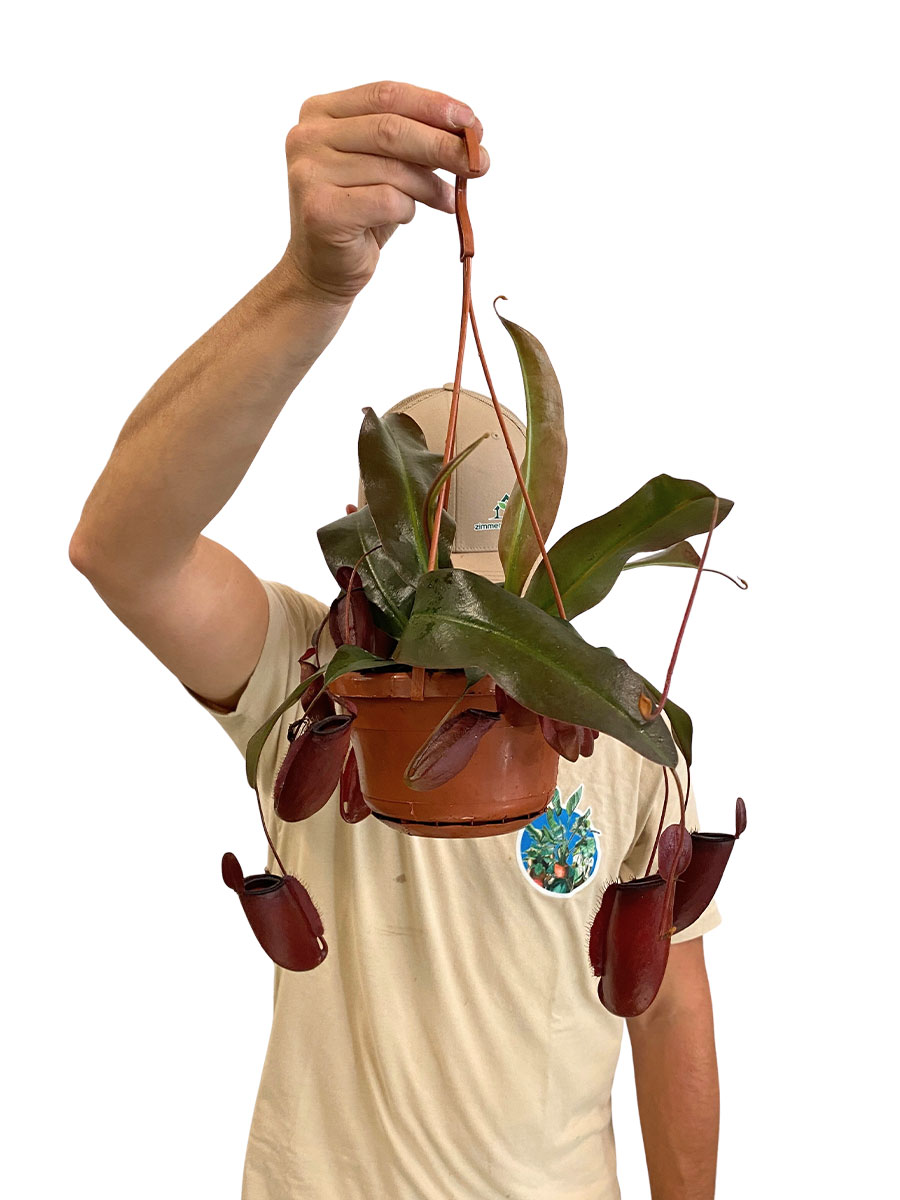
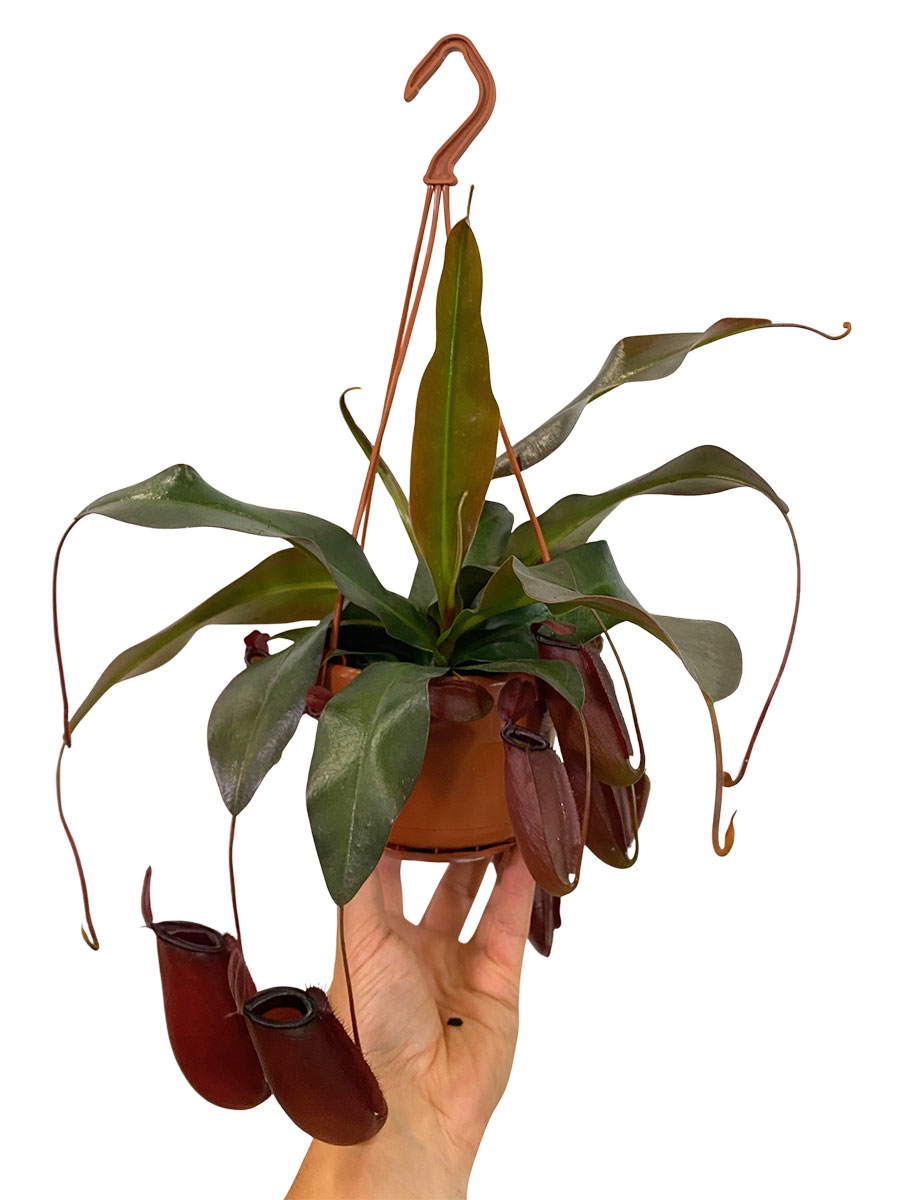
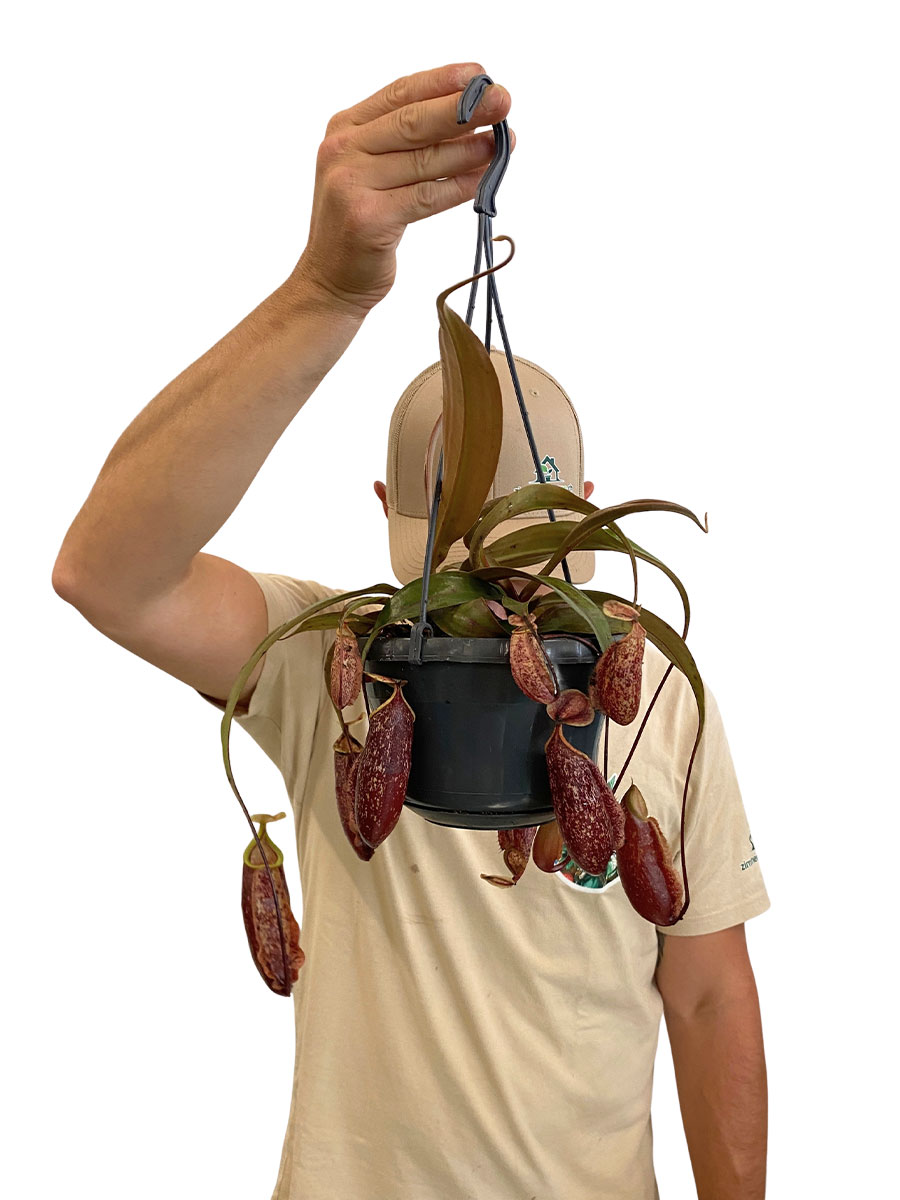
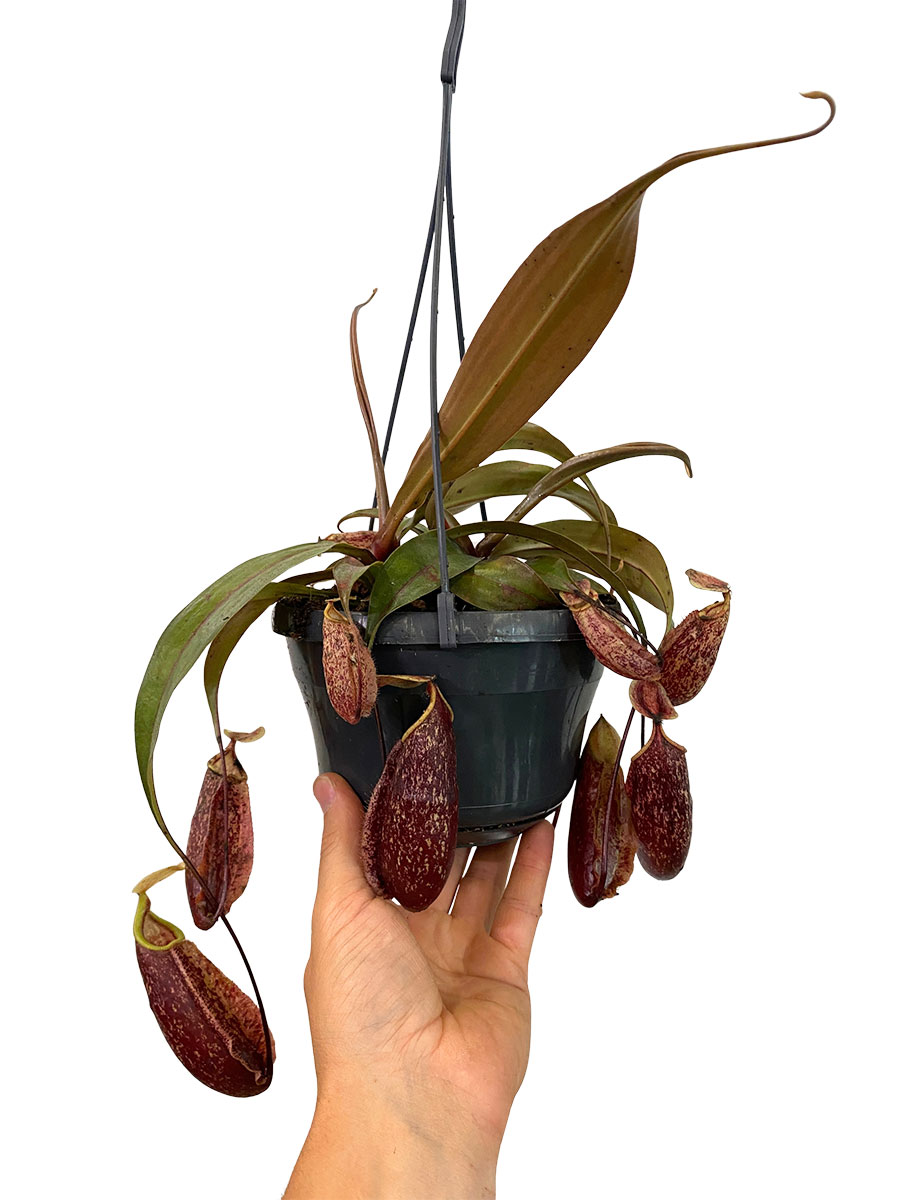
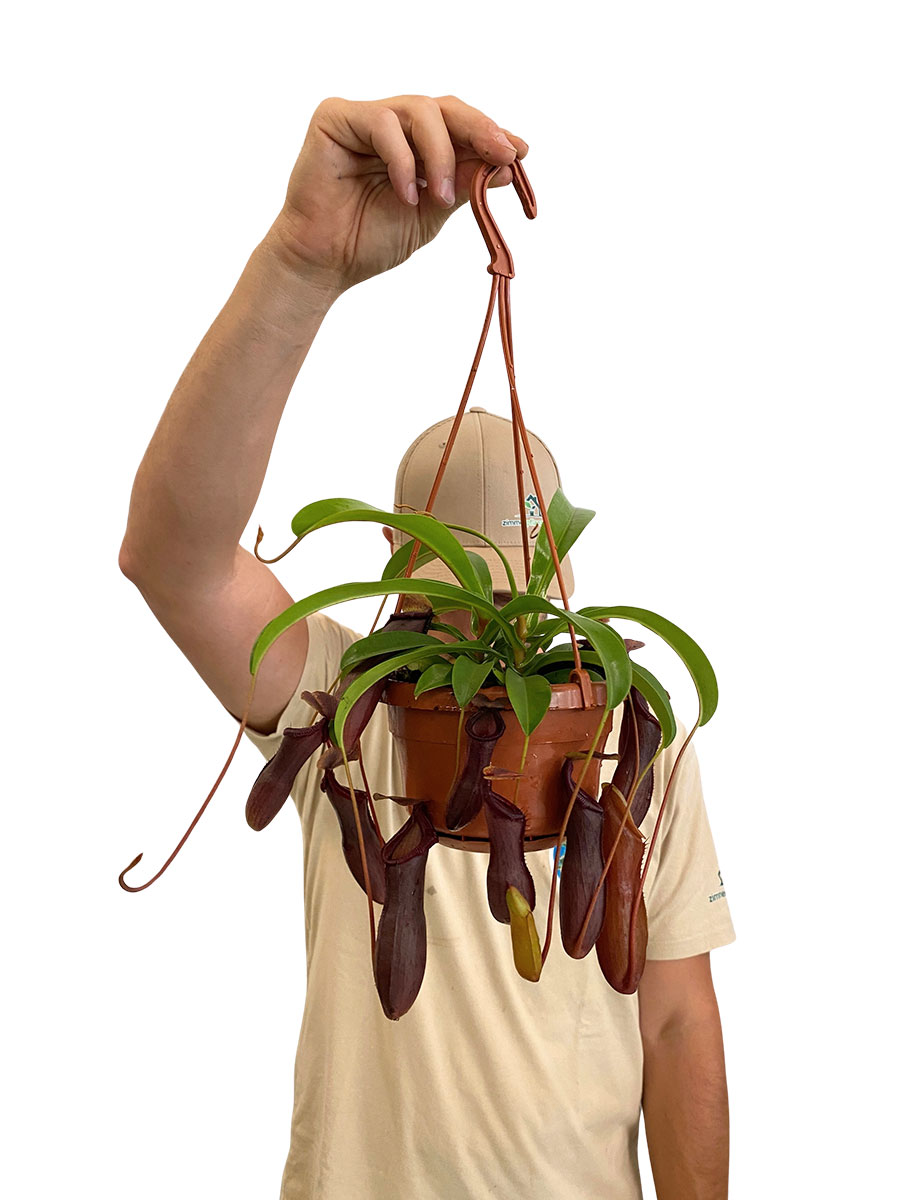
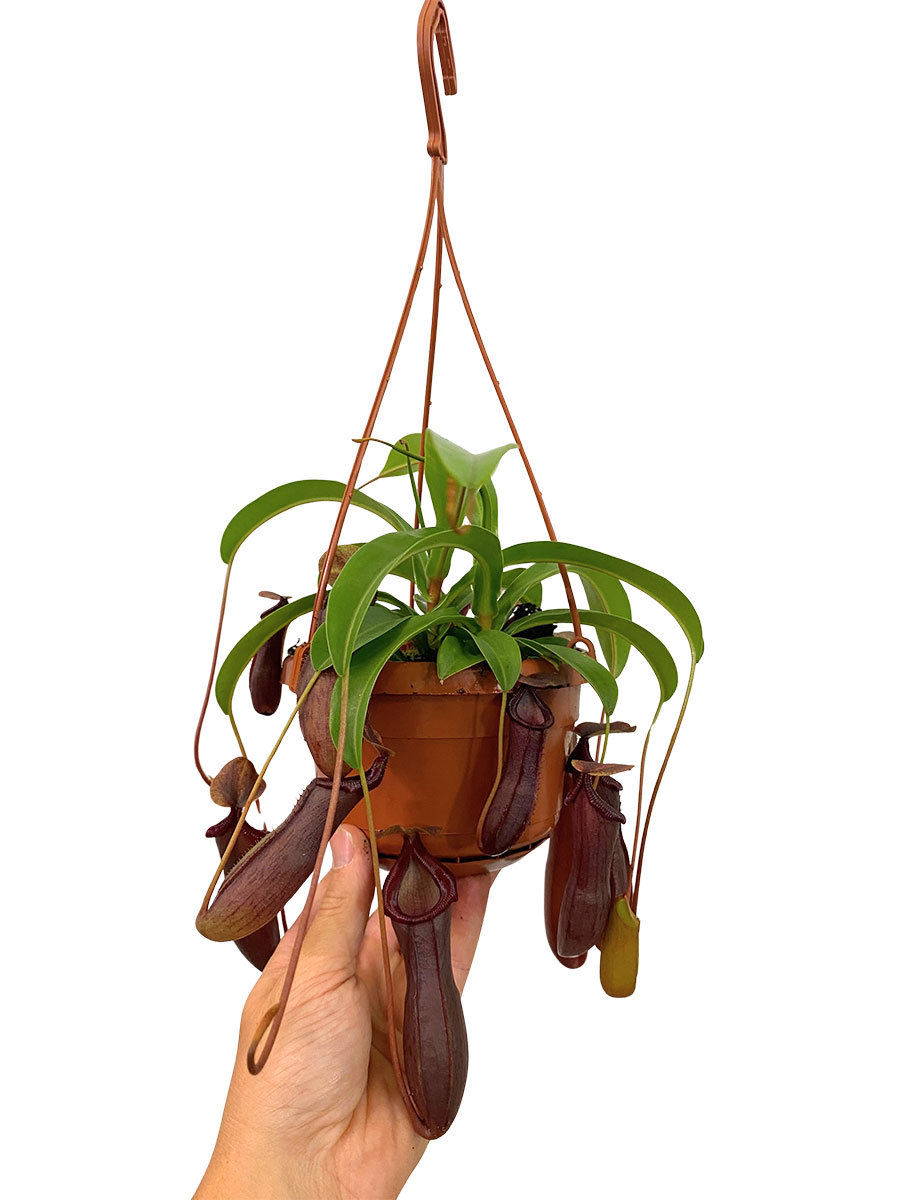
Hanging Pot - Pitcher Plant Nepenthes Dark Secret

Topfdurchmesser 14cm

Topfhöhe ab Boden 45cm ±

History of the pitcher plant Monkey Jars Dark Secret (Nepenthes) Nepenthes Monkey Jars Dark Secret is a fascinating carnivorous pitcher plant with particularly striking, dark-coloured pitchers. The cultivar 'Dark Secret' is listed as a hybrid of Nepenthes ampullaria and Nepenthes sibuyanensis and combines a decorative, trailing habit with spectacular dark red to almost black traps. The pitchers form at the leaf tips and serve as ingenious traps with which the plant catches and digests insects. As a trailing plant, it looks especially beautiful in hanging baskets and raised spots. With enough light, warmth and high humidity, it can keep producing new pitchers. Care as a houseplant: Light: Bright to very bright with plenty of indirect light. Morning or evening sun is well tolerated. Avoid intense midday sun, as the leaves and pitchers can react sensitively. Temperature: Around 20–30 °C is ideal. Avoid temperatures below 15 °C where possible. A slight drop in temperature at night is well tolerated. Humidity: High, ideally around 60–80 %. Increased humidity supports the development of new, richly coloured pitchers. Substrate: Use an airy, moisture-retaining and nutrient-poor carnivorous plant substrate, for example a mix of sphagnum moss, perlite and some orchid bark. Normal potting soil is not suitable. Watering: Use only rainwater, distilled water or other low-mineral water. Keep the substrate evenly moist, but do not leave it standing in water permanently. Never let it dry out completely. Feeding: Normal feeding of the substrate is not necessary. The plant obtains nutrients from the insects it catches. Commercial fertiliser can damage the sensitive roots. Special features: The dark red to almost black pitchers are the special highlight of this variety. Good light encourages the intense colouring. The plant does not need to be actively fed with insects, as it catches its own prey. The pitchers produce their own digestive fluid and should not be regularly topped up with water. Care as a terrarium plant: Light: Very bright to strongly lit. Supplement with suitable plant LEDs if needed. Temperature: Around 22–28 °C is optimal. A slight drop in temperature at night is well tolerated. Humidity: High, ideally around 70–80 %. At the same time, good air circulation should be ensured. Substrate: Use a loose and free-draining carnivorous plant substrate with sphagnum moss. Water: Use rainwater or distilled water and keep the substrate evenly moist. Avoid waterlogging. Winter dormancy: No classic winter dormancy necessary. With less light, growth may slow down during the cold season. Summer care (keeping outdoors) In summer, Nepenthes Monkey Jars Dark Secret can be placed outdoors in a warm, sheltered spot: Location: Bright to partially shaded, protected from intense midday sun and strong wind. Water: Always water with low-lime water and never let the substrate dry out completely. Humidity: The higher humidity outdoors can encourage the formation of new pitchers. Feeding behaviour: Outdoors, the plant catches its prey by itself. Additional feeding is not normally required. Bringing it back indoors: Bring back indoors before temperatures drop below 15 °C. Winter care: In winter, Nepenthes Monkey Jars Dark Secret still needs warmth, enough light and the highest possible humidity: Temperature: Keep at a minimum of 18 °C if possible and protected from cold draughts. Humidity: Aim for around 60–80 %. If the heating makes the air dry, a humidifier can be helpful. Water: Water less than in summer, but never let the substrate dry out completely. Light: Keep as bright as possible and supplement with a grow light if needed. Pitchers: It is normal for older pitchers to dry up and turn brown over time. With good light and humidity, new pitchers can then form.

CHF 39.90*

Delivery time 2 - 7 working days

Sold out
New
Item no. 4386
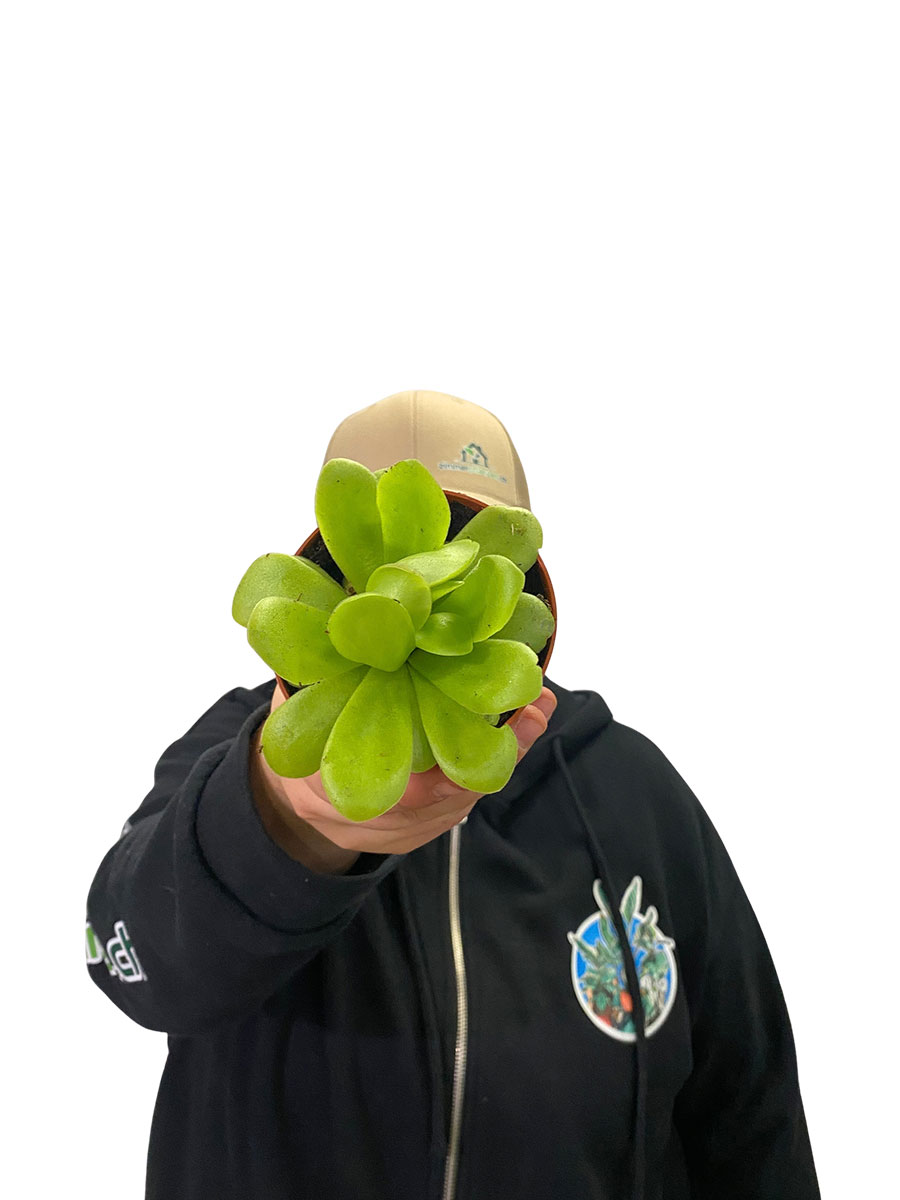
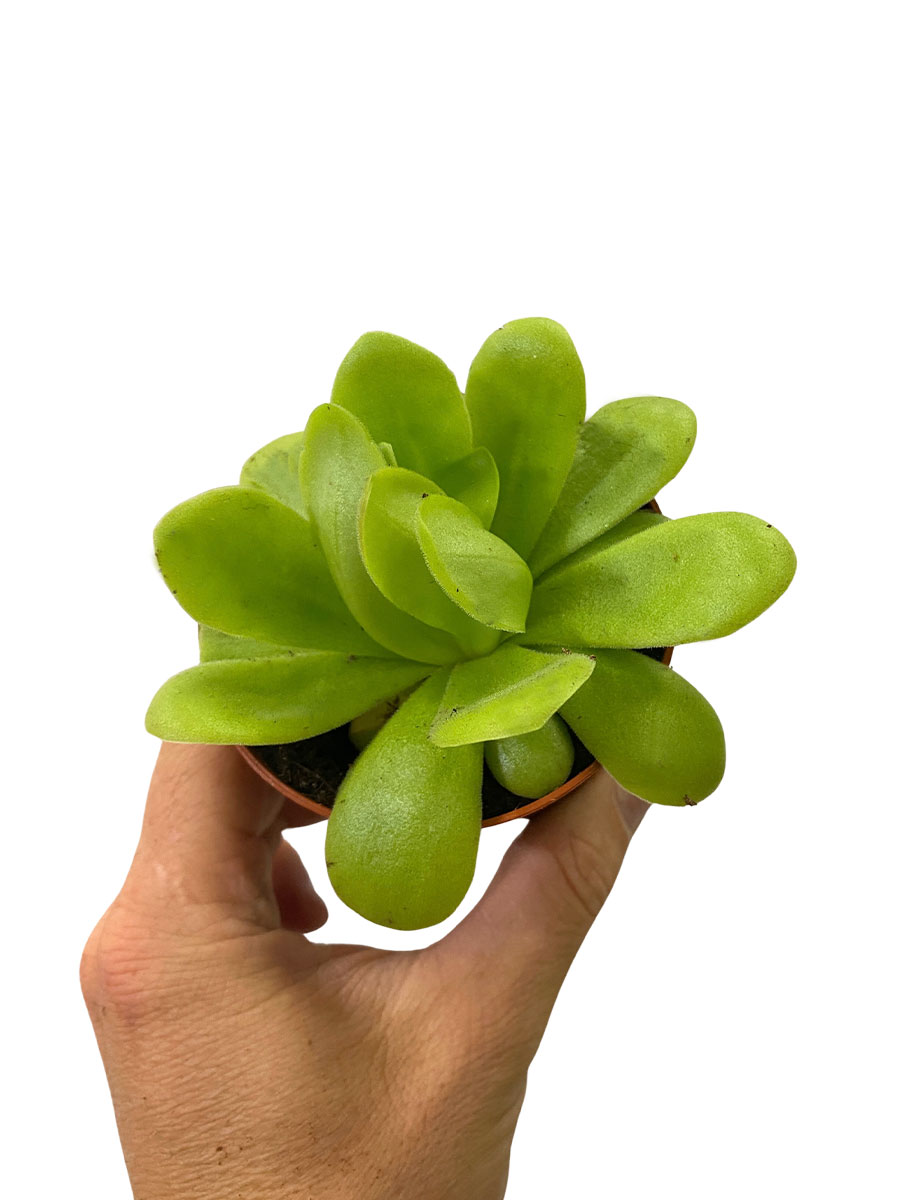
Butterwort Pinguicula Carnivorous Plant

Topfdurchmesser 8.5cm

Topfhöhe ab Boden 10cm ±

History of the PinguiculaPinguicula, also known as butterwort, is a carnivorous plant that forms compact rosettes of fleshy, sticky leaves. Small insects are caught on the sticky leaf surface and used as an additional source of nutrients. The various species and hybrids differ in leaf colour, shape and flower colour, and their compact growth makes them particularly attractive as small houseplants.Care as a houseplant:Light: Bright to very bright, but without strong midday sun.Temperature: Ideally around 18–25 °C.Humidity: Normal to slightly increased humidity is sufficient.Substrate: Use a special carnivorous plant substrate. No ordinary potting soil.Watering: Use rainwater, distilled or very low-lime water. Keep evenly moist, but avoid waterlogging.Feeding: Do not feed. The plant obtains nutrients from the small insects it catches.Special features: The sticky leaves are natural insect traps. Avoid touching the leaves where possible.Care as a terrarium plant:Light: Bright to very bright, ideally with suitable plant lighting.Temperature: Around 20–27 °C for tropical and Mexican species.Humidity: Around 60–80 % is favourable.Substrate: Mineral, nutrient-poor and free-draining carnivorous plant substrate.Watering: Keep evenly moist, but never permanently wet. Be sure to avoid waterlogging.Ventilation: Ensure good air circulation. An open or well-ventilated terrarium is ideal.Special features: Mexican Pinguicula in particular are suitable for terrariums. Exact care may vary slightly depending on the species or hybrid.Overwintering tips:Many Mexican Pinguicula form a more compact dormant rosette in winter. During this time, water less and keep the substrate somewhat drier. As soon as larger carnivorous leaves appear again, watering can be slowly increased.

CHF 14.90*

Sold out – we will notify you

Available
New
Item no. 4355
Hanging Pot - Pitcher Plant Nepenthes Louisa

Topfdurchmesser 15cm

Topfhöhe ab Boden 30cm ±

History of the pitcher plant Louisa (Nepenthes) Nepenthes Louisa, also called the pitcher plant, is a fascinating carnivorous plant that naturally catches and digests insects with its characteristic pitchers. Nepenthes species mainly come from the tropical regions of Southeast Asia, where they often grow as climbers in warm, humid forests. The decorative pitchers form at the leaf tips and can be particularly well developed depending on light, humidity and care. As a trailing plant, Nepenthes Louisa is ideal for hanging baskets and raised spots and brings a special atmosphere to your living space with its exotic growth. Care as a houseplant: Light: Bright, but without intense direct midday sun; east- or west-facing windows are ideal. Temperature: 20–30 °C; tropical warmth is preferred. Avoid temperatures below 15 °C where possible. Humidity: High, ideally at least 60–70 %. Regular misting and a humidifier can support pitcher formation. Substrate: Airy and nutrient-poor carnivorous plant substrate with sphagnum moss and perlite. Normal potting soil is not suitable. Watering: Use only rainwater or suitable low-lime water. Always keep the substrate slightly moist, but avoid waterlogging. Feeding: Normal feeding is not necessary, as the plant obtains additional nutrients from the insects it catches. If needed, a special carnivorous plant fertiliser can be used very sparingly. Special features: The decorative pitchers form particularly well with enough light and high humidity. The plant does not need to be actively fed with insects, as it catches its own prey. Care as a terrarium plant: Light: Very bright to strongly lit. A suitable plant LED can be used if needed. Temperature: Around 22–28 °C is optimal. A slight drop in temperature at night is well tolerated. Humidity: High, ideally 70 % or more. Regular misting or a suitable terrarium environment support pitcher formation. Substrate: Use a free-draining carnivorous plant substrate with sphagnum moss. Water: Use rainwater or suitable low-lime water. Keep the substrate moist, but not permanently wet. Winter dormancy: No classic winter dormancy necessary. However, growth may slow down somewhat during the darker season. Summer care (keeping outdoors) In summer, when temperatures are warm, Nepenthes Louisa can be placed outdoors in a sheltered spot: Location: Partial shade to bright, protected from intense midday sun. Water: Always water with low-lime water and never let the substrate dry out completely. Humidity: The higher humidity outdoors can encourage the development of new pitchers. Feeding behaviour: Outdoors, the plant catches insects by itself; additional feeding is not necessary. Bringing it back indoors: Bring back indoors before temperatures drop below 15 °C. Winter care: In winter, Nepenthes Louisa still needs warm temperatures and the highest possible humidity: Temperature: At least 18 °C if possible, ideally still tropically warm. Humidity: Keep high, around 60–80 %. A humidifier can be helpful if the heating makes the air dry. Water: Water a little less than in summer, but never let the substrate dry out completely. Light: Keep as bright as possible and supplement with a grow light if needed. Pitchers: Reduced pitcher formation in winter is normal and can increase again in spring with better light and humidity.

CHF 49.90*

Delivery time 2 - 7 working days

Sold out
New
Item no. 4356
Hanging Pot - Pitcher Plant Nepenthes St.Gaya

Topfdurchmesser 15cm

Topfhöhe ab Boden 30cm ±

History of the pitcher plant St.Gaya (Nepenthes) Nepenthes St. Gaya is a fascinating carnivorous pitcher plant with a decorative trailing habit and striking pitchers. Nepenthes species mainly come from the tropical regions of Southeast Asia, where they are adapted to warm, humid habitats. Their characteristic pitchers form at the leaf tips and serve as ingenious traps with which the plant catches and digests insects. Thanks to its trailing stems, Nepenthes St. Gaya looks particularly beautiful in hanging baskets, on shelves and in raised positions. Given enough light and high humidity, it can regularly develop new pitchers and becomes an extraordinary eye-catcher for lovers of carnivorous plants. Care as a houseplant: Light: Bright to very bright, but without intense midday sun. An east- or west-facing window is ideal. Sufficient light encourages strong pitcher formation. Temperature: Around 20–30 °C is optimal. Tropically warm conditions are preferred. Avoid temperatures below 15 °C where possible. Humidity: High, ideally at least 60–70 %. Regular misting and a humidifier can support the development of new pitchers. Substrate: Use a very airy, nutrient-poor carnivorous plant substrate, for example with sphagnum moss and perlite. Normal potting soil is not suitable. Watering: Use only rainwater or other suitable low-lime water. Keep the substrate evenly slightly moist, but avoid waterlogging. Feeding: Normal feeding is not necessary. The plant obtains additional nutrients from the insects it catches. If needed, a special carnivorous plant fertiliser can be used very sparingly. Special features: The trailing stems and decorative pitchers make Nepenthes St. Gaya particularly attractive for hanging baskets and raised positions. The plant does not need to be actively fed with insects, as it catches its own prey. Care as a terrarium plant: Light: Very bright to brightly lit. Supplement with a suitable plant LED if needed. Temperature: Around 22–28 °C is optimal. A slight drop in temperature at night is well tolerated. Humidity: High, ideally around 70 % or more. Regular misting can encourage pitcher formation. Substrate: Use an airy, free-draining carnivorous plant substrate with sphagnum moss. Water: Use rainwater or suitable low-lime water. Keep the substrate moist, but not permanently wet. Winter dormancy: No classic winter dormancy is needed. With less light, growth may slow down during the winter. Summer care (keeping outdoors) In summer, Nepenthes St. Gaya can be placed outdoors in a sheltered spot when temperatures are warm: Location: Partial shade to bright, protected from intense midday sun. Water: Always water with low-lime water and never let it dry out completely. Humidity: The natural humidity outdoors can support the formation of new pitchers. Feeding behaviour: Outdoors, the plant catches insects on its own. Additional feeding is not necessary. Bringing it back indoors: Bring back indoors before temperatures drop below 15 °C. Winter care: In winter, Nepenthes St. Gaya still needs warmth, sufficient light and the highest possible humidity: Temperature: Keep at a minimum of 18 °C if possible and protected from cold draughts. Humidity: Aim for around 60–80 %. If the heating makes the air dry, a humidifier can be helpful. Water: Water less than in summer, but never let the substrate dry out completely. Light: Keep as bright as possible and supplement with a grow light if needed. Pitchers: Fewer pitchers forming during the darker months is normal. With increasing light and better growing conditions in spring, the formation of new pitchers can increase significantly again.

CHF 49.90*

Sold out – we will notify you

Available
New
Item no. 4358
Hanging Pot - Pitcher Plant Nepenthes Bill

Topfdurchmesser 14cm

Topfhöhe ab Boden 45cm ±

History of the pitcher plant (Nepenthes) Nepenthes Monkey Jars Bill is a fascinating carnivorous pitcher plant with striking, deep red pitchers and a decoratively pronounced rim. The pitchers form at the tips of the leaves and are filled with their own digestive fluid, which the plant uses to catch small insects as an additional source of nutrients. The 'Bill' variety is described as a particularly reliable and comparatively adaptable Nepenthes, making it suitable for growing on a bright windowsill too. Thanks to its trailing growth, it looks especially attractive in hanging baskets or in raised positions. Care as a houseplant: Light: Bright to very bright, but preferably with indirect or filtered light. Direct, intense midday sun should be avoided, as the leaves and pitchers can be sensitive to it. Sufficient light encourages the formation of new pitchers. Temperature: Ideally around 18–28 °C. Temperatures below 15 °C should be avoided if possible. Humidity: Increased humidity of around 50–70 % is beneficial. In dry heated air, a humidifier can support pitcher formation. Substrate: Use a loose, airy and free-draining carnivorous plant substrate, for example a mix of sphagnum, perlite and some bark. Normal potting soil is not suitable. Watering: Keep evenly moist, but avoid waterlogging. Ideally use rainwater, distilled water or water that is very low in minerals. The pot should not stand in water permanently. Feeding: Regular feeding is not necessary. The plant covers part of its nutrient requirement from the insects it catches. Do not fill the pitchers with water – they produce their own digestive fluid. Special features: If no new pitchers form over a longer period, too little light or too low humidity is often the cause. The pitchers are natural traps and should not be artificially fed with insects or meat. Care as a terrarium plant: Nepenthes Monkey Jars Bill is very well suited to a warm, bright and humid terrarium. Good air circulation is important so that, despite the high humidity, a permanently stagnant, damp climate does not develop. Light: Bright and indirect, with suitable grow lights if necessary. Temperature: Ideally around 20–28 °C. Humidity: Increased and as constant as possible, around 60–80 %. Substrate: Very airy carnivorous plant substrate of sphagnum and perlite or comparable materials. Watering: Keep evenly moist, but never permanently wet. Summer care (keeping outdoors) In summer, Nepenthes Monkey Jars Bill can also be grown outdoors when temperatures are warm. A sheltered spot with plenty of bright, filtered light and no hot midday sun is ideal. Location: Sheltered, bright and protected from wind, for example under a canopy or in a covered hanging basket. Sun: Morning or evening sun is fine; avoid intense midday sun. Water: Use only low-lime water in summer too. Temperature: Bring it back indoors if temperatures stay below around 15 °C for longer periods. Winter care: Nepenthes Monkey Jars Bill does not need a classic winter rest and should be kept as warm and bright as possible in winter too. Especially during the heating season, make sure there is sufficient humidity and an even water supply. Temperature: Preferably not below 15 °C for extended periods. Light: As bright as possible, with additional grow lights if necessary. Humidity: Compensate for dry heated air where possible. Watering: Continue to keep evenly moist, but avoid waterlogging. Important for pet owners: This variety is described as non-toxic to pets. Nevertheless, the plant should be kept out of reach of curious animals so that neither the leaves nor the pitchers get damaged.

CHF 39.90*

Delivery time 2 - 7 working days

Available
Bestseller
Item no. 3373
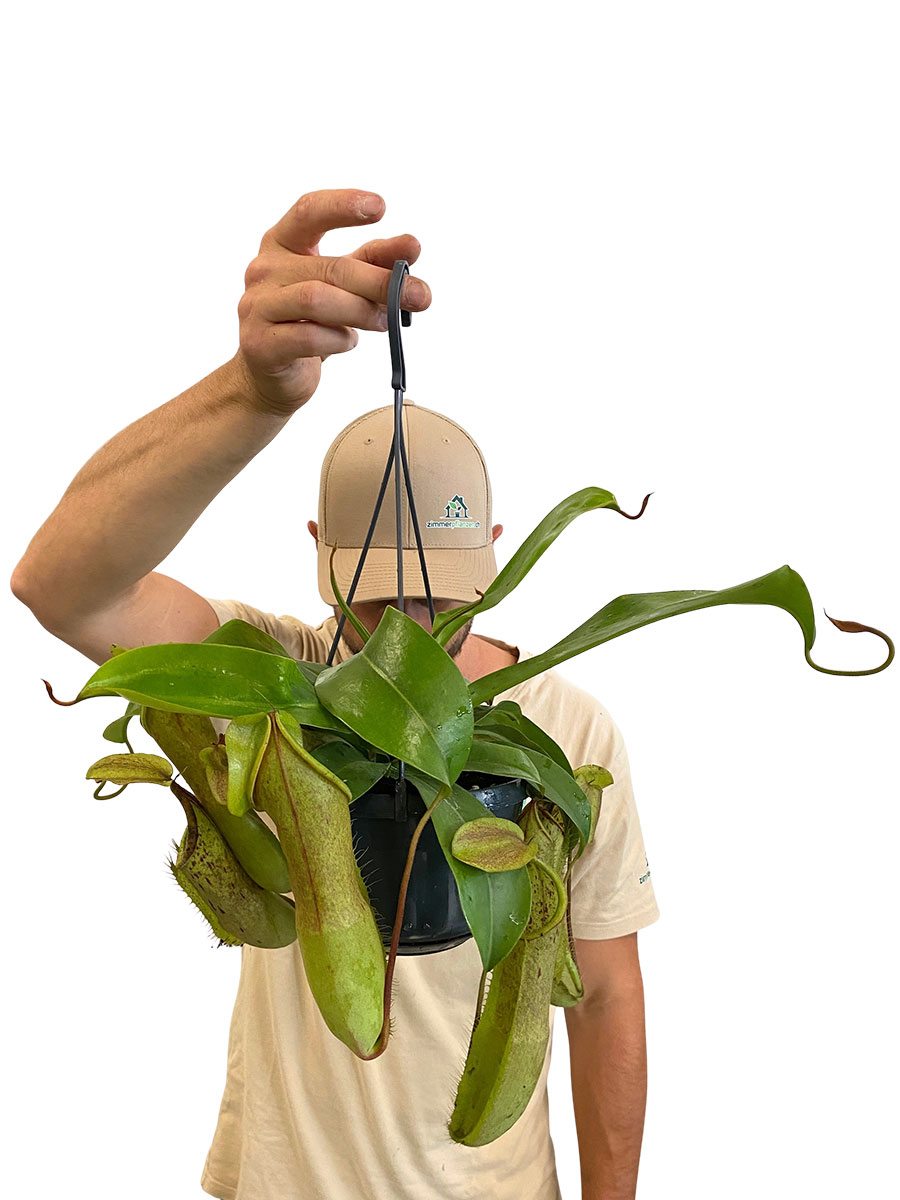
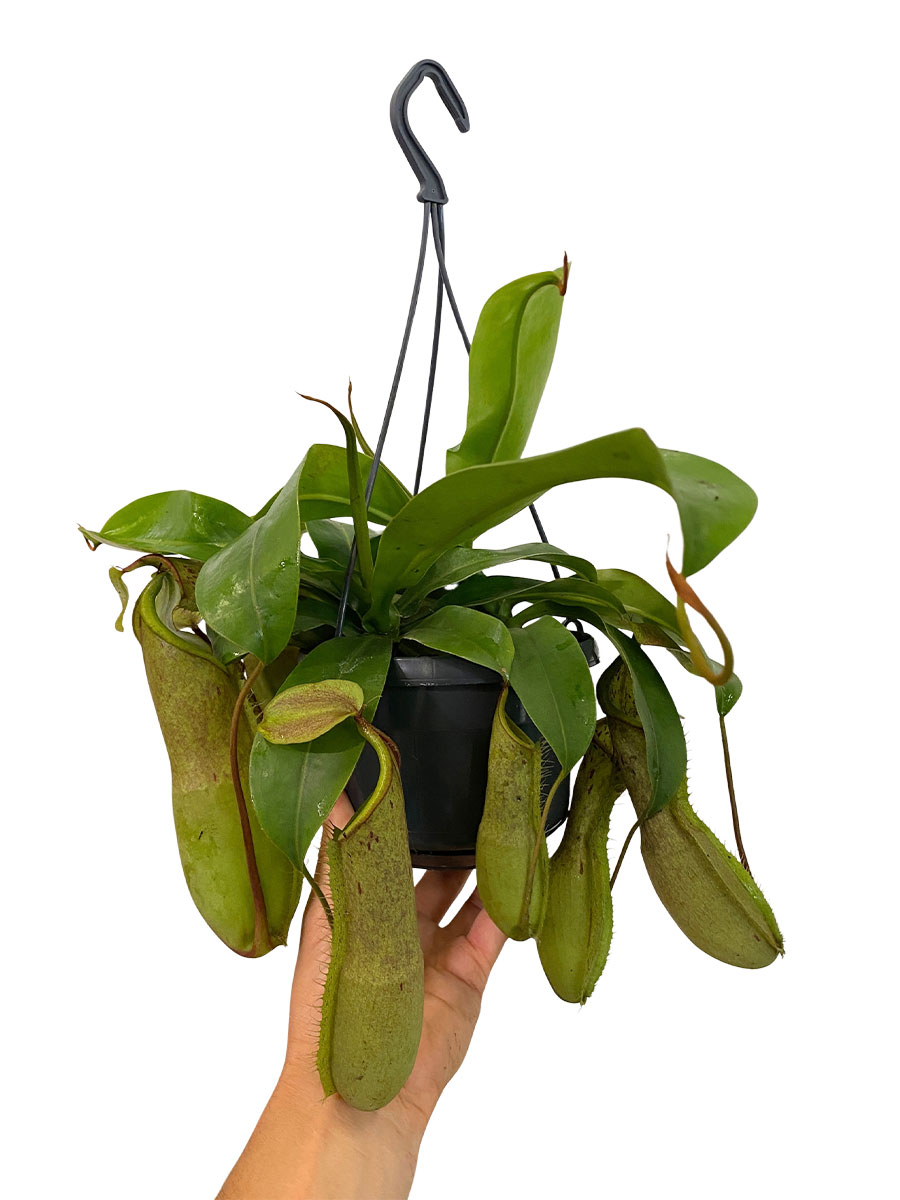
Hanging Pot - Pitcher Plant Nepenthes Gaya

Topfdurchmesser 14cm

Topfhöhe ab Boden 40cm ±

History of the pitcher plant (Nepenthes) Nepenthes, also called the pitcher plant, is a fascinating carnivorous plant originally from the tropical rainforests of Asia, Australia and Madagascar. Its characteristic pitchers serve as ingenious traps for catching and digesting insects. This exotic plant is a special addition for collectors and lovers of unusual houseplants. Care as a houseplant: Light: Bright, but without direct midday sun; east- or west-facing windows are ideal. Temperature: 20–30 °C; prefers tropical warmth. Humidity: High (at least 50–70 %); regular misting improves growth. Substrate: Airy carnivorous plant substrate with sphagnum moss and perlite. Watering: Only water with rainwater or distilled water; always keep slightly moist. Feeding: No fertiliser needed; it catches insects by itself. Special features: An exotic houseplant that forms a particularly large number of pitchers in high humidity. Care as a terrarium plant: Light: Strong plant LEDs or a very bright spot required. Temperature: Ideally 22–28 °C; a slight drop to 18–22 °C at night is possible. Humidity: Very high (at least 70 %); daily misting or a fogger recommended. Substrate: Free-draining carnivorous plant substrate with moss. Water: Use rainwater or distilled water; avoid waterlogging. Winter dormancy: No classic winter dormancy needed, but water slightly less at cooler temperatures. Summer care (keeping outdoors) In summer, Nepenthes can be placed outdoors in a sheltered, warm spot: Location: Partial shade to bright, but no direct midday sun. Water: Always water with lime-free water; never let it dry out. Humidity: Often higher outdoors – encourages pitcher growth. Feeding behaviour: Outdoors the plant catches plenty of insects by itself; no additional feeding needed. Bringing it back indoors: Bring it back indoors before temperatures drop below 15 °C. Winter care: In winter, Nepenthes needs warm temperatures and high humidity: Temperature: At least 18 °C; keep tropically warm. Humidity: Keep high (60–80 %), possibly with the help of a humidifier. Water: Water less than in summer, but do not let it dry out. Light: Place in a bright spot; supplement with a grow light if necessary. Leaves: Fewer pitchers in winter is normal – they return in spring. Whether as a houseplant, in a terrarium or outdoors in summer – Nepenthes is an exotic carnivorous plant that thrives best with high humidity and warmth.

CHF 39.90*

Delivery time 2 - 7 working days

Available
Bestseller
Item no. F3135
Venus Flytrap Dionaea Carnivorous Plant XXL

Topfdurchmesser 20cm

Topfhöhe ab Boden 20cm ±

Ready-made planting

History of the Venus flytrap (Dionaea muscipula) The Venus flytrap Dionaea muscipula is one of the best-known carnivorous houseplants and comes from the moist, nutrient-poor soils of the coastal regions of North and South Carolina (USA). Its spectacular trap leaves snap shut in a flash as soon as prey such as insects touch the fine trigger hairs. This fascinating adaptation makes it one of the most exciting plants for carnivorous plant enthusiasts. Feed it your flies and insects directly :-) Care as a houseplant: Light: Bright, direct sunlight for at least 4–6 hours a day. Temperature: Ideally 20–30 °C during the growing season. Humidity: Moderate to high; occasional misting can help. Substrate: Special carnivorous plant soil (nutrient-poor, peat-free, free-draining). Watering: Only lime-free water (rainwater or distilled water); keep the substrate constantly moist, but avoid waterlogging. Feeding: No fertiliser needed – the plant feeds itself by catching insects. Special features: An extraordinary houseplant that actively catches prey, which makes it unique. Care as a terrarium plant: Light: Very bright with direct sunlight or strong plant LEDs in the terrarium. Temperature: Ideally 22–28 °C during growth. Humidity: High (60–80 %), but good air circulation is needed to prevent mould. Substrate: Carnivorous plant soil with sphagnum moss for a permanently moist environment. Water: Use rainwater or distilled water; keep permanently moist, but not wet. Winter dormancy: Also necessary in a terrarium – lower the temperature to 5–10 °C and greatly reduce watering. Summer care (keeping outdoors) In summer, the Venus flytrap Dionaea muscipula can be kept outdoors very successfully: Location: Sunny, but protect from extreme midday heat. Weather: Choose a sheltered spot, as strong winds can damage the delicate traps. Water: Always keep moist with rainwater or distilled water – never let it dry out. Feeding behaviour: Outdoors it catches enough insects by itself, so no additional feeding is necessary. Bringing it back indoors: Move it back to a sheltered place before the first cold nights. Winter care: In winter, the Venus flytrap Dionaea muscipula needs a dormant period: Temperature: 5–10 °C (cool spot, e.g. an unheated room or garage with daylight). Water: Water less, but do not let the substrate dry out. Light: Less light required, but not a completely dark spot. Leaves: Many traps die off – this is normal. The plant puts out new growth in spring. Whether as a houseplant, in a terrarium or outdoors in summer – the Venus flytrap Dionaea muscipula is a fascinating plant with unique behaviour and needs a winter rest to stay healthy in the long term.

CHF 59.90*

Delivery time 2 - 7 working days

Available
New
Item no. 4245
Pitcher Plant Sarracenia Purpurea Venosa

Topfdurchmesser 10.5cm

Topfhöhe ab Boden 15cm ±

History of the pitcher plant Sarracenia purpurea venosa Sarracenia purpurea venosa is a fascinating carnivorous plant from the pitcher plant family. It comes from the south-east of the USA, where it grows in nutrient-poor bogs and wetlands. Unlike many other Sarracenia species, it forms its characteristic, bulbous pitchers close to the ground. These fill with rainwater and act as natural pitfall traps for insects. Prey is lured in by nectar and then broken down with the help of microorganisms and the plant's own enzymes, allowing the plant to obtain valuable nutrients. The variety venosa is distinguished by its sturdy pitchers, often with reddish veins, and the dense hairs on their outer surface. In spring, impressive purple-red to dark red flowers appear on long stalks. Care as a houseplant: • Light: Very bright to full sun; several hours of direct sun a day encourage sturdy pitchers and intense colouring. • Temperature: During the growing season, 15–30 °C is ideal. Higher temperatures are also well tolerated for short periods. • Humidity: Medium to high; normal outdoor air or increased humidity are well tolerated. • Substrate: Nutrient-poor, acidic carnivorous plant substrate made of white peat and quartz sand or perlite. Normal potting soil is unsuitable. • Watering: Water only with rainwater, distilled water or demineralised water. The substrate should remain permanently moist; the tray method is ideal. • Feeding: No feeding required. The plant obtains its own nutrients from the insects it catches. • Special features: The water-filled pitchers distinguish this species from many other pitcher plants. It is robust, long-lived and ideally suited to sunny windowsills, bog gardens or growing outdoors. Overwintering tips: The Sarracenia purpurea venosa needs a pronounced winter dormancy. From late autumn to spring, it should be overwintered in a bright, cool place at around 0–10 °C. During this time, keep it only moderately moist, but never let the substrate dry out completely. Winter dormancy is important for healthy growth and abundant pitcher and flower formation the following year.

CHF 14.90*

Delivery time 2 - 7 working days

Available
Item no. 4230
Baby Pitcher Plant Nepenthes Gaya

Topfdurchmesser 8.5cm

Topfhöhe ab Boden 10cm ±

History of the pitcher plant (Nepenthes) Nepenthes, also called the pitcher plant, is a fascinating carnivorous plant originally from the tropical rainforests of Asia, Australia and Madagascar. Its characteristic pitchers serve as ingenious traps for catching and digesting insects. This exotic plant is a special addition for collectors and lovers of unusual houseplants. Care as a houseplant: Light: Bright, but without direct midday sun; east- or west-facing windows are ideal. Temperature: 20–30 °C; prefers tropical warmth. Humidity: High (at least 50–70 %); regular misting improves growth. Substrate: Airy carnivorous plant substrate with sphagnum moss and perlite. Watering: Only water with rainwater or distilled water; always keep slightly moist. Feeding: No fertiliser needed; it catches insects by itself. Special features: An exotic houseplant that forms a particularly large number of pitchers in high humidity. Care as a terrarium plant: Light: Strong plant LEDs or a very bright spot required. Temperature: Ideally 22–28 °C; a slight drop to 18–22 °C at night is possible. Humidity: Very high (at least 70 %); daily misting or a fogger recommended. Substrate: Free-draining carnivorous plant substrate with moss. Water: Use rainwater or distilled water; avoid waterlogging. Winter dormancy: No classic winter dormancy needed, but water slightly less at cooler temperatures. Summer care (keeping outdoors) In summer, Nepenthes can be placed outdoors in a sheltered, warm spot: Location: Partial shade to bright, but no direct midday sun. Water: Always water with lime-free water; never let it dry out. Humidity: Often higher outdoors – encourages pitcher growth. Feeding behaviour: Outdoors the plant catches plenty of insects by itself; no additional feeding needed. Bringing it back indoors: Bring it back indoors before temperatures drop below 15 °C. Winter care: In winter, Nepenthes needs warm temperatures and high humidity: Temperature: At least 18 °C; keep tropically warm. Humidity: Keep high (60–80 %), possibly with the help of a humidifier. Water: Water less than in summer, but do not let it dry out. Light: Place in a bright spot; supplement with a grow light if necessary. Leaves: Fewer pitchers in winter is normal – they return in spring. Whether as a houseplant, in a terrarium or outdoors in summer – Nepenthes is an exotic carnivorous plant that thrives best with high humidity and warmth.

CHF 14.90*

Delivery time 2 - 7 working days

Available
Bestseller
Item no. 3480
Baby Sundew Drosera Capensis

Topfdurchmesser 8.5cm

Topfhöhe ab Boden 15cm ±

History of Drosera capensis – sundew The species Drosera capensis, also called the Cape sundew, comes from South Africa and is one of the best-known carnivorous plants. It was already being cultivated in Europe in the 18th century and today is a popular houseplant for carnivorous plant enthusiasts. Its sticky tentacles catch small insects, which it uses to absorb nutrients – a fascinating spectacle on any plant shelf. Drosera capensis is a fascinating houseplant that combines science and aesthetics – ideal for anyone who wants to experience a piece of nature's wonder on their windowsill. Care as a houseplant: Light: Very bright spot with plenty of sun; direct light is also well tolerated. Temperature: Ideally 18–28 °C; do not keep below 10 °C. Humidity: High (at least 50 %); ideal for bright window spots or closed plant display cases. Substrate: Peat and sand mix without fertiliser (e.g. sphagnum peat with quartz sand). Watering: Only water with distilled water or rainwater; always keep slightly moist – standing water in the saucer is desirable. Feeding: No fertiliser – it obtains nutrients by catching insects. Special features: This houseplant is particularly suitable for beginners in the world of carnivorous plants and impresses with its red trapping tentacles. Care as a terrarium plant: Light: Very bright or illuminated with a grow light. Temperature: Constantly between 20–28 °C. Humidity: High (60–80 %); regular misting or a fogger. Watering: Distilled water or rainwater; always keep the substrate moist.

CHF 14.90*

Delivery time 2 - 7 working days

Available
Item no. 4232
Venus Flytrap Dionaea Mix of 4

Topfdurchmesser 8.5cm

Topfhöhe ab Boden 10cm ±

History of the Venus flytrap (Dionaea muscipula) The Venus flytrap Dionaea muscipula is one of the best-known carnivorous houseplants and comes from the moist, nutrient-poor soils of the coastal regions of North and South Carolina (USA). Its spectacular trap leaves snap shut in a flash as soon as prey such as insects touch the fine trigger hairs. This fascinating adaptation makes it one of the most exciting plants for carnivorous plant enthusiasts. Care as a houseplant: Light: Bright, direct sunlight for at least 4–6 hours a day. Temperature: Ideally 20–30 °C during the growing season. Humidity: Moderate to high; occasional misting can help. Substrate: Special carnivorous plant soil (nutrient-poor, peat-free, free-draining). Watering: Only lime-free water (rainwater or distilled water); keep the substrate constantly moist, but avoid waterlogging. Feeding: No fertiliser needed – the plant feeds itself by catching insects. Special features: An extraordinary houseplant that actively catches prey, which makes it unique. Care as a terrarium plant: Light: Very bright with direct sunlight or strong plant LEDs in the terrarium. Temperature: Ideally 22–28 °C during growth. Humidity: High (60–80 %), but good air circulation is needed to prevent mould. Substrate: Carnivorous plant soil with sphagnum moss for a permanently moist environment. Water: Use rainwater or distilled water; keep permanently moist, but not wet. Winter dormancy: Also necessary in a terrarium – lower the temperature to 5–10 °C and greatly reduce watering. Summer care (keeping outdoors) In summer, the Venus flytrap Dionaea muscipula can be kept outdoors very successfully: Location: Sunny, but protect from extreme midday heat. Weather: Choose a sheltered spot, as strong winds can damage the delicate traps. Water: Always keep moist with rainwater or distilled water – never let it dry out. Feeding behaviour: Outdoors it catches enough insects by itself, so no additional feeding is necessary. Bringing it back indoors: Move it back to a sheltered place before the first cold nights. Winter care: In winter, the Venus flytrap Dionaea muscipula needs a dormant period: Temperature: 5–10 °C (cool spot, e.g. an unheated room or garage with daylight). Water: Water less, but do not let the substrate dry out. Light: Less light required, but not a completely dark spot. Leaves: Many traps die off – this is normal. The plant puts out new growth in spring. Whether as a houseplant, in a terrarium or outdoors in summer – the Venus flytrap Dionaea muscipula is a fascinating plant with unique behaviour and needs a winter rest to stay healthy in the long term.

CHF 39.90*

Delivery time 2 - 7 working days

Available
Bestseller
Item no. 606
Venus Flytrap Dionaea Carnivorous Plant

Topfdurchmesser 12cm

Topfhöhe ab Boden 12cm ±

History of the Venus flytrap (Dionaea muscipula) The Venus flytrap Dionaea muscipula is one of the best-known carnivorous houseplants and comes from the moist, nutrient-poor soils of the coastal regions of North and South Carolina (USA). Its spectacular trap leaves snap shut in a flash as soon as prey such as insects touch the fine trigger hairs. This fascinating adaptation makes it one of the most exciting plants for carnivorous plant enthusiasts. Feed it your flies and insects directly :-) Care as a houseplant: Light: Bright, direct sunlight for at least 4–6 hours a day. Temperature: Ideally 20–30 °C during the growing season. Humidity: Moderate to high; occasional misting can help. Substrate: Special carnivorous plant soil (nutrient-poor, peat-free, free-draining). Watering: Only lime-free water (rainwater or distilled water); keep the substrate constantly moist, but avoid waterlogging. Feeding: No fertiliser needed – the plant feeds itself by catching insects. Special features: An extraordinary houseplant that actively catches prey, which makes it unique. Care as a terrarium plant: Light: Very bright with direct sunlight or strong plant LEDs in the terrarium. Temperature: Ideally 22–28 °C during growth. Humidity: High (60–80 %), but good air circulation is needed to prevent mould. Substrate: Carnivorous plant soil with sphagnum moss for a permanently moist environment. Water: Use rainwater or distilled water; keep permanently moist, but not wet. Winter dormancy: Also necessary in a terrarium – lower the temperature to 5–10 °C and greatly reduce watering. Summer care (keeping outdoors) In summer, the Venus flytrap Dionaea muscipula can be kept outdoors very successfully: Location: Sunny, but protect from extreme midday heat. Weather: Choose a sheltered spot, as strong winds can damage the delicate traps. Water: Always keep moist with rainwater or distilled water – never let it dry out. Feeding behaviour: Outdoors it catches enough insects by itself, so no additional feeding is necessary. Bringing it back indoors: Move it back to a sheltered place before the first cold nights. Winter care: In winter, the Venus flytrap Dionaea muscipula needs a dormant period: Temperature: 5–10 °C (cool spot, e.g. an unheated room or garage with daylight). Water: Water less, but do not let the substrate dry out. Light: Less light required, but not a completely dark spot. Leaves: Many traps die off – this is normal. The plant puts out new growth in spring. Whether as a houseplant, in a terrarium or outdoors in summer – the Venus flytrap Dionaea muscipula is a fascinating plant with unique behaviour and needs a winter rest to stay healthy in the long term.

CHF 22.90*

Delivery time 2 - 7 working days

Available
Bestseller
Item no. 1341
Venus Flytrap Dionaea Carnivorous Plant

Topfdurchmesser 8.5cm

Topfhöhe ab Boden 10cm ±

History of the Venus flytrap (Dionaea muscipula) The Venus flytrap Dionaea muscipula is one of the best-known carnivorous houseplants and comes from the moist, nutrient-poor soils of the coastal regions of North and South Carolina (USA). Its spectacular trap leaves snap shut in a flash as soon as prey such as insects touch the fine trigger hairs. This fascinating adaptation makes it one of the most exciting plants for carnivorous plant enthusiasts. Care as a houseplant: Light: Bright, direct sunlight for at least 4–6 hours a day. Temperature: Ideally 20–30 °C during the growing season. Humidity: Moderate to high; occasional misting can help. Substrate: Special carnivorous plant soil (nutrient-poor, peat-free, free-draining). Watering: Only lime-free water (rainwater or distilled water); keep the substrate constantly moist, but avoid waterlogging. Feeding: No fertiliser needed – the plant feeds itself by catching insects. Special features: An extraordinary houseplant that actively catches prey, which makes it unique. Care as a terrarium plant: Light: Very bright with direct sunlight or strong plant LEDs in the terrarium. Temperature: Ideally 22–28 °C during growth. Humidity: High (60–80 %), but good air circulation is needed to prevent mould. Substrate: Carnivorous plant soil with sphagnum moss for a permanently moist environment. Water: Use rainwater or distilled water; keep permanently moist, but not wet. Winter dormancy: Also necessary in a terrarium – lower the temperature to 5–10 °C and greatly reduce watering. Summer care (keeping outdoors) In summer, the Venus flytrap Dionaea muscipula can be kept outdoors very successfully: Location: Sunny, but protect from extreme midday heat. Weather: Choose a sheltered spot, as strong winds can damage the delicate traps. Water: Always keep moist with rainwater or distilled water – never let it dry out. Feeding behaviour: Outdoors it catches enough insects by itself, so no additional feeding is necessary. Bringing it back indoors: Move it back to a sheltered place before the first cold nights. Winter care: In winter, the Venus flytrap Dionaea muscipula needs a dormant period: Temperature: 5–10 °C (cool spot, e.g. an unheated room or garage with daylight). Water: Water less, but do not let the substrate dry out. Light: Less light required, but not a completely dark spot. Leaves: Many traps die off – this is normal. The plant puts out new growth in spring. Whether as a houseplant, in a terrarium or outdoors in summer – the Venus flytrap Dionaea muscipula is a fascinating plant with unique behaviour and needs a winter rest to stay healthy in the long term.

CHF 14.90*

Delivery time 2 - 7 working days

Available
Bestseller
Item no. 1055
Hanging Pot - Pitcher Plant Nepenthes Bloody Mary

Topfdurchmesser 14cm

Topfhöhe ab Boden 30cm ±

History of the pitcher plant (Nepenthes) Nepenthes, also called the pitcher plant, is a fascinating carnivorous plant originally from the tropical rainforests of Asia, Australia and Madagascar. Its characteristic pitchers serve as ingenious traps for catching and digesting insects. This exotic plant is a special addition for collectors and lovers of unusual houseplants. Care as a houseplant: Light: Bright, but without direct midday sun; east- or west-facing windows are ideal. Temperature: 20–30 °C; prefers tropical warmth. Humidity: High (at least 50–70 %); regular misting improves growth. Substrate: Airy carnivorous plant substrate with sphagnum moss and perlite. Watering: Only water with rainwater or distilled water; always keep slightly moist. Feeding: No fertiliser needed; it catches insects by itself. Special features: An exotic houseplant that forms a particularly large number of pitchers in high humidity. Care as a terrarium plant: Light: Strong plant LEDs or a very bright spot required. Temperature: Ideally 22–28 °C; a slight drop to 18–22 °C at night is possible. Humidity: Very high (at least 70 %); daily misting or a fogger recommended. Substrate: Free-draining carnivorous plant substrate with moss. Water: Use rainwater or distilled water; avoid waterlogging. Winter dormancy: No classic winter dormancy needed, but water slightly less at cooler temperatures. Summer care (keeping outdoors) In summer, Nepenthes can be placed outdoors in a sheltered, warm spot: Location: Partial shade to bright, but no direct midday sun. Water: Always water with lime-free water; never let it dry out. Humidity: Often higher outdoors – encourages pitcher growth. Feeding behaviour: Outdoors the plant catches plenty of insects by itself; no additional feeding needed. Bringing it back indoors: Bring it back indoors before temperatures drop below 15 °C. Winter care: In winter, Nepenthes needs warm temperatures and high humidity: Temperature: At least 18 °C; keep tropically warm. Humidity: Keep high (60–80 %), possibly with the help of a humidifier. Water: Water less than in summer, but do not let it dry out. Light: Place in a bright spot; supplement with a grow light if necessary. Leaves: Fewer pitchers in winter is normal – they return in spring. Whether as a houseplant, in a terrarium or outdoors in summer – Nepenthes is an exotic carnivorous plant that thrives best with high humidity and warmth.

CHF 34.90*

Delivery time 2 - 7 working days

Available
Bestseller
Item no. 3474
Pitcher Plant Sarracenia Stevensii

Topfdurchmesser 12cm

Topfhöhe ab Boden 30cm ±

History of Sarracenia (pitcher plant) The Sarracenia pitcher plant, also called the trumpet pitcher, is an impressive carnivorous plant from North America. Its long, tubular leaves are specialised in attracting insects with sweet nectar and then luring them into the trap, where they are broken down by digestive enzymes. This fascinating carnivore is an easy-care and extraordinary addition for collectors and lovers of special houseplants. Care as a houseplant: Light: Very bright, ideally with direct sunlight (at least 5–6 hours a day). Temperature: Ideally 20–30 °C during the growing season. Humidity: Moderate to high (40–70 %); occasional misting is possible. Substrate: Carnivorous plant soil (nutrient-poor, peat-free, with a high proportion of sphagnum moss). Watering: Only rainwater or distilled water; always keep the substrate moist, but avoid waterlogging. Feeding: No fertiliser needed – the plant feeds itself by catching insects. Special features: A unique houseplant that forms many new trap leaves, especially in summer. Care as a terrarium plant: Light: Very bright; direct sun or strong plant LEDs required. Temperature: 22–28 °C during the growing season. Humidity: High (60–80 %); good air circulation required. Substrate: Carnivorous plant soil with sphagnum moss for lasting moisture. Water: Only water with rainwater or distilled water; always keep moist. Winter dormancy: Also necessary in a terrarium – lower the temperature and reduce watering. Summer care (keeping outdoors) In summer, Sarracenia can easily be kept outdoors: Location: Sunny, ideally in a sheltered spot on a balcony or terrace. Weather: Place in a spot sheltered from the wind, as strong winds can bend the pitchers. Water: Always water with rainwater or distilled water – never let it dry out. Feeding behaviour: Outdoors it catches enough insects; no additional feeding necessary. Bringing it back indoors: Bring it back indoors or into cool winter quarters before the first frost. Winter care: In winter, Sarracenia needs a dormant period: Temperature: 5–10 °C (cool spot such as an unheated room or garage with light). Water: Water less, but do not let the substrate dry out completely. Light: Less light required, but do not place it somewhere completely dark. Leaves: Many pitchers die off – this is normal. The plant puts out new growth in spring.It is suitable for beginners , but needs special conditions such as nutrient-poor substrate, rainwater and a winter dormancy. Whether as a houseplant, in a terrarium or outdoors in summer – Sarracenia is a fascinating carnivorous plant that needs a winter rest to stay healthy and put out vigorous new growth in spring.

CHF 24.90*

Delivery time 2 - 7 working days

Available
Bestseller
Item no. 3476
Pitcher Plant Sarracenia Purpurea Venosa

Topfdurchmesser 12cm

Topfhöhe ab Boden 25cm ±

History of Sarracenia (pitcher plant) The Sarracenia pitcher plant, also called the trumpet pitcher, is an impressive carnivorous plant from North America. Its long, tubular leaves are specialised in attracting insects with sweet nectar and then luring them into the trap, where they are broken down by digestive enzymes. This fascinating carnivore is an easy-care and extraordinary addition for collectors and lovers of special houseplants. Care as a houseplant: Light: Very bright, ideally with direct sunlight (at least 5–6 hours a day). Temperature: Ideally 20–30 °C during the growing season. Humidity: Moderate to high (40–70 %); occasional misting is possible. Substrate: Carnivorous plant soil (nutrient-poor, peat-free, with a high proportion of sphagnum moss). Watering: Only rainwater or distilled water; always keep the substrate moist, but avoid waterlogging. Feeding: No fertiliser needed – the plant feeds itself by catching insects. Special features: A unique houseplant that forms many new trap leaves, especially in summer. Care as a terrarium plant: Light: Very bright; direct sun or strong plant LEDs required. Temperature: 22–28 °C during the growing season. Humidity: High (60–80 %); good air circulation required. Substrate: Carnivorous plant soil with sphagnum moss for lasting moisture. Water: Only water with rainwater or distilled water; always keep moist. Winter dormancy: Also necessary in a terrarium – lower the temperature and reduce watering. Summer care (keeping outdoors) In summer, Sarracenia can easily be kept outdoors: Location: Sunny, ideally in a sheltered spot on a balcony or terrace. Weather: Place in a spot sheltered from the wind, as strong winds can bend the pitchers. Water: Always water with rainwater or distilled water – never let it dry out. Feeding behaviour: Outdoors it catches enough insects; no additional feeding necessary. Bringing it back indoors: Bring it back indoors or into cool winter quarters before the first frost. Winter care: In winter, Sarracenia needs a dormant period: Temperature: 5–10 °C (cool spot such as an unheated room or garage with light). Water: Water less, but do not let the substrate dry out completely. Light: Less light required, but do not place it somewhere completely dark. Leaves: Many pitchers die off – this is normal. The plant puts out new growth in spring.It is suitable for beginners , but needs special conditions such as nutrient-poor substrate, rainwater and a winter dormancy. Whether as a houseplant, in a terrarium or outdoors in summer – Sarracenia is a fascinating carnivorous plant that needs a winter rest to stay healthy and put out vigorous new growth in spring.

CHF 24.90*

Delivery time 2 - 7 working days

Available
Item no. 3062
Sundew Drosera Capensis

Topfdurchmesser 12cm

Topfhöhe ab Boden 20cm ±

History of Drosera capensis – sundew The species Drosera capensis, also called the Cape sundew, comes from South Africa and is one of the best-known carnivorous plants. It was already being cultivated in Europe in the 18th century and today is a popular houseplant for carnivorous plant enthusiasts. Its sticky tentacles catch small insects, which it uses to absorb nutrients – a fascinating spectacle on any plant shelf. Drosera capensis is a fascinating houseplant that combines science and aesthetics – ideal for anyone who wants to experience a piece of nature's wonder on their windowsill. Care as a houseplant: Light: Very bright spot with plenty of sun; direct light is also well tolerated. Temperature: Ideally 18–28 °C; do not keep below 10 °C. Humidity: High (at least 50 %); ideal for bright window spots or closed plant display cases. Substrate: Peat and sand mix without fertiliser (e.g. sphagnum peat with quartz sand). Watering: Only water with distilled water or rainwater; always keep slightly moist – standing water in the saucer is desirable. Feeding: No fertiliser – it obtains nutrients by catching insects. Special features: This houseplant is particularly suitable for beginners in the world of carnivorous plants and impresses with its red trapping tentacles. Care as a terrarium plant: Light: Very bright or illuminated with a grow light. Temperature: Constantly between 20–28 °C. Humidity: High (60–80 %); regular misting or a fogger. Watering: Distilled water or rainwater; always keep the substrate moist.

CHF 22.90*

Delivery time 2 - 7 working days