🌿 New customers: get 10% off plants 🌿

Pioneer since 2012
Safe shipping to Switzerland & Liechtenstein
Largest selection & variety in Switzerland
Hand-picked quality from the grower

Bestseller houseplants

Popular classics & trends.

Discover the houseplants that inspire the most.

Filter
Available
Bestseller
Item no. 361
Bush Lily Clivia Miniata

Topfdurchmesser 13cm

Topfhöhe ab Boden 40cm ±

History of the Clivia miniata The Clivia miniata, also known as the bush lily, is a classic houseplant originating from the subtropical regions of South Africa. It was already prized in European salons in the 19th century, above all for its bright orange flowers, which appear in clusters on strong, upright stalks. The plant owes its name to Lady Charlotte Clive, a duchess who first brought it into cultivation. Care as a houseplant: Light: Bright to partially shaded spot without direct midday sun. Temperature: 15–25 °C; a cooler spot in winter promotes flowering. Humidity: Average; copes well with a normal indoor climate. Substrate: Well-drained soil, e.g. container plant soil with some sand or perlite. Watering: Water moderately, and much less in winter. Be sure to avoid waterlogging. Feeding: Every 2–3 weeks with flower fertiliser from spring to summer. Special features: Often only flowers after a winter rest period – induce this at 10–15 °C for approx. 6–8 weeks. Overwintering tips: Keep cool (10–15 °C), bright and almost dry to encourage the next flowering. Clivia miniata is a long-lived, robust houseplant with nostalgic charm.

CHF 29.90*

Delivery time 2 - 7 working days

Available
Item no. 1629
Dieffenbachia Reflector

Topfdurchmesser 17cm

Topfhöhe ab Boden 50cm ±

History of the Dieffenbachia Reflector Dieffenbachia Reflector is an impressive houseplant with intensely patterned, dark green leaves covered in yellowish-green speckles. Its exotic look and air-purifying properties make it a popular choice for homes and offices. Dieffenbachia originally comes from the tropical rainforests of South America and has been cultivated worldwide as a houseplant for its decorative leaves. Care as a houseplant: Light: Bright spot with plenty of indirect light; no direct sun. Temperature: Ideally 18–26 °C; do not keep below 15 °C. Humidity: High (over 60 %); regular misting or a humidifier is recommended. Substrate: Loose, free-draining substrate, e.g. potting soil mixed with perlite or coconut fibre. Watering: Water moderately; the substrate should be evenly moist but not wet. Avoid waterlogging. Feeding: Every 2–4 weeks with liquid fertiliser during the growing season. Special features: This houseplant is poisonous, so keep it away from children and pets. Overwintering tips: Water less in winter and do not keep at temperatures below 15 °C. Dieffenbachia Reflector is an easy-care, exotic houseplant that delights with its striking patterning.

CHF 39.90*

Delivery time 2 - 7 working days

Available
Bestseller
Item no. 118
Calathea Zebrina

Topfdurchmesser 14cm

Topfhöhe ab Boden 40cm ±

History of the Calathea Zebrina The Calathea Zebrina, also called the zebra plant, is a tropical beauty from the rainforests of Brazil. Its velvety soft, bright green striped leaves are reminiscent of a zebra's pattern – hence the name. In the world of houseplants, it is one of the most popular species, especially among lovers of decorative foliage plants. Care as a houseplant: Light: Bright to partially shaded spot, no direct sunlight. Temperature: Ideally 20–26 °C, never below 16 °C. Humidity: High (at least 60 %); daily misting or a humidifier is recommended. Substrate: Loose, peat-free substrate, free-draining with coconut fibre or perlite. Watering: Keep evenly moist, ideally watering with low-lime water. Avoid waterlogging. Feeding: Every 2–4 weeks with foliage plant fertiliser during the growing season. Special features: A typical representative of the calatheas – it moves its leaves depending on the time of day, which makes it an exciting houseplant. Overwintering tips: Water less, keep humidity high and the location constantly warm. The Calathea Zebrina is ideal for anyone looking for special, lively houseplants .

CHF 24.90*

Delivery time 2 - 7 working days

Available
New
Item no. 3562
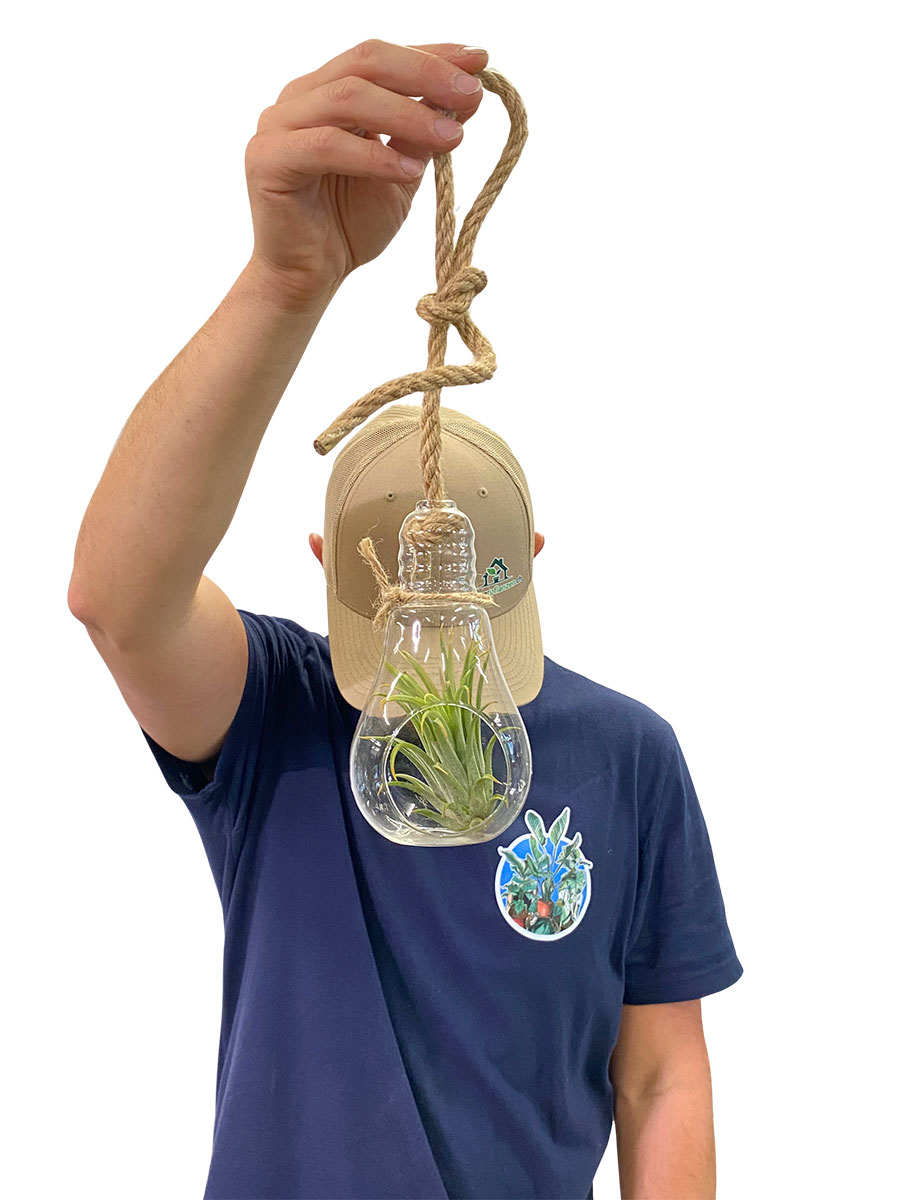
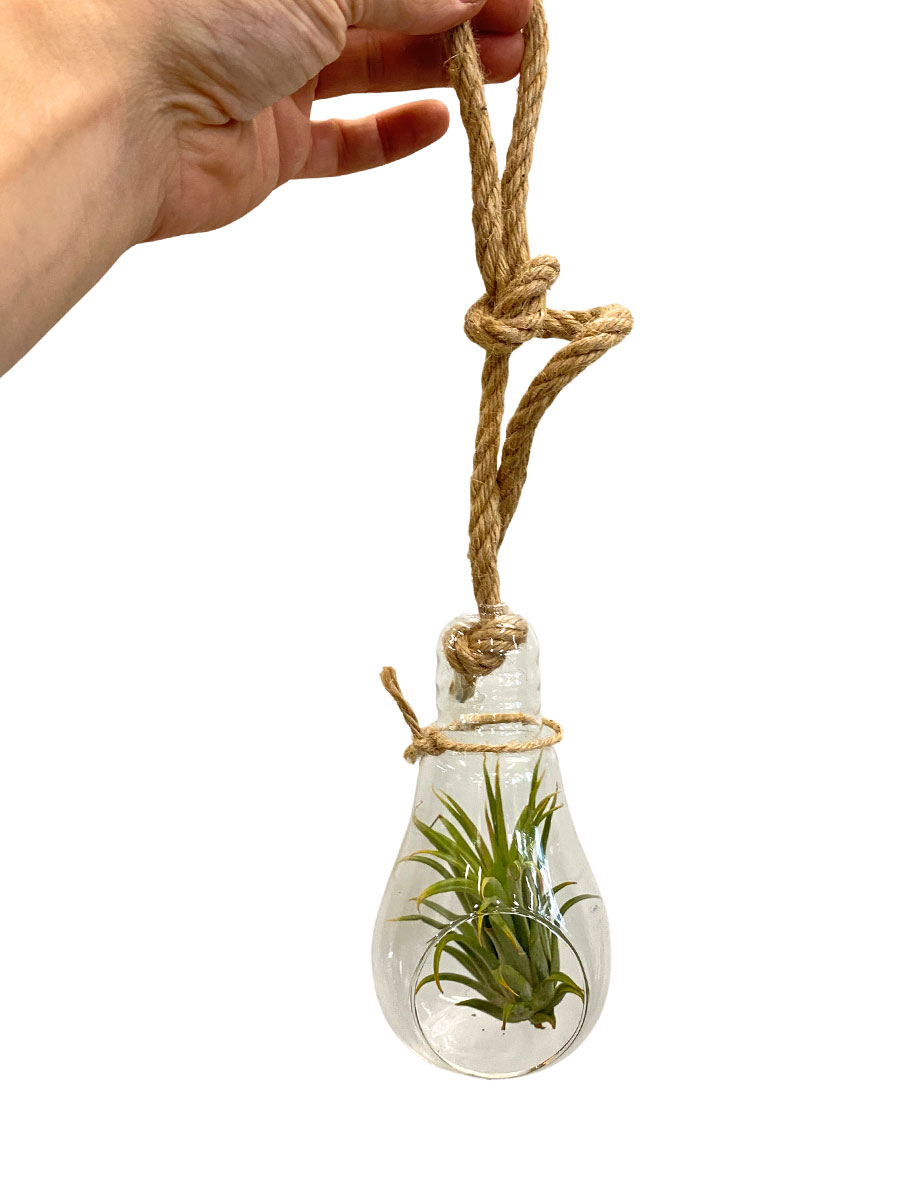
Hanging Pot - Tillandsia Glass Lamp

Topfdurchmesser 8cm

Topfhöhe ab Boden 13cm ±

History of the Tillandsia in a glass lamp Tillandsias, also known as air plants, originally come from Central and South America and belong to the bromeliad family. In the wild, they often grow without soil on trees or rocks. Decorated in a glass lamp , they become a modern, minimalist houseplant with a wow effect – a real eye-catcher that combines nature and design. Care as a houseplant: Light: Bright spot with plenty of indirect light; no blazing sun through glass. Temperature: Ideally 18–26 °C; no draughts or cold windowsills. Humidity: Medium to high; glass lamps can quickly become too dry – air regularly. Substrate: No substrate needed – simply place in the lamp. Watering: Mist or briefly dip in low-lime water 1–2 times a week. Then let it dry well to prevent mould. Feeding: Every 4–6 weeks, add a weakly dosed tillandsia fertiliser when misting. Special features: These houseplants need fresh air – open the glass regularly. Overwintering tips: Bright spot, minimal watering, no cold below 12 °C. Tillandsias in glass lamps are modern houseplants that impress with their unusual growth and easy-care nature.

CHF 19.90*

Delivery time 2 - 7 working days

Available
Bestseller
Item no. 3408
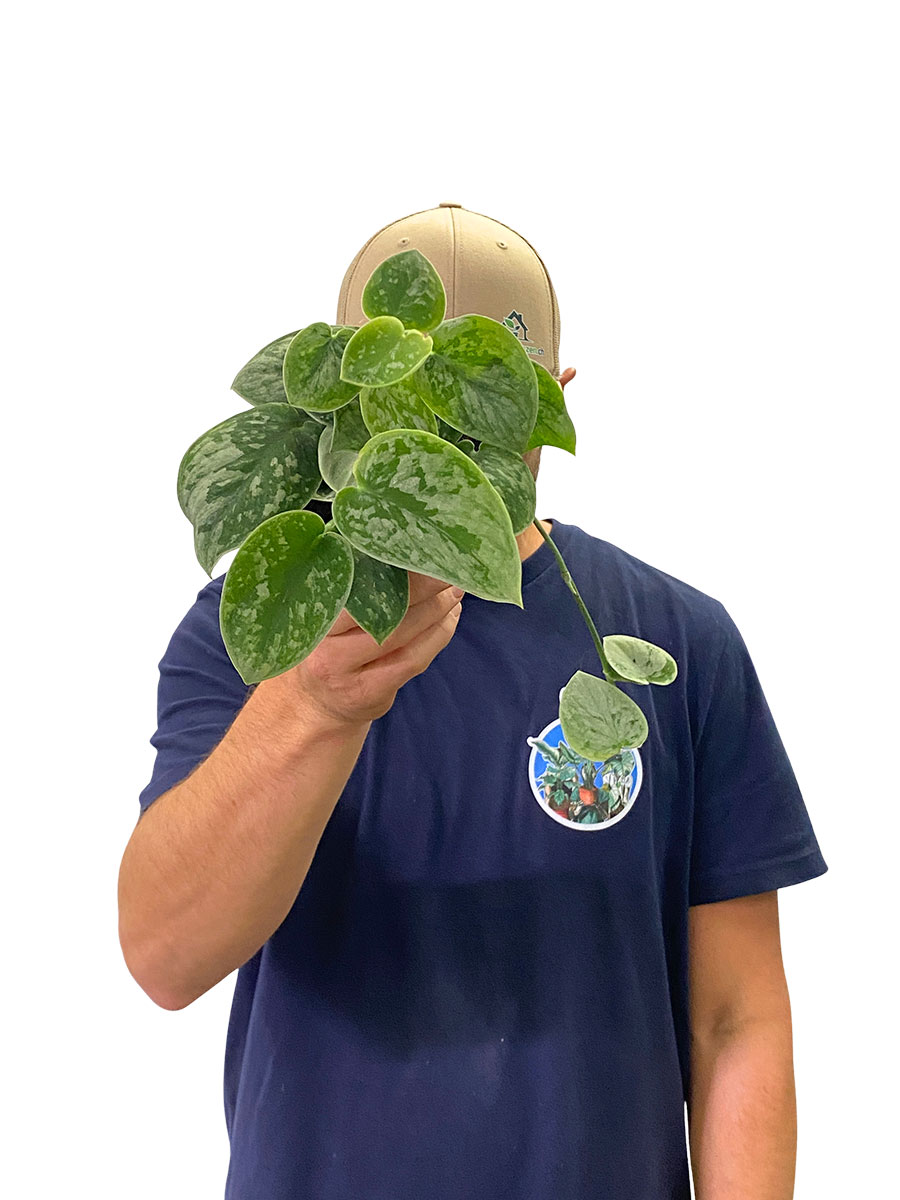
Scindapsus Silver Ann

Topfdurchmesser 11cm

Topfhöhe ab Boden 10cm ±

History of the Scindapsus Silver Ann The Scindapsus Silver Ann is an elegant houseplant characterised by its extraordinary, heart-shaped leaves with silvery marbling. This plant originally comes from the tropical rainforests of South-East Asia, where it grows as a climbing or trailing plant. It belongs to the arum family and, thanks to its robustness and decorative foliage, is very popular with houseplant lovers. The Scindapsus Silver Ann is particularly versatile and is perfect as a hanging plant, table decoration or green wall in modern living spaces. Care as a houseplant: Light: Bright to partially shaded spot; no direct sunlight. Temperature: Ideally 18–24 °C, at least 12 °C in winter. Humidity: Average to high; occasional misting promotes the plant's well-being. Substrate: Free-draining potting soil mixed with perlite or bark. Watering: Water moderately; the substrate should dry out slightly between waterings. Feeding: During the growing season, every 4–6 weeks with a liquid fertiliser for houseplants. Care as a terrarium plant: Light: Indirect light; grow lights can provide additional lighting. Temperature: Tropical conditions between 20–28 °C, at least 18 °C in winter. Humidity: High, ideally 60–80 %; regular misting or the use of a fogger is recommended. Substrate: A mix of potting soil, moss and perlite ensures optimal drainage and moisture regulation. Watering: Keep evenly moist, but avoid waterlogging. Terrarium conditions: This houseplant thrives best in a well-ventilated terrarium with high humidity.

CHF 12.90*

Delivery time 2 - 7 working days

Available
New
Item no. 3263
Philodendron Spiritus-Sancti

Topfdurchmesser 10.5cm

Topfhöhe ab Boden 20cm ±

History of the Philodendron Spiritus Sancti The Philodendron Spiritus Sancti is considered one of the rarest and most sought-after philodendrons in the world. It comes from the Brazilian state of Espírito Santo, where only a few specimens still exist in the wild. Its long, narrow, elegantly drooping leaves give it a majestic appearance. Because of its rarity, it is often grown as a collector's plant in protected indoor spaces or terrariums. Care as a houseplant: Light: Plenty of bright, indirect light; no direct sun. Temperature: 20–28 °C is ideal; do not keep below 18 °C. Humidity: High (above 70 %); a humidifier or daily misting is recommended. Substrate: Very airy substrate of soil, bark, perlite and moss. Watering: Keep evenly moist; the substrate must never dry out, but must not be waterlogged either. Feeding: Every 2–3 weeks with a weakly dosed liquid fertiliser during the growing season. Special features: This houseplant is sensitive to temperature fluctuations and needs stable conditions. Care as a terrarium plant: Light & climate: Warm, bright terrarium with high humidity (70–90 %) and good air circulation. Substrate & watering: Loose substrate of moss, bark and perlite, kept moist; mist evenly. Advantage: A terrarium makes it ideal for maintaining the constant humidity and warmth this rare species needs. The Philodendron Spiritus Sancti is an exclusive and demanding houseplant that thrives particularly well in a terrarium and makes collectors' hearts beat faster.

CHF 39.90*

Delivery time 2 - 7 working days

Available
Bestseller
Item no. 692
Hanging Pot - Scindapsus Pictus Argyraeus

Topfdurchmesser 14cm

Topfhöhe ab Boden 40cm ±

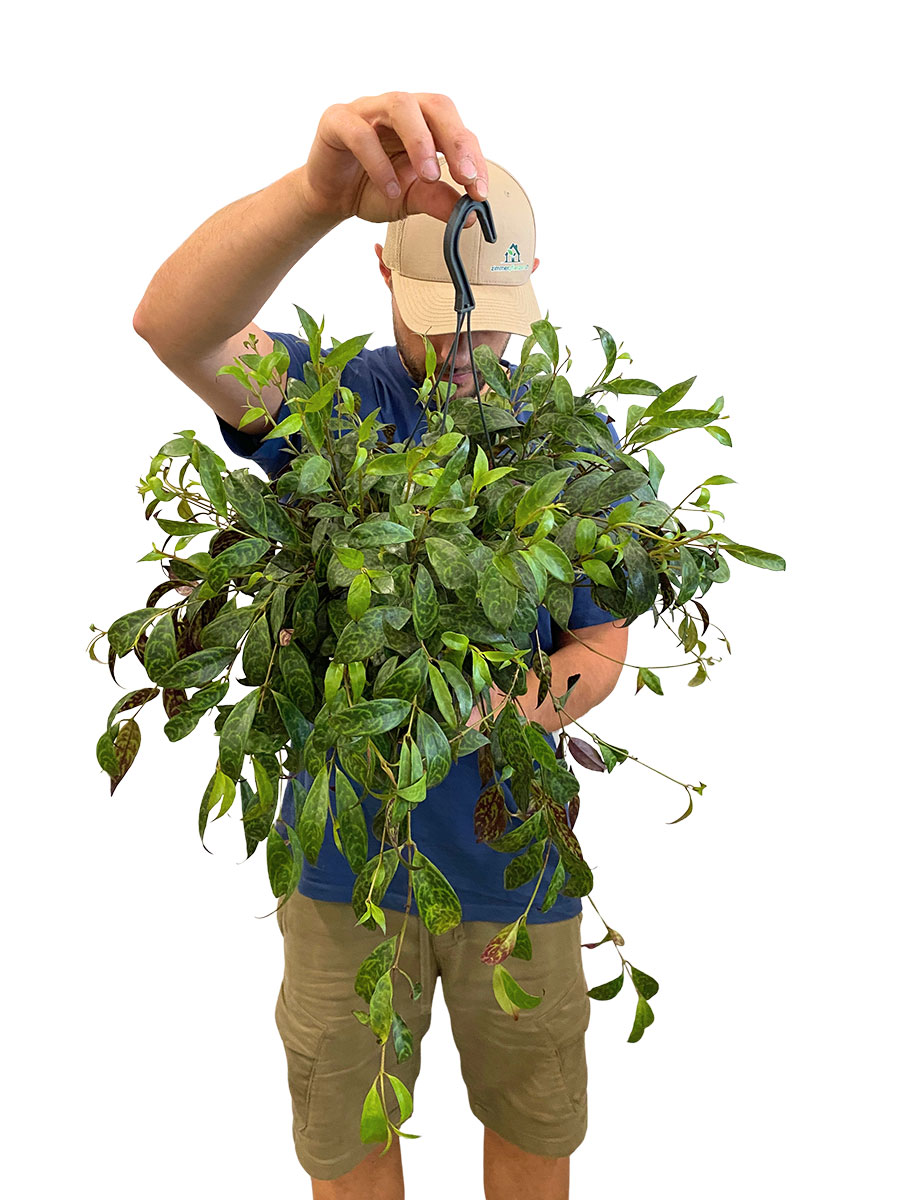
History of the Scindapsus pictus 'Argyraeus' The Scindapsus pictus 'Argyraeus' is a popular climbing plant known for its striking, heart-shaped leaves decorated with silver and green spots. This tropical plant originally comes from the rainforests of Southeast Asia and belongs to the Araceae family. Its decorative foliage and easy-care nature make it a favourite choice for houseplant lovers and collectors. Care as a houseplant: Light: Bright spot with indirect light; avoid direct sun, as it can scorch the leaves. Temperature: Ideally 18–28 °C; do not keep below 15 °C. Humidity: Prefers moderate to high humidity; occasional misting is beneficial. Substrate: Loose, free-draining substrate, e.g. a mix of potting soil, perlite and orchid bark. Watering: Water moderately; the substrate should dry out slightly between waterings; avoid waterlogging. Feeding: During the growing season (spring to autumn), every 2–4 weeks with a liquid fertiliser for foliage plants. Special features: This plant grows best when placed on a climbing support or in a terrarium, where it can fully develop its natural growth. Care as a terrarium plant: Light: Bright, indirect light or artificial lighting in the terrarium. Temperature: 22–28 °C, not below 15 °C at night. Humidity: High humidity (60–80 %); regular misting or a fogger is recommended. Substrate: Free-draining, moisture-retaining terrarium substrate, e.g. coconut fibre and orchid bark. Watering: Keep evenly moist, but make sure no waterlogging occurs. Terrarium conditions: Ideal for tropical terrariums where the plant can grow on a climbing support or wall to show its natural growth. Overwintering tips: In winter, reduce watering and make sure the temperature does not fall below 15 °C. Scindapsus pictus 'Argyraeus' is a fascinating plant that enriches any room or terrarium with its silvery foliage.

CHF 29.90*

Delivery time 2 - 7 working days

Available
Bestseller
Item no. 889
Jewel Orchid Macodes Petula Emerald

Sphagnum

Topfdurchmesser 6cm

Topfhöhe ab Boden 8cm ±

History of the jewel orchid Macodes Petula Emerald The jewel orchid Macodes Petula Emerald is a fascinating orchid species that originally comes from the tropical forests of Southeast Asia. This rare houseplant is valued less for its flowers than for its breathtaking leaves. Its velvety, deep green leaves are streaked with a vivid golden or emerald-green vein pattern that looks like a web of glowing gemstones. It is a true gem among houseplants and delights plant lovers around the world. Care as a houseplant: Light: Bright to partially shaded spot without direct sunlight. Temperature: Ideally 20–26 °C, at least 18 °C in winter. Humidity: High; regular misting or a humidifier is ideal. Substrate: Loose, orchid-specific substrate, e.g. a mix of bark, sphagnum moss and perlite. Watering: Keep evenly moist, ideally with decalcified water, but avoid waterlogging. Feeding: Every 4 weeks with a weak orchid fertiliser during the growing phase. Care as a terrarium plant: Light: Subdued, indirect light, supplemented by grow lights. Temperature: Tropical conditions between 22–26 °C, at least 20 °C in winter. Humidity: Very high, ideally 70–90 %, ensured by a fogger or regular misting. Substrate: Orchid substrate enriched with moss for additional moisture retention. Watering: Water moderately; the substrate should be evenly moist but not wet. Terrarium conditions: This houseplant feels particularly at home in an environment with high humidity and constant warmth.

CHF 19.90*

Delivery time 2 - 7 working days

Available
Bestseller
Item no. 3371
Sweetheart Plant Hoya Kerrii Splash

Topfdurchmesser 6cm

Topfhöhe ab Boden 10cm ±

History of the Hoya kerrii Splash The Hoya kerrii Splash is a special variety of the sweetheart plant that instantly stands out with its heart-shaped leaves and unique silver speckles. This houseplant originally comes from the tropical forests of South-East Asia, where it grows as a climbing and trailing plant. Its unmistakable look makes it a sought-after collector's item among plant lovers. The Hoya kerrii Splash is not only decorative but also easy to care for, making it an ideal houseplant for any living space. Care as a houseplant: Light: A bright spot with indirect light shows off the silver speckles particularly well; direct sun should be avoided. Temperature: The ideal temperature is between 18–26 °C; it does not tolerate cold and should be protected from temperatures below 15 °C. Humidity: Normal indoor air is sufficient, but the houseplant thrives particularly well in higher humidity. Substrate: A free-draining substrate, for example a mix of orchid and cactus compost, provides optimal growing conditions. Watering: The Hoya kerrii Splash prefers moderate watering. The substrate should dry out completely before the next watering; waterlogging must be avoided. Feeding: Feed lightly every 4 weeks during the growing phase, ideally with an orchid or cactus fertiliser. Special features: The Hoya kerrii Splash is a fascinating houseplant that is a real eye-catcher thanks to its silver speckles and extraordinary leaf shape. Overwintering tips: In winter, the Hoya kerrii Splash needs a bright spot and reduced watering. The temperature should not drop below 15 °C. With the right care, this special houseplant will remain a long-standing companion and a highlight in any collection.

CHF 8.90*

Delivery time 2 - 7 working days

Available
Bestseller
Item no. 372
Monstera Deliciosa

Topfdurchmesser 17cm

Topfhöhe ab Boden 60cm ±

History of the Monstera deliciosa Monstera deliciosa, also known as the Swiss cheese plant, comes from the tropical rainforests of Central and South America. This iconic houseplant is known for its large, glossy green leaves with decorative splits and holes. In the wild, it climbs up trees and can develop huge leaves. Thanks to its easy-care nature and exotic appearance, it is one of the most popular houseplants worldwide. Care as a houseplant: Light: Bright to partially shaded spot; no direct midday sun. Temperature: Ideally 18–27 °C; do not keep below 12 °C. Humidity: Prefers high humidity; mist occasionally. Substrate: Loose, free-draining substrate with a high organic content. Watering: Water moderately, only once the top layer of soil is dry; avoid waterlogging. Feeding: Every 2–4 weeks with liquid fertiliser from spring to autumn. Special features: This houseplant forms aerial roots, which should not be cut off but can be guided into the soil. Overwintering tips: Water less and ensure constant temperatures (at least 12 °C). Provide as much light as possible in winter, too. Monstera deliciosa is an impressive, easy-care houseplant that beautifies any room with its extraordinary leaves.

CHF 39.90*

Delivery time 2 - 7 working days

Available
Bestseller
Item no. 1223
Monstera Adansonii Variegata

Topfdurchmesser 12cm

Topfhöhe ab Boden 25cm ±

History of the Monstera adansonii variegata Monstera adansonii variegata is a sought-after, rare variety of the popular Monstera adansonii. Its unique variegated leaves, with a mix of deep green and creamy white to yellowish colour variations, make it one of the most fascinating houseplants. Monstera adansonii originally comes from the tropical rainforests of Central and South America, where it grows as a climbing plant in its natural environment. Thanks to its slow growth rate and special play of colours, the variegated version is highly prized, above all by houseplant lovers worldwide. Care as a houseplant: Light: Bright spot with indirect light; direct sun can damage the delicate variegation. Perfect for houseplants that love light. Temperature: A comfortable 20–28 °C is ideal; temperatures should not drop below 18 °C, even in winter. Humidity: High humidity of 60–80 % is ideal; as with many tropical houseplants, regular misting helps. Substrate: A loose, free-draining substrate, such as a mix of potting soil, perlite and a little bark, ensures healthy roots. Watering: Water evenly so that the substrate stays slightly moist; be sure to avoid waterlogging. Preferably use low-lime water. Feeding: During the growing season, every 2–4 weeks with a fertiliser for houseplants that need plenty of energy for their variegation. Special features: Monstera adansonii variegata is one of those houseplants that enrich any room with their striking looks while being a highlight in any collection. Care as a terrarium plant: Light: Indirect light, perfect for a well-lit tropical terrarium. Temperature: Tropical temperatures of 22–28 °C; not below 20 °C at night. Humidity: Very high humidity of 70–90 % supports the growth of this exceptional plant. Substrate: A mix of moist sphagnum moss, coconut fibre and bark is ideal for terrarium plants. Watering: Always keep the substrate in the terrarium slightly moist, but avoid waterlogging. Terrarium conditions: In a tropical terrarium, Monstera adansonii variegata reaches its full potential and shines as an eye-catcher among other terrarium plants. Overwintering tips: Even in winter, Monstera adansonii variegata needs warm temperatures and sufficient moisture. Reduce watering slightly, but keep the substrate moist. This variegated version is a particularly sought-after houseplant and, with its exotic appearance, is both a special challenge and a joy for plant lovers.

CHF 39.90*

Delivery time 2 - 7 working days

Available
Bestseller
Item no. 1032
Aglaonema Jungle Red

Topfdurchmesser 12cm

Topfhöhe ab Boden 40cm ±

History of the Aglaonema Jungle Red Aglaonema Jungle Red is a decorative houseplant from the Chinese evergreen genus and delights with its intensely coloured leaves. The elongated, glossy leaves show a striking interplay of rich green and strong red, giving the plant an exotic and lively accent in any living space. Aglaonema species originally come from the tropical rainforests of Southeast Asia, where they thrive in the shady understorey. Aglaonema Jungle Red is particularly popular as a houseplant because it is robust and copes well even with less light. Care as a houseplant: • Light: Bright to partially shaded position; avoid direct midday sun. • Temperature: Ideally 18–27 °C; temperatures below 15 °C should be avoided. • Humidity: Medium to slightly increased; occasional misting can promote the plant's well-being. • Substrate: Loose, free-draining houseplant substrate, ideally mixed with a little perlite or coir fibre. • Watering: Water moderately; let the substrate dry out slightly between waterings. Avoid waterlogging. • Feeding: During the growing season, every 2–4 weeks with a liquid fertiliser for foliage plants. • Special features: Aglaonema Jungle Red is considered particularly easy to care for and is therefore also well suited to less experienced plant lovers. Overwintering tips: Water a little less in winter and make sure the plant is not kept too cool. Temperatures should stay as constant as possible above 15 °C. Aglaonema Jungle Red is an attractive houseplant whose richly coloured leaves bring tropical flair to any living space.

CHF 24.90*

Delivery time 2 - 7 working days

Available
Item no. 3460
Begonia Maculata Mega Dot

Topfdurchmesser 17cm

Topfhöhe ab Boden 40cm ±

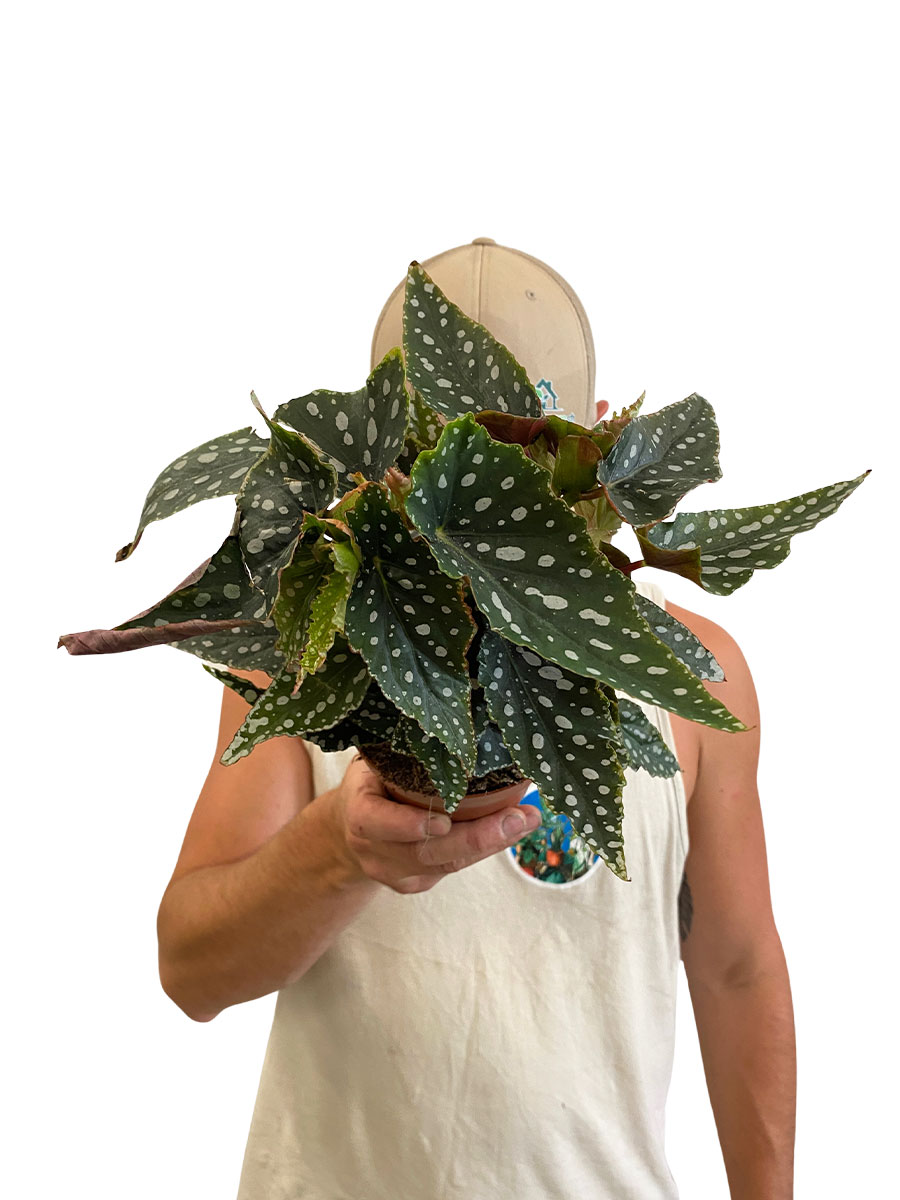
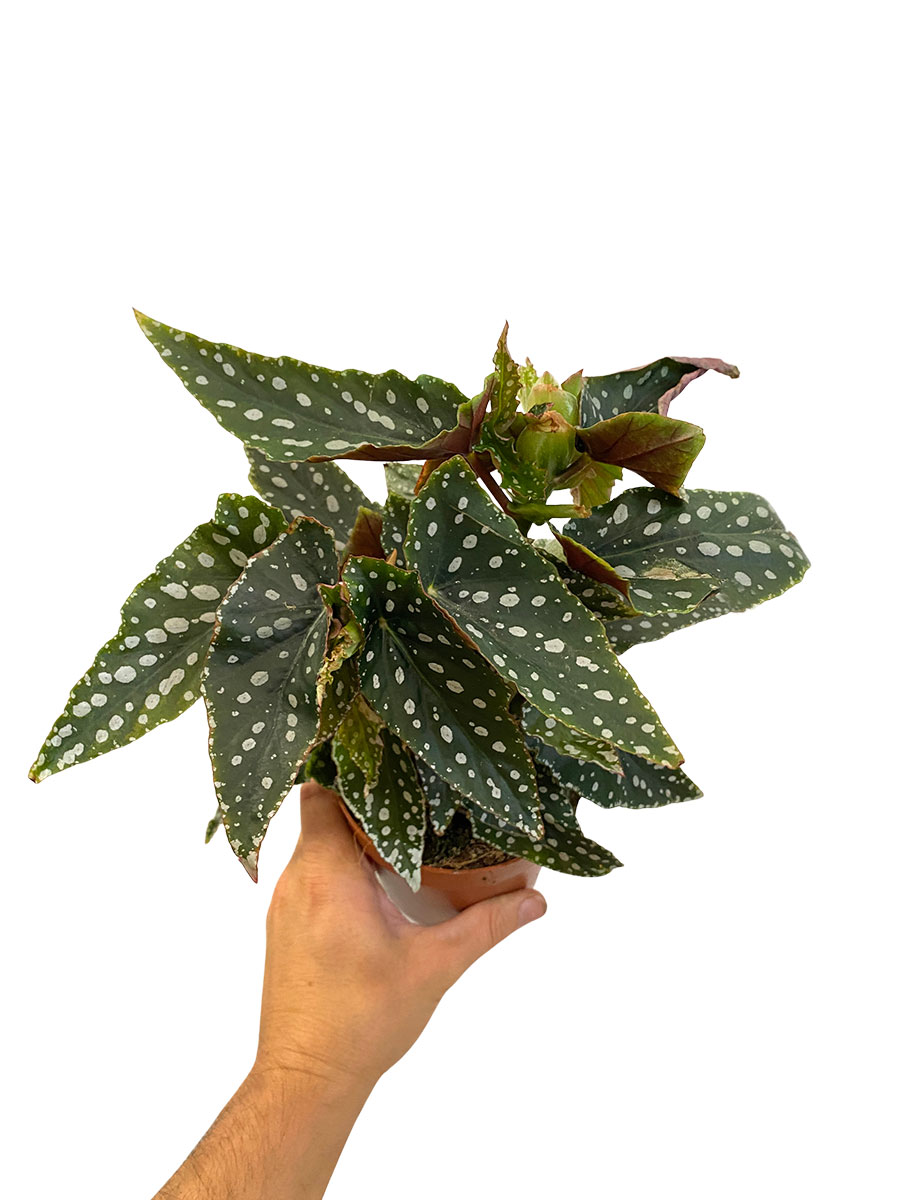
History of the Begonia maculata 'Mega Dot' The Begonia maculata Mega Dot is a particularly striking cultivar. The species originally comes from the tropical rainforests of Brazil. The 'Mega Dot' variety stands out with extra-large, silvery-white spots on olive-green leaves and intensely red leaf undersides. This makes it one of the most decorative houseplants and a real eye-catcher in any collection. Care as a houseplant: Light: Bright to partial shade, plenty of indirect light; avoid direct sun. Temperature: Ideally 18–25 °C; not below 15 °C. Humidity: Medium to high; avoid dry air from heating where possible. Substrate: Loose, free-draining substrate with good drainage. Watering: Water evenly; the top layer of soil may dry out slightly. Avoid waterlogging. Feeding: Every 2–3 weeks during the growing season with a mild liquid fertiliser. Special features: This houseplant grows upright, can be supported if needed and rewards a bright spot with intense spotted markings. Overwintering tips: In winter, water more sparingly and do not keep it colder than 15 °C. The Begonia maculata Mega Dot is an elegant houseplant that grows reliably with a little attention and shows off its spectacular leaf markings.

CHF 49.90*

Delivery time 2 - 7 working days

Available
Item no. 3004
Hanging Pot - Epiphyllum Chrysocardium

Topfdurchmesser 14cm

Topfhöhe ab Boden 30cm ±

History of the Epiphyllum chrysocardium (fern leaf cactus) The Epiphyllum chrysocardium, also known as fern leaf cactus, originally comes from the tropical rainforests of Central America. It is not a typical cactus – it grows epiphytically (on trees) and impresses with its deeply lobed, fern-like leaves. Thanks to its unusual growth habit and its night-blooming flowers, the plant quickly became a sought-after speciality among houseplant collectors. Care as a houseplant: Light: Bright spot with plenty of indirect light; avoid direct sun. Temperature: Ideally 18–26 °C; avoid draughts and temperatures below 15 °C. Humidity: Medium to high; regular misting or a spot in the bathroom is beneficial. Substrate: Loose, airy substrate as for orchids or epiphytes (e.g. with bark, perlite, coir). Watering: Water moderately; keep the substrate slightly moist but not soaked. Feeding: Feed lightly every 4 weeks during the growing season. Special features: A special houseplant with a bizarre leaf structure – well suited as a trailing plant or hanging basket plant. Overwintering tips: In winter, place it somewhere cooler (approx. 15–18 °C) and water less. This unusual houseplant prefers constant conditions without extreme fluctuations.

CHF 49.90*

Delivery time 2 - 7 working days

Available
Bestseller
Item no. 1381
Strelitzia Nicolai

Topfdurchmesser 17cm

Topfhöhe ab Boden 60cm ±

History of the Strelitzia nicolai Strelitzia nicolai, also known as the white bird of paradise, comes from the tropical and subtropical regions of South Africa. With its imposing, banana-like leaves and majestic growth, it is an impressive houseplant that brings a touch of the exotic and elegance to any room. Its ability to thrive even in large tubs makes it an ideal choice for interiors and bright conservatories. Care as a houseplant: Light: Very bright spot, ideally with direct sunlight, e.g. in front of a south-facing window. Temperature: Ideally 20–28 °C, at least 10–12 °C in winter. Humidity: Average to slightly increased; occasional misting is beneficial. Substrate: Free-draining, nutrient-rich substrate, e.g. potting soil mixed with sand or perlite. Watering: Water regularly and let the substrate dry out slightly between waterings. Avoid waterlogging. Feeding: Every 2–4 weeks during the growing season with a liquid foliage plant fertiliser. Repotting: Every 2–3 years into a larger pot with fresh soil. Care as a container/seasonal plant: Light: In summer, happy to be placed outdoors in a sunny, sheltered spot. Temperature: Sensitive to temperatures below 10 °C, so bring indoors in good time. Watering: Water regularly while avoiding waterlogging. Outdoors, drainage must work well. Feeding: Every 2 weeks during the growing season to support vigorous growth. Overwintering: Overwinter in a bright room at 10–15 °C with reduced watering.

CHF 29.90*

Delivery time 2 - 7 working days

Available
Bestseller
Item no. 3252
Calathea Roseopicta Crimson

Topfdurchmesser 14cm

Topfhöhe ab Boden 40cm ±

History of the Calathea roseopicta 'Crimson' Calathea roseopicta 'Crimson' is a striking houseplant from the tropical rainforests of South America. It belongs to the arrowroot family (Marantaceae) and is known for its large, velvety leaves in deep dark red with delicate, lighter veins. Like many Calathea species, it follows a day-night rhythm and moves its leaves depending on the light – which is why it is also called a 'prayer plant'. This exotic beauty is a popular choice among lovers of tropical houseplants. Care as a houseplant: Light: Bright to partially shaded spot without direct sun. Temperature: Ideally 18–26 °C; avoid temperatures below 15 °C. Humidity: High (60–80 %); regular misting or a humidifier is recommended. Substrate: Loose, humus-rich substrate with good drainage, e.g. a mix of potting soil, coconut fibre and perlite. Watering: Keep evenly moist but avoid waterlogging; ideally water with soft, low-lime water. Feeding: From spring to autumn, every 2–4 weeks with a weak dose of liquid fertiliser. Special features: This houseplant is sensitive to dry air and cold draughts – a sheltered spot with high humidity is ideal. Care as a terrarium plant: Light: Bright, indirect light; artificial lighting possible in a terrarium. Temperature: 22–28 °C during the day, not below 18 °C at night. Humidity: Very high (70–90 %), making it perfect for humid terrariums. Substrate: Loose, well-aerated terrarium substrate with high moisture retention. Watering: Keep evenly moist, but avoid waterlogging. Terrarium conditions: Particularly well suited to tropical rainforest terrariums with high humidity. Overwintering tips: The temperature should never drop below 15 °C. During the heating season, ensure sufficient humidity to prevent brown leaf edges. Calathea roseopicta 'Crimson' is a fascinating houseplant for anyone who loves tropical elegance.

CHF 29.90*

Delivery time 2 - 7 working days

Available
Bestseller
Item no. 1253
Baby Alocasia Frydek Variegata

Topfdurchmesser 6cm

Topfhöhe ab Boden 15cm ±

History of the Baby Alocasia Frydek VariegataThe Baby Alocasia Frydek Variegata is a rare and sought-after variety of Alocasia micholitziana. It originally comes from the tropical rainforests of Asia and delights plant lovers with its velvety, dark green leaves with unique creamy white variegation. Despite its exotic nature, this miniature version is particularly valued as a houseplant or in terrariums thanks to its decorative leaves and compact growth.Care as a houseplant:Light: Bright, indirect spot, no direct sun.Temperature: Ideally 20–26 °C, no temperatures below 18 °C.Humidity: High, at least 60 %; regular misting recommended.Substrate: Loose, free-draining substrate, e.g. potting soil with perlite, sphagnum and coconut fibre.Watering: Keep evenly moist, but avoid waterlogging.Feeding: Every 4–6 weeks with a weak foliage plant fertiliser during the growing phase.Care as a terrarium plant:Light: Indirect lighting from grow lights, ideal for tropical plants.Temperature: Constantly between 22–26 °C.Humidity: 70–90 %, keep constantly high by misting or using a fogger.Substrate: Free-draining terrarium mix, e.g. with added bark or moss.Watering: Water moderately; keep the substrate evenly moist but not soaked.Terrarium conditions: Ensure compact growth and good air circulation, and leave enough space for the leaves.

CHF 19.90*

Delivery time 2 - 7 working days

Available
Bestseller
Item no. 3050
Alocasia Frydek Variegata

Topfdurchmesser 12cm

Topfhöhe ab Boden 25cm ±

History of the Alocasia Frydek VariegataThe Alocasia Frydek Variegata is a rare and sought-after variety of Alocasia micholitziana. Originally native to the tropical rainforests of Asia, it delights plant lovers with its velvety, dark green leaves with unique creamy white variegation. Despite its exotic nature, this miniature version is particularly valued as a houseplant or in terrariums thanks to its decorative leaves and compact growth.Care as a houseplant:Light: Bright, indirect spot, no direct sun.Temperature: Ideally 20–26 °C, no temperatures below 18 °C.Humidity: High, at least 60 %; regular misting recommended.Substrate: Loose, free-draining substrate, e.g. potting soil with perlite or coconut fibre.Watering: Keep evenly moist, but avoid waterlogging.Feeding: Every 4–6 weeks with a weak foliage plant fertiliser during the growing phase.Care as a terrarium plant:Light: Indirect lighting from grow lights, ideal for tropical plants.Temperature: Constantly between 22–26 °C.Humidity: 70–90 %, keep constantly high by misting or using a fogger.Substrate: Free-draining terrarium mix, e.g. with added bark or moss.Watering: Water moderately; keep the substrate evenly moist but not soaked.Terrarium conditions: Ensure compact growth and good air circulation, and leave enough space for the leaves.

CHF 29.90*

Delivery time 2 - 7 working days

Available
New
Item no. 3183
Baby Philodendron Caramel Marble

Topfdurchmesser 6cm

Topfhöhe ab Boden 20cm ±

History of the Philodendron Caramel Marble The Philodendron Caramel Marble is a very rare and highly sought-after collector's houseplant. It captivates with its extraordinary variegated leaves in warm caramel, yellow and cream tones alternating with rich green. This hybrid descends from tropical philodendron species and is grown mainly by enthusiasts, as it is only available in limited quantities and is considered a real novelty among philodendrons. Care as a houseplant: Light: Very bright spot with plenty of indirect light so that the variegation stays strong; avoid direct sun. Temperature: Ideally 20–28 °C; do not keep below 18 °C. Humidity: High (over 60 %); misting or a humidifier supports the leaf pattern. Substrate: Loose, airy substrate (e.g. a mix of soil, bark, perlite, coconut fibre). Watering: Water evenly but carefully; the substrate should never dry out completely, but should not become waterlogged either. Feeding: Every 2–3 weeks with a nutrient-rich liquid fertiliser during the growing season. Special features: This houseplant grows slowly and should not be moved too often, as it is sensitive to changes of location. Overwintering tips: In winter, keep temperatures no lower than 18 °C, water less and continue to ensure high humidity. The Philodendron Caramel Marble is a rare, precious houseplant for collectors that fascinates with its unique play of colours.

CHF 39.90*

Delivery time 2 - 7 working days

Available
Bestseller
Item no. 3242
Alocasia Frydek

Topfdurchmesser 12cm

Topfhöhe ab Boden 35cm ±

History of the Alocasia Frydek The Alocasia Frydek is an elegant houseplant with deep green, velvety leaves and striking white veins. It originally comes from the tropical rainforests of Southeast Asia and belongs to the arum family. Its velvety texture and decorative effect make it a popular plant among lovers of unusual houseplants. Care as a houseplant: Light: Bright spot with plenty of indirect light; avoid direct sun. Temperature: 18–26 °C; not below 16 °C. Humidity: High (over 60 %); ideally with a humidifier or daily misting. Substrate: Loose and free-draining, e.g. of soil, perlite and a little bark. Watering: Water moderately; the top layer of soil should dry out slightly between waterings. Feeding: Every 2–4 weeks with liquid fertiliser during the growing season. Special features: As a houseplant it is somewhat sensitive – protect it from draughts, dry air and waterlogging. Care in a terrarium: Suitable for: Warm, humid tropical terrariums. Care tip: Consistently high humidity and constant temperatures promote healthy growth. The Alocasia Frydek is a houseplant full of character with great ornamental value – ideal for anyone who loves extraordinary foliage plants.

CHF 24.90*

Delivery time 2 - 7 working days

Available
New
Item no. 4385
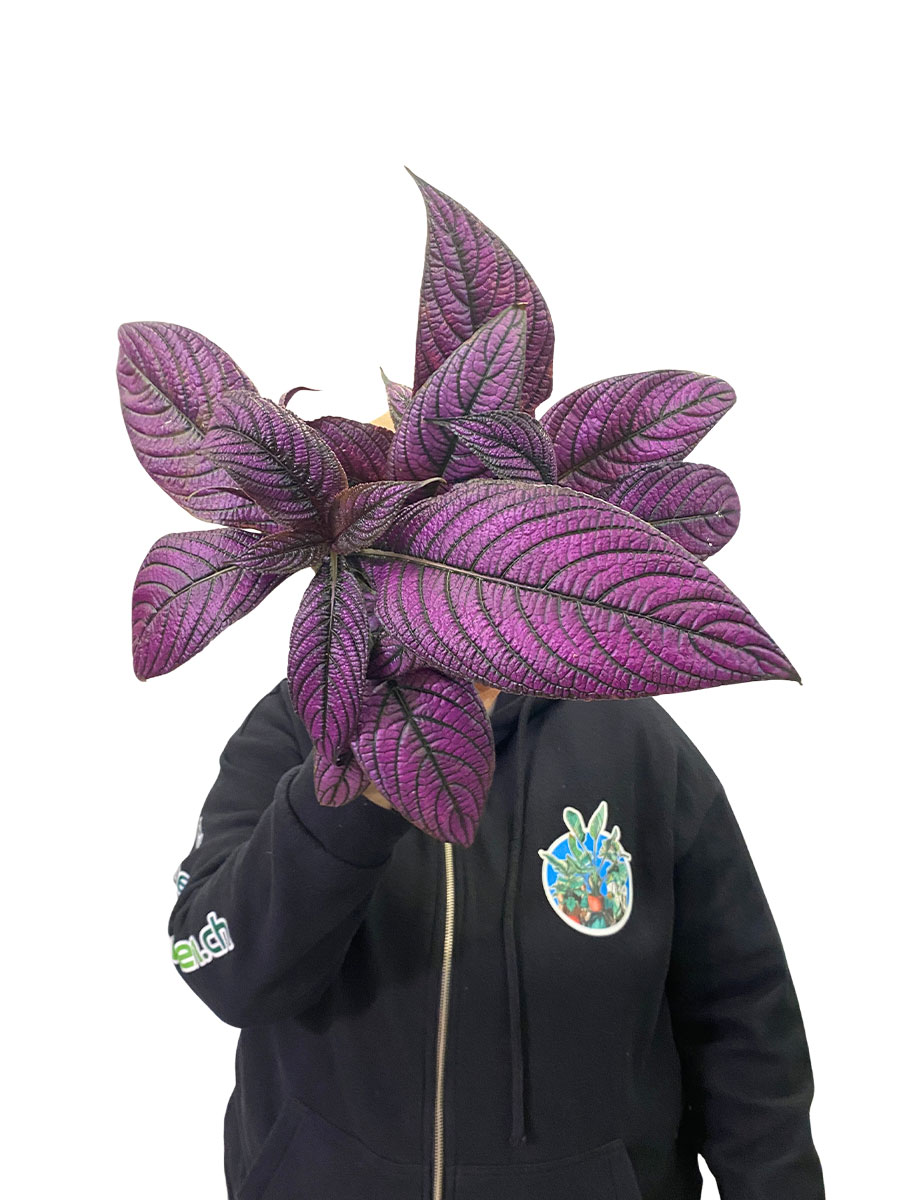
Strobilanthes Metallica

Topfdurchmesser 13cm

Topfhöhe ab Boden 20cm ±

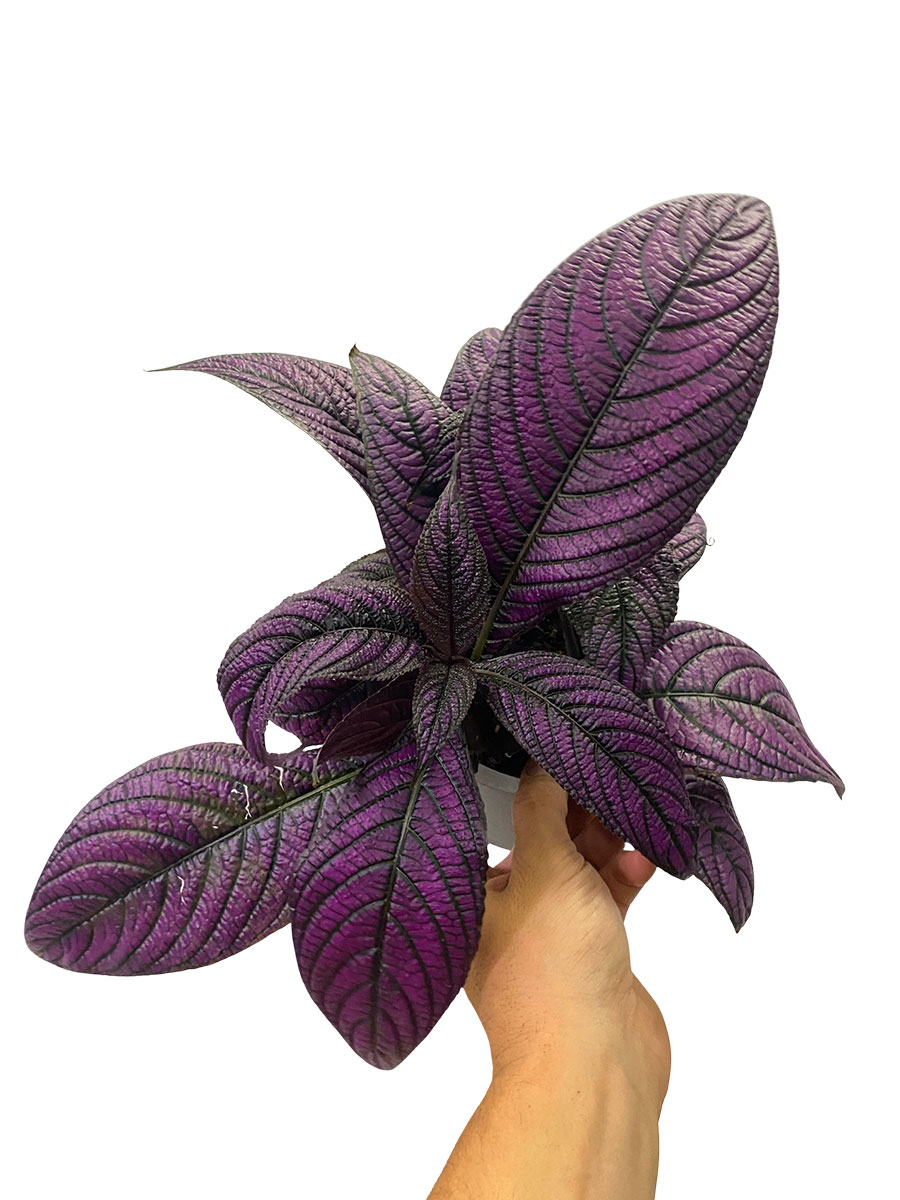
History of the Strobilanthes MetallicaStrobilanthes Metallica, also known as Persian shield, originally comes from Myanmar and belongs to the acanthus family (Acanthaceae). Its large, velvety-looking leaves with a metallic shimmer in violet, purple and silver are particularly striking. The colour effect changes depending on the light, making the plant a very special eye-catcher.Care as a houseplant:Light: Bright to very bright, but without strong midday sun. Good light promotes intense colouring.Temperature: Ideally 18–28 °C. Avoid temperatures below 15 °C.Humidity: Increased humidity of around 60–80 % is ideal.Substrate: Use a loose, humus-rich and free-draining substrate.Watering: Keep evenly slightly moist, but avoid waterlogging. Do not let the substrate dry out completely.Feeding: Feed lightly with foliage plant fertiliser every 2–4 weeks during the growing season.Special features: With too little light, the intense metallic colouring can fade. Regular trimming encourages compact, bushy growth.Overwintering tips:In winter, continue to keep it bright and warm and reduce watering slightly. Feeding can be paused during the low-light period. Avoid cold draughts and temperatures below 15 °C.

CHF 29.90*

Delivery time 2 - 7 working days

Available
Bestseller
Item no. 1655
Alocasia Platinum

Topfdurchmesser 14cm

Topfhöhe ab Boden 40cm ±

History of the Alocasia Platinum The Alocasia Platinum is an elegant and rare houseplant from the tropical regions of Southeast Asia. It belongs to the arum family and is known for its silvery green, metallic shimmering leaves with striking veining. As a decorative novelty, it is especially sought after by collectors and brings an exotic flair to any home. Care as a houseplant: Light: Bright spot with plenty of indirect light; no direct sun. Temperature: Ideally 20–28 °C; not below 16 °C. Humidity: High (over 60 %); ideally with a humidifier or daily misting. Substrate: Free-draining, loose mix of soil, coir, perlite and bark. Watering: Keep the substrate evenly slightly moist; no waterlogging. Feeding: Every 2–3 weeks with a weakly dosed fertiliser during the growing season. Special features: This houseplant is somewhat more demanding, but rewards good care with spectacular growth. Overwintering tips: Water a little less in winter and ensure consistently warm conditions (not below 16 °C). The Alocasia Platinum is a tropical beauty among houseplants – perfect for plant lovers looking for something special.

CHF 39.90*

Delivery time 2 - 7 working days

Available
New
Item no. F1687
Sensitive Plant Mimosa Pudica

Topfdurchmesser 16cm

Topfhöhe ab Boden 20cm ±

Ready-made planting

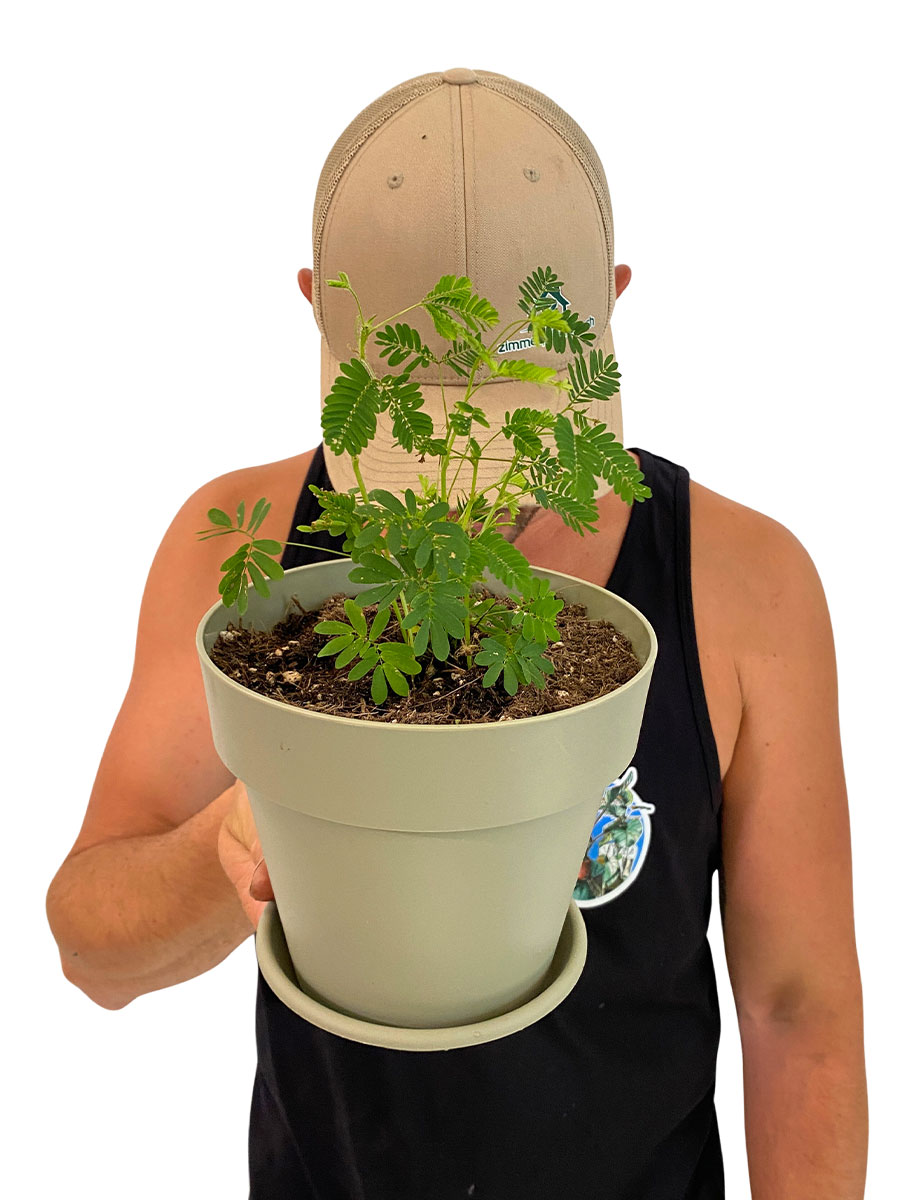
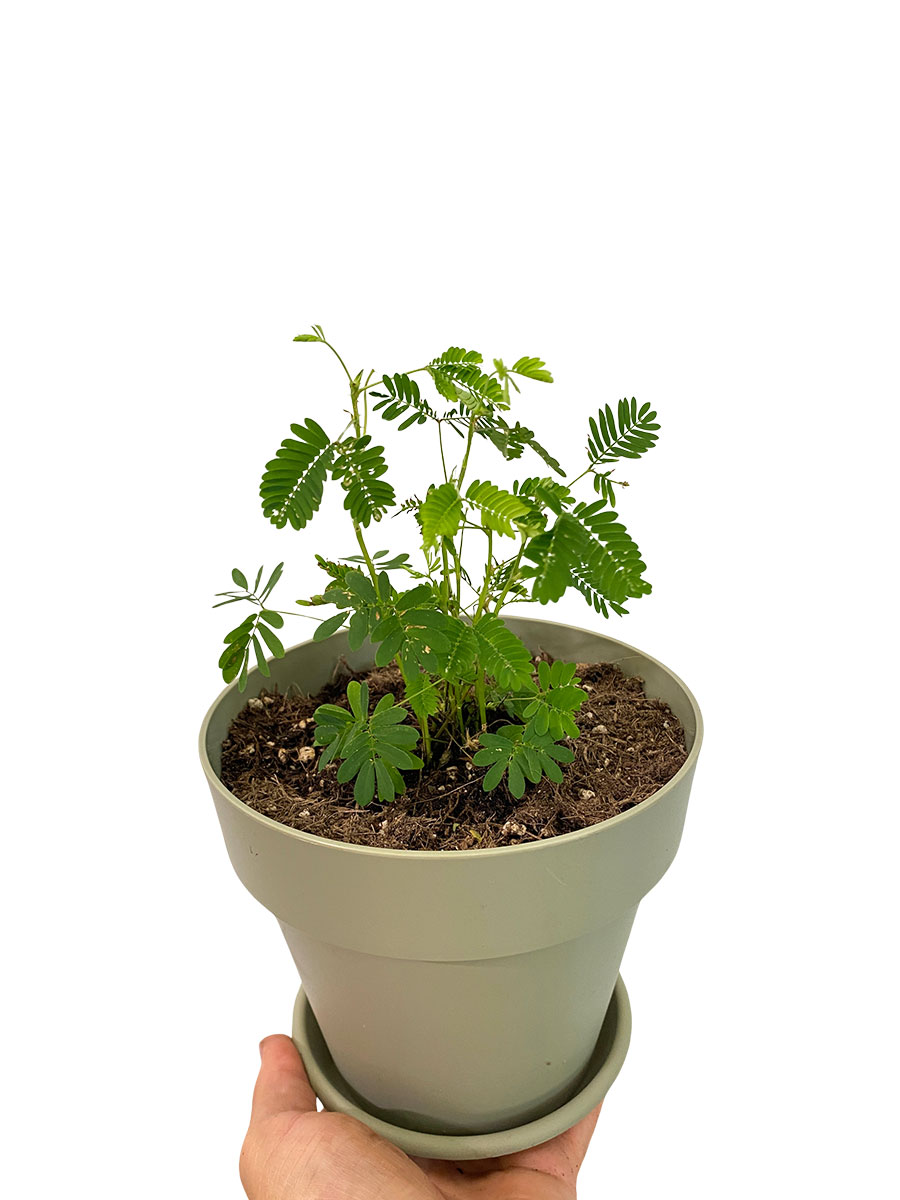
History of the sensitive plant (Mimosa pudica) The sensitive plant, botanically Mimosa pudica, is a fascinating tropical plant that originally comes from South America. It became famous for its extraordinary reaction to touch: its leaves fold up within seconds, which has also earned it the name 'touch-me-not'. This special feature makes it a popular houseplant, especially for children and plant lovers looking for something out of the ordinary. Care as a houseplant: Light: Very bright spot, happy with direct sun. Temperature: 18–28 °C; no temperatures below 15 °C. Humidity: Moderate to high; avoid dry air from heating. Substrate: Free-draining soil, e.g. potting soil with a little sand or perlite. Watering: Water regularly; the soil may dry out slightly, but not completely. No waterlogging! Feeding: Fertilise lightly every 2 weeks during the growing season. Special features: As a houseplant it is rather short-lived, but can easily be grown again from seed. Overwintering tips: In winter, keep it bright and warm (min. 15 °C), water less, but do not let it dry out. 

CHF 39.90*

Delivery time 2 - 7 working days

Available
Bestseller
Item no. 3482
Dischidia Nummularia in a Snail Shell

Topfdurchmesser 8cm

Topfhöhe ab Boden 30cm ±

History of the Dischidia nummularia snail shell plant Dischidia nummularia is an easy-care, exotic trailing plant from the tropical rainforests of Southeast Asia. As an epiphyte, it grows on trees there. Its trademark is its small, thick, coin-like leaves that sit closely together. Thanks to its delicate appearance, it is very popular as a houseplant and terrarium plant. Care as a houseplant: Light: Bright spot with plenty of indirect light; avoid direct sunlight. Temperature: Ideally 20–26 °C, not below 18 °C in winter. Humidity: High, at least 60 %; regular misting promotes healthy growth. Substrate: Airy, free-draining substrate, e.g. a mix of sphagnum moss, orchid bark and perlite. Watering: Water moderately and let the substrate dry out slightly between waterings; be sure to avoid waterlogging. Feeding: During the growing season, every 4–6 weeks with a weakly dosed liquid houseplant fertiliser. Special features: Its elegant trailing growth makes this plant ideal for hanging baskets or raised planters. Care as a terrarium plant: Light: Diffused light or grow lights that give off little heat are optimal. Temperature: Evenly warm at 22–28 °C, at least 20 °C in winter. Humidity: Very high, ideally 70–90 %; regular misting or a fogger is recommended. Substrate: Loose mix of moss, bark pieces and perlite for good root aeration. Watering: Keep evenly slightly moist without waterlogging; short drying phases are important. Terrarium conditions: Dischidia nummularia grows particularly vigorously in a well-ventilated terrarium with stable warmth and high humidity. Overwintering tips: During the winter months, the Dischidia nummularia snail shell plant should not be kept colder than 18 °C as a houseplant and 20 °C in a terrarium. Watering can be reduced slightly without letting the substrate dry out completely. Continued high humidity is crucial to prevent leaf loss and stunted growth.

CHF 19.90*

Delivery time 2 - 7 working days

Available
Item no. 4233
Baby Monstera Bulbasaur

Topfdurchmesser 6cm

Topfhöhe ab Boden 12cm ±

History of the Monstera Bulbasaur The Monstera Bulbasaur is a rare and sought-after collector's plant that delights with its extraordinary leaf markings and vigorous growth. The large, heart-shaped leaves show fascinating patterns in various shades of green, streaked with light to dark green areas depending on the plant. As it matures, the plant develops the leaf holes and splits typical of Monstera, giving it a particularly exotic appearance. The Bulbasaur variety is very popular among collectors because of its unique look and rarity. Care as a houseplant: • Light: Bright spot with plenty of indirect light; avoid direct midday sun. • Temperature: Ideally 18–28 °C; temperatures below 16 °C should be avoided. • Humidity: Medium to high; 60 % or more is ideal. Increased humidity promotes healthy growth and large leaves. • Substrate: Loose, airy and free-draining aroid substrate, for example of potting soil, bark, perlite and coconut fibre. • Watering: Water moderately; let the substrate dry out slightly between waterings. Avoid waterlogging. • Feeding: During the growing season, feed every 2–4 weeks with a liquid fertiliser for foliage plants or aroids. • Special features: On a climbing support or moss pole, the plant develops larger leaves and a more pronounced leaf structure. The individual leaf markings make each plant unique. Overwintering tips: In winter, water a little less and continue to keep it in a bright, warm spot. Temperatures should stay as constantly as possible above 16 °C. Avoid draughts and cold spots.

CHF 49.90*

Delivery time 2 - 7 working days

Available
Bestseller
Item no. 3481
Dischidia Pectenoides in a Snail Shell

Topfdurchmesser 8cm

Topfhöhe ab Boden 30cm ±

History of the Dischidia snail shell plant The Dischidia snail shell plant (sail plant), known botanically as Dischidia pectenoides, is a fascinating houseplant famous for its unusual, hollow leaves. In their natural environment, these leaves provide shelter and a habitat for ants, which has earned it the nickname “snail shell plant”. It originally comes from the tropical rainforests of Southeast Asia, where it grows as an epiphyte on trees. Today, this unique plant is a popular choice for exotic houseplant collections, as it impresses both with its unusual appearance and its ease of care. Care as a houseplant: Light: Bright spot with plenty of indirect light; direct sun should be avoided. Temperature: Ideally 20–26 °C, at least 18 °C in winter. Humidity: High, ideally over 60 %; occasional misting supports its well-being. Substrate: Free-draining substrate, e.g. a mix of sphagnum moss, orchid bark and perlite. Watering: Water moderately; let the substrate dry out slightly between waterings. Avoid waterlogging. Feeding: Every 4–6 weeks with a weak liquid fertiliser for houseplants during the growing season. Special features: This houseplant prefers increased humidity and thrives particularly well in hanging baskets or on climbing supports. Care as a terrarium plant: Light: Diffused light or grow lights are ideal for growth. Temperature: Tropical temperatures between 22–28 °C, at least 20 °C in winter. Humidity: High, ideally 70–90 %. A fogger or regular misting is helpful. Substrate: An airy mix of moss, bark pieces and perlite ensures ideal drainage. Watering: Keep evenly moist without waterlogging. The substrate should dry out slightly between waterings. Terrarium conditions: The Dischidia snail shell plant thrives superbly in a well-ventilated terrarium with high humidity and stable temperatures. Overwintering tips: In winter, the Dischidia snail shell plant needs a minimum temperature of 18 °C as a houseplant and 20 °C in a terrarium. Watering can be reduced slightly during this phase, but high humidity should still be maintained to keep the plant healthy.

CHF 19.90*

Delivery time 2 - 7 working days

Available
Bestseller
Item no. 3525
Aglaonema Coco Melon

Topfdurchmesser 12cm

Topfhöhe ab Boden 40cm ±

History of the Aglaonema 'Cocomelon' Aglaonema 'Cocomelon' is a new and rare cultivar from the popular Aglaonema family, known for its decorative leaves and easy care. This houseplant originally comes from the tropical rainforests of Asia and is particularly popular for its striking leaf colouring. The mix of green, pink and creamy white tones is reminiscent of the colours of a watermelon, which earned it the name "Cocomelon". Thanks to its resilience and adaptability, it is an ideal choice for plant lovers who want to add a splash of colour to their rooms. Care as a houseplant: Light: Partially shaded to bright spot; avoid direct sunlight, as it can scorch the leaves. Temperature: Ideally 20–28 °C; temperatures below 16 °C should be avoided. Humidity: Medium to high humidity (50–70 %); occasional misting promotes healthy growth. Substrate: Loose, free-draining substrate, e.g. a mix of potting soil, perlite and a little sand. Watering: Water moderately; the top layer of soil should dry out slightly before the next watering. Be sure to avoid waterlogging. Feeding: Feed every 4 weeks with a weak liquid fertiliser for foliage plants. Special features: This houseplant filters pollutants from the air, making it not only decorative but also useful for a healthy indoor climate. Care as a terrarium plant: Light: Indirect light or gentle artificial lighting is ideal. Temperature: 22–28 °C, not below 18 °C at night. Humidity: High humidity (70–90 %) promotes growth. Substrate: Free-draining, moist terrarium soil or a mix of coconut fibre and bark. Watering: Keep evenly moist, but no waterlogging in the substrate. Terrarium conditions: Aglaonema 'Cocomelon' is perfect for tropical terrariums and creates an exotic atmosphere with its colourful leaves. Overwintering tips: Even in winter, the temperature should not fall below 16 °C. Water less, but make sure the soil does not dry out completely. This extraordinary houseplant brings colour to any room and is an excellent choice for plant lovers looking for an uncomplicated yet visually impressive plant.

CHF 24.90*

Delivery time 2 - 7 working days

Available
New
Item no. 3002
Alocasia Dark Star

Topfdurchmesser 17cm

Topfhöhe ab Boden 50cm ±

History of the Alocasia Dark Star Alocasia Dark Star is an impressive hybrid from the popular Alocasia family, captivating with its large, dark green leaves with an almost metallic sheen. Originally from the tropical rainforests of Asia, this variety was bred specifically as a decorative houseplant. With its upright, sculptural growth, it makes a real statement in modern living spaces and is very popular with collectors. Care as a houseplant: Light: Bright spot with indirect light; no direct midday sun. Temperature: Ideally 18–26 °C; do not keep below 15 °C. Humidity: High (over 60 %); regular misting or a humidifier is ideal. Substrate: Free-draining, slightly airy mix of soil, bark, perlite and coconut fibre. Watering: Keep evenly moist, but avoid waterlogging. Use a pot with good drainage. Feeding: Every 2–4 weeks with a foliage plant fertiliser during the growing season. Special features: This houseplant develops impressive leaves of great ornamental value when well cared for. Overwintering tips: Water less in winter, but keep humidity high. Do not keep below 15 °C. Alocasia Dark Star is a tropical houseplantthat enriches any collection with its structure and leaf size.

CHF 39.90*

Delivery time 2 - 7 working days

Available
Bestseller
Item no. 3290
Baby Alocasia Melo

Topfdurchmesser 6cm

Topfhöhe ab Boden 8cm ±

History of the Alocasia Melo The Alocasia Melo is a rare and particularly fascinating houseplant from the arum family (Araceae). It originally comes from the tropical rainforests of Southeast Asia, in particular the Philippines. This alocasia is especially striking for its thick, leathery leaves with a textured, almost stone-like surface. Its extraordinary look makes it a sought-after collector's plant among lovers of exotic houseplants. Care as a houseplant: Light: Bright spot with plenty of indirect light; avoid direct sun, as it can damage the leaves. Temperature: Ideally 20–30 °C; should not drop below 18 °C. Humidity: High humidity (60–80 %) is important for healthy growth. Substrate: Free-draining mix of potting soil, perlite and a little bark for a loose structure. Watering: Water moderately; keep the substrate slightly moist, but avoid waterlogging. Feeding: Feed every 4 weeks with a weak liquid fertiliser for foliage plants. Special features: The Alocasia Melo stores water in its thick leaves and therefore needs a little less moisture than other Alocasia species. Care as a terrarium plant: Light: Bright, indirect light or artificial lighting is ideal. Temperature: 22–28 °C, not below 18 °C at night. Humidity: High humidity (70–90 %) is beneficial. Substrate: Free-draining, moisture-retaining substrate with good drainage. Watering: Keep evenly moist without risking waterlogging. Terrarium conditions: Thanks to its preference for warm, humid environments, the Alocasia Melo is ideal for tropical terrariums. Overwintering tips: The temperature should not drop below 18 °C, and watering should be reduced to avoid root rot. As a special houseplant with a unique leaf shape, the Alocasia Melo is a valuable addition to any collection.

CHF 12.90*

Delivery time 2 - 7 working days

Available
Bestseller
Item no. 3479
Monstera Variegata Super White

Topfdurchmesser 15cm

Topfhöhe ab Boden 50cm ±

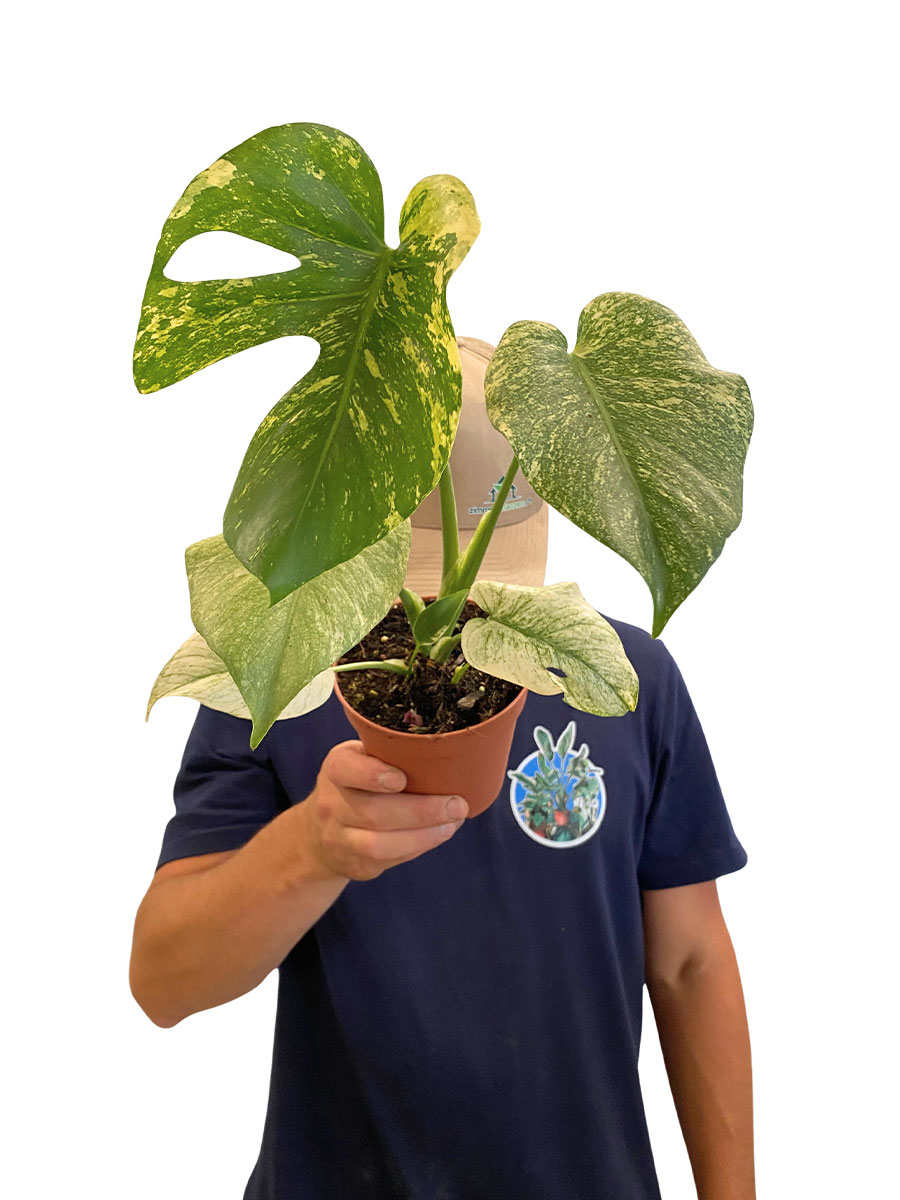
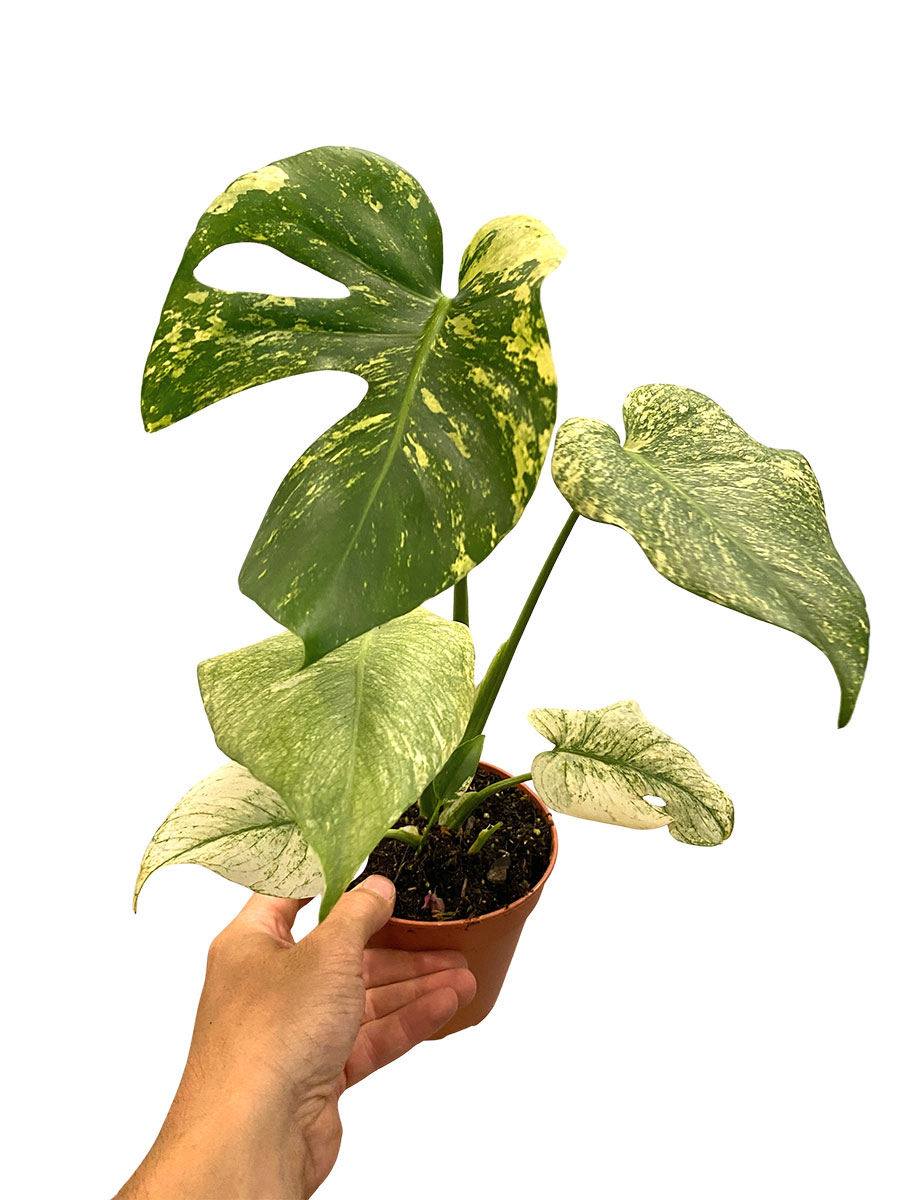
History of Monstera Variegata Super White Monstera Variegata Super White is an impressive variety of the well-known Monstera deliciosa. This plant originally comes from the tropical rainforests of Central and South America. Its striking, large leaves are not just green but show a striking white variegation caused by genetic mutations. Thanks to its rarity and beauty, Monstera Variegata Super White has become very popular with plant lovers in recent years and is often regarded as a status symbol in the plant world.Important:Super White is a very delicate plant – the white parts of the leaves in particular often turn brown quickly and naturally do not last long. This is completely normal for this variety. As this plant is very sensitive and often already arrives from the grower with cut marks, we unfortunately cannot guarantee that it will be in perfect condition. Above all, a healthy root system is what matters. If the plant is repotted promptly and can then settle in well, it will soon produce beautiful new leaves. With good care, it reliably puts out new growth and will soon develop into a larger plant. Care as a houseplant: Light: Bright, indirect light is ideal; direct sun can scorch the leaves. Temperature: Ideally 20–28 °C; protect from cold below 12 °C. Humidity: Moderate to high; humidity of 50–70 % promotes growth. Substrate: Free-draining potting soil mixed with perlite or orchid substrate for better drainage. Watering: Water moderately; the substrate should dry out slightly between waterings. Avoid waterlogging. Feeding: Feed every 4-6 weeks during the growing season with a balanced liquid fertiliser. Special features: Regular repotting every 1–2 years promotes healthy growth; the variegation can vary depending on light conditions. Care as a terrarium plant: Light: Strong, indirect lighting or special grow lights; avoid direct sunlight. Temperature: In a terrarium, 20–28 °C should be maintained; constant warmth is important. Humidity: High (60–80 %); regular misting can increase humidity. Substrate: A mix of potting soil and orchid substrate ensures good drainage and aerated roots. Water: Use lime-free water; the soil should be evenly moist but not wet. Winter dormancy: Monstera Variegata Super White does not need a special winter rest, but watering should be reduced. Monstera Variegata Super White is an exquisite addition to any home, both as a houseplant and in a terrarium. Its striking colouring and impressive leaves make it an absolute eye-catcher.

CHF 99.90*

Delivery time 2 - 7 working days

Available
Item no. 4211
Hoya Compacta Variegata

Topfdurchmesser 6cm

Topfhöhe ab Boden 5cm ±

History of the Hoya Compacta Variegata The Hoya Compacta Variegata is an extraordinary and sought-after variety of the popular wax plant. Its strongly twisted and curled leaves are streaked with creamy white to yellowish variegation, giving each plant a unique appearance. The decorative shoots grow trailing or climbing and, over time, form impressive cascades of leaves. Under optimal conditions, the plant develops spherical flower clusters with small, star-shaped and pleasantly fragrant flowers. Hoya species originally come from the tropical regions of Southeast Asia and Australia, where they grow epiphytically on trees. Care as a houseplant: • Light: Bright spot with plenty of indirect light; some morning or evening sun promotes variegation. Avoid direct midday sun. • Temperature: Ideally 18–28 °C; temperatures below 12–15 °C should be avoided. • Humidity: Medium to high; increased humidity supports healthy growth. • Substrate: Loose, airy and free-draining substrate, e.g. orchid compost mixed with perlite and coir fibre. • Watering: Water moderately; let the substrate dry out slightly between waterings. Avoid waterlogging. • Feeding: During the growing season, every 2–4 weeks with a low dose of liquid fertiliser. • Special features: The variegated, curled leaves make this Hoya an exclusive collector's item. The long shoots are ideal for hanging baskets or raised spots. Overwintering tips: In winter, water a little less and continue to keep it in a bright spot. Temperatures should ideally not fall below 12 °C. The Hoya Compacta Variegata is a decorative and easy-care houseplant that creates an exotic eye-catcher in your living space with its uniquely twisted, variegated leaves and fragrant flowers.

CHF 14.90*

Delivery time 2 - 7 working days

Available
Bestseller
Item no. 1724
Money Tree Pachira Aquatica

Topfdurchmesser 17cm

Topfhöhe ab Boden 60cm ±

History of the Pachira – money tree Pachira aquatica, also known as the money tree, comes from the tropical regions of Central and South America. Its braided trunks and elegant leaf shape have made it popular worldwide as a decorative houseplant. In feng shui it is considered a symbol of prosperity and positive energy, which is why it is often given as a gift. Care as a houseplant: Light: Bright spot with indirect light; also tolerates partial shade. Temperature: Ideally 18–25 °C; do not keep below 12 °C. Humidity: Moderate to high humidity; mist occasionally. Substrate: Free-draining, loose soil with some sand or perlite. Watering: Water moderately; the soil may dry out slightly between waterings. Avoid waterlogging. Feeding: Every 4 weeks with liquid fertiliser during the growing season. Special features: This houseplant stores water in its trunk and copes well with short dry spells. Overwintering tips: In winter, water less and do not let temperatures drop below 12 °C. The Pachira is an easy-care and decorative houseplant that is a real eye-catcher with its braided trunk and distinctive leaves.

CHF 49.90*

Delivery time 2 - 7 working days

Available
Bestseller
Item no. 3477
Philodendron Pink Princess

Topfdurchmesser 14cm

Topfhöhe ab Boden 30cm ±

History of the Philodendron Pink Princess The Philodendron Pink Princess, also known asRosa Princess Marbleis an extraordinary houseplant with striking pink variegation on dark green to almost black leaves. This rare cultivar from the Philodendron family originally comes from the tropical rainforests of South America. Thanks to its distinctive colouring, it is one of the most sought-after collector's plants and is very popular among plant lovers. Care as a houseplant: Light: Bright spot with plenty of indirect light; avoid direct sun to preserve the variegation. Temperature: Ideally 20–28 °C; do not keep below 16 °C. Humidity: Prefers high humidity; regular misting or a humidifier is recommended. Substrate: Loose, free-draining substrate with perlite, bark and a little peat. Watering: Water moderately; the top layer of soil should dry out slightly between waterings. Avoid waterlogging. Feeding: Every 2–4 weeks with liquid fertiliser during the growing season. Special features: This houseplant grows slowly and needs patient care to develop an intense pink colouring. Care as a terrarium plant: Light: Plenty of indirect light; in closed terrariums make sure there is sufficient lighting. Moisture: High humidity is beneficial, but good air circulation is needed to prevent mould. Substrate: Loose, well-aerated substrate with a drainage layer to prevent waterlogging. Special features: Due to the high humidity in the terrarium, the Philodendron Pink Princess should be checked regularly for mould or rot. Overwintering tips: In winter, water less and do not let temperatures drop below 16 °C. The Philodendron Pink Princess is a fascinating houseplant that brings a tropical touch with its unique colouring – whether in a room or in a terrarium.

CHF 49.90*

Delivery time 2 - 7 working days

Available
Bestseller
Item no. 4120
Philodendron Melanochrysum

Topfdurchmesser 12cm

Topfhöhe ab Boden 20cm ±

History of the Philodendron melanochrysum The Philodendron melanochrysum is an elegant and sought-after collector's plant known for its large, velvety leaves. The deep dark green, elongated leaves have a refined, almost black surface with strikingly pale veins that can shimmer gold depending on the light – hence the name 'melanochrysum', which roughly means 'black-gold'. This tropical climbing plant originally comes from the rainforests of Colombia, where it grows up tree trunks. As a houseplant, it gives any room a luxurious, tropical atmosphere. Care as a houseplant: • Light: Bright spot with plenty of indirect light; avoid direct sun. • Temperature: Ideally 18–27 °C; temperatures below 16 °C should be avoided. • Humidity: High; 60 % or more is ideal. Increased humidity promotes large, healthy leaves. • Substrate: Loose, airy and free-draining substrate, e.g. a mix of potting soil, bark, perlite and coconut fibre. • Watering: Water moderately; keep the substrate slightly moist, but avoid waterlogging. • Feeding: During the growing season, every 2–4 weeks with a liquid fertiliser for foliage plants. • Special features: As a climbing plant, it develops particularly large and impressive leaves on a moss pole or climbing support. Overwintering tips: In winter, water a little less and continue to keep it in a warm, bright spot. Temperatures should stay as constantly as possible above 18 °C. The Philodendron melanochrysum is an exclusive houseplant whose velvety, elegant leaves create a luxurious eye-catcher.

CHF 29.90*

Delivery time 2 - 7 working days

Available
Bestseller
Item no. 1713
Aglaonema Red Joy

Topfdurchmesser 12cm

Topfhöhe ab Boden 30cm ±

History of Aglaonema Red Joy The Aglaonema Red Joy belongs to the genus Aglaonema, a group of tropical plants originally native to the rainforests of Southeast Asia. With its striking red and green leaves, it is a popular choice among houseplant lovers, especially because it is easy to care for and decorative. Care as a houseplant: Light: Partial shade to indirect light; avoid direct sun. Water: Water moderately; only water when the top layer of soil is dry. Humidity: Average room humidity is sufficient; occasional misting promotes good health. Temperature: 18-24°C, no draughts or cold temperatures. Feeding: Every 4-6 weeks during the growing phase with houseplant fertiliser. Care as a terrarium plant: Light: Subdued light, ideal for humid and shady areas of the terrarium. Water: Regular misting instead of direct watering to keep humidity high. Substrate: Free-draining substrate with a high humus content, suitable for tropical conditions. Humidity: Very high humidity, over 70%, optimal for closed terrariums. Placement: Not directly against the walls of the terrarium, to prevent condensation forming on the leaves.

CHF 24.90*

Delivery time 2 - 7 working days

Available
Bestseller
Item no. 3377
Aglaonema Crimson Love

Topfdurchmesser 12cm

Topfhöhe ab Boden 30cm ±

History of the Aglaonema Crimson Love The Aglaonema Crimson Love is a newer cultivar from the popular Aglaonema range, especially valued for its intense red and green leaf markings. Aglaonemas originally come from the tropical rainforests of Southeast Asia, where they grow in the shady undergrowth. This variety brings strong colours into the room, making it a striking novelty among decorative houseplants. Care as a houseplant: Light: Bright spot with plenty of indirect light; avoid direct sun. Temperature: Ideally 18–26 °C; never below 15 °C. Humidity: Medium to high; regular misting improves its well-being. Substrate: Loose, free-draining, e.g. potting soil with perlite. Watering: Water moderately; let the soil dry out slightly, avoid waterlogging. Feeding: Every 3–4 weeks during the growing season with liquid fertiliser. Special features: This houseplant stands out with its striking red colouring, which is most intense in good light. Overwintering tips: In winter, water less, keep it warm and not below 15 °C. The Aglaonema Crimson Love is an attractive houseplant that brings colour and tropical flair into your home.

CHF 24.90*

Delivery time 2 - 7 working days

Available
Bestseller
Item no. 4043
Epipremnum N'joy

Topfdurchmesser 12cm

Topfhöhe ab Boden 15cm ±

History of the Epipremnum N’Joy The Epipremnum N’Joy is a compact and particularly decorative variety of the classic pothos. Its small, heart-shaped leaves show striking green and cream variegation, giving each plant a unique pattern. The species originally comes from the tropical regions of Southeast Asia, where it grows as a climbing plant on trees. In its baby size, it is ideal for small rooms, shelves or as a gift and brings fresh greenery to any living space. Care as a houseplant: • Light: Bright to partially shaded spot; indirect light encourages the beautiful variegation. Avoid direct midday sun. • Temperature: Ideally 18–27 °C; temperatures below 15 °C should be avoided. • Humidity: Medium; copes well with normal room air. • Substrate: Loose, free-draining houseplant substrate, ideally mixed with a little perlite or coir fibre. • Watering: Water moderately; let the substrate dry out slightly between waterings. Avoid waterlogging. • Feeding: During the growing season, every 2–4 weeks with a liquid fertiliser for foliage plants. • Special features: Compact growth habit; ideal for small pots, hanging baskets or as an easy-care beginner's plant. Overwintering tips: In winter, water a little less and keep in a bright spot. Temperatures should stay as constant as possible above 15 °C. The Epipremnum Aureum N’Joy is an easy-care, decorative houseplant that adds a fresh accent to your living space with its finely patterned leaves.

CHF 14.90*

Delivery time 2 - 7 working days

Available
Bestseller
Item no. 1086
Alocasia Jacklyn

Topfdurchmesser 12cm

Topfhöhe ab Boden 30cm ±

History of the Alocasia Jacklyn The Alocasia Jacklyn is a fascinating houseplant that comes from the tropical rainforests of Southeast Asia. It impresses with its striking, deeply lobed leaves, which are traced with vivid, dark veins. The high-contrast leaf structure and distinctive growth make it a highlight for plant lovers. Its rarity and exotic charisma have quickly earned it a special place in the world of houseplants, where it captivates with both its design and its care requirements. Care as a houseplant: Light: Bright spot with indirect light; avoid direct sun to protect the delicate leaves. Temperature: Ideally 20–28 °C, at least 18 °C in winter. Humidity: High humidity of 60–80 % is ideal; regular misting or a humidifier is recommended. Substrate: Loose, free-draining substrate, e.g. a mix of potting soil, bark, perlite and a little coconut fibre. Watering: Keep evenly moist but avoid waterlogging; let it dry out slightly between waterings. Feeding: During the growing season, every 2–4 weeks with a fertiliser designed for foliage plants. Special features: The Alocasia Jacklyn grows quickly and needs enough space to fully unfold its impressive leaves. Care as a terrarium plant: Light: Indirect light or suitable grow lights; UV light can promote growth and leaf colour. Temperature: Tropical temperatures between 22–28 °C, not below 18 °C at night. Humidity: Very high humidity of 70–90 % is essential; a fogger or frequent misting helps. Substrate: An airy, moisture-regulating substrate, e.g. terrarium soil with sphagnum moss and some bark. Watering: Always keep the substrate slightly moist; be sure to avoid waterlogging. Terrarium conditions: In a tropical terrarium with high humidity and sufficient warmth, the Alocasia Jacklyn thrives particularly well and develops magnificently. Overwintering tips: In winter, the Alocasia Jacklyn should be kept in a bright, sheltered spot at no less than 18 °C. Watering can be reduced slightly, but the substrate should never dry out completely. Humidity should remain high to prevent leaf drop or stunted growth.

CHF 24.90*

Delivery time 2 - 7 working days

Available
Bestseller
Item no. 828
Hanging Pot - Hoya Carnosa Gracilis

Topfdurchmesser 14cm

Topfhöhe ab Boden 20cm ±

History of the Hoya GracilisThe Hoya Gracilis is a delicate, trailing houseplant from the tropical regions of Asia. It belongs to the dogbane family (Apocynaceae) and is particularly popular for its dainty, succulent leaves and its delicate, star-shaped flowers. As a climbing plant, it is ideal for hanging pots or as a terrarium plant.Care as a houseplant:Light: Bright position with indirect light; direct sun can scorch the leaves.Temperature: Ideally 18–28 °C; do not keep below 12 °C.Humidity: Medium to high; regular misting promotes healthy growth.Substrate: Loose, well-draining substrate, e.g. orchid or succulent soil.Watering: Keep evenlymoist, but avoid waterlogging; allow to dry out slightly between waterings.Feeding: Every 4 weeks during the growing season with liquid fertiliser for succulents or flowering plants.Special features: This houseplant climbs or trails well; a trellis or hanging basket is ideal.Overwintering tips:In winter, water less and do not let temperatures drop below 12 °C. Hoya Gracilis is a decorative houseplant and terrarium plant that delights with its dainty leaves and delicate flowers.

CHF 39.90*

Delivery time 2 - 7 working days

Available
Bestseller
Item no. 3373
Hanging Pot - Pitcher Plant Nepenthes Gaya

Topfdurchmesser 14cm

Topfhöhe ab Boden 40cm ±

History of the pitcher plant (Nepenthes) Nepenthes, also called the pitcher plant, is a fascinating carnivorous plant originally from the tropical rainforests of Asia, Australia and Madagascar. Its characteristic pitchers serve as ingenious traps for catching and digesting insects. This exotic plant is a special addition for collectors and lovers of unusual houseplants. Care as a houseplant: Light: Bright, but without direct midday sun; east- or west-facing windows are ideal. Temperature: 20–30 °C; prefers tropical warmth. Humidity: High (at least 50–70 %); regular misting improves growth. Substrate: Airy carnivorous plant substrate with sphagnum moss and perlite. Watering: Only water with rainwater or distilled water; always keep slightly moist. Feeding: No fertiliser needed; it catches insects by itself. Special features: An exotic houseplant that forms a particularly large number of pitchers in high humidity. Care as a terrarium plant: Light: Strong plant LEDs or a very bright spot required. Temperature: Ideally 22–28 °C; a slight drop to 18–22 °C at night is possible. Humidity: Very high (at least 70 %); daily misting or a fogger recommended. Substrate: Free-draining carnivorous plant substrate with moss. Water: Use rainwater or distilled water; avoid waterlogging. Winter dormancy: No classic winter dormancy needed, but water slightly less at cooler temperatures. Summer care (keeping outdoors) In summer, Nepenthes can be placed outdoors in a sheltered, warm spot: Location: Partial shade to bright, but no direct midday sun. Water: Always water with lime-free water; never let it dry out. Humidity: Often higher outdoors – encourages pitcher growth. Feeding behaviour: Outdoors the plant catches plenty of insects by itself; no additional feeding needed. Bringing it back indoors: Bring it back indoors before temperatures drop below 15 °C. Winter care: In winter, Nepenthes needs warm temperatures and high humidity: Temperature: At least 18 °C; keep tropically warm. Humidity: Keep high (60–80 %), possibly with the help of a humidifier. Water: Water less than in summer, but do not let it dry out. Light: Place in a bright spot; supplement with a grow light if necessary. Leaves: Fewer pitchers in winter is normal – they return in spring. Whether as a houseplant, in a terrarium or outdoors in summer – Nepenthes is an exotic carnivorous plant that thrives best with high humidity and warmth.

CHF 39.90*

Delivery time 2 - 7 working days

Available
New
Item no. 4283
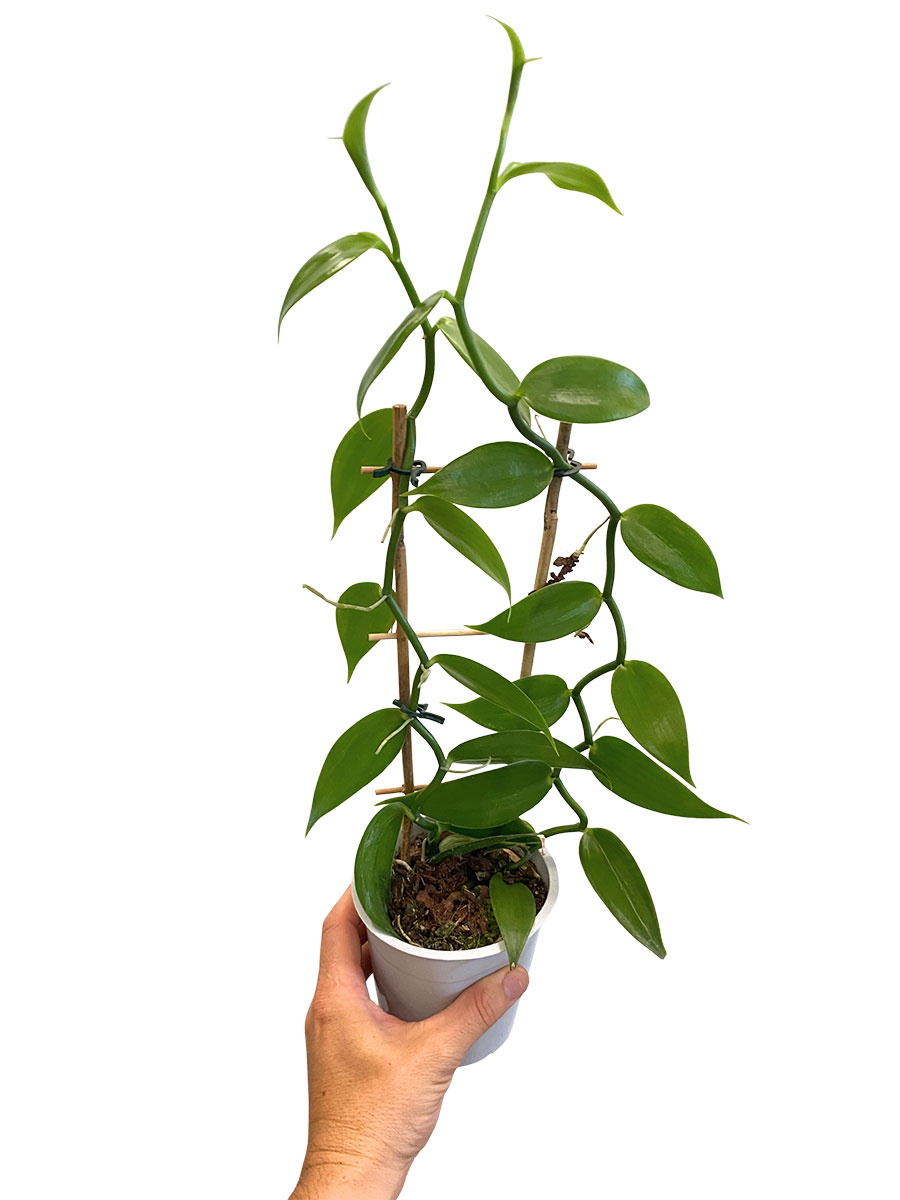
Vanilla Planifolia Orchid

Topfdurchmesser 12cm

Topfhöhe ab Boden 40cm ±

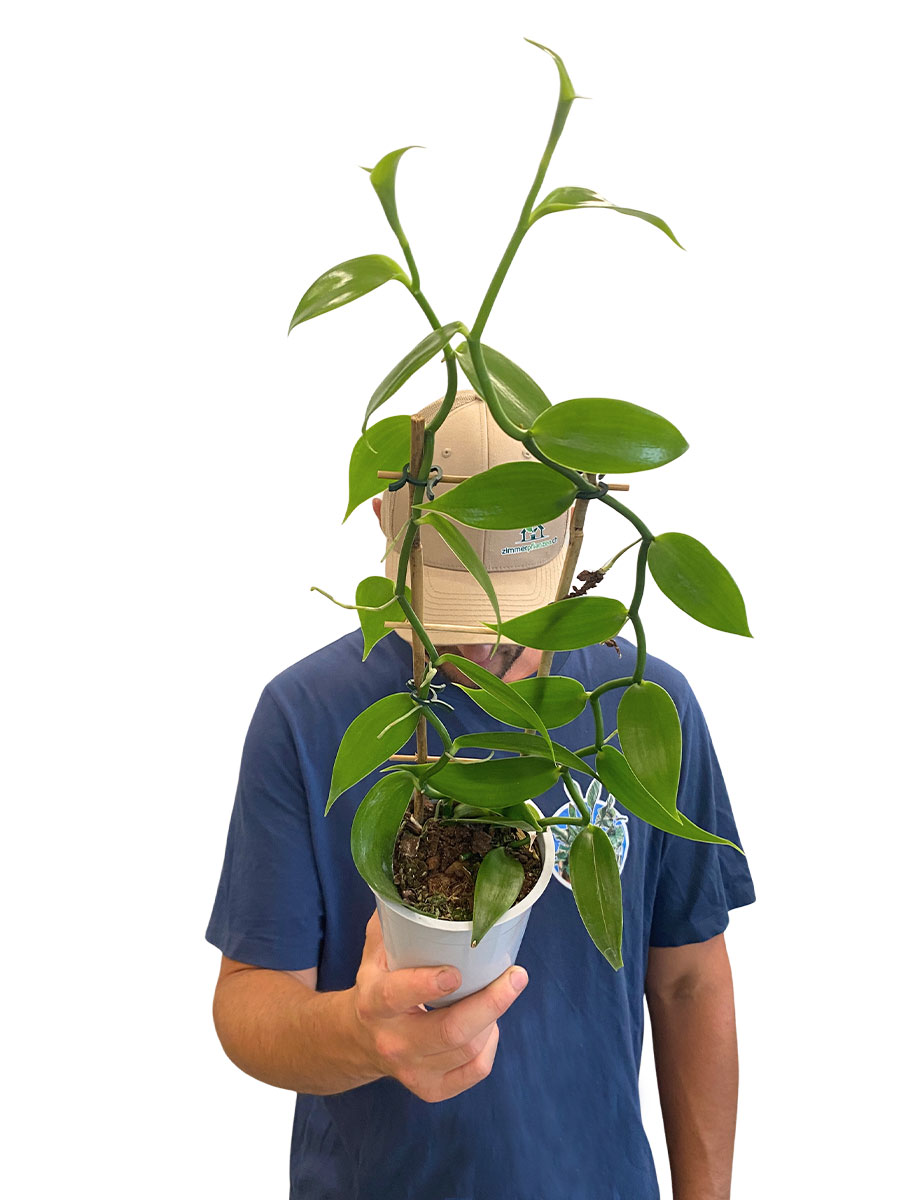
History of the Vanilla planifolia The Vanilla planifolia, also known as true vanilla, is a fascinating tropical climbing orchid and the most important species for producing natural vanilla. It originally comes from Mexico and Central America. Today it is grown mainly in tropical regions. In their natural environment, the long, fleshy leaves and sturdy shoots climb up trees. Under good conditions, the vanilla orchid can flower after a few years and then develop its characteristic long vanilla pods. However, pollination and fruit formation require special conditions and usually hand pollination. Care as a houseplant: • Light: Bright to partially shaded spot with plenty of indirect light. Some morning or evening sun is well tolerated; avoid intense midday sun. • Temperature: Ideally 20–30 °C. Even at night, it should ideally not drop below 16–18 °C for long periods. • Humidity: High; around 60–80 % is ideal. Consistent humidity supports the growth of the long shoots. • Substrate: Very loose, airy and free-draining, for example orchid substrate with bark, coconut chips and some sphagnum. • Watering: Water regularly as soon as the top layer of substrate has dried slightly. Be sure to avoid waterlogging. The fleshy roots should not stand in water permanently. • Feeding: During the growing season, feed about every 2–3 weeks with a weakly dosed orchid fertiliser. • Climbing support: The Vanilla planifolia is a true climbing plant and needs a climbing support. A moss pole, trellis or other sturdy climbing aid supports its natural growth. • Special features: With enough warmth, light, humidity and patience, a mature plant can develop flowers and later vanilla pods. The flowers open only for a short time and often have to be pollinated by hand to ensure fruit formation. Overwintering tips: In winter, continue to keep it warm, bright and humid. Watering can be reduced slightly when growth slows, but the substrate should not dry out completely. Avoid temperatures below 16 °C where possible.

CHF 49.90*

Delivery time 2 - 7 working days

Available
Bestseller
Item no. 021
Alocasia Zebrina

Topfdurchmesser 17cm

Topfhöhe ab Boden 65cm ±

History of Alocasia Zebrina Alocasia Zebrina is a striking and popular houseplant from the tropical rainforests of Southeast Asia. It owes its name to its distinctive zebra-patterned stems, which make it a real eye-catcher. In recent years it has become a trend plant, as its exotic appearance perfectly complements modern living spaces. Care as a houseplant: Light: Bright, indirect light; direct sun only in moderation to avoid leaf scorch. Temperature: Ideally 18–28 °C; no temperatures below 15 °C. Humidity: High humidity (over 60 %) promotes healthy growth – regular misting or a humidifier is ideal. Substrate: Free-draining, loose soil, e.g. a mix of potting soil, perlite and bark. Watering: Water as soon as the top layer of soil has dried; avoid waterlogging, as the plant is sensitive to too much water. Feeding: During the growing season (spring to autumn), feed with liquid fertiliser every 2–4 weeks. Special features: Older leaves sometimes die off while new ones grow – this is normal and no cause for concern. Overwintering tips: Water less during winter and do not fertilise. Temperatures should not drop below 15 °C, as the plant is sensitive to cold. If the air is too dry, the leaf edges can turn brown – a humidifier can help prevent this.

CHF 39.90*

Delivery time 2 - 7 working days

Available
New
Item no. 3182
Baby Monstera Mint Variegata

Topfdurchmesser 8cm

Topfhöhe ab Boden 20cm ±

History of the Monstera Mint Variegated The Monstera Mint Variegatais an extremely rare and sought-after cultivar of the popular Monstera deliciosa. It is characterised by its striking mint green and white variegation, which gives each leaf a unique pattern. Monstera originally comes from the tropical rainforests of Central and South America, but this special variety is mainly cultivated by collectors as an exclusive houseplant. Care as a houseplant: Light: Bright spot with plenty of indirect light so that the variegation is retained; avoid direct sun. Temperature: Ideally 18–28 °C; do not keep below 16 °C. Humidity: High (over 60 %); regular misting or a humidifier is recommended. Substrate: Loose, airy substrate of soil, bark, perlite and coconut fibre. Watering: Keep evenly moist, but no waterlogging; let the top layer of soil dry out. Feeding: Every 2–4 weeks with liquid fertiliser during the growing season. Special features: This houseplant grows more slowly than the green Monstera, as the variegated parts of the leaves contain less chlorophyll. Overwintering tips: In winter, water more sparingly and do not let temperatures fall below 16 °C. The Monstera Mint Variegated is an exclusive and decorative houseplant whose unique colouring makes it one of the highlights of any plant collection. 🌿

CHF 49.90*

Delivery time 2 - 7 working days

Available
New
Item no. 1219
Philodendron Micans Lime

Topfdurchmesser 12cm

Topfhöhe ab Boden 20cm ±

History of the Philodendron Micans Lime Philodendron Micans Lime is a particularly attractive variety of the popular Philodendron Micans and delights with its velvety, heart-shaped leaves in bright lime to fresh green shades. Depending on the age of the leaf, different nuances from light green to yellow-green can develop, giving the plant a lively and varied appearance. The velvety leaf surface also adds an elegant sheen. Like many philodendrons, this plant comes from the tropical regions of Central and South America, where it grows as a climbing or creeping plant in warm, humid forests. With its long shoots, it is ideal for hanging baskets, shelves or a climbing support. Care as a houseplant: • Light: Bright spot with plenty of indirect light. Some morning or evening sun is well tolerated. Avoid intense midday sun so that the delicate leaves do not burn. • Temperature: Ideally 18–28 °C; avoid temperatures below 15 °C if possible. • Humidity: Medium to high; around 60 % or more is ideal. Increased humidity supports the development of beautiful, healthy leaves. • Substrate: Loose, airy and free-draining aroid substrate, for example made of potting soil, pine bark, perlite and coconut fibre. • Watering: Water moderately and let the substrate dry out slightly between waterings. Be sure to avoid waterlogging. • Feeding: During the growing season, feed about every 2–4 weeks with a low dose of liquid fertiliser for foliage plants or aroids. • Special features: The long shoots can trail or be attached to a climbing support. Regular pruning encourages bushier growth. The velvety, lime-green leaves make the plant a particularly fresh and decorative eye-catcher. Overwintering tips: Water a little less in winter and keep it as bright and warm as possible. Temperatures should remain as constant as possible above 16 °C. Avoid cold draughts and dry heating air. With less light, growth can slow down considerably.

CHF 19.90*

Delivery time 2 - 7 working days

Available
Bestseller
Item no. 3180
Baby Monstera Adansonii Variegata

Topfdurchmesser 6cm

Topfhöhe ab Boden 15cm ±

History of the Monstera Adansonii Variegata Monstera adansonii variegata is a sought-after, rare variety of the popular Monstera adansonii. Its unique variegated leaves, with a mix of deep green and creamy white to yellowish colour variations, make it one of the most fascinating houseplants. Monstera adansonii originally comes from the tropical rainforests of Central and South America, where it grows as a climbing plant in its natural environment. Thanks to its slow growth rate and special play of colours, the variegated version is highly prized, above all by houseplant lovers worldwide. Care as a houseplant: Light: Bright spot with indirect light; direct sun can damage the delicate variegation. Perfect for houseplants that love light. Temperature: A comfortable 20–28 °C is ideal; temperatures should not drop below 18 °C, even in winter. Humidity: High humidity of 60–80 % is ideal; as with many tropical houseplants, regular misting helps. Substrate: A loose, free-draining substrate, such as a mix of potting soil, perlite and a little bark, ensures healthy roots. Watering: Water evenly so that the substrate stays slightly moist; be sure to avoid waterlogging. Preferably use low-lime water. Feeding: During the growing season, every 2–4 weeks with a fertiliser for houseplants that need plenty of energy for their variegation. Special features: Monstera adansonii variegata is one of those houseplants that enrich any room with their striking looks while being a highlight in any collection. Care as a terrarium plant: Light: Indirect light, perfect for a well-lit tropical terrarium. Temperature: Tropical temperatures of 22–28 °C; not below 20 °C at night. Humidity: Very high humidity of 70–90 % supports the growth of this exceptional plant. Substrate: A mix of moist sphagnum moss, coconut fibre and bark is ideal for terrarium plants. Watering: Always keep the substrate in the terrarium slightly moist, but avoid waterlogging. Terrarium conditions: In a tropical terrarium, Monstera adansonii variegata reaches its full potential and shines as an eye-catcher among other terrarium plants. Overwintering tips: Even in winter, Monstera adansonii variegata needs warm temperatures and sufficient moisture. Reduce watering slightly, but keep the substrate moist. This variegated version is a particularly sought-after houseplant and, with its exotic appearance, is both a special challenge and a joy for plant lovers.

CHF 22.90*

Delivery time 2 - 7 working days

Available
Bestseller
Item no. 129
Ginseng Fig S-Shape

Topfdurchmesser 27cm

Topfhöhe ab Boden 70cm ±

History of the S-shaped ginseng fig The ginseng fig, also known as Ficus microcarpa Ginseng, is a fascinating houseplant that impresses with its sculptural, tuber-like roots and curved S-shape. Originally from Southeast Asia, it is a popular choice for bonsai lovers and anyone who wants to give their home a touch of Zen. Its robustness and decorative appearance make it a valued houseplant that is a highlight in both modern and traditional interiors. Care as a houseplant: Light: Bright to partially shaded spot, no direct midday sun. A place near an east- or west-facing window is ideal. Temperature: Ideally 18–24 °C, at least 15 °C in winter. Humidity: Average; occasional misting of the leaves can be helpful. Substrate: Well-draining soil, e.g. a mix of potting soil and sand or special bonsai substrate. Watering: Water when the top layer of soil has dried out slightly. Be sure to avoid waterlogging, as it can damage the roots. Feeding: Every 4–6 weeks during the growing phase with a weak liquid houseplant fertiliser. Special features: This houseplant should be turned regularly so that it grows evenly, and it does not like sudden changes of location. Overwintering tips: In winter, the ginseng fig needs constant temperatures of at least 15 °C. Reduce watering, as its water requirement drops during the rest period. Make sure not to place the plant near radiators or in draughty areas. A bright spot without direct sunlight remains important to promote healthy growth.

CHF 149.90*

Delivery time 2 - 7 working days

Available
Bestseller
Item no. 1160
Strelitzia Nicolai

Topfdurchmesser 24cm

Topfhöhe ab Boden 120cm ±

History of the Strelitzia nicolai Strelitzia nicolai, also known as the white bird of paradise, comes from the tropical and subtropical regions of South Africa. With its imposing, banana-like leaves and majestic growth, it is an impressive houseplant that brings a touch of the exotic and elegance to any room. Its ability to thrive even in large tubs makes it an ideal choice for interiors and bright conservatories. Care as a houseplant: Light: Very bright spot, ideally with direct sunlight, e.g. in front of a south-facing window. Temperature: Ideally 20–28 °C, at least 10–12 °C in winter. Humidity: Average to slightly increased; occasional misting is beneficial. Substrate: Free-draining, nutrient-rich substrate, e.g. potting soil mixed with sand or perlite. Watering: Water regularly and let the substrate dry out slightly between waterings. Avoid waterlogging. Feeding: Every 2–4 weeks during the growing season with a liquid foliage plant fertiliser. Repotting: Every 2–3 years into a larger pot with fresh soil. Care as a container/seasonal plant: Light: In summer, happy to be placed outdoors in a sunny, sheltered spot. Temperature: Sensitive to temperatures below 10 °C, so bring indoors in good time. Watering: Water regularly while avoiding waterlogging. Outdoors, drainage must work well. Feeding: Every 2 weeks during the growing season to support vigorous growth. Overwintering: Overwinter in a bright room at 10–15 °C with reduced watering.

CHF 89.90*

Delivery time 2 - 7 working days

Available
Bestseller
Item no. 3358
Aglaonema Silver Bay

Topfdurchmesser 17cm

Topfhöhe ab Boden 70cm ±

History of the Aglaonema Silver Bay Aglaonema Silver Bay is an elegant houseplant from the tropical regions of Asia. This robust, easy-care plant impresses with its large, silvery-green leaves with dark green edges. Thanks to its adaptability and timeless appearance, it is a popular choice for homes and offices alike. Care as a houseplant: Light: Semi-shaded to bright position, no direct sunlight. Temperature: Ideally 18–26 °C, at least 15 °C in winter. Humidity: Average; occasional misting is helpful when the room air is dry. Substrate: Loose, free-draining substrate, e.g. potting soil with sand or perlite. Watering: Keep evenly moist; let the substrate dry out slightly between waterings. Feeding: Every 4–6 weeks with a fertiliser for foliage plants during the growing season. Care as a terrarium plant: Light: Indirect light, supplemented by plant grow lights if necessary. Temperature: Tropical conditions between 22–28 °C, at least 18 °C in winter. Humidity: High, ideally 60–80 %; regular misting or a fogger is recommended. Substrate: A mix of loose potting soil and moss for good moisture retention. Watering: Water sparingly; keep the substrate slightly moist but not wet. Terrarium conditions: Ensure sufficient space for the plant and good air circulation.

CHF 39.90*

Delivery time 2 - 7 working days

Available
Bestseller
Item no. 082
Weeping Fig Ficus Benjamina Twilight

Topfdurchmesser 21cm

Topfhöhe ab Boden 100cm ±

History of the weeping fig Twilight The weeping fig Twilight (Ficus benjamina ‘Twilight’) is a decorative variety of the classic weeping fig and belongs to the mulberry family (Moraceae). The species originally comes from the tropical regions of Asia and Australia, where it grows into large trees in the wild. The ‘Twilight’ variety is characterised by its green-and-white variegated leaves, which give it a particularly elegant look. This popular houseplant is not only an eye-catcher but is also known for improving air quality. Care as a houseplant: Light: Bright spot with plenty of indirect light; direct sun is well tolerated. Temperature: 18–26 °C is optimal; avoid temperatures below 15 °C. Humidity: Medium to high (50–70%); occasional misting is beneficial. Substrate: Loose, free-draining substrate with good drainage, e.g. a mix of potting soil, sand and perlite. Watering: Keep evenly moist but avoid waterlogging; only water once the top layer of soil is dry. Feeding: From spring to autumn, every 2–4 weeks with liquid fertiliser for foliage plants. Special features: This houseplant can react sensitively to changes of location and shed leaves – but it usually recovers quickly. Overwintering tips: The temperature should not drop below 15 °C, and watering should be reduced slightly in winter. A stable location with high humidity helps to prevent leaf drop. This easy-care houseplant brings tropical flair to any home with its elegant foliage.

CHF 69.90*

Delivery time 2 - 7 working days

Available
Bestseller
Item no. 1379
Fiddle-Leaf Fig Ficus lyrata Standard

Topfdurchmesser 30cm

Topfhöhe ab Boden 150cm ±

History of the fiddle-leaf fig (Ficus lyrata) The fiddle-leaf fig (Ficus lyrata) is a popular houseplant that originally comes from the tropical rainforests of West Africa. It belongs to the mulberry family (Moraceae) and is known for its large, striking leaves, which have a characteristic violin-like shape. In recent years, the fiddle-leaf fig has become one of the most sought-after houseplants, as it creates a modern and elegant atmosphere in both homes and offices. Care as a houseplant: Light: Bright position with plenty of indirect light; direct sun can scorch the leaves. Temperature: Ideally 20–25 °C; avoid temperatures below 15 °C. Humidity: Medium to high humidity; regular misting of the leaves can be helpful. Substrate: Free-draining, humus-rich potting soil, ideally with some perlite for better drainage. Watering: Water moderately; the soil should be evenly moist but not wet. Be sure to avoid waterlogging. Feeding: During the growing season (spring and summer), feed every 4–6 weeks with a liquid fertiliser for foliage plants. Special features: This houseplant grows relatively quickly and can reach an impressive height in optimal conditions. Overwintering tips: In winter, reduce the amount of water to slow down growth . The fiddle-leaf fig should be kept in an area where temperatures do not drop below 15 °C. With its distinctive leaf shape, the Ficus lyrata is an excellent choice for anyone looking for a stylish, easy-care houseplant.

CHF 299.90*

Delivery time 2 - 7 working days

Available
Bestseller
Item no. 115
Calathea Warscewiczii

Topfdurchmesser 17cm

Topfhöhe ab Boden 60cm ±

History of the Calathea Warscewiczii Calathea Warscewiczii comes from the tropical rainforests of Central and South America and belongs to the prayer plant family. It is known for its velvety soft, dark green leaves with lighter patterns and an intense purple underside. This decorative houseplant is valued for its air-purifying properties and its exotic appearance. Thanks to its preference for high humidity, it is also suitable for humid terrariums. Care as a houseplant: Light: Bright, indirect light; no direct sun. Temperature: Ideally 18–25 °C; do not keep below 15 °C. Humidity: High (over 60 %); regular misting or a humidifier is recommended. Substrate: Loose, free-draining substrate, e.g. potting soil with perlite and coconut fibre. Watering: Keep evenly moist; use low-lime water at room temperature. Avoid waterlogging. Feeding: Every 2–4 weeks with a weak liquid fertiliser during the growing season. Special features: The leaves move depending on the time of day ("living plant"). Demanding to care for; needs constant moisture. Care as a terrarium plant: Light: Bright, diffused light; no direct sunlight. Humidity: Very high (over 70 %); ideal for tropical humid terrariums. Location: Perfect for larger terrariums with enough space for it to grow. Water requirements: Keep evenly moist; use rainwater or distilled water. Overwintering tips: In winter, water less and protect it from dry air from heating. Calathea Warscewiczii is an impressive houseplant and a stylish addition to tropical humid terrariums.

CHF 39.90*

Delivery time 2 - 7 working days

Available
Bestseller
Item no. 3288
Norfolk Island Pine Araucaria Heterophylla

Topfdurchmesser 14cm

Topfhöhe ab Boden 50cm ±

History of the Norfolk Island pine Araucaria heterophylla The Norfolk Island pine (Araucaria heterophylla) comes from Norfolk Island in the Pacific and is one of the primeval plants. This evergreen houseplant impresses with its soft, symmetrically growing needles and is especially popular at Christmas time as a natural alternative to the classic Christmas tree. Its elegant growth and adaptability make it an exceptional choice for indoor spaces. Care as a houseplant: Light: Bright spot with plenty of indirect light; no direct midday sun. Temperature: 15–22 °C is optimal; slightly cooler in winter is fine (10–15 °C). Humidity: Moderate to high; mist occasionally. Substrate: Free-draining, slightly acidic soil, e.g. rhododendron or container plant soil. Watering: Keep evenly moist, but avoid waterlogging; water more sparingly in winter. Feeding: Every 4–6 weeks with liquid fertiliser during the growing season. Special features: This houseplant grows slowly and needs plenty of headroom, as it can reach a considerable height over the years. Overwintering tips: In winter, the Norfolk Island pine prefers cooler temperatures (10–15 °C) and a reduced water supply. As an elegant houseplant with natural charm, it creates a green, calming ambience all year round.

CHF 22.90*

Delivery time 2 - 7 working days

Available
Item no. 4225
Aloe Vera Humilis Shark

Topfdurchmesser 7cm

Topfhöhe ab Boden 10cm ±

History of the Aloe humilis Shark The Aloe humilis 'Shark' is an extraordinary succulent that wins hearts with its striking leaf shape and compact growth. The sturdy, blue-green leaves grow in dense rosettes and are set with conspicuous white teeth reminiscent of a shark's skin or teeth – hence the cultivar name 'Shark'. With its sculptural appearance, it is a real eye-catcher for a windowsill, desk or succulent collection. The species Aloe humilis originally comes from the dry regions of South Africa, where it is adapted to intense sunshine and long dry periods. Care as a houseplant: • Light: Very bright to sunny spot; several hours of direct sun promote compact growth and intense leaf colour. • Temperature: Ideally 18–30 °C; temperatures below 10 °C should be avoided. • Humidity: Low; dry indoor air is tolerated very well. • Substrate: Free-draining cactus or succulent substrate with a high mineral content. • Watering: Water sparingly; let the substrate dry out completely between waterings. Be sure to avoid waterlogging. • Feeding: During the growing season, feed about once a month with a weakly dosed cactus or succulent fertiliser. • Special features: The toothed leaves and compact rosette shape give the plant an extraordinary, almost sculptural appearance. With good care, orange to coral-red flowers on long flower stalks may appear in spring or early summer. Overwintering tips: In winter, water very sparingly and place it in as bright a spot as possible. Temperatures between 10 and 15 °C are ideal. During the dormant period, the plant needs only a little water.

CHF 8.90*

Delivery time 2 - 7 working days

Available
Bestseller
Item no. 1162
Kentia Palm Howea Forsteriana

Topfdurchmesser 17cm

Topfhöhe ab Boden 70cm ±

History of the kentia palm (Howea forsteriana) The kentia palm (Howea forsteriana) comes from remote Lord Howe Island in Australia and is one of the most popular houseplants worldwide. Since the 19th century, it has been valued as an elegant, easy-care plant that brings tropical flair to living spaces with its slender, arching leaves. Its robustness and adaptability make it one of the ideal houseplants for beginners and experienced plant lovers alike. Care as a houseplant: Light: Bright to partially shaded spot; avoid direct midday sun, as it can damage the leaves. Temperature: Optimal conditions are between 18–25 °C; temperatures below 10 °C should be avoided. Humidity: Kentia palms thrive better with increased humidity, but also cope with dry room air. Substrate: Free-draining, humus-rich soil, ideally a mix of palm soil and sand or perlite. Watering: Keep evenly moist without waterlogging; the top layer of soil should dry out slightly before the next watering. Feeding: During the growing season from spring to summer, feed every 4 weeks with a liquid palm fertiliser. Special features: One of the few houseplants that can also thrive in somewhat darker corners, albeit more slowly. Overwintering tips: In winter, the kentia palm should still be kept at temperatures above 15 °C. Watering can be reduced, but the soil must never dry out completely. Thanks to its longevity and easy care, it is one of those houseplants that create a relaxed, tropical atmosphere in any home.

CHF 49.90*

Delivery time 2 - 7 working days

Available
Bestseller
Item no. BON04
Bonsai Carmona Microphylla

Topfdurchmesser 15cm

Topfhöhe ab Boden 30cm ±

History of the Carmona Fukien tea bonsaiThe Carmona Fukien tea bonsai (Carmona microphylla), also known as Fukien tea or Chinese tea shrub, originally comes from Southeast Asia and is valued in bonsai culture for its small, leathery leaves and its attractive, gnarled trunk structure. The plant is known for its small white flowers, which form during the growing season and offer a special aesthetic. It is suitable for beginners as well as experienced bonsai enthusiasts and can be grown both indoors and outdoors.Care as a houseplant:Light: Bright spot with direct sunlight for several hours a day; a south-facing window is ideal.Temperature: 15–25 °C is optimal; in winter the temperature should not drop below 10 °C.Humidity: Prefers increased humidity; occasional misting of the leaves promotes good health.Substrate: Free-draining bonsai substrate, e.g. a mix of akadama, pumice and bark.Watering: Keep evenly moist, but avoid waterlogging; water more often in summer and less in winter.Feeding: Feed every 2–4 weeks during the growing season with a balanced bonsai fertiliser.Special features: Regular pruning is important to encourage shape and branching; flowers can be removed once they have faded.Keeping as a seasonal plant outdoors:Location: From spring to autumn, the Carmona Fukien tea can stand outdoors in a sunny, sheltered spot.Temperature: Ideally 10–25 °C; at temperatures below 5 °C the plant should be brought indoors.Overwintering: In winter, the plant should be kept in a bright, cool place to support its rest period.Winter dormancy:The Carmona Fukien tea bonsai needs a rest period to replenish its energy and encourage growth in spring. The ideal temperature for winter dormancy is between 10 and 15 °C. A bright, cool spot such as a conservatory or a cool stairwell is ideal. During this time, watering should be reduced, but the substrate must not dry out completely. Only in spring, when growth resumes, can normal watering and feeding start again.

CHF 49.90*

Delivery time 2 - 7 working days

Available
Bestseller
Item no. 3129
Monstera Deliciosa Variegata 30cm

Topfdurchmesser 12cm

Topfhöhe ab Boden 30cm ±

Monstera deliciosa variegata – origin, beauty and care The Monstera deliciosa variegata is one of the most fascinating houseplants of all. Its characteristic white-and-green marbled leaves make every specimen unique. The striking pattern is caused by a natural mutation in which no chlorophyll is produced in parts of the leaf. This creates the elegant, creamy white markings that make this plant so exclusive. The Monstera deliciosa originally comes from the tropical rainforests of Central and South America. There it grows as a vigorous climbing plant up trees and develops its typical split leaves as it matures. Because of its rarity and exotic appearance, the variegated form is today one of the most popular collector's plants. Care as a houseplant: • Light: Bright spot with plenty of indirect light. Avoid direct sun, as the white parts of the leaves are sensitive. • Temperature: Ideally 18–27 °C. Temperatures below 15 °C should be avoided. • Humidity: Increased humidity is beneficial. Regular misting of the leaves or a humidifier supports healthy growth. • Substrate: Loose, free-draining soil, e.g. a mix of potting soil, orchid substrate and perlite. • Watering: Keep the substrate slightly moist, but avoid waterlogging. Let the top layer of soil dry out before watering. • Feeding: During the growing phase (spring to autumn), feed every 2–4 weeks with liquid foliage plant fertiliser. Fertilise only sparingly in winter. • Repotting: Every 2–3 years or when root growth is strong, repot into fresh substrate and a larger pot. Overwintering tips: • Location: Bright and free from draughts. • Temperature: Not below 15 °C. • Watering: Water less than in summer, but never let the soil dry out completely. • Humidity: Mist the leaves occasionally, especially when the heating makes the air dry. The Monstera deliciosa variegata is a stylish, exotic houseplant that, with the right care, will bring joy for many years and visually enhance any room.

CHF 39.90*

Delivery time 2 - 7 working days

Available
Bestseller
Item no. 1203
Monstera Deliciosa Variegata 50cm

Topfdurchmesser 17cm

Topfhöhe ab Boden 50cm ±

History of the Monstera deliciosa variegata The Monstera deliciosa variegata is a breathtaking variety of the classic Monstera with its characteristic white-and-green marbled leaves. Monstera deliciosa originally comes from the tropical rainforests of Central and South America, where it grows as a climber up trees. The variegated form is the result of a natural mutation, which makes it a sought-after and exclusive houseplant. With its exotic look and unique leaf markings, it is a real highlight in any collection. Care as a houseplant: Light: Bright spot with plenty of indirect light. Direct sunlight can damage the delicate white parts of the leaves. Temperature: Ideally 18–27 °C. In winter, temperatures should not drop below 15 °C. Humidity: Increased humidity is beneficial, for example through regular misting or a humidifier. Substrate: Loose, free-draining soil, e.g. a mix of potting soil, orchid substrate and perlite. Watering: Keep the substrate slightly moist, but be sure to avoid waterlogging. Let the top layer of soil dry slightly before watering. Feeding: During the growing phase (spring to autumn), every 2–4 weeks with a liquid foliage plant fertiliser. Fertilise only sparingly in winter. Repotting: Repot into a larger pot with fresh soil every 2–3 years or when root growth is strong. Care as a container/seasonal plant: Light: In summer, the Monstera variegata can be placed outdoors in a sheltered, bright spot, but without direct midday sun. Temperature: Sensitive to temperatures below 15 °C – bring it indoors in good time. Watering: Water regularly, but the root ball must not stay wet permanently. Feeding: Every 2 weeks during the growing season to encourage strong leaf development. Overwintering: Overwinter in a bright room at a minimum of 15 °C with moderate watering. Overwintering tips: In winter, the Monstera deliciosa variegata should be kept in a bright spot free from draughts. Temperatures below 15 °C can harm the plant. Watering should be reduced to avoid waterlogging, but the substrate must never dry out completely. Misting the leaves is particularly important in winter to increase humidity and protect the delicate, white-patterned leaves from drying out.

CHF 69.90*

Delivery time 2 - 7 working days

Available
Bestseller
Item no. 536
Calathea Makoyana

Topfdurchmesser 17cm

Topfhöhe ab Boden 60cm ±

History of the Calathea Makoyana The Calathea Makoyana, also called the peacock plant, comes from the tropical rainforests of Brazil. This decorative houseplant is known for its artfully patterned leaves, which look like painted peacock feathers. It has been cultivated in Europe since the 19th century and is still very popular today thanks to its elegant, exotic appearance. Care as a houseplant: Light: Bright spot with plenty of indirect light; no direct sun. Temperature: Ideally 18–26 °C; do not keep below 16 °C. Humidity: High (over 60 %); regular misting or a humidifier is recommended. Substrate: Loose, humus-rich substrate with good drainage, e.g. a mix of soil, bark and perlite. Watering: Keep evenly moist; use only low-lime water. Avoid waterlogging. Feeding: Feed lightly every 2–4 weeks during the growing season. Special features: This houseplant folds its leaves upwards in the evening – a typical feature of prayer plants. Overwintering tips: In winter, water a little less, but never let it dry out. The Calathea Makoyana remains a sensitive but beautiful houseplant that will give you lasting pleasure with the right care.

CHF 29.90*

Delivery time 2 - 7 working days

Available
Bestseller
Item no. 119
Calathea Zebrina - Large

Topfdurchmesser 19cm

Topfhöhe ab Boden 70cm ±

History of the Calathea Zebrina The Calathea Zebrina, also known as the zebra plant, originally comes from the tropical rainforests of Brazil. It belongs to the arrowroot family (Marantaceae) and is one of the most popular Calathea species among houseplants. Its velvety soft leaves with a striking, zebra-like pattern make it a real eye-catcher. In the world of houseplants, it is especially prized for its decorative effect and its ability to create a tropical ambience. Care as a houseplant: Light: Bright spot without direct sun; partial shade is ideal. Temperature: 18–26 °C is ideal; no cold draughts. Humidity: High (at least 60 %); regular misting or a humidifier is necessary. Substrate: Loose and free-draining; e.g. potting soil with perlite or coconut fibre. Watering: Keep evenly moist but not wet; ideally use low-lime water. Feeding: Feed lightly every 2–4 weeks during the growing season. Special features: This houseplant folds up its leaves in the evening – typical behaviour of the arrowroot family. Overwintering tips: In winter, water less and make sure there is sufficient humidity. Calathea Zebrina is a more demanding but rewarding houseplant with unique foliage.

CHF 49.90*

Delivery time 2 - 7 working days

Available
Bestseller
Item no. 985
Purple Shamrock Oxalis Triangularis

Topfdurchmesser 12cm

Topfhöhe ab Boden 20cm ±

History of the purple shamrock Oxalis triangularisThe purple shamrock Oxalis triangularis comes from the tropical regions of South America and captivates with its characteristic triangular, purple leaves that are reminiscent of clover leaves. As a symbol of luck and positive energy, it is very popular – whether as a houseplant or as a decorative accent outdoors. Its dainty appearance gives any room or garden a touch of exoticism and charm.Care as a houseplant:Light: Bright spot with plenty of indirect light; avoid direct, intense sunlight to prevent leaf scorch.Temperature: Ideally 15–25 °C; temperatures should not drop below 10 °C.Humidity: Moderate humidity is sufficient; occasional misting supports its well-being in dry rooms.Substrate: Free-draining potting soil, possibly enriched with a little sand or perlite, promotes healthy root development.Watering: Water regularly, but only once the top layer of soil is dry – avoid waterlogging.Feeding: During the growing season, feed every 4–6 weeks with a weak dose of liquid fertiliser for foliage plants.Outdoor care (seasonal cultivation)In warm, frost-free regions, the purple shamrock can also thrive outdoors and add a colourful accent to gardens or balconies.Light & location: A partially shaded to sunny spot that is protected from intense midday sun is ideal for healthy growth.Temperature: Oxalis triangularis thrives in tropical or subtropical climates – make sure it is protected from frost in the cooler months.Soil: Loose, free-draining soil enriched with organic matter promotes root development.Watering: Water regularly so that the soil stays moist without becoming waterlogged; more frequent watering may be needed during very hot spells.Feeding: Outdoors, feed every 4–6 weeks during the growing phase with an organic liquid fertiliser to support its vivid colours.Care tip: In regions with cooler nights or seasonal frost, the purple shamrock should be moved to a sheltered area or indoors in good time.Overwintering tips:Whether as a houseplant or outdoors:Reduce watering in winter, as growth slows down.Make sure temperatures do not drop below 10 °C to avoid damage.A bright, draught-free spot keeps the purple shamrock vigorous even during its dormant phase.With the right care, the purple shamrock Oxalis triangularis brings a vibrant display of colour and plenty of positive energy to your home or garden, both indoors and outdoors.

CHF 19.90*

Delivery time 2 - 7 working days

Available
New
Item no. 4279
Sword Fern Nephrolepis Green Lady

Topfdurchmesser 9cm

Topfhöhe ab Boden 15cm ±

History of the sword fern Nephrolepis Green Lady The sword fern Nephrolepis Green Lady is a lush and elegant houseplant whose numerous, densely packed fronds give it a fresh, tropical look. The rich green, slightly arching fronds form an attractive bushy habit, making this fern particularly appealing for hanging baskets, shelves or raised planters. The Green Lady variety is considered decorative and comparatively robust. Sword ferns originally come from tropical and subtropical regions, where they grow in humid forests. Care as a houseplant: • Light: Bright to partially shaded spot with plenty of indirect light; avoid direct midday sun. • Temperature: 18–25 °C is ideal; temperatures below 15 °C should be avoided. • Humidity: High; increased humidity promotes strong, green fronds. • Substrate: Loose, humus-rich and free-draining substrate with good water retention. • Watering: Keep evenly moist, but avoid waterlogging. Use low-lime water if possible. The substrate should not dry out completely. • Feeding: Feed about every 3–4 weeks during the growing season with a weakly dosed liquid fertiliser for foliage plants or ferns. • Special features: Its dense, arching growth makes the sword fern particularly attractive in hanging baskets and raised positions. Regularly removing old or dried-out fronds keeps the plant looking good. Overwintering tips: In winter, keep it in a bright spot and keep the substrate evenly and slightly moist. Avoid dry air from heating where possible and increase humidity if necessary. Draughts and temperatures below 15 °C should be avoided.

CHF 9.90*

Delivery time 2 - 7 working days

Available
New
Item no. 3059
Hanging Pot - Lipstick Plant Aeschynanthus Marmoratus

Topfdurchmesser 17cm

Topfhöhe ab Boden 35cm ±

History of the Lipstick Plant Aeschynanthus marmoratus The lipstick plant (Aeschynanthus marmoratus) is an extraordinary houseplant from the tropical regions of South-East Asia. It belongs to the gesneriad family and grows epiphytically on trees in its native habitat. Particularly striking are its elongated, marbled leaves with dark markings on the upper side and a purple underside. It owes its name 'lipstick plant' to its tubular flowers, which look like a twisted-up lipstick. Care as a houseplant: Light: Bright spot with plenty of indirect light; no direct midday sun. Temperature: Ideally 18–26 °C; do not keep below 15 °C. Humidity: High; regular misting or a bright spot in the bathroom is ideal. Substrate: Loose, free-draining substrate with some bark or a special orchid compost mix. Watering: Water moderately; the substrate should dry out slightly between waterings. Avoid waterlogging. Feeding: Every 2–4 weeks with liquid fertiliser during the growing phase. Special features: This houseplant is excellent for hanging baskets, as its shoots trail decoratively. Overwintering tips: In winter, keep it a little cooler (approx. 16–18 °C) and water less. A slight rest period encourages flowering the following year. The Lipstick Plant Aeschynanthus marmoratus is a decorative houseplant that delights with its extraordinary leaf pattern and its special flowers.

CHF 49.90*

Delivery time 2 - 7 working days

Available
Item no. 1010
Philodendron Red Emerald

Topfdurchmesser 19cm

Topfhöhe ab Boden 70cm ±

History of the Philodendron Red Emerald The Philodendron Red Emerald is an elegant climbing plant from the tropical rainforests of South America. It is known above all for its bright red leaf stalks, which form an intense contrast with the glossy, rich green leaves. It has been valued as a houseplant for many years, as it is both decorative and robust and quickly creates a tropical atmosphere. Care as a houseplant: Light: Bright spot with plenty of indirect light; no direct midday sun. Temperature: Ideally 18–27 °C; do not keep below 15 °C. Humidity: High (60 % or more); regular misting supports healthy growth. Substrate: Loose, humus-rich and free-draining substrate, ideally with bark and perlite. Watering: Water moderately; keep the substrate evenly slightly moist, without waterlogging. Feeding: Every 2 weeks with liquid fertiliser during the growing season. Special features: This houseplant likes to climb and benefits from a climbing support such as a moss pole or trellis. Overwintering tips: Water less in winter and do not keep below 15 °C. The Philodendron Red Emerald is a tropical houseplant that enriches any room with its red stems and vigorous growth.

CHF 69.90*

Delivery time 2 - 7 working days

Available
Item no. 4032
Monstera Deliciosa Mint Variegata

Topfdurchmesser 12cm

Topfhöhe ab Boden 40cm ±

History of the Monstera Deliciosa Mint Variegata The Monstera Deliciosa Mint Variegated is a rare and particularly decorative variety of the popular Monstera deliciosa. Its large, characteristic fenestrated leaves show extraordinary variegation in light mint and cream shades, giving each plant a unique appearance. The original species comes from the tropical rainforests of Central America, where it grows up trees as a climbing plant. Thanks to its striking leaf colouring, the Mint Variegated is a sought-after collector's plant and a real eye-catcher in modern living spaces. Care as a houseplant: • Light: Bright spot with plenty of indirect light; avoid direct midday sun, as it can damage the light-coloured areas of the leaves. • Temperature: Ideally 18–27 °C; temperatures below 15 °C should be avoided. • Humidity: Medium to high; higher humidity supports healthy growth. • Substrate: Loose, free-draining substrate, e.g. a mix of potting soil, bark, perlite and coconut fibre. • Watering: Water moderately; let the substrate dry out slightly between waterings. Avoid waterlogging. • Feeding: During the growing season, every 2–4 weeks with a liquid fertiliser for foliage plants. • Special features: As it matures, the Monstera Deliciosa Mint Variegated forms large, split leaves and grows best with a climbing support or a moss pole. Overwintering tips: In winter, water a little less and continue to provide a bright spot. Temperatures should remain as constant as possible above 16 °C. The Monstera Deliciosa Mint Variegated is an extraordinary houseplant that adds a stylish, tropical accent to your living space with its rare variegation and large leaves.

CHF 89.90*

Delivery time 2 - 7 working days

Available
Bestseller
Item no. 1452
Baby Monstera Thai Constellation

Topfdurchmesser 6cm

Topfhöhe ab Boden 15cm ±

History of the Monstera Thai Constellation The Monstera Thai Constellation is a special cultivar of the classic Monstera deliciosa. It stands out for its creamy white to yellowish marbled variegation, which is reminiscent of constellations. This exceptional houseplant is one of the most sought-after Monstera varieties and, due to its variegated leaves, grows more slowly than its green relative. Care as a houseplant: Light: Bright spot without direct midday sun; too little light can weaken the variegation. Temperature: Ideally 18–28 °C; avoid temperatures below 15 °C. Humidity: High (60 % and more); regular misting or a humidifier is ideal. Substrate: Free-draining, loose mix of potting soil, bark, perlite and a little sand. Watering: Water moderately when the top layer of soil is dry; be sure to avoid waterlogging. Feeding: During the growing season (spring to autumn), every 2–4 weeks with liquid fertiliser for foliage plants. Special features: Due to its slower growth rate, it can be more expensive than other Monstera varieties. Overwintering tips: Water less and do not let temperatures drop below 15 °C. A bright spot is important so that the variegation is retained. This exclusive houseplant is a real highlight for plant lovers.

CHF 19.90*

Delivery time 2 - 7 working days

Available
Bestseller
Item no. 1342
Ficus lyrata Branched

Topfdurchmesser 27cm

Topfhöhe ab Boden 120cm ±

History of the fiddle-leaf fig (Ficus lyrata) The fiddle-leaf fig (Ficus lyrata) is an impressive houseplant that originally comes from the tropical forests of West Africa. It owes its name to its large, glossy, violin-shaped leaves, which catch the eye immediately. In its natural habitat, the fiddle-leaf fig can grow into a tree of impressive size, but as a houseplant it is cultivated to manageable dimensions. It has become very popular, especially in modern interiors, thanks to its striking appearance and robust growth. Care as a houseplant: Light: Bright position with plenty of indirect light; the plant also tolerates a few hours of direct sun, but should not be exposed to blazing midday sun for long periods. Temperature: Temperatures between 18–24 °C are ideal; it does not like draughts or temperatures below 15 °C. Humidity: Average room air is sufficient, but regular misting of the leaves promotes health and prevents dust from building up. Substrate: Well-draining, humus-rich potting soil with a small proportion of sand or perlite. Watering: Water moderately so that the top layer of soil dries out slightly before the next watering; be sure to avoid waterlogging. Feeding: Feed every 4 weeks with a fertiliser for foliage plants during the growing season. Special features: The fiddle-leaf fig is an ideal houseplant for tall, light-flooded rooms and its large leaves contribute to a better indoor climate. Overwintering tips: In winter, reduce watering slightly, but do not let the soil dry out completely. Make sure it has a bright position and temperatures above 15 °C. This houseplant requires a little patience, but with the right care it grows into a magnificent eye-catcher.

CHF 199.90*

Delivery time 2 - 7 working days

Available
Bestseller
Item no. 3463
Monstera Thai Constellation

Topfdurchmesser 12cm

Topfhöhe ab Boden 30cm ±

History of the Monstera Thai Constellation The Monstera Thai Constellation is a sought-after and impressive houseplant that captivates with cream to white speckles and patterns on its large, typical Monstera leaves. This exceptional plant is a cultivar of Monstera deliciosa and originally comes from Thailand, where it was cultivated specifically for its unique colouring. Its name “Thai Constellation” reflects the star-like pattern on its leaves. This houseplant is a real eye-catcher and a highlight in any plant collection, especially popular with lovers of rare and decorative plants. Care as a houseplant: Light: Bright spot without direct sunlight; diffused light is ideal. Temperature: Ideally 20–25 °C, at least 15 °C in winter. Humidity: High, ideally over 60 %; regular misting of the leaves promotes wellbeing. Substrate: Free-draining, loose potting soil enriched with perlite, coconut fibre and bark for good drainage. Watering: Keep evenly moist; the substrate should dry slightly before watering again. Feeding: During the growing season, every 4 weeks with a balanced liquid fertiliser for houseplants. Special features: As the Monstera Thai Constellation is sensitive to waterlogging, good drainage is essential. A climbing support aids growth and the formation of large leaves. Overwintering tips: In winter, too, the Monstera Thai Constellation needs a bright spot and steady temperatures of at least 15 °C. Adjust your watering so that you water less often, but still with a sensitive touch. Humidity should be kept as high as possible during the heating season to avoid leaf problems.

CHF 39.90*

Delivery time 2 - 7 working days

Available
Bestseller
Item no. 962
Philodendron Florida Ghost

Topfdurchmesser 12cm

Topfhöhe ab Boden 20cm ±

History of the Philodendron Florida Ghost The Philodendron Florida Ghost is an extraordinary houseplant that impresses above all with its striking, ghostly white new leaves, which turn a vibrant green over time. This hybrid, which originates from tropical regions of South and Central America, is one of the most popular Philodendron species among collectors. Its name “Ghost” refers to the pale, almost translucent young leaves that give this plant a mystical appearance. The Florida Ghost is not only an eye-catcher but also relatively easy to care for, making it an attractive choice for lovers of exotic houseplants. Care as a houseplant: Light: Bright spot with indirect light; too much direct sun can scorch the delicate leaves. Temperature: Ideally 18–26 °C, at least 16 °C in winter. Humidity: High, ideally above 60 %; regular misting supports growth. Substrate: Free-draining, loose soil mixed with perlite, coconut fibre and orchid bark. Watering: Keep evenly moist; let the substrate dry out slightly before watering again. Avoid waterlogging. Feeding: Every 2–4 weeks during the growing season with a weak liquid fertiliser for houseplants. Special features: This houseplant appreciates increased humidity and is sensitive to draughts and sudden changes in temperature. Care as a terrarium plant: Light: Diffused light or supplementary grow lights are ideal for even growth. Temperature: Tropical temperatures between 20–28 °C, at least 18 °C in winter. Humidity: Very high, ideally 70–90 %. A mister or regular misting ensures optimal conditions. Substrate: A mix of potting soil, moss and pieces of bark provides the ideal base for the roots. Watering: Keep the substrate evenly moist without allowing waterlogging. The surface should dry out slightly between waterings. Terrarium conditions: The Philodendron Florida Ghost thrives superbly in a well-ventilated terrarium with high humidity and stable temperatures. Overwintering tips: In winter, the Philodendron Florida Ghost needs constant temperatures of at least 16 °C as a houseplant and 18 °C in a terrarium. Watering can be reduced during the rest period, but humidity should be kept high to preserve the vitality of the leaves.

CHF 24.90*

Delivery time 2 - 7 working days

Available
Bestseller
Item no. 1450
Philodendron Brasil

Topfdurchmesser 12cm

Topfhöhe ab Boden 20cm ±

History of the Philodendron Brasil The Philodendron Brasil is a popular houseplant known for its striking, heart-shaped leaves with green and golden-yellow marbling. This plant belongs to the arum family and originally comes from the tropical regions of South America, where it grows in humid forests. Its name “Brasil” refers to its origin, and it is a variety of the classic Philodendron hederaceum. Thanks to its robustness, easy-care nature and decorative appearance, the Philodendron Brasil has become one of the most sought-after houseplants and can be grown both as a trailing plant and as a climber. Care as a houseplant: Light: Bright to partially shaded spot; direct sunlight should be avoided. Temperature: Ideally 18–24 °C, at least 15 °C in winter. Humidity: Average to high; occasional misting of the leaves is beneficial. Substrate: Free-draining potting soil enriched with perlite or bark. Watering: Water moderately; the substrate should dry slightly between waterings, but avoid waterlogging. Feeding: During the growing season, every 4–6 weeks with a liquid fertiliser for houseplants. Care as a terrarium plant: Light: Indirect light, supplemented by grow lights for optimal growing conditions. Temperature: Tropical conditions between 20–28 °C, at least 18 °C in winter. Humidity: High, ideally 60–80 %; regular misting or using a fogger encourages growth. Substrate: A mix of potting soil, moss and perlite ensures optimal drainage and moisture regulation. Watering: Keep evenly moist while avoiding waterlogging. Terrarium conditions: This houseplant needs a well-ventilated environment with high humidity to thrive.

CHF 12.90*

Delivery time 2 - 7 working days

Available
Bestseller
Item no. 13039
Sphagnum Moss 1000g - Fresh

Sphagnum

Sphagnum moss, also known as peat moss, is mainly used in indoor greening for its aesthetic and functional properties. It is often used in terrariums, living plant pictures, moss walls or vertical gardens to add natural accents.Some advantages of sphagnum moss in indoor greening:Moisture regulation: Sphagnum moss can store large amounts of water and release it gradually, which improves the humidity in the room.Easy care: It needs little care, as it is often preserved or stabilised, which means it does not need watering.Sound absorption: Moss walls made of sphagnum moss can absorb sound and thus improve room acoustics.Natural look: It gives rooms a green, natural ambience that has a calming effect and can enhance well-being.Overall, sphagnum moss is a popular choice for indoor greening thanks to its versatility and low maintenance.

CHF 29.90*

Delivery time 2 - 7 working days

Available
Bestseller
Item no. 1301
True Aloe Vera Organic

Topfdurchmesser 12cm

Topfhöhe ab Boden 35cm ±

History of Aloe Vera Aloe vera, also called “true aloe”, belongs to the Asphodelaceae family and originally comes from the dry regions of Africa and the Arabian Peninsula. It has been valued for centuries for its healing properties – its gel in particular is used in skincare and natural medicine. This succulent is one of the best-known houseplants and impresses with its easy-care nature and attractive rosette-shaped growth. Care as a houseplant: Light: Sunny to bright spot; tolerates direct sun well. Temperature: Ideally 18–30 °C; avoid temperatures below 10 °C. Humidity: Low; copes well with dry air. Substrate: Free-draining cactus soil or a mix of potting soil, sand and perlite. Watering: Water sparingly, only once the substrate has dried out completely; be sure to avoid waterlogging. Feeding: During the growing season (spring to autumn), every 4–6 weeks with cactus fertiliser. Special features: This houseplant stores water in its thick leaves and can therefore go a long time without watering. Overwintering tips: Water less in winter and do not let temperatures drop below 10 °C. A bright spot is important, as otherwise aloe vera grown as a houseplant becomes leggy. This easy-care succulent is ideal for anyone looking for an uncomplicated yet useful plant.

CHF 17.90*

Delivery time 2 - 7 working days

Available
Bestseller
Item no. 533
African Hemp Sparmannia Africana

Topfdurchmesser 17cm

Topfhöhe ab Boden 50cm ±

History of the African hemp (Sparmannia africana)African hemp, botanically Sparmannia africana, comes from the temperate climate zones of South Africa; its German name 'Zimmerlinde' (indoor linden) refers to its linden-like leaves. It was brought to Europe in the 18th century and was particularly popular in historic conservatories and orangeries. Today it is a valued houseplant that enriches living spaces and gardens alike with its large, velvety leaves and delicate white flowers.Care as a houseplant:Light: Bright spot, preferably without direct midday sun.Temperature: Ideally 15–22 °C, not below 10 °C in winter.Humidity: Medium; occasional misting promotes health.Substrate: Loose, humus-rich potting soil.Watering: Keep evenly moist, without waterlogging.Feeding: Every 2–3 weeks with liquid fertiliser during the growing phase.Care as a seasonal or container plant:Light: Sheltered, bright spot outdoors, without blazing sun.Temperature: Ideally 15–25 °C in summer; bring indoors in good time in autumn/winter.Humidity: Natural outdoor conditions are sufficient.Substrate: Potting soil with good drainage, e.g. with added sand or clay granules.Watering: Water regularly; the soil should always stay slightly moist.Feeding: Weekly with container plant fertiliser during the growing phase.Overwintering: Bright and cool at 10–15 °C, water less, no fertiliser.

CHF 69.90*

Delivery time 2 - 7 working days

Available
New
Item no. 4268
Begonia Maculata

Topfdurchmesser 12cm

Topfhöhe ab Boden 30cm ±

History of the Begonia maculata Begonia maculata, also known as the polka dot begonia, is one of the most popular foliage plants and delights with its unmistakable appearance. The elongated, asymmetrical leaves are dark green and dotted with striking silvery-white spots reminiscent of a trout's markings. The undersides of the leaves glow a deep burgundy red, forming a beautiful contrast to the upper side. Begonia maculata originally comes from the tropical rainforests of Brazil, where it grows in warm, humid and semi-shaded areas. With its elegant growth and decorative leaves, it is a real eye-catcher in any living space. Care as a houseplant: • Light: Bright spot with plenty of indirect light; avoid direct midday sun. • Temperature: Ideally 18–26 °C; temperatures below 16 °C should be avoided. • Humidity: Medium to high; increased humidity promotes healthy growth. • Substrate: Loose, humus-rich and well-draining substrate, e.g. a mix of potting soil, perlite and coconut fibre. • Watering: Keep the substrate evenly slightly moist, but avoid waterlogging. The top layer of soil may dry out slightly between waterings. • Feeding: During the growing season, feed every 2–3 weeks with a liquid fertiliser for green or foliage plants. • Special features: With good care, Begonia maculata produces elegant, drooping flower clusters with delicate white to pink flowers. Regular pruning encourages bushy growth. Overwintering tips: In winter, water a little less and keep it in a bright, warm position. Temperatures should remain as constant as possible above 16 °C. Avoid draughts and dry air from heating.

CHF 19.90*

Delivery time 2 - 7 working days

Available
Bestseller
Item no. 026
Anthurium Clarinervium

Topfdurchmesser 14cm

Topfhöhe ab Boden 40cm ±

History of the Anthurium Clarinervium The Anthurium Clarinervium comes from the tropical rainforests of Mexico and is one of the most exquisite anthurium species. In recent years, this houseplant has become a real collector's item, as its velvety, dark green leaves form a striking contrast with their distinctive pale veins. In nature, it grows as an epiphyte on trees and benefits from high humidity. Care as a houseplant: Light: Bright spot with plenty of indirect light; no direct sun. Temperature: Ideally 18–26 °C; do not keep below 16 °C. Humidity: High (over 60 %); regular misting or a spot in the bathroom is ideal. Substrate: Airy, well-draining substrate, e.g. a mix of orchid soil, bark, perlite and a little humus. Watering: Keep evenly moist, but avoid waterlogging; water should be soft and at room temperature. Feeding: Every 3–4 weeks with liquid fertiliser during the growing phase. Special features: This houseplant grows slowly and impresses with decorative, heart-shaped leaves that become larger and larger over time. Overwintering tips: In winter, water a little less, but maintain high humidity. Anthurium Clarinervium is an elegant houseplant that combines tropical flair with a luxurious look.

CHF 49.90*

Delivery time 2 - 7 working days

Available
Bestseller
Item no. 326
Spider Plant Chlorophytum Laxum

Topfdurchmesser 12cm

Topfhöhe ab Boden 25cm ±

History of the spider plant Chlorophytum Laxum The spider plant Chlorophytum Laxum is a popular houseplant originally native to South Africa. It belongs to the asparagus family and is characterised by its long, narrow leaves, which appear in an attractive mix of green and white patterning (Reverse). This plant is known for its air-purifying properties and its ability to propagate easily. Thanks to its easy-care nature and attractive appearance, the spider plant is very popular in many homes and offices. Care as a houseplant: Light: Bright spot with indirect sunlight; can also tolerate some shade. Temperature: Ideally 18–24 °C, not below 10 °C in winter. Humidity: Average; occasional misting is beneficial to keep the leaves fresh. Substrate: Free-draining substrate, such as a mix of potting soil and perlite or sand. Watering: Water moderately; the substrate should dry out slightly between waterings. Feeding: Every 4–6 weeks with a weak liquid fertiliser during the growing season. Care as a terrarium plant: Light: Indirect light, supplemented by grow lights for optimal growth. Temperature: Tropical conditions between 20–25 °C, at least 15 °C in winter. Humidity: High, ideally 50–70 %; regular misting or a fogger is recommended. Substrate: A mix of potting soil and perlite to regulate moisture and avoid waterlogging. Watering: Keep evenly moist, but avoid waterlogging. Terrarium conditions: This houseplant needs enough space and good air circulation to thrive healthily.

CHF 12.90*

Delivery time 2 - 7 working days

Available
Bestseller
Item no. 373
Monstera Minima

Topfdurchmesser 12cm

Topfhöhe ab Boden 30cm ±

History of the Monstera Minima The Monstera Minima (botanical name: Rhaphidophora tetrasperma) is often confused with the classic Monstera, but belongs to the genus Rhaphidophora and comes from Southeast Asia. This fast-growing climber is characterised by its smaller, deeply split leaves, which resemble a miniature version of Monstera deliciosa. Thanks to its compact growth, it is a perfect choice for anyone who loves tropical houseplants but has less space. Care as a houseplant: Light: Bright spot with indirect light; avoid direct midday sun. Temperature: Ideally 18–27 °C; it should not drop below 12 °C. Humidity: 50–70 %; occasional misting promotes wellbeing. Substrate: Free-draining, humus-rich soil; a mix of potting soil, bark and perlite is ideal. Watering: Water moderately when the top layer of soil is dry; avoid waterlogging. Feeding: From spring to autumn, every 2–4 weeks with liquid fertiliser for foliage plants. Special features: This houseplant likes to grow up a moss pole or climbing support, which supports its natural growth habit. Care as a terrarium plant: Light: Plenty of indirect light; artificial lighting possible. Temperature: 22–28 °C during the day, not below 16 °C at night. Humidity: 60–80 %; perfect for tropical terrariums. Substrate: Loose, well-aerated substrate with good moisture retention. Watering: Keep regularly moist but not too wet; misting helps. Terrarium conditions: Ideal for rainforest terrariums, as it stays compact and likes high humidity. Overwintering tips: The Monstera Minima should not be kept below 12 °C in winter. Water less during the cold season, but make sure there is sufficient humidity. This uncomplicated houseplant is a stylish addition to any home.

CHF 19.90*

Delivery time 2 - 7 working days

Available
Item no. 736
Alocasia Black Velvet

Topfdurchmesser 12cm

Topfhöhe ab Boden 25cm ±

History of the Alocasia Black Velvet The Alocasia Black Velvet is a compact and elegant houseplant with velvety dark green to almost black leaves and striking silvery-white veins. It originally comes from the tropical rainforests of Southeast Asia, where it thrives on shady forest floors. Its extraordinary leaf texture and small size make it a popular choice for modern plant collections and as a terrarium plant. Care as a houseplant: Light: Bright to partially shaded spot with plenty of indirect light. Temperature: 18–25 °C is ideal; sensitive to cold and draughts. Humidity: High (over 60 %); a humidifier or regular misting helps. Substrate: Loose, free-draining, e.g. an aroid mix with bark, coconut fibre and perlite. Watering: Keep evenly moist but avoid waterlogging. Use a pot with drainage. Feeding: Every 4 weeks with a weak liquid fertiliser during the growing season. Special features: This houseplant prefers stable conditions and is sensitive to care mistakes. Care as a terrarium plant: Suitable for: Humid or tropical terrariums with constantly high humidity. Advantage: A terrarium often provides ideal conditions – high humidity, even warmth and a sheltered positionIn winter, keep temperatures above 17 °C and water less, but never let the substrate dry out completely. Avoid dry air from heating. The Alocasia Black Velvet is a demanding but rewarding houseplant with unique foliage.

CHF 24.90*

Delivery time 2 - 7 working days

Available
Item no. 4042
Baby Epipremnum Aureum N'joy

Topfdurchmesser 6cm

Topfhöhe ab Boden 10cm ±

History of the Epipremnum Aureum N’Joy The Epipremnum Aureum N’Joy is a compact and particularly decorative variety of the classic pothos. Its small, heart-shaped leaves show striking variegation in green and cream, giving each plant a unique pattern. The species originally comes from the tropical regions of Southeast Asia, where it grows as a climber on trees. As a baby plant, it is ideal for small rooms, shelves or as a gift and brings fresh greenery to any living space. Care as a houseplant: • Light: Bright to partially shaded spot; indirect light encourages the beautiful variegation. Avoid direct midday sun. • Temperature: Ideally 18–27 °C; temperatures below 15 °C should be avoided. • Humidity: Medium; copes well with normal room air. • Substrate: Loose, free-draining houseplant substrate, ideally mixed with a little perlite or coir fibre. • Watering: Water moderately; let the substrate dry out slightly between waterings. Avoid waterlogging. • Feeding: During the growing season, every 2–4 weeks with a liquid fertiliser for foliage plants. • Special features: Compact growth habit; ideal for small pots, hanging baskets or as an easy-care beginner's plant. Overwintering tips: In winter, water a little less and keep in a bright spot. Temperatures should stay as constant as possible above 15 °C. The Epipremnum Aureum N’Joy is an easy-care, decorative houseplant that adds a fresh accent to your living space with its finely patterned leaves.

CHF 7.90*

Delivery time 2 - 7 working days

Available
Item no. 4210
Hoya Compacta Mauna Loa

Topfdurchmesser 6cm

Topfhöhe ab Boden 10cm ±

History of the Hoya Compacta Mauna Loa The Hoya Compacta Mauna Loa is an exceptional variety of the popular wax plant and delights with its strongly twisted, curled leaves. The decorative shoots form dense chains of dark green, often slightly variegated leaves, giving the plant a unique appearance. As it ages, the Hoya Compacta Mauna Loa develops long, trailing shoots and, under optimal conditions, forms spherical umbels of fragrant, star-shaped flowers. Hoya species originally come from the tropical regions of Southeast Asia and Australia, where they grow epiphytically on trees. Care as a houseplant: • Light: Bright spot with plenty of indirect light; tolerates some morning or evening sun well. • Temperature: Ideally 18–28 °C; temperatures below 12–15 °C should be avoided. • Humidity: Medium to high; increased humidity promotes healthy growth. • Substrate: Loose, airy and free-draining substrate, e.g. orchid compost mixed with perlite and coir fibre. • Watering: Water moderately; let the substrate dry out slightly between waterings. Avoid waterlogging. • Feeding: During the growing season, every 2–4 weeks with a low dose of liquid fertiliser. • Special features: The curled leaves and long, trailing shoots make this Hoya an ideal plant for hanging baskets and raised positions. Overwintering tips: In winter, water a little less and keep in a bright spot. Temperatures should ideally not drop below 12 °C. The Hoya Compacta Mauna Loa is an easy-care, decorative houseplant that creates an exotic eye-catcher with its unusually twisted leaves and fragrant flowers.

CHF 14.90*

Delivery time 2 - 7 working days

Available
Bestseller
Item no. 3492
Baby Philodendron Pink Princess

Topfdurchmesser 6cm

Topfhöhe ab Boden 12cm ±

History of the Philodendron Pink Princess The Philodendron Pink Princess is an exceptional houseplant with striking pink variegation on dark green to almost black leaves. This rare cultivar from the Philodendron family originally comes from the tropical rainforests of South America. Thanks to its striking colouring, it is one of the most sought-after collector's plants and is very popular among plant lovers. Care as a houseplant: Light: Bright spot with plenty of indirect light; avoid direct sun to preserve the variegation. Temperature: Ideally 20–28 °C; do not keep below 16 °C. Humidity: Prefers high humidity; regular misting or a humidifier is recommended. Substrate: Loose, free-draining substrate with perlite, bark and a little peat. Watering: Water moderately; the top layer of soil should dry out slightly between waterings. Avoid waterlogging. Feeding: Every 2–4 weeks with liquid fertiliser during the growing season. Special features: This houseplant grows slowly and needs patient care to develop an intense pink colouring. Care as a terrarium plant: Light: Plenty of indirect light; in closed terrariums make sure there is sufficient lighting. Moisture: High humidity is beneficial, but good air circulation is needed to prevent mould. Substrate: Loose, well-aerated substrate with a drainage layer to prevent waterlogging. Special features: Due to the high humidity in the terrarium, the Philodendron Pink Princess should be checked regularly for mould or rot. Overwintering tips: In winter, water less and do not let temperatures drop below 16 °C. The Philodendron Pink Princess is a fascinating houseplant that brings a tropical touch with its unique colouring – whether in a room or in a terrarium.

CHF 12.90*

Delivery time 2 - 7 working days

Available
Bestseller
Item no. 3110
Anthurium Queen of Hearts

Topfdurchmesser 12cm

Topfhöhe ab Boden 35cm ±

History of the Anthurium Queen of Hearts The Anthurium Queen of Hearts is a rare and elegant houseplant known for its deep red, glossy inflorescences and strong, dark green foliage. It comes from the tropical rainforests of Central and South America, where anthuriums thrive beneath shady tree canopies. This special variety was bred specifically to develop particularly large, heart-shaped bracts, which give it its royal name. Care as a houseplant: Light: Bright spot with indirect light; avoid direct sun. Temperature: 18–27 °C is ideal; do not keep below 16 °C. Humidity: High (over 60 %); regular misting or use of a humidifier. Substrate: Loose, free-draining, humus-rich substrate (e.g. a mix of orchid soil, bark and perlite). Watering: Keep evenly moist, but avoid waterlogging. Feeding: Every 4 weeks during the growing season with a phosphorus-rich liquid fertiliser. Special features: This houseplant benefits from regular cleaning of its leaves to keep them glossy. Overwintering tips: In winter, water a little less but maintain high humidity. Anthurium Queen of Hearts remains an elegant and richly coloured houseplant even in the cooler season.

CHF 29.90*

Delivery time 2 - 7 working days

Available
Bestseller
Item no. 1046
Monstera Peru

Topfdurchmesser 12cm

Topfhöhe ab Boden 30cm ±

History of the rare Monstera Peru The rare Monstera Peru, with its delicate, finely shaped leaves and characteristic hole patterns, is an exceptional rarity from the tropical rainforests of South America. This special Monstera variety combines the exotic appearance of classic Monstera species with elegant, delicate growth. Thanks to its rarity and unique foliage, it is a highlight in any plant collection. Care as a houseplant: Light: Bright spot with indirect light; avoid direct sun. Temperature: Ideally 20–28 °C, at least 18 °C in winter. Humidity: High; regular misting is ideal to imitate tropical conditions. Substrate: Airy, free-draining substrate, e.g. potting soil mixed with bark, coconut fibre and perlite. Watering: Keep evenly moist; let the substrate dry out slightly between waterings. Feeding: Every 4–6 weeks with a weak foliage plant fertiliser during the growing season. Care as a terrarium plant: Light: Indirect light, supplemented by grow lights to encourage steady growth. Temperature: Tropical conditions between 22–28 °C, at least 18 °C in winter. Humidity: Very high, ideally 70–90 %, ensured by a fogger or regular misting. Substrate: A mix of soil, moss and bark to retain moisture while allowing drainage. Watering: Water moderately; the substrate should be slightly moist but not wet. Terrarium conditions: Provide plenty of space for its climbing growth and good air circulation.

CHF 24.90*

Delivery time 2 - 7 working days

Available
Item no. 3224
Baby Anthurium Veitchii

Topfdurchmesser 6cm

Topfhöhe ab Boden 15cm ±

History of the Baby Anthurium Veitchii Anthurium Veitchii, also known as the “King Anthurium”, originally comes from the tropical rainforests of Colombia. It is a majestic species with long, pendulous, deeply ribbed leaves that can reach impressive sizes as the plant matures. As a young plant, it is highly prized among lovers of rare houseplants and is ideal for sheltered, warm and humid environments such as a terrarium. Care as a houseplant: Light: Bright spot with plenty of indirect light; no direct sun. Temperature: 20–28 °C is ideal; sensitive below 16 °C. Humidity: High (over 70 %); mist regularly or use a humidifier. Substrate: Loose, airy substrate of bark, coconut chips, perlite and some moss. Watering: Keep evenly moist, but no waterlogging. Rainwater or filtered water preferred. Feeding: Every 3–4 weeks with a weakly dosed liquid fertiliser during the growing season. Special features: This houseplant is sensitive to dry air and temperature fluctuations, but grows vigorously with consistent care. Care in a terrarium: Light: Bright, diffused light without direct sun. Humidity: Constantly above 80 %; ventilate regularly to prevent mould. Temperature: Ideally 22–28 °C, not below 18 °C at night.Anthurium Veitchii is an exclusive terrarium plant and houseplant that delights with its regal growth and velvety textured leaves.

CHF 12.90*

Delivery time 2 - 7 working days

Available
New
Item no. 3073
Fittonia Mosaic Skeleton

Topfdurchmesser 7cm

Topfhöhe ab Boden 10cm ±

History of the Fittonia Mosaic Skeleton The Fittonia Mosaic Skeleton belongs to the genus Fittonia, which originally comes from the rainforests of South America. This special cultivar captivates with its striking leaf pattern: dark green with contrasting pale veins reminiscent of a fine skeleton. It is popular as a houseplant or terrarium plant, as it stays small and looks very decorative thanks to its delicate markings. Care as a houseplant: Light: Bright spot with plenty of indirect light; no direct sun. Temperature: Ideally 20–26 °C; do not keep below 18 °C. Humidity: High (over 60 %); regular misting or closed containers are ideal. Substrate: Loose, humus-rich substrate that retains moisture well. Watering: Keep evenly moist; sensitive to drying out, but avoid waterlogging. Feeding: Every 4 weeks with a weakly dosed liquid fertiliser during the growing season. Special features: This houseplant is excellent as ground cover in a terrarium. Care as a terrarium plant: Light: Diffused light or artificial lighting; no direct sun. Temperature: A constant 20–26 °C; high humidity thanks to a closed terrarium. Substrate: Moisture-loving, humus-rich terrarium substrate. Watering: Mist regularly; always keep the substrate slightly moist.

CHF 7.90*

Delivery time 2 - 7 working days

Available
Item no. 3080
Anthurium Veitchii

Topfdurchmesser 12cm

Topfhöhe ab Boden 25cm ±

History of the Anthurium Veitchii Anthurium Veitchii, also known as the “King Anthurium”, originally comes from the tropical rainforests of Colombia. It is a majestic species with long, pendulous, deeply ribbed leaves that can reach impressive sizes as the plant matures. As a young plant, it is highly prized among lovers of rare houseplants and is ideal for sheltered, warm and humid environments such as a terrarium. Care as a houseplant: Light: Bright spot with plenty of indirect light; no direct sun. Temperature: 20–28 °C is ideal; sensitive below 16 °C. Humidity: High (over 70 %); mist regularly or use a humidifier. Substrate: Loose, airy substrate of bark, coconut chips, perlite and some moss. Watering: Keep evenly moist, but no waterlogging. Rainwater or filtered water preferred. Feeding: Every 3–4 weeks with a weakly dosed liquid fertiliser during the growing season. Special features: This houseplant is sensitive to dry air and temperature fluctuations, but grows vigorously with consistent care. Care in a terrarium: Light: Bright, diffused light without direct sun. Humidity: Constantly above 80 %; ventilate regularly to prevent mould. Temperature: Ideally 22–28 °C, not below 18 °C at night.Anthurium Veitchii is an exclusive terrarium plant and houseplant that delights with its regal growth and velvety textured leaves.

CHF 39.90*

Delivery time 2 - 7 working days

Available
Bestseller
Item no. F3135
Venus Flytrap Dionaea Carnivorous Plant XXL

Topfdurchmesser 20cm

Topfhöhe ab Boden 20cm ±

Ready-made planting

History of the Venus flytrap (Dionaea muscipula) The Venus flytrap Dionaea muscipula is one of the best-known carnivorous houseplants and comes from the moist, nutrient-poor soils of the coastal regions of North and South Carolina (USA). Its spectacular trap leaves snap shut in a flash as soon as prey such as insects touch the fine trigger hairs. This fascinating adaptation makes it one of the most exciting plants for carnivorous plant enthusiasts. Feed it your flies and insects directly :-) Care as a houseplant: Light: Bright, direct sunlight for at least 4–6 hours a day. Temperature: Ideally 20–30 °C during the growing season. Humidity: Moderate to high; occasional misting can help. Substrate: Special carnivorous plant soil (nutrient-poor, peat-free, free-draining). Watering: Only lime-free water (rainwater or distilled water); keep the substrate constantly moist, but avoid waterlogging. Feeding: No fertiliser needed – the plant feeds itself by catching insects. Special features: An extraordinary houseplant that actively catches prey, which makes it unique. Care as a terrarium plant: Light: Very bright with direct sunlight or strong plant LEDs in the terrarium. Temperature: Ideally 22–28 °C during growth. Humidity: High (60–80 %), but good air circulation is needed to prevent mould. Substrate: Carnivorous plant soil with sphagnum moss for a permanently moist environment. Water: Use rainwater or distilled water; keep permanently moist, but not wet. Winter dormancy: Also necessary in a terrarium – lower the temperature to 5–10 °C and greatly reduce watering. Summer care (keeping outdoors) In summer, the Venus flytrap Dionaea muscipula can be kept outdoors very successfully: Location: Sunny, but protect from extreme midday heat. Weather: Choose a sheltered spot, as strong winds can damage the delicate traps. Water: Always keep moist with rainwater or distilled water – never let it dry out. Feeding behaviour: Outdoors it catches enough insects by itself, so no additional feeding is necessary. Bringing it back indoors: Move it back to a sheltered place before the first cold nights. Winter care: In winter, the Venus flytrap Dionaea muscipula needs a dormant period: Temperature: 5–10 °C (cool spot, e.g. an unheated room or garage with daylight). Water: Water less, but do not let the substrate dry out. Light: Less light required, but not a completely dark spot. Leaves: Many traps die off – this is normal. The plant puts out new growth in spring. Whether as a houseplant, in a terrarium or outdoors in summer – the Venus flytrap Dionaea muscipula is a fascinating plant with unique behaviour and needs a winter rest to stay healthy in the long term.

CHF 59.90*

Delivery time 2 - 7 working days

Available
Bestseller
Item no. 376
Monstera Monkey Leaf

Topfdurchmesser 12cm

Topfhöhe ab Boden 25cm ±

History of the Monstera Monkey Leaf The Monstera Monkey Leaf is a remarkable houseplant originally from the tropical forests of Central and South America. It is prized for its unique, deep green leaves, which often have large holes and slits at the edges and in the middle. This characteristic leaf shape gives the plant an exotic look and adds a special accent to any plant collection. The Monstera Monkey Leaf is not only a visual asset, but also an easy-care plant that can thrive in many different environments. Care as a houseplant: Light: Bright to partially shaded spot; avoid direct sunlight. Temperature: Ideally 20–30 °C, at least 15 °C in winter. Humidity: Moderate to high; occasional misting of the leaves is beneficial. Substrate: Free-draining potting soil mixed with perlite or bark for better drainage. Watering: Water moderately; the substrate should dry out slightly between waterings. Feeding: Every 4–6 weeks with a weak liquid fertiliser during the growing season. Care as a terrarium plant: Light: Indirect light, supplemented by grow lights for even growth. Temperature: Tropical conditions between 22–28 °C, at least 18 °C in winter. Humidity: High, ideally 60–80 %; regular misting or a fogger is recommended. Substrate: A mix of potting soil, moss and bark for good drainage and moisture regulation. Watering: Keep evenly moist, but avoid waterlogging. Terrarium conditions: This houseplant needs enough space and good air circulation to thrive.

CHF 19.90*

Delivery time 2 - 7 working days

Available
New
Item no. 3042
Alocasia Venom

Topfdurchmesser 8cm

Topfhöhe ab Boden 15cm ±

History of the Alocasia Venom The Alocasia Venom is a striking tropical plant from the rainforests of Southeast Asia and belongs to the arum family (Araceae). It impresses with its dark green, arrow-shaped leaves, contrasted by pale veins, which give it a “venomous” look. Thanks to its exotic growth and dramatic leaf markings, it is a sought-after houseplant and terrarium plant. Care as a houseplant: Light: Bright spot without direct midday sun. Temperature: Ideally 20–28 °C; do not keep below 15 °C. Humidity: High; mist regularly or use a humidifier. Substrate: Loose, humus-rich substrate with perlite or bark for good drainage. Watering: Keep evenly moist, avoid waterlogging. Feeding: Every 2 weeks with liquid fertiliser during the growing season. Special features: This houseplant is sensitive to overly dry air and draughts. Care as a terrarium plant: Location: Ideal for tropical terrariums with high humidity. Temperature: 22–28 °C; constant warmth promotes growth. Humidity: 70–90 % for optimal leaf development. Substrate: Loose, well-drained terrarium substrate that retains moisture. Watering: Regular misting ensures optimal conditions. Overwintering tips: Water less and do not let temperatures drop below 15 °C. The Alocasia Venom is a spectacular houseplant and terrarium plant that enriches any tropical setting with its exotic leaf markings.

CHF 39.90*

Delivery time 2 - 7 working days

Available
Bestseller
Item no. 1779
Tillandsia Ionantha Rubra Red

Topfdurchmesser -

Topfhöhe ab Boden 10cm ±

History of Tillandsia ionantha 'Red' Tillandsia ionantha 'Red' is a particularly striking variety of the classic Tillandsia ionantha. This fascinating houseplant comes from Central and South America, where it grows epiphytically on trees or rocks. Unlike the green basic form, this variety is characterised by a more intense red colouring of its leaves before flowering. Its violet flower creates a stunning contrast and makes it one of the most popular air-purifying houseplants. Care as a houseplant: Light: Bright spot with plenty of indirect light or gentle morning/evening sun. Temperature: Ideally 18–30 °C; avoid temperatures below 12 °C. Humidity: 50–70 %; regular misting or a humidifier is recommended. Substrate: No substrate needed, as it grows as an epiphyte; can be placed on wood, stone or in a bowl. Watering: Mist 2–3 times a week with low-lime water or soak once a week. Let excess water drain off well. Feeding: Every 4 weeks, mist with heavily diluted Tillandsia fertiliser. Special features: Its intense red colouring develops particularly well in high light intensity, so place it somewhere as bright as possible. Care as a terrarium plant: Light: Plenty of indirect light or suitable artificial lighting. Temperature: 20–30 °C, not below 15 °C at night. Humidity: High humidity (60–80 %) is ideal. Substrate: Not necessary; can be placed on decorative material such as branches or stones. Watering: Mist 2–3 times a week or soak every 7–10 days. Important: ensure good air circulation after misting. Terrarium conditions: Suitable for tropical and dry terrariums with good ventilation. Overwintering tips: The temperature should not drop below 12 °C. In winter, mist less often, but make sure the humidity does not drop too much. Tillandsia ionantha 'Red' is a colourful, easy-care addition to any houseplant collection.

CHF 4.90*

Delivery time 2 - 7 working days

Available
Bestseller
Item no. 1613
Hanging Pot - Hoya Wayetii

Topfdurchmesser 14cm

Topfhöhe ab Boden 20cm ±

History of the wax plant Hoya wayetii The Hoya wayetii originally comes from the Philippines and is one of the most decorative wax plant species. It is very popular as a houseplant because of its narrow, elongated leaves with a dark green edge and a lighter centre. With good care, it produces fragrant, waxy flowers in pink to purple that appear in dense umbels. Care as a houseplant: Light: Bright position with plenty of indirect light; a little morning or evening sun encourages flowering. Temperature: Ideally 18–26 °C; do not keep below 15 °C. Humidity: Medium to high; regular misting supports healthy growth. Substrate: Loose, well-draining substrate, e.g. a mix of orchid soil, coir and perlite. Watering: Water moderately; let the substrate dry out slightly before watering again. Avoid waterlogging. Feeding: Every 2–4 weeks with liquid fertiliser during the growing season. Special features: This houseplant flowers particularly well if it is not moved around constantly and its roots are a little snug in the pot. Overwintering tips: In winter, move it to a brighter spot, water more sparingly and do not keep it below 15 °C. Hoya wayetii is a long-lived, decorative houseplant that delights with its splendid flowers.

CHF 39.90*

Delivery time 2 - 7 working days

Available
Bestseller
Item no. 3258
Baby Syngonium Rosa Splash

Topfdurchmesser 6cm

Topfhöhe ab Boden 15cm ±

History of the Syngonium Rosa Splash The Syngonium Rosa Splash is a colourful variety of the popular syngonium and originally comes from the tropical rainforests of Central and South America. This cultivar impresses with delicate pink speckles and veins on its heart-shaped leaves. It is very popular as a houseplant because it is easy to care for and its range of colours adds a soft, modern accent. Care as a houseplant Light: Bright spot with indirect light; no direct sun. Temperature: Ideally 18–27 °C; do not keep below 15 °C. Humidity: High; regular misting or use of a humidifier. Substrate: Loose, free-draining substrate of potting soil, coconut fibre and perlite. Watering: Keep evenly moist, avoid waterlogging. Feeding: Every 2–4 weeks during the growing season with a mild liquid fertiliser. Special features: This houseplant is robust and ideal for bright living spaces or offices. Care as a terrarium plant Light: Bright, diffused light; ideal under LED terrarium lighting. Temperature: Constantly 22–28 °C, with high humidity above 70 %. Substrate: Airy, moist terrarium substrate with some moss. Watering: Mist regularly so that the microclimate stays humid. Special features: In a terrarium, the Syngonium Rosa Splash develops particularly intense leaf colours and is ideal for tropical plant scenes. The Syngonium Rosa Splash is a versatile houseplant and terrarium plant that brings tropical elegance into any home with little effort.

CHF 12.90*

Delivery time 2 - 7 working days

Available
Bestseller
Item no. 1801
Calathea Orbifolia

Topfdurchmesser 17cm

Topfhöhe ab Boden 60cm ±

History of the Calathea Orbifolia The Calathea Orbifolia is a stunning houseplant originally native to the tropical rainforests of South America. It belongs to the arrowroot family (Marantaceae) and is known for its large, rounded leaves with silvery green stripes. Thanks to its unique appearance and its ability to purify the air, it is valued worldwide as a decorative houseplant. Care as a houseplant: Light: Bright, indirect light; no direct sun. Temperature: Ideally 18–25 °C; do not keep below 15 °C. Humidity: High (over 60 %); daily misting or a humidifier is recommended. Substrate: Loose, free-draining substrate, e.g. potting soil with perlite and coconut fibre. Watering: Keep evenly moist; use low-lime water at room temperature. Avoid waterlogging. Feeding: Every 2–4 weeks with a weak liquid fertiliser during the growing season. Special features: The leaves move depending on the time of day ("living plant"). A more demanding houseplant that needs high humidity.Care as a terrarium plant:Light: Bright, diffused light; no direct sunlight.Humidity: Very high (over 70 %); ideal for tropical humid terrariums.Location: Perfect for larger terrariums with enough space for it to grow.Water requirements: Keep evenly moist; use rainwater or distilled water. Overwintering tips: In winter, water less and protect from dry heating air. The Calathea Orbifolia is an elegant but high-maintenance houseplant that develops magnificently with the right care.

CHF 29.90*

Delivery time 2 - 7 working days

Available
Bestseller
Item no. 425
Philodendron Imperial Green

Topfdurchmesser 19cm

Topfhöhe ab Boden 40cm ±

History of the Philodendron Imperial Green The Philodendron Imperial Green is a modern cultivar from the philodendron family, valued for its dense, compact growth and its large, glossy green leaves. Philodendrons originally come from the tropical rainforests of South America, where they thrive as climbing or ground-cover plants. This easy-care houseplant was bred specifically for indoor use and impresses with its robust growth and decorative foliage. Care as a houseplant: Light: Bright to partially shaded spot; no direct midday sun. Temperature: Ideally 18–27 °C; do not keep below 15 °C. Humidity: Moderate to high humidity, mist occasionally. Substrate: Loose, free-draining substrate with a high humus content. Watering: Water moderately, only once the top layer of soil is dry; avoid waterlogging. Feeding: Every 2–4 weeks with liquid fertiliser from spring to autumn. Special features: This houseplant grows upright and needs no climbing support. Overwintering tips: In winter, water less and keep in a warm, bright spot (at least 15 °C). The Philodendron Imperial Green is an uncomplicated and elegant houseplant that enhances any room with its lush green foliage.

CHF 39.90*

Delivery time 2 - 7 working days

Available
Item no. 4183
Baby Anthurium Clarinervium

Topfdurchmesser 7cm

Topfhöhe ab Boden 20cm ±

History of the Anthurium Clarinervium Anthurium Clarinervium is a particularly decorative houseplant from the arum family (Araceae). It originally comes from the tropical rainforests of South America, where it thrives in damp, shady locations. The plant impresses with its large, velvety leaves with pronounced cream-coloured veins, which give it an elegant and luxurious look. Thanks to its unusual foliage, Anthurium Clarinervium is very popular both as a classic houseplant and in tropical terrariums. Care as a houseplant: Light: Bright to partially shaded spot; avoid direct sunlight to prevent leaf scorch. Temperature: Ideally 20–28 °C; temperatures should ideally not fall below 15 °C. Humidity: High humidity (at least 60 %) is ideal; regular misting or a humidifier is recommended. Substrate: A loose, free-draining substrate, such as a mix of potting soil, orchid soil and perlite, promotes healthy roots. Watering: Keep evenly moist but avoid waterlogging; ideally water with lime-free water. Feeding: From spring to autumn, feed every 2–4 weeks with a weakly dosed liquid fertiliser for foliage plants. Special features: Sensitive to cold draughts and dry heating air – a sheltered, bright spot is ideal. Care as a terrarium plant: Light: Bright, indirect light or suitable grow lights; avoid direct sunlight. Temperature: Tropical temperatures of 22–28 °C are optimal; at least 18 °C should be maintained at night. Humidity: Very high humidity (70–90 %) is essential; regular misting or a fogger provides the necessary moisture. Substrate: An airy, moisture-regulating terrarium substrate, for example sphagnum moss mixed with orchid soil and perlite, provides optimal conditions. Watering: Keep the substrate evenly moist without allowing waterlogging; regular light misting is ideal. Terrarium conditions: In a tropical terrarium with constantly high humidity and stable temperatures, Anthurium Clarinervium thrives particularly well and keeps its magnificent leaf markings. Overwintering tips: Whether as a classic houseplant or in a terrarium: in winter, take care that temperatures do not get too cold (not below 15 °C, or 18 °C in a terrarium). Watering can be reduced during the rest period, but the substrate should never dry out completely, to keep the plant healthy.

CHF 16.90*

Delivery time 2 - 7 working days

Available
Bestseller
Item no. 3293
Begonia Beleaf Inca Flame

Topfdurchmesser 12cm

Topfhöhe ab Boden 20cm ±

History of the Begonia Beleaf Inca Flame The Begonia Beleaf Inca Flame is an exotic begonia from South America, particularly prized for its bright red leaves and compact growth. This variety was bred specifically for indoor use and is popular both as a houseplant and as a terrarium plant. It brings a tropical flair to any room and is an eye-catcher in humid, sheltered environments. Care as a houseplant: Light: Bright spot without direct sun; bright indirect light enhances the leaf colour. Temperature: Ideally 20–26 °C; do not keep below 16 °C. Humidity: High; regular misting supports growth. Substrate: Loose, humus-rich substrate, free-draining. Watering: Keep evenly moist, avoid waterlogging. Feeding: Every 2–4 weeks during the growing season with liquid fertiliser. Special features: This houseplant shows off its bright leaves especially well in bright surroundings and high humidity. Care as a terrarium plant: Location: Tropical terrarium with high humidity (70–90 %). Temperature: 22–26 °C; constant warmth promotes growth. Substrate: Loose, free-draining terrarium substrate that retains moisture. Watering: Regular misting or a drip system keeps the substrate moist; avoid waterlogging. Overwintering tips: In winter, water less and keep the plant bright and warm (at least 16 °C). The Begonia Beleaf Inca Flame is an attractive houseplant and terrarium plant that enriches any tropical interior with its intense colours.

CHF 14.90*

Delivery time 2 - 7 working days

Available
Bestseller
Item no. 747
Velvet Plant Gynura Aurantiaca

Topfdurchmesser 12cm

Topfhöhe ab Boden 15cm ±

History of Gynura aurantiaca (velvet plant)The species Gynura aurantiaca, also known as the velvet plant , comes from Southeast Asia and is a popular houseplantthanks to its striking, purple-haired leaves. The fine hairs on the leaves give it a velvety look that shimmers depending on the light. In the wild it grows as a fast-trailing plant in tropical regions, but indoors it is usually kept as a compact hanging or climbing plant.Care as a houseplant:Light: Bright spot with indirect light; direct sunlight intensifies the purple colouring.Temperature: Ideally 18–26 °C; do not keep below 15 °C.Humidity: Medium to high (40–60 %); mist occasionally.Substrate: Loose, free-draining substrate; a mix of potting soil, sand and perlite is recommended.Watering: Keep evenly moist but avoid waterlogging; the top layer of soil should dry out slightly between waterings.Feeding: Every 2–4 weeks with a weak liquid fertiliser during the growing season (spring to autumn).Special features: Regular pinching out encourages bushy growth. Surroundings that are too dark can cause the purple colour to fade.Care as a terrarium plant:Humidity: Medium to high (50–80 %), ideal for open or semi-open terrariums.Location: Do not place too close to the terrarium walls, to allow sufficient air circulation.Water requirements: Adjusted to the moisture level in the terrarium – avoid waterlogging.Overwintering tips:In winter, water less, as the plant then grows more slowly. Do not let temperatures drop below 15 °C. Gynura aurantiaca is a fascinating houseplantthat enhances any living space with its unique colour and velvety texture.

CHF 17.90*

Delivery time 2 - 7 working days

4 Available
Bestseller
Item no. 3230
Philodendron Patriciae

Topfdurchmesser 10.5cm

Topfhöhe ab Boden 20cm ±

History of the Philodendron patriciae The Philodendron patriciae is a rare and exclusive collector's houseplant from the rainforests of Colombia. It was named after the wife of the botanist Tom Croat, who discovered this species. Its extremely long, pendulous, dark green leaves with a striking texture are eye-catching and give it a very elegant, tropical character. Care as a houseplant: Light: Bright spot with plenty of indirect light; no direct sun. Temperature: Ideally 20–28 °C; do not keep below 18 °C. Humidity: High (over 70 %); a humidifier or regular misting is necessary. Substrate: Loose, airy substrate, e.g. a mix of bark, perlite, sphagnum and coconut fibre. Watering: Water moderately; keep the substrate slightly moist but not wet. Avoid waterlogging. Feeding: Every 2 weeks during the growing season with liquid fertiliser. Special features: This houseplant is more demanding than many other philodendrons and is better suited to experienced plant lovers. Overwintering tips: In winter, water less, ensure high humidity and do not keep it below 18 °C. Philodendron patriciae is a majestic houseplant whose exceptionally long leaves make it a real highlight in any collection.

CHF 49.90*

Delivery time 2 - 7 working days

Available
Bestseller
Item no. 016
Alocasia Silver Dragon

Topfdurchmesser 14cm

Topfhöhe ab Boden 30cm ±

History of the Alocasia Silver Dragon The Alocasia Silver Dragon, a rare hybrid, originates from tropical Asian rainforests and was bred for its striking, scaly, silver-coloured leaves, which are reminiscent of dragon skin. Thanks to its exotic appearance, it is a popular choice among houseplant enthusiasts worldwide. Care as a houseplant: Light: Bright, indirect position, no direct sun. Water: Even moisture; allow the top layer of soil to dry out slightly. Humidity: High humidity, at least 60–70 %. Temperature: 18–25 °C, no draughts. Substrate: Well-draining, loose soil, e.g. a houseplant mix with perlite. Feeding: Every 2–4 weeks during the growing phase with a weak liquid fertiliser. Care as a terrarium plant: Light: Subdued light, perfect for closed terrariums with plant grow lights. Water: Water rarely, as terrariums retain moisture well. Humidity: Naturally high humidity in the terrarium (70–90 %). Temperature: A stable 20–25 °C, suitable for tropical terrarium inhabitants. Substrate: Moisture-loving substrate with added moss or humus. Care: Check regularly for mould or rot. The Alocasia Silver Dragon is an eye-catcher both as a houseplant and in a terrarium, provided its care is adapted to its special needs.

CHF 29.90*

Delivery time 2 - 7 working days

Available
Bestseller
Item no. 3603
Jade Plant Crassula Ovata Minor

Topfdurchmesser 12cm

Topfhöhe ab Boden 20cm ±

History of the Crassula ovata Minor The Crassula ovata Minor, also known as the dwarf jade plant, is a more compact variety of the well-known Crassula ovata. This succulent houseplant originally comes from South Africa and is very popular for its easy-care nature and symbolic meaning as a lucky charm. Its smaller growth habit makes it ideal for windowsills and small interiors. Care as a houseplant: Light: Bright spot with plenty of direct light; tolerates full sun well. Temperature: Ideally 18–28 °C; no temperatures below 10 °C. Humidity: Low; copes well with dry room air. Substrate: Free-draining succulent soil or a mix of potting soil, sand and perlite. Watering: Only water when the substrate is completely dry. Avoid waterlogging. Feeding: About every 4–6 weeks with cactus fertiliser during the growing season. Special features: This houseplant grows slowly, is easy to prune and is easily propagated from cuttings. Overwintering tips: In winter, keep cool (about 10–15 °C) and dry. The Crassula ovata Minor is a compact, long-lived houseplant – perfect for beginners and collectors alike.

CHF 12.90*

Delivery time 2 - 7 working days

Available
Bestseller
Item no. 975
Tillandsia Xerographica

Topfdurchmesser -

Topfhöhe ab Boden 10cm ±

History of the Tillandsia xerographica Tillandsia xerographica belongs to the bromeliad family and comes from the dry regions of Central America, particularly Mexico, Guatemala and El Salvador. This impressive air plant is known for its silvery-green, spiralling leaves and, thanks to its beauty, is often called the “queen of tillandsias”. It is a popular houseplant because it grows without soil and is particularly easy to care for. Care as a houseplant: Light: Bright spot with plenty of indirect light; direct sun is also well tolerated. Temperature: 18–30 °C is optimal; do not let it drop below 12 °C. Humidity: Needs moderate to high humidity; occasional misting is beneficial. Watering: Soak in low-lime water or mist 1–2 times a week. Then let it drain well so that no water collects at the base of the leaves. Feeding: Every 4 weeks, add a bromeliad or tillandsia fertiliser to the misting water. Care as a terrarium plant: Light & location: Bright, but do not place directly under strong terrarium lamps, as the leaves may scorch. Humidity: Should be constantly between 50–70 %. In very humid terrariums, ensure good air circulation to prevent rot. Watering: Mist lightly with low-lime water every few days and let excess water drain off well. Substrate: No substrate needed – can be attached to wood, stones or other decorative elements. Tillandsia xerographica is an extraordinary houseplant that impresses with its elegant shape and uncomplicated care. In a terrarium it creates a natural atmosphere, as long as good ventilation is ensured.

CHF 29.90*

Delivery time 2 - 7 working days

Available
Bestseller
Item no. 1730
Baby Alocasia Jacklyn

Topfdurchmesser 6cm

Topfhöhe ab Boden 15cm ±

History of the Alocasia Jacklyn The Alocasia Jacklyn is a fascinating houseplant that comes from the tropical rainforests of Southeast Asia. It impresses with its striking, deeply lobed leaves, which are streaked with vivid, dark veins. The high-contrast leaf structure and unmistakable growth make it a highlight for plant lovers. Its rarity and exotic charisma have quickly earned it a special place in the world of houseplants, where it stands out both for its design and its care requirements. Care as a houseplant: Light: Bright spot with indirect light; avoid direct sun to protect the delicate leaves. Temperature: Ideally 20–28 °C, at least 18 °C in winter. Humidity: High humidity of 60–80 % is ideal; regular misting or a humidifier is recommended. Substrate: Loose, free-draining substrate, e.g. a mix of potting soil, bark, perlite and a little coconut fibre. Watering: Keep evenly moist but avoid waterlogging; let it dry out slightly between waterings. Feeding: During the growing season, every 2–4 weeks with a fertiliser designed for foliage plants. Special features: The Alocasia Jacklyn grows quickly and needs enough space to fully unfold its impressive leaves. Care as a terrarium plant: Light: Indirect light or suitable grow lights; UV light can promote growth and leaf colour. Temperature: Tropical temperatures between 22–28 °C, not below 18 °C at night. Humidity: Very high humidity of 70–90 % is essential; a fogger or frequent misting helps. Substrate: An airy, moisture-regulating substrate, e.g. terrarium soil with sphagnum moss and some bark. Watering: Always keep the substrate slightly moist; be sure to avoid waterlogging. Terrarium conditions: In a tropical terrarium with high humidity and sufficient warmth, the Alocasia Jacklyn thrives particularly well and develops magnificently. Overwintering tips: In winter, the Alocasia Jacklyn should be kept at a minimum of 18 °C in a bright, sheltered spot. Watering can be reduced slightly, but the substrate should never dry out completely. Humidity should remain high to prevent leaf drop or stunted growth.

CHF 12.90*

Delivery time 2 - 7 working days

Available
Item no. 4144
Gymnocalycium Mihanovichii Multicolor

Topfdurchmesser 7.5cm

Topfhöhe ab Boden 13cm ±

Ready-made planting

History of the Gymnocalycium mihanovichii Multicolor The Gymnocalycium mihanovichii Multicolor is an extraordinary and colourful cactus that delights with its intense colour gradients. The spherical shoots display fascinating combinations of green, yellow, orange, pink, red or cream, giving each plant a unique appearance. The species Gymnocalycium mihanovichii originally comes from South America, particularly Paraguay and Argentina, where it grows in dry, sunny regions. The Multicolor variety is especially popular with collectors and adds exotic accents to living spaces or plant collections with its vivid colours. Care as a houseplant: • Light: Very bright spot with plenty of indirect light; tolerates some direct sun well, but accustom it gradually to strong midday sun. • Temperature: Ideally 18–30 °C; temperatures below 10–12 °C should be avoided. • Humidity: Low; dry room air is ideal. • Substrate: Free-draining cactus substrate with mineral components such as pumice, sand or perlite. • Watering: Water sparingly; let the substrate dry out completely between waterings. Be sure to avoid waterlogging. • Feeding: During the growing season, about once a month with a low dose of cactus fertiliser. • Special features: The intensely coloured variegation makes every plant a one-of-a-kind specimen and a popular collector's item. Overwintering tips: In winter, water very sparingly and place the plant in as bright and slightly cooler a spot as possible. Temperatures should ideally be between 10 and 15 °C. The Gymnocalycium mihanovichii Multicolor is an easy-care, decorative cactus that adds special accents with its vivid colours.

CHF 22.90*

Delivery time 2 - 7 working days

Available
New
Item no. 4143
Gymnocalycium Mihanovichii Variegata

Topfdurchmesser 7.5cm

Topfhöhe ab Boden 13cm ±

Ready-made planting

History of the Gymnocalycium mihanovichii Variegata Gymnocalycium mihanovichii 'Variegata' is an extraordinary and decorative cactus that delights with its striking variegation. The spherical to slightly flattened stems show fascinating colour gradients of green, yellow, orange, pink or cream, giving each plant a unique pattern. The species Gymnocalycium mihanovichii originally comes from South America, particularly Paraguay and Argentina, where it grows in dry, sunny regions. The variegated form is especially popular with collectors and a colourful eye-catcher in any cactus or succulent collection. Care as a houseplant: • Light: Very bright spot with plenty of indirect light; tolerates some direct sun well, but accustom it gradually to strong midday sun. • Temperature: Ideally 18–30 °C; temperatures below 10–12 °C should be avoided. • Humidity: Low; dry room air is ideal. • Substrate: Free-draining cactus substrate with mineral components such as pumice, sand or perlite. • Watering: Water sparingly; let the substrate dry out completely between waterings. Be sure to avoid waterlogging. • Feeding: During the growing season, about once a month with a low dose of cactus fertiliser. • Special features: The striking variegation makes each plant a one-off and a popular collector's item. Overwintering tips: In winter, water very sparingly and place in as bright and slightly cooler a spot as possible. Temperatures should ideally be between 10 and 15 °C. Gymnocalycium mihanovichii 'Variegata' is an easy-care and colourful cactus that makes a special statement with its extraordinary variegation.

CHF 22.90*

Delivery time 2 - 7 working days

Available
Bestseller
Item no. 3589
Baby Alocasia Silver Dragon

Topfdurchmesser 6cm

Topfhöhe ab Boden 12cm ±

History of the Alocasia Silver Dragon The Alocasia Silver Dragon is a fascinating houseplant from Southeast Asia and is one of the most decorative dwarf alocasias. Its silvery, metallic leaves with dark green veining are reminiscent of dragon skin – hence its name. In recent years it has become increasingly popular among plant lovers and is now a real highlight in many houseplant collections. Care as a houseplant: Light: Bright spot without direct sun; tolerates partial shade well. Temperature: 18–26 °C; sensitive to draughts and cold. Humidity: High (at least 60 %); mist regularly or use a humidifier. Substrate: Loose, free-draining substrate (e.g. soil, perlite, bark). Watering: Keep evenly moist; let the top layer of soil dry out, then water. Feeding: Every 2–4 weeks, a low dose of foliage plant fertiliser during the growing season. Special features: This houseplant is compact and grows slowly, but is strikingly beautiful. Care in a terrarium: Advantage: The high humidity in the terrarium supports healthy growth. Choosing a spot: Do not place too close to heat sources or lamps. Care effort: Lower than outside, as the climate remains constant. Overwintering tips: In winter, water less and keep the temperature above 16 °C. The Alocasia Silver Dragon is a demanding but very rewarding houseplant – a real gem, especially in a terrarium.

CHF 12.90*

Delivery time 2 - 7 working days

7 Available
Bestseller
Item no. 265
Anthurium Karma Red

Topfdurchmesser 17cm

Topfhöhe ab Boden 60cm ±

History of the Anthurium 'Karma Red' The Anthurium 'Karma Red' is an impressive houseplant from the arum family (Araceae). Anthuriums originally come from the tropical rainforests of Central and South America, where they grow as epiphytes on trees. The 'Karma Red' variety stands out for its intensely red, glossy bracts, which are often mistaken for flowers. This exotic beauty is easy to care for and brings tropical flair to any setting with its vibrant colours. Care as a houseplant: Light: Bright spot with plenty of indirect light; avoid direct sun, as it can scorch the leaves. Temperature: 18–28 °C is ideal; temperatures below 15 °C should be avoided. Humidity: High humidity (60–80%) promotes healthy growth; occasional misting is helpful. Substrate: Loose, free-draining substrate, e.g. a mix of potting compost, bark and perlite. Watering: Water moderately; the substrate should always be slightly moist but not wet. Avoid waterlogging. Feeding: Feed every 4 weeks with a weak liquid fertiliser for flowering plants. Special features: This houseplant improves the indoor climate by filtering the air and is known for its long flowering period of several months. Care as a terrarium plant: Light: Bright, indirect light or low artificial lighting is ideal. Temperature: 22–28 °C; constantly warm conditions are ideal. Humidity: High humidity (70–90%); regular misting or a fogger helps. Substrate: Free-draining, moisture-retaining substrate with a high organic content. Watering: Keep evenly moist without letting water collect. Terrarium conditions: Perfect for tropical terrariums, as the high humidity supports growth and flower formation. Overwintering tips: Even in winter, the temperature should not drop below 15 °C. Reduce watering slightly, but do not let the substrate dry out completely. The Anthurium 'Karma Red' is a stylish choice for houseplant lovers looking for an easy-care yet extraordinary flowering plant.

CHF 29.90*

Delivery time 2 - 7 working days

Available
Bestseller
Item no. 3227
Baby Alocasia Dragon Scale

Topfdurchmesser 6cm

Topfhöhe ab Boden 10cm ±

History of the Alocasia Dragon Scale The Alocasia Dragon Scale is one of the most spectacular houseplants from the arum family (Araceae). It owes its name to the stunning, dragon-like scale patterns on its firm, dark green leaves. This plant comes from the tropical rainforests of Southeast Asia, where it thrives in warm and humid conditions. Thanks to its exotic appearance, the Alocasia Dragon Scale is a sought-after choice for collectors and lovers of extraordinary houseplants. Its fascinating leaves make it a real eye-catcher in any plant collection. Care as a houseplant: Light: Bright spot with indirect light; no direct sun, to protect the delicate leaves. Temperature: Ideally 20–27 °C, at least 18 °C in winter. Humidity: High, ideally over 60 %; regular misting of the leaves is recommended. Substrate: Loose, well-draining soil mixed with perlite, coconut fibre and orchid bark. Watering: Keep evenly moist; the substrate should dry out slightly between waterings. Avoid waterlogging. Feeding: During the growing season, every 2–4 weeks with a weak liquid houseplant fertiliser. Special features: This houseplant appreciates warm, sheltered spots free from draughts and sudden temperature fluctuations. Care as a terrarium plant: Light: Indirect light or grow lights for even growth. Temperature: Tropical temperatures between 22–28 °C, at least 20 °C in winter. Humidity: Very high, ideally 70–90 %. A fogger or regular misting supports the plant. Substrate: An airy mix of potting soil, moss and bark pieces provides the necessary drainage. Watering: Keep evenly moist without waterlogging. The substrate should not dry out completely. Terrarium conditions: The Alocasia Dragon Scale thrives in a well-ventilated terrarium that offers constantly high humidity and stable temperatures. Overwintering tips: The Alocasia Dragon Scale also needs a minimum temperature of 18 °C as a houseplant and 20 °C in a terrarium in winter. Watering intervals can be extended slightly during the dormant period, but humidity should remain high to protect the delicate leaves from drying out.

CHF 12.90*

Delivery time 2 - 7 working days

Available
Bestseller
Item no. 617
Hanging Pot - Staghorn Fern Platycerium Bifurcatum

Topfdurchmesser 17cm

Topfhöhe ab Boden 40cm ±

History of the staghorn fern Platycerium bifurcatum The staghorn fern (Platycerium bifurcatum) originally comes from Australia and New Guinea, where it grows epiphytically on trees. It owes its name to its striking, antler-like branching fronds, which make it one of the most distinctive houseplants. It has been cultivated as a decorative plant for many decades and is particularly popular when grown as a wall-mounted or hanging plant. Care as a houseplant: Light: Bright spot with plenty of indirect light; no direct midday sun. Temperature: Ideally 18–25 °C; do not keep below 12 °C. Humidity: High; regular misting or a spot in the bathroom is ideal. Substrate: Best mounted on wood or in a loose, well-draining substrate (orchid or fern substrate). Watering: Keep the substrate slightly moist; water by dipping or gentle watering, avoid waterlogging. Feeding: Every 4 weeks with a weak dose of liquid fertiliser. Special features: This houseplant forms shield fronds, which protect the roots and should not be removed. Overwintering tips: In winter, water a little more sparingly, but do not let it dry out; temperatures not below 12 °C. The staghorn fern Platycerium bifurcatum is an exotic and extraordinary houseplant that gives any room a special flair.Important:The brown structures in the centre of a staghorn fern (Platycerium) are known as shield fronds or basal fronds. They are green at first and turn brown and dry over time – this is completely normal and even important. Why are they good? Protection The shield fronds cover the root ball and protect it from drying out and mechanical damage. Moisture storage They act like a sponge and help to store moisture from the air or liquid absorbed from above. Nutrient collectors In nature, the shield fronds catch falling organic material (leaves, dust), which decomposes and serves as a source of nutrients. Important for stability They help the fern to hold on to its base (e.g. tree bark) – indoors too, for example on a mounting board. 👉 Do not remove! Removing the brown shield fronds does the fern more harm than good. They are a natural and useful part of the plant.

CHF 49.90*

Delivery time 2 - 7 working days

Available
Bestseller
Item no. 1459
Tillandsia Ionantha

Topfdurchmesser -

Topfhöhe ab Boden 10cm ±

History of Tillandsia ionantha Tillandsia ionantha is one of the most popular air-purifying houseplants from the bromeliad family (Bromeliaceae). It originally comes from Central and South America, where it grows epiphytically on trees or rocks. This small, easy-care plant is particularly fascinating because its leaves change colour from green to bright red before flowering. The flower itself is violet and creates a beautiful contrast. Care as a houseplant: Light: Bright spot with plenty of indirect light or gentle morning/evening sun. Temperature: Ideally 18–30 °C; avoid temperatures below 12 °C. Humidity: 50–70 %; regular misting or a humidifier is recommended. Substrate: No substrate needed, as it grows as an epiphyte; can be placed on wood, stone or in a bowl. Watering: Mist 2–3 times a week with low-lime water or soak once a week. Let excess water drain off well. Feeding: Every 4 weeks, mist with heavily diluted Tillandsia fertiliser. Special features: This houseplant is very adaptable and grows well in both dry and humid environments. Care as a terrarium plant Light: Plenty of indirect light or suitable artificial lighting. Temperature: 20–30 °C, not below 15 °C at night. Humidity: High humidity (60–80 %) is ideal. Substrate: Not necessary; can be placed on decorative material such as branches or stones. Watering: Mist 2–3 times a week or soak every 7–10 days. Important: ensure good air circulation after misting. Terrarium conditions: Perfect for tropical and dry terrariums with good ventilation. Overwintering tips: The temperature should not drop below 12 °C. In winter, mist less often and ensure good air circulation. Tillandsia ionantha is an ideal houseplant for anyone who loves easy-care, decorative plants.

CHF 4.90*

Delivery time 2 - 7 working days

Available
Bestseller
Item no. 1181
Philodendron Micans

Topfdurchmesser 12cm

Topfhöhe ab Boden 20cm ±

History of Philodendron micans Philodendron micans is a striking houseplant originally from the tropical rainforests of Central and South America. This species belongs to the arum family and is characterised by its heart-shaped, velvety leaves, which are deep green with a distinctive bronze underside. In recent years, Philodendron micans has become a favourite among plant lovers, not only for its decorative leaves but also for its robustness and easy care. This versatile plant is excellent for shelves, hanging baskets or as a climber. Care as a houseplant: Light: Bright to partially shaded spot; avoid direct sunlight. Temperature: Ideally 18–24 °C, not below 10 °C in winter. Humidity: Moderate to high; occasional misting of the leaves is beneficial. Substrate: Free-draining potting soil mixed with perlite or bark for better drainage. Watering: Water moderately; the substrate should dry out slightly between waterings. Feeding: Every 4–6 weeks with a weak liquid fertiliser during the growing season. Care as a terrarium plant: Light: Indirect light, supplemented by grow lights for even growth. Temperature: Tropical conditions between 22–28 °C, at least 18 °C in winter. Humidity: High, ideally 60–80 %; regular misting or a fogger is recommended. Substrate: A mix of potting soil, moss and bark to regulate moisture and avoid waterlogging. Watering: Keep evenly moist, but avoid waterlogging. Terrarium conditions: This houseplant needs enough space and good air circulation to thrive.

CHF 19.90*

Delivery time 2 - 7 working days

Available
Item no. 3238
Ficus Lyrata Variegata

Topfdurchmesser 12cm

Topfhöhe ab Boden 20cm ±

History of the Ficus lyrata Variegata The Ficus lyrata Variegata, also called the variegated fiddle-leaf fig, is a rare and particularly decorative variety of the popular Ficus lyrata. It originally comes from the tropical rainforests of West Africa, where it reaches impressive heights as a tree. Indoors, it is valued as an exclusive houseplant, above all for its large, violin-shaped leaves, which are enhanced by cream-white to light green variegation. Care as a houseplant: Light: Bright spot with plenty of indirect light; no direct midday sun. Temperature: Ideally 18–27 °C; do not keep below 15 °C. Humidity: Medium to high; regular misting of the leaves promotes its well-being. Substrate: Well-draining, humus-rich substrate; ideally mixed with some perlite or coconut fibre. Watering: Keep evenly moist, but avoid waterlogging; allow to dry out slightly between waterings. Feeding: Every 2–4 weeks with liquid fertiliser during the growing season. Special features: This houseplant is sensitive to changes of position and draughts – better to find the perfect spot once and leave it there. Overwintering tips: In winter, water less, but ensure there is enough light. Ficus lyrata Variegata is an exquisite houseplant that delights with its exceptional leaf markings and elegant growth.

CHF 39.90*

Delivery time 2 - 7 working days

Available
Bestseller
Item no. 991
Philodendron White Princess

Topfdurchmesser 12cm

Topfhöhe ab Boden 30cm ±

History of the Philodendron White Princess The Philodendron White Princess is a sought-after cultivar within the philodendron family, known for its elegant leaves variegated in white and green. This rare houseplant originally comes from the tropical rainforests of South America and was developed as a decorative hybrid through targeted selection. Its extraordinary colouring makes it a highlight in any plant collection, while it still remains relatively easy to care for. Care as a houseplant: Light: Bright spot with plenty of indirect light; avoid direct sun to prevent leaf scorch. Temperature: Ideally 20–27 °C; should not drop below 16 °C. Humidity: 60–80 % is ideal; regular misting or a humidifier helps. Substrate: Loose, free-draining substrate with bark, perlite and some sphagnum moss. Watering: Water moderately; the substrate should dry out slightly between waterings. Avoid waterlogging. Feeding: Every 2 weeks during the growing season with a mild liquid fertiliser. Special features: The white variegation reduces its ability to photosynthesise – so it needs more light than other philodendron species. Care as a terrarium plant Light: Bright grow light or filtered daylight in the terrarium. Temperature: Ideal values are between 22–28 °C, not below 18 °C. Humidity: High (70–90 %); especially important for even growth. Substrate: Airy, moisture-regulating substrate with a drainage layer. Watering: Keep evenly moist, but no waterlogging. Special features: In closed terrariums, excessive moisture can cause root rot, so ensure good air circulation. Overwintering tips A lack of light can lead to weaker variegation, so supplement with a grow light in winter. Water less, but keep humidity stable. Temperatures should not drop below 16 °C.

CHF 29.90*

Delivery time 2 - 7 working days

Available
Item no. 4230
Baby Pitcher Plant Nepenthes Gaya

Topfdurchmesser 8.5cm

Topfhöhe ab Boden 10cm ±

History of the pitcher plant (Nepenthes) Nepenthes, also called the pitcher plant, is a fascinating carnivorous plant originally from the tropical rainforests of Asia, Australia and Madagascar. Its characteristic pitchers serve as ingenious traps for catching and digesting insects. This exotic plant is a special addition for collectors and lovers of unusual houseplants. Care as a houseplant: Light: Bright, but without direct midday sun; east- or west-facing windows are ideal. Temperature: 20–30 °C; prefers tropical warmth. Humidity: High (at least 50–70 %); regular misting improves growth. Substrate: Airy carnivorous plant substrate with sphagnum moss and perlite. Watering: Only water with rainwater or distilled water; always keep slightly moist. Feeding: No fertiliser needed; it catches insects by itself. Special features: An exotic houseplant that forms a particularly large number of pitchers in high humidity. Care as a terrarium plant: Light: Strong plant LEDs or a very bright spot required. Temperature: Ideally 22–28 °C; a slight drop to 18–22 °C at night is possible. Humidity: Very high (at least 70 %); daily misting or a fogger recommended. Substrate: Free-draining carnivorous plant substrate with moss. Water: Use rainwater or distilled water; avoid waterlogging. Winter dormancy: No classic winter dormancy needed, but water slightly less at cooler temperatures. Summer care (keeping outdoors) In summer, Nepenthes can be placed outdoors in a sheltered, warm spot: Location: Partial shade to bright, but no direct midday sun. Water: Always water with lime-free water; never let it dry out. Humidity: Often higher outdoors – encourages pitcher growth. Feeding behaviour: Outdoors the plant catches plenty of insects by itself; no additional feeding needed. Bringing it back indoors: Bring it back indoors before temperatures drop below 15 °C. Winter care: In winter, Nepenthes needs warm temperatures and high humidity: Temperature: At least 18 °C; keep tropically warm. Humidity: Keep high (60–80 %), possibly with the help of a humidifier. Water: Water less than in summer, but do not let it dry out. Light: Place in a bright spot; supplement with a grow light if necessary. Leaves: Fewer pitchers in winter is normal – they return in spring. Whether as a houseplant, in a terrarium or outdoors in summer – Nepenthes is an exotic carnivorous plant that thrives best with high humidity and warmth.

CHF 14.90*

Delivery time 2 - 7 working days

Available
Item no. 3167
Living Stones Lithops

Topfdurchmesser 8.5cm

Topfhöhe ab Boden 12cm ±

History of Lithops living stones The Lithops, also known as living stones , come from the dry desert regions of southern Africa. They have adapted perfectly to extreme drought, with leaves that look like small stones and are thus superbly camouflaged in their surroundings. Since the 19th century they have been prized as extraordinary and decorative houseplants that stand out for their unusual shape and pretty flowers. Care as a houseplant: Light: Very bright, sunny spot; south-facing windows are ideal. Temperature: Ideally 20–30 °C; tolerates heat well, but do not keep below 10 °C. Humidity: Low; dry air is perfect. Substrate: Very mineral, free-draining substrate such as cactus soil with sand or pumice. Watering: Water very sparingly; water lightly only during the growing season and keep completely dry in winter. Feeding: Feeding once with cactus fertiliser during the growing season is sufficient. Special features: This houseplant is an absolute rarity – thanks to their camouflage, Lithops look like small stones, and they flower in autumn with yellow or white blooms. Overwintering tips: Do not water in winter and keep in a very bright spot. Lithops are fascinating, minimalist houseplants, perfect for collectors and lovers of exotic succulents.

CHF 12.90*

Delivery time 2 - 7 working days

Available
Item no. 1614
Maranta Kerchoveana

Topfdurchmesser 12cm

Topfhöhe ab Boden 30cm ±

History of the Maranta Kerchoveana The Maranta Kerchoveana, also known as the “prayer plant”, comes from the tropical rainforests of Brazil. It owes its name to its special habit of “folding” its leaves upright at night, as if it were praying. The delicate, light green leaves with dark green spots give this houseplant a charm all of its own. It is especially popular in houseplant collections. Care as a houseplant: Light: Bright to partially shaded spot, without direct sunlight. Temperature: Ideally 18–26 °C; sensitive to cold. Humidity: High (over 60 %); regular misting or a spot in a humid room is recommended. Substrate: Loose, free-draining, humus-rich; e.g. soil with coir, perlite or a little sand. Watering: Keep evenly moist; water with low-lime water. Avoid waterlogging. Feeding: Every 2–3 weeks at a low dose during the growing season. Special features: This houseplant is particularly known for its leaf movement and markings. Care as a terrarium plant: Suitable for: Tropical terrariums with high humidity. Advantages: Compact growth, loves the constant moisture in the terrarium. Light & temperature: Bright, diffused light; temperatures between 22–26 °C are ideal. Humidity: Very high (over 70 %); feels particularly at home in a closed system. The Maranta Kerchoveana is a beautiful addition to any collection of houseplants – whether in a pot or in a terrarium.

CHF 17.90*

Delivery time 2 - 7 working days

Available
Item no. 1006
Alocasia Red Secret

Topfdurchmesser 14cm

Topfhöhe ab Boden 35cm ±

History of the Alocasia Red Secret The Alocasia Red Secret is a striking houseplant with metallic, glossy, red-bronze leaves. It originally comes from the tropical rainforests of Southeast Asia and belongs to the arum family. Thanks to its extravagant appearance, it is a popular choice for lovers of rare houseplants – especially in modern interiors or plant collections. Care as a houseplant: Light: Bright spot with plenty of indirect light; no direct sun. Temperature: Ideally 20–27 °C; never below 15 °C. Humidity: High (over 60 %); regular misting or a humidifier is recommended. Substrate: Free-draining, loose mix of soil, coir, bark and perlite. Watering: Keep evenly moist, but avoid waterlogging. Use a pot with a drainage hole. Feeding: Every 2–3 weeks with liquid fertiliser during the growing season. Special features: This houseplant is better suited to more experienced growers and can react sensitively to care mistakes. Care as a terrarium plant: Advantages: The warm, humid climate in the terrarium supports growth and leaf beauty. Light & temperature: An LED grow light is recommended in dim rooms; constantly warm conditions are ideal. Substrate & care: Same as for indoor cultivation, but don't forget to ventilate the terrarium regularly. The Alocasia Red Secret is a real eye-catching houseplant – it shows its full potential especially in warm, humid environments such as a terrarium.

CHF 24.90*

Delivery time 2 - 7 working days

Available
Bestseller
Item no. 3394
Baby Monstera Peru

Topfdurchmesser 6cm

Topfhöhe ab Boden 20cm ±

History of the rare Monstera PeruThe rare Monstera Peru, with its delicate, finely shaped leaves and characteristic hole patterns, is an exceptional rarity from the tropical rainforests of South America. This special Monstera variety combines the exotic appearance of classic Monstera species with elegant, delicate growth. Thanks to its rarity and unique foliage, it is a highlight in any plant collection.Care as a houseplant:Light: Bright spot with indirect light; avoid direct sun.Temperature: Ideally 20–28 °C, at least 18 °C in winter.Humidity: High; regular misting is ideal to imitate tropical conditions.Substrate: Airy, free-draining substrate, e.g. potting soil mixed with bark, coconut fibre and perlite.Watering: Keep evenly moist; let the substrate dry out slightly between waterings.Feeding: Every 4–6 weeks with a weak foliage plant fertiliser during the growing season.Care as a terrarium plant:Light: Indirect light, supplemented by grow lights to encourage steady growth.Temperature: Tropical conditions between 22–28 °C, at least 18 °C in winter.Humidity: Very high, ideally 70–90 %, ensured by a fogger or regular misting.Substrate: A mix of soil, moss and bark to retain moisture while allowing drainage.Watering: Water moderately; the substrate should be slightly moist but not wet.Terrarium conditions: Provide plenty of space for its climbing growth and good air circulation.

CHF 12.90*

Delivery time 2 - 7 working days

Available
Bestseller
Item no. 3172
Epipremnum Cebu Blue

Topfdurchmesser 12cm

Topfhöhe ab Boden 20cm ±

History of the Epipremnum Cebu Blue The Epipremnum Cebu Blue originally comes from the Philippine island of Cebu and is a rare but very popular houseplant. It stands out with its silvery-blue, elongated leaves, which can be deeply split on older plants. In recent years it has gone from a rarity to a sought-after houseplant for collectors and enthusiasts. Care as a houseplant: Light: Bright spot with indirect light; tolerates partial shade. Temperature: Ideally 18–28 °C; do not keep below 15 °C. Humidity: Medium to high; regular misting promotes healthy leaves. Substrate: Loose, free-draining substrate, e.g. soil mixed with perlite, bark and coir fibre. Watering: Keep evenly and slightly moist, but avoid waterlogging; let the top layer dry out slightly before the next watering. Feeding: Every 2–4 weeks with liquid fertiliser during the growing season. Special features: This houseplant can climb or trail, which makes it ideal for climbing supports or hanging baskets. Overwintering tips: In winter, water more sparingly and keep temperatures above 15 °C. The Epipremnum Cebu Blue is a stylish, easy-care houseplant that captivates with its exceptional leaf colour.

CHF 19.90*

Delivery time 2 - 7 working days

Available
Bestseller
Item no. 1457
Tillandsia Silver

Topfdurchmesser -

Topfhöhe ab Boden 10cm ±

History of Tillandsia 'Silver' Tillandsia 'Silver' belongs to the bromeliad family (Bromeliaceae) and is a fascinating, epiphytic houseplant. It originally comes from the dry regions of Central and South America, where it grows on trees or rocks. It owes its silvery shimmering foliage to special trichomes that absorb moisture and nutrients directly from the air. Thanks to its easy-care nature and exotic appearance, it is particularly popular with lovers of air-purifying houseplants. Care as a houseplant: Light: Bright spot with plenty of indirect light or gentle morning/evening sun. Temperature: Ideally 18–28 °C; avoid temperatures below 12 °C. Humidity: 50–70 %; regular misting or a humidifier is recommended. Substrate: No substrate needed, as it grows as an epiphyte; can be placed on wood, stone or in a bowl. Watering: Mist 2–3 times a week with low-lime water or briefly dip in water. Let excess water drain off well. Feeding: Every 4 weeks, mist with heavily diluted Tillandsia fertiliser. Special features: This houseplant does not need a pot and can be creatively incorporated into vertical gardens or decorations. Care as a terrarium plant: Light: Plenty of indirect light or suitable artificial lighting. Temperature: 20–30 °C, not below 15 °C at night. Humidity: High humidity (60–80 %) is ideal. Substrate: Not necessary; can be placed on decorative material such as branches or stones. Watering: Mist 2–3 times a week or soak every 7–10 days. Important: ensure good air circulation after misting. Terrarium conditions: Particularly well suited to dry to moderately humid terrariums with good ventilation. Overwintering tips: In winter, mist less often and make sure the temperature does not drop below 12 °C. Humidity that is too low can be compensated for by occasional misting. Tillandsia 'Silver' is an exceptional choice for lovers of exotic houseplants and terrariums.

CHF 7.90*

Delivery time 2 - 7 working days

Available
New
Item no. 4237
Baby Maranta Leuconeura Tricolor

Topfdurchmesser 6cm

Topfhöhe ab Boden 12cm ±

History of Maranta leuconeura Tricolor Maranta leuconeura Tricolor, also known as the prayer plant, comes from the tropical rainforests of South America and belongs to the prayer plant family (Marantaceae). It is particularly popular among houseplant lovers because of its striking leaf markings: dark green leaves with red veins and light green patches give it an extraordinary look. Its leaves move depending on the time of day: at night they fold upwards, which has earned it the name "prayer plant". Care as a houseplant: Light: Bright to partially shaded spot without direct sun. Temperature: Ideally 18–26 °C; it should not drop below 15 °C. Humidity: High (60–80 %); regular misting or a humidifier helps. Substrate: Loose, humus-rich substrate with good drainage, e.g. a mix of potting soil, coconut fibre and perlite. Watering: Keep evenly moist but avoid waterlogging; low-lime water is preferable. Feeding: From spring to autumn, every 2–4 weeks with a weak dose of liquid fertiliser. Special features: This houseplant is sensitive to dry air from heating – high humidity is crucial for its well-being. Care as a terrarium plant: Light: Bright, indirect light or artificial lighting in the terrarium. Temperature: 22–28 °C during the day, not below 18 °C at night. Humidity: Very high (70–90 %); perfect for humid terrariums. Substrate: Loose, well-aerated terrarium substrate with high moisture retention. Watering: Keep evenly moist, but do not allow waterlogging. Terrarium conditions: Particularly well suited to rainforest terrariums with high humidity. Overwintering tips: The temperature should not drop below 15 °C. During the heating season, ensure sufficient humidity to avoid brown leaf edges. This easy-care houseplant is perfect for anyone who wants to bring a tropical touch into their home or terrarium.

CHF 9.90*

Delivery time 2 - 7 working days

Available
Item no. 3057
Hoya Flamingo Dream

Topfdurchmesser 9cm

Topfhöhe ab Boden 10cm ±

History of the Hoya Flamingo Dream The Hoya Flamingo Dream is a special cultivar of the wax plant. Hoyas originally come from the tropical regions of Asia and Australia, where they grow as climbing or trailing plants. This variety delights with its slightly pink to variegated leaves and compact growth. As a houseplant it is particularly popular with collectors and is excellent for bright spots or as a decorative hanging plant. Care as a houseplant: Light: Bright spot with plenty of indirect light; some morning or evening sun is ideal. Temperature: Ideally 18–26 °C; do not keep below 15 °C. Humidity: Medium to high; normal room air is tolerated. Substrate: Very free-draining, loose substrate with bark, perlite and a little potting soil. Watering: Water moderately; let the substrate dry out well between waterings. Feeding: Every 3–4 weeks during the growing season with a weak liquid fertiliser. Special features: With good care, this houseplant produces fragrant, star-shaped flowers. Care as a terrarium plant: Location: Ideal for tropical terrariums with good ventilation. Humidity: 60–80 % promotes healthy growth. Temperature: 20–28 °C is ideal. Substrate: Airy terrarium substrate, or it can be mounted on bark. Watering: Regularly but sparingly; avoid waterlogging. Overwintering tips: Water less in winter and keep in a bright spot. The Hoya Flamingo Dream is a decorative, easy-care choice with exotic charm, both as a houseplant and as a terrarium plant.

CHF 19.90*

Delivery time 2 - 7 working days

Available
Bestseller
Item no. 3480
Baby Sundew Drosera Capensis

Topfdurchmesser 8.5cm

Topfhöhe ab Boden 15cm ±

History of Drosera capensis – sundew The species Drosera capensis, also called the Cape sundew, comes from South Africa and is one of the best-known carnivorous plants. It was already being cultivated in Europe in the 18th century and today is a popular houseplant for carnivorous plant enthusiasts. Its sticky tentacles catch small insects, which it uses to absorb nutrients – a fascinating spectacle on any plant shelf. Drosera capensis is a fascinating houseplant that combines science and aesthetics – ideal for anyone who wants to experience a piece of nature's wonder on their windowsill. Care as a houseplant: Light: Very bright spot with plenty of sun; direct light is also well tolerated. Temperature: Ideally 18–28 °C; do not keep below 10 °C. Humidity: High (at least 50 %); ideal for bright window spots or closed plant display cases. Substrate: Peat and sand mix without fertiliser (e.g. sphagnum peat with quartz sand). Watering: Only water with distilled water or rainwater; always keep slightly moist – standing water in the saucer is desirable. Feeding: No fertiliser – it obtains nutrients by catching insects. Special features: This houseplant is particularly suitable for beginners in the world of carnivorous plants and impresses with its red trapping tentacles. Care as a terrarium plant: Light: Very bright or illuminated with a grow light. Temperature: Constantly between 20–28 °C. Humidity: High (60–80 %); regular misting or a fogger. Watering: Distilled water or rainwater; always keep the substrate moist.

CHF 14.90*

Delivery time 2 - 7 working days

Available
Item no. 060
Weeping Fig Ficus Benjamina Danielle

Topfdurchmesser 21cm

Topfhöhe ab Boden 100cm ±

History of the weeping fig Danielle (Ficus benjamina Danielle) The weeping fig Danielle is one of the best-known and most popular houseplants worldwide. This variety of Ficus benjamina comes from the tropical and subtropical regions of Asia and Australia. Its glossy, dark green leaves and elegant, compact growth make it a perfect choice for interiors. The weeping fig Danielle is not only decorative, but is also one of the houseplants that can filter and improve indoor air. It has been a classic among houseplants for decades and enjoys great popularity. Care as a houseplant: Light: A bright position is ideal, but without direct midday sun. This houseplant also tolerates semi-shaded spots well. Temperature: Optimal temperatures are between 18–25 °C; it should be protected from draughts and temperature fluctuations. Humidity: Houseplants such as the weeping fig appreciate slightly increased humidity, especially in winter. Regular misting is helpful. Substrate: A loose, well-draining potting soil is ideal for this houseplant. Watering: Keep evenly moist, without waterlogging. The top layer of soil should have dried out slightly before watering. Feeding: During the growing season, feed every 4 weeks with a liquid fertiliser for houseplants. Special features: As an easy-care houseplant, the weeping fig Danielle is suitable for beginners and experienced plant lovers alike. Overwintering tips: A bright position is important in winter, as houseplants such as the weeping fig get less light. Reduce watering, but do not let it dry out. With the right care, this classic houseplant remains a long-lived and magnificent companion in your home.

CHF 79.90*

Delivery time 2 - 7 working days

Available
Bestseller
Item no. 1061
Aloe Tiki Tahi

Topfdurchmesser 9cm

Topfhöhe ab Boden 20cm ±

History of the Aloe Tiki Tahi The Aloe Tiki Tahi is a particularly striking succulent that belongs to the Asphodelaceae family and originally comes from New Zealand. It is known for its decorative, pointed leaves, which are arranged in an attractive rosette. The Aloe Tiki Tahi is characterised by its interesting colour variation, ranging from green to reddish tones, especially in direct sunlight. This robust plant is often kept in homes and offices and is very popular thanks to its easy care and unique look. Care as a houseplant: Light: Bright spot that receives plenty of sunlight; direct sun intensifies the colour. Temperature: Ideally 18–30 °C; avoid temperatures below 10 °C. Humidity: Low; copes well with dry air. Substrate: Free-draining cactus soil or a mix of potting soil, sand and perlite. Watering: Water moderately; only water once the soil has dried out completely. Avoid waterlogging. Feeding: During the growing season (spring to autumn), every 4–6 weeks with cactus fertiliser. Special features: This succulent stores water in its leaves and needs little care. Care as a terrarium plant:The Aloe Tiki Tahi is excellent for desert or dry terrariums. It needs free-draining soil and should not be kept permanently moist. It is particularly well suited to reptiles such as bearded dragons or leopard geckos, as it creates a natural, visually appealing environment and is easy to care for. Light: Bright, indirect light or artificial lighting; direct sun in a terrarium can lead to overheating. Temperature: Ideally 20–25 °C; make sure the warmth in the terrarium is even. Humidity: Moderate humidity of 30–50 %. Substrate: Free-draining substrate with sand and perlite for optimal drainage. Watering: Water less often; the substrate should dry out well between waterings. Terrarium conditions: Make sure the Aloe Tiki Tahi has enough space to develop, as it can grow in closed terrariums. Overwintering tips: In winter, reduce watering and place the plant in a bright, cool spot. The Aloe Tiki Tahi is an attractive, easy-care choice for succulent lovers and adds a touch of exotic charm to any room.

CHF 12.90*

Delivery time 2 - 7 working days

Available
Bestseller
Item no. 14067
Alocasia Jacklyn XL

Topfdurchmesser 14cm

Topfhöhe ab Boden 40cm ±

History of the Alocasia Jacklyn The Alocasia Jacklyn is a fascinating houseplant that comes from the tropical rainforests of Southeast Asia. It impresses with its striking, deeply lobed leaves, which are traced with vivid, dark veins. The high-contrast leaf structure and distinctive growth make it a highlight for plant lovers. Its rarity and exotic charisma have quickly earned it a special place in the world of houseplants, where it captivates with both its design and its care requirements. Care as a houseplant: Light: Bright spot with indirect light; avoid direct sun to protect the delicate leaves. Temperature: Ideally 20–28 °C, at least 18 °C in winter. Humidity: High humidity of 60–80 % is ideal; regular misting or a humidifier is recommended. Substrate: Loose, free-draining substrate, e.g. a mix of potting soil, bark, perlite and a little coconut fibre. Watering: Keep evenly moist but avoid waterlogging; let it dry out slightly between waterings. Feeding: During the growing season, every 2–4 weeks with a fertiliser designed for foliage plants. Special features: The Alocasia Jacklyn grows quickly and needs enough space to fully unfold its impressive leaves. Care as a terrarium plant: Light: Indirect light or suitable grow lights; UV light can promote growth and leaf colour. Temperature: Tropical temperatures between 22–28 °C, not below 18 °C at night. Humidity: Very high humidity of 70–90 % is essential; a fogger or frequent misting helps. Substrate: An airy, moisture-regulating substrate, e.g. terrarium soil with sphagnum moss and some bark. Watering: Always keep the substrate slightly moist; be sure to avoid waterlogging. Terrarium conditions: In a tropical terrarium with high humidity and sufficient warmth, the Alocasia Jacklyn thrives particularly well and develops magnificently. Overwintering tips: In winter, the Alocasia Jacklyn should be kept in a bright, sheltered spot at no less than 18 °C. Watering can be reduced slightly, but the substrate should never dry out completely. Humidity should remain high to prevent leaf drop or stunted growth.

CHF 49.90*

Delivery time 2 - 7 working days

Available
Bestseller
Item no. 353
Coffee Plant Coffea Arabica

Topfdurchmesser 12cm

Topfhöhe ab Boden 25cm ±

History of the coffee plant Coffea Arabica The coffee plant (Coffea arabica) originally comes from the tropical regions of Africa, in particular Ethiopia. It is the most important coffee species in the world and has been cultivated for coffee production for centuries. As a houseplant, it impresses with glossy, dark green leaves and, with good care, can even develop fragrant flowers and later red coffee cherries. Care as a houseplant: Light: Bright spot without direct midday sun; too little light can inhibit growth. Temperature: Ideally 18–25 °C; avoid temperatures below 12 °C. Humidity: Prefers high humidity; regular misting is beneficial. Substrate: Loose, humus-rich substrate with good drainage. Watering: Keep evenly moist but avoid waterlogging; lime-free water is preferable. Feeding: From spring to autumn, every 2–4 weeks with liquid fertiliser for foliage plants. Special features: This houseplant grows slowly, but under ideal conditions it can produce flowers and coffee cherries after a few years. Overwintering tips: Do not let temperatures drop below 12 °C and continue to ensure high humidity. The coffee plant is an exotic houseplant that, with patience and good care, can even produce small amounts of coffee.

CHF 14.90*

Delivery time 2 - 7 working days

Available
Item no. 3058
Hanging Pot - Lipstick Plant Aeschynanthus Twister

Topfdurchmesser 15cm

Topfhöhe ab Boden 40cm ±

History of the Lipstick Plant – Aeschynanthus Twister The lipstick plant (Aeschynanthus Twister) is an extraordinary houseplant from the tropical regions of Southeast Asia. It owes its name to its tubular, bright red flowers, which emerge from the calyx like lipstick twisted out of its case. The Twister variety is particularly eye-catching thanks to its strongly twisted, glossy green leaves, which give it a playful, curly appearance. Care as a houseplant: Light: Bright spot with indirect light; no direct midday sun. Temperature: Ideally 18–26 °C; do not keep below 15 °C. Humidity: Medium to high; occasional misting promotes healthy growth. Substrate: Loose, free-draining substrate with drainage (e.g. soil with perlite or bark). Watering: Water moderately; the top layer of soil may dry out slightly between waterings. Avoid waterlogging. Feeding: Every 2–4 weeks with liquid fertiliser during the growing and flowering season. Special features: This houseplant is ideal as a hanging plant and, with good care, flowers regularly. Overwintering tips: In winter, keep it somewhat cooler (approx. 16–18 °C) and water more sparingly. A short rest period promotes flowering the following year. The Aeschynanthus Twister is a decorative houseplant that is a real eye-catcher with its twisted leaves and bright flowers. 🌿

CHF 39.90*

Delivery time 2 - 7 working days

Available
Bestseller
Item no. 1042
Aloe Cosmo

Topfdurchmesser 10.5cm

Topfhöhe ab Boden 20cm ±

History of the Aloe Cosmo The Aloe Cosmo is a modern cultivar from the aloe family, distinguished by its compact growth habit and uniquely textured leaves. Its thick, fleshy green leaves with small decorative bumps make it a stylish houseplant. Like all aloes, it stores water in its leaves, which makes it particularly easy to care for and drought-tolerant. Care as a houseplant: Light: Bright, direct to indirect light; also tolerates full sun. Temperature: Ideally 18–28 °C; do not keep below 10 °C. Humidity: Low; copes well with dry indoor air. Substrate: Free-draining cactus compost or a mix of sand, perlite and potting soil. Watering: Only water when the substrate has dried out completely. Be sure to avoid waterlogging. Feeding: Every 4–6 weeks with cactus fertiliser during the growing season. Special features: A very easy-care houseplant, ideal for sunny spots. Overwintering tips: In winter, barely water and keep in a bright, cool place at a minimum of 10 °C. The Aloe Cosmo is a hardy and decorative houseplant that is perfect for beginners.

CHF 12.90*

Delivery time 2 - 7 working days

Available
Item no. 4219
Baby Tradescantia Nanouk

Topfdurchmesser 5.5cm

Topfhöhe ab Boden 8cm ±

History of the Tradescantia Nanouk The Tradescantia Nanouk is a comparatively new cultivar from the Netherlands and one of the most striking varieties of spiderwort. It is characterised by its colourful, striped leaves in shades of pink, purple and green. As a fast-growing and robust houseplant, it is especially popular with plant lovers who value easy-care, decorative species. Care as a houseplant: Light: Very bright spot with plenty of indirect light; the brighter it is, the more intense the leaf colours. Temperature: Ideally 18–24 °C; do not keep below 12 °C. Humidity: Medium to high; regular misting is beneficial. Substrate: Loose, free-draining substrate, e.g. potting soil with perlite or sand. Watering: Keep evenly and slightly moist; let the top layer of soil dry out before watering again. Avoid waterlogging. Feeding: Feed every 2 weeks with liquid fertiliser during the growing season. Special features: This houseplant grows quickly, is easy to propagate and looks particularly beautiful in hanging baskets or on shelves. Overwintering tips: In winter, water less and keep at a minimum of 12 °C. The Tradescantia Nanouk is a colourful houseplant that makes a big impact with little effort.

CHF 9.90*

Delivery time 2 - 7 working days

Available
Bestseller
Item no. 3229
Asplenium Parvati

Topfdurchmesser 12cm

Topfhöhe ab Boden 20cm ±

History of Asplenium Parvati Asplenium Parvati, a special cultivar from the spleenwort genus, captivates with its glossy green, wavy leaves. This exotic houseplant comes from tropical regions and is known for its air-purifying properties. It brings an elegant, fresh green to living spaces and thrives particularly well in humid environments. Care as a houseplant: Light: Bright, indirect light; also tolerates partial shade. Temperature: Ideally 18–25 °C; do not keep below 15 °C. Humidity: High; regular misting or a humidifier is beneficial. Substrate: Loose, free-draining substrate, e.g. potting soil with bark or perlite. Watering: Keep evenly moist; use low-lime water at room temperature. Avoid waterlogging. Feeding: Every 4 weeks with a weak foliage plant fertiliser during the growing season. Special features: Do not wipe the leaves, as they are sensitive to mechanical stimuli. Overwintering tips: Maintain consistent moisture and protect from dry heating air. The Asplenium Parvati is an elegant houseplant that brings tropical flair and freshness to any home.

CHF 12.90*

Delivery time 2 - 7 working days

Available
Bestseller
Item no. 046
Dypsis Areca Palm

Topfdurchmesser 21cm

Topfhöhe ab Boden 100cm ±

History of the areca palm (Dypsis lutescens) The areca palm, scientifically Dypsis lutescens, originally comes from Madagascar and is one of the most popular houseplants worldwide. It grows bushy with several stems and elegant, feather-like fronds that can take on a golden-yellow tinge. Thanks to its tropical appearance and air-purifying properties, it is a valued houseplant for homes and offices. Care as a houseplant: Light: Bright spot with plenty of indirect light; avoid direct sun. Temperature: Ideally 18–25 °C; do not keep below 15 °C. Humidity: High; regular misting or a humidifier is recommended. Substrate: Loose, humus-rich substrate with good drainage. Watering: Keep evenly moist, but avoid waterlogging; let the top layer of soil dry slightly. Feeding: Every 2 weeks with liquid fertiliser during the growing season. Special features: This houseplant creates a tropical ambience and improves the indoor climate. Overwintering tips: Water less in winter and do not let temperatures drop below 15 °C. The areca palm Dypsis lutescens is an easy-care, decorative houseplant that stands out for its bushy growth and golden-yellow leaves.

CHF 49.90*

Delivery time 2 - 7 working days

2 Available
Item no. 3022
Hoya Callistophylla

Topfdurchmesser 12cm

Topfhöhe ab Boden 15cm ±

History of the Hoya callistophylla The Hoya callistophylla is a rare and highly prized Hoya species from Southeast Asia, especially Borneo. It is one of the most striking Hoya houseplants, as its large, leathery leaves are traced with bold, dark green veins. This distinctive leaf pattern makes it a true collector's plant even without flowers. Care as a houseplant Light: Bright spot with plenty of indirect light; no direct sun. Temperature: Ideally 18–28 °C; do not keep below 15 °C. Humidity: Medium to high (from approx. 60 %), ideal for healthy leaves. Substrate: Very airy, well-drained substrate, e.g. orchid soil with perlite and bark. Watering: Water moderately; the substrate may dry out slightly between waterings. Feeding: Fertilise lightly every 3–4 weeks during the growing season. Special features: This houseplant grows rather slowly, but rewards patience with decorative leaves and, later, star-shaped, fragrant flowers. Notes The Hoya callistophylla is also well suited to bright display cabinets or airy terrariums. As a houseplant highlight, it is ideal for anyone who loves unusual leaf markings.

CHF 29.90*

Delivery time 2 - 7 working days

Available
Bestseller
Item no. 606
Venus Flytrap Dionaea Carnivorous Plant

Topfdurchmesser 12cm

Topfhöhe ab Boden 12cm ±

History of the Venus flytrap (Dionaea muscipula) The Venus flytrap Dionaea muscipula is one of the best-known carnivorous houseplants and comes from the moist, nutrient-poor soils of the coastal regions of North and South Carolina (USA). Its spectacular trap leaves snap shut in a flash as soon as prey such as insects touch the fine trigger hairs. This fascinating adaptation makes it one of the most exciting plants for carnivorous plant enthusiasts. Feed it your flies and insects directly :-) Care as a houseplant: Light: Bright, direct sunlight for at least 4–6 hours a day. Temperature: Ideally 20–30 °C during the growing season. Humidity: Moderate to high; occasional misting can help. Substrate: Special carnivorous plant soil (nutrient-poor, peat-free, free-draining). Watering: Only lime-free water (rainwater or distilled water); keep the substrate constantly moist, but avoid waterlogging. Feeding: No fertiliser needed – the plant feeds itself by catching insects. Special features: An extraordinary houseplant that actively catches prey, which makes it unique. Care as a terrarium plant: Light: Very bright with direct sunlight or strong plant LEDs in the terrarium. Temperature: Ideally 22–28 °C during growth. Humidity: High (60–80 %), but good air circulation is needed to prevent mould. Substrate: Carnivorous plant soil with sphagnum moss for a permanently moist environment. Water: Use rainwater or distilled water; keep permanently moist, but not wet. Winter dormancy: Also necessary in a terrarium – lower the temperature to 5–10 °C and greatly reduce watering. Summer care (keeping outdoors) In summer, the Venus flytrap Dionaea muscipula can be kept outdoors very successfully: Location: Sunny, but protect from extreme midday heat. Weather: Choose a sheltered spot, as strong winds can damage the delicate traps. Water: Always keep moist with rainwater or distilled water – never let it dry out. Feeding behaviour: Outdoors it catches enough insects by itself, so no additional feeding is necessary. Bringing it back indoors: Move it back to a sheltered place before the first cold nights. Winter care: In winter, the Venus flytrap Dionaea muscipula needs a dormant period: Temperature: 5–10 °C (cool spot, e.g. an unheated room or garage with daylight). Water: Water less, but do not let the substrate dry out. Light: Less light required, but not a completely dark spot. Leaves: Many traps die off – this is normal. The plant puts out new growth in spring. Whether as a houseplant, in a terrarium or outdoors in summer – the Venus flytrap Dionaea muscipula is a fascinating plant with unique behaviour and needs a winter rest to stay healthy in the long term.

CHF 22.90*

Delivery time 2 - 7 working days

Available
Bestseller
Item no. 1341
Venus Flytrap Dionaea Carnivorous Plant

Topfdurchmesser 8.5cm

Topfhöhe ab Boden 10cm ±

History of the Venus flytrap (Dionaea muscipula) The Venus flytrap Dionaea muscipula is one of the best-known carnivorous houseplants and comes from the moist, nutrient-poor soils of the coastal regions of North and South Carolina (USA). Its spectacular trap leaves snap shut in a flash as soon as prey such as insects touch the fine trigger hairs. This fascinating adaptation makes it one of the most exciting plants for carnivorous plant enthusiasts. Care as a houseplant: Light: Bright, direct sunlight for at least 4–6 hours a day. Temperature: Ideally 20–30 °C during the growing season. Humidity: Moderate to high; occasional misting can help. Substrate: Special carnivorous plant soil (nutrient-poor, peat-free, free-draining). Watering: Only lime-free water (rainwater or distilled water); keep the substrate constantly moist, but avoid waterlogging. Feeding: No fertiliser needed – the plant feeds itself by catching insects. Special features: An extraordinary houseplant that actively catches prey, which makes it unique. Care as a terrarium plant: Light: Very bright with direct sunlight or strong plant LEDs in the terrarium. Temperature: Ideally 22–28 °C during growth. Humidity: High (60–80 %), but good air circulation is needed to prevent mould. Substrate: Carnivorous plant soil with sphagnum moss for a permanently moist environment. Water: Use rainwater or distilled water; keep permanently moist, but not wet. Winter dormancy: Also necessary in a terrarium – lower the temperature to 5–10 °C and greatly reduce watering. Summer care (keeping outdoors) In summer, the Venus flytrap Dionaea muscipula can be kept outdoors very successfully: Location: Sunny, but protect from extreme midday heat. Weather: Choose a sheltered spot, as strong winds can damage the delicate traps. Water: Always keep moist with rainwater or distilled water – never let it dry out. Feeding behaviour: Outdoors it catches enough insects by itself, so no additional feeding is necessary. Bringing it back indoors: Move it back to a sheltered place before the first cold nights. Winter care: In winter, the Venus flytrap Dionaea muscipula needs a dormant period: Temperature: 5–10 °C (cool spot, e.g. an unheated room or garage with daylight). Water: Water less, but do not let the substrate dry out. Light: Less light required, but not a completely dark spot. Leaves: Many traps die off – this is normal. The plant puts out new growth in spring. Whether as a houseplant, in a terrarium or outdoors in summer – the Venus flytrap Dionaea muscipula is a fascinating plant with unique behaviour and needs a winter rest to stay healthy in the long term.

CHF 14.90*

Delivery time 2 - 7 working days

Available
Item no. 4189
Baby Monstera Monkey Leaf

Topfdurchmesser 5.5cm

Topfhöhe ab Boden 25cm ±

History of the Monstera Monkey Leaf The Monstera Monkey Leaf is a remarkable houseplant originally from the tropical forests of Central and South America. It is valued for its unique, deep green leaves, which often have large holes and slits at the edges and in the centre. This characteristic leaf shape gives the plant an exotic look and adds a special accent to any plant collection. The Monstera Monkey Leaf is not only a visual asset, but also an easy-care plant that can thrive in many different environments. Care as a houseplant: Light: Bright to partially shaded spot; avoid direct sunlight. Temperature: Ideally 20–30 °C, at least 15 °C in winter. Humidity: Moderate to high; occasional misting of the leaves is beneficial. Substrate: Free-draining potting soil mixed with perlite or bark for better drainage. Watering: Water moderately; the substrate should dry out slightly between waterings. Feeding: Every 4–6 weeks with a weak liquid fertiliser during the growing season. Care as a terrarium plant: Light: Indirect light, supplemented by grow lights for even growth. Temperature: Tropical conditions between 22–28 °C, at least 18 °C in winter. Humidity: High, ideally 60–80 %; regular misting or a fogger is recommended. Substrate: A mix of potting soil, moss and bark for good drainage and moisture regulation. Watering: Keep evenly moist, but avoid waterlogging. Terrarium conditions: This houseplant needs enough space and good air circulation to thrive.

CHF 9.90*

Delivery time 2 - 7 working days

Available
Item no. 4040
Baby Aloe Vera Organic

Topfdurchmesser 6cm

Topfhöhe ab Boden 10cm ±

History of Aloe Vera Aloe vera, also called “true aloe”, belongs to the Asphodelaceae family and originally comes from the dry regions of Africa and the Arabian Peninsula. It has been valued for centuries for its healing properties – its gel in particular is used in skincare and natural medicine. This succulent is one of the best-known houseplants and impresses with its easy-care nature and attractive rosette-shaped growth. Care as a houseplant: Light: Sunny to bright spot; tolerates direct sun well. Temperature: Ideally 18–30 °C; avoid temperatures below 10 °C. Humidity: Low; copes well with dry air. Substrate: Free-draining cactus soil or a mix of potting soil, sand and perlite. Watering: Water sparingly, only once the substrate has dried out completely; be sure to avoid waterlogging. Feeding: During the growing season (spring to autumn), every 4–6 weeks with cactus fertiliser. Special features: This houseplant stores water in its thick leaves and can therefore go a long time without watering. Overwintering tips: Water less in winter and do not let temperatures drop below 10 °C. A bright spot is important, as otherwise aloe vera grown as a houseplant becomes leggy. This easy-care succulent is ideal for anyone looking for an uncomplicated yet useful plant.

CHF 7.90*

Delivery time 2 - 7 working days

Available
Bestseller
Item no. 127
Ficus Microcarpa Ginseng

Topfdurchmesser 17cm

Topfhöhe ab Boden 40cm ±

History of the S-shaped ginseng fig The ginseng fig, also known as Ficus microcarpa Ginseng, is a fascinating houseplant that impresses with its sculptural, tuber-like roots and curved S-shape. Originally from Southeast Asia, it is a popular choice for bonsai lovers and anyone who wants to give their home a touch of Zen. Its robustness and decorative appearance make it a valued houseplant that is a highlight in both modern and traditional interiors. Care as a houseplant: Light: Bright to partially shaded spot, no direct midday sun. A place near an east- or west-facing window is ideal. Temperature: Ideally 18–24 °C, at least 15 °C in winter. Humidity: Average; occasional misting of the leaves can be helpful. Substrate: Well-draining soil, e.g. a mix of potting soil and sand or special bonsai substrate. Watering: Water when the top layer of soil has dried out slightly. Be sure to avoid waterlogging, as it can damage the roots. Feeding: Every 4–6 weeks during the growing phase with a weak liquid houseplant fertiliser. Special features: This houseplant should be turned regularly so that it grows evenly, and it does not like sudden changes of location. Overwintering tips: In winter, the ginseng fig needs constant temperatures of at least 15 °C. Reduce the amount of water, as its water requirement drops during the rest period. Make sure not to place the plant near radiators or in draughty areas. A bright spot without direct sunlight remains important to promote healthy growth.

CHF 34.90*

Delivery time 2 - 7 working days

Available
Item no. 4167
Baby Chinese Money Plant Pilea Peperomioides

Topfdurchmesser 6cm

Topfhöhe ab Boden 15cm ±

History of the Chinese money plant Pilea Peperomioides The Chinese money plant, known as Pilea Peperomioides or "UFO plant", is a popular houseplant originally native to the mountains of China. This plant is known for its distinctive round, glossy leaves that look like little UFOs, which have earned it the nickname “UFO plant”. Pilea Peperomioides is very popular as a houseplant, not only because of its unique appearance but also because of its easy care and air-purifying abilities. In recent years, it has become a trend among plant lovers and is often regarded as a good-luck charm. Care as a houseplant: Light: Bright, indirect spot; avoid direct sunlight. Temperature: Ideally 18–24 °C, not below 10 °C in winter. Humidity: Average; occasional misting can be beneficial. Substrate: Free-draining substrate, e.g. a mix of potting soil and perlite. Watering: Water moderately; the substrate should dry out slightly between waterings. Feeding: Every 4–6 weeks with a weak liquid fertiliser during the growing season. Care as a terrarium plant: Light: Bright to partially shaded spot, supplemented by grow lights for optimal growth. Temperature: Tropical conditions between 20–25 °C, at least 15 °C in winter. Humidity: High, ideally 50–70 %; regular misting or a fogger is recommended. Substrate: A mix of potting soil and perlite or coconut fibre for good drainage. Watering: Keep evenly moist, but avoid waterlogging. Terrarium conditions: This houseplant needs enough space and good air circulation to thrive healthily.

CHF 9.90*

Delivery time 2 - 7 working days

Available
Bestseller
Item no. 1408
Monstera Dubia

Topfdurchmesser 14cm

Topfhöhe ab Boden 45cm ±

History of the Monstera Dubia Monstera Dubia is a rare climbing plant from the tropical rainforests of Central and South America. Unlike many other Monstera species, when young it grows flat against tree trunks and has small, heart-shaped leaves with a silvery-green pattern. Only when mature does it develop larger, perforated leaves. This extraordinary growth habit makes it a special houseplant for plant lovers. Care as a houseplant: Light: Bright spot with indirect light; avoid direct sun. Temperature: Ideally 18–27 °C; do not keep below 15 °C. Humidity: High humidity preferred; regular misting recommended. Substrate: Loose, free-draining substrate with pieces of bark and perlite. Watering: Keep evenly moist, but avoid waterlogging. Feeding: Every 2–4 weeks with liquid fertiliser during the growing season. Special features: This houseplant needs a climbing support to encourage its natural growth.Care as a terrarium plant:Location: Ideal for tropical terrariums with high humidity.Humidity: 70–90 % recommended for healthy growth.Temperature: 20–28 °C; constant warmth encourages climbing.Substrate: Loose, free-draining terrarium substrate that retains moisture.Watering: Regular misting ensures optimal conditions. Overwintering tips: In winter, water less and do not let temperatures drop below 15 °C. Monstera Dubia is a fascinating houseplant that impresses with its unique growth habit and leaf markings.

CHF 39.90*

Delivery time 2 - 7 working days

Available
Bestseller
Item no. F3605
Strelitzia Nicolai Super Size

Topfdurchmesser 60cm

Topfhöhe ab Boden 240cm ±

Ready-made planting

History of the Strelitzia Nicolai Strelitzia nicolai, also known as the white bird of paradise, comes from the tropical and subtropical regions of South Africa. With its imposing, banana-like leaves and majestic growth, it is an impressive houseplant that brings a touch of the exotic and elegance to any room. Its ability to thrive even in large tubs makes it an ideal choice for interiors and bright conservatories. Care as a houseplant: Light: Very bright spot, ideally with direct sunlight, e.g. in front of a south-facing window. Temperature: Ideally 20–28 °C, at least 10–12 °C in winter. Humidity: Average to slightly increased; occasional misting is beneficial. Substrate: Free-draining, nutrient-rich substrate, e.g. potting soil mixed with sand or perlite. Watering: Water regularly and let the substrate dry out slightly between waterings. Avoid waterlogging. Feeding: Every 2–4 weeks during the growing season with a liquid foliage plant fertiliser. Repotting: Every 2–3 years into a larger pot with fresh soil. Care as a container/seasonal plant: Light: In summer, happy to be placed outdoors in a sunny, sheltered spot. Temperature: Sensitive to temperatures below 10 °C, so bring indoors in good time. Watering: Water regularly while avoiding waterlogging. Outdoors, drainage must work well. Feeding: Every 2 weeks during the growing season to support vigorous growth. Overwintering: Overwinter in a bright room at 10–15 °C with reduced watering.Overwintering tips: Strelitzia nicolai is not a hardy plant and should be brought indoors in good time before the first frost. It prefers a bright spot, for example in a conservatory, at temperatures between 10–15 °C. During its winter rest the plant needs less water; the substrate should dry out well between waterings. Fertilising can be skipped during this phase. Regularly removing dust from the large leaves promotes photosynthesis during overwintering too.

CHF 799.90*

Delivery time 2 - 7 working days

Available
Item no. 3089
Tradescantia Zebrina Rosa Paradise

Topfdurchmesser 9cm

Topfhöhe ab Boden 10cm ±

History of Tradescantia Zebrina 'Rosa Paradise' The Tradescantia Zebrina 'Rosa Paradise' is a striking and decorative cultivar of the classic Tradescantia, also known as the inch plant or spiderwort. Its long, trailing stems bear shimmering leaves in shades of pink, silver and green – a real eye-catcher among houseplants. The genus originally comes from Central and South America and has long been known for its adaptability and fast growth. Care as a houseplant: Light: Bright to partial shade; indirect light brings out vibrant colours. Temperature: Ideally 18–25 °C; not below 10 °C. Humidity: Medium to high; occasional misting does it good. Substrate: Free-draining potting soil, ideally with a little sand or perlite. Watering: Keep evenly moist, but avoid waterlogging. The top layer of soil may dry out slightly between waterings. Feeding: Every 2–4 weeks with liquid fertiliser during the growing phase. Special features: This houseplant grows quickly and is well suited to hanging baskets or for greening shelves. Overwintering tips: Cooler, but not below 10 °C; water less. Tradescantia Zebrina 'Rosa Paradise' is an ideal houseplant for beginners and impresses with its colour, shape and easy care – perfect for anyone who loves uncomplicated houseplants.

CHF 19.90*

Delivery time 2 - 7 working days

Available
Item no. F3080
Strelitzia Nicolai XL

Topfdurchmesser 50cm

Topfhöhe ab Boden 200cm ±

Ready-made planting

History of the Strelitzia nicolai Strelitzia nicolai, also known as the white bird of paradise, comes from the tropical and subtropical regions of South Africa. With its imposing, banana-like leaves and majestic growth, it is an impressive houseplant that brings a touch of the exotic and elegance to any room. Its ability to thrive even in large tubs makes it an ideal choice for interiors and bright conservatories. Care as a houseplant: Light: Very bright spot, ideally with direct sunlight, e.g. in front of a south-facing window. Temperature: Ideally 20–28 °C, at least 10–12 °C in winter. Humidity: Average to slightly increased; occasional misting is beneficial. Substrate: Free-draining, nutrient-rich substrate, e.g. potting soil mixed with sand or perlite. Watering: Water regularly and let the substrate dry out slightly between waterings. Avoid waterlogging. Feeding: Every 2–4 weeks during the growing season with a liquid foliage plant fertiliser. Repotting: Every 2–3 years into a larger pot with fresh soil. Care as a container/seasonal plant: Light: In summer, happy to be placed outdoors in a sunny, sheltered spot. Temperature: Sensitive to temperatures below 10 °C, so bring indoors in good time. Watering: Water regularly while avoiding waterlogging. Outdoors, drainage must work well. Feeding: Every 2 weeks during the growing season to support vigorous growth. Overwintering: Overwinter in a bright room at 10–15 °C with reduced watering.Overwintering tips: Strelitzia nicolai is not a hardy plant and should be brought indoors in good time before the first frost. It prefers a bright spot, for example in a conservatory, at temperatures between 10–15 °C. During its winter rest the plant needs less water; the substrate should dry out well between waterings. Fertilising can be skipped during this phase. Regularly removing dust from the large leaves promotes photosynthesis during overwintering too.

CHF 499.90*

Delivery time 2 - 7 working days

Available
Bestseller
Item no. 998
Scindapsus Treubii Moonlight

Topfdurchmesser 12cm

Topfhöhe ab Boden 20cm ±

History of the Scindapsus Treubii Moonlight The Scindapsus Treubii Moonlight is a rare and elegant houseplant from the tropical rainforests of Southeast Asia. It impresses with its silvery, shimmering leaves, which give it an almost metallic sheen. As a rarity, it has become a highly sought-after collector's plant in recent years. Scindapsus Treubii Moonlight is an extraordinary and refined plant for enthusiasts, both as a houseplant and in a terrarium. Care as a houseplant: Light: Bright spot with indirect light; too much sun can scorch the leaves. Temperature: Ideally 18–27 °C; do not keep below 15 °C. Humidity: High; regular misting promotes healthy leaves. Substrate: Loose, free-draining substrate, e.g. soil with bark, perlite and coconut fibre. Watering: Keep evenly slightly moist; be sure to avoid waterlogging. Feeding: Feed every 2–4 weeks with liquid fertiliser during the growing season. Special features: This houseplant grows slowly, but its silvery foliage makes it a real eye-catcher. Care in a terrarium: Light: Plenty of bright, indirect light; artificial grow lights work well. Temperature: Warm (20–28 °C), stable and without strong fluctuations. Humidity: Very high (over 70 %); a terrarium provides ideal conditions. Substrate: Loose, breathable terrarium substrate that holds moisture but does not become waterlogged. Special features: In a terrarium, the Scindapsus Treubii Moonlight develops more intense colours and more even growth.

CHF 19.90*

Delivery time 2 - 7 working days

Available
Item no. 4157
Begonia Maculata Wightii

Topfdurchmesser 12cm

Topfhöhe ab Boden 35cm ±

History of the Begonia maculata Wightii The Begonia maculata Wightii, also known as the polka dot begonia, is an exceptional ornamental foliage plant that delights with the striking silver dots on its dark green leaves. The long, slightly asymmetrical leaves have an elegant shape and often show a strong reddish hue on the underside. This eye-catching pattern gives the plant a modern and exotic appearance. Begonias originally come from the tropical regions of South America, where they grow in warm, humid forest areas. The Wightii variety is one of the most popular begonias for indoors. Care as a houseplant: • Light: Bright spot with plenty of indirect light; avoid direct midday sun. • Temperature: Ideally 18–26 °C; temperatures below 16 °C should be avoided. • Humidity: Medium to high; increased humidity supports healthy growth. • Substrate: Loose, humus-rich and free-draining substrate, e.g. potting soil with perlite or coir fibre. • Watering: Keep evenly and slightly moist, but avoid waterlogging. The substrate may dry out slightly. • Feeding: During the growing season, every 2–3 weeks with a liquid fertiliser for foliage plants. • Special features: With good care, the plant produces delicate, drooping flowers in white to pink. Overwintering tips: In winter, water a little less and keep in a warm, bright spot. Avoid draughts and keep the humidity as constant as possible. The Begonia maculata Wightii is an elegant houseplant whose spotted leaves and exotic character make it a special eye-catcher.

CHF 24.90*

Delivery time 2 - 7 working days

Available
Bestseller
Item no. 4094
Baby Monstera Burle Marx Flame

Topfdurchmesser 6cm

Topfhöhe ab Boden 15cm ±

History of the Monstera Burle Marx Flame The Monstera Burle Marx Flame is an extremely rare and sought-after rarity among collectors. It owes its name to the famous Brazilian landscape architect Roberto Burle Marx. Its deeply split, flame-shaped leaves are characteristic and give it a spectacular appearance. It originally comes from the tropical rainforests of Brazil and is one of the most exclusive houseplants among monsteras. Care as a houseplant: Light: Very bright spot with plenty of indirect light; no direct midday sun. Temperature: Ideally 20–28 °C; do not keep below 18 °C. Humidity: High (at least 60–70 %). Substrate: Airy, coarse aroid substrate of bark, perlite, coconut chips and a little soil. Watering: Keep evenly slightly moist, avoid waterlogging. Feeding: Every 2–3 weeks during the growing season with a balanced liquid fertiliser. Special features: This houseplant grows rather slowly and needs a stable climbing support for its large, deeply split leaves. Care as a terrarium plant: Location: Ideal for large tropical terrariums or display cabinets. Humidity: 70–90 % for optimal growth. Temperature: Constantly warm between 22–28 °C. Ventilation: Good air circulation is important to prevent fungal infections. Substrate: Very free-draining, yet moisture-retaining. Notes: The Monstera Burle Marx Flame is suitable both as a demanding houseplant and as an exclusive terrarium plant. It needs stable, tropical conditions and is best suited to experienced plant lovers.

CHF 14.90*

Delivery time 2 - 7 working days

Available
Bestseller
Item no. 365
Maranta Leuconeura Tricolor

Topfdurchmesser 12cm

Topfhöhe ab Boden 30cm ±

History of Maranta leuconeura Tricolor Maranta leuconeura Tricolor, also known as the “prayer plant”, comes from the tropical rainforests of South America and belongs to the arrowroot family (Marantaceae). It is especially popular among houseplant lovers because of its striking leaf markings: dark green leaves with red veins and light green patches give it an extraordinary look. Its leaves move depending on the time of day – at night they fold upwards, which has earned it the name “prayer plant”. Care as a houseplant: Light: Bright to partially shaded spot without direct sun. Temperature: Ideally 18–26 °C; it should not drop below 15 °C. Humidity: High (60–80 %); regular misting or a humidifier helps. Substrate: Loose, humus-rich substrate with good drainage, e.g. a mix of potting soil, coconut fibre and perlite. Watering: Keep evenly moist but avoid waterlogging; low-lime water is preferable. Feeding: From spring to autumn, every 2–4 weeks with a weak dose of liquid fertiliser. Special features: This houseplant is sensitive to dry air from heating – high humidity is crucial for its well-being. Care as a terrarium plant: Light: Bright, indirect light or artificial lighting in the terrarium. Temperature: 22–28 °C during the day, not below 18 °C at night. Humidity: Very high (70–90 %); perfect for humid terrariums. Substrate: Loose, well-aerated terrarium substrate with high moisture retention. Watering: Keep evenly moist, but do not allow waterlogging. Terrarium conditions: Particularly well suited to rainforest terrariums with high humidity. Overwintering tips: The temperature should not drop below 15 °C. During the heating season, ensure sufficient humidity to avoid brown leaf edges. This easy-care houseplant is perfect for anyone who wants to bring a tropical touch into their home or terrarium.

CHF 19.90*

Delivery time 2 - 7 working days

Available
Bestseller
Item no. 1303
Maranta Lemon Lime

Topfdurchmesser 12cm

Topfhöhe ab Boden 25cm ±

History of the Maranta Lemon Lime The Maranta Lemon Lime is a particularly striking variety of the Maranta family, known for its unique, bright green leaves with pale yellow veins. It originally comes from the tropical rainforests of South America, where it grows as ground cover beneath a dense canopy. It belongs to the arrowroot family (Marantaceae) and is a popular choice among houseplant lovers. Like all marantas, it follows the day-night rhythm and raises or lowers its leaves – which is why it is also called the “prayer plant”. Care as a houseplant: Light: Bright to partially shaded spot without direct sun. Temperature: Ideally 18–26 °C; it should not drop below 15 °C. Humidity: High (60–80 %); regular misting or a humidifier is recommended. Substrate: Loose, humus-rich substrate with good drainage, e.g. a mix of potting soil, coconut fibre and perlite. Watering: Keep evenly moist but avoid waterlogging; ideally water with low-lime water. Feeding: From spring to autumn, every 2–4 weeks with a weak dose of liquid fertiliser. Special features: This houseplant is sensitive to dry air from heating – high humidity is crucial for its well-being. Care as a terrarium plant: Light: Bright, indirect light or artificial lighting in the terrarium. Temperature: 22–28 °C during the day, not below 18 °C at night. Humidity: Very high (70–90 %); perfect for humid terrariums. Substrate: Loose, well-aerated terrarium substrate with high moisture retention. Watering: Keep evenly moist, but do not allow waterlogging. Terrarium conditions: Excellently suited to rainforest terrariums with high humidity. Overwintering tips: The temperature should not drop below 15 °C. During the heating season, ensure sufficient humidity to avoid brown leaf edges. This easy-care houseplant is a perfect choice for anyone who wants to bring a tropical touch into their home.

CHF 19.90*

Delivery time 2 - 7 working days

Available
Bestseller
Item no. 560
Alocasia Macrorrhiza

Topfdurchmesser 17cm

Topfhöhe ab Boden 60cm ±

History of the Alocasia macrorrhiza Alocasia macrorrhiza, also known as giant taro or elephant ears, originally comes from the tropical regions of Southeast Asia and is known for its impressive, large leaves. This houseplant belongs to the arum family (Araceae) and can grow up to 2 metres tall in its natural habitat. It is especially prized for its striking, decorative appearance and is often used indoors as a statement plant. Care as a houseplant: Light: Bright to partially shaded spot; avoid direct sunlight, as it can scorch the leaves. Temperature: 20–30 °C is ideal; avoid temperatures below 15 °C. Humidity: High humidity is ideal; regular misting of the leaves promotes growth. Substrate: Free-draining, humus-rich substrate, e.g. a mix of potting soil, peat and perlite. Watering: Water regularly; keep the soil evenly moist, but be sure to avoid waterlogging. Feeding: Feed every 4–6 weeks from spring to autumn with a liquid fertiliser for houseplants. Special features: This houseplant has large, striking leaves with a decorative appeal that look their best in large pots. Overwintering tips: In winter, the temperature should not drop below 15 °C. Reduce watering, as the plant is less active in the cold season. Alocasia macrorrhiza is an impressive houseplant whose majestic appearance gives any room a tropical flair.

CHF 49.90*

Delivery time 2 - 7 working days

Available
Bestseller
Item no. 051
Dypsis Areca Palm

Topfdurchmesser 24cm

Topfhöhe ab Boden 130cm ±

History of the areca palm Dypsis lutescens The areca palm (Dypsis lutescens) comes from Madagascar and is one of the most popular houseplants worldwide. Its elegant, feather-like fronds and bushy growth make it a decorative addition to living spaces. In the past it was often used to green courtyards and gardens; today it is valued as an air-purifying houseplant. Care as a houseplant: Light: Bright spot with plenty of indirect light; avoid direct midday sun. Temperature: Ideally 18–25 °C; do not keep below 15 °C. Humidity: High; mist regularly or use a humidifier. Substrate: Loose, humus-rich substrate with good drainage. Watering: Keep evenly moist, but avoid waterlogging; the top layer of soil should dry out before watering again. Feeding: Every 2 weeks with liquid fertiliser during the growing season. Special features: This houseplant promotes a healthy indoor climate and brings a tropical touch to any home. Overwintering tips: In winter, water less and keep temperatures above 15 °C. The areca palm Dypsis lutescens is an easy-care houseplant that impresses with its air-purifying effect and elegant growth.

CHF 79.90*

Delivery time 2 - 7 working days

Available
Item no. 1008
Hardy Banana Musa Basjoo

Topfdurchmesser 17cm

Topfhöhe ab Boden 50cm ±

History of the hardy banana Musa Basjoo Musa Basjoo, also known as the Japanese hardy banana, is a robust plant species that originally comes from the subtropical regions of East Asia. Thanks to its frost tolerance and impressive height, this remarkable banana has become a popular choice for gardens in temperate climates. With its large green leaves and its ability to thrive in different soil types, Musa Basjoo is a valued addition to many garden landscapes. Care outdoors: Light: Needs a sunny to partially shaded spot; direct sun encourages growth. Temperature: Ideally 20–30 °C; sensitive to frost, but can survive temperatures down to -10 °C. Soil: Free-draining, humus-rich soil is ideal; work in compost regularly. Watering: Keep evenly moist; water sufficiently in dry periods to encourage root growth. Feeding: Feed regularly with a balanced fertiliser during the growing season. Special features: In winter, the plant should be kept frost-free or covered during severe frost. Overwintering tips: In winter, Musa Basjoo should be protected with fleece or a layer of mulch in extreme temperatures. This hardy banana is an exotic and easy-care plant that adds a tropical flair to warm regions or sheltered gardens.

CHF 49.90*

Delivery time 2 - 7 working days

Available
Item no. 3619
Xanthosoma Lindenii Angel Wing

Topfdurchmesser 14cm

Topfhöhe ab Boden 60cm ±

History of the Xanthosoma lindenii 'Angel Wing' Xanthosoma lindenii 'Angel Wing' is an extraordinary houseplant that captivates with its striking, arrow-shaped leaves with creamy white markings. It originally comes from the tropical regions of South America and, because of its eye-catching leaf pattern, is often confused with decorative caladiums or alocasias. As a member of the arum family (Araceae), it has established itself as a special rarity among houseplant lovers. Care as a houseplant: Light: Bright spot with plenty of indirect light; avoid direct sun. Temperature: Ideally 18–27 °C; sensitive below 15 °C. Humidity: High (over 60 %); regular misting or a humidifier helps. Substrate: Loose, free-draining substrate (e.g. soil with perlite, coir or bark). Watering: Water moderately; keep the soil evenly and slightly moist, no waterlogging. Feeding: Every 2–4 weeks during the growing season with foliage plant fertiliser. Special features: This houseplant is sensitive to cold and draughts – a warm, sheltered spot is ideal. Overwintering tips: In winter, keep it drier and do not place it below 16 °C. Xanthosoma lindenii 'Angel Wing' is a tropical beauty among houseplants and ideal for plant lovers with some experience.

CHF 29.90*

Delivery time 2 - 7 working days

Available
Bestseller
Item no. 939
Hanging Pot - Philodendron Micans

Topfdurchmesser 15cm

Topfhöhe ab Boden 30cm ±

History of the Philodendron MicansThe Philodendron Micans is a climbing plant from Central and South America that captivates with its velvety-soft, heart-shaped leaves. Depending on the light, they shimmer in shades of green, bronze and purple, making this species a particularly popular houseplant among philodendron lovers. It originally grew up tree trunks in tropical forests and is today an elegant classic for living spaces.Care as a houseplant:Light: Bright spot with plenty of indirect light; avoid direct sun.Temperature: Ideally 18–27 °C; do not keep below 15 °C.Humidity: High (over 60 %); regular misting promotes healthy leaves.Substrate: Loose, airy substrate of soil, coir fibre, bark and perlite.Watering: Keep evenly moist; let the top layer of soil dry out before watering again.Feeding: Feed every 2–4 weeks with liquid fertiliser during the growing season.Special features: This houseplant is ideal for trailing or climbing and, thanks to its velvety leaves, is a real eye-catcher.Overwintering tips:In winter, water less, avoid draughts and keep temperatures above 15 °C. The Philodendron Micans is an elegant, uncomplicated houseplant that gives any room a tropical touch.

CHF 39.90*

Delivery time 2 - 7 working days

Available
Bestseller
Item no. 368
Monstera Deliciosa Coir Pole

Topfdurchmesser 27cm

Topfhöhe ab Boden 130cm ±

History of the Monstera deliciosa The Monstera deliciosa, also known as the Swiss cheese plant, comes from the tropical rainforests of Central and South America. It belongs to the arum family (Araceae) and is one of the most popular houseplants worldwide. Its characteristic, deeply split leaves develop as it matures and give it an impressive tropical look. In its natural environment, it climbs up trees with the help of aerial roots, which is why it can also be grown indoors as a climbing plant. Care as a houseplant: Light: Bright to partially shaded spot, no direct midday sun. Temperature: Ideally 18–27 °C; it should not stand below 15 °C for long periods. Humidity: Medium to high (50–70 %); occasional misting helps in dry air. Substrate: Loose, humus-rich substrate with good drainage, e.g. a mix of potting soil, coconut fibre and perlite. Watering: Water moderately, only once the top layer of soil is dry; avoid waterlogging. Feeding: From spring to autumn, every 2–4 weeks with liquid fertiliser for foliage plants. Special features: This houseplant forms aerial roots, which should not be removed, as they help the plant absorb moisture and nutrients. Overwintering tips: The Monstera deliciosa is easy to care for, but needs less water and fertiliser in winter. The temperature should not fall below 15 °C. When the heating makes the air dry, it is a good idea to mist the leaves occasionally. This houseplant is an ideal choice for anyone who wants to bring tropical flair into their home.

CHF 129.90*

Delivery time 2 - 7 working days

Available
Item no. 4129
Baby Calathea White Fusion

Topfdurchmesser 9cm

Topfhöhe ab Boden 15cm ±

History of the Calathea White Fusion The Calathea White Fusion is an exceptional houseplant that comes from the tropical rainforests of South America. It delights with its elegant white-and-green variegated leaves, which show a delicate purple tone on the underside. This rare and sought-after Calathea variety stands for stylish elegance. Care as a houseplant: Light: Bright spot with indirect light; avoid direct sunlight, as the variegation is sensitive. Temperature: Ideally 18–26 °C, at least 16 °C in winter. Humidity: High humidity of 60–80 % is essential; regular misting or a humidifier is recommended. Substrate: Loose, free-draining substrate, e.g. a mix of potting soil, perlite, bark and coconut fibre. Watering: Keep evenly moist; the substrate should not dry out, but avoid waterlogging. Feeding: Every 2–4 weeks during the growing season with a houseplant fertiliser suited to foliage plants. Special features: The Calathea White Fusion is a lively houseplant that stands out from other plants with its dancing leaves, which close at night and open in the morning. Care as a terrarium plant: Light: Bright, indirect light or grow lights; UV light promotes leaf health. Temperature: Tropical temperatures between 22–26 °C, not below 18 °C at night. Humidity: Very high humidity of 70–90 % is necessary; a mister or regular misting helps to create optimal conditions. Substrate: An airy, moisture-regulating substrate, such as terrarium soil with sphagnum moss and some bark. Watering: Always keep the substrate slightly moist, but drain off excess water well. Terrarium conditions: In a tropical terrarium with high humidity and constant temperatures, the Calathea White Fusion thrives particularly well. Overwintering tips: In winter, the Calathea White Fusion should be kept in a warm, bright spot at no less than 16 °C. Watering can be reduced slightly, but the substrate should still never dry out. High humidity is essential to protect the delicate, beautifully patterned leaves.

CHF 14.90*

Delivery time 2 - 7 working days

Available
Bestseller
Item no. 1385
Ficus lyrata branched 150cm

Topfdurchmesser 35cm

Topfhöhe ab Boden 150cm ±

History of the fiddle-leaf fig (Ficus lyrata) The fiddle-leaf fig, botanically known as Ficus lyrata, originally comes from the tropical regions of West Africa. Its name derives from its large, fiddle-shaped leaves, which make it a striking and popular houseplant. With its imposing growth and eye-catching, glossy leaves, the fiddle-leaf fig brings a modern, urban flair to living spaces. As a solitary plant in particular, the fiddle-leaf fig is a real eye-catcher and is often used as a stylish statement in interiors. Care as a houseplant: Light: Bright spot with plenty of indirect light, as close to a window as possible. Direct midday sun should be avoided. Temperature: Ideally 18–25 °C. In winter, the temperature must not drop below 15 °C. Humidity: Average to slightly increased. Regular misting helps to compensate for dry heating air. Substrate: Free-draining potting soil, ideally mixed with sand or perlite to prevent waterlogging. Watering: Water moderately so that the top layer of soil dries out slightly between waterings. Avoid waterlogging, as the plant is sensitive to it. Feeding: Feed every 2–4 weeks with a liquid fertiliser for foliage plants during the growing season from spring to autumn. Feed only rarely in winter. Repotting: Repot young plants every 1–2 years. Older plants only when necessary, about every 3 years. Care as a container/seasonal plant: Light: In summer, the fiddle-leaf fig can be placed in a sheltered spot outdoors, for example in partial shade. Temperature: It is sensitive to cold and should be brought indoors when temperatures fall below 15 °C. Watering: Water regularly without letting water collect in the container. Feeding: Feed every 2 weeks during the growing season to encourage vigorous growth. Overwintering: Overwinter indoors at a minimum of 15 °C in a bright spot with few draughts. Overwintering tips: During the winter months, the fiddle-leaf fig should be kept in a bright room at a minimum of 15 °C. Avoid draughts and cold windows, as it is sensitive to them. Reduce watering, but do not let the substrate dry out completely. Regularly wiping the large leaves keeps them free of dust and promotes photosynthesis.

CHF 399.90*

Delivery time 2 - 7 working days

Available
Bestseller
Item no. 807
Monstera Thai Constellation

Topfdurchmesser 17cm

Topfhöhe ab Boden 50cm ±

History of the Monstera Thai Constellation The Monstera Thai Constellation is a sought-after and impressive houseplant that captivates with cream to white speckles and patterns on its large, typical Monstera leaves. This exceptional plant is a cultivar of Monstera deliciosa and originally comes from Thailand, where it was cultivated specifically for its unique colouring. Its name “Thai Constellation” reflects the star-like pattern on its leaves. This houseplant is a real eye-catcher and a highlight in any plant collection, especially popular with lovers of rare and decorative plants. Care as a houseplant: Light: Bright spot without direct sunlight; diffused light is ideal. Temperature: Ideally 20–25 °C, at least 15 °C in winter. Humidity: High, ideally over 60 %; regular misting of the leaves promotes wellbeing. Substrate: Free-draining, loose potting soil enriched with perlite, coconut fibre and bark for good drainage. Watering: Keep evenly moist; the substrate should dry slightly before watering again. Feeding: During the growing season, every 4 weeks with a balanced liquid fertiliser for houseplants. Special features: As the Monstera Thai Constellation is sensitive to waterlogging, good drainage is essential. A climbing support aids growth and the formation of large leaves. Overwintering tips: In winter, too, the Monstera Thai Constellation needs a bright spot and steady temperatures of at least 15 °C. Adjust your watering so that you water less often, but still with a sensitive touch. Humidity should be kept as high as possible during the heating season to avoid leaf problems.

CHF 69.90*

Delivery time 2 - 7 working days

Available
Bestseller
Item no. 3383
Alocasia Silver Dragon

Topfdurchmesser 12cm

Topfhöhe ab Boden 25cm ±

History of the Alocasia Silver Dragon The Alocasia Silver Dragon, a rare hybrid, originates from tropical Asian rainforests and was bred for its striking, scaly, silver-coloured leaves, which are reminiscent of dragon skin. Thanks to its exotic appearance, it is a popular choice among houseplant enthusiasts worldwide. Care as a houseplant: Light: Bright, indirect position, no direct sun. Water: Even moisture; allow the top layer of soil to dry out slightly. Humidity: High humidity, at least 60–70 %. Temperature: 18–25 °C, no draughts. Substrate: Well-draining, loose soil, e.g. a houseplant mix with perlite. Feeding: Every 2–4 weeks during the growing phase with a weak liquid fertiliser. Care as a terrarium plant: Light: Subdued light, perfect for closed terrariums with plant grow lights. Water: Water rarely, as terrariums retain moisture well. Humidity: Naturally high humidity in the terrarium (70–90 %). Temperature: A stable 20–25 °C, suitable for tropical terrarium inhabitants. Substrate: Moisture-loving substrate with added moss or humus. Care: Check regularly for mould or rot. The Alocasia Silver Dragon is an eye-catcher both as a houseplant and in a terrarium, provided its care is adapted to its special needs.

CHF 24.90*

Delivery time 2 - 7 working days

Available
Item no. 4096
Snake Plant Sansevieria Black Coral

Topfdurchmesser 14cm

Topfhöhe ab Boden 50cm ±

History of the Sansevieria Black Coral The Sansevieria Black Coral, also known as snake plant or mother-in-law's tongue, is an elegant and particularly easy-care houseplant. Its upright, sword-shaped leaves show striking dark green to almost black markings with silvery-green cross bands, giving it a modern and refined appearance. Sansevieria species originally come from the dry regions of Africa and Asia, where they are adapted to warm and sparse conditions. The Black Coral is especially popular as a houseplant because it is robust and stays beautiful for a long time even with little care. Care as a houseplant: • Light: Bright to partially shaded spot; also copes well with less light. • Temperature: Ideally 18–28 °C; temperatures below 12–15 °C should be avoided. • Humidity: Low to medium; dry indoor air is tolerated very well. • Substrate: Free-draining cactus substrate or a mix of potting soil and sand/perlite. • Watering: Water very sparingly; let the substrate dry out completely between waterings. Be sure to avoid waterlogging. • Feeding: During the growing season, every 4–6 weeks with a weakly dosed foliage plant or cactus fertiliser. • Special features: Very robust and ideal for beginners; considered a particularly air-purifying houseplant. Overwintering tips: In winter, water only very little and continue to keep it in a bright to partially shaded spot. Temperatures should not drop below 12 °C. The Sansevieria Black Coral is a stylish and easy-care houseplant whose dark leaf markings add modern accents to any living space.

CHF 29.90*

Delivery time 2 - 7 working days

Available
Bestseller
Item no. 1391
Syngonium Mottled

Topfdurchmesser 12cm

Topfhöhe ab Boden 30cm ±

History of the Syngonium Mottled The Syngonium Mottled is a special variety of the popular syngonium with strikingly patterned, marbled leaves in various shades of green and white. This decorative climbing plant originally comes from the tropical rainforests of Central and South America. It has since become a sought-after houseplant, valued for its versatility and varied foliage, which changes shape as the plant ages. Care as a houseplant: Light: Bright spot with indirect light; no direct sun. Temperature: Ideally 18–27 °C; do not keep below 15 °C. Humidity: Medium to high; regular misting helps, especially in winter. Substrate: Loose, well-draining substrate of soil, perlite and some bark. Watering: Keep evenly moist; allow to dry out slightly before the next watering. Avoid waterlogging. Feeding: Every 4 weeks with houseplant fertiliser during the growing season. Special features: This houseplant can climb well or be grown as a trailing plant – a versatile eye-catcher in any houseplant collection. Overwintering tips: In winter, water less and keep it in a bright spot not below 15 °C. Syngonium Mottled remains an uncomplicated, decorative houseplant in winter too.

CHF 22.90*

Delivery time 2 - 7 working days

Available
Item no. 3066
Zamioculcas Zenzi XL

Topfdurchmesser 21cm

Topfhöhe ab Boden 60cm ±

History of the Zamioculcas ZenziThe Zamioculcas Zenzi is a compact cultivar of the well-known ZZ plant (Zamioculcas zamiifolia). The species originally comes from the dry regions of East Africa, where it is adapted to extreme conditions. The 'Zenzi' variety is distinguished by its particularly compact growth and its thicker, slightly curved, dark green leaves. This makes this houseplant look particularly dense and decorative, and it is ideal for smaller rooms or modern interiors.Care as a houseplant:Light: Bright to partially shaded spot; also copes well with little light.Temperature: Ideally 18–26 °C; do not keep below 15 °C.Humidity: Normal indoor air is sufficient.Substrate: Free-draining potting soil, ideally mixed with sand or perlite.Watering: Water very sparingly; only once the soil is completely dry. Be sure to avoid waterlogging.Feeding: During the growing season, every 4–6 weeks with liquid fertiliser for foliage plants.Special features: This houseplant stores water in its rhizomes and is therefore extremely easy to care for and tolerant of drought.Overwintering tips:In winter, water considerably less and do not let temperatures drop below 15 °C. Zamioculcas Zenzi is an extremely robust houseplant and is perfect for anyone looking for a decorative but low-maintenance plant.

CHF 79.90*

Delivery time 2 - 7 working days

Available
Bestseller
Item no. V10
Ficus Lyrata Branched - Vulka

Vulkastrat

Topfdurchmesser 32cm

Topfhöhe ab Boden 100cm ±

Ready-made planting

History of the fiddle-leaf fig (Ficus lyrata) The fiddle-leaf fig, botanically known as Ficus lyrata , originally comes from the tropical regions of West Africa. Its name derives from its large, violin-shaped leaves, which make it a striking and popular houseplant. With its imposing growth and eye-catching, glossy leaves, the fiddle-leaf fig brings a modern, urban flair to living spaces. It is particularly eye-catching as a solitary plant and is often used as a style statement in interiors. Care as a houseplant: Light: Bright spot with plenty of indirect light, as close to a window as possible. Direct midday sun should be avoided. Temperature: Ideally 18–25 °C. In winter, the temperature must not drop below 15 °C. Humidity: Average to slightly increased. Regular misting helps to compensate for dry heating air. Substrate: Free-draining potting soil, ideally mixed with sand or perlite to prevent waterlogging. Watering: Water moderately so that the top layer of soil dries out slightly between waterings. Avoid waterlogging, as the plant is sensitive to it. Feeding: Feed every 2–4 weeks with a liquid fertiliser for foliage plants during the growing season from spring to autumn. Feed only rarely in winter. Repotting: Repot young plants every 1–2 years. Older plants only when necessary, about every 3 years. Overwintering tips: During the winter months, the fiddle-leaf fig should be kept in a bright room at a minimum of 15 °C. Avoid draughts and cold windows, as it is sensitive to them. Reduce watering, but do not let the substrate dry out completely. Regularly wiping the large leaves keeps them free of dust and promotes photosynthesis.

CHF 299.90*

Delivery time 2 - 7 working days

Available
Item no. 4047
Hoya Carnosa Compacta

Topfdurchmesser 6cm

Topfhöhe ab Boden 10cm ±

History of the Hoya Carnosa Compacta Hoya Carnosa Compacta, also known as the 'wax plant' or 'Krinkle Kurl', is a special variety of Hoya carnosa. Its thick, wavy and twisted leaves give it an extraordinary, sculptural appearance. Hoya carnosa originally comes from Southeast Asia, where it grows as an epiphytic climbing plant on trees. The Compacta form is particularly popular for its unique leaf structure and its decorative, star-shaped flowers. Care as a houseplant: • Light: Bright spot with plenty of indirect light; some direct sun is well tolerated. • Temperature: Ideally 18–27 °C; avoid temperatures below 12–15 °C. • Humidity: Moderate to slightly increased; occasional misting supports growth. • Substrate: Loose, free-draining substrate, e.g. orchid compost mixed with perlite. • Watering: Water moderately; let the substrate dry out well between waterings. Avoid waterlogging. • Feeding: During the growing season, every 2–4 weeks with a liquid fertiliser. • Special features: The twisted leaves store water, making the plant relatively drought-tolerant. It is ideal for hanging baskets. Overwintering tips: In winter, water less and place in a bright spot. Temperatures should not fall below 12 °C. Hoya Carnosa Compacta is an easy-care and extraordinary houseplant that is a real eye-catcher with its twisted leaves and decorative flowers.

CHF 14.90*

Delivery time 2 - 7 working days

Available
Item no. 4033
Zamioculcas Zenzi

Topfdurchmesser 9cm

Topfhöhe ab Boden 25cm ±

History of the Zamioculcas ZenziThe Zamioculcas Zenzi is a compact cultivar of the well-known ZZ plant (Zamioculcas zamiifolia). The species originally comes from the dry regions of East Africa, where it is adapted to extreme conditions. The 'Zenzi' variety stands out with its particularly compact growth and its thicker, slightly curved, dark green leaves. This makes this houseplant look especially dense and decorative, and it is ideal for smaller rooms or modern living concepts.Care as a houseplant:Light: Bright to partially shaded spot; also copes well with little light.Temperature: Ideally 18–26 °C; do not keep below 15 °C.Humidity: Normal indoor air is sufficient.Substrate: Free-draining potting soil, ideally mixed with sand or perlite.Watering: Water very sparingly; only once the soil is completely dry. Be sure to avoid waterlogging.Feeding: During the growing season, every 4–6 weeks with liquid fertiliser for foliage plants.Special features: This houseplant stores water in its rhizomes and is therefore extremely easy to care for and tolerant of drought.Overwintering tips:In winter, water considerably less and do not let temperatures drop below 15 °C. The Zamioculcas Zenzi is an extremely robust houseplant and perfect for anyone looking for a decorative but low-maintenance plant.

CHF 14.90*

Delivery time 2 - 7 working days

Available
Item no. 3262
Sansevieria Moonshine

Topfdurchmesser 12cm

Topfhöhe ab Boden 35cm ±

History of the snake plant (Sansevieria moonshine) The snake plant, particularly the variety Sansevieria moonshine, is one of the most robust and easy-care houseplants. The genus Sansevieria originally comes from Africa and Asia and is known for its air-purifying properties. The variety Moonshine captivates with its elegant, silvery-green leaves, which offer a modern, minimalist look. This houseplant is particularly popular with plant lovers who value style and easy care. Care as a houseplant: Light: A bright spot with indirect light is preferred. However, it also tolerates partial shade and direct sunlight. Temperature: Ideally 18–30 °C. Temperatures below 10 °C should be avoided. Humidity: No special requirements – thrives in normal room air. Substrate: Free-draining, well-drained soil, e.g. cactus soil or a mix of potting soil and sand. Watering: Water sparingly, only once the substrate is completely dry. Give significantly less water in winter. Be sure to avoid waterlogging. Feeding: During the growing phase (spring to autumn), feed every 4–6 weeks with a cactus fertiliser. No fertiliser needed in winter. Repotting: Repot into a slightly larger pot every 2–3 years or when root growth is strong. Overwintering tips: The Sansevieria moonshine needs little care in winter. Reduce watering, as the plant is in its dormant phase. A bright spot at temperatures above 10 °C is ideal. Avoid draughts and excessive moisture, as this can lead to root rot.

CHF 19.90*

Delivery time 2 - 7 working days

Available
Bestseller
Item no. 1682
Chinese Money Plant Pilea Peperomioides

Topfdurchmesser 12cm

Topfhöhe ab Boden 25cm ±

History of the Chinese money plant Pilea Peperomioides The Chinese money plant, known botanically as Pilea Peperomioides and also nicknamed the “UFO plant”, is a popular houseplant originally native to the mountains of China. This plant is known for its distinctive round, glossy leaves, which look like little UFOs – hence the nickname. Pilea Peperomioides is very popular as a houseplant, not only because of its unique appearance, but also because of its easy care and air-purifying abilities. In recent years it has become a trend among plant lovers and is often regarded as a lucky charm. Care as a houseplant: Light: Bright, indirect spot; avoid direct sunlight. Temperature: Ideally 18–24 °C, not below 10 °C in winter. Humidity: Average; occasional misting can be beneficial. Substrate: Free-draining substrate, e.g. a mix of potting soil and perlite. Watering: Water moderately; the substrate should dry out slightly between waterings. Feeding: Every 4–6 weeks with a weak liquid fertiliser during the growing season. Care as a terrarium plant: Light: Bright to partially shaded spot, supplemented by grow lights for optimal growth. Temperature: Tropical conditions between 20–25 °C, at least 15 °C in winter. Humidity: High, ideally 50–70 %; regular misting or a fogger is recommended. Substrate: A mix of potting soil and perlite or coconut fibre for good drainage. Watering: Keep evenly moist, but avoid waterlogging. Terrarium conditions: This houseplant needs enough space and good air circulation to thrive.

CHF 19.90*

Delivery time 2 - 7 working days

Available
Item no. 3041
Alocasia Longiloba Purple

Topfdurchmesser 10.5cm

Topfhöhe ab Boden 30cm ±

History of the Alocasia Longiloba PurpleThe Alocasia Longiloba Purple is an exotic houseplant from the tropical rainforests of Southeast Asia. It belongs to the arum family (Araceae) and impresses with its long, arrow-shaped leaves with a striking purple underside. This plant is particularly popular with terrarium enthusiasts, as it can develop its magnificent foliage to the full in a controlled, humid environment.Care as a houseplant:Light: Bright spot without direct midday sun; it prefers filtered light.Temperature: Ideally 20–28 °C; do not keep below 18 °C.Humidity: High (70–90 %); regular misting is recommended.Substrate: Loose, free-draining substrate with a high humus content.Watering: Keep evenly moist, avoid waterlogging; the soil should dry out slightly between waterings.Feeding: Every 2–4 weeks with liquid fertiliser during the growing season.Special features: In a terrarium, this houseplant can grow faster and the leaf colour becomes more intense.Care as a terrarium plant:Humidity: 70–90 % for healthy growth.Temperature: 22–28 °C; constant warmth promotes leaf development.Substrate: Loose, moist terrarium substrate with peat, bark and perlite.Watering: Regular misting keeps humidity constant.Overwintering tips:In winter, water less and do not let temperatures fall below 18 °C. The Alocasia Longiloba Purple is an impressive houseplant and terrarium plant that turns any home or terrarium into a tropical paradise with its striking leaves.

CHF 39.90*

Delivery time 2 - 7 working days

Available
Bestseller
Item no. 987
Ficus lyrata stem 160cm

Topfdurchmesser 30cm

Topfhöhe ab Boden 160cm ±

History of the fiddle-leaf fig Ficus Lyrata The fiddle-leaf fig Ficus Lyrata comes from the tropical rainforests of West Africa and is a popular houseplant thanks to its large, fiddle-shaped leaves. In the wild it can grow up to 15 metres tall, whereas as a houseplant it usually stays more compact. Its striking foliage makes it an elegant eye-catcher in living spaces. Care as a houseplant: Light: Bright, indirect light; too little light leads to slow growth. Temperature: Ideally 18–25 °C; no cold draughts or sudden temperature fluctuations. Humidity: Moderate to high; occasional misting promotes healthy leaves. Substrate: Free-draining, humus-rich potting soil with sand or perlite for better aeration. Watering: Water moderately; only once the top layer of soil is dry. Be sure to avoid waterlogging. Feeding: Every 2–4 weeks during the growing season with a weak liquid fertiliser. Special features: An impressive houseplant that, with the right care, grows into an imposing eye-catcher. Overwintering tips: Water less and keep away from heaters and draughts. The fiddle-leaf fig Ficus Lyrata remains an attractive houseplant all year round, stylishly complementing modern living spaces.

CHF 349.90*

Delivery time 2 - 7 working days

Available
Item no. 4037
Epipremnum Trio

Topfdurchmesser 12cm

Topfhöhe ab Boden 20cm ±

Epipremnum Trio - Njoy, Aureum and PothosThe Epipremnum Trio combines three popular pothos varieties in a decorative set and provides varied, tropical greenery with different leaf colours and markings. The Epipremnum N'Joy delights with its white and green variegated leaves, the Epipremnum Aureum impresses with its classic yellow-green variegation and the Epipremnum Pothos stands out with its vigorous growth and rich green to slightly marbled leaves. Epipremnum species originally come from the tropical rainforests of Southeast Asia and the Pacific islands, where they climb up trees. This trio is ideal for beginners and plant lovers who want to enjoy different leaf patterns in one set. Care as a houseplant: • Light: Bright to partially shaded spot with plenty of indirect light; avoid direct midday sun. Bright locations encourage intense variegation. • Temperature: 18–28 °C is ideal; temperatures below 15 °C should be avoided. • Humidity: Medium to high; normal indoor air is well tolerated, and higher humidity promotes vigorous growth. • Substrate: Loose, airy and free-draining foliage plant or aroid substrate, e.g. with perlite and pieces of bark. • Watering: Water moderately; let the substrate dry out slightly between waterings. Avoid waterlogging. • Feeding: Feed every 2–4 weeks during the growing season with a liquid fertiliser for foliage plants. • Special features: All three varieties are ideal for hanging baskets, shelves or climbing supports. The different leaf markings create a varied and harmonious overall look. Overwintering tips: In winter, water a little less and keep in a bright, warm spot. Temperatures should stay as constant as possible above 15 °C. Avoid draughts and cold locations.

CHF 29.90*

Delivery time 2 - 7 working days

Available
Item no. 501
Stromanthe Triostar

Topfdurchmesser 19cm

Topfhöhe ab Boden 60cm ±

History of the Stromanthe Triostar Stromanthe Triostar is a fascinating houseplant from the arrowroot family (Marantaceae). It comes from the tropical rainforests of South America and impresses with its uniquely coloured leaves: green with creamy white and pink accents on the upper side and a vivid pink-violet underside. This striking colouring makes it a popular choice among plant lovers. Care as a houseplant: Light: Bright spot with plenty of indirect light; avoid direct sun. Temperature: Ideally 18–27 °C; do not keep below 15 °C. Humidity: High (over 60 %); regular misting or a humidifier is recommended. Substrate: Loose, humus-rich substrate, e.g. potting soil mixed with perlite and bark. Watering: Keep evenly moist, but avoid waterlogging. Ideally water with low-lime water. Feeding: Every 2–4 weeks with liquid fertiliser during the growing season. Special features: This houseplant follows the day-night rhythm and folds its leaves upwards in the evening. Care as a terrarium plant: Light: Bright, indirect light; no direct sunlight. Moisture: High humidity (70–90 %) is essential for its well-being. Watering: Regular, light watering to ensure constant moisture. Substrate: Free-draining, humus-rich substrate with a high water-holding capacity. Special features: Due to its high humidity requirements, it is perfect for a warm, humid terrarium. Overwintering tips: Water less in winter and do not keep at temperatures below 15 °C. Stromanthe Triostar is a beautiful houseplant that delights with its extraordinary leaf colouring and movement.

CHF 49.90*

Delivery time 2 - 7 working days

Available
Bestseller
Item no. 1305
Norfolk Island Pine Araucaria Heterophylla

Topfdurchmesser 21cm

Topfhöhe ab Boden 90cm ±

History of the Norfolk Island pine Araucaria heterophylla The Norfolk Island pine (Araucaria heterophylla) comes from Norfolk Island in the Pacific and is one of the primeval plants. This evergreen houseplant impresses with its soft, symmetrically growing needles and is especially popular at Christmas time as a natural alternative to the classic Christmas tree. Its elegant growth and adaptability make it an exceptional choice for indoor spaces. Care as a houseplant: Light: Bright spot with plenty of indirect light; no direct midday sun. Temperature: 15–22 °C is optimal; slightly cooler in winter is fine (10–15 °C). Humidity: Moderate to high; mist occasionally. Substrate: Free-draining, slightly acidic soil, e.g. rhododendron or container plant soil. Watering: Keep evenly moist, but avoid waterlogging; water more sparingly in winter. Feeding: Every 4–6 weeks with liquid fertiliser during the growing season. Special features: This houseplant grows slowly and needs plenty of headroom, as it can reach a considerable height over the years. Overwintering tips: In winter, the Norfolk Island pine prefers cooler temperatures (10–15 °C) and a reduced water supply. As an elegant houseplant with natural charm, it creates a green, calming ambience all year round.

CHF 79.90*

Delivery time 2 - 7 working days

Available
Bestseller
Item no. 1055
Hanging Pot - Pitcher Plant Nepenthes Bloody Mary

Topfdurchmesser 14cm

Topfhöhe ab Boden 30cm ±

History of the pitcher plant (Nepenthes) Nepenthes, also called the pitcher plant, is a fascinating carnivorous plant originally from the tropical rainforests of Asia, Australia and Madagascar. Its characteristic pitchers serve as ingenious traps for catching and digesting insects. This exotic plant is a special addition for collectors and lovers of unusual houseplants. Care as a houseplant: Light: Bright, but without direct midday sun; east- or west-facing windows are ideal. Temperature: 20–30 °C; prefers tropical warmth. Humidity: High (at least 50–70 %); regular misting improves growth. Substrate: Airy carnivorous plant substrate with sphagnum moss and perlite. Watering: Only water with rainwater or distilled water; always keep slightly moist. Feeding: No fertiliser needed; it catches insects by itself. Special features: An exotic houseplant that forms a particularly large number of pitchers in high humidity. Care as a terrarium plant: Light: Strong plant LEDs or a very bright spot required. Temperature: Ideally 22–28 °C; a slight drop to 18–22 °C at night is possible. Humidity: Very high (at least 70 %); daily misting or a fogger recommended. Substrate: Free-draining carnivorous plant substrate with moss. Water: Use rainwater or distilled water; avoid waterlogging. Winter dormancy: No classic winter dormancy needed, but water slightly less at cooler temperatures. Summer care (keeping outdoors) In summer, Nepenthes can be placed outdoors in a sheltered, warm spot: Location: Partial shade to bright, but no direct midday sun. Water: Always water with lime-free water; never let it dry out. Humidity: Often higher outdoors – encourages pitcher growth. Feeding behaviour: Outdoors the plant catches plenty of insects by itself; no additional feeding needed. Bringing it back indoors: Bring it back indoors before temperatures drop below 15 °C. Winter care: In winter, Nepenthes needs warm temperatures and high humidity: Temperature: At least 18 °C; keep tropically warm. Humidity: Keep high (60–80 %), possibly with the help of a humidifier. Water: Water less than in summer, but do not let it dry out. Light: Place in a bright spot; supplement with a grow light if necessary. Leaves: Fewer pitchers in winter is normal – they return in spring. Whether as a houseplant, in a terrarium or outdoors in summer – Nepenthes is an exotic carnivorous plant that thrives best with high humidity and warmth.

CHF 34.90*

Delivery time 2 - 7 working days

Available
Item no. 3040
Baby Hoya Australis Tricolor

Topfdurchmesser 6cm

Topfhöhe ab Boden 10cm ±

History of the Hoya Australis Tricolor The Hoya Australis Tricolor is an exotic climbing plant from Australia that captivates with its three-coloured leaves – green, creamy white and pink. It belongs to the dogbane family (Apocynaceae) and is particularly suitable for terrariums, as it loves high humidity and can fully develop its leaves there. Besides its decorative leaf colouring, with good care it can also produce fragrant, star-shaped flowers. Care as a terrarium plant: Light: Bright spot without direct midday sun; north- or east-facing windows or grow lights are ideal. Temperature: Ideally 20–28 °C; not below 15 °C. Humidity: Very high (70–90 %), perfect for terrariums. Substrate: Loose, free-draining substrate, e.g. orchid soil with perlite or bark. Watering: Keep evenly moist, but avoid waterlogging. Mist regularly. Feeding: Every 2–4 weeks during the growing season with orchid fertiliser. Special features: This terrarium plant likes to climb and needs a climbing support; the leaves only reveal their full beauty in high humidity. Overwintering tips: Do not let temperatures drop below 15 °C and continue to ensure high humidity. The Hoya Australis Tricolor is a decorative terrarium plant and houseplant that impresses with its unusual leaf colouring and exotic charm.

CHF 9.90*

Delivery time 2 - 7 working days

Available
Item no. 3078
Baby Hoya Carnosa Tricolor

Topfdurchmesser 6cm

Topfhöhe ab Boden 10cm ±

History of the Hoya Carnosa Tricolor Hoya Carnosa Tricolor, also known as the wax plant, comes from the tropical regions of Asia and Australia. It is a popular houseplant with thick, glossy leaves that glow in green, cream-white and shades of pink. Its star-shaped, fragrant flowers make it particularly attractive. Thanks to its adaptability, it thrives not only as a classic houseplant but is also suitable for tropical humid terrariums. Care as a houseplant: Light: Bright, indirect light; also tolerates some morning or evening sun. Temperature: Ideally 18–26 °C; avoid temperatures below 12 °C. Humidity: Average to high; occasional misting promotes growth. Substrate: Loose, free-draining substrate, e.g. orchid compost with perlite. Watering: Water moderately; only water once the substrate has dried out slightly. Avoid waterlogging. Feeding: Every 4 weeks with a weak liquid fertiliser during the growing season. Special features: Only flowers with enough light; climbs or trails elegantly. Care as a terrarium plant: Light: Bright, diffused light; avoid direct sun. Humidity: High (over 60 %), but not extremely humid. Location: Perfect for larger tropical terrariums with climbing supports or hanging elements. Water requirements: Moderate; let the substrate dry out slightly before watering again. Overwintering tips: In winter, water less and do not fertilise. Hoya Carnosa Tricolor is an easy-care houseplant that brings a tropical flair with its colourful leaves and fragrant flowers – in terrariums too.

CHF 9.90*

Delivery time 2 - 7 working days

Available
Bestseller
Item no. 4023
Chamaedorea Elegans

Topfdurchmesser 12cm

Topfhöhe ab Boden 40cm ±

History of the parlour palm Chamaedorea elegans The parlour palm Chamaedorea elegans is one of the most popular houseplants worldwide. It originally comes from the rainforests of Central and South America, where it grows in shady areas beneath larger trees. This easy-care plant was already cultivated as a decorative houseplant in the 19th century and is particularly valued for its air-purifying properties and its elegant growth. Care as a houseplant: Light: Partial shade to shade; no direct sun. Temperature: Ideally 18–25 °C; do not keep below 12 °C. Humidity: Medium to high; mist occasionally. Substrate: Loose, humus-rich substrate, e.g. potting soil with sand or perlite. Watering: Keep evenly moist, but avoid waterlogging. Feeding: Every 4 weeks with liquid fertiliser during the growing season. Special features: A robust, long-lived houseplant that also copes with less light. Care as a terrarium plant: Light: Bright, indirect light or artificial lighting. Humidity: High (over 60 %); regular misting recommended. Location: Ideal for larger humid terrariums with a tropical climate. Water requirements: Keep moderately moist; no waterlogging. Overwintering tips: In winter, water less and do not let temperatures drop below 12 °C. The parlour palm Chamaedorea elegans is an easy-care houseplant and also makes a decorative addition to terrariums.

CHF 19.90*

Delivery time 2 - 7 working days

Available
Bestseller
Item no. 096
Sansevieria Moonshine

Topfdurchmesser 17cm

Topfhöhe ab Boden 55cm ±

History of the snake plant (Sansevieria moonshine) The snake plant, particularly the variety Sansevieria moonshine, is one of the most robust and easy-care houseplants. The genus Sansevieria originally comes from Africa and Asia and is known for its air-purifying properties. The variety Moonshine captivates with its elegant, silvery-green leaves, which offer a modern, minimalist look. This houseplant is particularly popular with plant lovers who value style and easy care. Care as a houseplant: Light: A bright spot with indirect light is preferred. However, it also tolerates partial shade and direct sunlight. Temperature: Ideally 18–30 °C. Temperatures below 10 °C should be avoided. Humidity: No special requirements – thrives in normal room air. Substrate: Free-draining, well-drained soil, e.g. cactus soil or a mix of potting soil and sand. Watering: Water sparingly, only once the substrate is completely dry. Give significantly less water in winter. Be sure to avoid waterlogging. Feeding: During the growing phase (spring to autumn), feed every 4–6 weeks with a cactus fertiliser. No fertiliser needed in winter. Repotting: Repot into a slightly larger pot every 2–3 years or when root growth is strong. Overwintering tips: The Sansevieria moonshine needs little care in winter. Reduce watering, as the plant is in its dormant phase. A bright spot at temperatures above 10 °C is ideal. Avoid draughts and excessive moisture, as this can lead to root rot.

CHF 39.90*

Delivery time 2 - 7 working days

Available
Bestseller
Item no. 242
Euphorbia Trigona

Topfdurchmesser 17cm

Topfhöhe ab Boden 60cm ±

History of the Euphorbia trigona Euphorbia trigona, also called the African milk tree, comes from Central Africa and is an easy-care, succulent houseplant. With its three-edged, upright shoots and small leaves, it looks like a cactus but belongs to the spurge family. Thanks to its rapid growth and robustness, it is a popular choice for plant lovers. Care as a houseplant: Light: Sunny to very bright spot; direct sunlight is also well tolerated. Temperature: Ideally 20–30 °C; do not keep below 12 °C. Humidity: Copes well with dry air; no additional misting needed. Substrate: Free-draining, sandy cactus compost or a mix of potting soil with sand/perlite. Watering: Water moderately, only once the substrate has dried out completely. Be sure to avoid waterlogging. Feeding: Feed every 4 weeks with cactus fertiliser from spring to autumn. Special features: This houseplant contains a toxic milky sap that can cause skin irritation – take care when cutting or repotting! Overwintering tips: In winter, water more sparingly and do not let temperatures drop below 12 °C. Euphorbia trigona is an extremely easy-care houseplant whose extraordinary, columnar growth makes it a real highlight in any collection.

CHF 49.90*

Delivery time 2 - 7 working days

Available
Bestseller
Item no. 3445
Desert Rose Adenium Obesum

Topfdurchmesser 13cm

Topfhöhe ab Boden 30cm ±

History of Adenium obesum (desert rose) Adenium obesum, also known as the desert rose, comes from the dry regions of Africa and the Arabian Peninsula. It belongs to the dogbane family (Apocynaceae) and is known for its thickened, water-storing trunk (caudex) and its striking, trumpet-shaped flowers in pink, red or white. This succulent houseplant is particularly popular with bonsai enthusiasts, as it is easy to shape. As a houseplant, under the right conditions it often flowers profusely and regularly, usually in spring and summer (roughly April to September).Adenium obesum often flowers more readily than Adenium arabicum, but has a somewhat slimmer growth habit with a less pronounced caudex.Flower colour: Usually bright pink, pink or red, sometimes also white or multicoloured, depending on the variety. The flowers are funnel-shaped, striking and reminiscent of oleander. Requirements for flowering as a houseplant: Very bright, sunny spot – ideally direct sunlight (south-facing window or outdoors in summer). Warm temperatures – ideally 20–35 °C. Sparse winter rest – cool (approx. 12–15 °C), with hardly any watering, so that it gathers strength for flowering. Well-drained substrate – cactus soil or a very mineral substrate prevents waterlogging. Regular feeding in spring/summer (but sparingly). Care as a houseplant: Light: Very bright spot with direct sun; the more light, the better the growth. Temperature: Ideally 20–35 °C; avoid temperatures below 10 °C. Humidity: Low humidity is ideal; tolerates dry room air well. Substrate: Very free-draining substrate, e.g. cactus soil with sand or pumice. Watering: Water moderately; the substrate should dry out completely before watering again. Be sure to avoid waterlogging! Feeding: Feed with cactus fertiliser every 4 weeks during the growing phase. Care as a terrarium plant: (dry terrarium) Location: Only suitable for dry terrariums with strong lighting. Substrate: Sandy, free-draining mix for optimal root aeration. Humidity: Very low humidity preferred. Watering: Very sparingly, as too much moisture can cause root rot. Overwintering tips: In winter, Adenium obesum should be kept at a minimum of 12–15 °C. Water less during the dormant phase and do not fertilise. This extraordinary houseplant impresses with its sculptural growth and exotic flowers.

CHF 29.90*

Delivery time 2 - 7 working days

Available
Bestseller
Item no. 658
Strelitzia Nicolai - 19 cm

Topfdurchmesser 19cm

Topfhöhe ab Boden 70cm ±

History of the Strelitzia nicolai Strelitzia nicolai, also known as the white bird of paradise, comes from the tropical and subtropical regions of South Africa. With its imposing, banana-like leaves and majestic growth, it is an impressive houseplant that brings a touch of the exotic and elegance to any room. Its ability to thrive even in large tubs makes it an ideal choice for interiors and bright conservatories. Care as a houseplant: Light: Very bright spot, ideally with direct sunlight, e.g. in front of a south-facing window. Temperature: Ideally 20–28 °C, at least 10–12 °C in winter. Humidity: Average to slightly increased; occasional misting is beneficial. Substrate: Free-draining, nutrient-rich substrate, e.g. potting soil mixed with sand or perlite. Watering: Water regularly and let the substrate dry out slightly between waterings. Avoid waterlogging. Feeding: Every 2–4 weeks during the growing season with a liquid foliage plant fertiliser. Repotting: Every 2–3 years into a larger pot with fresh soil. Care as a container/seasonal plant: Light: In summer, happy to be placed outdoors in a sunny, sheltered spot. Temperature: Sensitive to temperatures below 10 °C, so bring indoors in good time. Watering: Water regularly while avoiding waterlogging. Outdoors, drainage must work well. Feeding: Every 2 weeks during the growing season to support vigorous growth. Overwintering: Overwinter in a bright room at 10–15 °C with reduced watering.

CHF 59.90*

Delivery time 2 - 7 working days

Available
Bestseller
Item no. 695
Strelitzia Nicolai

Topfdurchmesser 21cm

Topfhöhe ab Boden 80cm ±

History of the Strelitzia nicolai Strelitzia nicolai, also known as the white bird of paradise, comes from the tropical and subtropical regions of South Africa. With its imposing, banana-like leaves and majestic growth, it is an impressive houseplant that brings a touch of the exotic and elegance to any room. Its ability to thrive even in large tubs makes it an ideal choice for interiors and bright conservatories. Care as a houseplant: Light: Very bright spot, ideally with direct sunlight, e.g. in front of a south-facing window. Temperature: Ideally 20–28 °C, at least 10–12 °C in winter. Humidity: Average to slightly increased; occasional misting is beneficial. Substrate: Free-draining, nutrient-rich substrate, e.g. potting soil mixed with sand or perlite. Watering: Water regularly and let the substrate dry out slightly between waterings. Avoid waterlogging. Feeding: Every 2–4 weeks during the growing season with a liquid foliage plant fertiliser. Repotting: Every 2–3 years into a larger pot with fresh soil. Care as a container/seasonal plant: Light: In summer, happy to be placed outdoors in a sunny, sheltered spot. Temperature: Sensitive to temperatures below 10 °C, so bring indoors in good time. Watering: Water regularly while avoiding waterlogging. Outdoors, drainage must work well. Feeding: Every 2 weeks during the growing season to support vigorous growth. Overwintering: Overwinter in a bright room at 10–15 °C with reduced watering.

CHF 69.90*

Delivery time 2 - 7 working days

Available
Item no. 3067
Fittonia Mosaic Tiger

Topfdurchmesser 8.5cm

Topfhöhe ab Boden 10cm ±

History of the Fittonia Mosaic Tiger The Fittonia 'Mosaic Tiger' is an impressive variety of the popular nerve plant, which originally comes from the tropical rainforests of South America. It is distinguished by its striking yellowish leaf veins on a dark green background, which form a fascinating, tiger-like pattern. Its compact growth habit makes it an attractive eye-catcher for any houseplant collection and perfectly suited to terrariums or small plant groupings. Care as a houseplant: Light: Bright to partially shaded spot, no direct sunlight. Temperature: Ideally 20–25 °C; not below 15 °C. Humidity: High; regular misting or a spot in the bathroom/terrarium. Substrate: Loose, moisture-retaining substrate with good drainage. Watering: Keep evenly moist; do not let it dry out, avoid waterlogging. Feeding: Every 4 weeks, a low dose of liquid fertiliser. Special features: The leaves droop quickly when short of water, but recover fast after watering. Care as a terrarium plant: Location: Place in the moist, warm part of the terrarium. Humidity: Very high (over 70 %), ideal for closed or tropical terrariums. Care: Keep evenly moist; a fine misty climate promotes vitality. The Fittonia 'Mosaic Tiger' is an easy-care houseplant, particularly suited to plant lovers who adore striking leaf patterns – also ideal for beginners.

CHF 6.90*

Delivery time 2 - 7 working days

Available
Item no. 1580
Tree Fern Dicksonia Antarctica

Topfdurchmesser 24cm

Topfhöhe ab Boden 80cm ±

History of the tree fern Dicksonia antarctica The tree fern Dicksonia antarctica comes from the humid, temperate rainforests of Australia and Tasmania. This prehistoric-looking plant has existed for millions of years and is one of the oldest fern species on Earth. It is becoming increasingly popular in tropical-style gardens and as a special container or houseplant – above all because of its characteristic trunk and majestic, fan-like fronds. Care as a houseplant: Light: Bright spot without direct midday sun; partial shade is also well tolerated. Temperature: Ideally 16–24 °C; do not keep below 10 °C. Humidity: High (over 60%); daily misting is recommended. Substrate: Humus-rich, free-draining soil, e.g. a mix of potting soil, composted bark and perlite. Watering: Keep evenly moist; the trunk should also be moistened regularly. No waterlogging. Feeding: Every 4 weeks in spring and summer with a weak liquid fertiliser. Special features: This houseplant loves stable conditions and is sensitive to dry air and changes of location. Overwintering tips: In winter, place in a bright, cool spot (10–15 °C), maintain humidity and water less. The Dicksonia antarctica is an impressive houseplant with history, suitable for lovers of lush, green exotics.

CHF 129.90*

Delivery time 2 - 7 working days

Available
Item no. 3063
Tillandsia Ionantha Clump

Topfdurchmesser 10cm

Topfhöhe ab Boden 10cm ±

History of Tillandsia ionantha Tillandsia ionantha is one of the most popular air-purifying houseplants from the bromeliad family (Bromeliaceae). It originally comes from Central and South America, where it grows epiphytically on trees or rocks. This small, easy-care plant is particularly fascinating because its leaves change colour from green to bright red before flowering. The flower itself is violet and creates a beautiful contrast. Care as a houseplant: Light: Bright spot with plenty of indirect light or gentle morning/evening sun. Temperature: Ideally 18–30 °C; avoid temperatures below 12 °C. Humidity: 50–70 %; regular misting or a humidifier is recommended. Substrate: No substrate needed, as it grows as an epiphyte; can be placed on wood, stone or in a bowl. Watering: Mist 2–3 times a week with low-lime water or soak once a week. Let excess water drain off well. Feeding: Every 4 weeks, mist with heavily diluted Tillandsia fertiliser. Special features: This houseplant is very adaptable and grows well in both dry and humid environments. Care as a terrarium plant Light: Plenty of indirect light or suitable artificial lighting. Temperature: 20–30 °C, not below 15 °C at night. Humidity: High humidity (60–80 %) is ideal. Substrate: Not necessary; can be placed on decorative material such as branches or stones. Watering: Mist 2–3 times a week or soak every 7–10 days. Important: ensure good air circulation after misting. Terrarium conditions: Perfect for tropical and dry terrariums with good ventilation. Overwintering tips: The temperature should not drop below 12 °C. In winter, mist less often and ensure good air circulation. Tillandsia ionantha is an ideal houseplant for anyone who loves easy-care, decorative plants.

CHF 12.90*

Delivery time 2 - 7 working days

Available
Bestseller
Item no. 3602
Tillandsia Usneoides XL

Topfdurchmesser -

Topfhöhe ab Boden 80cm ±

Extra-long Spanish moss for particularly lush decorationThis large-format variety of Tillandsia usneoides is ideal for larger containers, hanging fixtures or displays in shop windows, conservatories and terrariums. With its impressive length, it adds tropical accents – a real eye-catcher!History of Spanish moss (Tillandsia usneoides) Spanish moss (Tillandsia usneoides) belongs to the bromeliad family and is an epiphytic air plant that originally comes from the warm and humid regions of the Americas. It is particularly known for its hanging, grey-green growth, which adorns trees in the southern United States, Central and South America and the Caribbean. Contrary to what its name suggests, it is not a true moss but a species of Tillandsia that absorbs water and nutrients directly from the air. Care as a houseplant: Light: Bright spot with plenty of indirect light; some morning or evening sun is also possible. Temperature: Ideally 18–30 °C; do not keep below 10 °C. Humidity: High (over 50 %); regular misting or keeping it in a humid environment is recommended. Substrate: No substrate needed; can hang freely or be attached to wood, wire or stones. Watering: Mist 2–3 times a week with low-lime water or soak in water for a few minutes once a week. Then let it dry well. Feeding: Every 3–4 weeks, mist with diluted bromeliad or Tillandsia fertiliser. Special features: This houseplant needs good air circulation to stay healthy and avoid rot. Care as a terrarium plant Humidity: High (60–90 %); perfect for humid, well-ventilated terrariums. Location: Place it high up so that the moss can hang freely and air can circulate. Water requirements: Water less often than outside the terrarium, as the humidity is high. Overwintering tips: In winter, mist less, but do not let it dry out completely. Do not let temperatures drop below 10 °C. Spanish moss is a unique houseplant that brings a natural, tropical touch to your home with its elegant, hanging growth habit.

CHF 34.90*

Delivery time 2 - 7 working days

Available
Bestseller
Item no. 3474
Pitcher Plant Sarracenia Stevensii

Topfdurchmesser 12cm

Topfhöhe ab Boden 30cm ±

History of Sarracenia (pitcher plant) The Sarracenia pitcher plant, also called the trumpet pitcher, is an impressive carnivorous plant from North America. Its long, tubular leaves are specialised in attracting insects with sweet nectar and then luring them into the trap, where they are broken down by digestive enzymes. This fascinating carnivore is an easy-care and extraordinary addition for collectors and lovers of special houseplants. Care as a houseplant: Light: Very bright, ideally with direct sunlight (at least 5–6 hours a day). Temperature: Ideally 20–30 °C during the growing season. Humidity: Moderate to high (40–70 %); occasional misting is possible. Substrate: Carnivorous plant soil (nutrient-poor, peat-free, with a high proportion of sphagnum moss). Watering: Only rainwater or distilled water; always keep the substrate moist, but avoid waterlogging. Feeding: No fertiliser needed – the plant feeds itself by catching insects. Special features: A unique houseplant that forms many new trap leaves, especially in summer. Care as a terrarium plant: Light: Very bright; direct sun or strong plant LEDs required. Temperature: 22–28 °C during the growing season. Humidity: High (60–80 %); good air circulation required. Substrate: Carnivorous plant soil with sphagnum moss for lasting moisture. Water: Only water with rainwater or distilled water; always keep moist. Winter dormancy: Also necessary in a terrarium – lower the temperature and reduce watering. Summer care (keeping outdoors) In summer, Sarracenia can easily be kept outdoors: Location: Sunny, ideally in a sheltered spot on a balcony or terrace. Weather: Place in a spot sheltered from the wind, as strong winds can bend the pitchers. Water: Always water with rainwater or distilled water – never let it dry out. Feeding behaviour: Outdoors it catches enough insects; no additional feeding necessary. Bringing it back indoors: Bring it back indoors or into cool winter quarters before the first frost. Winter care: In winter, Sarracenia needs a dormant period: Temperature: 5–10 °C (cool spot such as an unheated room or garage with light). Water: Water less, but do not let the substrate dry out completely. Light: Less light required, but do not place it somewhere completely dark. Leaves: Many pitchers die off – this is normal. The plant puts out new growth in spring.It is suitable for beginners , but needs special conditions such as nutrient-poor substrate, rainwater and a winter dormancy. Whether as a houseplant, in a terrarium or outdoors in summer – Sarracenia is a fascinating carnivorous plant that needs a winter rest to stay healthy and put out vigorous new growth in spring.

CHF 24.90*

Delivery time 2 - 7 working days

Available
Bestseller
Item no. 3476
Pitcher Plant Sarracenia Purpurea Venosa

Topfdurchmesser 12cm

Topfhöhe ab Boden 25cm ±

History of Sarracenia (pitcher plant) The Sarracenia pitcher plant, also called the trumpet pitcher, is an impressive carnivorous plant from North America. Its long, tubular leaves are specialised in attracting insects with sweet nectar and then luring them into the trap, where they are broken down by digestive enzymes. This fascinating carnivore is an easy-care and extraordinary addition for collectors and lovers of special houseplants. Care as a houseplant: Light: Very bright, ideally with direct sunlight (at least 5–6 hours a day). Temperature: Ideally 20–30 °C during the growing season. Humidity: Moderate to high (40–70 %); occasional misting is possible. Substrate: Carnivorous plant soil (nutrient-poor, peat-free, with a high proportion of sphagnum moss). Watering: Only rainwater or distilled water; always keep the substrate moist, but avoid waterlogging. Feeding: No fertiliser needed – the plant feeds itself by catching insects. Special features: A unique houseplant that forms many new trap leaves, especially in summer. Care as a terrarium plant: Light: Very bright; direct sun or strong plant LEDs required. Temperature: 22–28 °C during the growing season. Humidity: High (60–80 %); good air circulation required. Substrate: Carnivorous plant soil with sphagnum moss for lasting moisture. Water: Only water with rainwater or distilled water; always keep moist. Winter dormancy: Also necessary in a terrarium – lower the temperature and reduce watering. Summer care (keeping outdoors) In summer, Sarracenia can easily be kept outdoors: Location: Sunny, ideally in a sheltered spot on a balcony or terrace. Weather: Place in a spot sheltered from the wind, as strong winds can bend the pitchers. Water: Always water with rainwater or distilled water – never let it dry out. Feeding behaviour: Outdoors it catches enough insects; no additional feeding necessary. Bringing it back indoors: Bring it back indoors or into cool winter quarters before the first frost. Winter care: In winter, Sarracenia needs a dormant period: Temperature: 5–10 °C (cool spot such as an unheated room or garage with light). Water: Water less, but do not let the substrate dry out completely. Light: Less light required, but do not place it somewhere completely dark. Leaves: Many pitchers die off – this is normal. The plant puts out new growth in spring.It is suitable for beginners , but needs special conditions such as nutrient-poor substrate, rainwater and a winter dormancy. Whether as a houseplant, in a terrarium or outdoors in summer – Sarracenia is a fascinating carnivorous plant that needs a winter rest to stay healthy and put out vigorous new growth in spring.

CHF 24.90*

Delivery time 2 - 7 working days

Available
Item no. 1FILB3T08
Hydro - Ficus Lyrata Bambino

Topfdurchmesser 25/19

Topfhöhe ab Boden 120cm ±

The fiddle-leaf fig (Ficus lyrata) is a popular houseplant known for its striking, large green leaves. It is often grown in hydroculture, which means the plant is cultivated in a special water-based medium instead of conventional potting soil. The fiddle-leaf fig in hydroculture is a fascinating houseplant that can thrive magnificently with the right care tips. Easy to care for and suitable for beginners too. Care tips for the fiddle-leaf fig in hydroculture:Light A bright position with indirect light is ideal. Direct sunlight should be avoided, as it can cause leaf scorch.Temperature The optimal temperature is between 18 and 24 °C. Cold and sharp temperature fluctuations have a negative effect on growth. Draughts should be avoided. Water The water level indicator in the hydroculture container should be checked regularly. The water level is optimal when it is in the middle range. Waterlogging or too much water can cause root rot and should be avoided. Humidity Increased humidity promotes the plant's health. Occasionally misting the leaves or placing a bowl filled with water near the plant can help, especially when the room air is dry. Feeding During the growing phase, usually in spring and summer, a regular supply of nutrients is important. A special hydroculture fertiliser should be used about every two weeks according to the manufacturer's instructions. Repotting You need to repot when the roots completely fill the available space. A larger hydroculture pot and fresh substrate should then be used. Cleaning The large leaves of the fiddle-leaf fig should be cleaned regularly with a damp cloth. This supports photosynthesis and keeps the plant looking well cared for. Pruning For a compact shape, shoots that are too long or damaged can be cut back. Pruning encourages branching and healthy growth. Diseases and pests Regular checks for pests such as spider mites, scale insects or aphids are recommended. In case of infestation, suitable biological or chemical remedies such as neem oil or plant protection products can help.

CHF 199.90*

Delivery time 2 - 7 working days

Available
Item no. 944
Hanging Pot - Hoya Wayetii Tricolor

Topfdurchmesser 14cm

Topfhöhe ab Boden 20cm ±

History of the Hoya Wayetii Tricolor The Hoya Wayetii Tricolor is a decorative and rare houseplant from the large wax plant family. It originally comes from South-East Asia and impresses with its elongated, slightly curved leaves, variegated in green, white and pink. With good care, it produces fragrant, star-shaped flowers that release their sweet scent especially in the evening. Care as a houseplant: Light: Bright spot with plenty of indirect light; a little morning sun enhances the leaf colour. Temperature: Ideally 18–27 °C; do not keep below 15 °C. Humidity: Medium to high; regular misting promotes vitality. Substrate: Airy, free-draining substrate, e.g. orchid compost mixed with perlite or bark. Watering: Water moderately; let the soil dry out between waterings. Be sure to avoid waterlogging. Feeding: Every 2–4 weeks with liquid fertiliser during the growing season. Special features: This houseplant climbs or trails elegantly and develops even more intense leaf colours over time. Overwintering tips: In winter, water more sparingly and do not keep at temperatures below 15 °C. The Hoya Wayetii Tricolor is a long-lived and extraordinary houseplant that impresses with its special variegation and its typical wax plant flowers.

CHF 39.90*

Delivery time 2 - 7 working days

Available
Item no. 3062
Sundew Drosera Capensis

Topfdurchmesser 12cm

Topfhöhe ab Boden 20cm ±

History of Drosera capensis – sundew The species Drosera capensis, also called the Cape sundew, comes from South Africa and is one of the best-known carnivorous plants. It was already being cultivated in Europe in the 18th century and today is a popular houseplant for carnivorous plant enthusiasts. Its sticky tentacles catch small insects, which it uses to absorb nutrients – a fascinating spectacle on any plant shelf. Drosera capensis is a fascinating houseplant that combines science and aesthetics – ideal for anyone who wants to experience a piece of nature's wonder on their windowsill. Care as a houseplant: Light: Very bright spot with plenty of sun; direct light is also well tolerated. Temperature: Ideally 18–28 °C; do not keep below 10 °C. Humidity: High (at least 50 %); ideal for bright window spots or closed plant display cases. Substrate: Peat and sand mix without fertiliser (e.g. sphagnum peat with quartz sand). Watering: Only water with distilled water or rainwater; always keep slightly moist – standing water in the saucer is desirable. Feeding: No fertiliser – it obtains nutrients by catching insects. Special features: This houseplant is particularly suitable for beginners in the world of carnivorous plants and impresses with its red trapping tentacles. Care as a terrarium plant: Light: Very bright or illuminated with a grow light. Temperature: Constantly between 20–28 °C. Humidity: High (60–80 %); regular misting or a fogger. Watering: Distilled water or rainwater; always keep the substrate moist.

CHF 22.90*

Delivery time 2 - 7 working days

Available
Item no. 3056
Baby Hoya Flamingo Dream

Topfdurchmesser 6cm

Topfhöhe ab Boden 10cm ±

History of the Hoya Flamingo Dream The Hoya Flamingo Dream is a special cultivar of the wax plant. Hoyas originally come from the tropical regions of Asia and Australia, where they grow as climbing or trailing plants. This variety delights with its slightly pink to variegated leaves and compact growth. As a houseplant it is particularly popular with collectors and is excellent for bright spots or as a decorative hanging plant. Care as a houseplant: Light: Bright spot with plenty of indirect light; some morning or evening sun is ideal. Temperature: Ideally 18–26 °C; do not keep below 15 °C. Humidity: Medium to high; normal room air is tolerated. Substrate: Very free-draining, loose substrate with bark, perlite and a little potting soil. Watering: Water moderately; let the substrate dry out well between waterings. Feeding: Every 3–4 weeks during the growing season with a weak liquid fertiliser. Special features: With good care, this houseplant produces fragrant, star-shaped flowers. Care as a terrarium plant: Location: Ideal for tropical terrariums with good ventilation. Humidity: 60–80 % promotes healthy growth. Temperature: 20–28 °C is ideal. Substrate: Airy terrarium substrate, or it can be mounted on bark. Watering: Regularly but sparingly; avoid waterlogging. Overwintering tips: Water less in winter and keep in a bright spot. The Hoya Flamingo Dream is a decorative, easy-care choice with exotic charm, both as a houseplant and as a terrarium plant.

CHF 12.90*

Delivery time 2 - 7 working days

Available
Bestseller
Item no. 1382
Monstera Deliciosa

Topfdurchmesser 14cm

Topfhöhe ab Boden 40cm ±

History of the Monstera deliciosa The Monstera deliciosa, also known as the Swiss cheese plant, comes from the tropical rainforests of Central and South America. Known for its large, glossy leaves with decorative splits and holes, it is one of the most popular houseplants worldwide. In its natural habitat, it climbs up trees and can develop impressive leaves up to one metre in size. Care as a houseplant: Light: Bright to partially shaded spot; avoid direct midday sun. Temperature: Ideally 18–27 °C; do not keep below 12 °C. Humidity: Prefers high humidity; mist occasionally. Substrate: Loose, free-draining substrate with a high organic content. Watering: Keep evenly moist and let the soil dry out slightly between waterings; avoid waterlogging. Feeding: Every 2–4 weeks with liquid fertiliser from spring to autumn. Special features: This houseplant forms aerial roots, which can be guided into the soil or onto supports. Overwintering tips: In winter, water less and ensure a bright spot with warm temperatures (at least 12 °C). Monstera deliciosa is an easy-care and impressive houseplant that brings tropical flair to any room.

CHF 19.90*

Delivery time 2 - 7 working days

Available
Bestseller
Item no. 1043
Hanging Pot - Philodendron Scandens

Topfdurchmesser 15cm

Topfhöhe ab Boden 40cm ±

History of the Philodendron Scandens The Philodendron Scandens (also called the heartleaf philodendron) comes from the tropical rainforests of Central and South America, where it grows as a climbing plant up trees. With its heart-shaped, rich green leaves, it is one of the most popular houseplants of all. Its undemanding nature and fast growth make it ideal for beginners. Care as a houseplant: Light: Bright to partially shaded spot; no direct midday sun. Temperature: Ideally 18–25 °C; do not keep below 15 °C. Humidity: Moderate to high; copes well with normal room air. Substrate: Loose, free-draining substrate containing humus. Watering: Water moderately; the top layer of soil may dry out between waterings. Avoid waterlogging. Feeding: Every 2–4 weeks during the growing season with liquid fertiliser. Special features: This houseplant is excellent as a trailing plant or with a climbing support. It is very robust and forgives minor care mistakes.Care as a terrarium plant: Location: Perfect for tropical terrariums with high humidity. Humidity: 70–90 % promotes strong, healthy growth. Temperature: 20–28 °C is ideal. Substrate: Moisture-retaining but free-draining terrarium substrate. Growth: Stays more compact in the terrarium and develops particularly fresh, lush green leaves. Overwintering tips: In winter, water a little less and make sure the spot is bright. Temperatures should not drop below 15 °C. The Philodendron Scandens is an easy-care, decorative houseplant whose dense, heart-shaped foliage creates a cosy atmosphere. 🌿

CHF 29.90*

Delivery time 2 - 7 working days

Available
Bestseller
Item no. 3391
Baby Anthurium Warocqueanum

Topfdurchmesser 6cm

Topfhöhe ab Boden 12cm ±

History of Anthurium warocqueanum Anthurium warocqueanum, also known as the "Queen Anthurium", comes from the tropical rainforests of Colombia and is known for its impressive, velvety leaves. These can grow up to one metre long and are characterised by their dark green colour and striking pale leaf veins. This noble plant is regarded as a symbol of tropical elegance and is highly prized among plant lovers for its exceptional beauty and majestic growth. Care as a houseplant: Light: Bright spot with plenty of indirect light, no direct sun. Temperature: Ideally 20–26 °C, at least 18 °C in winter. Humidity: High, ideally over 60 %; regular misting recommended. Substrate: Airy, free-draining substrate, e.g. orchid compost with moss and perlite. Watering: Keep evenly moist; let the substrate dry out slightly between waterings. Feeding: Every 4–6 weeks with a weak foliage plant fertiliser during the growing phase. Care as a terrarium plant: Light: Indirect light, evenly distributed by grow lights. Temperature: Tropical conditions between 20–26 °C, constantly above 18 °C in winter. Humidity: Very high, ideally 70–90 %, ensured by misting or a fogger. Substrate: Special mix of bark, moss and coarse substrate for epiphytes. Watering: Water moderately; the substrate should stay evenly moist but not become wet. Terrarium conditions: Ensure enough space for the long leaves and good air circulation.

CHF 14.90*

Delivery time 2 - 7 working days

Available
Item no. 1461
Hoya Carnosa Gracilis

Topfdurchmesser 12cm

Topfhöhe ab Boden 15cm ±

History of the Hoya carnosa Gracilis The Hoya carnosa Gracilis is an elegant variety of the wax plant and originally comes from the tropical regions of Southeast Asia. There, hoyas usually grow as epiphytes on trees and use their shoots to climb. This houseplant is especially popular for its small, elongated leaves with silvery speckles. With the right care, it can also produce beautiful, star-shaped flowers with a pleasant fragrance. Care as a houseplant: Light: Bright spot with plenty of indirect light; some morning or evening sun is ideal. Temperature: Ideally 18–28 °C; do not keep below 15 °C. Humidity: Medium to high humidity (50–70%) promotes healthy growth. Substrate: Very airy substrate, e.g. a mix of potting soil, bark, perlite and coconut fibre. Watering: Water moderately; the substrate should dry out slightly between waterings. Avoid waterlogging. Feeding: Every 3–4 weeks during the growing season with liquid fertiliser for foliage plants. Special features: This houseplant is ideal for hanging baskets or climbing supports, as its shoots grow long and climbing. Overwintering tips: Water less in winter and do not let temperatures fall below 15 °C. A bright spot is important to keep the plant healthy. The Hoya carnosa Gracilis is a decorative and relatively easy-care houseplant that delights with its pretty leaves and potential flowers.

CHF 24.90*

Delivery time 2 - 7 working days

Available
Bestseller
Item no. 3210
Monstera Minima Variegata

Topfdurchmesser 12cm

Topfhöhe ab Boden 30cm ±

History of the Rhaphidophora Tetrasperma Variegata The Rhaphidophora Tetrasperma Variegata, also known as Monstera Minima Variegata, comes from the tropical forests of South-East Asia and delights with its split leaves and unique white to cream variegation. Thanks to its rapid growth and exotic look, it has become a sought-after houseplant. Care as a houseplant: Light: Bright, indirect light; avoid direct sun. Temperature: 18–26 °C, no cold or draughts. Humidity: Medium to high; mist occasionally. Substrate: Loose, free-draining, e.g. with perlite and bark. Watering: Keep evenly moist, but avoid waterlogging. Feeding: Every 2–4 weeks with liquid fertiliser during the growing season. Special features: Climbing plant – a climbing support encourages vigorous growth. Care as a terrarium plant: Light: Indirect light, no direct sunlight. Humidity: High; ideal for tropical terrariums. Substrate: Free-draining, moisture-regulating substrate. Care: Keep moist but not too wet; mist regularly. Overwintering: Do not keep at temperatures below 16 °C; water less, but keep humidity high. Reduce or stop feeding in winter.

CHF 49.90*

Delivery time 2 - 7 working days

Available
Bestseller
Item no. 1MODEMK30
Hydro - Monstera Deliciosa Moss Pole

Topfdurchmesser 22/19

Topfhöhe ab Boden 120cm ±

History of the Monstera deliciosa in hydroculture Monstera deliciosa, also known as the Swiss cheese plant, comes from the tropical rainforests of Central and South America, where it grows as a climbing plant up trees. In hydroculture, this popular houseplant develops a strong root system in water and adapts well when the conditions are right. Hydroculture makes care easier, as it provides an even water supply and reduces root rot. Care as a houseplant in hydroculture: Light: Bright position, no direct sunlight. Temperature: 18–27 °C is optimal, not below 12 °C. Humidity: Medium to high, mist occasionally. Substrate: Expanded clay or another hydroculture substrate. Watering: Use the water level indicator; top up regularly with fresh water. Feeding: Special hydroculture fertiliser every 4–6 weeks. Special features: This houseplant forms aerial roots that can be guided into the water. Overwintering tips: Fertilise less and make sure the water does not get too cold. A bright position helps to support growth in the winter months too. Monstera deliciosa in hydroculture is an elegant, easy-care solution for plant lovers.

CHF 199.90*

Delivery time 2 - 7 working days

Available
Bestseller
Item no. 3286
Baby Velvet Plant Gynura Aurantiaca

Topfdurchmesser 7cm

Topfhöhe ab Boden 10cm ±

History of Gynura aurantiaca (velvet plant)The Gynura aurantiaca, also known as the velvet plant , comes from Southeast Asia and is a popular houseplantthanks to its striking, purple-haired leaves. The fine hairs on the leaves give it a velvety look that shimmers depending on the light. In the wild it grows as a fast-trailing plant in tropical regions, but indoors it is usually kept as a compact hanging or climbing plant.Care as a houseplant:Light: Bright spot with indirect light; direct sunlight intensifies the purple colouring.Temperature: Ideally 18–26 °C; do not keep below 15 °C.Humidity: Medium to high (40–60 %); mist occasionally.Substrate: Loose, free-draining substrate; a mix of potting soil, sand and perlite is recommended.Watering: Keep evenly moist but avoid waterlogging; the top layer of soil should dry out slightly between waterings.Feeding: Every 2–4 weeks with a weak liquid fertiliser during the growing season (spring to autumn).Special features: Regular pinching out encourages bushy growth. Surroundings that are too dark can cause the purple colour to fade.Care as a terrarium plant:Humidity: Medium to high (50–80 %), ideal for open or semi-open terrariums.Location: Do not place too close to the terrarium walls, to allow sufficient air circulation.Water requirements: Adjusted to the moisture level in the terrarium – avoid waterlogging.Overwintering tips:In winter, water less, as the plant then grows more slowly. Do not let temperatures drop below 15 °C. Gynura aurantiaca is a fascinating houseplantthat enhances any living space with its unique colour and velvety texture.

CHF 12.90*

Delivery time 2 - 7 working days

Available
Bestseller
Item no. 3033
Monstera Burle Marx Flame

Topfdurchmesser 15cm

Topfhöhe ab Boden 60cm ±

History of the Monstera Burle Marx Flame The Monstera Burle Marx Flame is an extremely rare and sought-after rarity among collectors. It owes its name to the famous Brazilian landscape architect Roberto Burle Marx. Its deeply split, flame-shaped leaves are characteristic and give it a spectacular appearance. It originally comes from the tropical rainforests of Brazil and is one of the most exclusive houseplants among monsteras. Care as a houseplant: Light: Very bright spot with plenty of indirect light; no direct midday sun. Temperature: Ideally 20–28 °C; do not keep below 18 °C. Humidity: High (at least 60–70 %). Substrate: Airy, coarse aroid substrate of bark, perlite, coconut chips and a little soil. Watering: Keep evenly slightly moist, avoid waterlogging. Feeding: Every 2–3 weeks during the growing season with a balanced liquid fertiliser. Special features: This houseplant grows rather slowly and needs a stable climbing support for its large, deeply split leaves. Care as a terrarium plant: Location: Ideal for large tropical terrariums or display cabinets. Humidity: 70–90 % for optimal growth. Temperature: Constantly warm between 22–28 °C. Ventilation: Good air circulation is important to prevent fungal infections. Substrate: Very free-draining, yet moisture-retaining. Notes: The Monstera Burle Marx Flame is suitable both as a demanding houseplant and as an exclusive terrarium plant. It needs stable, tropical conditions and is best suited to experienced plant lovers.

CHF 49.90*

Delivery time 2 - 7 working days

Available
Bestseller
Item no. 3470
Calathea Medallion

Topfdurchmesser 14cm

Topfhöhe ab Boden 40cm ±

History of the Calathea Medallion The Calathea Medallion belongs to the arrowroot family and comes from the tropical rainforests of South America. Its striking, roundish leaves with intricate, medallion-like patterns and purple undersides make it a popular houseplant. Because it needs high humidity, it is also excellent as a terrarium plant. Care as a houseplant: Light: Bright, indirect light; avoid direct sun. Temperature: Ideally 18–26 °C; do not keep below 15 °C. Humidity: High; regular misting or a humidifier is beneficial. Substrate: Loose, humus-rich substrate, e.g. a mix of potting soil, coconut fibre and perlite. Watering: Keep evenly moist but avoid waterlogging; use low-lime water at room temperature. Feeding: Every 2–4 weeks with a weak liquid fertiliser during the growing season. Special features: Thanks to its natural leaf movements, it closes its leaves at night and opens them again in the morning. Care as a terrarium plant Light: Indirect light or a suitable grow light in the terrarium. Humidity: Very high; between 70–90 %. Regular misting or a misting system promotes growth. Substrate: A mix of loose soil, bark and moss retains moisture well. Watering: Moist but not wet substrate; use rainwater or filtered water. Special features: Perfect for a tropical terrarium, as it adapts well to humid conditions. Overwintering tips: In winter, continue to ensure high humidity and avoid direct heat from radiators. The Calathea Medallion is a decorative houseplant and terrarium plant that brings tropical flair and vibrant colours to any setting.

CHF 22.90*

Delivery time 2 - 7 working days

Available
Bestseller
Item no. 1689
Tillandsia Usneoides

Topfdurchmesser -

Topfhöhe ab Boden 50cm ±

An elegant air plant for subtle, natural accents.This standard-length Tillandsia usneoides is perfect for small hanging vases, shelves or as natural wall decoration. Particularly popular in minimalist interior design or as a stylish addition to urban jungle interiors.History of Spanish moss (Tillandsia usneoides) Spanish moss (Tillandsia usneoides) belongs to the bromeliad family and is an epiphytic air plant that originally comes from the warm and humid regions of the Americas. It is particularly known for its hanging, grey-green growth, which adorns trees in the southern United States, Central and South America and the Caribbean. Contrary to what its name suggests, it is not a true moss but a species of Tillandsia that absorbs water and nutrients directly from the air. Care as a houseplant: Light: Bright spot with plenty of indirect light; some morning or evening sun is also possible. Temperature: Ideally 18–30 °C; do not keep below 10 °C. Humidity: High (over 50 %); regular misting or keeping it in a humid environment is recommended. Substrate: No substrate needed; can hang freely or be attached to wood, wire or stones. Watering: Mist 2–3 times a week with low-lime water or soak in water for a few minutes once a week. Then let it dry well. Feeding: Every 3–4 weeks, mist with diluted bromeliad or Tillandsia fertiliser. Special features: This houseplant needs good air circulation to stay healthy and avoid rot. Care as a terrarium plant Humidity: High (60–90 %); perfect for humid, well-ventilated terrariums. Location: Place it high up so that the moss can hang freely and air can circulate. Water requirements: Water less often than outside the terrarium, as the humidity is high. Overwintering tips: In winter, mist less, but do not let it dry out completely. Do not let temperatures drop below 10 °C. Spanish moss is a unique houseplant that brings a natural, tropical touch to your home with its elegant, hanging growth habit.

CHF 22.90*

Delivery time 2 - 7 working days

Available
Item no. 3345
Aglaonema Chili Red

Topfdurchmesser 12cm

Topfhöhe ab Boden 25cm ±

History of the Aglaonema Chili Red Aglaonema Chili Red is an impressive houseplant whose bright red leaves with green edges bring a vibrant splash of colour to any home. This plant originally comes from the tropical forests of Asia, where it thrives in shady, humid environments. ‘Chili Red’ is a modern cultivar and belongs to the arum family, which is known for its exceptional leaf colouring and robustness. As an easy-care, decorative houseplant, Aglaonema Chili Red is very popular with plant lovers, especially those who appreciate exotic and colourful plants in their collection. Care as a houseplant: Light: Bright to partially shaded spot; no direct sunlight. Temperature: Ideally 18–26 °C, at least 15 °C in winter. Humidity: Average to high; occasional misting of the leaves supports the plant's well-being. Substrate: Free-draining potting soil enriched with perlite or coconut fibre. Watering: Water moderately; the substrate should dry out slightly between waterings. Avoid waterlogging. Feeding: During the growing season, every 4–6 weeks with a weak liquid houseplant fertiliser. Special features: Aglaonema Chili Red is a robust houseplant that also thrives in rooms with less light, which makes it particularly versatile. Care as a terrarium plant: Light: Indirect light or supplementary plant lamps provide ideal growing conditions. Temperature: Tropical conditions between 20–28 °C, at least 18 °C in winter. Humidity: High, ideally 60–80 %; regular misting or a fogger is recommended. Substrate: A loose mix of potting soil, moss and perlite ensures optimal drainage and moisture regulation. Watering: Keep evenly moist without waterlogging. The substrate must not dry out completely. Terrarium conditions: This houseplant thrives in a well-ventilated environment with consistently high humidity and stable temperatures. Overwintering tips: Even in winter, Aglaonema Chili Red needs a minimum temperature of 15 °C as a houseplant and 18 °C in a terrarium. The amount of water should be reduced, but humidity should still be kept high to prevent the leaves from drying out.

CHF 29.90*

Delivery time 2 - 7 working days

Available
Bestseller
Item no. 493
Strelitzia Nicolai - XL

Topfdurchmesser 24cm

Topfhöhe ab Boden 120cm ±

History of the Strelitzia nicolai Strelitzia nicolai, also known as the white bird of paradise, comes from the tropical and subtropical regions of South Africa. With its imposing, banana-like leaves and majestic growth, it is an impressive houseplant that brings a touch of the exotic and elegance to any room. Its ability to thrive even in large tubs makes it an ideal choice for interiors and bright conservatories. Care as a houseplant: Light: Very bright spot, ideally with direct sunlight, e.g. in front of a south-facing window. Temperature: Ideally 20–28 °C, at least 10–12 °C in winter. Humidity: Average to slightly increased; occasional misting is beneficial. Substrate: Free-draining, nutrient-rich substrate, e.g. potting soil mixed with sand or perlite. Watering: Water regularly and let the substrate dry out slightly between waterings. Avoid waterlogging. Feeding: Every 2–4 weeks during the growing season with a liquid foliage plant fertiliser. Repotting: Every 2–3 years into a larger pot with fresh soil. Care as a container/seasonal plant: Light: In summer, happy to be placed outdoors in a sunny, sheltered spot. Temperature: Sensitive to temperatures below 10 °C, so bring indoors in good time. Watering: Water regularly while avoiding waterlogging. Outdoors, drainage must work well. Feeding: Every 2 weeks during the growing season to support vigorous growth. Overwintering: Overwinter in a bright room at 10–15 °C with reduced watering.

CHF 129.90*

Delivery time 2 - 7 working days