🌿 New customers: get 10% off plants 🌿

Pioneer since 2012
Safe shipping to Switzerland & Liechtenstein
Largest selection & variety in Switzerland
Hand-picked quality from the grower

All plants & filters

Your support makes it possible for us to keep tracking down new exotics and to share our fascination for plants. Thank you for your trust since 2012! Which plant is still missing from your collection?

Everything from classics to rarities. New arrivals every week. Available as a gift with a personal greeting card on request & delivered safely even in winter thanks to cold protection.
Filter
Available
New
Item no. 4416
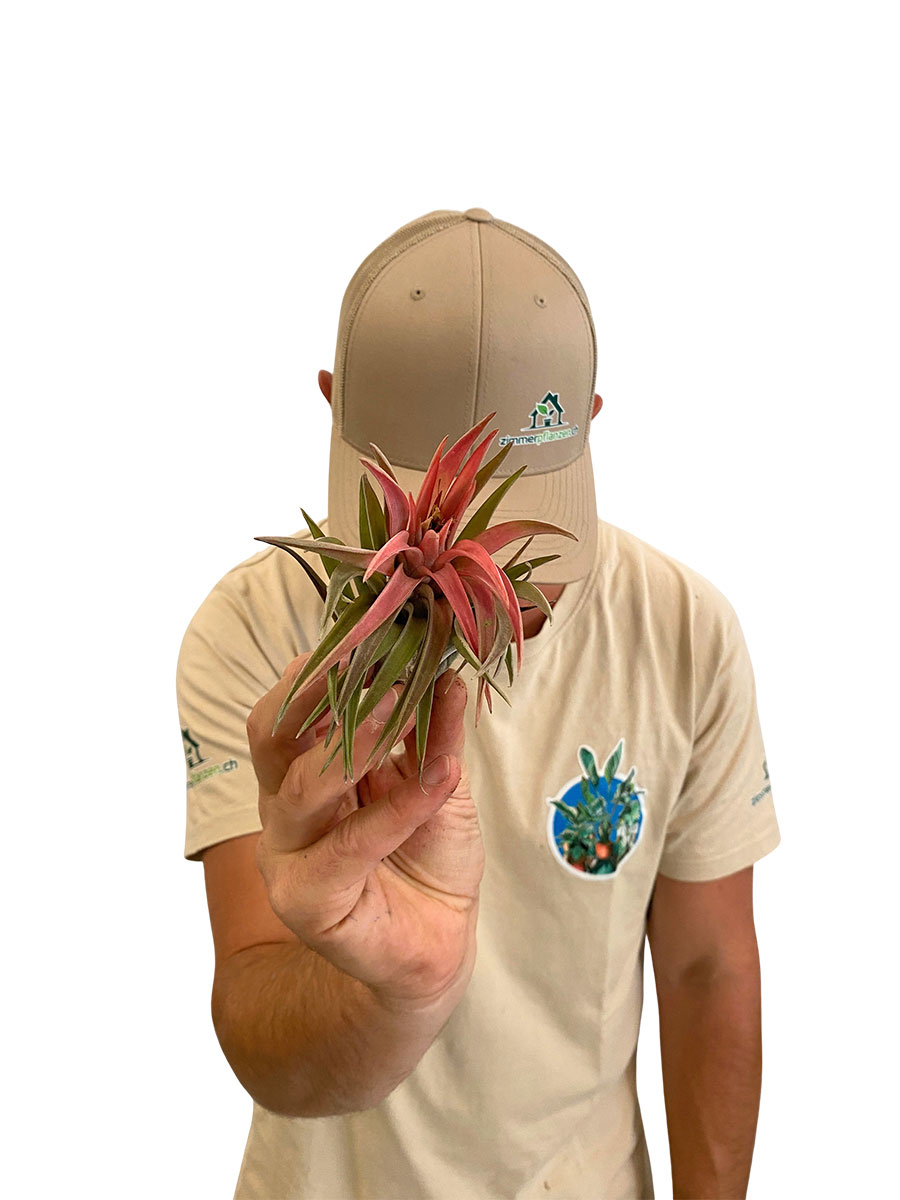
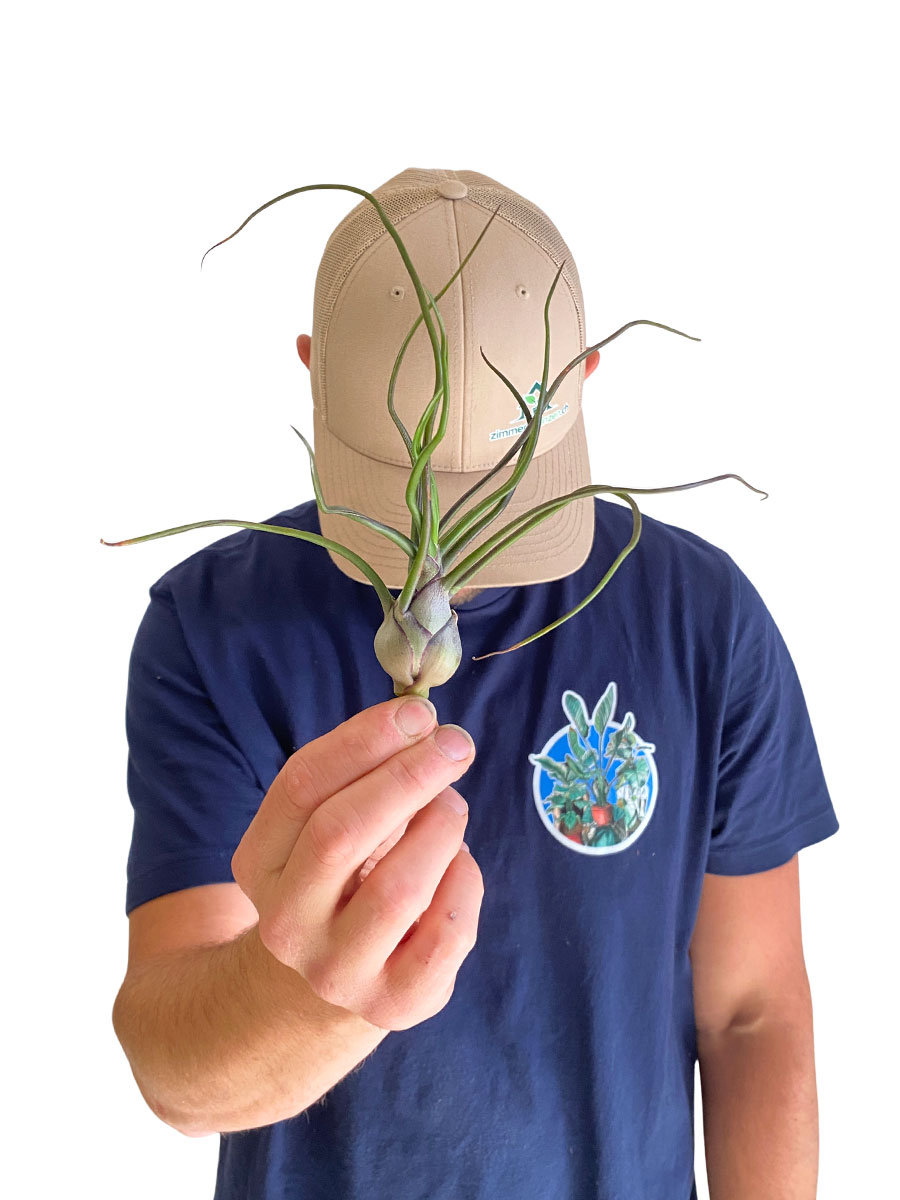
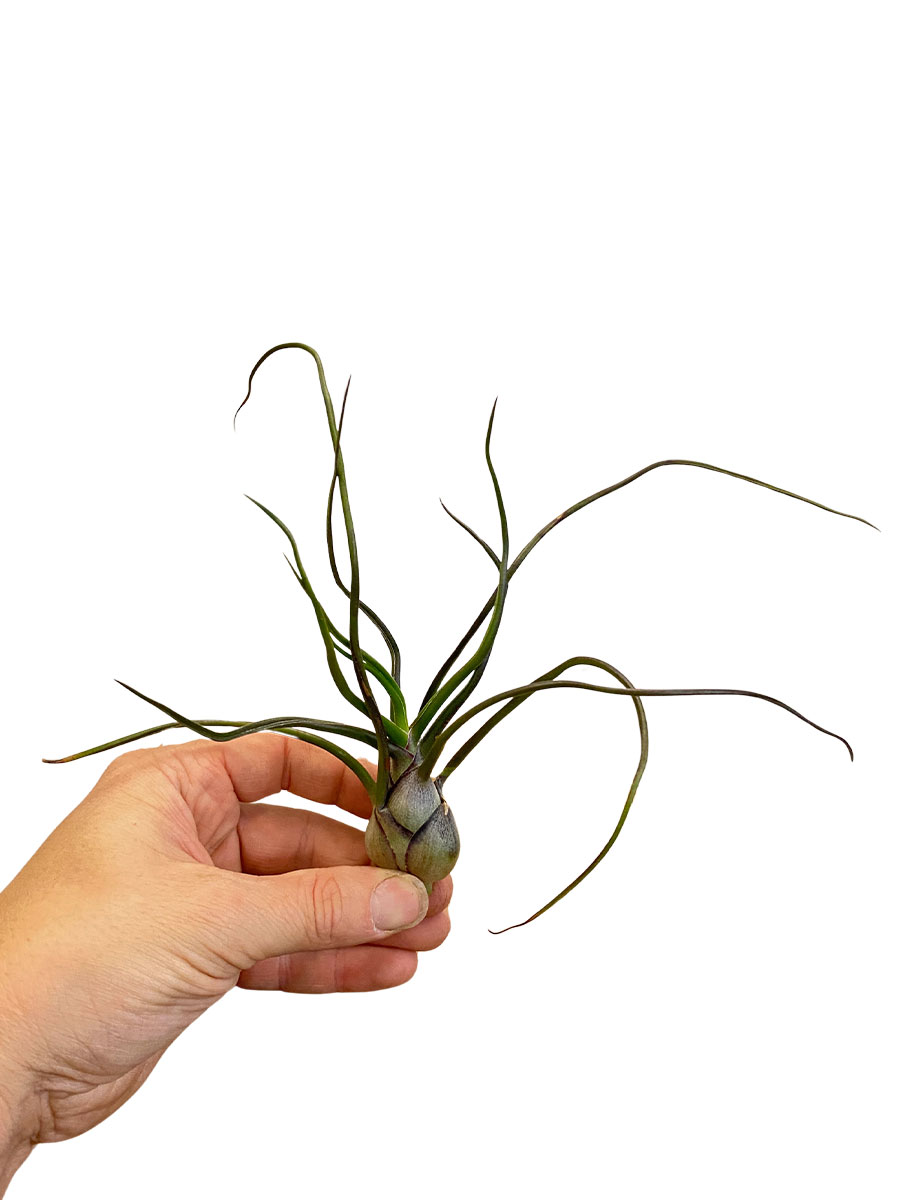
Tillandsia Bulbosa

Topfdurchmesser -

Topfhöhe ab Boden 15cm ±

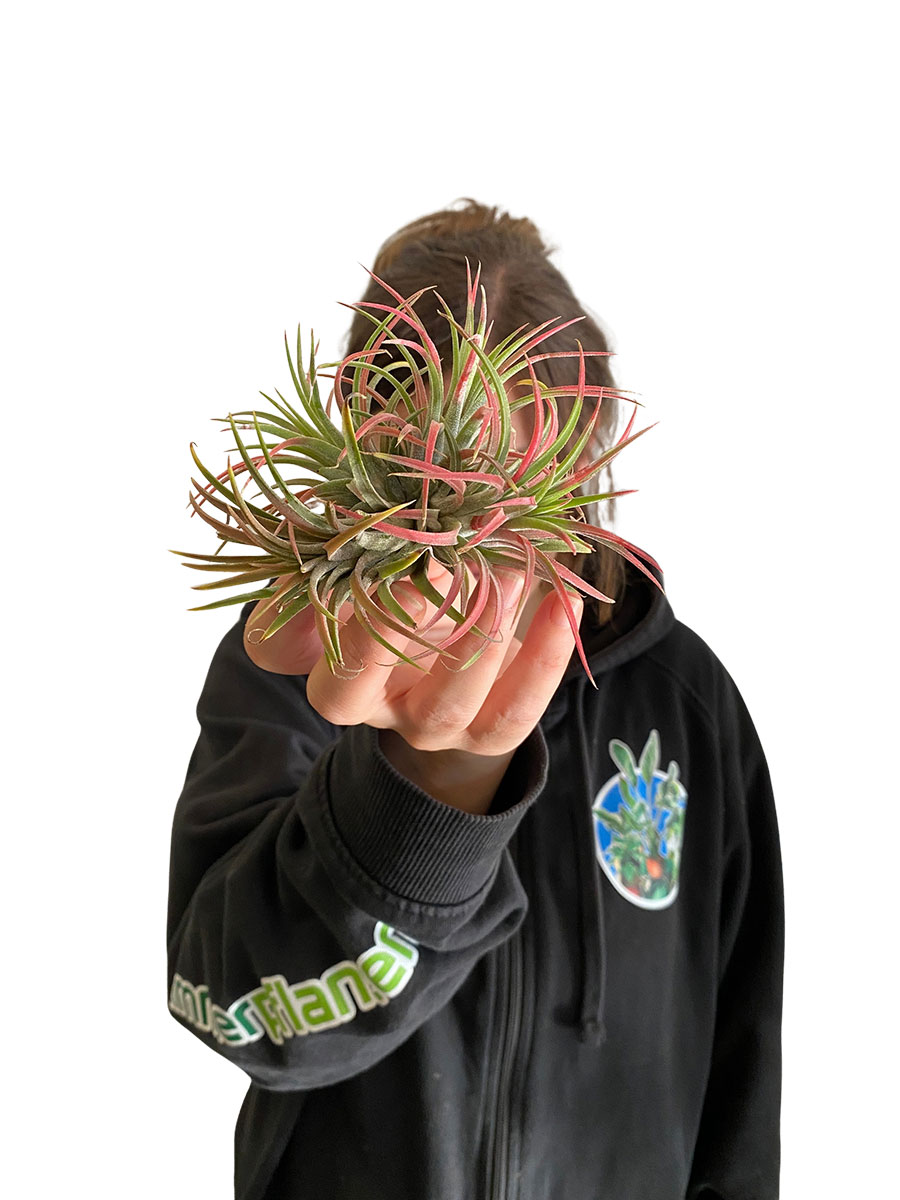
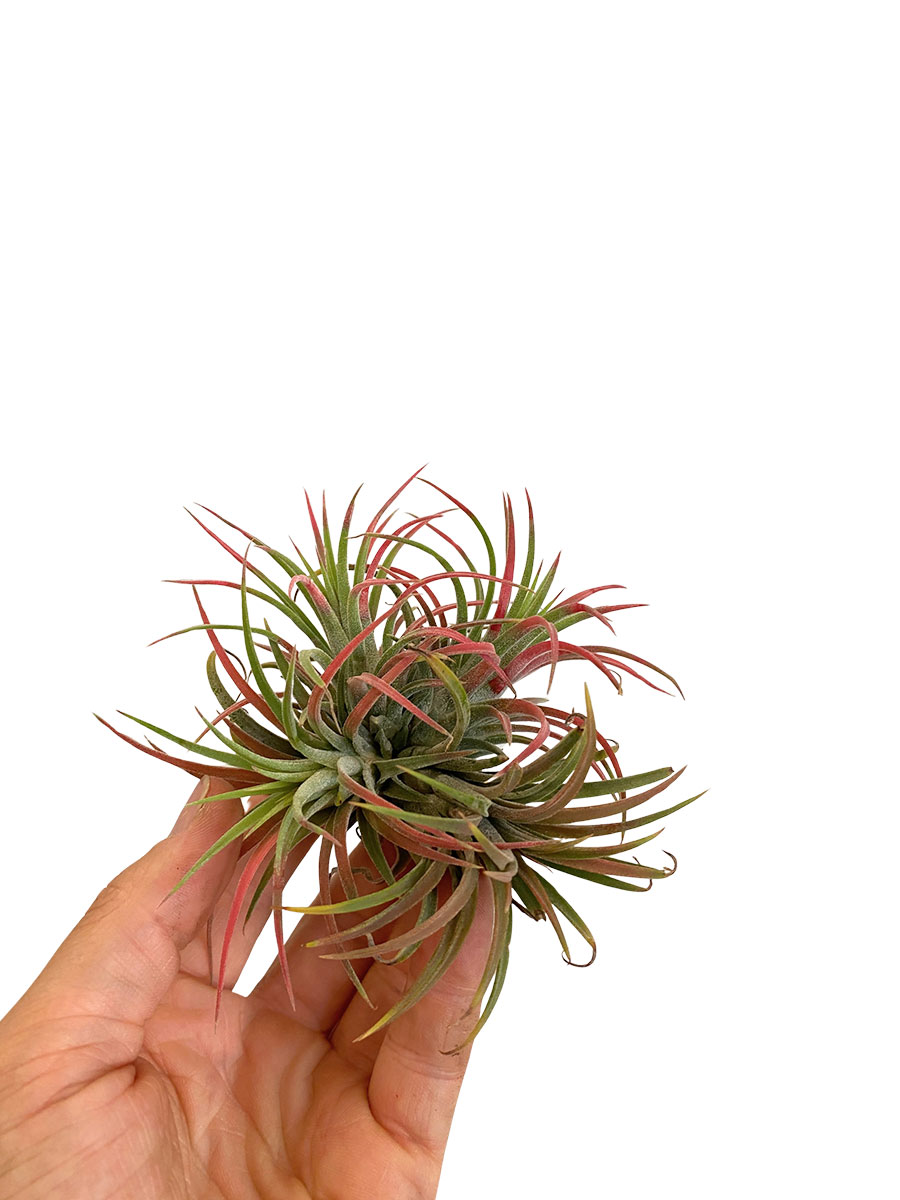
History of Tillandsia Bulbosa The species Tillandsia Bulbosa comes from Central and South America and the Caribbean and is one of the best-known air plants. It is characterised by its bulbous base and twisted, thin leaves that grow in all directions, giving it an almost sculptural appearance. It is popular as a houseplant because it does not need soil and can be used in many ways in modern decor. Care as a houseplant: Light: Bright spot with plenty of indirect light; tolerates some morning or evening sun. Temperature: Ideally 18–28 °C; do not keep below 12 °C. Humidity: High; mist regularly with low-lime water or submerge in water 1–2 times a week. Substrate: No soil needed; can be grown in bowls, on wood or mounted decoratively. Watering: Let it drain well after soaking so that no water collects in the leaf rosette. Feeding: Every 4–6 weeks with heavily diluted bromeliad or orchid fertiliser. Special features: This houseplant is excellent for creative arrangements and brings a tropical touch to your home. Overwintering tips In winter, soak less often but continue to mist regularly; do not keep below 12 °C. Tillandsia Bulbosa is an easy-care, decorative houseplant that delights with its unusual growth.

CHF 12.90*

Delivery time 2 - 7 working days

Available
New
Item no. 4414
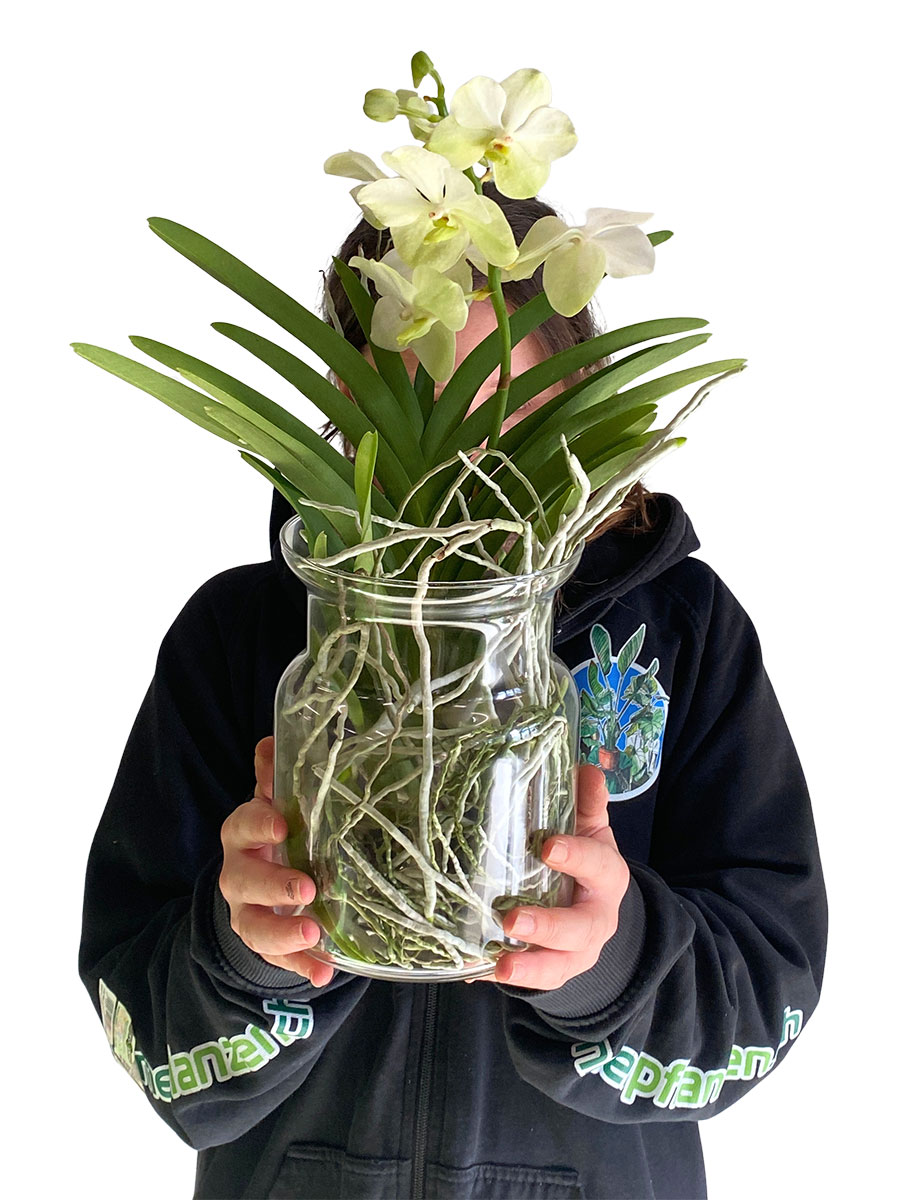
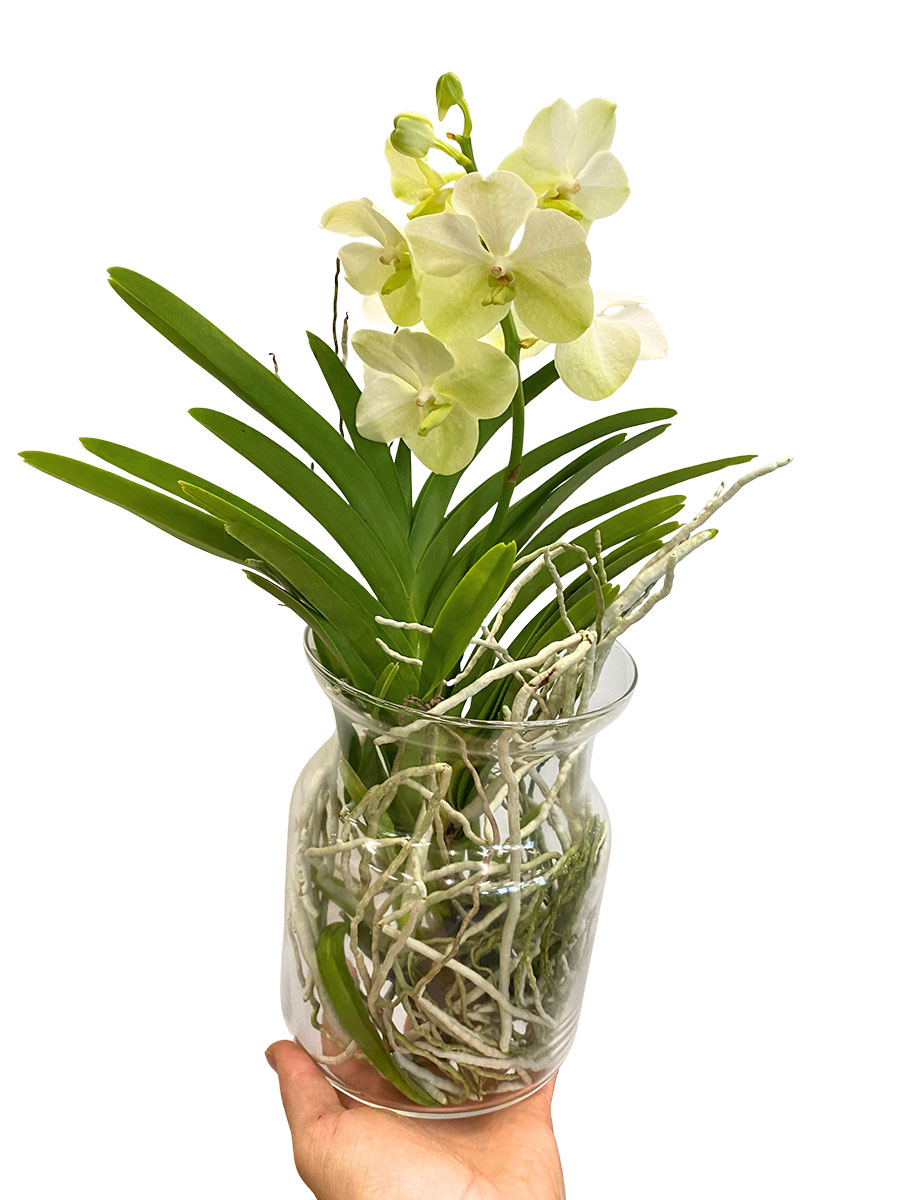
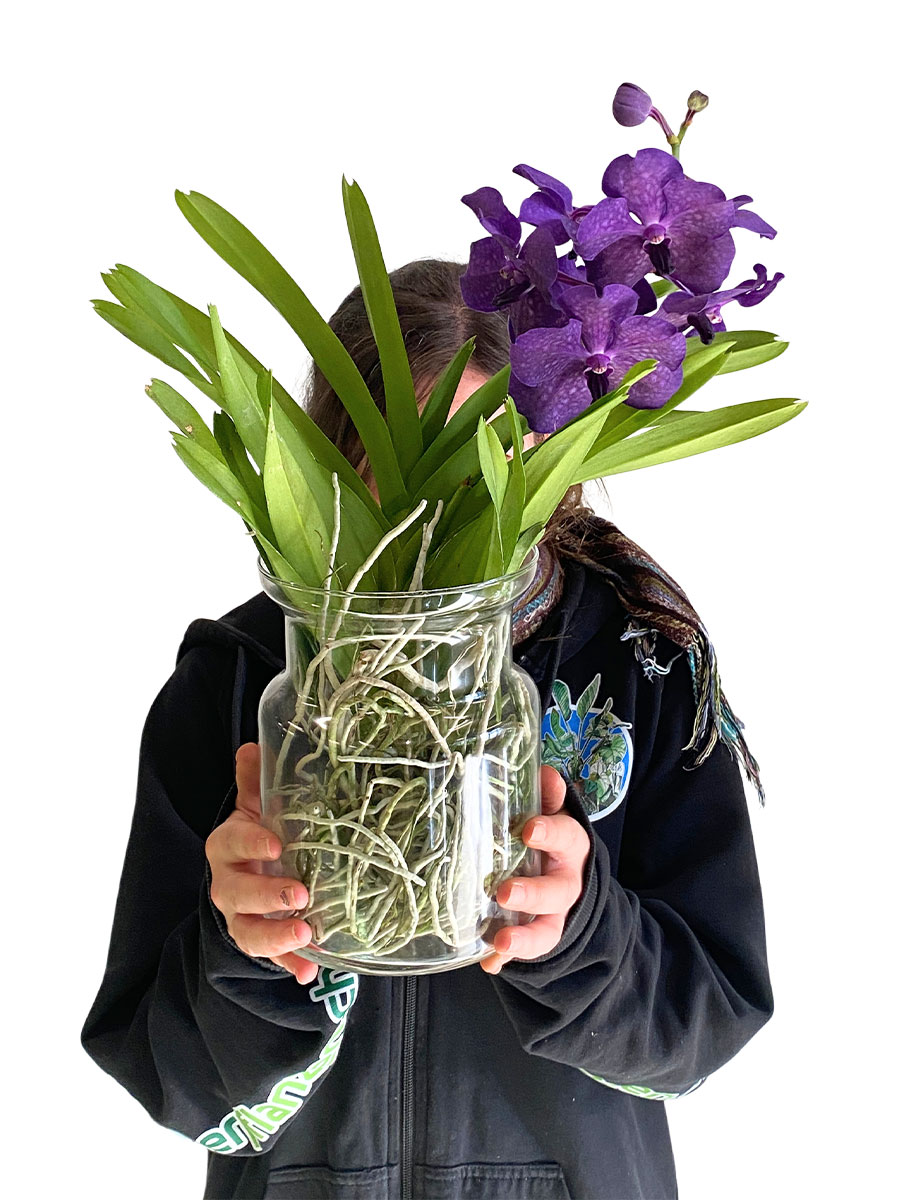
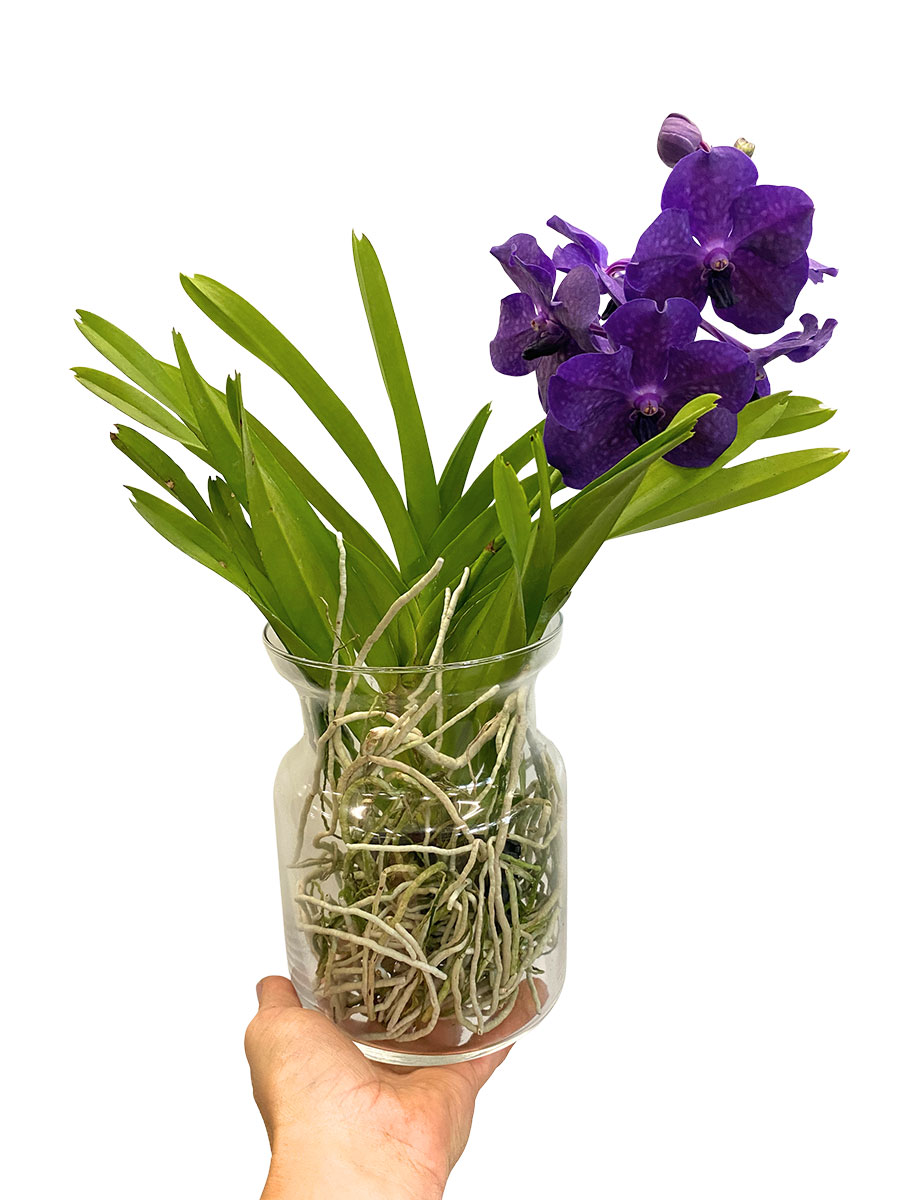
Vanda Michelle Orchid in Glass

Topfdurchmesser 14cm

Topfhöhe ab Boden 45cm ±

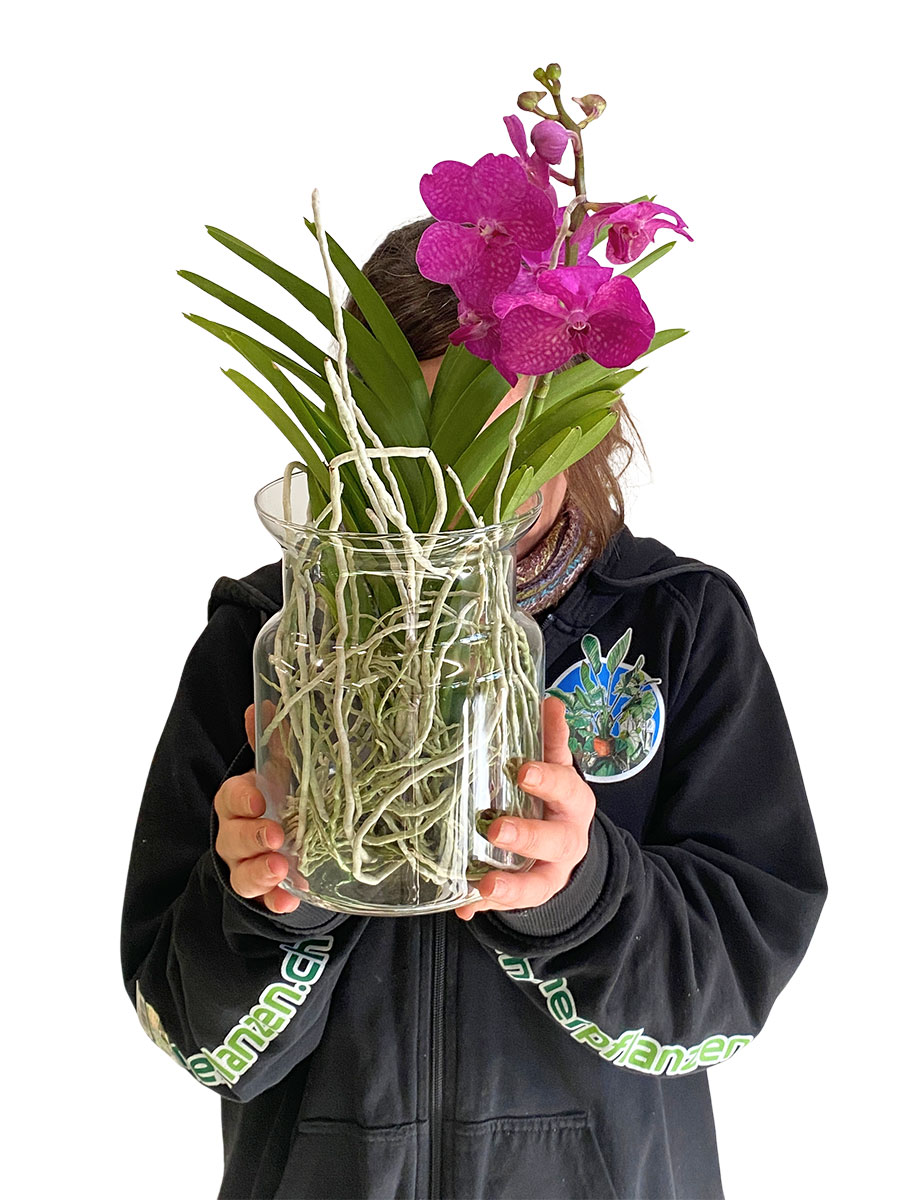
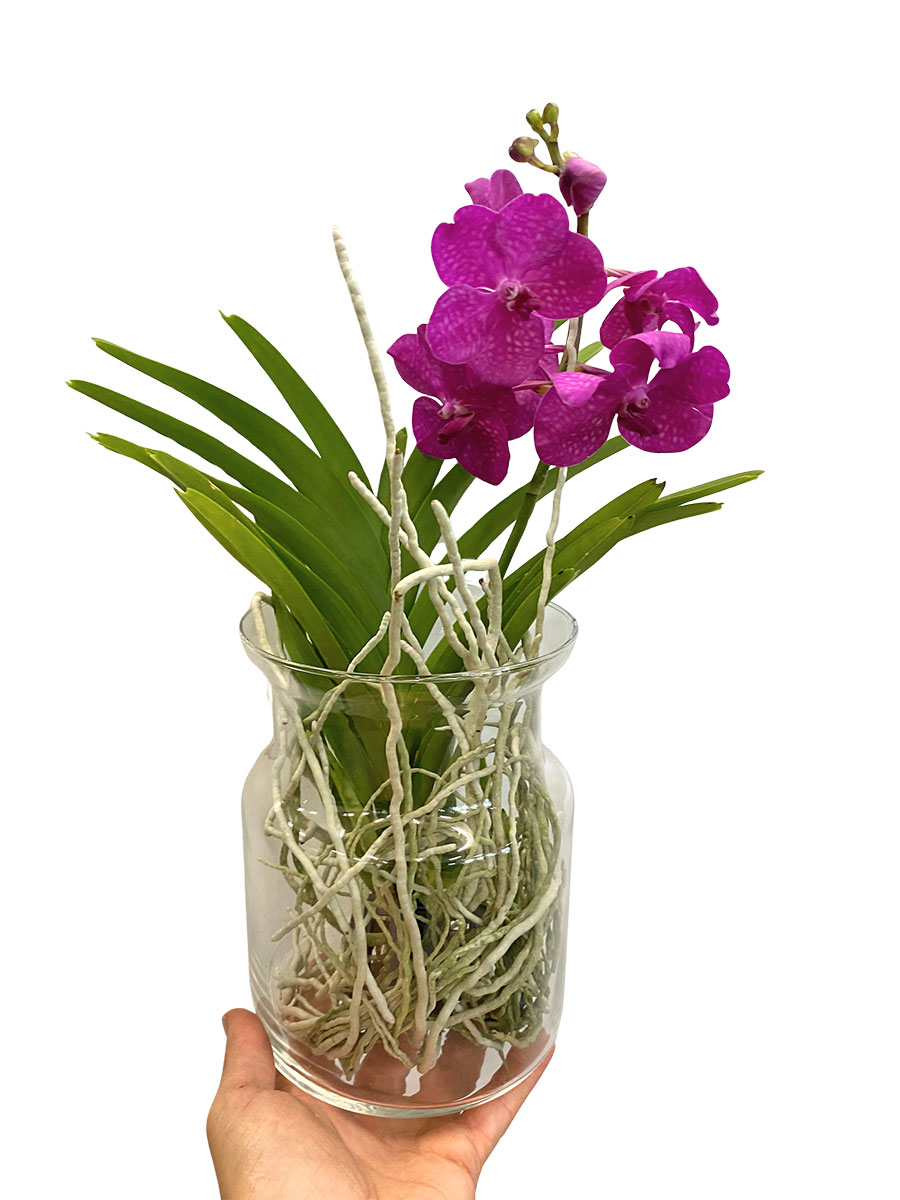
History of the Vanda Michelle orchid The Vanda Michelle orchid belongs to the genus Vanda and is a fascinating tropical orchid characterised by its elegant flowers, strong leaves and striking aerial roots. Vanda orchids originally come from the tropical regions of Asia, where they mainly grow as epiphytes on trees rather than in ordinary soil. In decorative glass cultivation, their characteristic aerial roots are shown off particularly beautifully, making the plant a real eye-catcher. In good conditions, it can flower several times a year and delights with colourful, long-lasting blooms. For pet owners, the Vanda orchid is generally a good choice, as it is considered non-toxic to cats and dogs and can therefore also be grown in households with pets. Care as a houseplant: Light: Very bright to bright. Vanda orchids need a lot of light and also tolerate some direct morning or evening sun. Intense midday sun behind glass should be avoided. Temperature: Around 20–28 °C during the day and slightly cooler temperatures at night are ideal. Avoid temperatures below 15 °C where possible. Humidity: High humidity of around 60–80 % is preferred. A humidifier can be helpful, especially in dry rooms. Substrate: In glass cultivation, the Vanda is kept without conventional substrate. The aerial roots should have enough space and be well ventilated. Watering: Moisten the aerial roots regularly with low-lime water or, depending on how it is grown, briefly dip the plant. Excess water should then be able to drain away completely. Never leave the roots standing in water permanently. Feeding: During active growth, feed roughly every 1–2 weeks with a special orchid fertiliser at a weak dose. Feeding can be reduced in winter. Special features: The aerial roots are an important part of the plant and should not be cut off as long as they are healthy. Good air circulation is particularly important. Faded flower spikes can be removed once they have dried out completely. Important for pet owners: Vanda orchids are considered non-toxic to cats and dogs and are therefore generally well suited to households with pets. Overwintering tips: The Vanda Michelle should be kept very bright and warm in winter too. As natural light is weaker in the cold season, a grow light can be used if needed. Watering should be adapted to the slower growth, but at the same time the aerial roots must not dry out completely for long periods.

CHF 89.90*

Delivery time 2 - 7 working days

Available
New
Item no. 4419
Tillandsia Usneoides

Topfdurchmesser -

Topfhöhe ab Boden 40cm ±

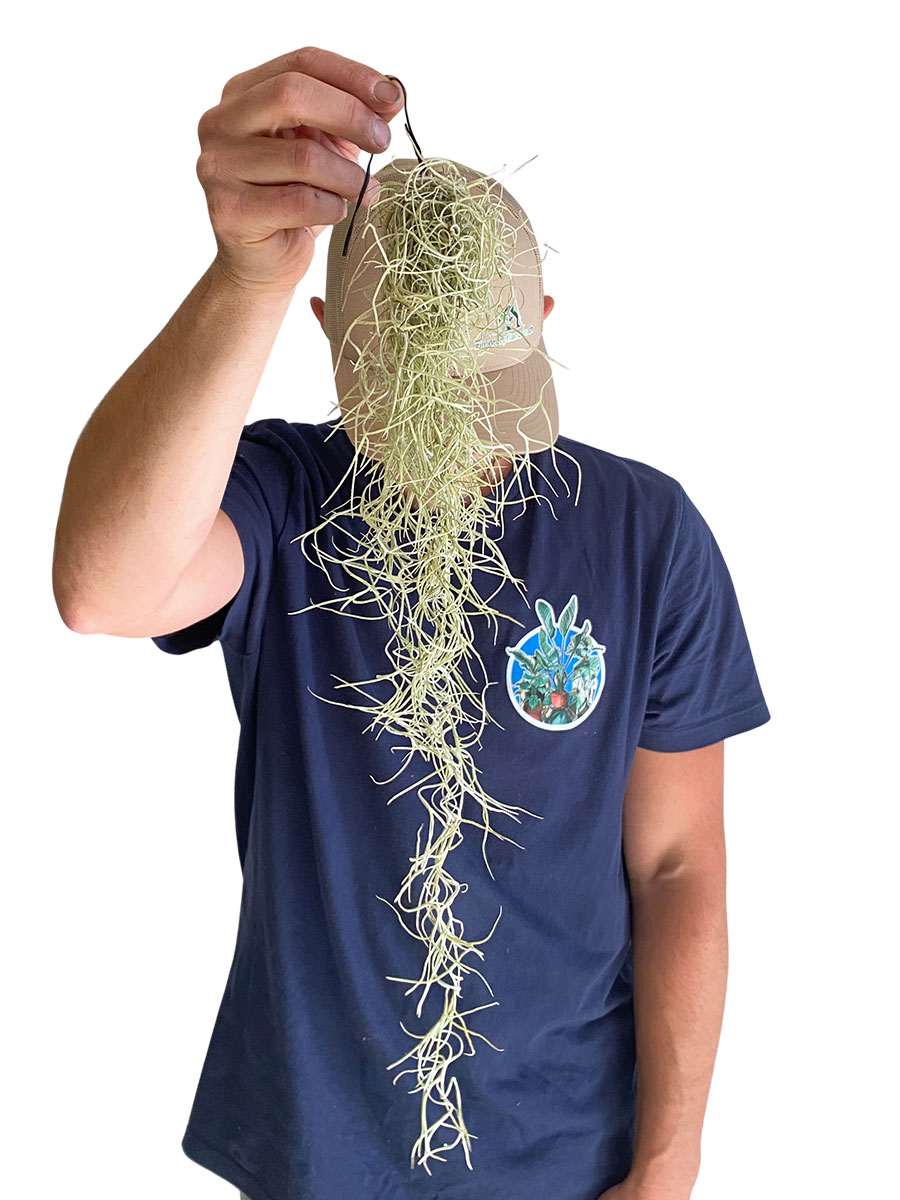
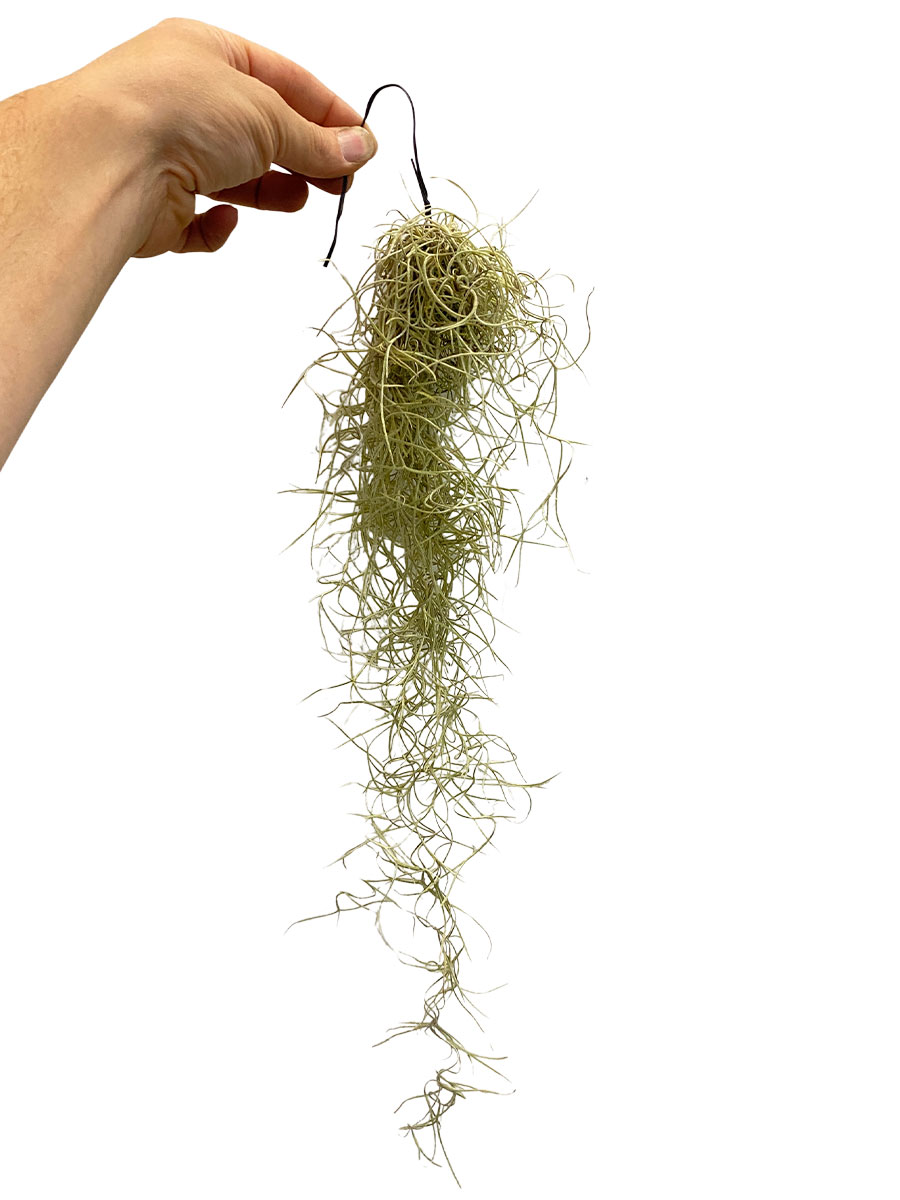
An elegant air plant for subtle, natural accents.This standard-length Tillandsia usneoides is perfect for small hanging vases, shelves or as natural wall decoration. Particularly popular in minimalist interior design or as a stylish addition to urban jungle interiors.History of Spanish moss (Tillandsia usneoides) Spanish moss (Tillandsia usneoides) belongs to the bromeliad family and is an epiphytic air plant that originally comes from the warm and humid regions of the Americas. It is particularly known for its hanging, grey-green growth, which adorns trees in the southern United States, Central and South America and the Caribbean. Contrary to what its name suggests, it is not a true moss but a species of Tillandsia that absorbs water and nutrients directly from the air. Care as a houseplant: Light: Bright spot with plenty of indirect light; some morning or evening sun is also possible. Temperature: Ideally 18–30 °C; do not keep below 10 °C. Humidity: High (over 50 %); regular misting or keeping it in a humid environment is recommended. Substrate: No substrate needed; can hang freely or be attached to wood, wire or stones. Watering: Mist 2–3 times a week with low-lime water or soak in water for a few minutes once a week. Then let it dry well. Feeding: Every 3–4 weeks, mist with diluted bromeliad or Tillandsia fertiliser. Special features: This houseplant needs good air circulation to stay healthy and avoid rot. Care as a terrarium plant Humidity: High (60–90 %); perfect for humid, well-ventilated terrariums. Location: Place it high up so that the moss can hang freely and air can circulate. Water requirements: Water less often than outside the terrarium, as the humidity is high. Overwintering tips: In winter, mist less, but do not let it dry out completely. Do not let temperatures drop below 10 °C. Spanish moss is a unique houseplant that brings a natural, tropical touch to your home with its elegant, hanging growth habit.

CHF 12.90*

Delivery time 2 - 7 working days

Available
Item no. 4417
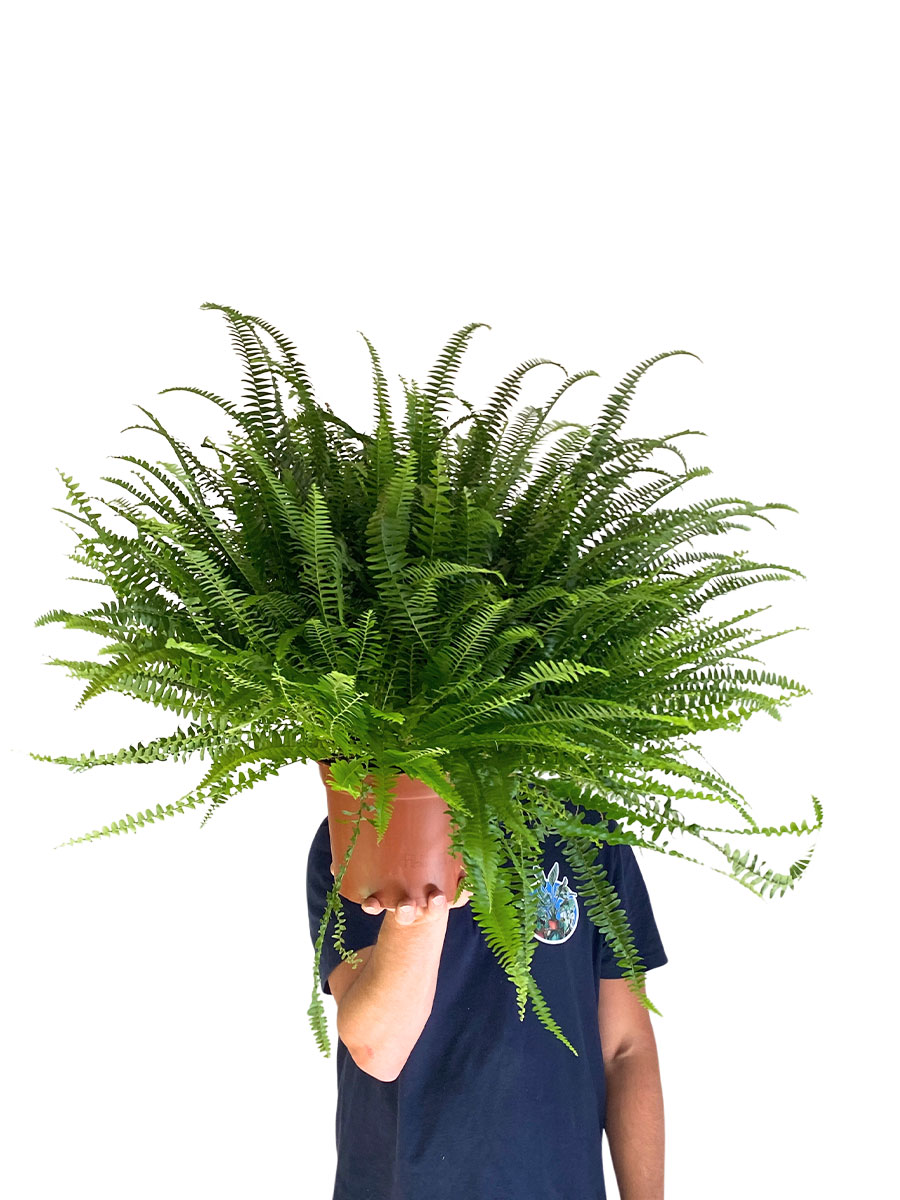
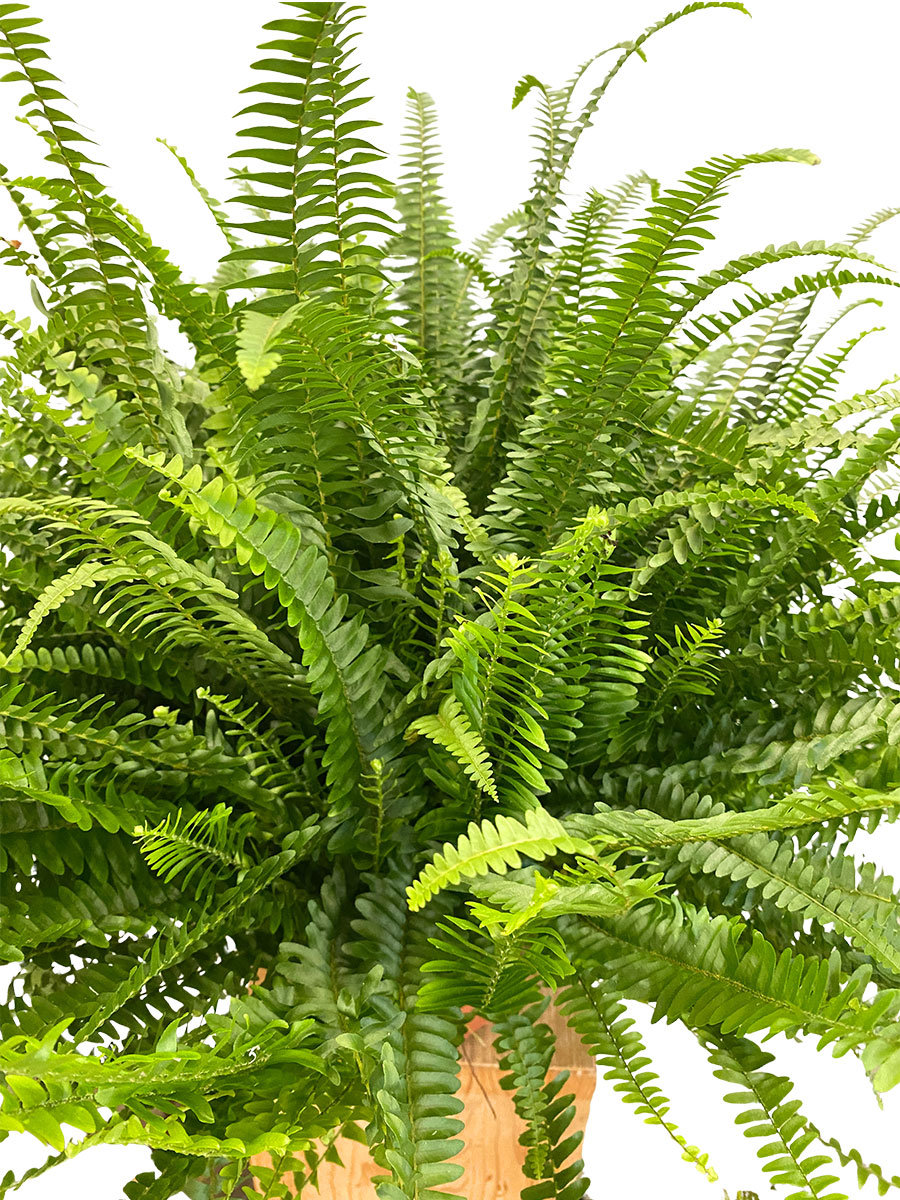
Sword Fern Nephrolepis Exaltata

Topfdurchmesser 19cm

Topfhöhe ab Boden 60cm ±

History of the sword fern (Nephrolepis) The sword fern, botanically Nephrolepis exaltata, is one of the oldest known houseplants. It originally comes from tropical and subtropical regions around the globe. It became particularly popular in the Victorian era, when it brought a tropical touch to conservatories and living rooms. With its densely pinnate, elegantly arching fronds, it remains one of the classic houseplants today. Care as a houseplant: Light: Bright spot without direct sun; also does well in partial shade. Temperature: Ideally 18–25 °C; do not keep below 15 °C for long periods. Humidity: High; regular misting or a humidifier is recommended. Substrate: Loose, humus-rich and with good water retention, e.g. potting soil with a little coir or bark. Watering: Keep evenly moist; do not let it dry out. Avoid waterlogging. Feeding: Every 4 weeks with houseplant fertiliser during the growing season. Special features: This houseplant is particularly good at purifying the air and is well suited to bedrooms or bathrooms. Overwintering tips: In winter, water a little less and keep room temperatures as constant as possible. The sword fern remains a particularly popular classic houseplant when the humidity and location are right.

CHF 39.90*

Delivery time 2 - 7 working days

Available
Item no. 4418
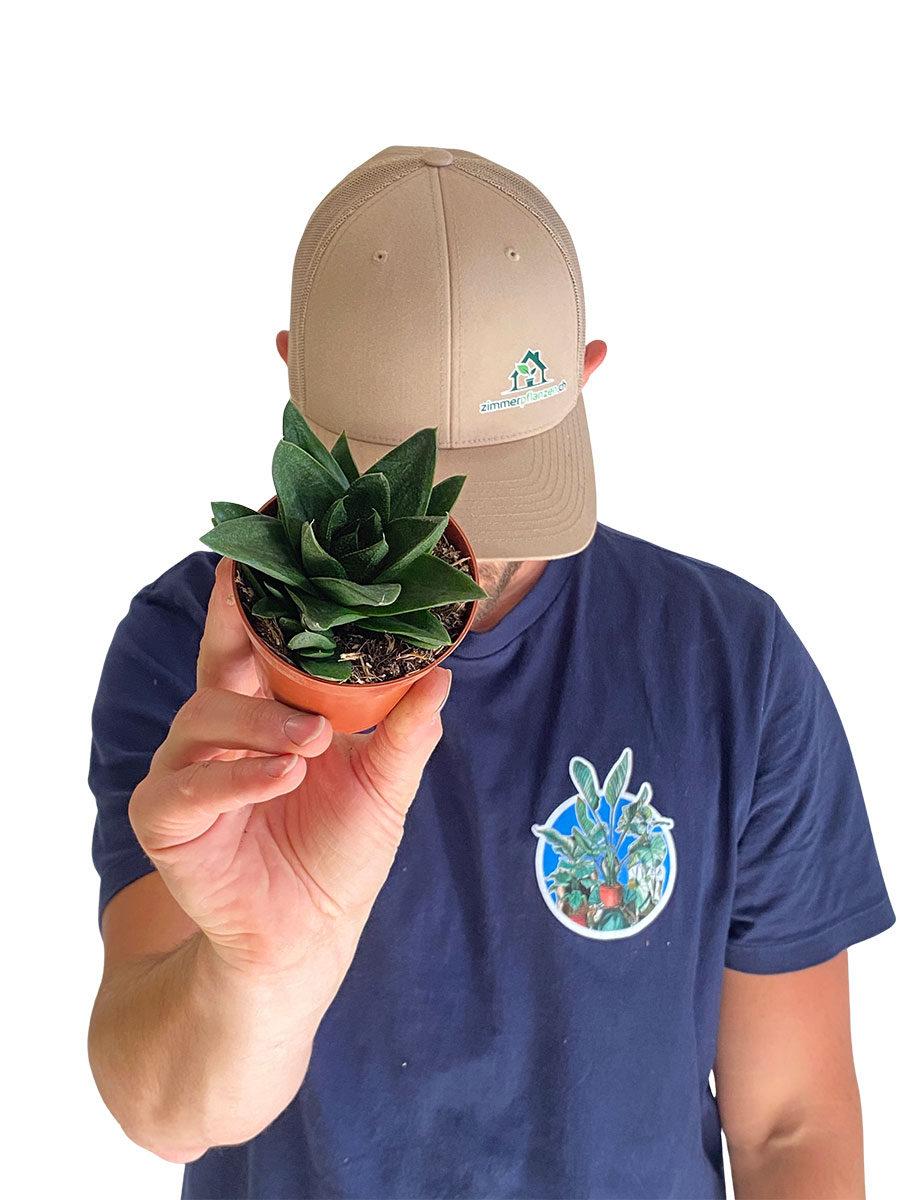
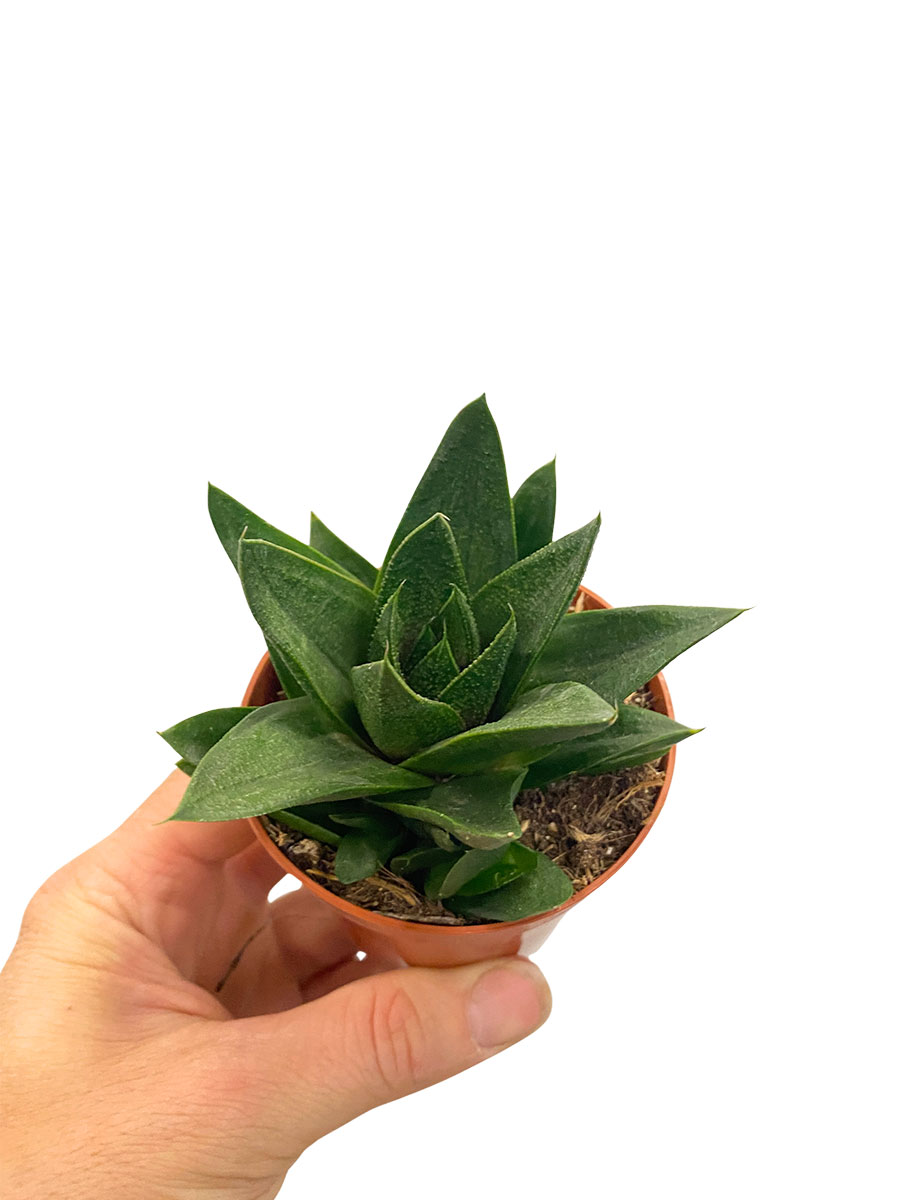
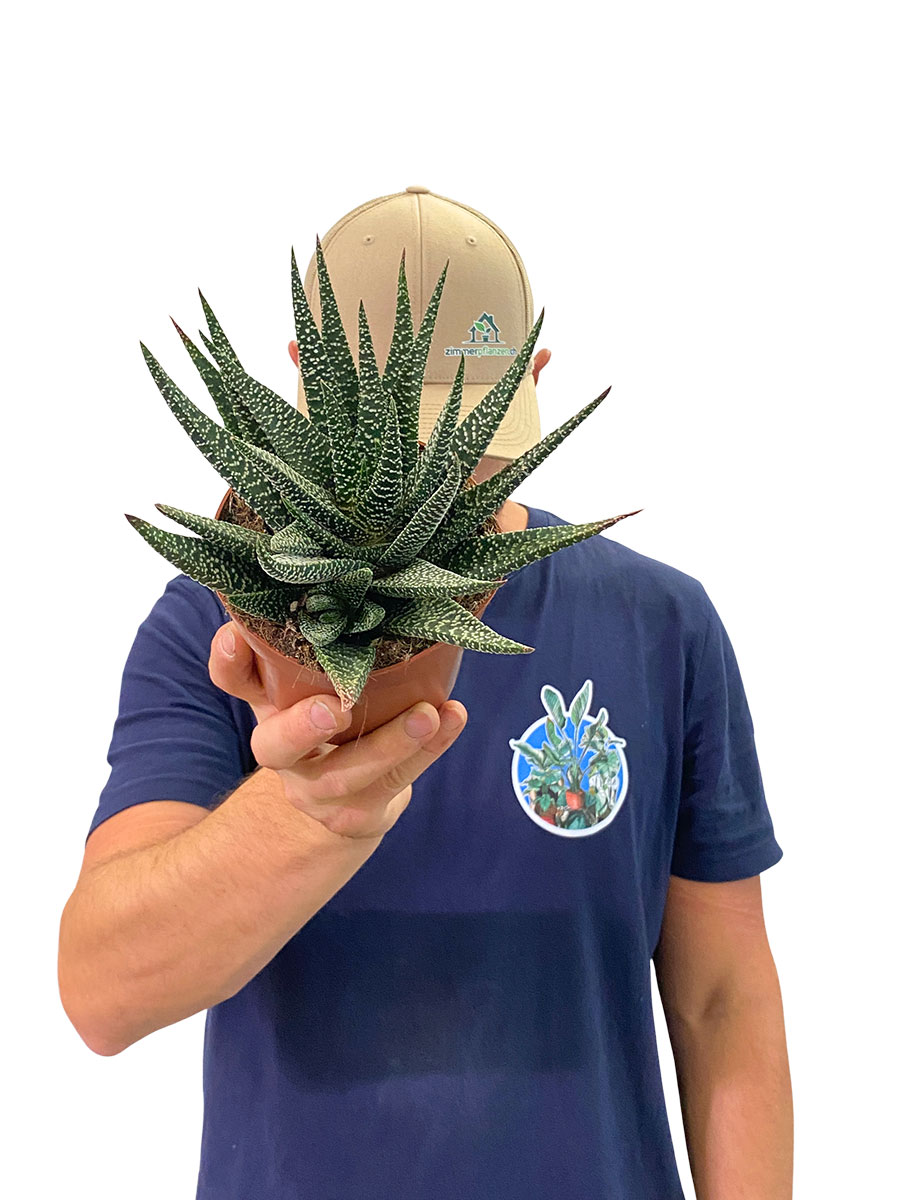
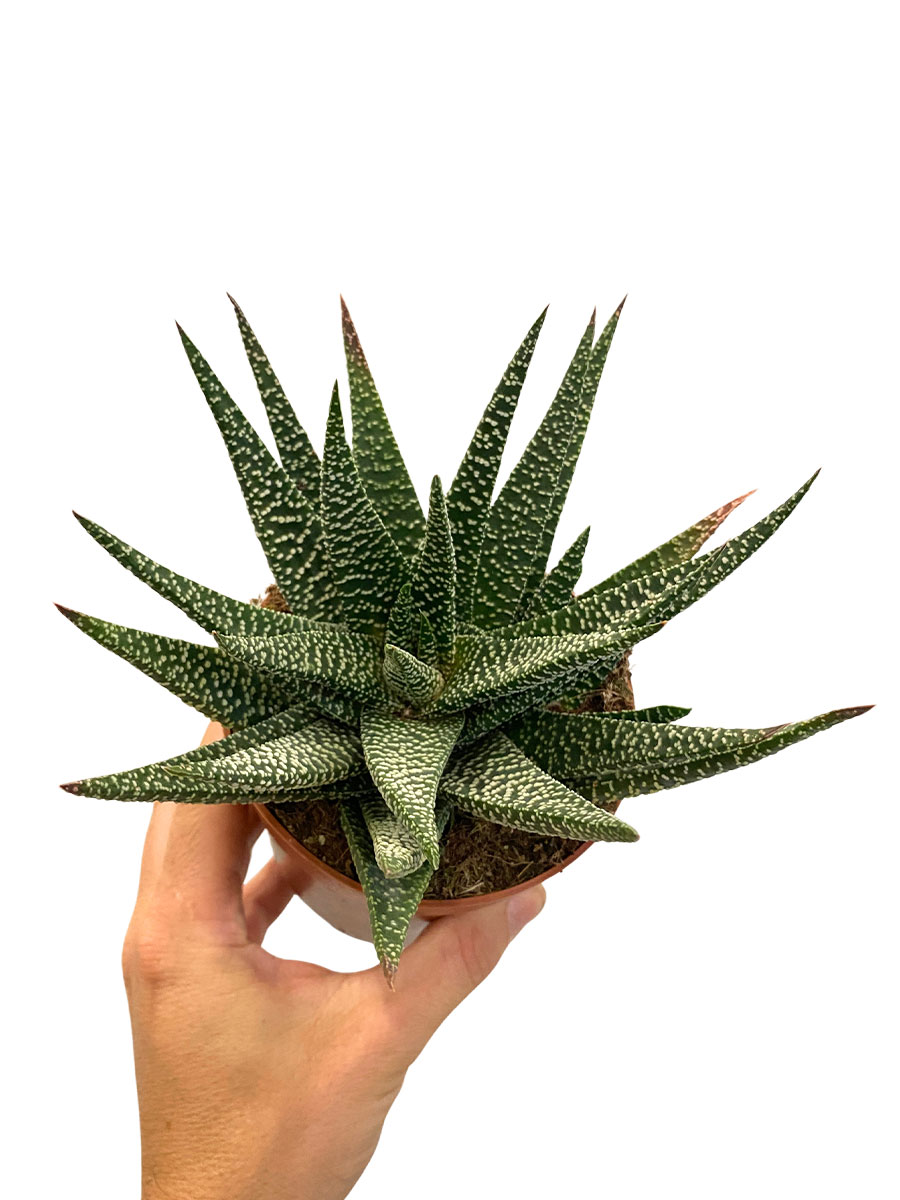
Gasteria Flow

Topfdurchmesser 8.5cm

Topfhöhe ab Boden 15cm ±

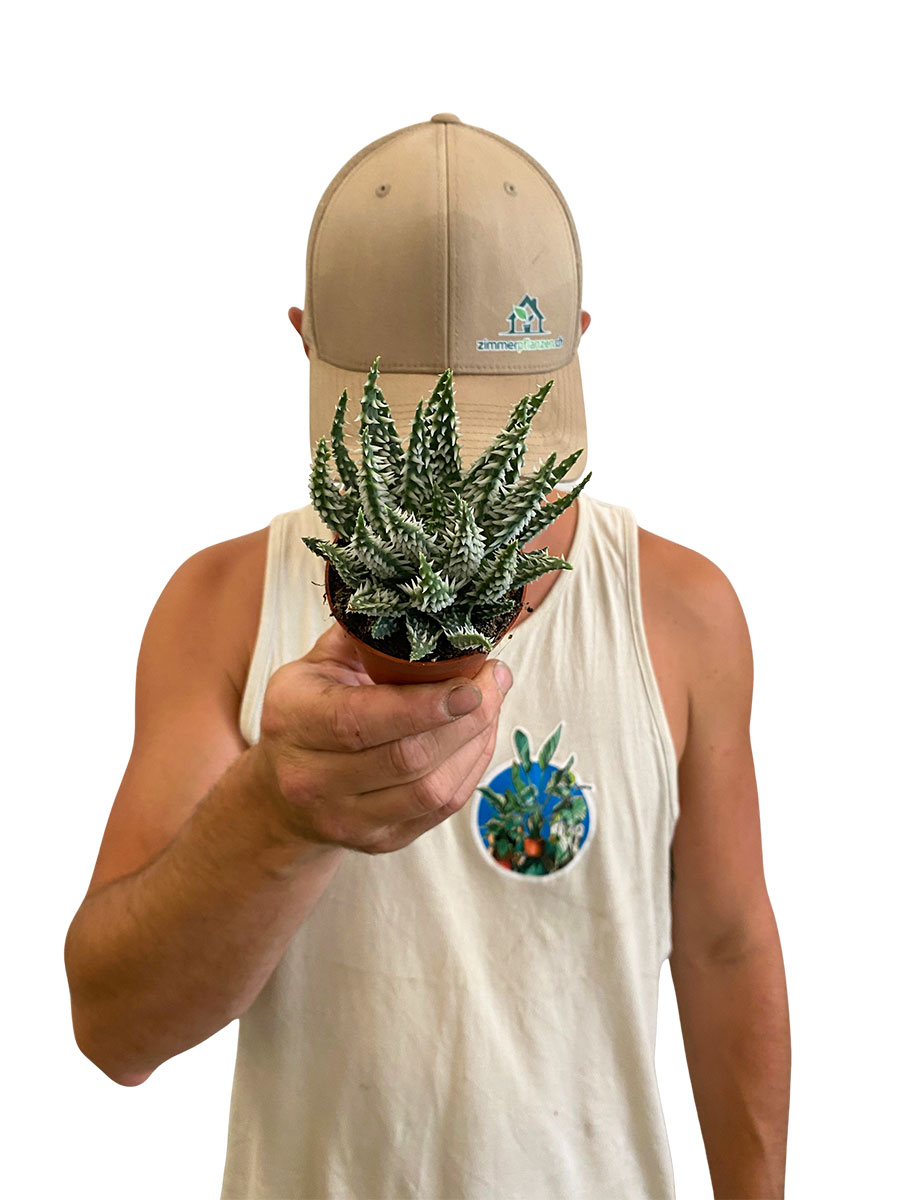
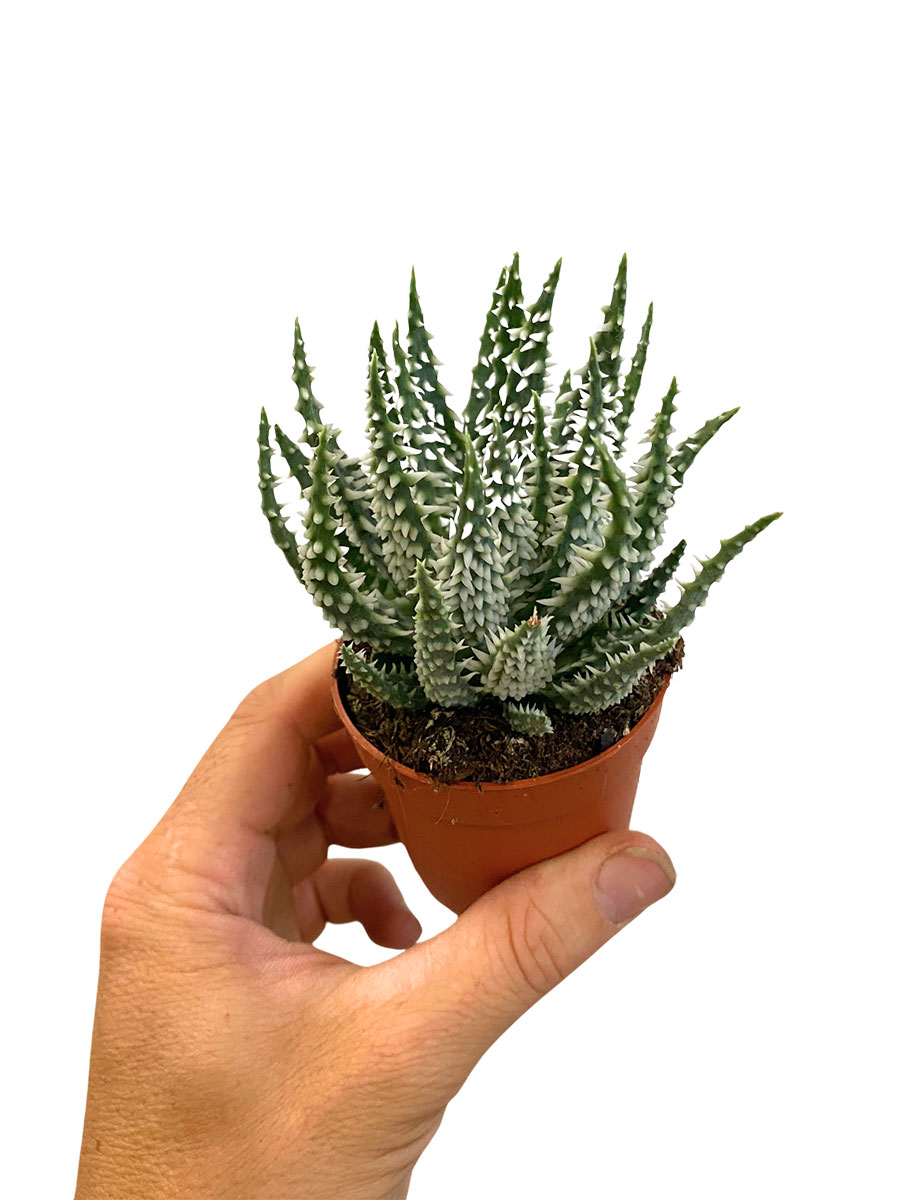
History of the Gasteria Flow Gasteria Flow belongs to the genus Gasteria, which is closely related to Aloe and Haworthia. It originally comes from South Africa, where it grows in dry, rocky areas. This houseplant is characterised by its thick, lanceolate leaves with unique patterns and a compact growth habit. Gasteria species are known for their robustness and adaptable growth, which makes them ideal houseplants. Care as a houseplant: Light: Bright position to partial shade; also tolerates indirect light well. Temperature: Ideally 18–30 °C; avoid temperatures below 10 °C. Humidity: Well adapted to dry air, perfect for indoor spaces. Substrate: Cactus soil or free-draining potting soil with sand and perlite. Watering: Only water when the substrate is completely dry; avoid waterlogging. Feeding: Every 6–8 weeks with cactus fertiliser during the growing season. Special features: This houseplant grows slowly and is very easy to care for – ideal for beginners. Overwintering tips: Water less in winter and place it in a bright, cool spot (at least 10 °C). Gasteria Flow is a long-lived, decorative houseplant that can thrive even in darker corners.

CHF 9.90*

Delivery time 2 - 7 working days

Available
New
Item no. 4421
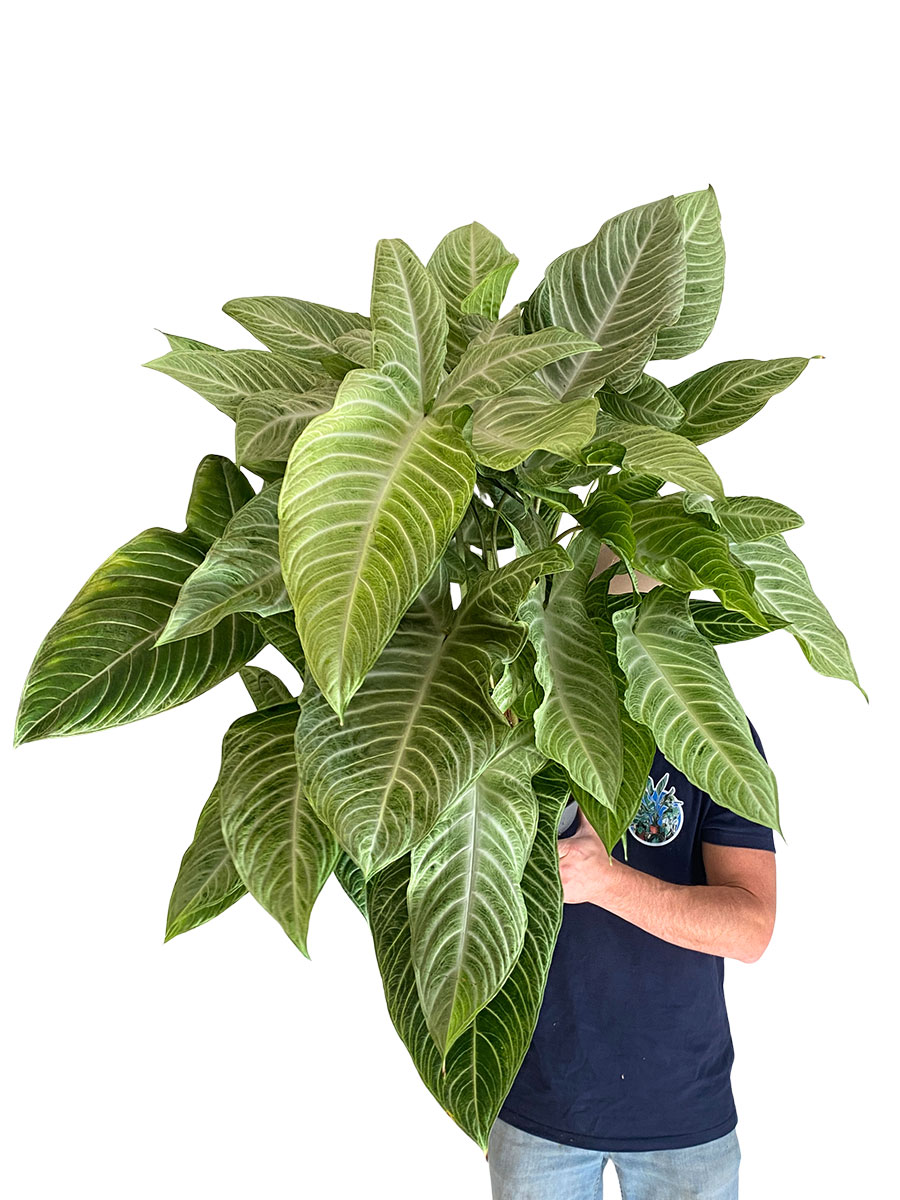
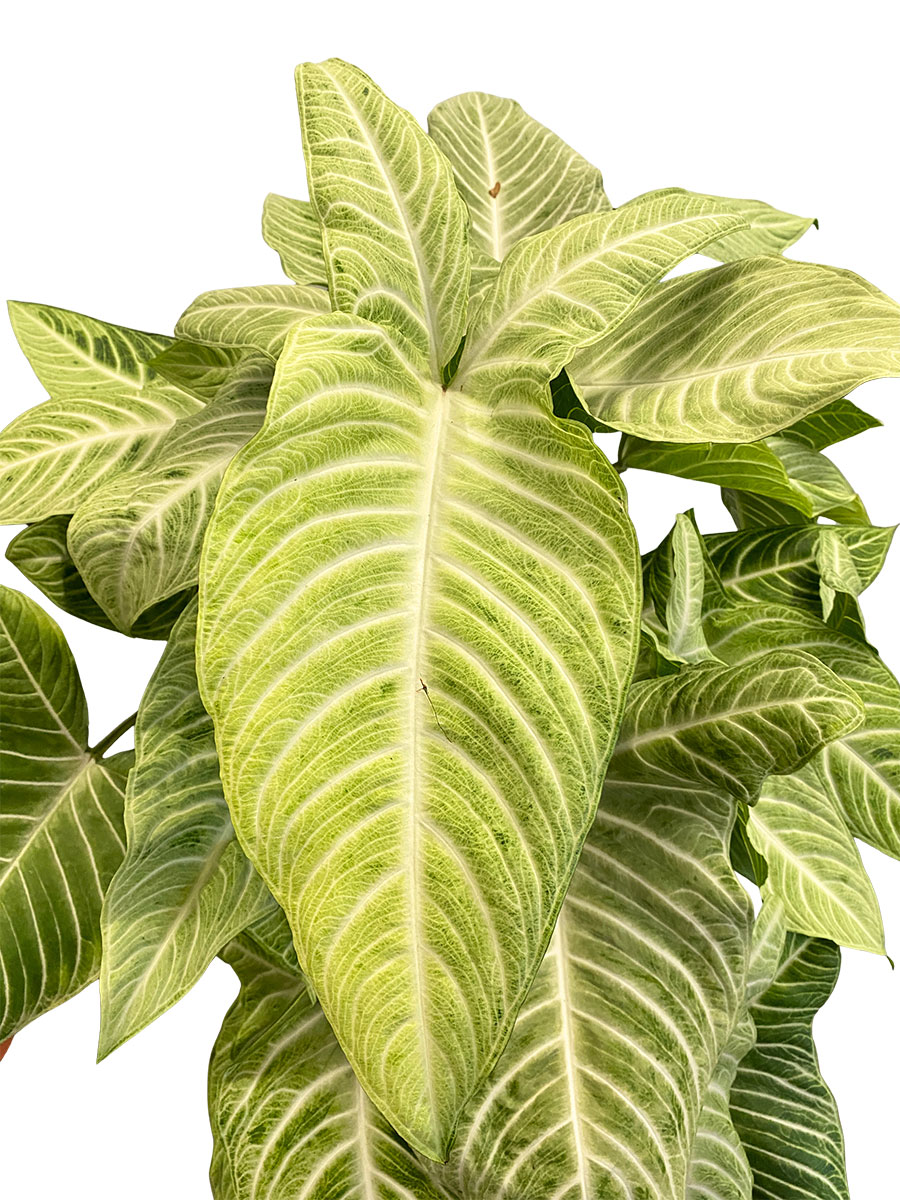
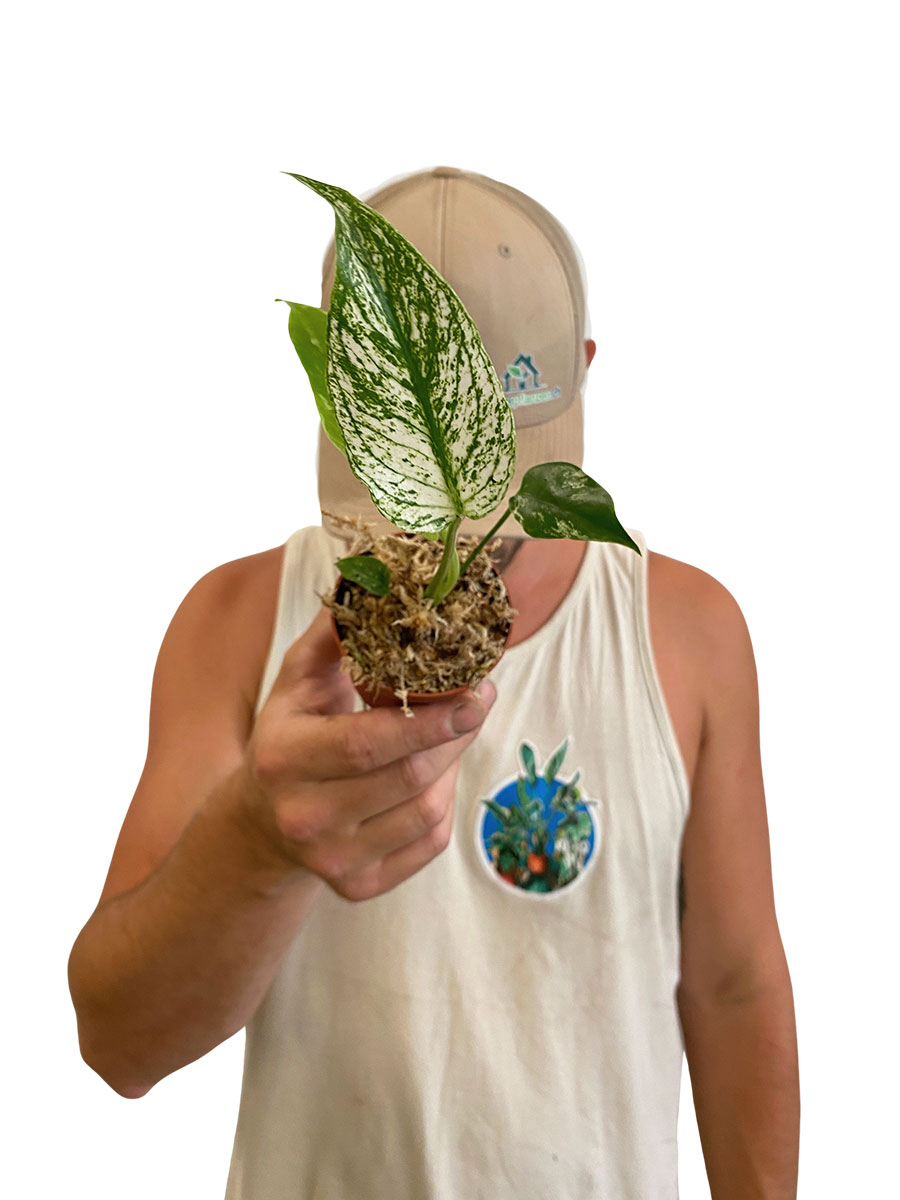
Xanthosoma Lindenii Angel Wing - Large

Topfdurchmesser 24cm

Topfhöhe ab Boden 70cm ±

History of the Xanthosoma lindenii 'Angel Wing' Xanthosoma lindenii 'Angel Wing' is an extraordinary houseplant that captivates with its striking, arrow-shaped leaves with creamy white markings. It originally comes from the tropical regions of South America and, because of its eye-catching leaf pattern, is often confused with decorative caladiums or alocasias. As a member of the arum family (Araceae), it has established itself as a special rarity among houseplant lovers. Care as a houseplant: Light: Bright spot with plenty of indirect light; avoid direct sun. Temperature: Ideally 18–27 °C; sensitive below 15 °C. Humidity: High (over 60 %); regular misting or a humidifier helps. Substrate: Loose, free-draining substrate (e.g. soil with perlite, coir or bark). Watering: Water moderately; keep the soil evenly and slightly moist, no waterlogging. Feeding: Every 2–4 weeks during the growing season with foliage plant fertiliser. Special features: This houseplant is sensitive to cold and draughts – a warm, sheltered spot is ideal. Overwintering tips: In winter, keep it drier and do not place it below 16 °C. Xanthosoma lindenii 'Angel Wing' is a tropical beauty among houseplants and ideal for plant lovers with some experience.

CHF 149.90*

Delivery time 2 - 7 working days

Available
Item no. 4412
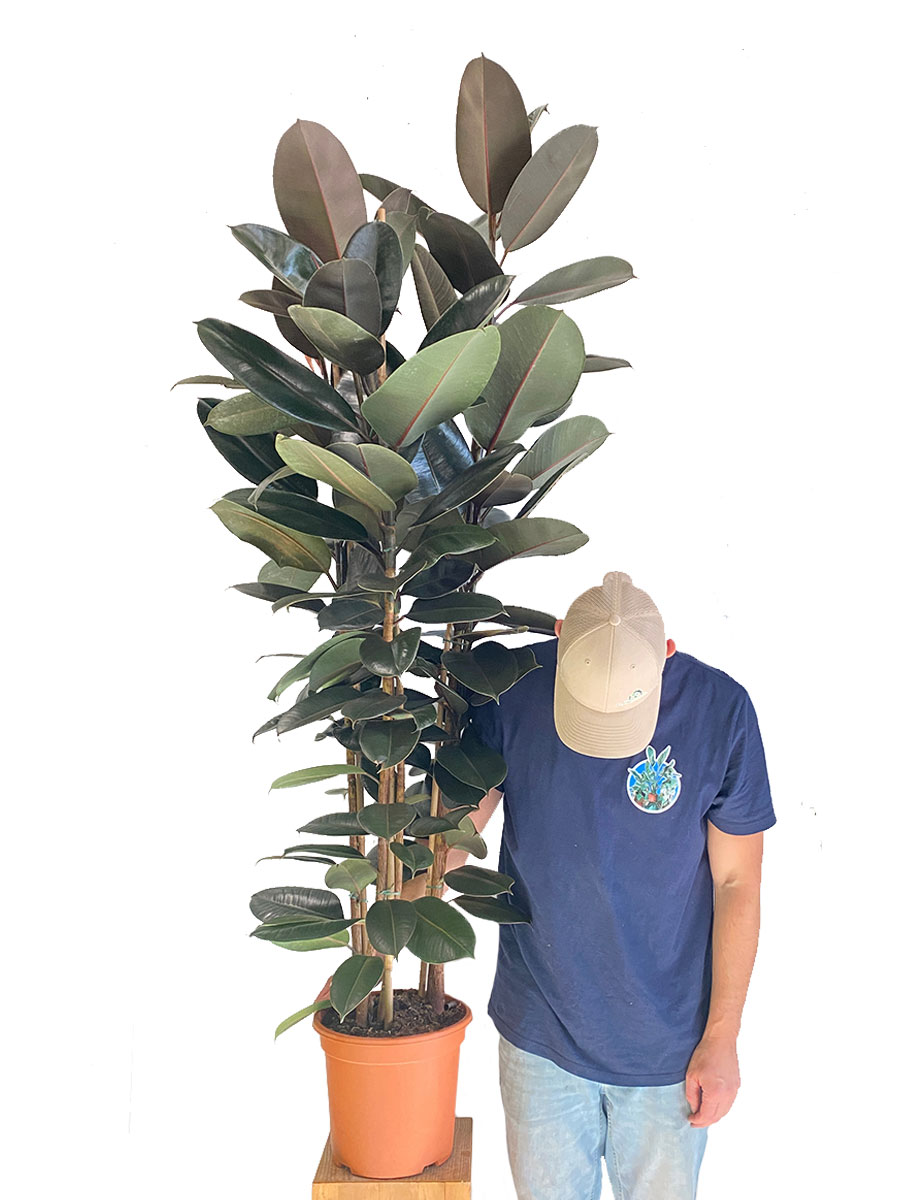
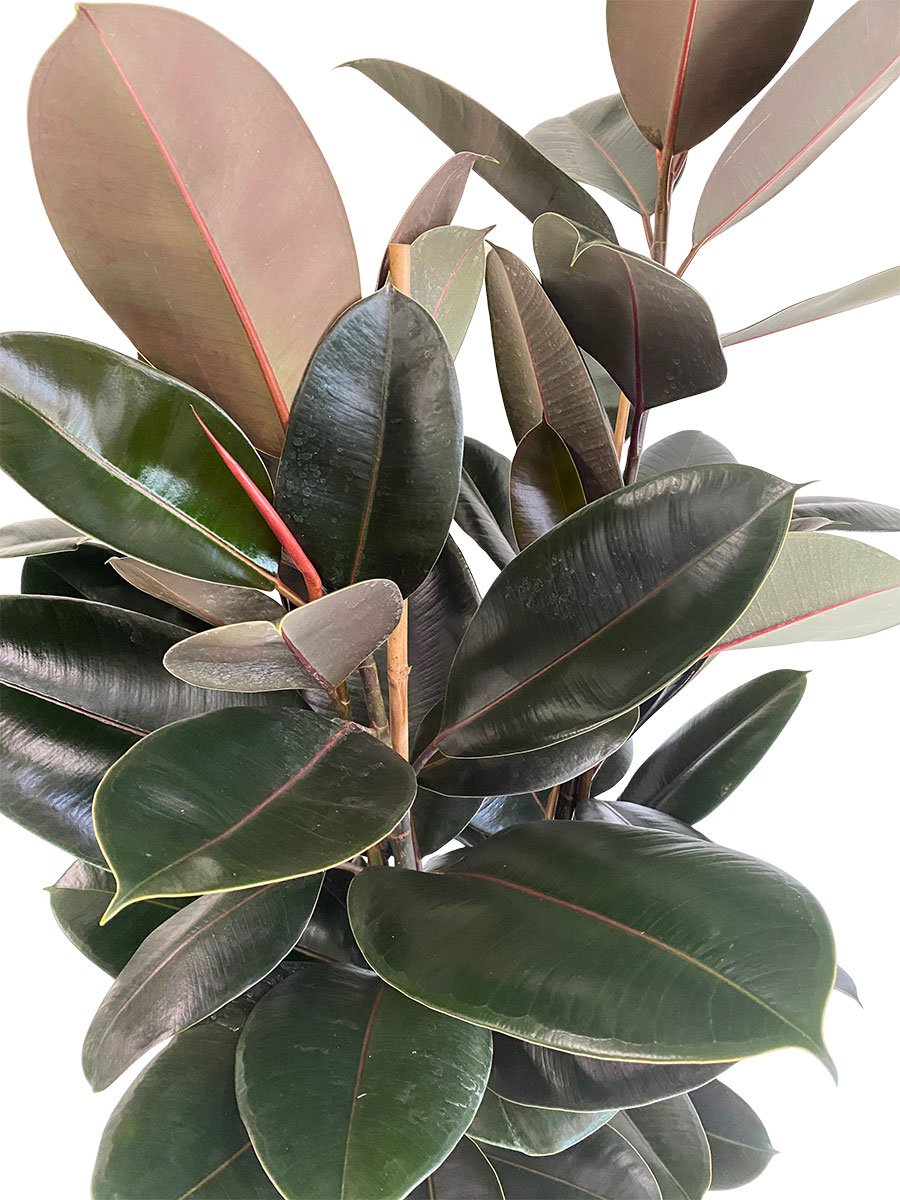
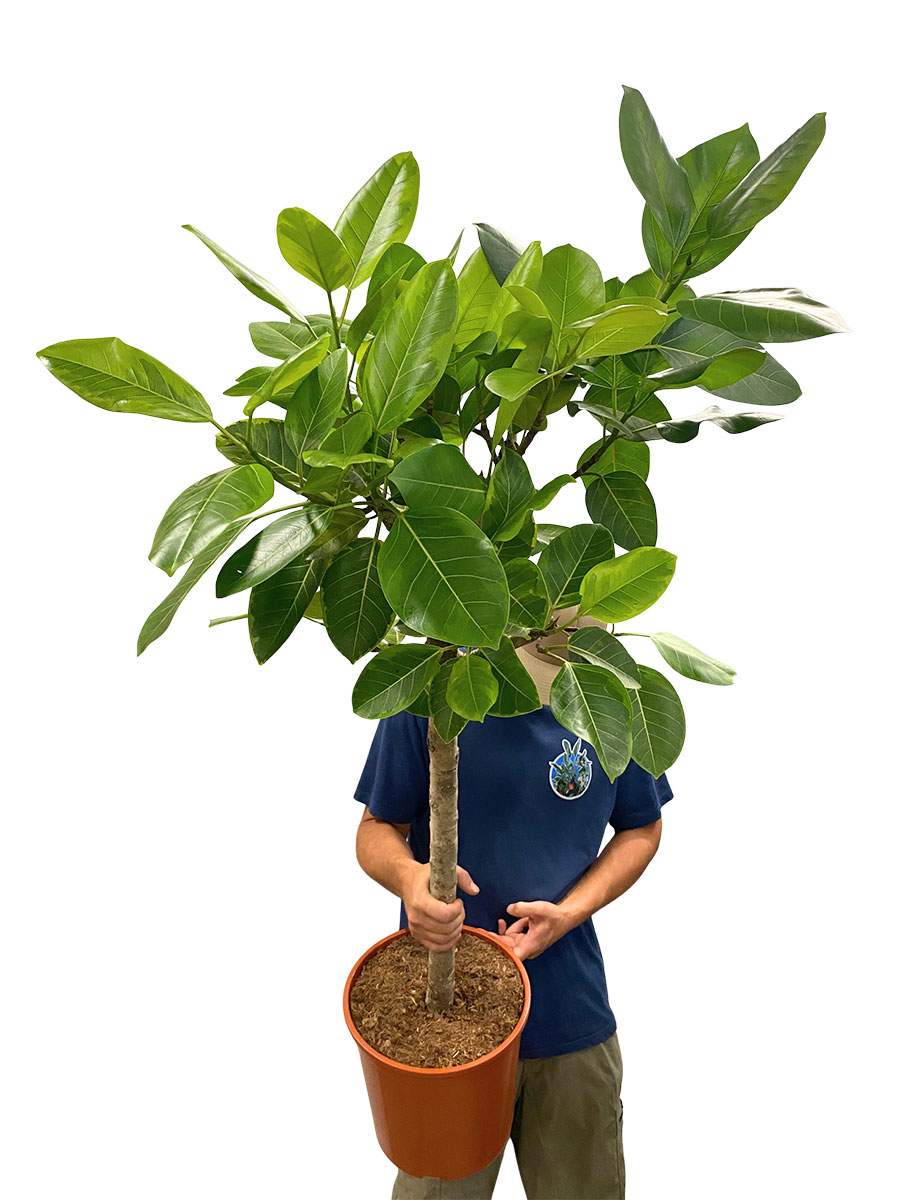
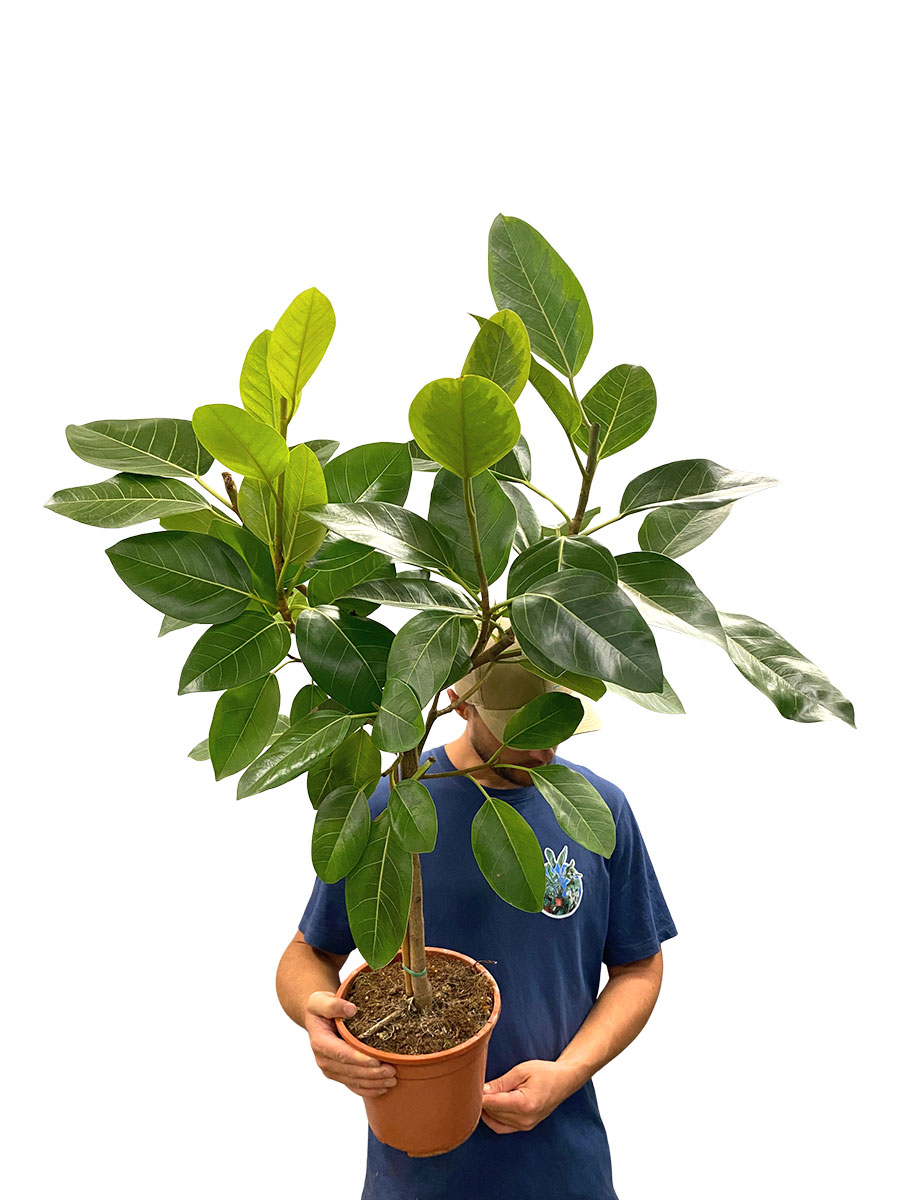
Ficus Elastica Abidjan

Topfdurchmesser 27cm

Topfhöhe ab Boden 160cm ±

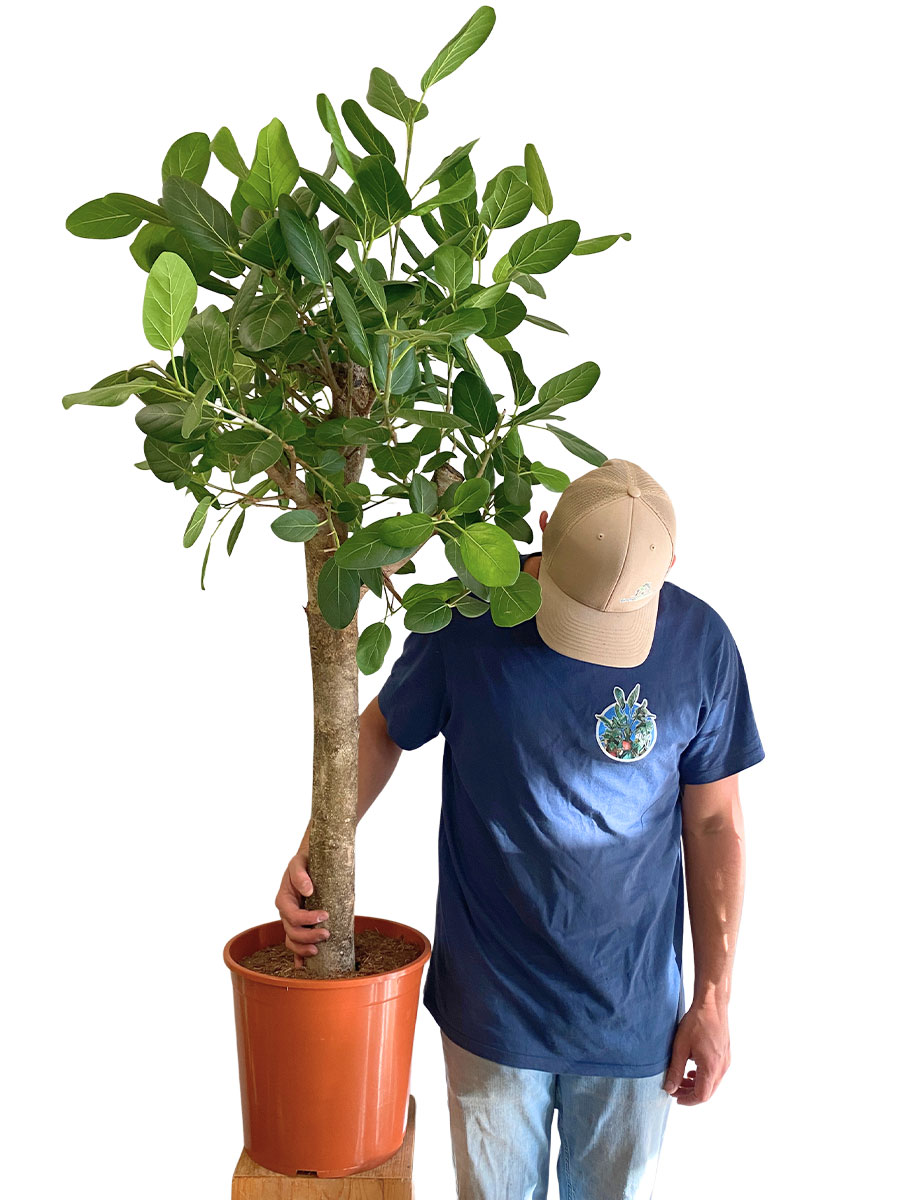
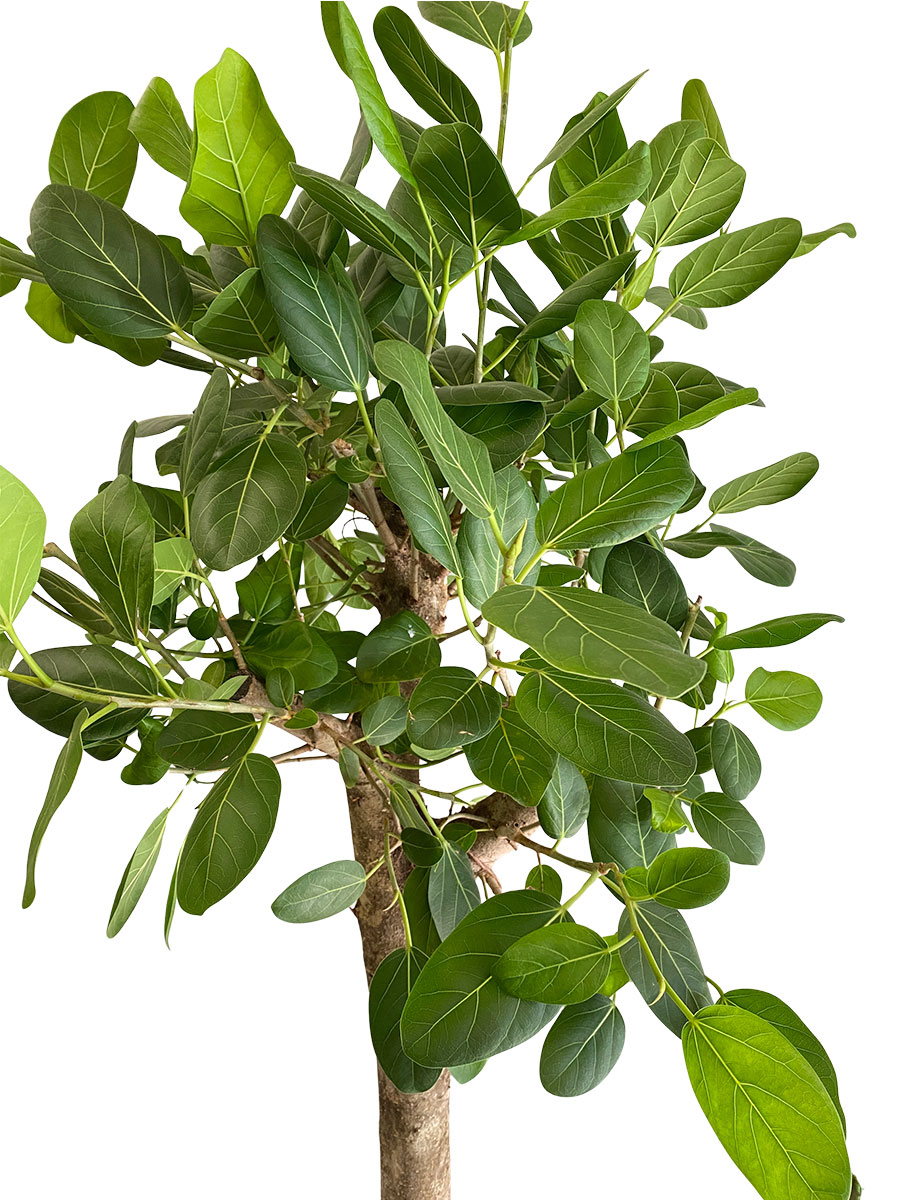
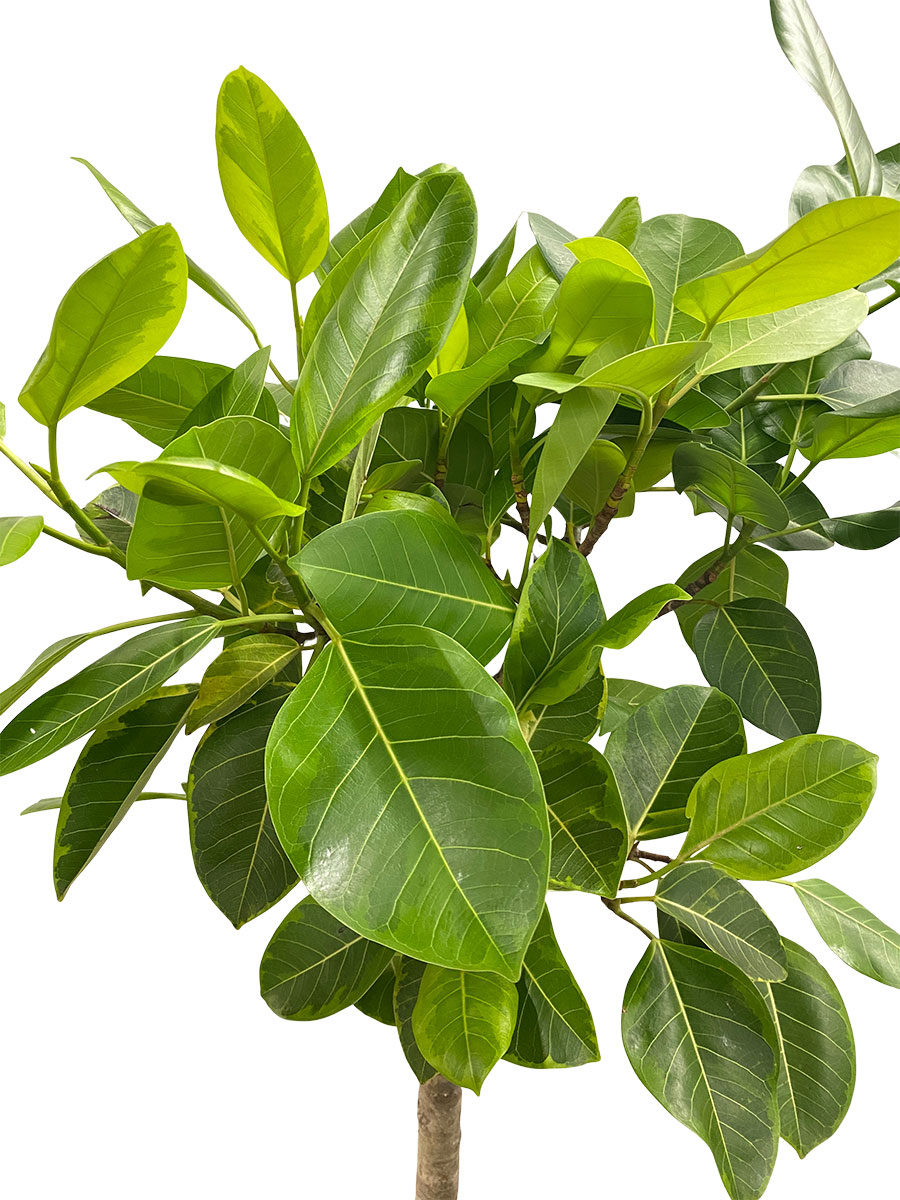
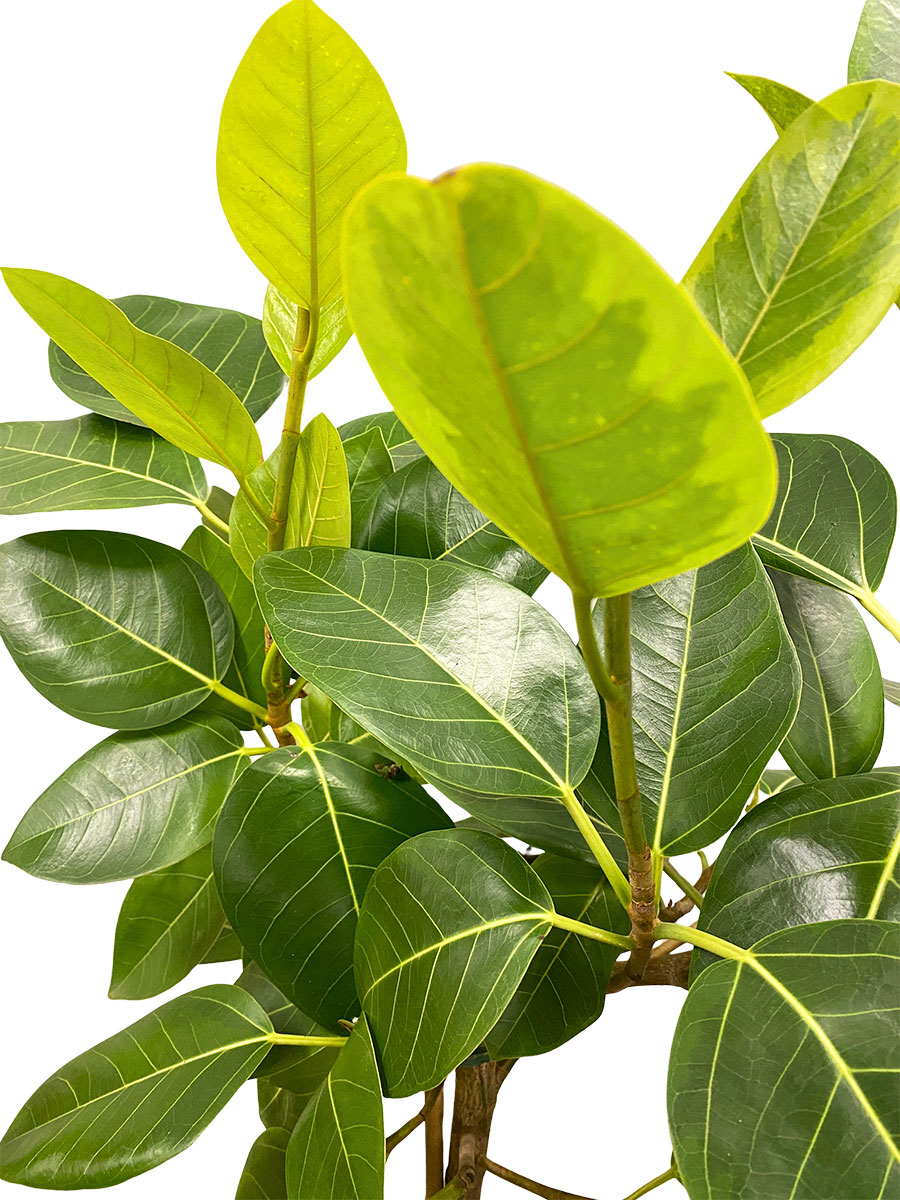
History of the rubber plant Ficus Abidjan The rubber plant (Ficus elastica Abidjan) is a particularly dark-coloured cultivar of the classic rubber plant. It originally comes from the tropical rainforests of Southeast Asia and impresses with its deep green to almost black-red leaves. As an easy-care houseplant, it is a stylish addition to living spaces and offices, as it is not only decorative but also improves air quality. Care as a houseplant: Light: Bright to partially shaded spot; no direct midday sun. Temperature: 18–26 °C is optimal; avoid temperatures below 15 °C. Humidity: Medium to high humidity; occasional misting promotes healthy leaves. Substrate: Free-draining potting soil with some sand or perlite for better drainage. Watering: Water moderately, only once the top layer of soil is dry; avoid waterlogging. Feeding: Every 4 weeks from spring to autumn with liquid fertiliser for foliage plants. Special features: This houseplant is robust but can lose leaves in draughts or if the air is too dry. Overwintering tips: Water less and do not keep at temperatures below 15 °C. A bright spot helps keep the dark foliage healthy and glossy. The rubber plant Abidjan is a hardy, easy-care houseplant with elegant, dark leaf colouring.

CHF 299.90*

Delivery time 2 - 7 working days

Available
New
Item no. 4413
Vanda Michelle Orchid in Glass

Topfdurchmesser 14cm

Topfhöhe ab Boden 45cm ±

History of the Vanda Michelle orchid The Vanda Michelle orchid belongs to the genus Vanda and is a fascinating tropical orchid characterised by its elegant flowers, strong leaves and striking aerial roots. Vanda orchids originally come from the tropical regions of Asia, where they mainly grow as epiphytes on trees rather than in ordinary soil. In decorative glass cultivation, their characteristic aerial roots are shown off particularly beautifully, making the plant a real eye-catcher. In good conditions, it can flower several times a year and delights with colourful, long-lasting blooms. For pet owners, the Vanda orchid is generally a good choice, as it is considered non-toxic to cats and dogs and can therefore also be grown in households with pets. Care as a houseplant: Light: Very bright to bright. Vanda orchids need a lot of light and also tolerate some direct morning or evening sun. Intense midday sun behind glass should be avoided. Temperature: Around 20–28 °C during the day and slightly cooler temperatures at night are ideal. Avoid temperatures below 15 °C where possible. Humidity: High humidity of around 60–80 % is preferred. A humidifier can be helpful, especially in dry rooms. Substrate: In glass cultivation, the Vanda is kept without conventional substrate. The aerial roots should have enough space and be well ventilated. Watering: Moisten the aerial roots regularly with low-lime water or, depending on how it is grown, briefly dip the plant. Excess water should then be able to drain away completely. Never leave the roots standing in water permanently. Feeding: During active growth, feed roughly every 1–2 weeks with a special orchid fertiliser at a weak dose. Feeding can be reduced in winter. Special features: The aerial roots are an important part of the plant and should not be cut off as long as they are healthy. Good air circulation is particularly important. Faded flower spikes can be removed once they have dried out completely. Important for pet owners: Vanda orchids are considered non-toxic to cats and dogs and are therefore generally well suited to households with pets. Overwintering tips: The Vanda Michelle should be kept very bright and warm in winter too. As natural light is weaker in the cold season, a grow light can be used if needed. Watering should be adapted to the slower growth, but at the same time the aerial roots must not dry out completely for long periods.

CHF 89.90*

Delivery time 2 - 7 working days

Available
New
Item no. 4415
Vanda Michelle Orchid in Glass

Topfdurchmesser 14cm

Topfhöhe ab Boden 45cm ±

History of the Vanda Michelle orchid The Vanda Michelle orchid belongs to the genus Vanda and is a fascinating tropical orchid characterised by its elegant flowers, strong leaves and striking aerial roots. Vanda orchids originally come from the tropical regions of Asia, where they mainly grow as epiphytes on trees rather than in ordinary soil. In decorative glass cultivation, their characteristic aerial roots are shown off particularly beautifully, making the plant a real eye-catcher. In good conditions, it can flower several times a year and delights with colourful, long-lasting blooms. For pet owners, the Vanda orchid is generally a good choice, as it is considered non-toxic to cats and dogs and can therefore also be grown in households with pets. Care as a houseplant: Light: Very bright to bright. Vanda orchids need a lot of light and also tolerate some direct morning or evening sun. Intense midday sun behind glass should be avoided. Temperature: Around 20–28 °C during the day and slightly cooler temperatures at night are ideal. Avoid temperatures below 15 °C where possible. Humidity: High humidity of around 60–80 % is preferred. A humidifier can be helpful, especially in dry rooms. Substrate: In glass cultivation, the Vanda is kept without conventional substrate. The aerial roots should have enough space and be well ventilated. Watering: Moisten the aerial roots regularly with low-lime water or, depending on how it is grown, briefly dip the plant. Excess water should then be able to drain away completely. Never leave the roots standing in water permanently. Feeding: During active growth, feed roughly every 1–2 weeks with a special orchid fertiliser at a weak dose. Feeding can be reduced in winter. Special features: The aerial roots are an important part of the plant and should not be cut off as long as they are healthy. Good air circulation is particularly important. Faded flower spikes can be removed once they have dried out completely. Important for pet owners: Vanda orchids are considered non-toxic to cats and dogs and are therefore generally well suited to households with pets. Overwintering tips: The Vanda Michelle should be kept very bright and warm in winter too. As natural light is weaker in the cold season, a grow light can be used if needed. Watering should be adapted to the slower growth, but at the same time the aerial roots must not dry out completely for long periods.

CHF 89.90*

Delivery time 2 - 7 working days

Available
New
Item no. 1ASPABP05
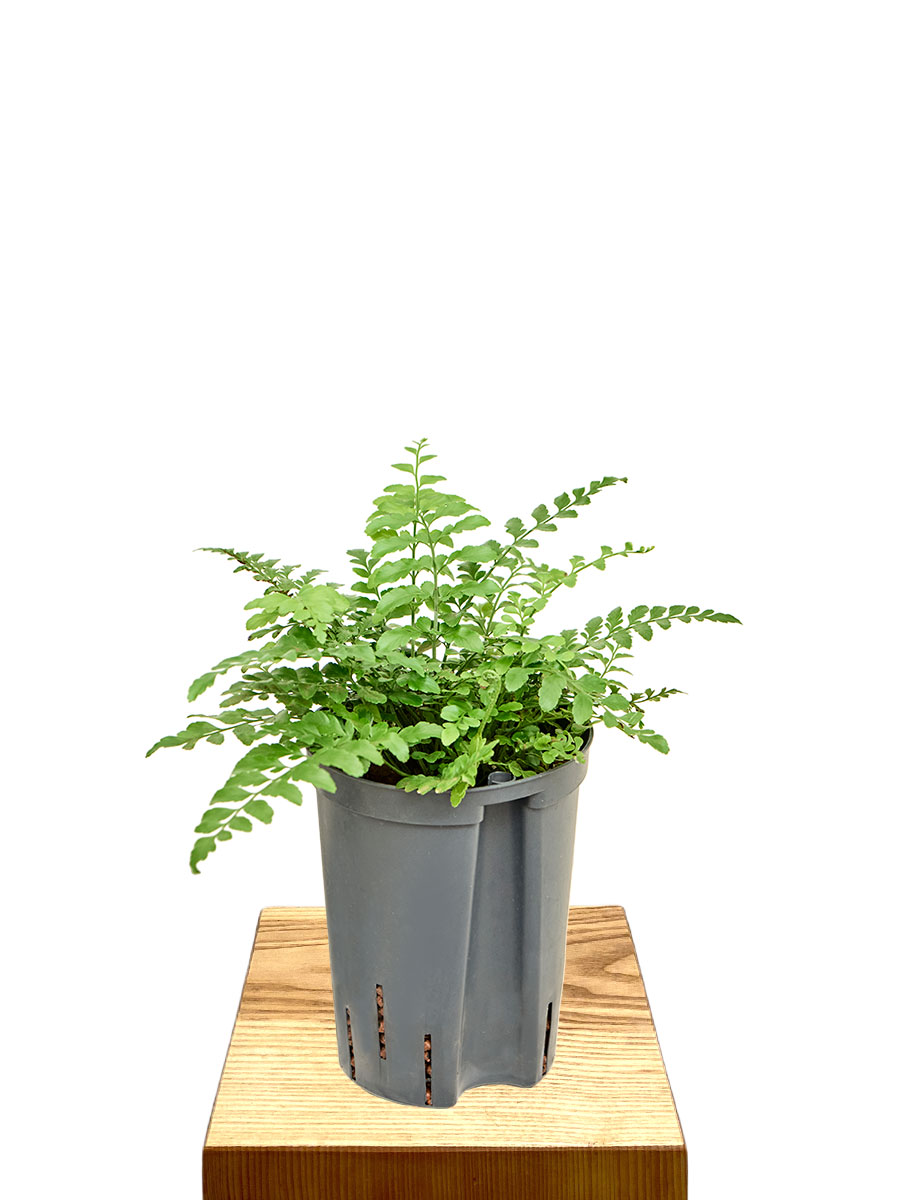
Hydro - Nestfarn Asplenium Parvati

Topfdurchmesser 15/19

Topfhöhe ab Boden 30cm ±

Der Asplenium dimorphum Parvati ist eine moderne Züchtung des Nestfarns und stammt ursprünglich von Farnarten ab, die in den tropischen und subtropischen Wäldern Ozeaniens und Südostasiens beheimatet sind. In seiner natürlichen Umgebung wächst er häufig als Aufsitzerpflanze auf Bäumen oder Felsen in feuchtwarmen Wäldern. Seine fein geschlitzten, sattgrünen Wedel verleihen ihm ein besonders elegantes und filigranes Erscheinungsbild. Dank seines kompakten Wuchses ist er eine beliebte Zimmerpflanze für Wohn- und Büroräume.Pflege in HydrokulturLicht: Heller bis halbschattiger Standort mit indirektem Licht. Direkte Mittagssonne sollte vermieden werden.Temperatur: Optimal sind 18–25 °C. Temperaturen unter 15 °C sollten vermieden werden.Luftfeuchtigkeit: Hoch. Eine erhöhte Luftfeuchtigkeit fördert gesundes Wachstum und verhindert das Austrocknen der Wedel.Substrat: Hydrokultur mit Blähton und passendem Kulturtopf inklusive Wasserstandsanzeiger.Bewässerung: Wasser erst nachfüllen, wenn der Wasserstandsanzeiger auf Minimum steht. Anschliessend bis zur Optimal-Markierung auffüllen. Ein dauerhaft zu hoher Wasserstand sollte vermieden werden.Düngung: Während der Wachstumszeit alle 4 Wochen mit einem speziellen Hydrokultur-Dünger in geringer Dosierung versorgen.Besonderheiten: Die empfindlichen Wedel sollten nicht unnötig berührt werden. Der Farn reagiert empfindlich auf trockene Heizungsluft, Zugluft und starke Temperaturschwankungen.Hinweise für die ÜberwinterungIm Winter benötigt der Asplenium dimorphum Parvati weniger Wasser und Dünger. Ein heller Standort bei Temperaturen zwischen 18 und 22 °C ist ideal. Der Wasserstand sollte regelmässig kontrolliert werden, da der Wasserverbrauch während der Ruhephase geringer ist. Eine hohe Luftfeuchtigkeit trägt dazu bei, dass die Wedel gesund und frisch bleiben.

CHF 39.90*

Delivery time 2 - 7 working days

Available
Bestseller
Item no. 361
Bush Lily Clivia Miniata

Topfdurchmesser 13cm

Topfhöhe ab Boden 40cm ±

History of the Clivia miniata The Clivia miniata, also known as the bush lily, is a classic houseplant originating from the subtropical regions of South Africa. It was already prized in European salons in the 19th century, above all for its bright orange flowers, which appear in clusters on strong, upright stalks. The plant owes its name to Lady Charlotte Clive, a duchess who first brought it into cultivation. Care as a houseplant: Light: Bright to partially shaded spot without direct midday sun. Temperature: 15–25 °C; a cooler spot in winter promotes flowering. Humidity: Average; copes well with a normal indoor climate. Substrate: Well-drained soil, e.g. container plant soil with some sand or perlite. Watering: Water moderately, and much less in winter. Be sure to avoid waterlogging. Feeding: Every 2–3 weeks with flower fertiliser from spring to summer. Special features: Often only flowers after a winter rest period – induce this at 10–15 °C for approx. 6–8 weeks. Overwintering tips: Keep cool (10–15 °C), bright and almost dry to encourage the next flowering. Clivia miniata is a long-lived, robust houseplant with nostalgic charm.

CHF 29.90*

Delivery time 2 - 7 working days

9 Available
Sale
Item no. 4289
Alocasia Macrorrhiza Aurea Variegata

Topfdurchmesser 12cm

Topfhöhe ab Boden 30cm ±

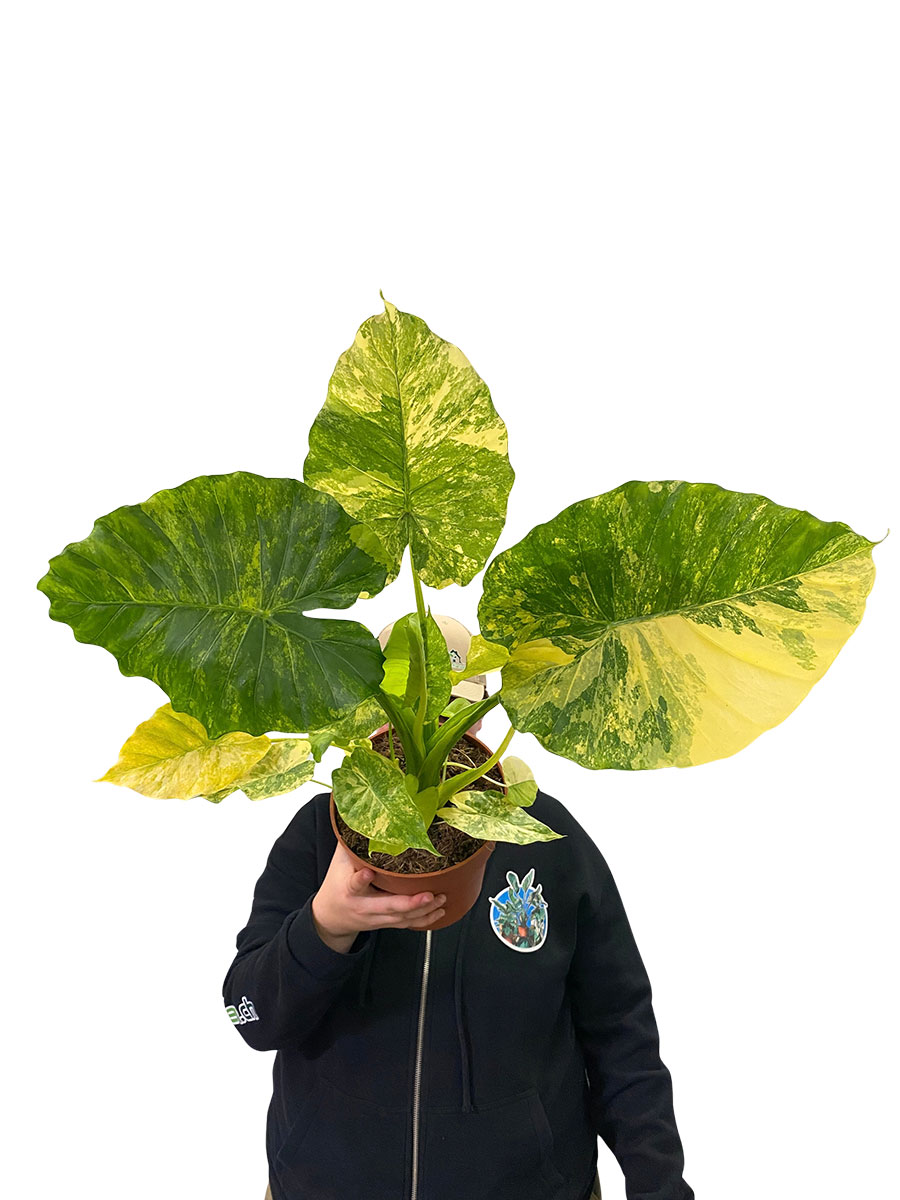
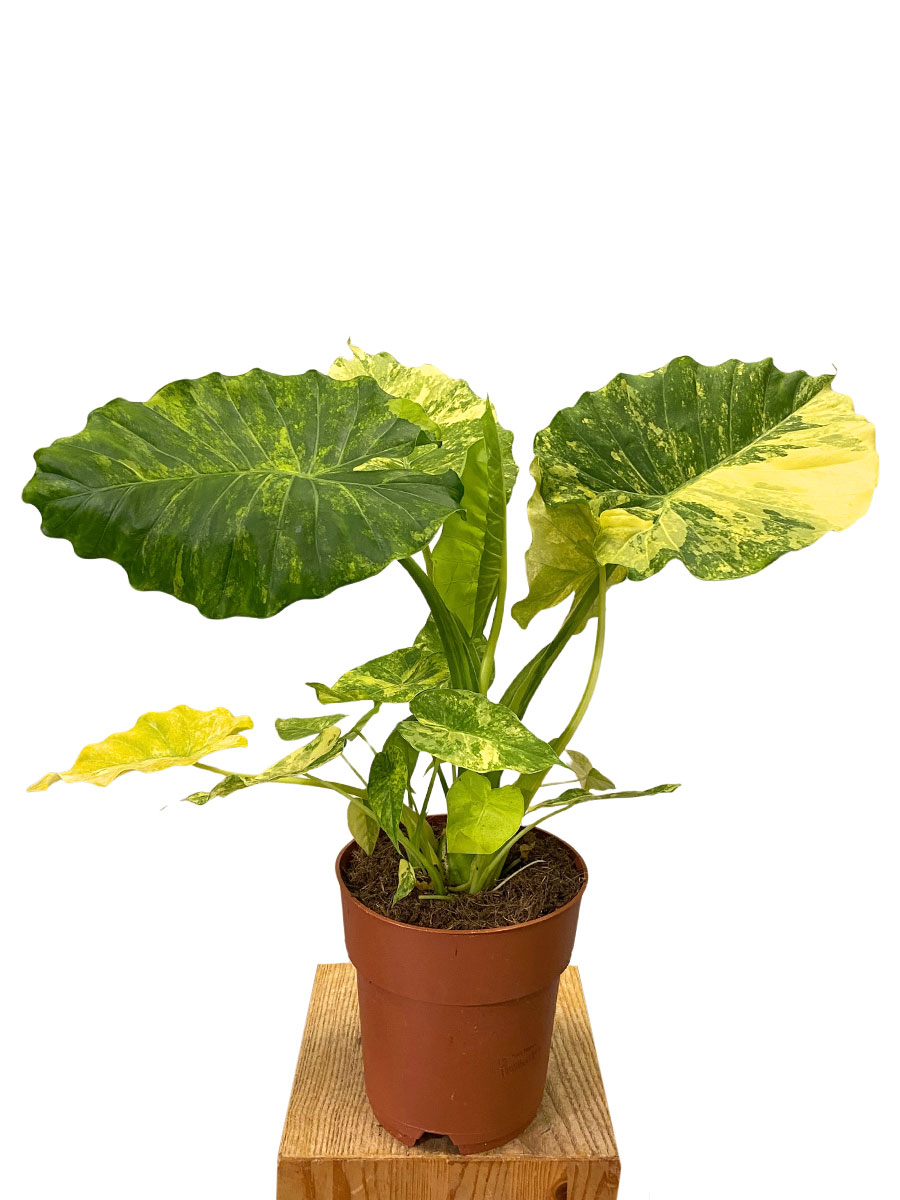
History of Alocasia Macrorrhiza Aurea Variegata Alocasia macrorrhiza Aurea Variegata is a particularly impressive and sought-after variegated form of the giant taro. Its large, arrow-shaped leaves show a fascinating interplay of strong green and cream-yellow to golden-yellow areas. The variegation can vary from leaf to leaf and makes each plant a unique specimen. Thanks to its large leaves and sturdy leaf stalks, it has an imposing, tropical presence. Alocasia macrorrhiza originally comes from the tropical regions of Southeast Asia and Oceania, where it grows in warm and humid conditions and can reach an impressive size. Care as a houseplant: • Light: Bright spot with plenty of indirect light. Good light conditions support attractive variegation. Avoid intense midday sun, as the pale leaf areas are more sensitive. • Temperature: 20–28 °C is optimal; avoid temperatures below 16 °C where possible. • Humidity: High; around 60–80 % is ideal. Consistently high humidity supports the development of large, healthy leaves. • Substrate: Loose, airy and free-draining aroid substrate, for example made of pine bark, perlite, coconut chips and high-quality potting soil. • Watering: Water evenly as soon as the top layer of substrate has dried out slightly. Be sure to avoid waterlogging. • Feeding: During the growing season, feed roughly every 2–3 weeks with a weakly dosed liquid fertiliser for foliage plants or aroids. • Special features: The golden-yellow variegation makes every leaf unique. With enough light and warmth, the plant can grow particularly vigorously. Because of the size it can later reach, it should be given enough space. Overwintering tips: In winter, water a little less and continue to keep it as bright and warm as possible. Temperatures should stay as constant as possible above 16–18 °C. Avoid cold draughts and sharp temperature fluctuations. With less light, the Alocasia may slow its growth considerably or temporarily lose individual leaves.

CHF 30.00* CHF 39.90* (24.81% saved)

Delivery time 2 - 7 working days

Available
New
Item no. 4195
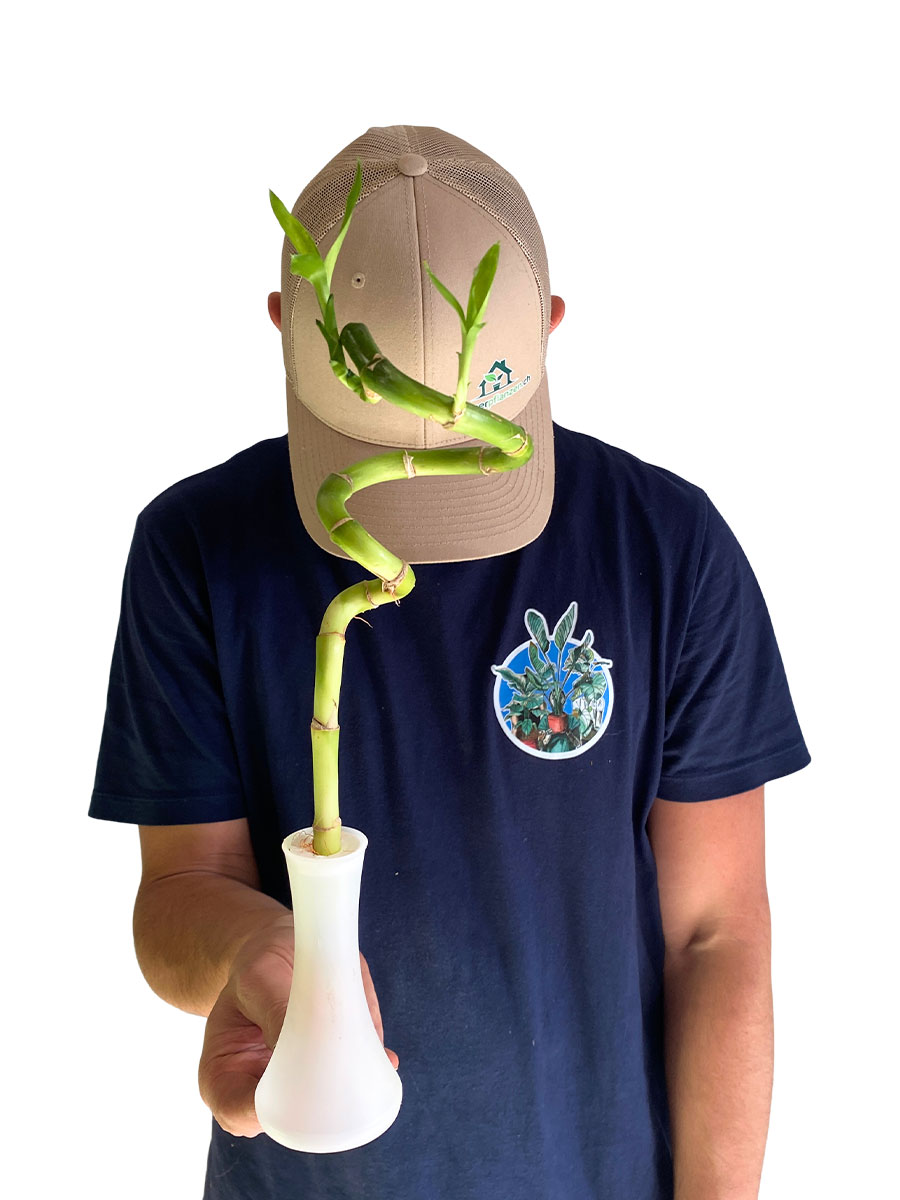
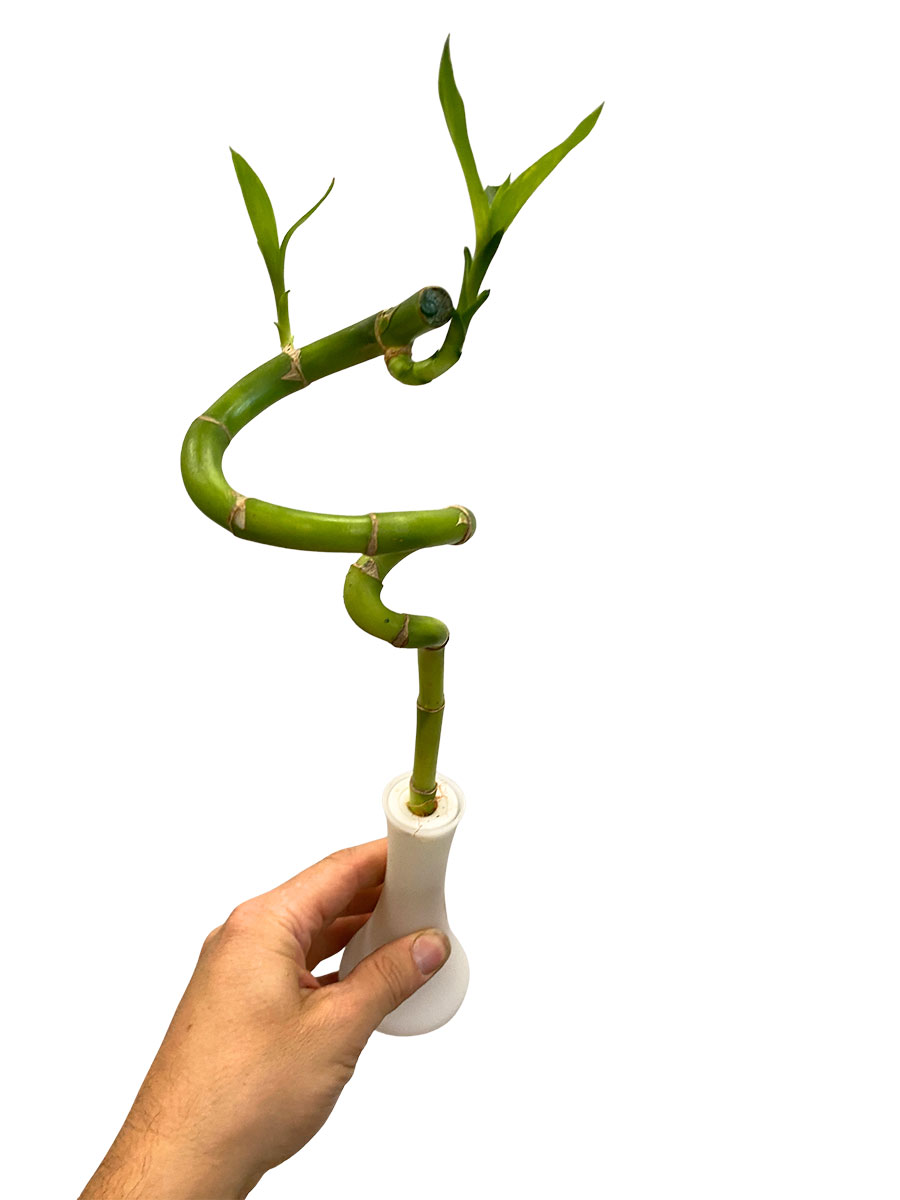
Dracaena Lucky Bamboo Spiral incl. Vase

Topfdurchmesser 6cm

Topfhöhe ab Boden 30cm ±

History of Lucky Bamboo Lucky Bamboo, botanically belonging to the genus Dracaena , is a popular good-luck plant that has been associated with prosperity, health and positive energy for centuries. Especially in Asian feng shui, Lucky Bamboo is regarded as a symbol of harmony, luck and success. The artfully spiral-grown stems give the plant a modern, decorative look. Although it is known as “bamboo”, it does not belong to the family of true bamboo plants, but to the dragon trees (Dracaena). The combination of spiral stem and decorative vase makes this plant a stylish eye-catcher for living and working spaces. Care as a houseplant: • Light: Bright to partially shaded spot; avoid direct sun. • Temperature: Ideally 18–28 °C; temperatures below 15 °C should be avoided. • Humidity: Medium; normal room air is well tolerated. • Location: Ideal for living rooms, offices or reception areas with indirect light. • Watering: When kept in a vase, the roots should always be slightly covered with water. Change the water regularly and use low-lime water if possible. • Fertilising: Fertilise sparingly every 6–8 weeks with a liquid fertiliser for green plants or hydroculture plants. • Special features: The decorative spiral shape is the result of special cultivation and makes every plant an attractive one-of-a-kind piece. Overwintering tips: In winter, keep it in a bright spot and protect it from cold drafts. Check and renew the water regularly. The Dracaena Lucky Bamboo spiral stem incl. vase is an easy-care houseplant that enriches any room with its elegant shape and its symbolic meaning of luck and harmony.

CHF 12.90*

Delivery time 2 - 7 working days

Available
Item no. 1629
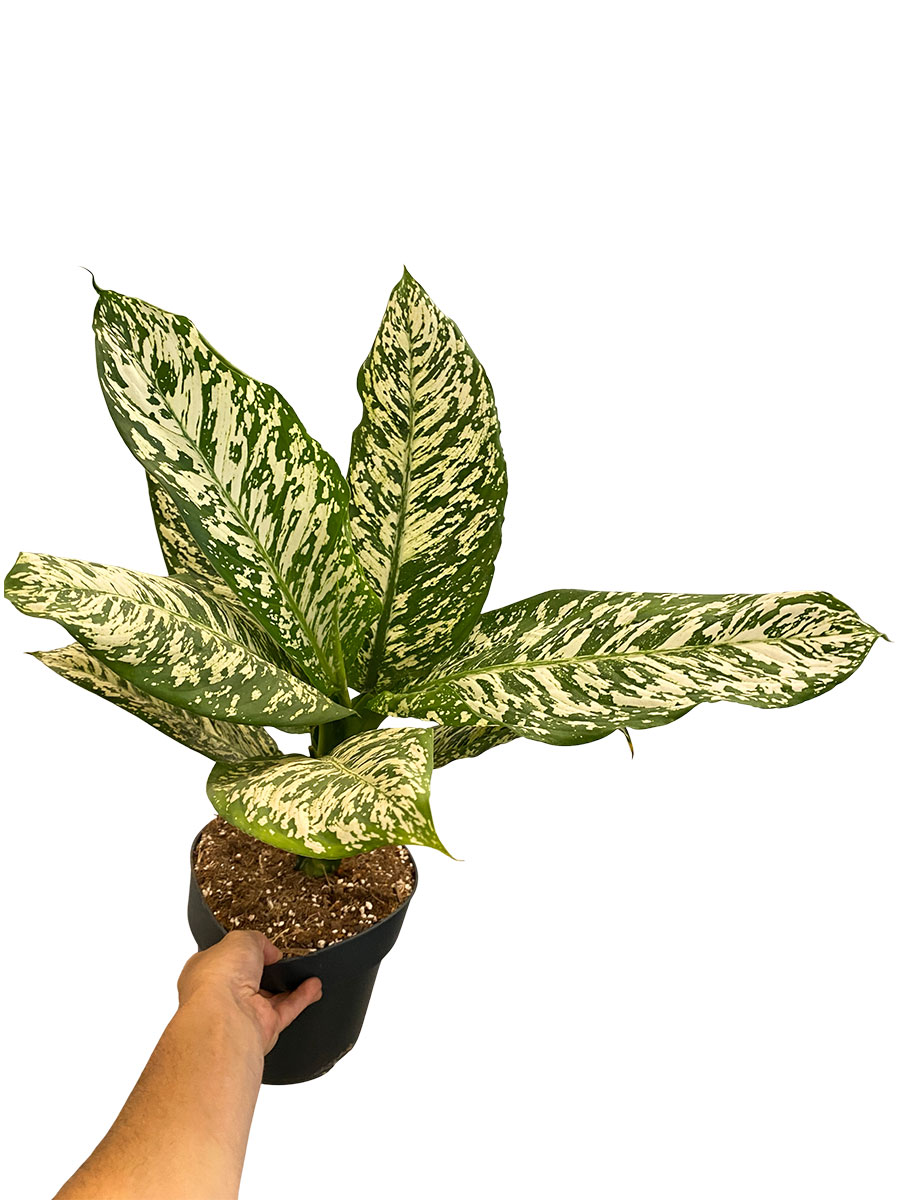
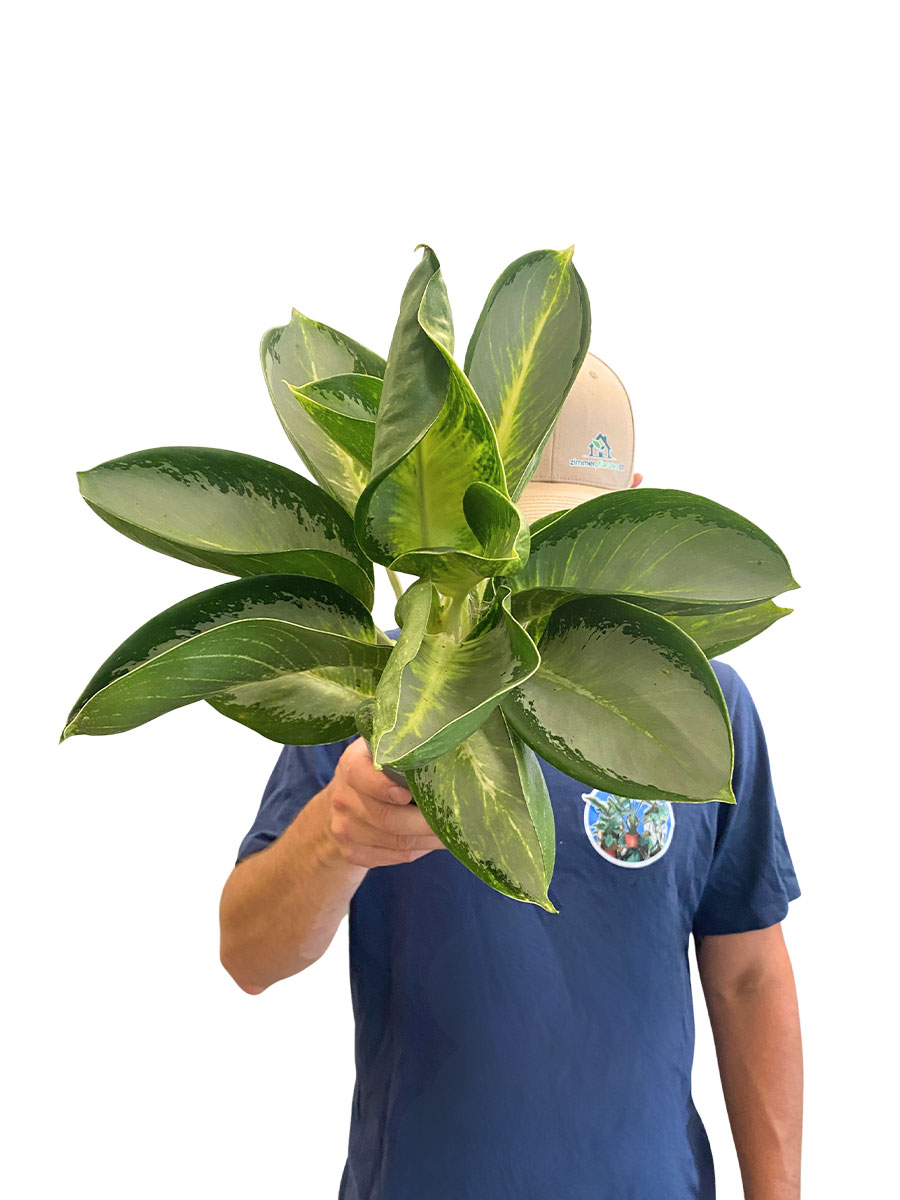
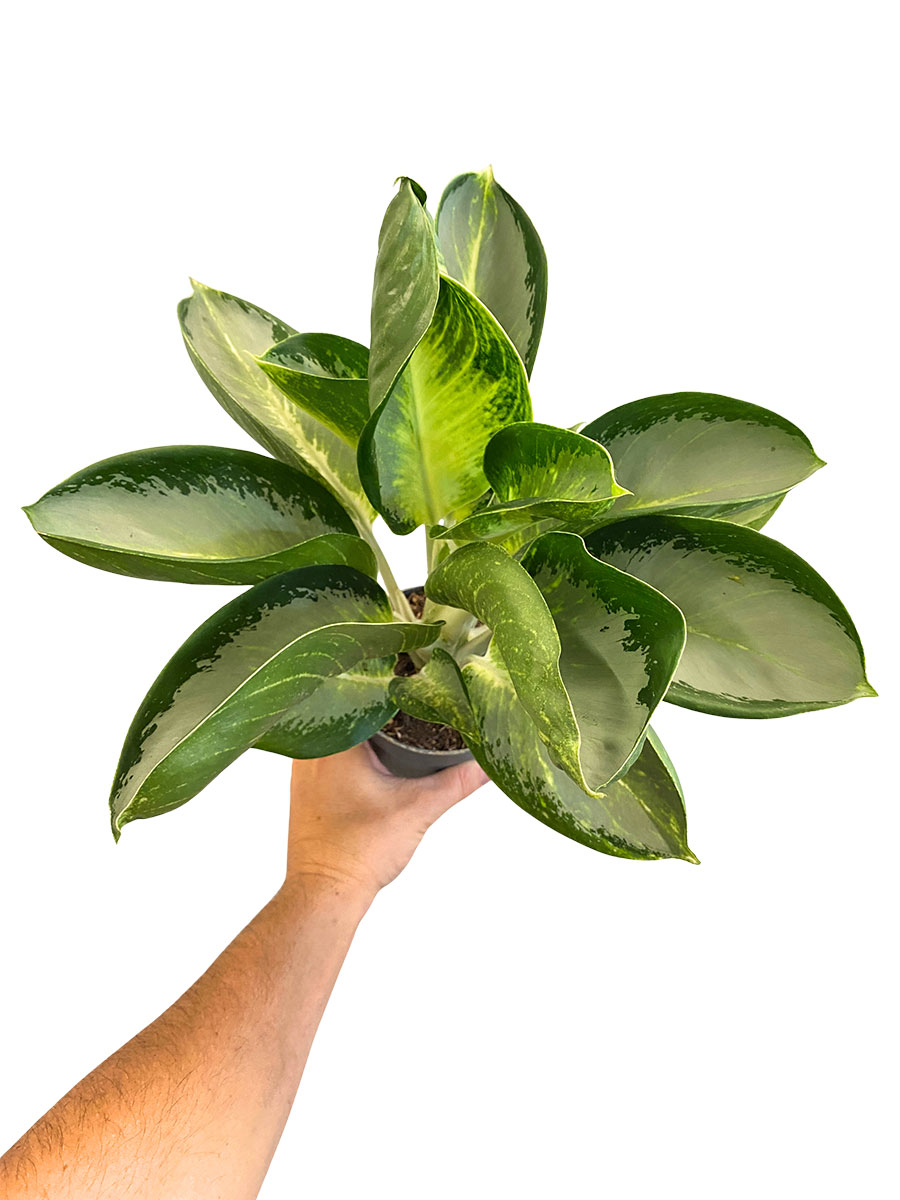
Dieffenbachia Reflector

Topfdurchmesser 17cm

Topfhöhe ab Boden 50cm ±

History of the Dieffenbachia Reflector Dieffenbachia Reflector is an impressive houseplant with intensely patterned, dark green leaves covered in yellowish-green speckles. Its exotic look and air-purifying properties make it a popular choice for homes and offices. Dieffenbachia originally comes from the tropical rainforests of South America and has been cultivated worldwide as a houseplant for its decorative leaves. Care as a houseplant: Light: Bright spot with plenty of indirect light; no direct sun. Temperature: Ideally 18–26 °C; do not keep below 15 °C. Humidity: High (over 60 %); regular misting or a humidifier is recommended. Substrate: Loose, free-draining substrate, e.g. potting soil mixed with perlite or coconut fibre. Watering: Water moderately; the substrate should be evenly moist but not wet. Avoid waterlogging. Feeding: Every 2–4 weeks with liquid fertiliser during the growing season. Special features: This houseplant is poisonous, so keep it away from children and pets. Overwintering tips: Water less in winter and do not keep at temperatures below 15 °C. Dieffenbachia Reflector is an easy-care, exotic houseplant that delights with its striking patterning.

CHF 39.90*

Delivery time 2 - 7 working days

3 Available
Sale
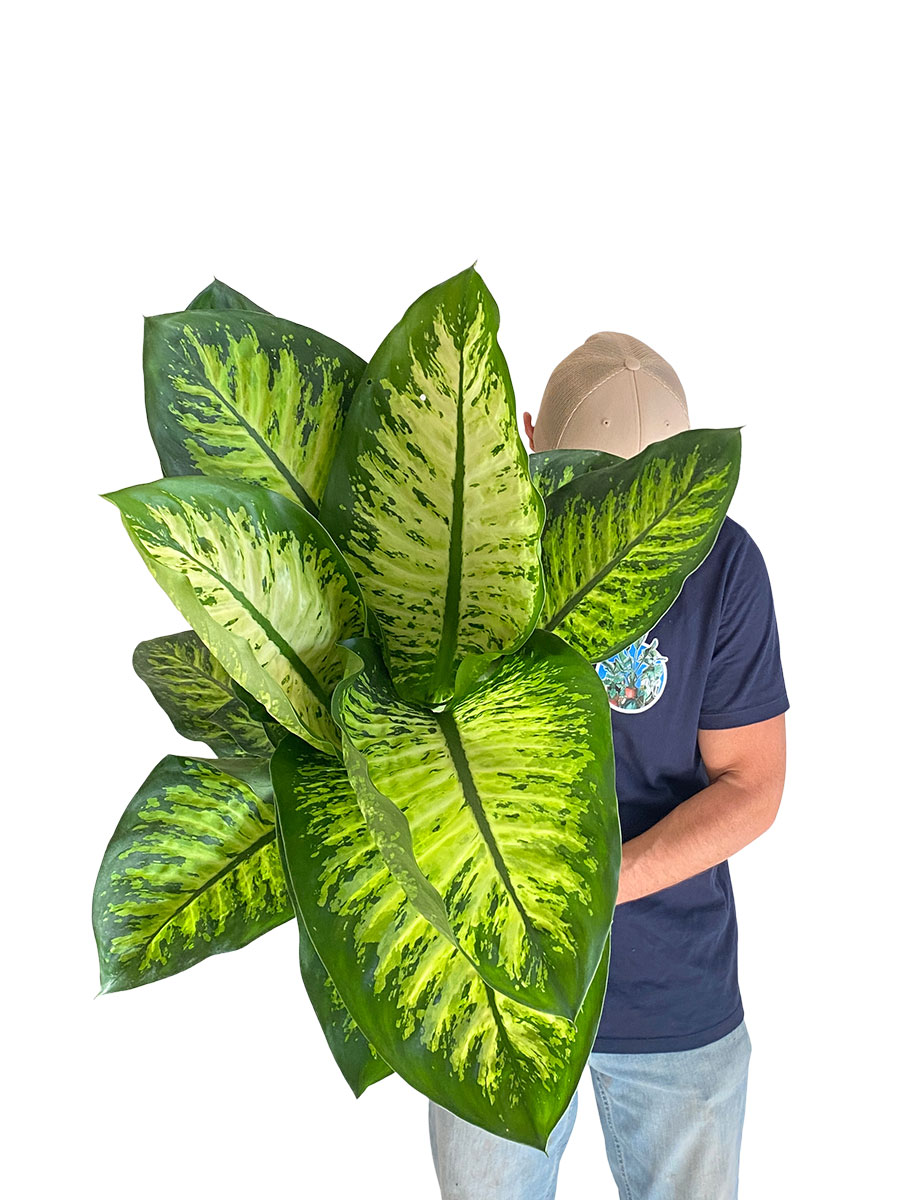
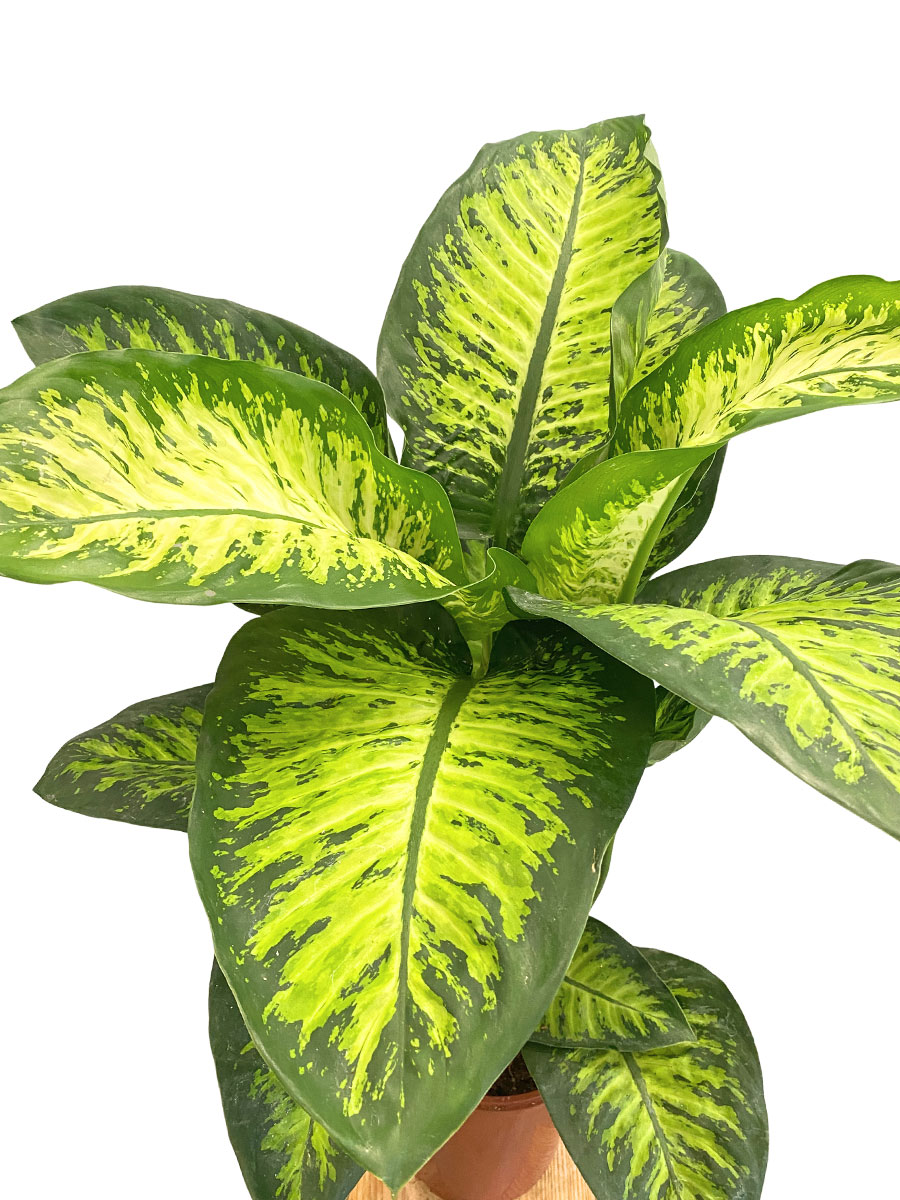
Item no. 4303
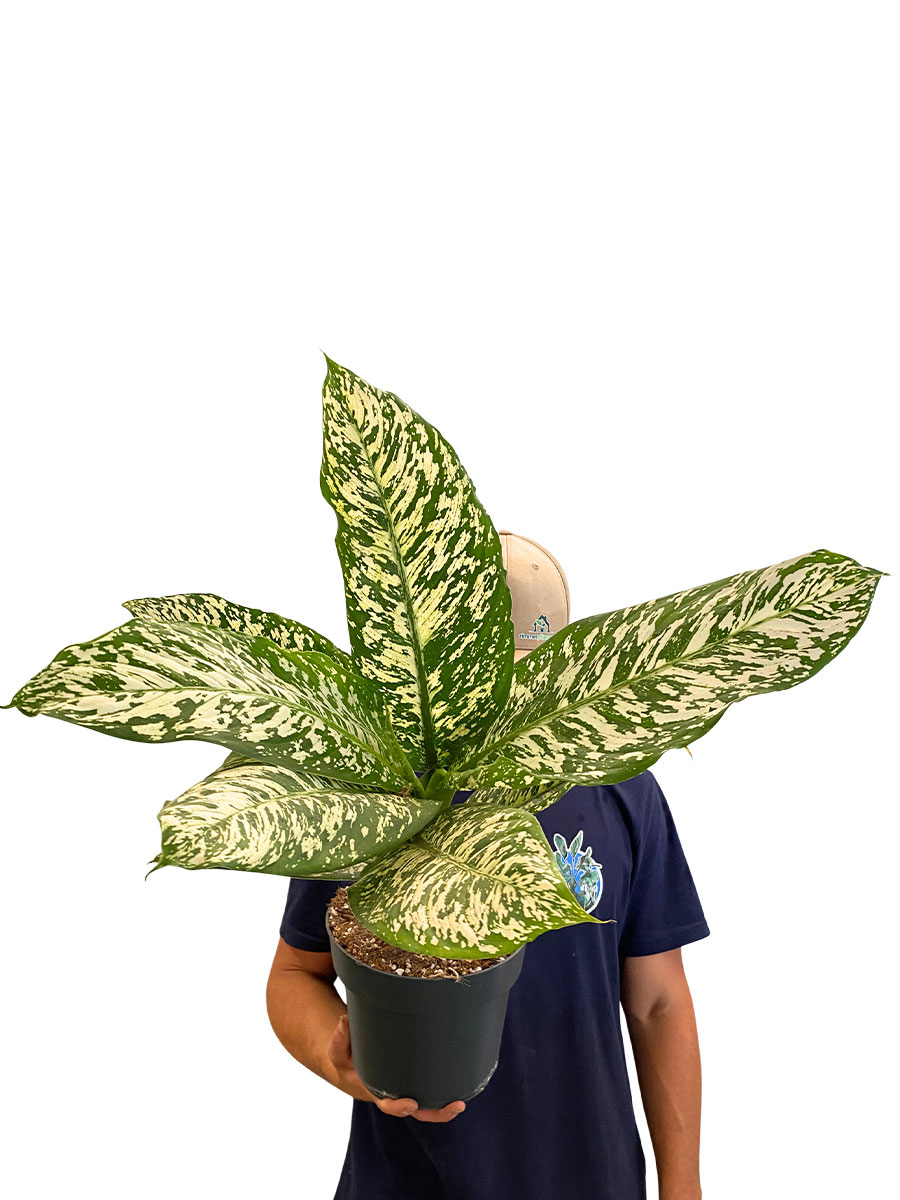
Dieffenbachia White Etna

Topfdurchmesser 21cm

Topfhöhe ab Boden 60cm ±

History of the Dieffenbachia White Etna Dieffenbachia White Etna is an elegant and eye-catching houseplant that impresses with its large, oval leaves and high-contrast pale markings. The centre of the leaf usually shows creamy white to light green areas framed by a rich green edge. This creates a harmonious, modern play of colours. Dieffenbachias originally come from the tropical regions of Central and South America, where they grow in the shady understorey of warm, humid rainforests. The White Etna variety is particularly well suited to bright living spaces and offices and, in good conditions, develops lush, upright growth. Care as a houseplant: • Light: Bright to partially shaded spot with plenty of indirect light. Avoid direct midday sun, as the leaves can be sensitive to intense sun. • Temperature: 18–27 °C is optimal; avoid temperatures below 15 °C where possible. • Humidity: Medium to high; increased humidity promotes strong growth and beautiful, healthy leaves. • Substrate: Loose, humus-rich and free-draining foliage plant substrate. Good drainage is important to prevent waterlogging. • Watering: Keep evenly slightly moist. The top layer of substrate may dry out slightly between waterings. Avoid waterlogging. • Feeding: During the growing season, feed about every 2–4 weeks with a liquid fertiliser for foliage plants. • Special features: The large, pale-patterned leaves make Dieffenbachia White Etna a particularly decorative eye-catcher. As it gets older, it can develop stately, upright growth. • Important for pet owners: Dieffenbachia is not suitable for households where pets have free access to it. Parts of the plant contain calcium oxalate crystals and can cause irritation and swelling in the mouth if chewed or swallowed. It is therefore essential to place it out of reach of cats, dogs and other pets. Overwintering tips: Water a little less in winter and continue to keep it as bright as possible. Temperatures should remain as constant as possible above 16 °C. Avoid cold draughts and dry heated air as far as possible. With less light, growth slows down, so the water requirement also decreases.

CHF 50.00* CHF 69.90* (28.47% saved)

Delivery time 2 - 7 working days

Available
Bestseller
Item no. 118
Calathea Zebrina

Topfdurchmesser 14cm

Topfhöhe ab Boden 40cm ±

History of the Calathea Zebrina The Calathea Zebrina, also called the zebra plant, is a tropical beauty from the rainforests of Brazil. Its velvety soft, bright green striped leaves are reminiscent of a zebra's pattern – hence the name. In the world of houseplants, it is one of the most popular species, especially among lovers of decorative foliage plants. Care as a houseplant: Light: Bright to partially shaded spot, no direct sunlight. Temperature: Ideally 20–26 °C, never below 16 °C. Humidity: High (at least 60 %); daily misting or a humidifier is recommended. Substrate: Loose, peat-free substrate, free-draining with coconut fibre or perlite. Watering: Keep evenly moist, ideally watering with low-lime water. Avoid waterlogging. Feeding: Every 2–4 weeks with foliage plant fertiliser during the growing season. Special features: A typical representative of the calatheas – it moves its leaves depending on the time of day, which makes it an exciting houseplant. Overwintering tips: Water less, keep humidity high and the location constantly warm. The Calathea Zebrina is ideal for anyone looking for special, lively houseplants .

CHF 24.90*

Delivery time 2 - 7 working days

Available
New
Item no. 4399
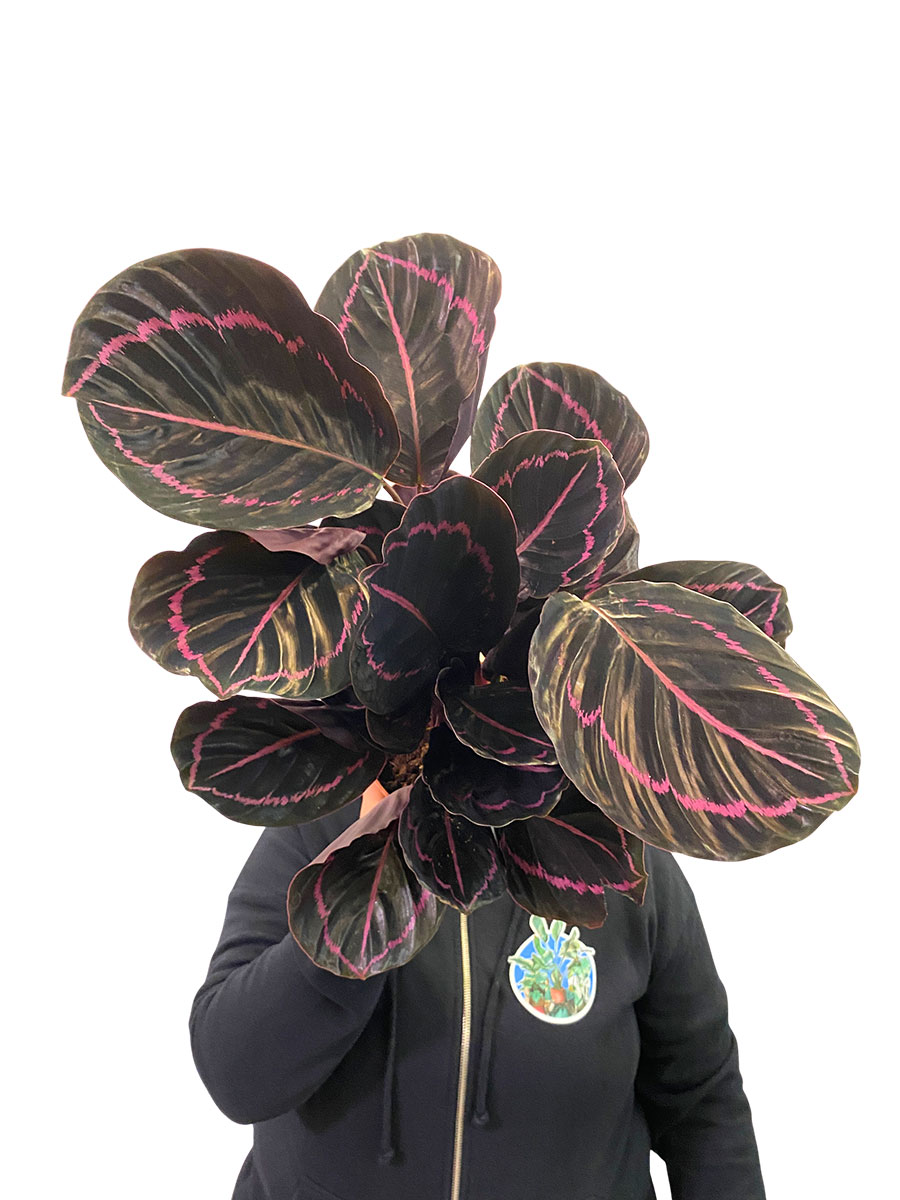
Calathea Roseopicta Dottie

Topfdurchmesser 14cm

Topfhöhe ab Boden 40cm ±

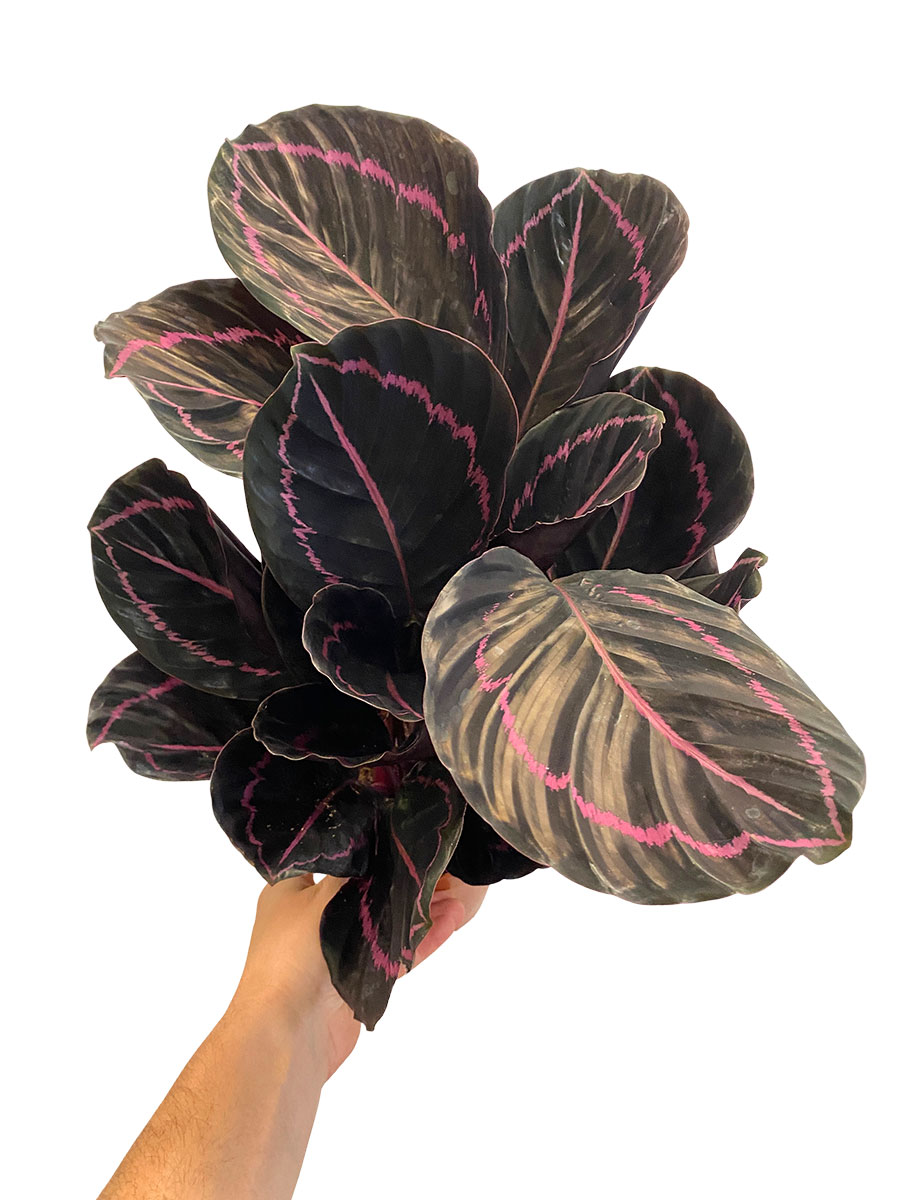
History of Calathea Roseopicta Dottie The Calathea Roseopicta Dottie is one of the most popular tropical houseplants. It originally comes from the rainforests of South America and is famous for its deep dark green to almost black leaves with bright pink markings. Care as a houseplant: Light: Bright to partially shaded spot, no direct sunlight. Temperature: Ideally 20–26 °C; do not keep below 18 °C. Humidity: High (over 60 %); mist regularly or use a humidifier. Substrate: Loose, humus-rich substrate with good drainage. Watering: Keep evenly moist, but avoid waterlogging; it is best to water with soft, low-lime water. Fertilising: Fertilise lightly every 2–4 weeks during the growing season. Special features: This houseplant closes its leaves at night – a fascinating characteristic of Calathea species. Care as a terrarium plant: Light & climate: Warm, humid climate with consistently high humidity. Care note: Ideal in closed or semi-open terrariums; do not place directly next to lamps. Overwintering tips: In winter, keep evenly moist but water a little more sparingly; do not let temperatures drop below 18 °C.

CHF 29.90*

Delivery time 2 - 7 working days

Available
New
Item no. 2SAZEBP10
Hydro - Snake Plant Sansevieria Compacta

Topfdurchmesser 13/12

Topfhöhe ab Boden 25cm ±

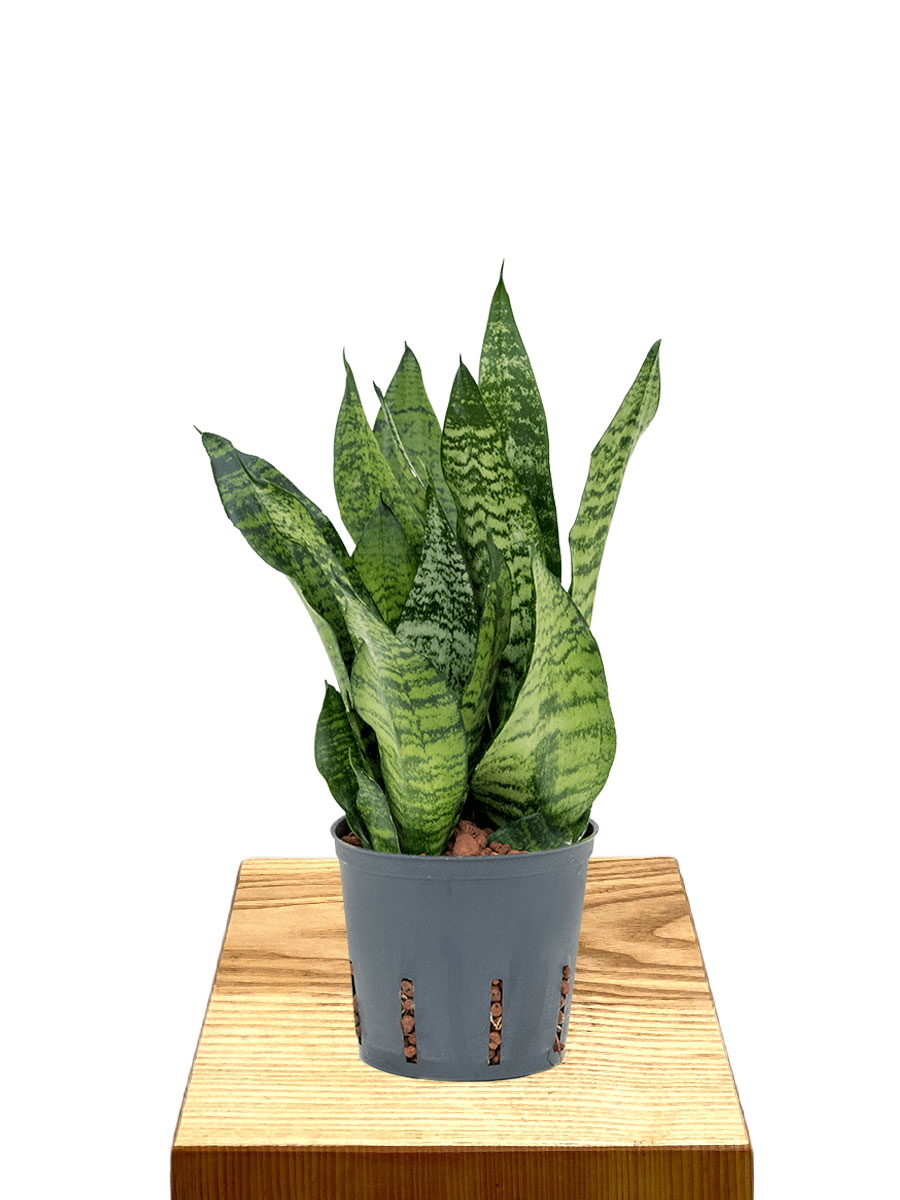
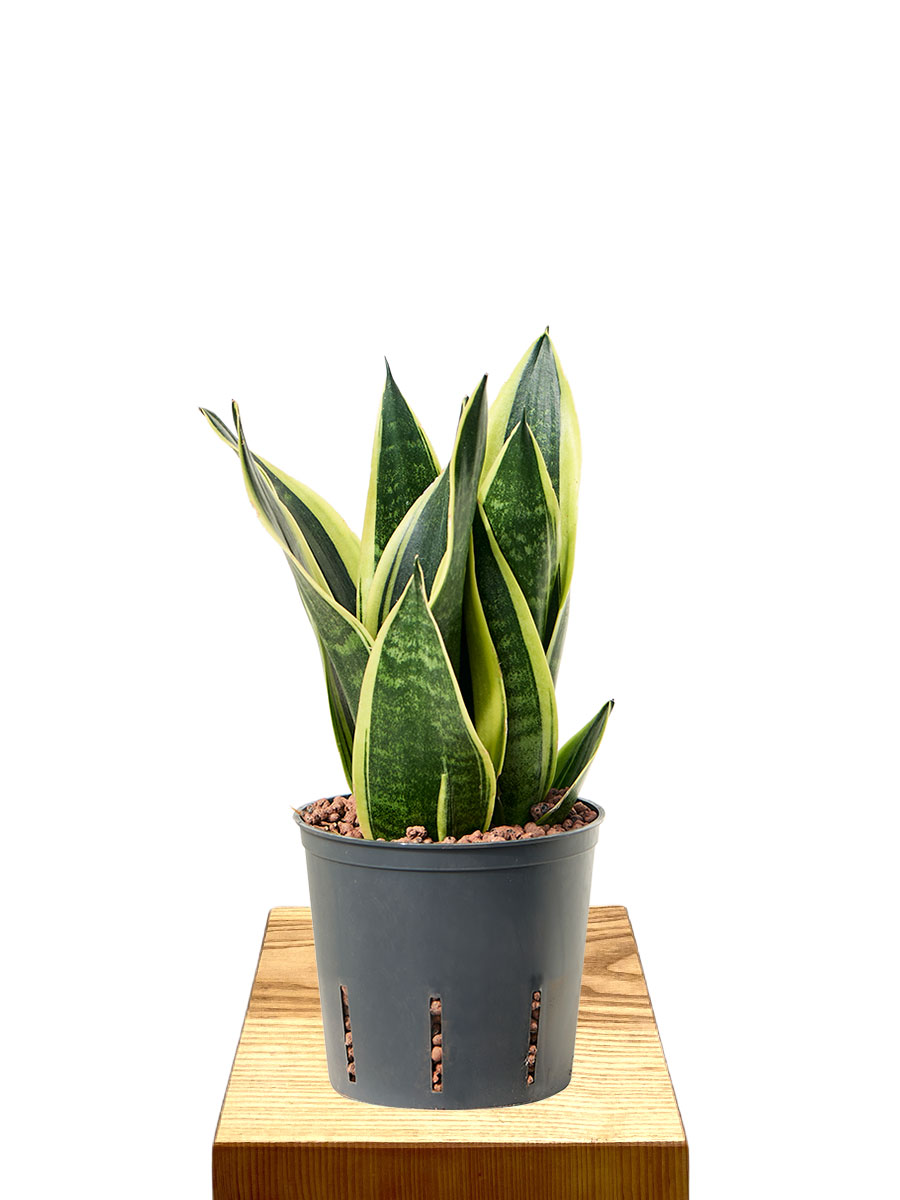
Hydro – Snake Plant Sansevieria CompactaThe snake plant Sansevieria Compacta is a decorative, easy-care houseplant with a compact habit and densely arranged, upright, dark green leaves. The sturdy leaves have an attractive pattern and give the plant a modern, elegant look. Thanks to its robust nature and its ability to store water in its leaves, it is very well suited to hydroculture.Care in hydrocultureLight:A bright spot with plenty of indirect light is ideal. Partially shaded spots are also tolerated well. Some morning or evening sun is fine; intense midday sun should be avoided.Temperature:Ideally 18–27 °C; try not to let it drop below 12 °C. Avoid cold drafts and strong temperature fluctuations.Humidity:Normal room air is perfectly sufficient. Increased humidity is not necessary.Substrate:Hydroculture granules (e.g. expanded clay) ensure good aeration of the roots and an even water supply.Watering:Check the water level regularly and only top up once the water level indicator is at minimum. Wait a few days before refilling so that the roots receive enough oxygen. Avoid permanently high water levels, as waterlogging can encourage root rot.Fertilising:During the growing season from spring to autumn, fertilise every 4–6 weeks with a special hydroculture fertiliser at the recommended dosage. In winter, fertilise much less or pause if there is no growth.Special features:The hydro Sansevieria Compacta is robust, long-lived and ideal for plant lovers looking for an uncomplicated houseplant. Its compact, dense habit makes it particularly suitable for smaller rooms, window sills and offices. The water-storing leaves tolerate short dry spells well, but are sensitive to permanently wet roots.Overwintering tipsIn winter, reduce water consumption and only refill once the water level indicator is at minimum. Do not leave the roots standing in water permanently. Keep temperatures as constant as possible above 12 °C and avoid cold drafts. Fertilise only sparingly during the low-light season. The plant keeps its compact habit and remains an attractive eye-catcher in winter too.

CHF 29.90*

Delivery time 2 - 7 working days

Available
New
Item no. 2SABDBP10
Hydro - Snake Plant Sansevieria Black Diamond

Topfdurchmesser 13/12

Topfhöhe ab Boden 35cm ±

Hydro – Snake Plant Sansevieria Black DiamondThe snake plant Sansevieria Black Diamond is a decorative, easy-care houseplant with sturdy, upright, dark green leaves. The striking dark leaf colour and compact habit give it an elegant, modern look. This robust plant stores water in its leaves, is very undemanding and, with adapted watering, is very well suited to hydroculture.Care in hydrocultureLight:A bright spot with plenty of indirect light is ideal. Partially shaded spots are also tolerated well. Some morning or evening sun is fine; intense midday sun should be avoided.Temperature:Ideally 18–27 °C; try not to let it drop below 12 °C. Avoid cold drafts and strong temperature fluctuations.Humidity:Normal room air is perfectly sufficient. Increased humidity is not necessary.Substrate:Hydroculture granules (e.g. expanded clay) ensure good aeration of the roots and an even water supply.Watering:Check the water level regularly and only top up once the water level indicator is at minimum. Wait a few days before refilling so that the roots receive enough oxygen. Avoid permanently high water levels, as waterlogging can encourage root rot.Fertilising:During the growing season from spring to autumn, fertilise every 4–6 weeks with a special hydroculture fertiliser at the recommended dosage. In winter, fertilise much less or pause if there is no growth.Special features:The hydro Sansevieria Black Diamond is robust, long-lived and ideal for plant lovers looking for an uncomplicated houseplant. Its dark green, sturdy leaves add elegant accents in living spaces and offices. Thanks to its water-storing leaves, it tolerates short dry spells well, but is sensitive to permanently wet roots.Overwintering tipsIn winter, reduce water consumption and only refill once the water level indicator is at minimum. Do not leave the roots standing in water permanently. Keep temperatures as constant as possible above 12 °C and avoid cold drafts. Fertilise only sparingly during the low-light season. The plant keeps its dark, decorative leaf colour and remains an attractive eye-catcher in winter too.

CHF 29.90*

Delivery time 2 - 7 working days

Sold out
New
Item no. 2SAKIBP10
Hydro - Snake Plant Sansevieria Kirkii

Topfdurchmesser 13/12

Topfhöhe ab Boden 30cm ±

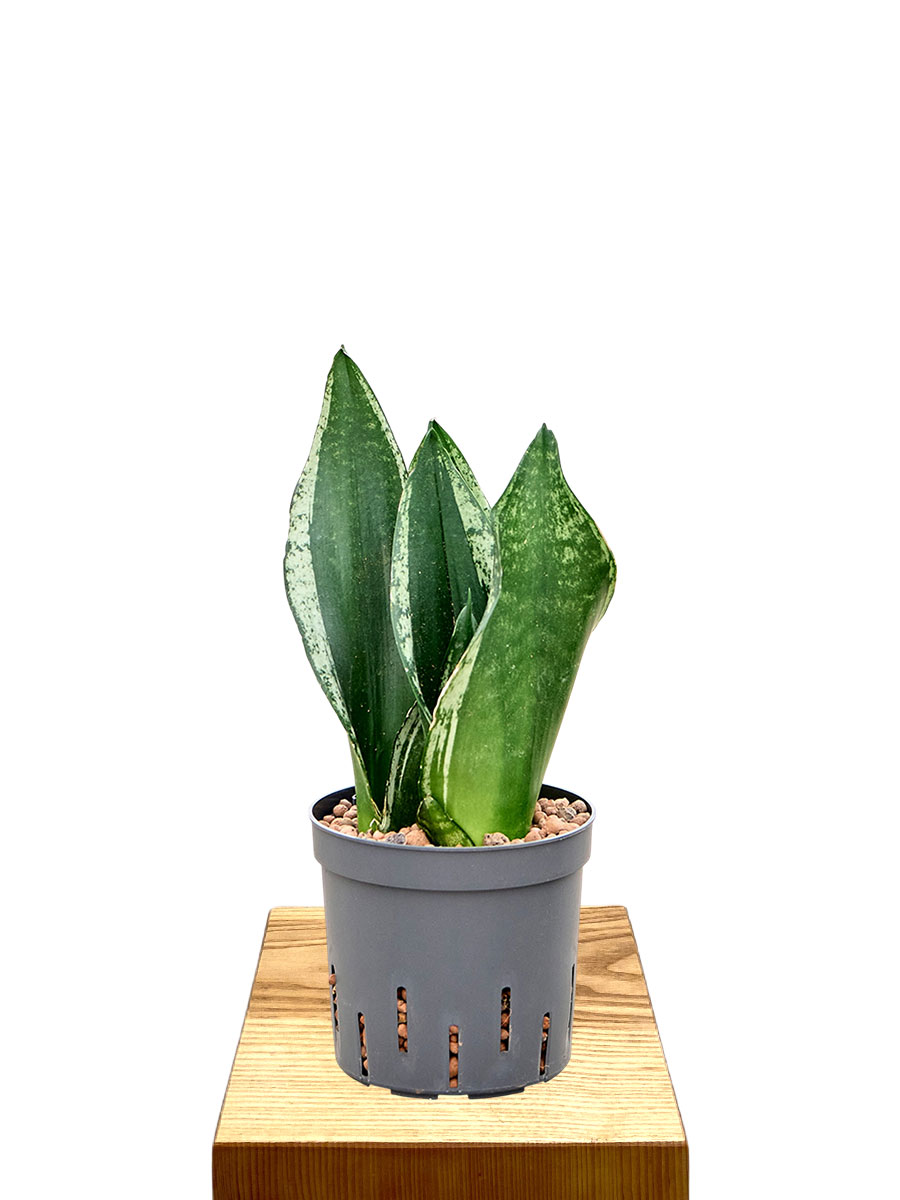
Hydro – Snake Plant Sansevieria kirkiiThe snake plant Sansevieria kirkii is an attractive, robust houseplant with broad, slightly wavy leaves and a striking dark green to silvery-green pattern. The decorative leaves can have reddish-brown edges and give the plant an exotic look. Thanks to its undemanding nature and its ability to store water in its leaves, it is well suited to hydroculture.Care in hydrocultureLight:A bright spot with plenty of indirect light is ideal. Partially shaded spots are also tolerated. Some morning or evening sun is fine; avoid intense midday sun if possible.Temperature:Ideally 18–27 °C; try not to let it drop below 12 °C. Avoid cold drafts and strong temperature fluctuations.Humidity:Normal room air is perfectly sufficient. Increased humidity is not necessary.Substrate:Hydroculture granules (e.g. expanded clay) ensure good aeration of the roots and an even water supply.Watering:Check the water level regularly and only top up once the water level indicator is at “Minimum”. Wait a few days before refilling so that the roots receive enough oxygen. Avoid permanently high water levels, as waterlogging can encourage root rot.Fertilising:During the growing season from spring to autumn, fertilise every 4–6 weeks with a special hydroculture fertiliser at the recommended dosage. In winter, fertilise much less or pause if there is no growth.Special features:The hydro Sansevieria kirkii is easy to care for, long-lived and also suitable for plant lovers with little time. Its sturdy, decoratively marked leaves make it a special eye-catcher in living spaces and offices. As a succulent plant, it tolerates short dry spells well, but is sensitive to permanently wet roots.Overwintering tipsIn winter, reduce water consumption and only refill once the water level indicator is at “Minimum”. Do not leave the roots standing in water permanently. Keep temperatures as constant as possible above 12 °C and avoid cold drafts. Fertilise only sparingly during the low-light season. The plant keeps its decorative leaf markings and remains an attractive eye-catcher in winter too.

CHF 29.90*

Sold out – we will notify you

Available
New
Item no. 4410
ZZ Plant Zamioculcas Zamiifolia

Topfdurchmesser 12cm

Topfhöhe ab Boden 45cm ±

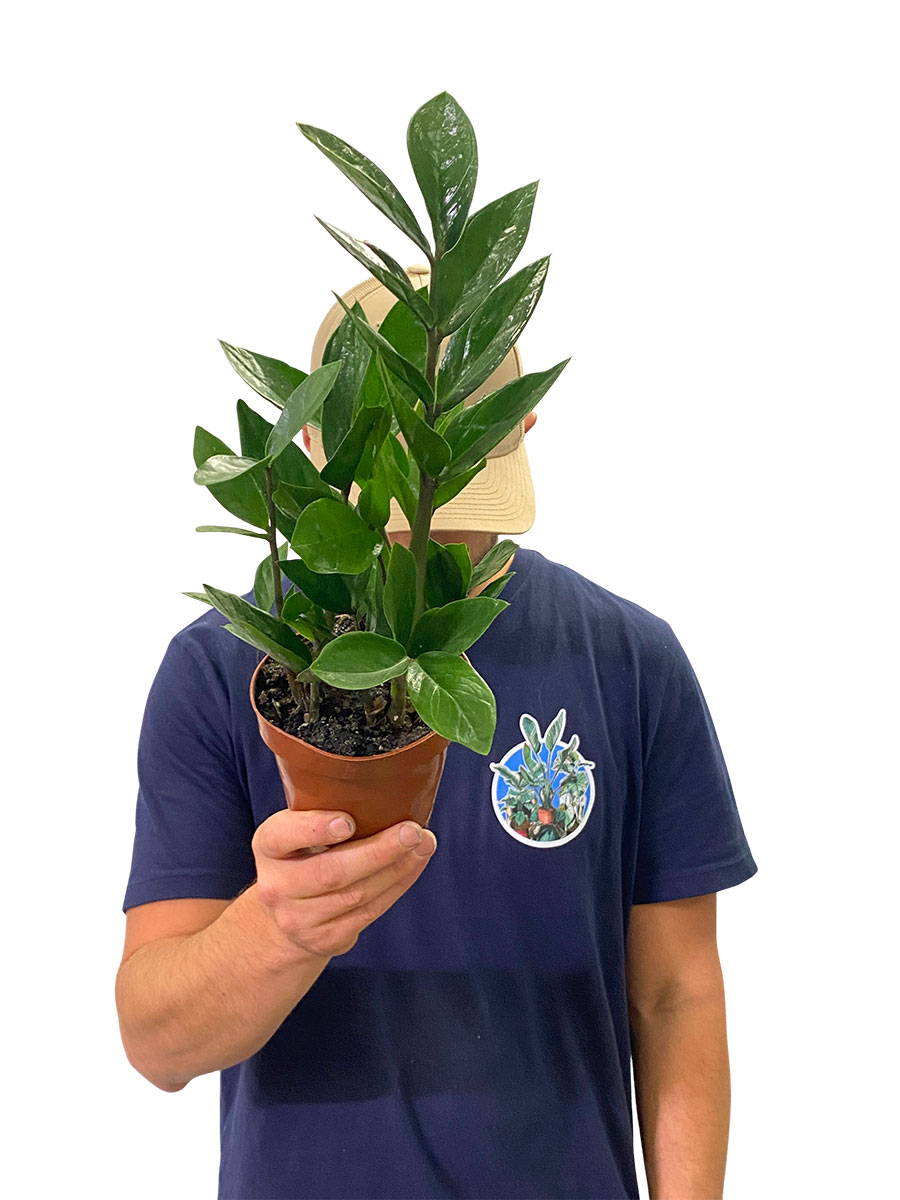
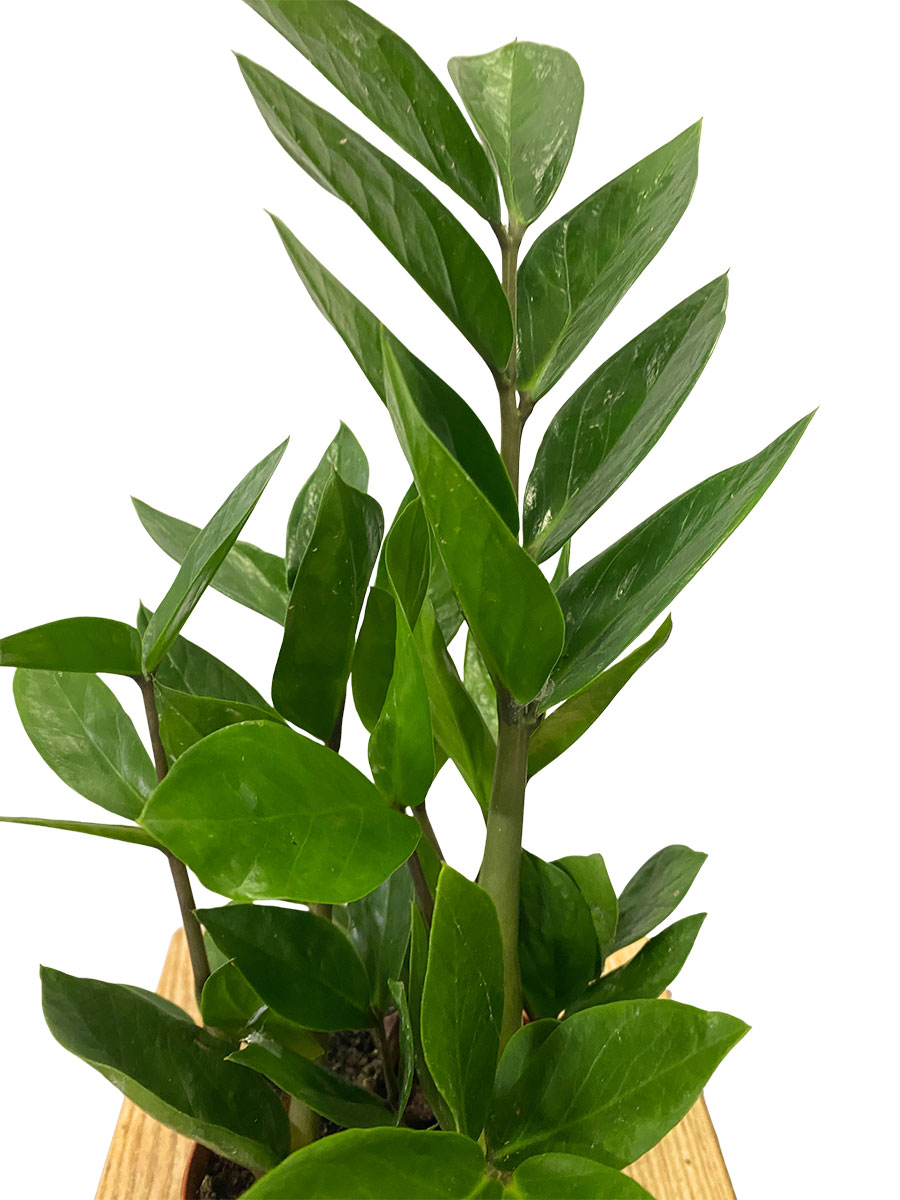
History of the Zamioculcas zamiifolia (ZZ plant) Zamioculcas zamiifolia, also known as the ZZ plant, comes from the dry regions of East Africa and has made a name for itself worldwide as an easy-care and decorative houseplant. With its glossy, dark green leaves and robust growth, it is an ideal choice for beginners and busy plant lovers. Thanks to its ability to store water in its thick, fleshy leaf stalks, it is particularly adaptable and forgiving of care mistakes. Care as a houseplant: Light: Bright to partially shaded spot; also tolerates shady places, but no direct sunlight. Temperature: Ideally 18–26 °C, at least 15 °C in winter. Humidity: Tolerant of dry room air; no additional misting necessary. Substrate: Free-draining soil, e.g. potting soil with sand or perlite, to avoid waterlogging. Watering: Low water requirements; only water when the substrate is completely dry. Be sure to avoid waterlogging. Feeding: Every 6–8 weeks with a weak foliage plant fertiliser during the growing phase. Care tips: The Zamioculcas is extremely robust but should not be watered too often, as it is sensitive to waterlogging. Repot every 2–3 years once the pot is completely filled with roots. Regularly remove dead or yellow leaves to keep the plant healthy.

CHF 14.90*

Delivery time 2 - 7 working days

Available
New
Item no. 4411
Anthurium White Champion

Topfdurchmesser 12cm

Topfhöhe ab Boden 40cm ±

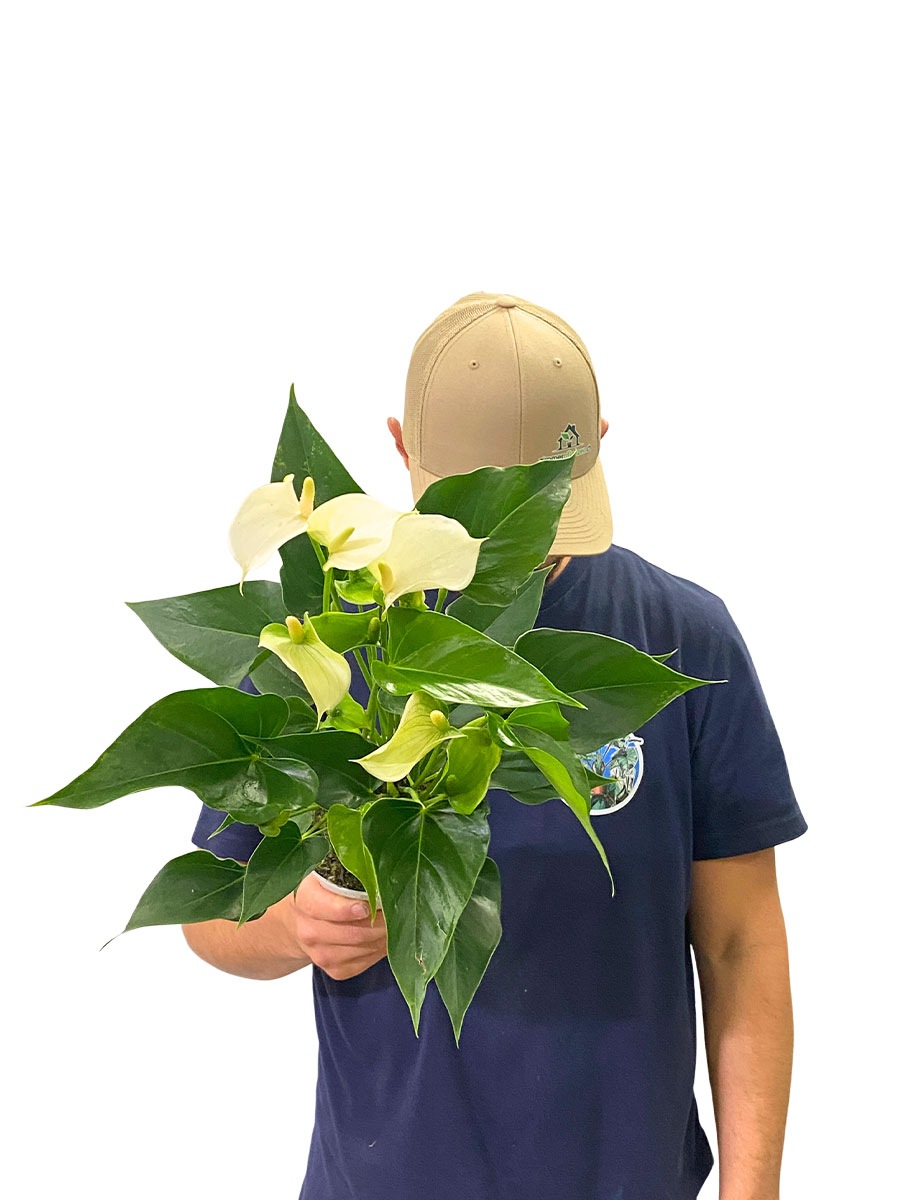
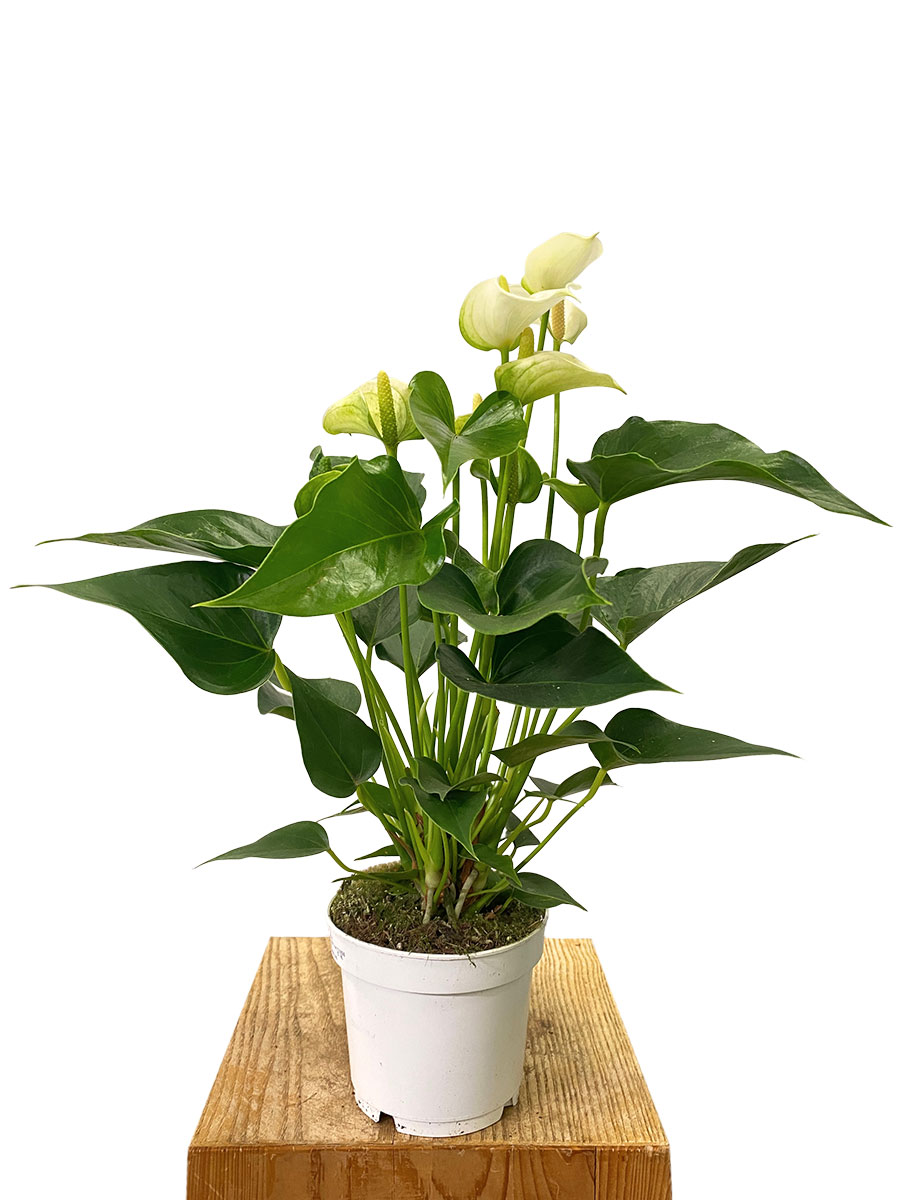
History of the Anthurium White Champion The Anthurium White Champion is an elegant cultivar from the large Anthurium family, originally native to the tropical rainforests of Central and South America. With its bright white bracts, which contrast strongly with the glossy dark green foliage, it is very much in demand as a modern houseplant. This variety was bred specifically for its compact growth habit and long-lasting flowers and is one of the finest anthuriums on the market. Care as a houseplant: Light: Bright spot with plenty of indirect light; no direct midday sun. Temperature: Ideally 18–26 °C; do not keep below 16 °C. Humidity: High (60–80%); regular misting or a spot in the bathroom is ideal. Substrate: Loose, airy substrate, e.g. orchid compost with bark and some perlite. Watering: Keep evenly moist but avoid waterlogging; use lukewarm, low-lime water. Feeding: Every 2–3 weeks with liquid fertiliser for flowering plants during the growing and flowering season. Special features: This houseplant is considered a symbol of purity and elegance and also makes an excellent gift. Overwintering tips: Water less in winter and make sure temperatures stay at least 16 °C. With the right care, the Anthurium White Champion remains a long-lived and decorative houseplant.

CHF 16.90*

Delivery time 2 - 7 working days

Available
Seasonal
Item no. 527
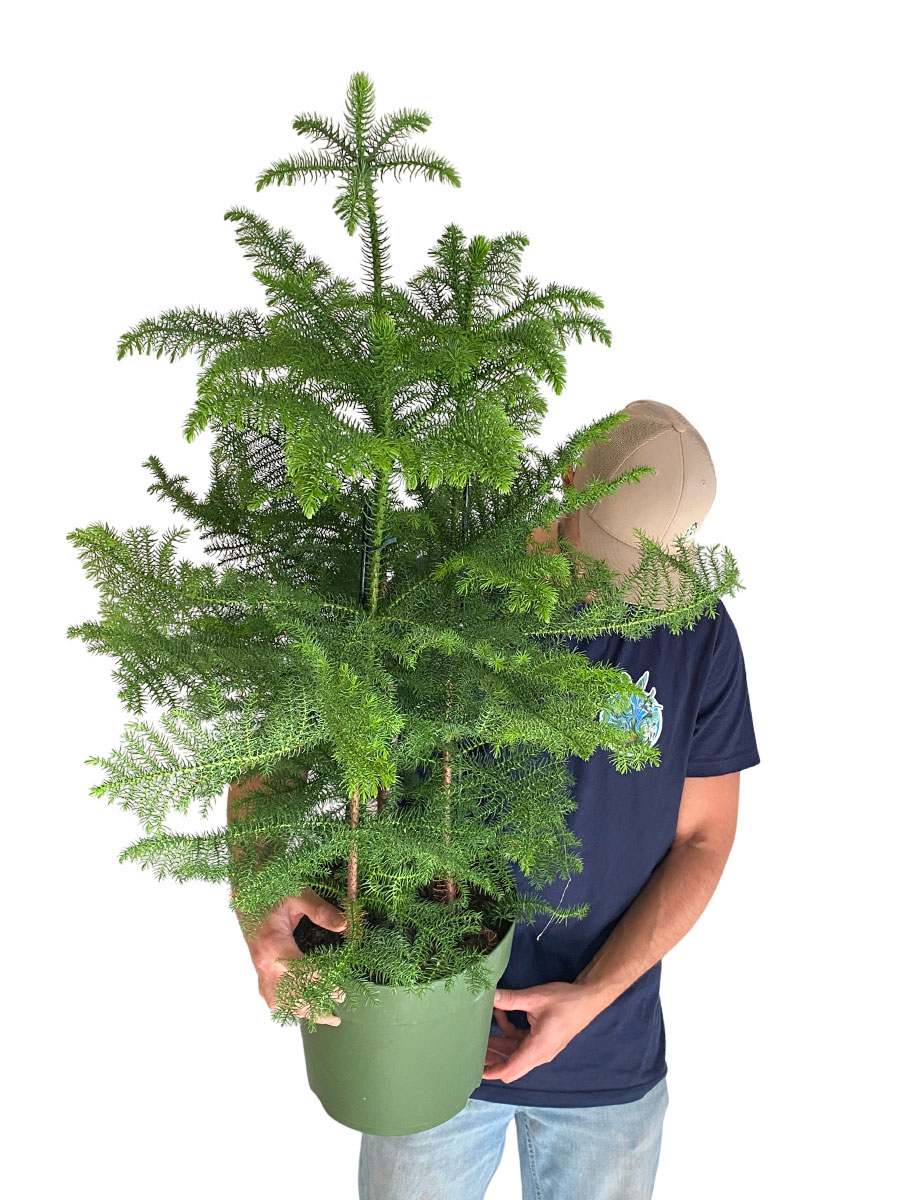
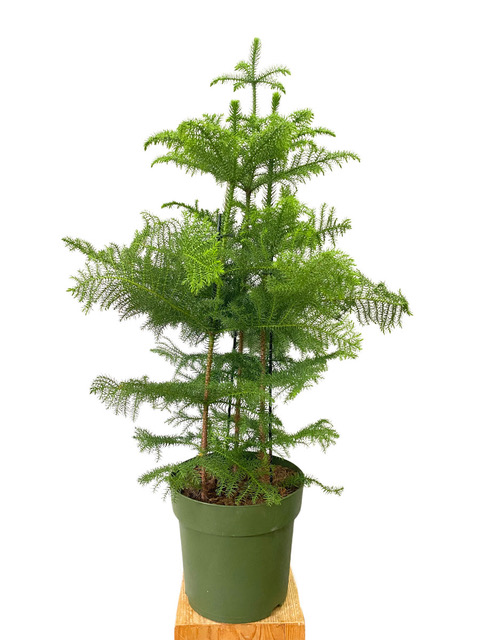
Araucaria Heterophylla 3-Plant Tuft

Topfdurchmesser 27cm

Topfhöhe ab Boden 100cm ±

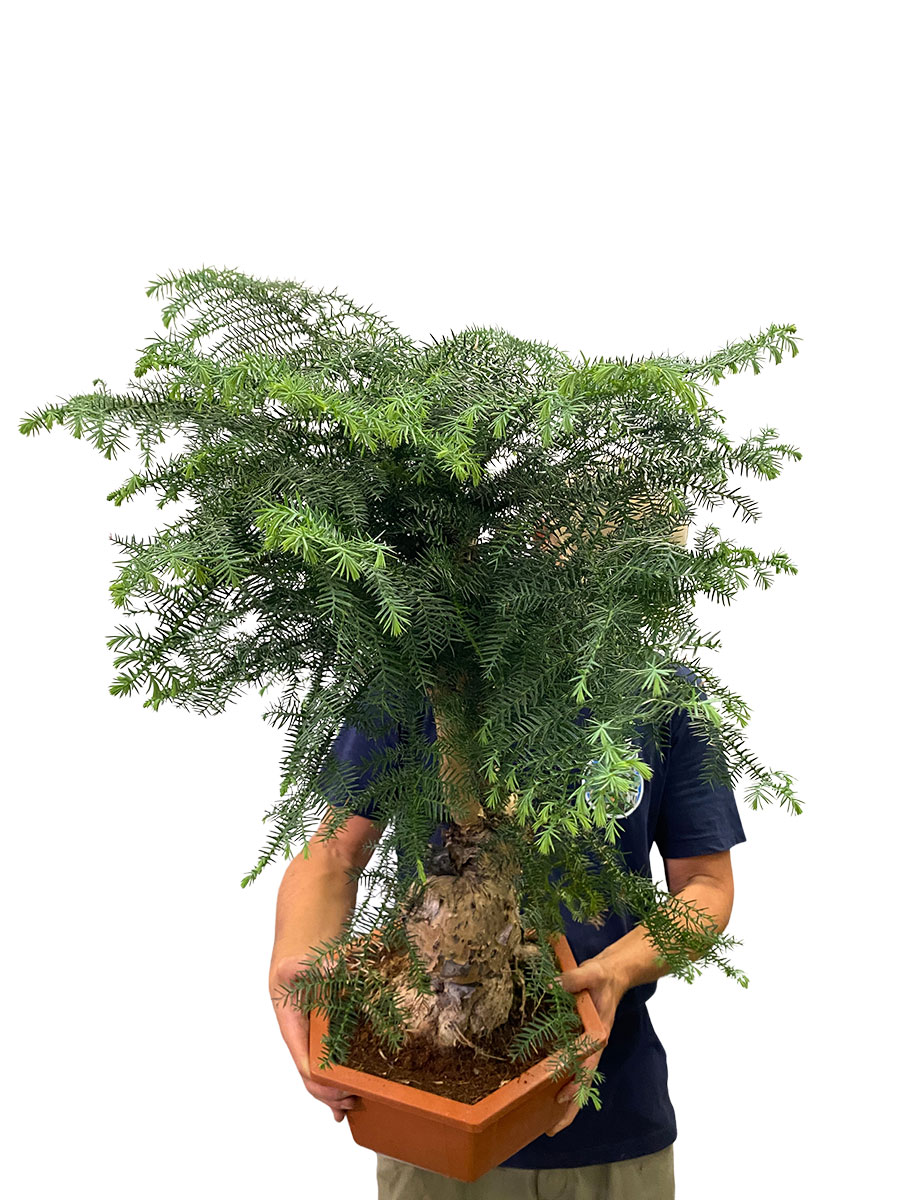
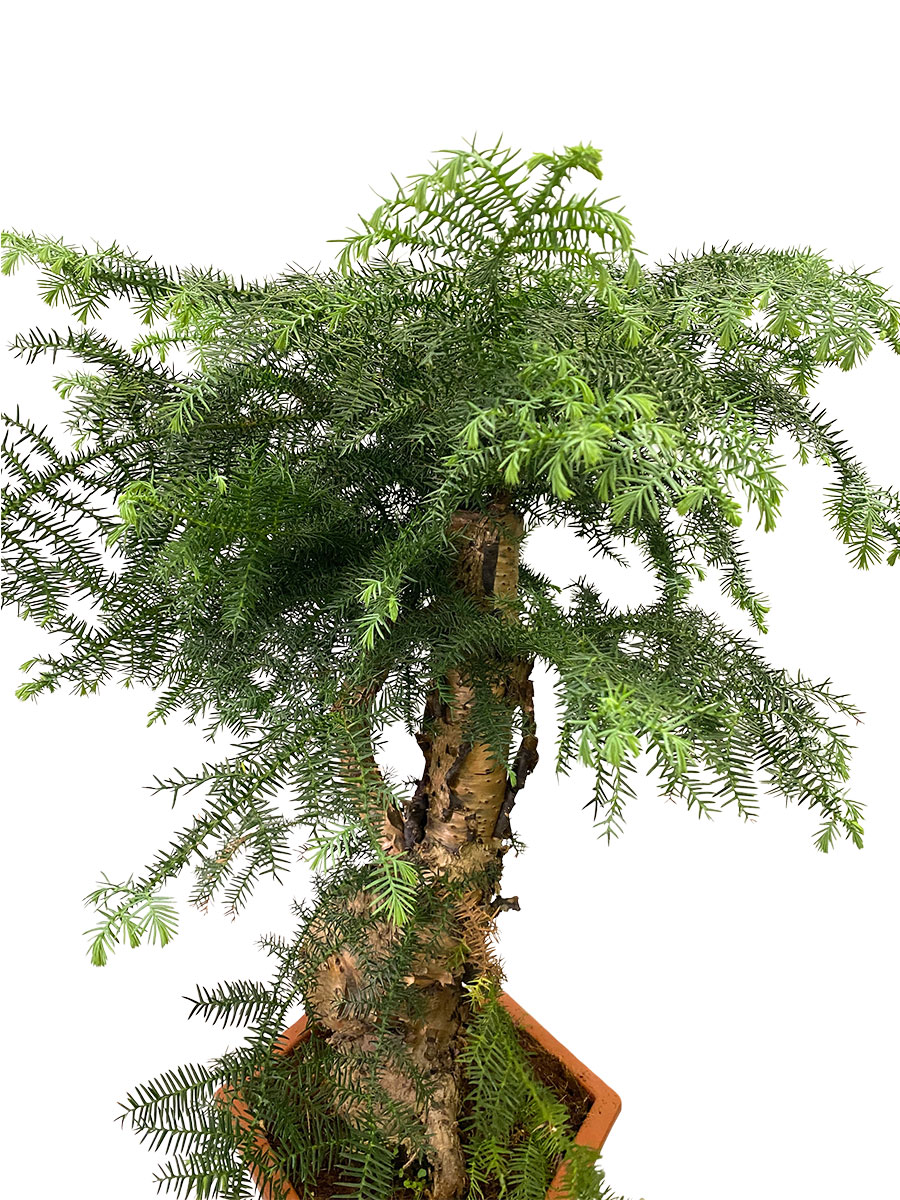
History of the Norfolk Island pine, Araucaria heterophylla The Norfolk Island pine (Araucaria heterophylla) originally comes from Norfolk Island in the Pacific and is not a true fir, but belongs to the Araucariaceae family. It was brought to Europe as an exotic rarity in the 19th century and has been a popular houseplant ever since. With its even, pyramidal growth it resembles a small fir tree and is often also used as a living Christmas tree. Care as a houseplant: Light: Bright spot with plenty of indirect light; direct sun only in moderation. Temperature: Ideally 18–22 °C; in winter a little cooler is fine (10–15 °C). Humidity: High; does not tolerate dry heated air well, so mist regularly. Substrate: Loose, humus-rich substrate with good drainage. Watering: Keep evenly moist, but be sure to avoid waterlogging. Fertilising: Every 4 weeks, diluted liquid fertiliser during the growing season. Special features: This houseplant grows slowly, but can reach considerable sizes over the years. Overwintering tips: In winter, keep it cool (10–15 °C), bright and with reduced watering. The Norfolk Island pine is an elegant, long-lived houseplant that, with patience, grows into a real gem.

CHF 149.90*

Delivery time 2 - 7 working days

Available
Rarity
New
Item no. 4384
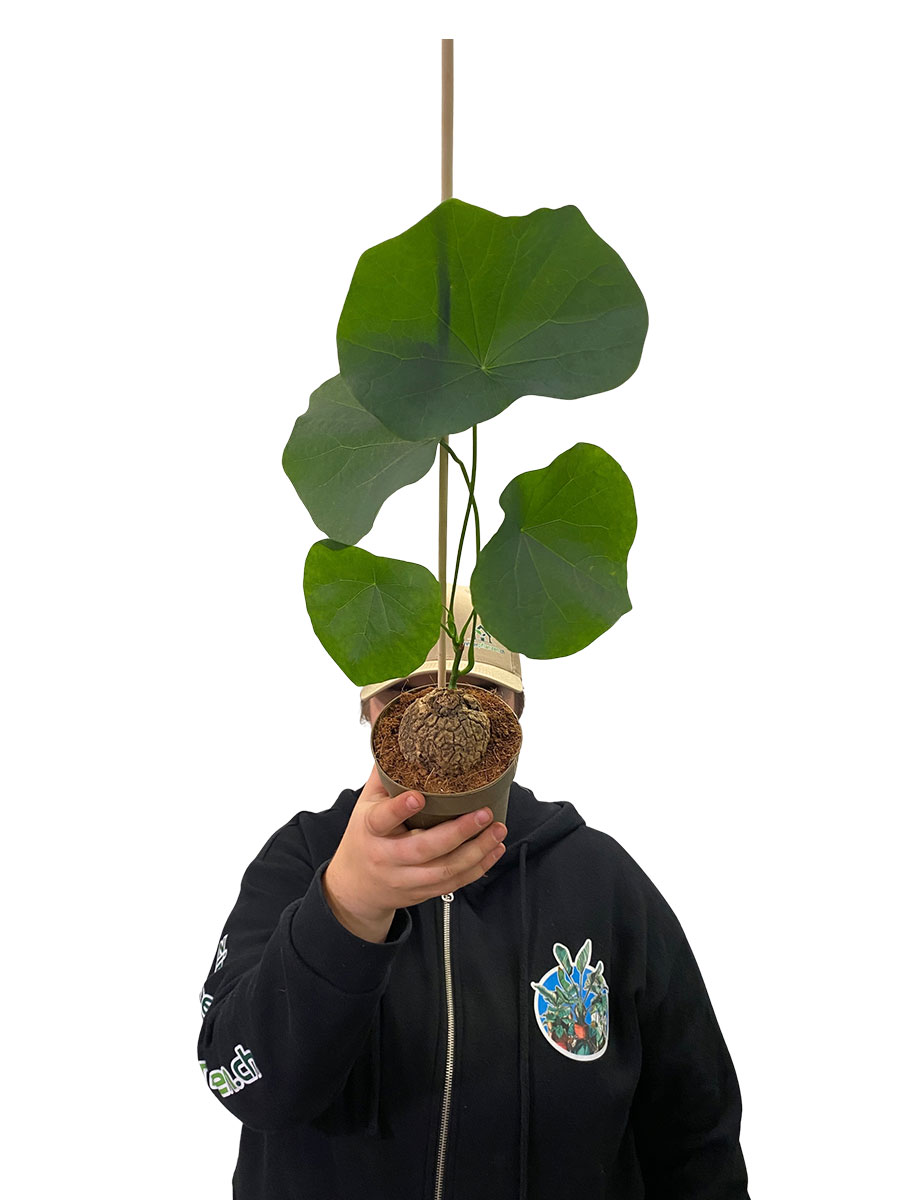
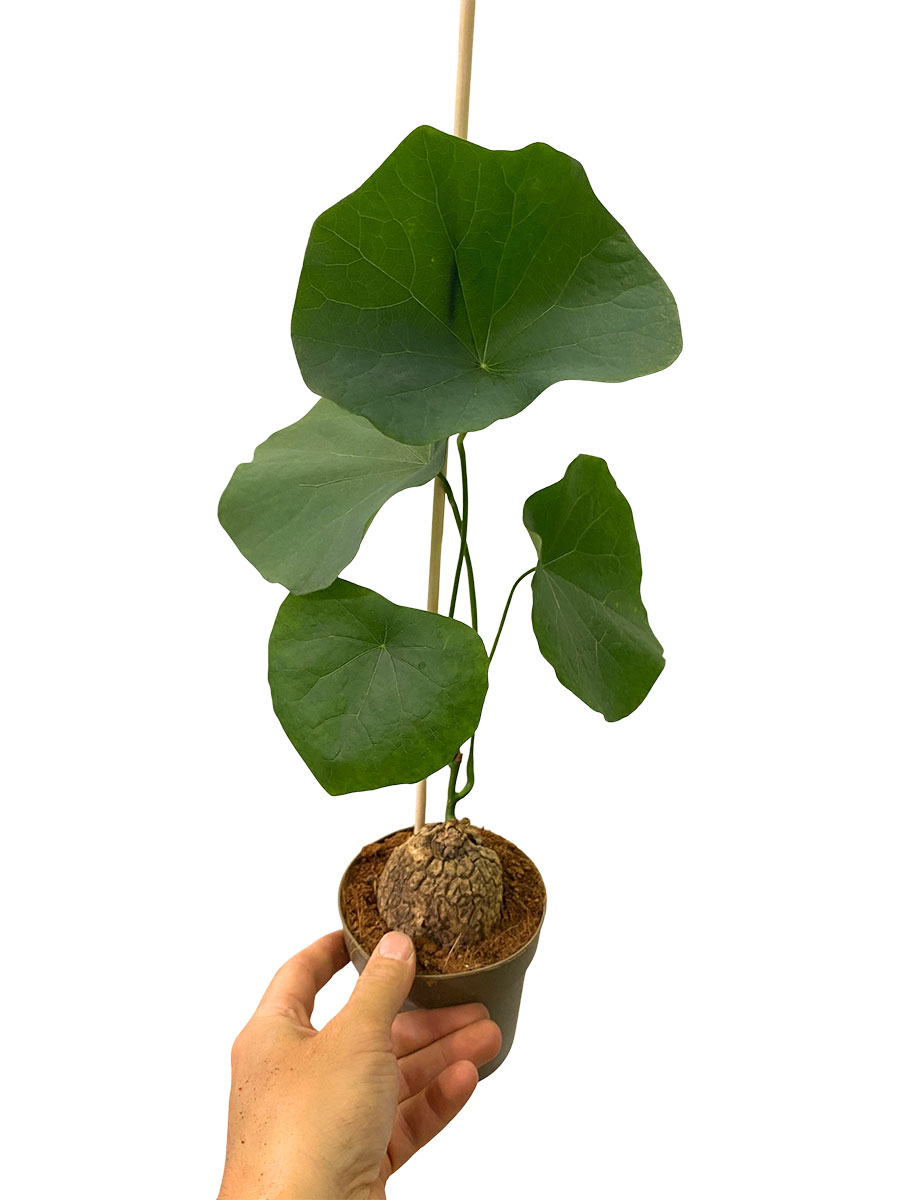
Stephania Suberosa Pierrei

Topfdurchmesser 11cm

Topfhöhe ab Boden 20cm ±

History of the Stephania Suberosa PierreiStephania Suberosa Pierrei is a special caudex plant from the moonseed family (Menispermaceae). It forms a striking, cork-textured tuber from which fine, twining shoots with roundish leaves grow during the growing season. The tuber serves as a water reservoir and is best left largely visible above the substrate.Care as a houseplant:Light: Bright to very bright, but protected from strong midday sun.Temperature: 20–28 °C is ideal. Not below 15 °C for long periods.Humidity: Normal to slightly increased indoor humidity is sufficient.Substrate: Very free-draining, mineral substrate for caudex plants or succulents.Watering: Water moderately during growth and let the substrate dry out well between waterings. Do not wet the tuber directly.Feeding: Feed lightly about once a month during the growing season.Special features: Most of the tuber should stay above the soil. A small climbing support is recommended for the long shoots.Overwintering tips:When the leaves turn yellow and drop in autumn, the natural dormant period begins. Then stop watering completely and keep the tuber dry, bright and ideally at around 15–20 °C. Only start watering again slowly when new shoots appear in spring.

CHF 49.90*

Delivery time 2 - 7 working days

Available
Rarity
New
Item no. 4247
Baby Monstera Devil Monster

Topfdurchmesser 7cm

Topfhöhe ab Boden 25cm ±

History of the Monstera “Devil Monster” The Monstera “Devil Monster” is considered one of the rarest houseplants in the world and is a true botanical legend. It is almost impossible to find on the open market and is aimed exclusively at serious collectors. There is little reliable information about its exact origin, which further adds to its mystical reputation. Its extraordinary appearance and extreme rarity make it an absolute prestige piece among houseplants. Care as a houseplant: Light: Very bright spot with plenty of indirect light; no direct sun. Temperature: Ideally 20–28 °C; keep warm at all times. Humidity: High (at least 60–70 %); stable conditions are crucial. Substrate: Very airy, high-quality aroid substrate with bark, perlite and coconut chips. Watering: Keep evenly and slightly moist; strictly avoid waterlogging. Feeding: Feed sparingly but regularly during the growing phase. Special features: Extremely sensitive to stress, changes of location and care mistakes. This houseplant is very unforgiving of mistakes. Important note for collectors: The Monstera “Devil Monster” is not a plant for beginners. It requires experience, patience and a very good understanding of tropical houseplants. Anyone caring for it should be aware that even small deviations in light, water or humidity can cause problems. A true rarity – exclusively for real lovers of extraordinary houseplants.

CHF 299.90*

Delivery time 2 - 7 working days

Available
New
Item no. 1700
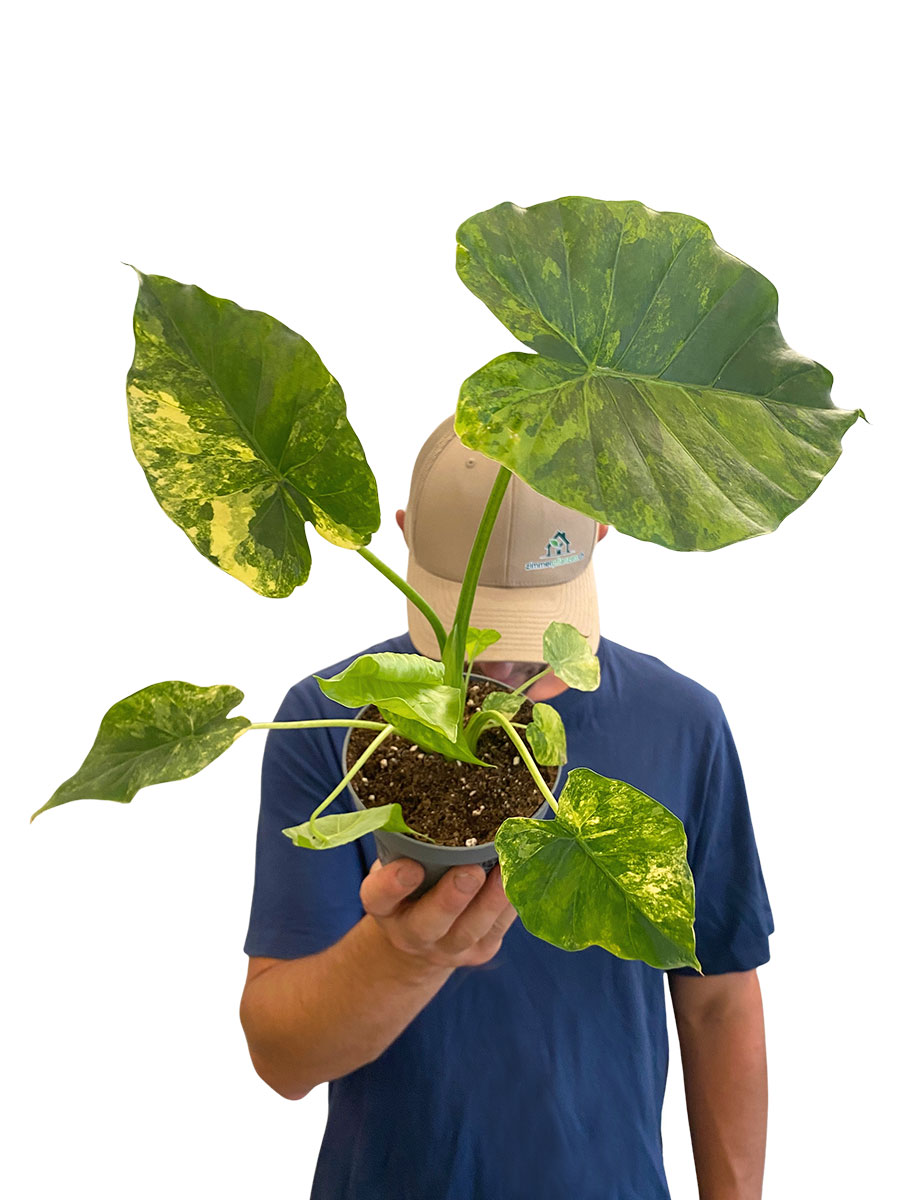
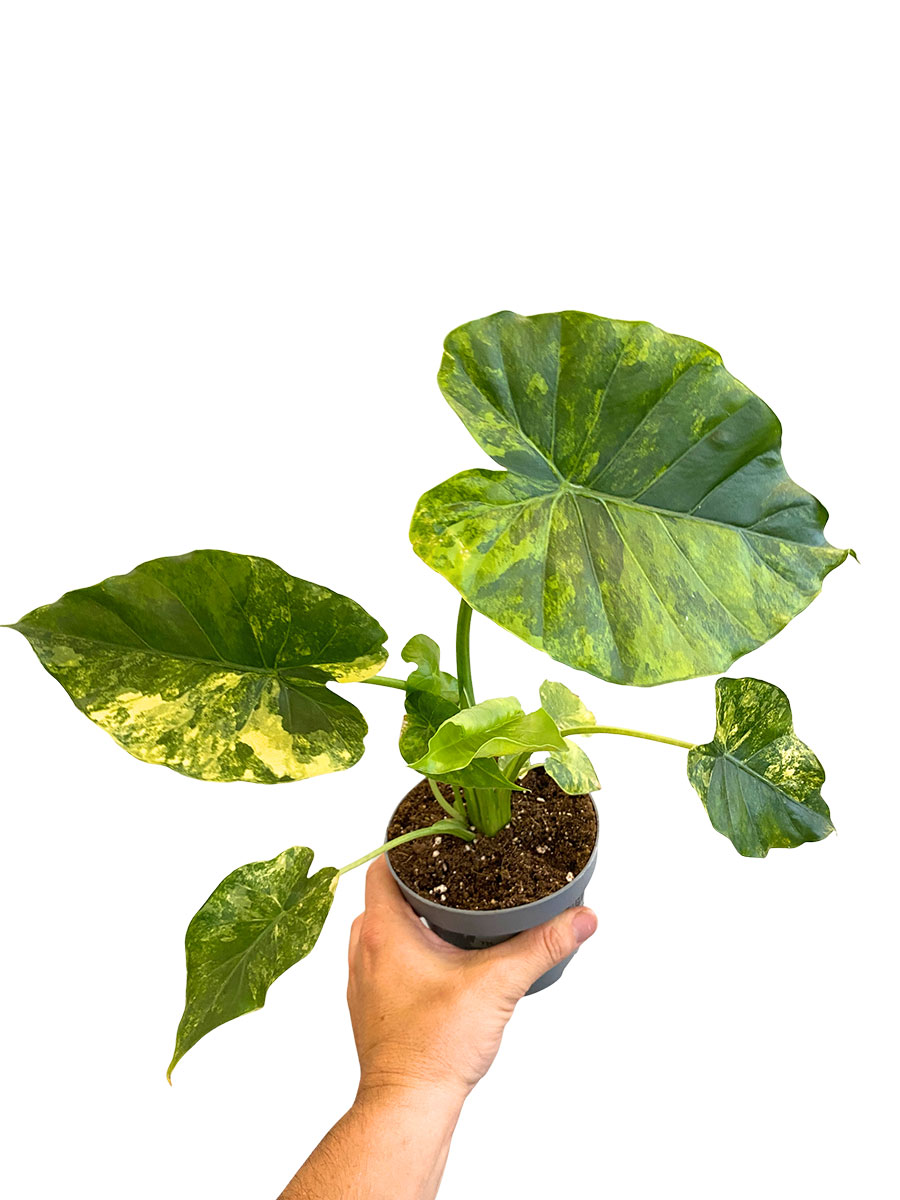
Alocasia Macrorrhiza Variegata

Topfdurchmesser 14cm

Topfhöhe ab Boden 35cm ±

History of the Alocasia Macrorrhiza Variegata The Alocasia Macrorrhiza Variegata is a rare and sought-after cultivar of the classic large-leaved alocasia, also known as giant taro. The species originally comes from the tropical regions of Southeast Asia, where it has been known for centuries as both an ornamental and a useful plant. The variegated form with its huge, white-and-green marbled leaves is one of the most striking and valuable forms and is especially prized as an exclusive houseplant. Care as a houseplant: Light: Bright position with plenty of indirect light; direct sun can scorch the leaves. Temperature: Ideally 18–28 °C; do not keep below 15 °C. Humidity: High (over 60 %); regular misting or a humidifier helps. Substrate: Loose, nutrient-rich and free-draining substrate, e.g. soil with coconut fibre, bark and perlite. Watering: Keep evenly moist; avoid waterlogging, but do not let it dry out completely. Feeding: Every 2 weeks with liquid fertiliser during the growing season. Special features: This houseplant can grow very large and therefore needs plenty of space; its variegation makes every leaf unique. Overwintering tips: Water less in winter and keep it in a bright spot at a minimum of 15 °C. Alocasia Macrorrhiza Variegata is an impressive houseplant that brings tropical flair with its huge, variegated leaves.

CHF 49.90*

Delivery time 2 - 7 working days

Available
Item no. 4330
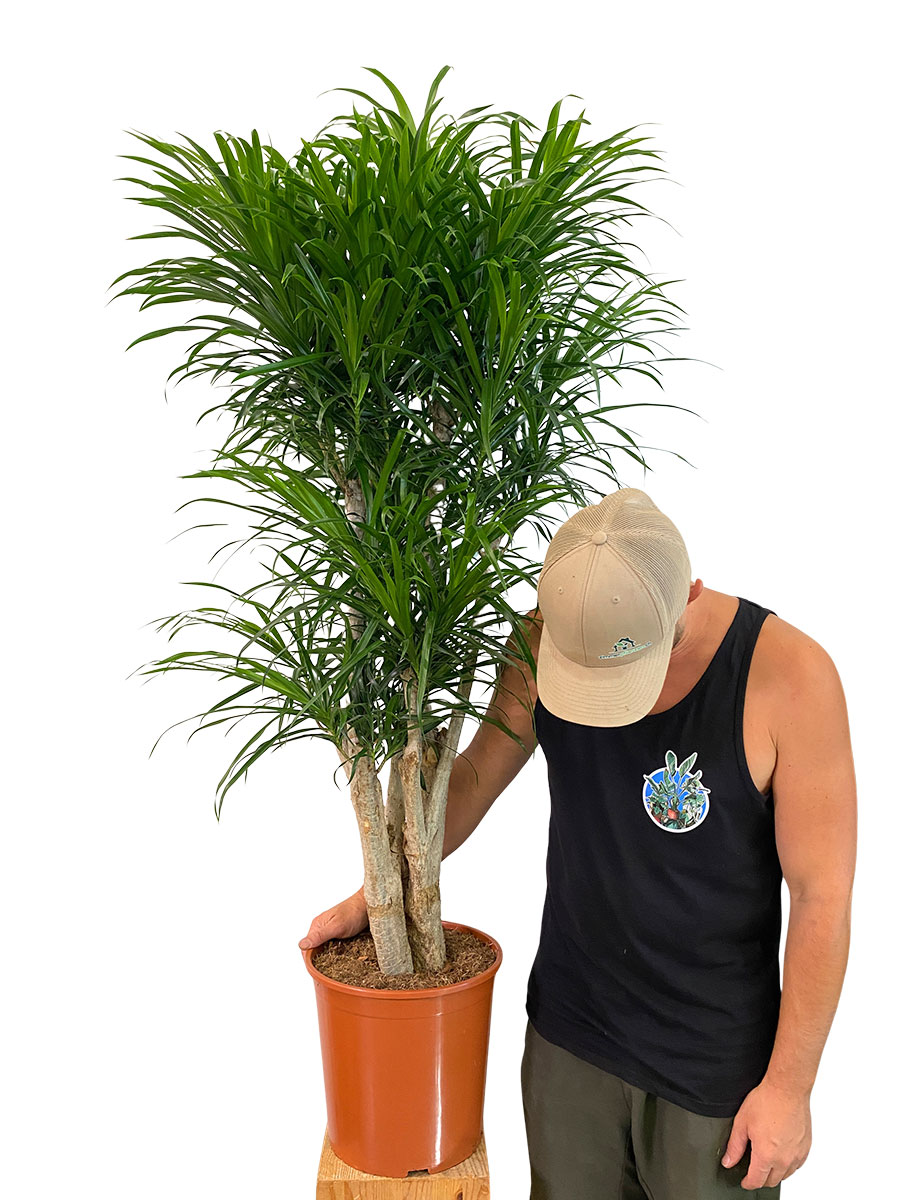
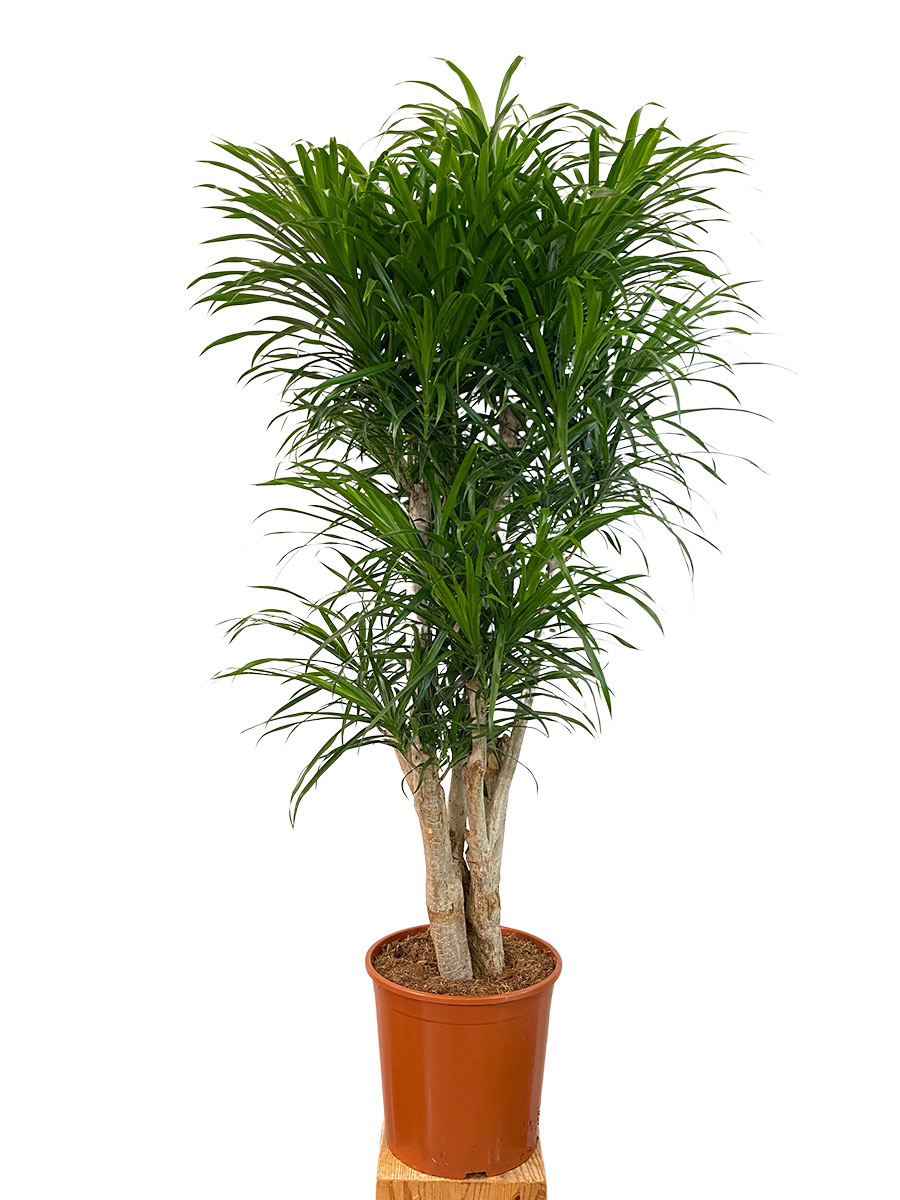
Dracaena Anita Branched

Topfdurchmesser 30cm

Topfhöhe ab Boden 150cm ±

History of the Dracaena Anita The Dracaena Anitais an elegant houseplant with slender, arching leaves in rich green. It belongs to the asparagus family (Asparagaceae) and originally comes from Africa. Its branched growth habit gives it a particularly decorative appearance that is ideal for living spaces and offices. Thanks to its robustness and air-purifying properties, it is a popular choice among houseplants. Care as a houseplant: Light: Bright spot with indirect light; also tolerates partial shade. Temperature: Ideally 18–25 °C; do not keep below 12 °C. Humidity: Moderate; occasional misting promotes vitality. Substrate: Loose, free-draining substrate, e.g. potting soil mixed with sand or perlite. Watering: Water moderately; the substrate should dry out slightly before the next watering. Avoid waterlogging. Feeding: Every 4 weeks with liquid fertiliser during the growing season. Special features: This houseplant is easy to care for and improves the indoor climate with its air-purifying properties. Overwintering tips: Water more sparingly in winter and do not keep it below 12 °C. The branched Dracaena Anita is a hardy and decorative houseplant that is also suitable for beginners.

CHF 279.90*

Delivery time 2 - 7 working days

Available
New
Item no. 4403
Spider Plant Chlorophytum Bonnie

Topfdurchmesser 12cm

Topfhöhe ab Boden 20cm ±

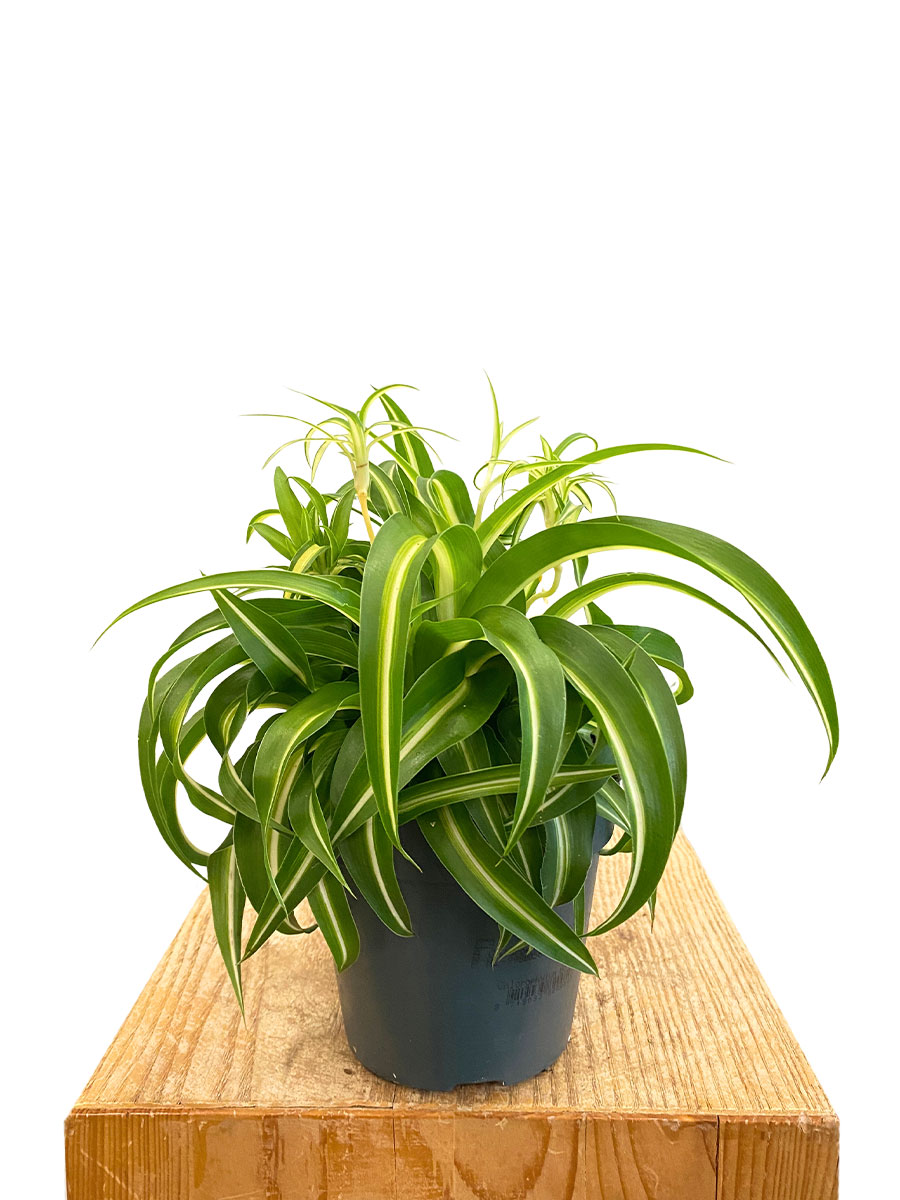
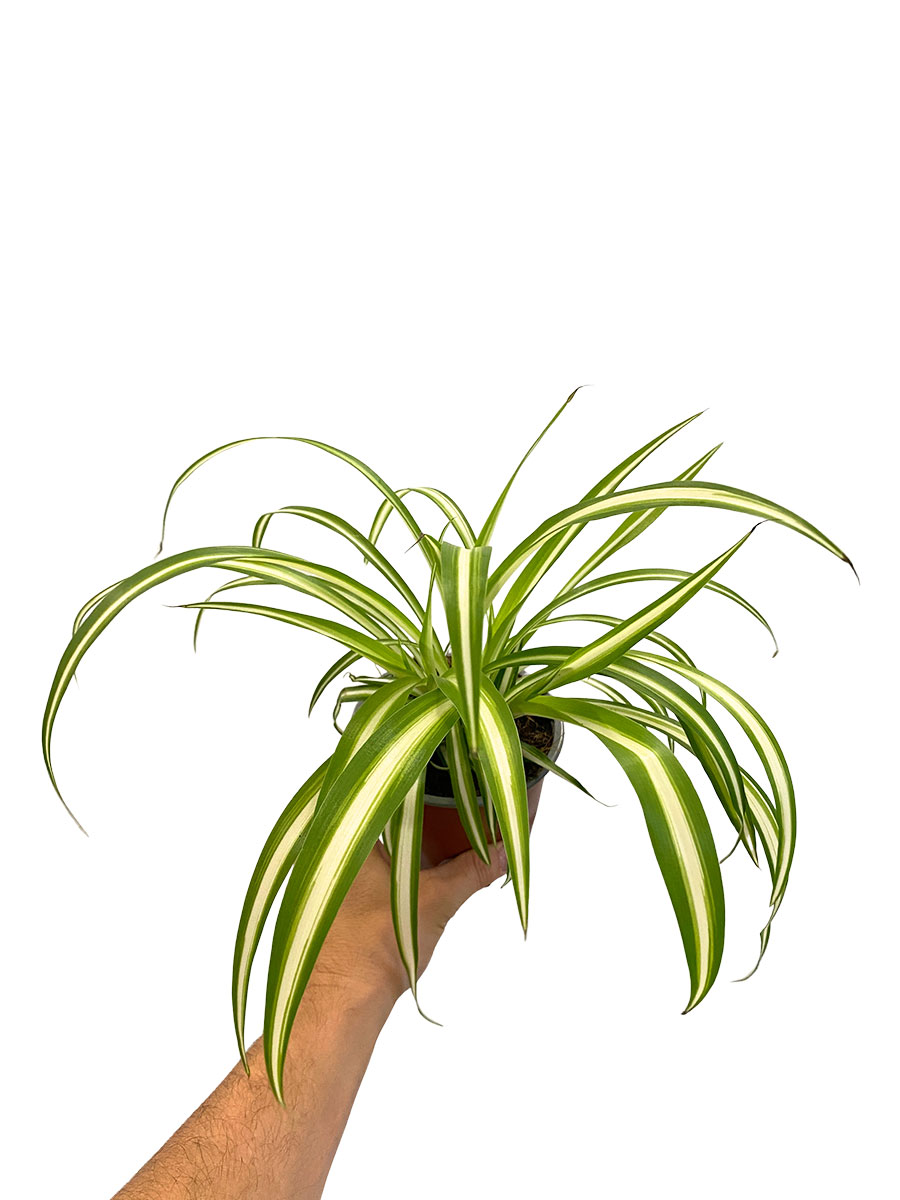
History of the spider plant Chlorophytum BonnieThe spider plant originally comes from tropical and southern Africa. The Bonnie variety stands out for its decoratively curled, green-and-white striped leaves and its compact growth. It is ideal as an easy-care houseplant and for suitable tropical terrariums.Care as a houseplant:Light: Bright to partially shaded, without intense midday sun.Temperature: Ideally 18–27 °C, not below 10–12 °C.Humidity: Normal indoor air is suitable; higher humidity is well tolerated.Substrate: Loose, humus-rich and free-draining.Watering: Water moderately as soon as the top layer of substrate has dried slightly. Avoid waterlogging.Feeding: From spring to autumn, feed weakly every 2–4 weeks.Special features: The curled leaves give the plant a special look. In good conditions it forms long shoots with small offsets.Important for pet owners: Generally considered non-toxic to cats and dogs.Care as a terrarium plant:Light: Bright to partially shaded, indirect light.Temperature: Ideally 22–28 °C.Humidity: About 60–80 %.Substrate: Loose, humus-rich and free-draining.Watering: Keep slightly moist, let excess water drain away well.Air circulation: Ensure regular air exchange to avoid mould formation.Special features: Suitable for spacious, tropical terrariums. The compact growth and the curled leaves add decorative accents.Overwintering tips:In winter, keep bright at normal room temperature, water less and reduce feeding. Avoid cold draughts and permanently wet soil.

CHF 14.90*

Delivery time 2 - 7 working days

Available
New
Item no. 4401
Chlorophytum Green Orange

Topfdurchmesser 12cm

Topfhöhe ab Boden 40cm ±

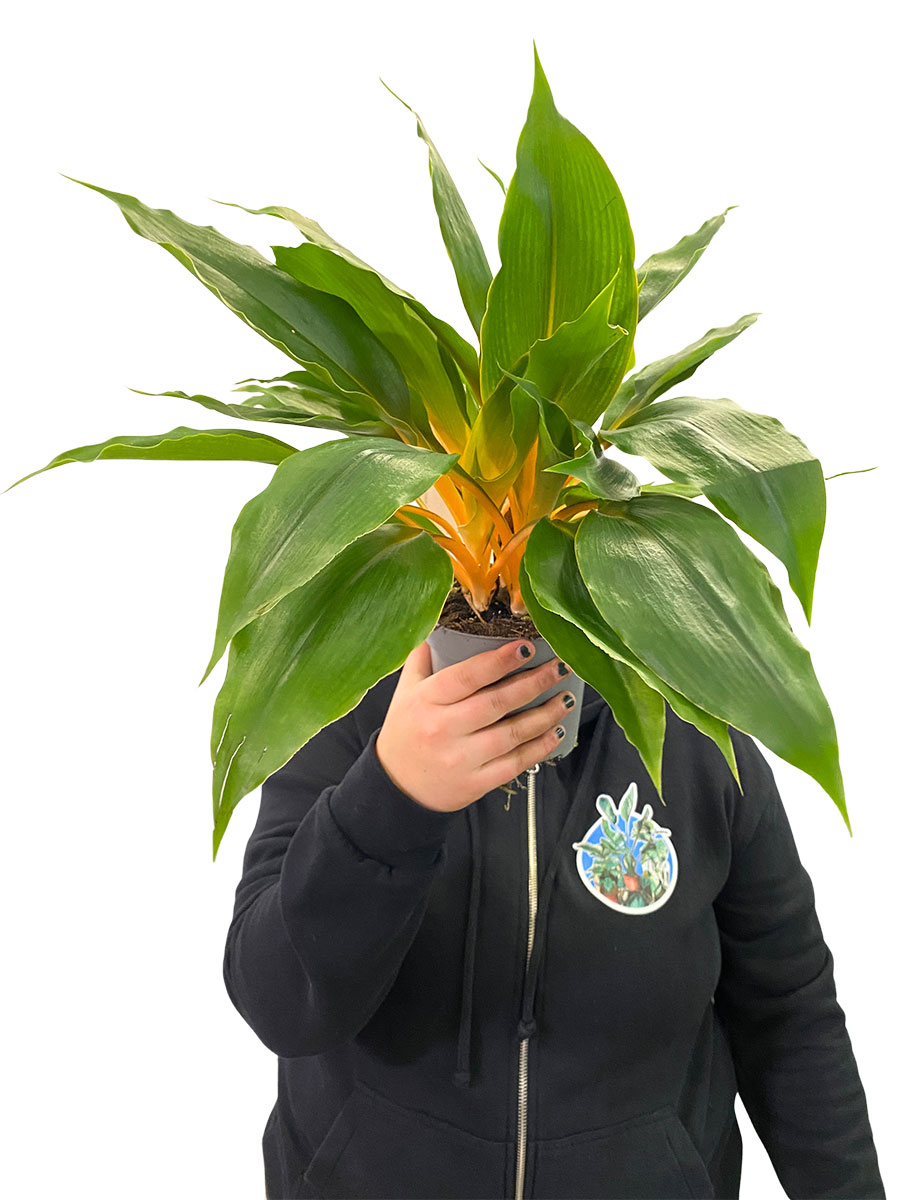
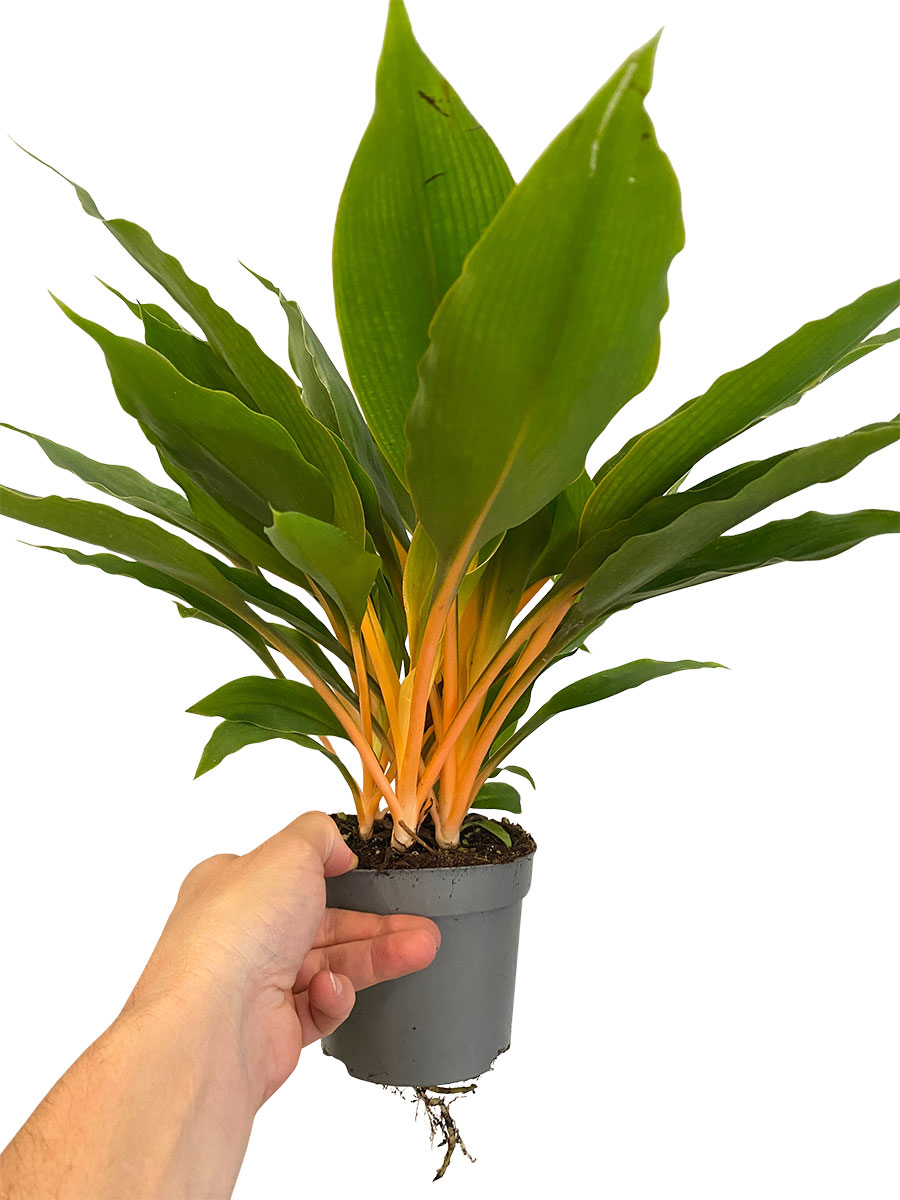
History of the Chlorophytum orchidastrum Green OrangeChlorophytum orchidastrum comes from the tropical regions of Africa and is known for its broad, dark green leaves and striking orange leaf stalks. With its strong colour contrast, the Green Orange variety adds a special accent to any living space and any tropical terrarium.Care as a houseplant:Light: Bright to partially shaded, without intense midday sun.Temperature: Ideally 18–27 °C, not below 15 °C.Humidity: Medium to high humidity.Substrate: Loose, humus-rich and free-draining.Watering: Water moderately as soon as the top layer of substrate has dried slightly. Avoid waterlogging.Feeding: From spring to autumn, feed weakly every 2–4 weeks.Special features: Bright, indirect light supports the strong colouring of the orange leaf stalks.Important for pet owners: Generally considered non-toxic to cats and dogs.Care as a terrarium plant:Light: Bright to partially shaded, indirect light.Temperature: Ideally 22–28 °C.Humidity: About 60–80 %.Substrate: Loose, humus-rich and free-draining.Watering: Keep evenly and slightly moist, avoid waterlogging.Air circulation: Ensure regular air exchange to prevent mould.Special features: Suitable for spacious, tropical terrariums with enough room for the leaves.Overwintering tips:In winter, keep bright and at normal room temperature. Water less and reduce feeding. Avoid cold draughts.

CHF 29.90*

Delivery time 2 - 7 working days

Available
New
Item no. 4404
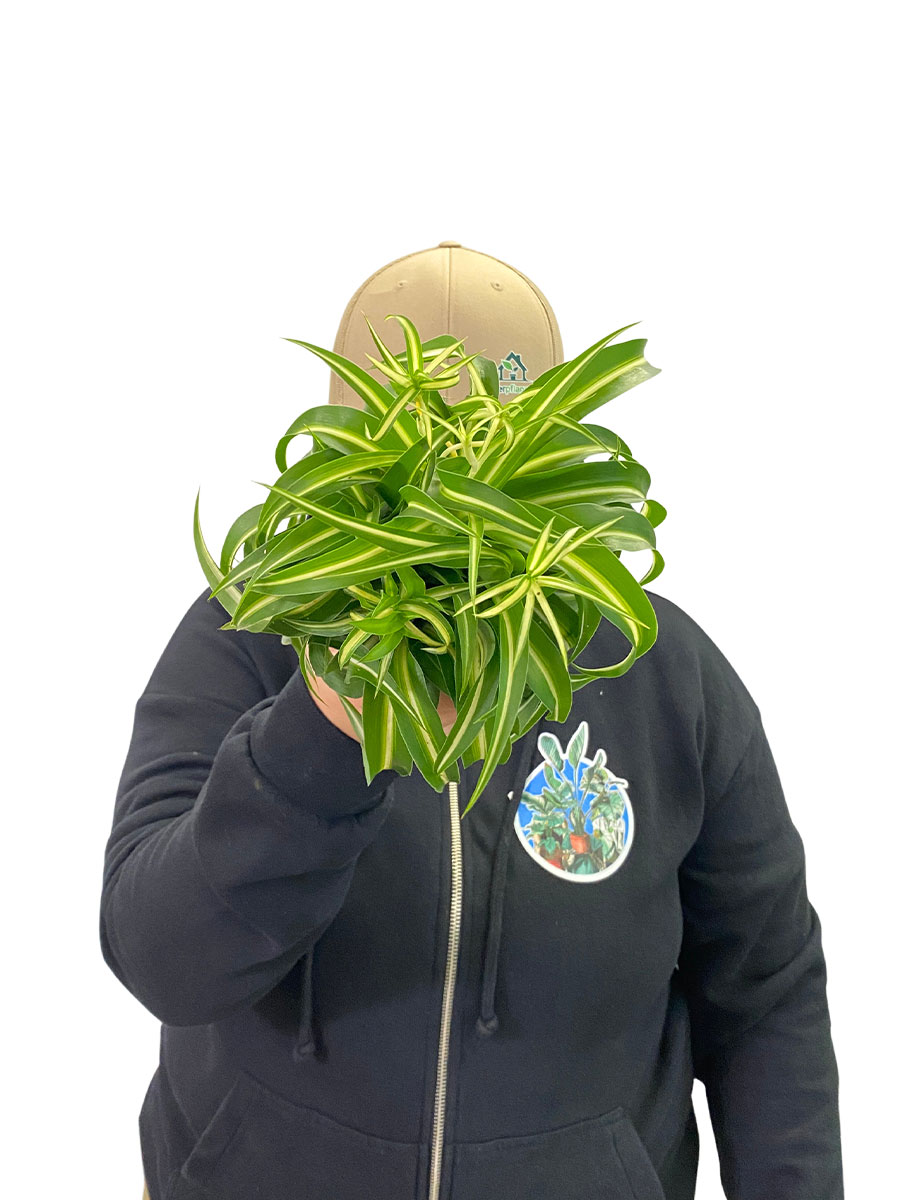
Spider Plant Chlorophytum Variegata

Topfdurchmesser 12cm

Topfhöhe ab Boden 25cm ±

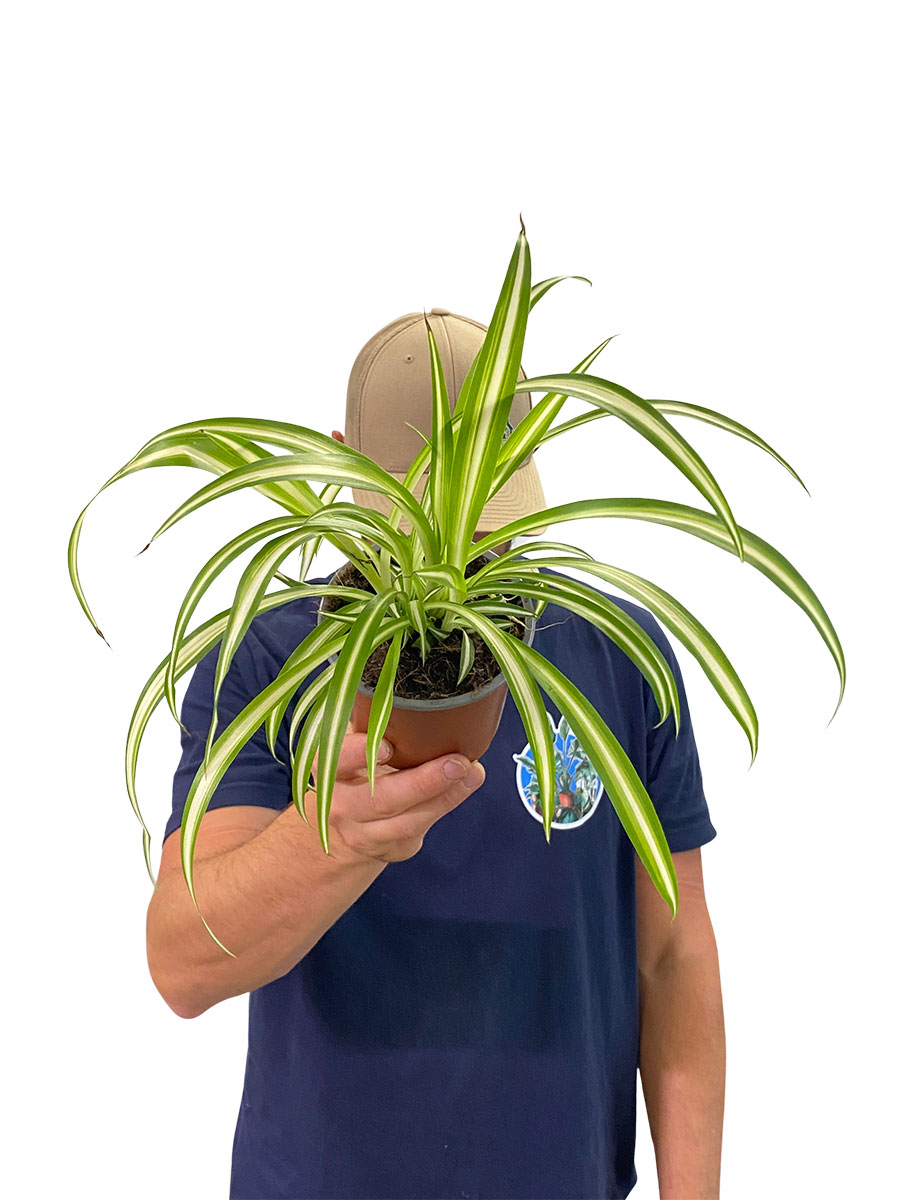
History of the spider plant Chlorophytum VariegataThe spider plant originally comes from tropical and southern Africa. The Variegata form delights with its long, narrow leaves, whose green and white stripes make them particularly decorative. It is easy to care for and suitable for living spaces as well as suitable tropical terrariums.Care as a houseplant:Light: Bright to partially shaded, without strong midday sun.Temperature: Ideally 18–27 °C, not below 10–12 °C.Humidity: Normal indoor air is suitable; higher humidity is well tolerated.Substrate: Loose, humus-rich and free-draining.Watering: Water as soon as the top layer of substrate has dried out slightly. Avoid waterlogging.Feeding: From spring to autumn, feed weakly every 2–4 weeks.Special features: Bright, indirect light supports the high-contrast leaf markings.Important for pet owners: Generally considered non-toxic to cats and dogs.Care as a terrarium plant:Light: Bright to partially shaded, indirect light.Temperature: Ideally 22–28 °C.Humidity: About 60–80 %.Substrate: Loose, humus-rich and free-draining.Watering: Keep slightly moist; excess water must be able to drain away.Air circulation: Ensure regular air exchange to prevent mould.Special features: Suitable for spacious, tropical terrariums with enough room for its long leaves.Overwintering tips:In winter, keep bright and at normal room temperature. Water less and reduce feeding. Avoid cold draughts.

CHF 14.90*

Delivery time 2 - 7 working days

Available
Item no. F4400
Purple Shamrock Oxalis Triangularis - Large

Topfdurchmesser 25cm

Topfhöhe ab Boden 25cm ±

Ready-made planting

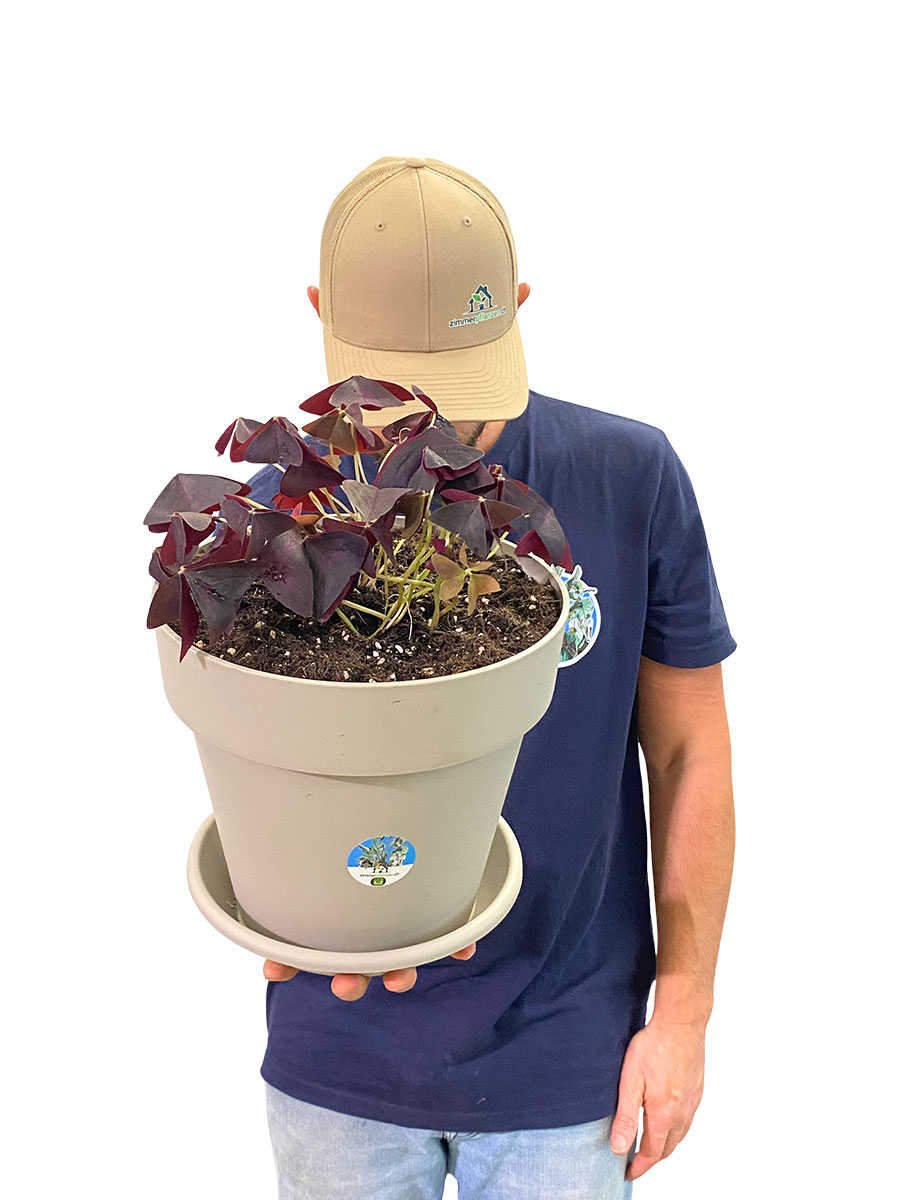
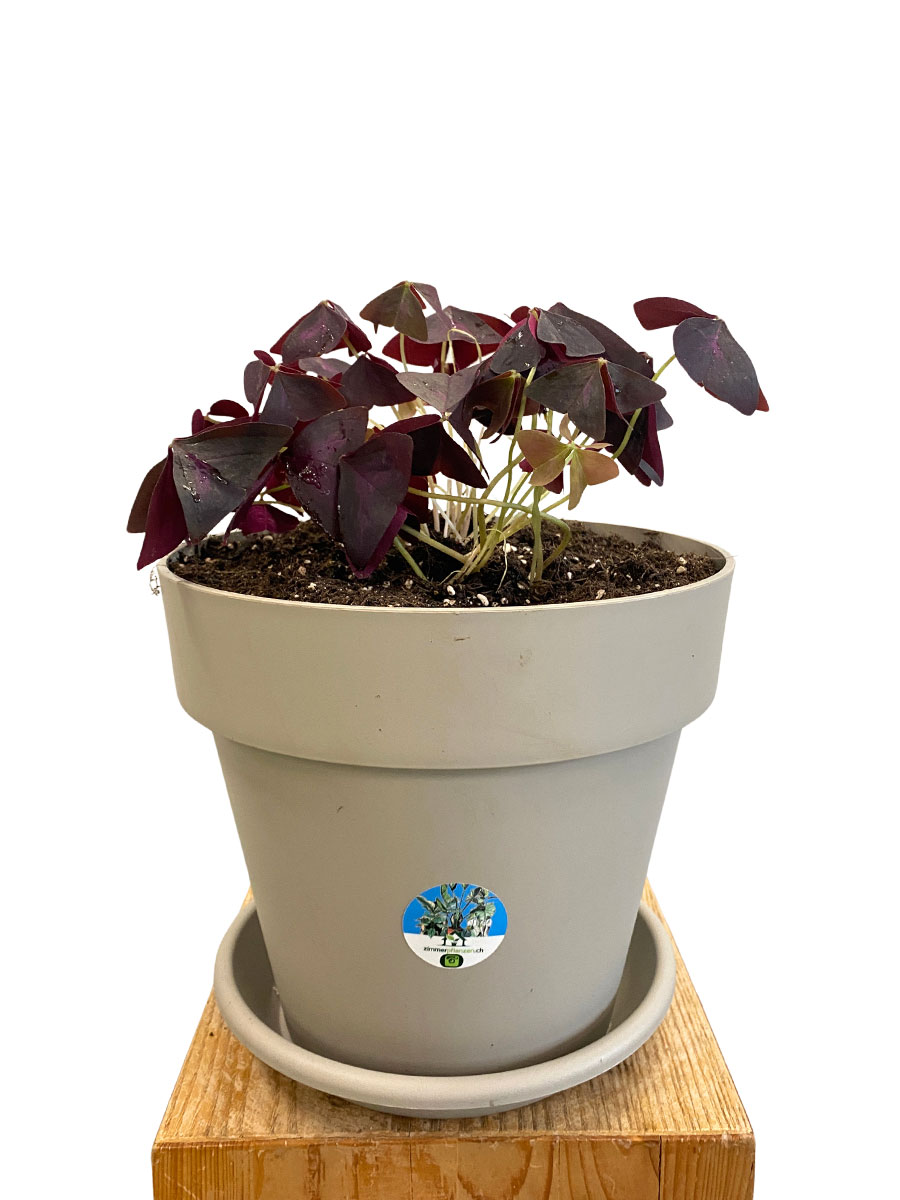
History of the purple shamrock Oxalis triangularisThe purple shamrock Oxalis triangularis comes from the tropical regions of South America and captivates with its characteristic triangular, purple leaves that are reminiscent of clover leaves. As a symbol of luck and positive energy, it is very popular – whether as a houseplant or as a decorative accent outdoors. Its dainty appearance gives any room or garden a touch of exoticism and charm.Care as a houseplant:Light: Bright spot with plenty of indirect light; avoid direct, intense sunlight to prevent leaf scorch.Temperature: Ideally 15–25 °C; temperatures should not drop below 10 °C.Humidity: Moderate humidity is sufficient; occasional misting supports its well-being in dry rooms.Substrate: Free-draining potting soil, possibly enriched with a little sand or perlite, promotes healthy root development.Watering: Water regularly, but only once the top layer of soil is dry – avoid waterlogging.Feeding: During the growing season, feed every 4–6 weeks with a weak dose of liquid fertiliser for foliage plants.Outdoor care (seasonal cultivation)In warm, frost-free regions, the purple shamrock can also thrive outdoors and add a colourful accent to gardens or balconies.Light & location: A partially shaded to sunny spot that is protected from intense midday sun is ideal for healthy growth.Temperature: Oxalis triangularis thrives in tropical or subtropical climates – make sure it is protected from frost in the cooler months.Soil: Loose, free-draining soil enriched with organic matter promotes root development.Watering: Water regularly so that the soil stays moist without becoming waterlogged; more frequent watering may be needed during very hot spells.Feeding: Outdoors, feed every 4–6 weeks during the growing phase with an organic liquid fertiliser to support its vivid colours.Care tip: In regions with cooler nights or seasonal frost, the purple shamrock should be moved to a sheltered area or indoors in good time.Overwintering tips:Whether as a houseplant or outdoors:Reduce watering in winter, as growth slows down.Make sure temperatures do not drop below 10 °C to avoid damage.A bright, draught-free spot keeps the purple shamrock vigorous even during its dormant phase.With the right care, the purple shamrock Oxalis triangularis brings a vibrant display of colour and plenty of positive energy to your home or garden, both indoors and outdoors.

CHF 69.90*

Delivery time 2 - 7 working days

Available
New
Item no. 3562
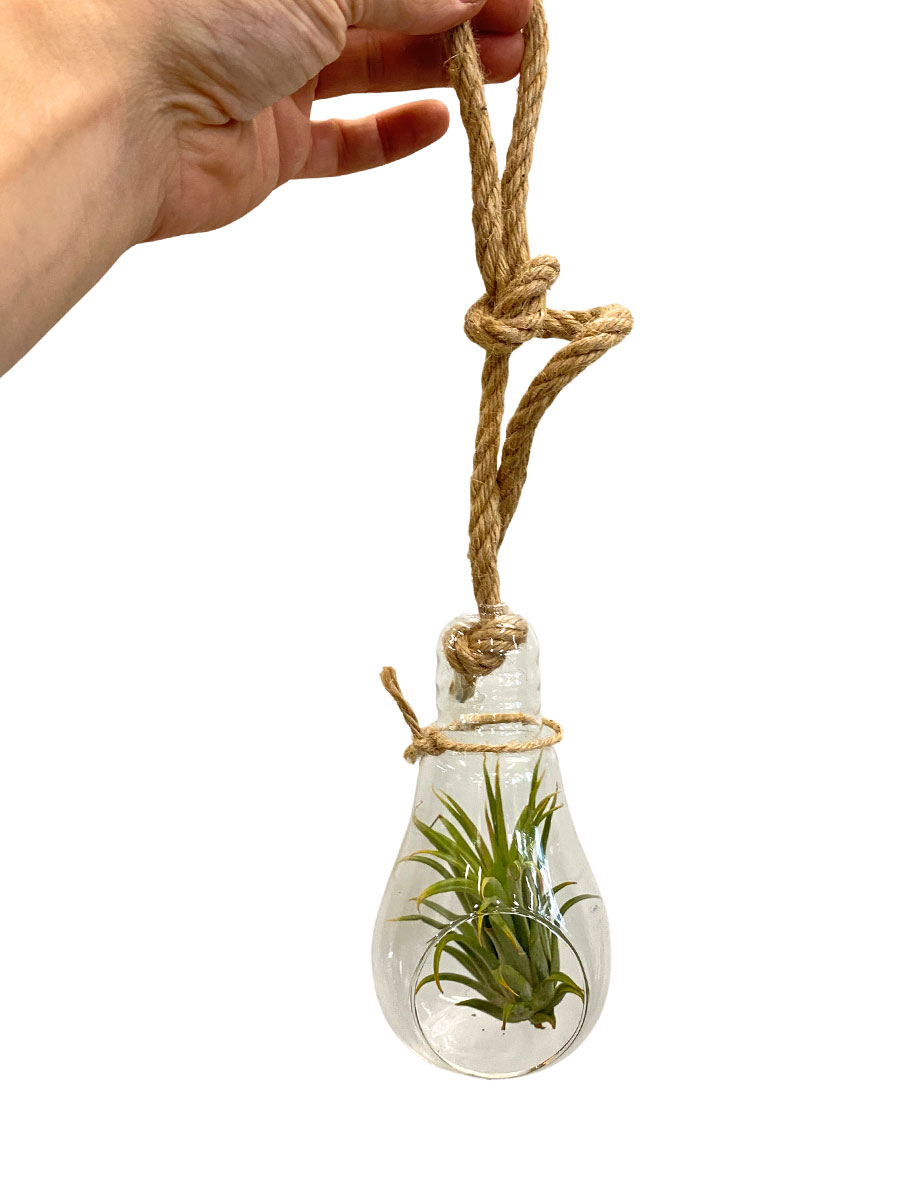
Hanging Pot - Tillandsia Glass Lamp

Topfdurchmesser 8cm

Topfhöhe ab Boden 13cm ±

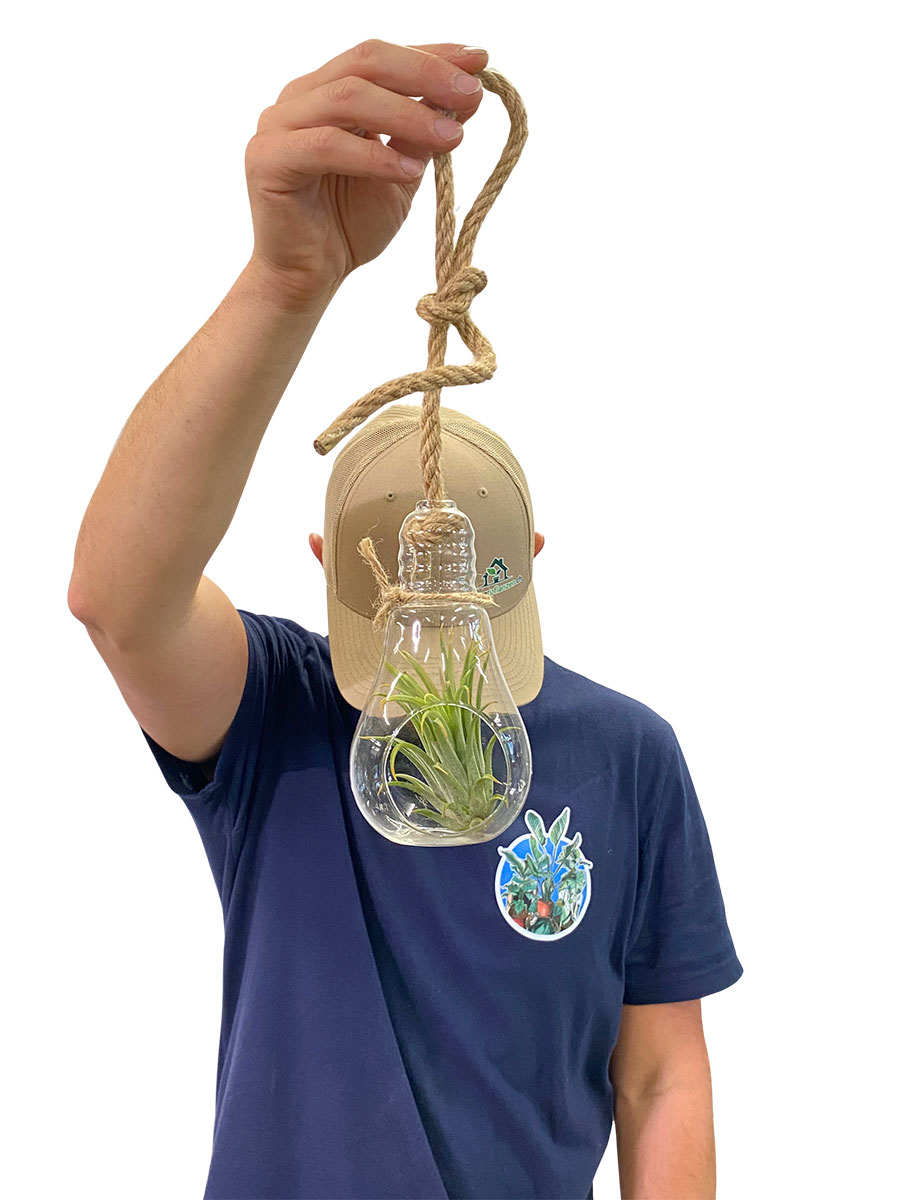
History of the Tillandsia in a glass lamp Tillandsias, also known as air plants, originally come from Central and South America and belong to the bromeliad family. In the wild, they often grow without soil on trees or rocks. Decorated in a glass lamp , they become a modern, minimalist houseplant with a wow effect – a real eye-catcher that combines nature and design. Care as a houseplant: Light: Bright spot with plenty of indirect light; no blazing sun through glass. Temperature: Ideally 18–26 °C; no draughts or cold windowsills. Humidity: Medium to high; glass lamps can quickly become too dry – air regularly. Substrate: No substrate needed – simply place in the lamp. Watering: Mist or briefly dip in low-lime water 1–2 times a week. Then let it dry well to prevent mould. Feeding: Every 4–6 weeks, add a weakly dosed tillandsia fertiliser when misting. Special features: These houseplants need fresh air – open the glass regularly. Overwintering tips: Bright spot, minimal watering, no cold below 12 °C. Tillandsias in glass lamps are modern houseplants that impress with their unusual growth and easy-care nature.

CHF 19.90*

Delivery time 2 - 7 working days

Available
New
Item no. 4402
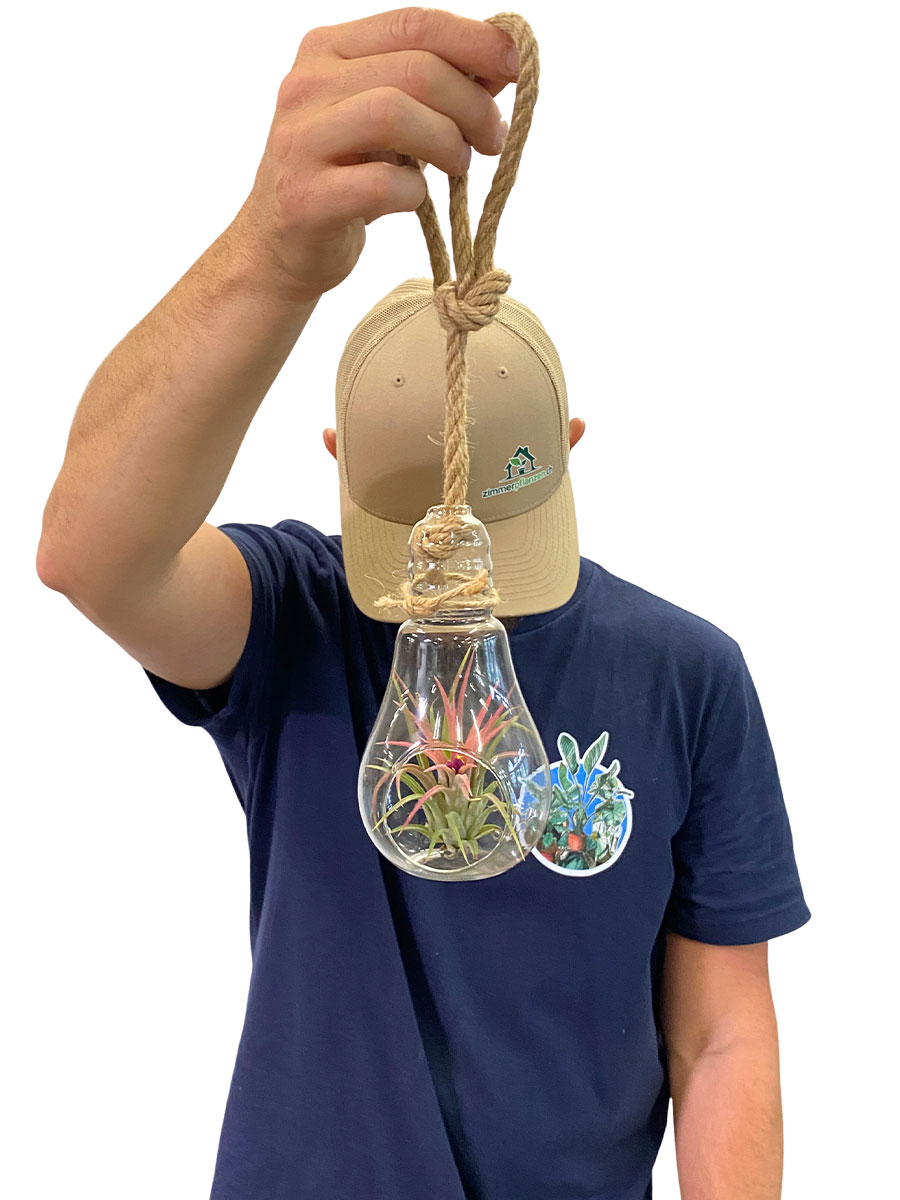
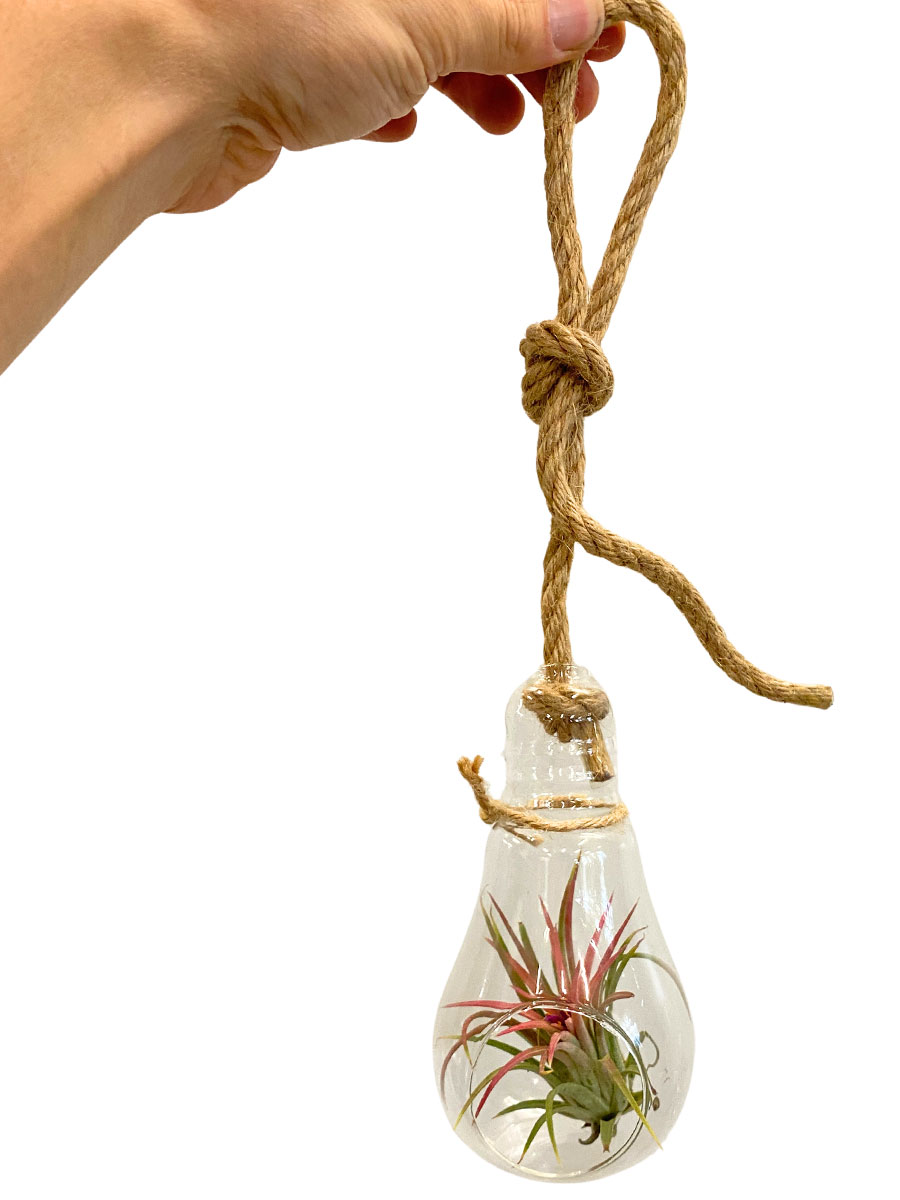
Hanging Pot - Tillandsia Red Glass Lamp

Topfdurchmesser 8cm

Topfhöhe ab Boden 13cm ±

History of the Tillandsia in a glass lamp Tillandsias, also known as air plants, originally come from Central and South America and belong to the bromeliad family. In the wild, they often grow without soil on trees or rocks. Decorated in a glass lamp , they become a modern, minimalist houseplant with a wow effect – a real eye-catcher that combines nature and design. Care as a houseplant: Light: Bright spot with plenty of indirect light; no blazing sun through glass. Temperature: Ideally 18–26 °C; no draughts or cold windowsills. Humidity: Medium to high; glass lamps can quickly become too dry – air regularly. Substrate: No substrate needed – simply place in the lamp. Watering: Mist or briefly dip in low-lime water 1–2 times a week. Then let it dry well to prevent mould. Feeding: Every 4–6 weeks, add a weakly dosed tillandsia fertiliser when misting. Special features: These houseplants need fresh air – open the glass regularly. Overwintering tips: Bright spot, minimal watering, no cold below 12 °C. Tillandsias in glass lamps are modern houseplants that impress with their unusual growth and easy-care nature.

CHF 19.90*

Delivery time 2 - 7 working days

Available
Bestseller
Item no. 3408
Scindapsus Silver Ann

Topfdurchmesser 11cm

Topfhöhe ab Boden 10cm ±

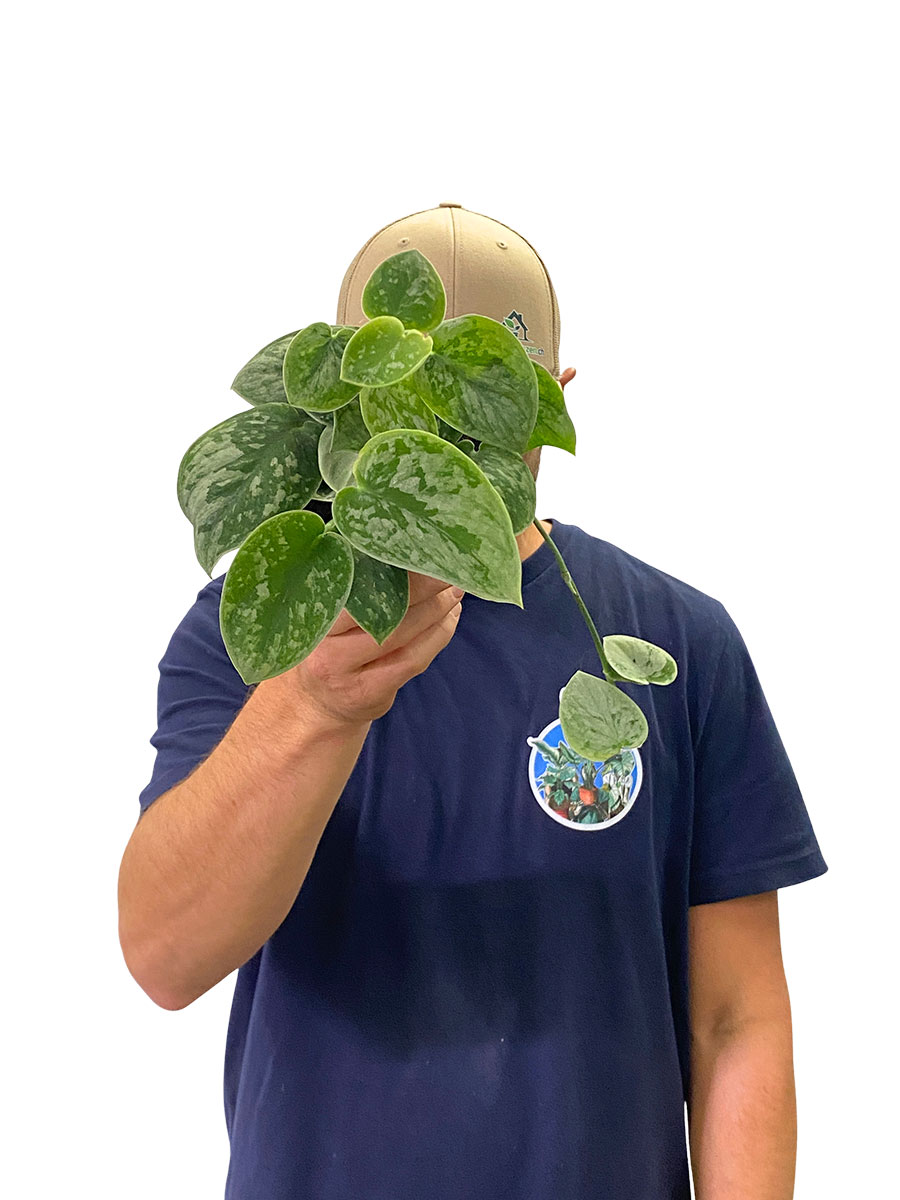
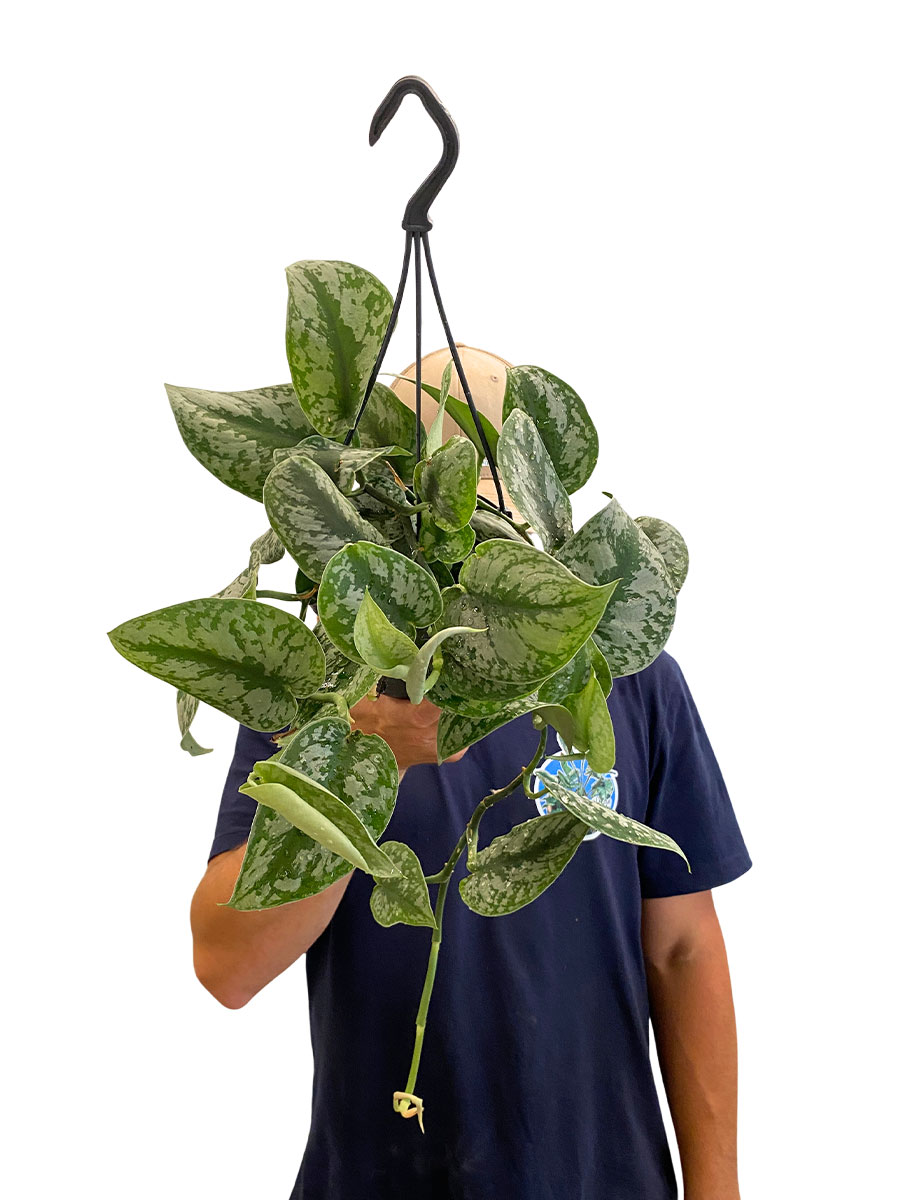
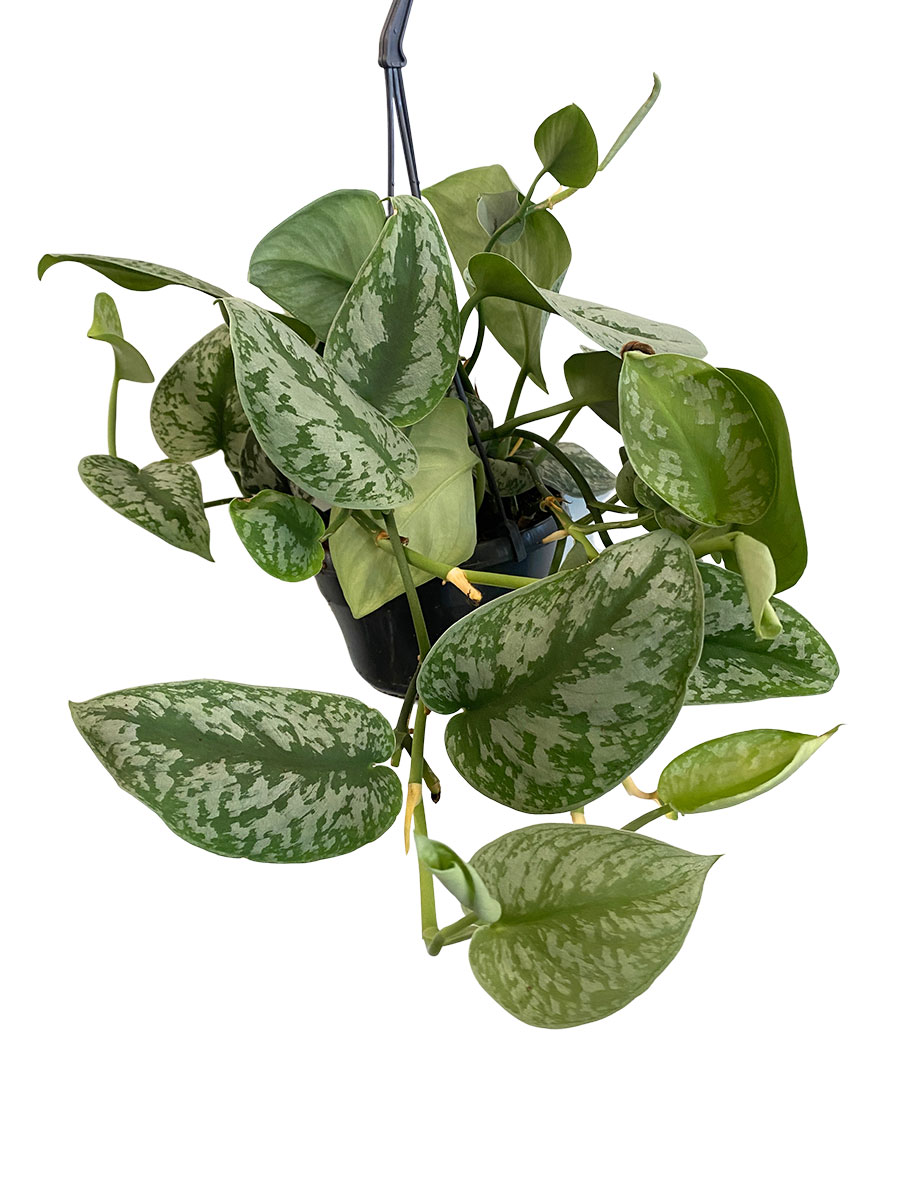
History of the Scindapsus Silver Ann The Scindapsus Silver Ann is an elegant houseplant characterised by its extraordinary, heart-shaped leaves with silvery marbling. This plant originally comes from the tropical rainforests of South-East Asia, where it grows as a climbing or trailing plant. It belongs to the arum family and, thanks to its robustness and decorative foliage, is very popular with houseplant lovers. The Scindapsus Silver Ann is particularly versatile and is perfect as a hanging plant, table decoration or green wall in modern living spaces. Care as a houseplant: Light: Bright to partially shaded spot; no direct sunlight. Temperature: Ideally 18–24 °C, at least 12 °C in winter. Humidity: Average to high; occasional misting promotes the plant's well-being. Substrate: Free-draining potting soil mixed with perlite or bark. Watering: Water moderately; the substrate should dry out slightly between waterings. Feeding: During the growing season, every 4–6 weeks with a liquid fertiliser for houseplants. Care as a terrarium plant: Light: Indirect light; grow lights can provide additional lighting. Temperature: Tropical conditions between 20–28 °C, at least 18 °C in winter. Humidity: High, ideally 60–80 %; regular misting or the use of a fogger is recommended. Substrate: A mix of potting soil, moss and perlite ensures optimal drainage and moisture regulation. Watering: Keep evenly moist, but avoid waterlogging. Terrarium conditions: This houseplant thrives best in a well-ventilated terrarium with high humidity.

CHF 12.90*

Delivery time 2 - 7 working days

Available
Item no. 4407
Gasteria Flow Verrucosa

Topfdurchmesser 12cm

Topfhöhe ab Boden 15cm ±

History of the Gasteria Flow VerrucosaGasteria belongs to the asphodel family and originally comes from southern Africa. This succulent plant is characterised by its fleshy leaves with distinctive pale raised spots and an attractive surface texture. It is robust, easy to care for and ideal for lovers of unusual succulents.Care as a houseplant:Light: Bright to partially shaded, protect from intense midday sun.Temperature: Ideally 18–27 °C, in winter preferably not below 10 °C.Humidity: Normal indoor air is well suited.Substrate: Very free-draining cactus or succulent soil with a mineral content.Watering: Only water once the substrate is completely dry. Avoid waterlogging.Feeding: From spring to summer, feed sparingly with cactus fertiliser.Special features: The fleshy leaves store water. Watering too often can lead to root rot.Overwintering tips:In winter, keep bright and rather cool. Water only sparingly and do not feed during the dormant period. Avoid cold, damp soil.

CHF 14.90*

Delivery time 2 - 7 working days

Available
New
Item no. 4408
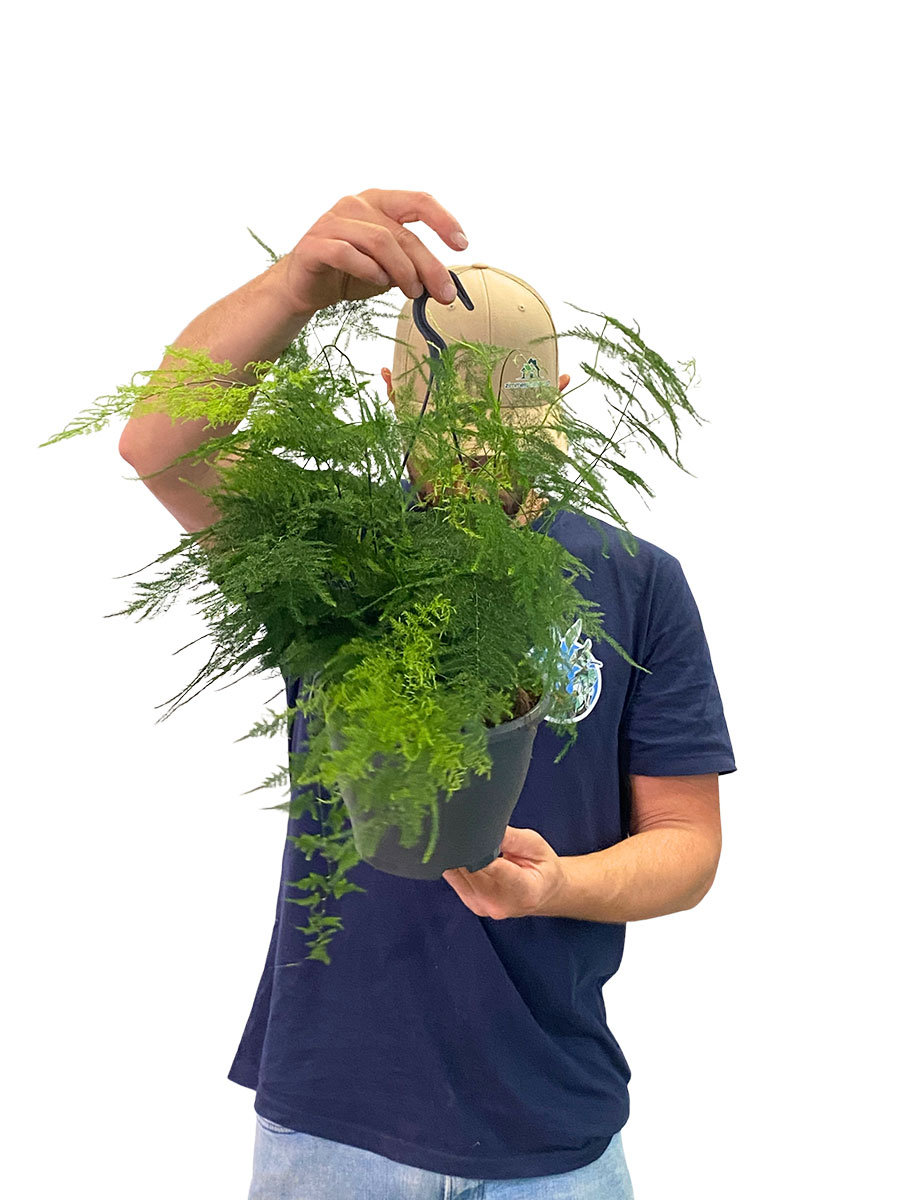
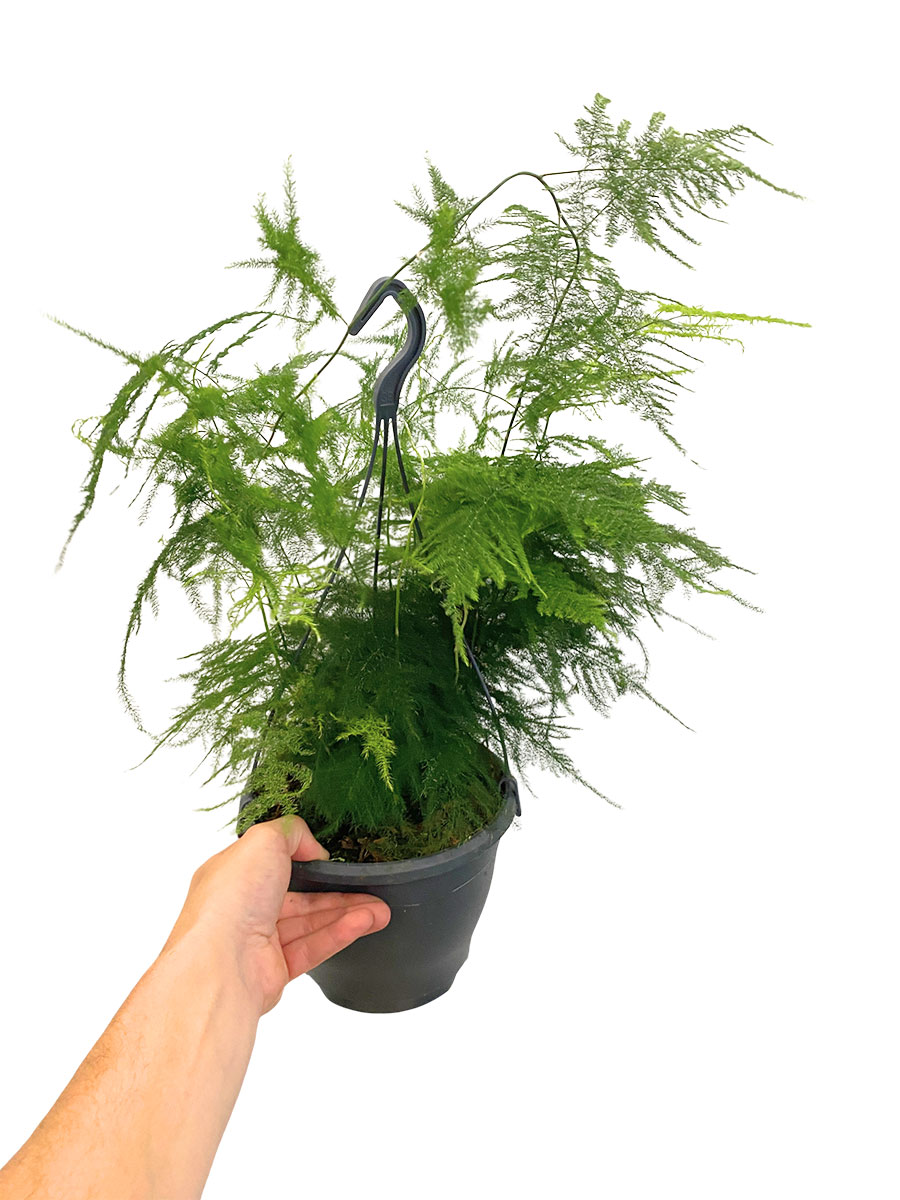
Hanging Pot - Asparagus Plumosus

Topfdurchmesser 19cm

Topfhöhe ab Boden 55cm ±

History of the Asparagus plumosusAsparagus plumosus comes from southern Africa and is known for its fine, feathery shoots. Despite its delicate appearance, it belongs to the asparagus family and is suitable as a decorative houseplant for bright living spaces.Care as a houseplant:Light: Bright to partially shaded, no intense midday sun.Temperature: Ideally 18–25 °C, if possible not below 10 °C.Humidity: Medium to high humidity is preferred.Substrate: Loose, humus-rich and free-draining.Watering: Keep evenly slightly moist; avoid waterlogging and drying out completely.Feeding: From spring to autumn, feed weakly every 2–4 weeks.Special features: The fine shoots are also suitable for flower arrangements. In good conditions, the plant grows bushy and dense.Important for pet owners: Can cause gastrointestinal complaints if ingested. Keep the plant out of reach of pets.Overwintering tips:In winter, keep bright and ideally at 15–20 °C. Water less, but do not let the substrate dry out completely. Ensure sufficient humidity when the heating air is dry.

CHF 39.90*

Delivery time 2 - 7 working days

Available
New
Item no. 4406
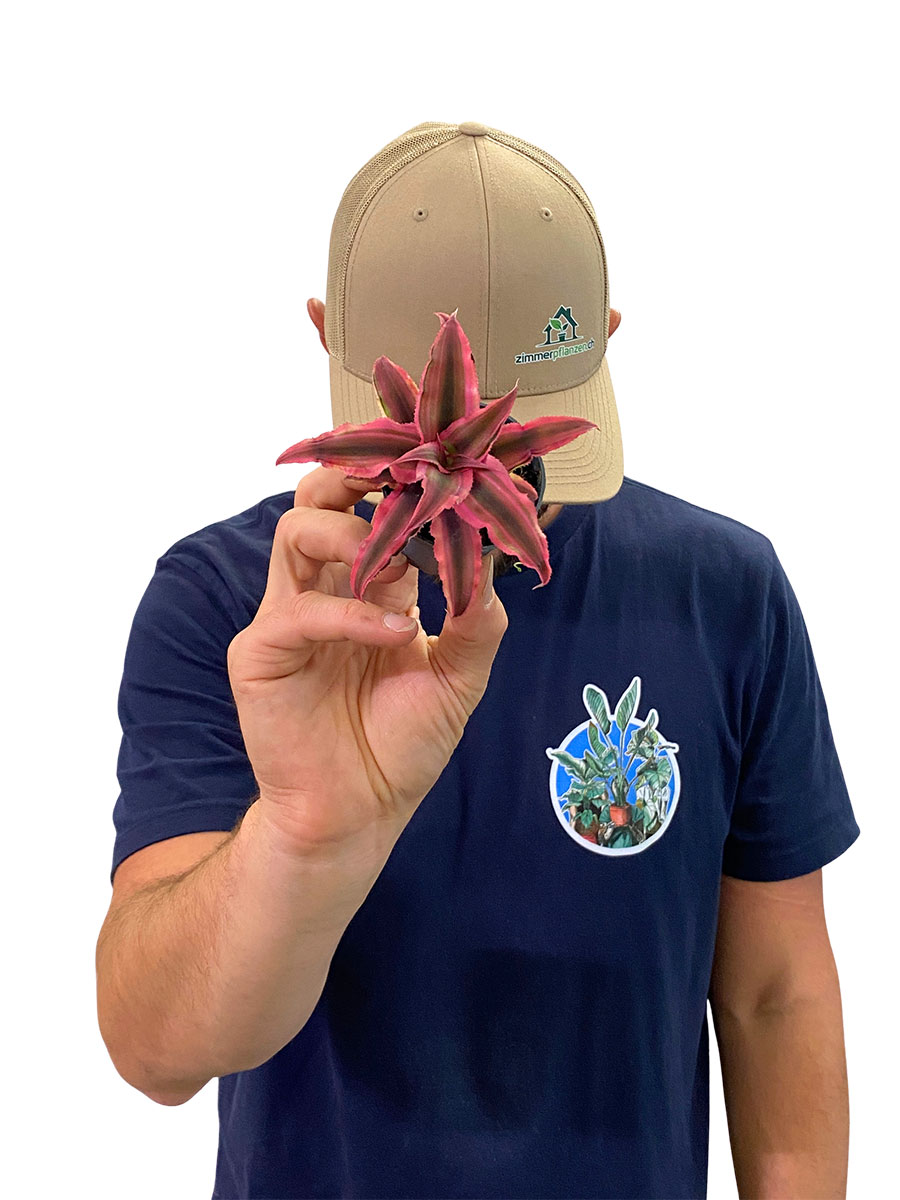
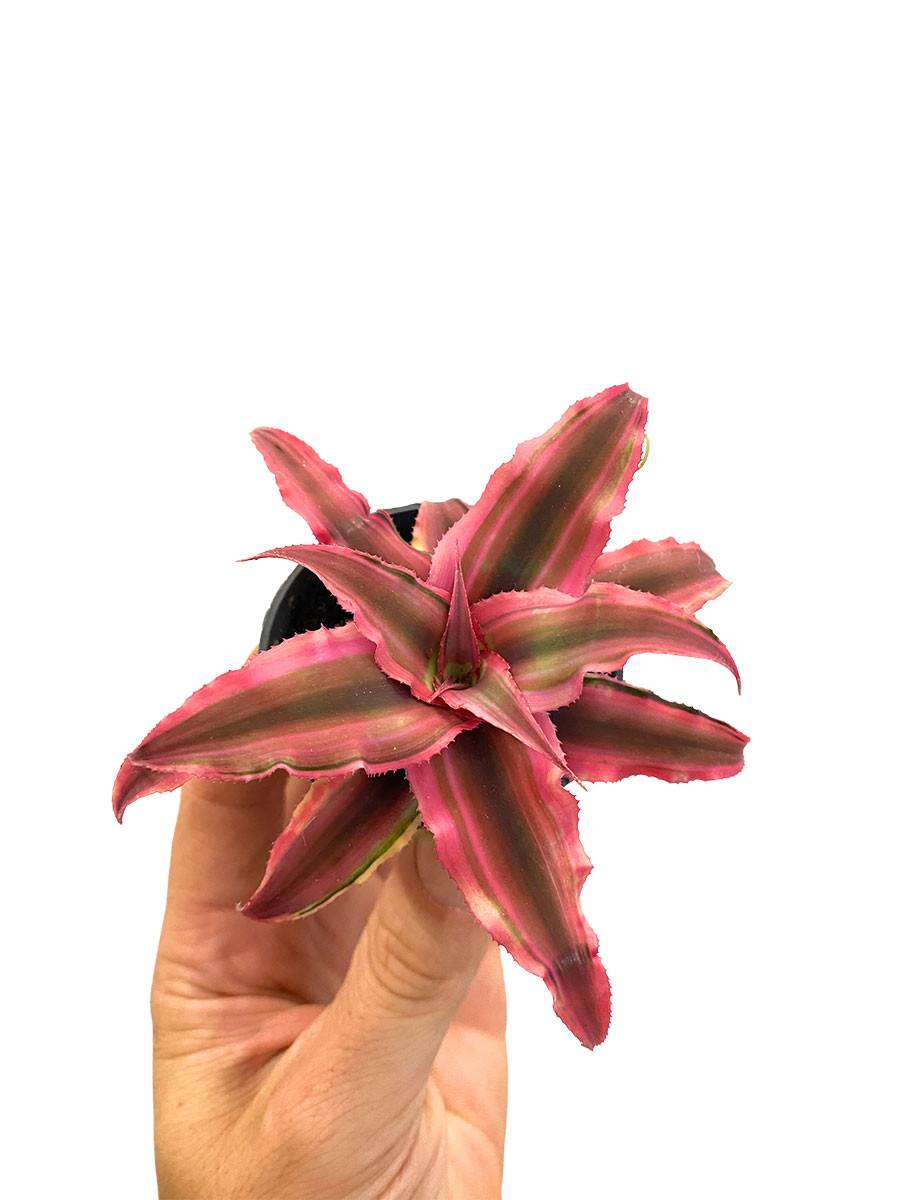
Baby Cryptanthus Rosa Star

Topfdurchmesser 6cm

Topfhöhe ab Boden 8cm ±

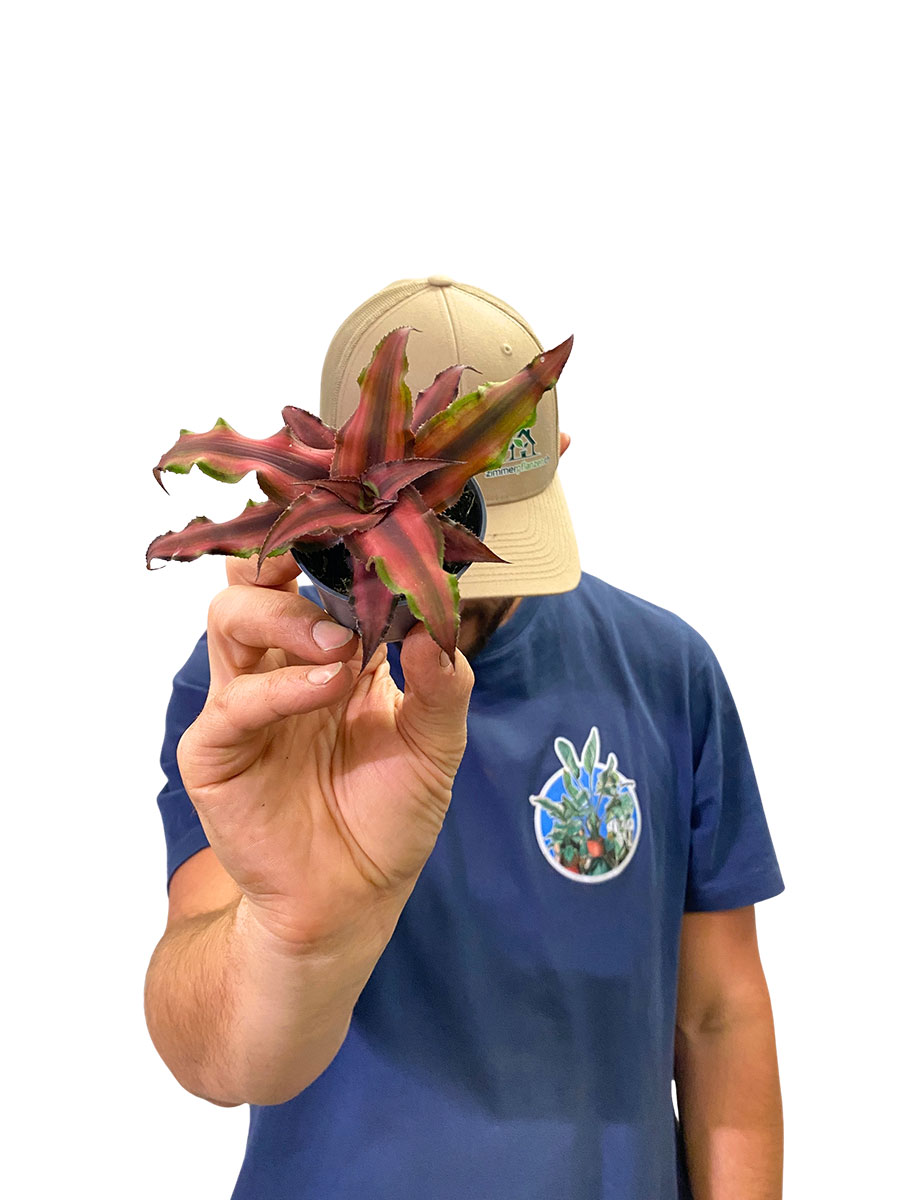
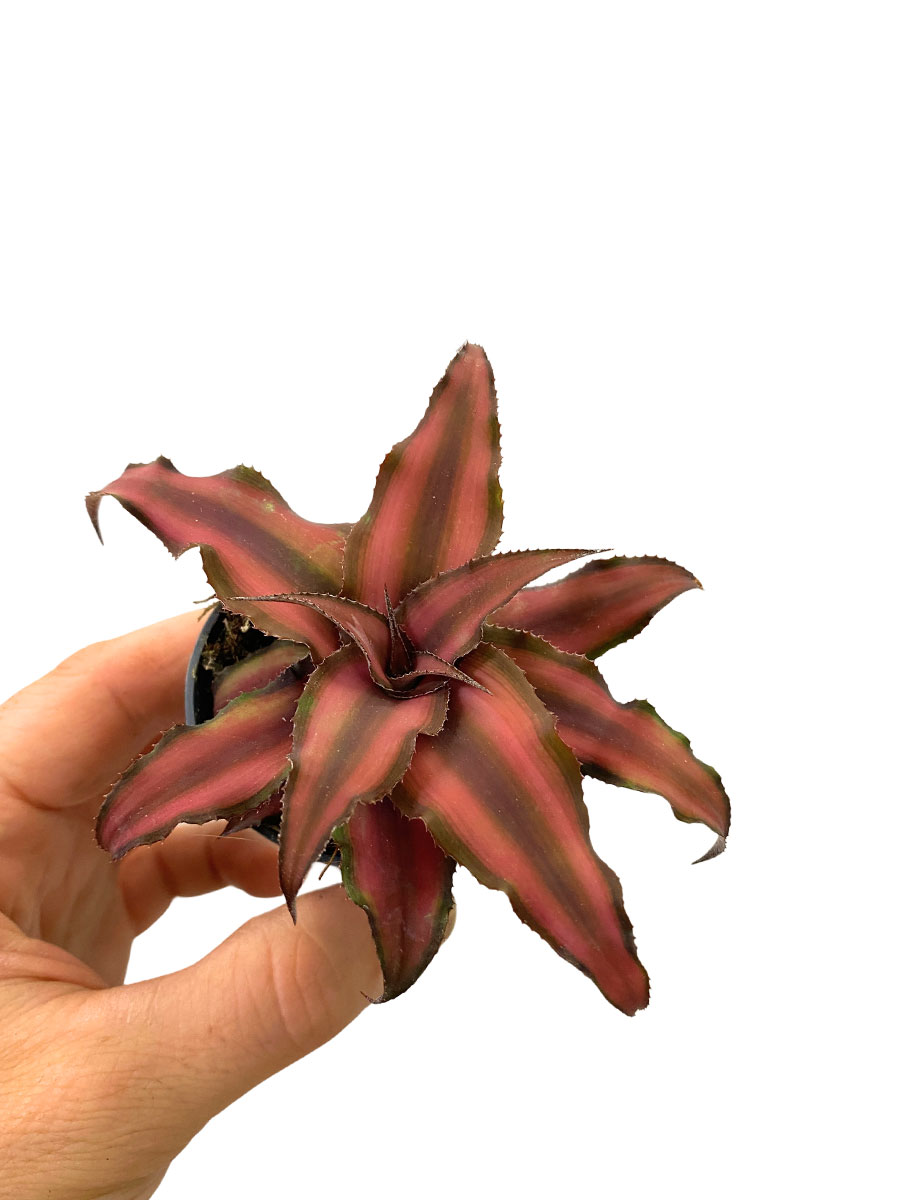
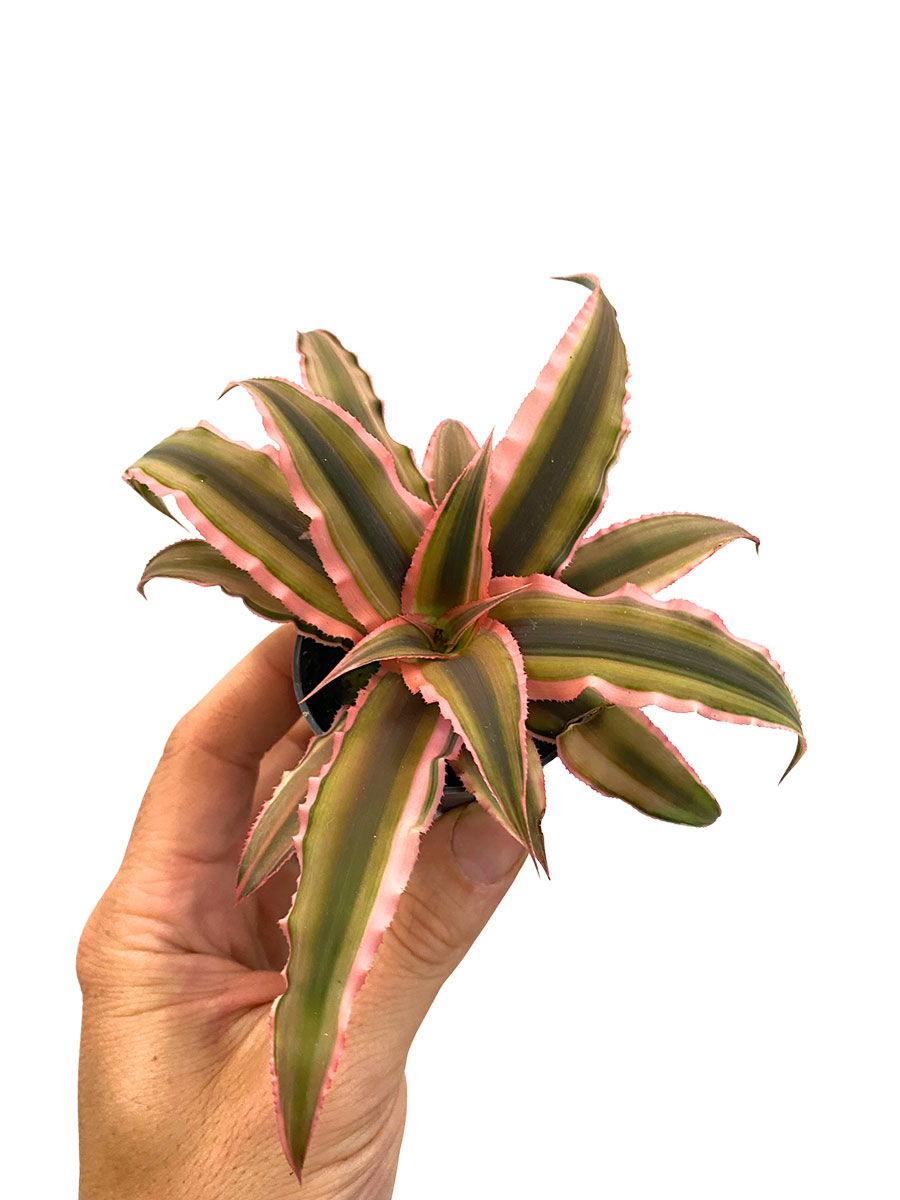
History of the Cryptanthus Rosa StarCryptanthus belongs to the bromeliad family and comes from Brazil. The Rosa Star variety delights with its star-shaped leaf rosette and striking shades of pink, which vary in intensity depending on light and growing conditions. Thanks to its compact growth, it is particularly well suited to tropical terrariums.Care as a houseplant:Light: Bright to partially shaded, indirect light.Temperature: Ideally 18–27 °C, not below 15 °C.Humidity: Medium to high humidity.Substrate: Loose, humus-rich and free-draining.Watering: Keep slightly moist, avoid waterlogging.Feeding: During the growing phase, feed sparingly with diluted bromeliad fertiliser.Special features: Bright, indirect light supports intense leaf colouring.Care as a terrarium plant:Light: Bright and indirect, avoid direct midday sun.Temperature: Ideally 22–28 °C.Humidity: About 60–80 %.Substrate: Airy, humus-rich and well-drained.Watering: Keep evenly slightly moist, let excess water drain away.Air circulation: Ensure regular air exchange to prevent mould and rot.Special features: The compact rosette adds a decorative splash of colour to tropical plant terrariums.Overwintering tips:In winter, keep bright and warm, water less and reduce feeding. Avoid cold draughts and permanently wet substrate.

CHF 9.90*

Delivery time 2 - 7 working days

Available
New
Item no. 4405
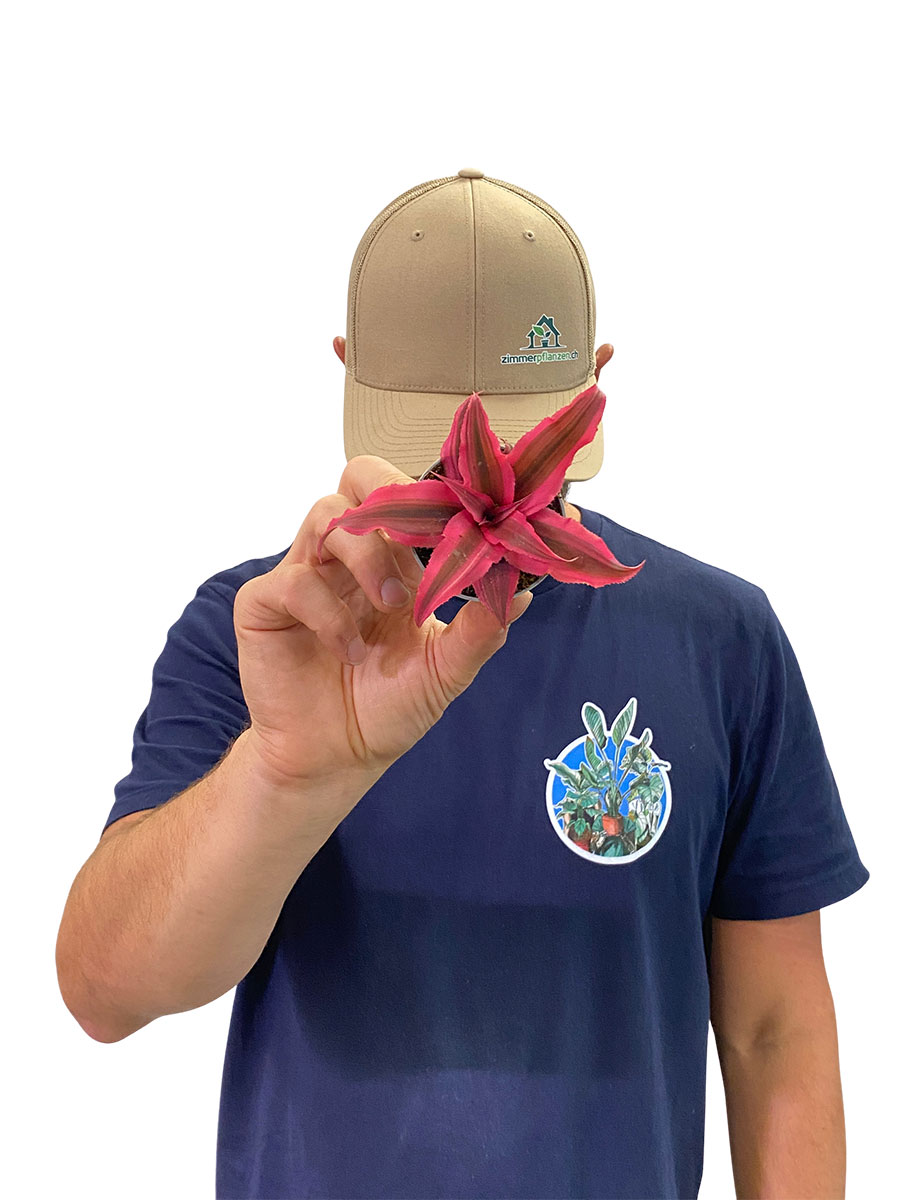
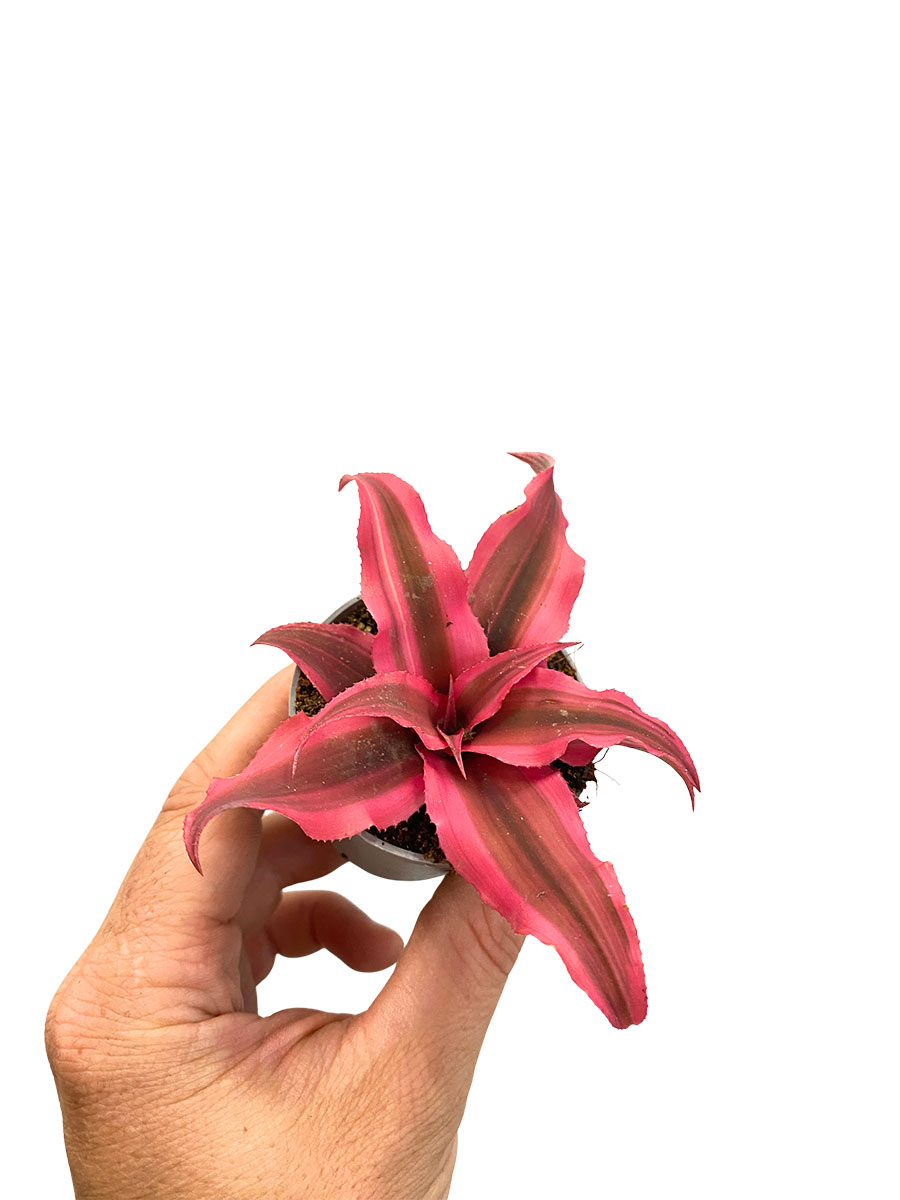
Baby Cryptanthus Super Rosa

Topfdurchmesser 6cm

Topfhöhe ab Boden 8cm ±

History of the Cryptanthus Super RosaCryptanthus belongs to the bromeliad family and comes from Brazil. The Super Rosa variety delights with its star-shaped leaf rosette and strong shades of pink, which look particularly intense in good light conditions. It is ideal for tropical plant collections and terrariums.Care as a houseplant:Light: Bright to partially shaded, indirect light.Temperature: Ideally 18–27 °C, not below 15 °C.Humidity: Medium to high humidity.Substrate: Loose, humus-rich and free-draining.Watering: Keep the substrate slightly moist, avoid waterlogging.Feeding: During the growing phase, feed sparingly with diluted bromeliad fertiliser.Special features: Bright, indirect light supports the intense pink colouring.Care as a terrarium plant:Light: Bright and indirect, avoid direct midday sun.Temperature: Ideally 22–28 °C.Humidity: About 60–80 %.Substrate: Airy, humus-rich and well-drained.Watering: Keep slightly moist, let excess water drain away well.Air circulation: Ensure regular air exchange to prevent rot and mould.Special features: The compact growth and the vibrant rosette add decorative splashes of colour to tropical terrariums.Overwintering tips:In winter, keep bright and warm, water less and reduce feeding. Avoid cold draughts and permanently wet substrate.

CHF 9.90*

Delivery time 2 - 7 working days

Available
New
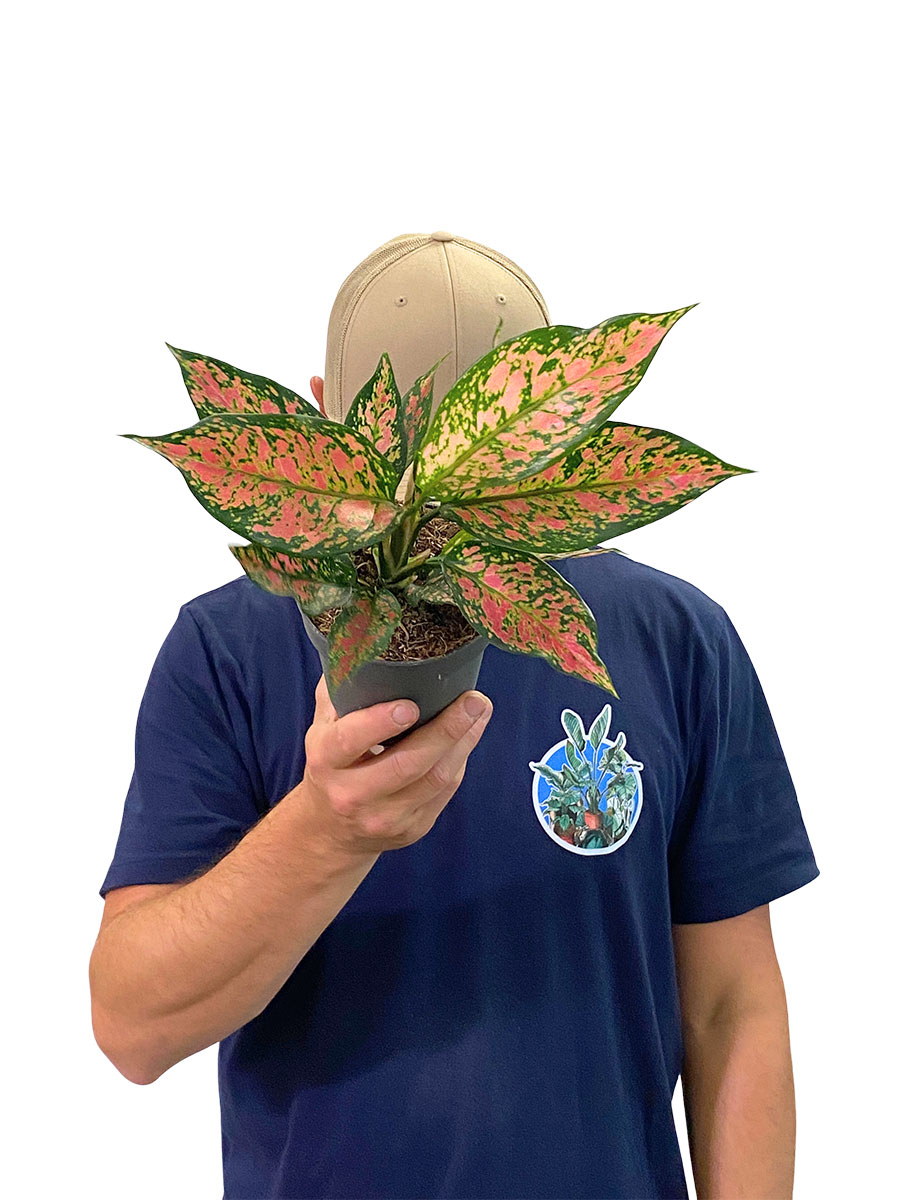
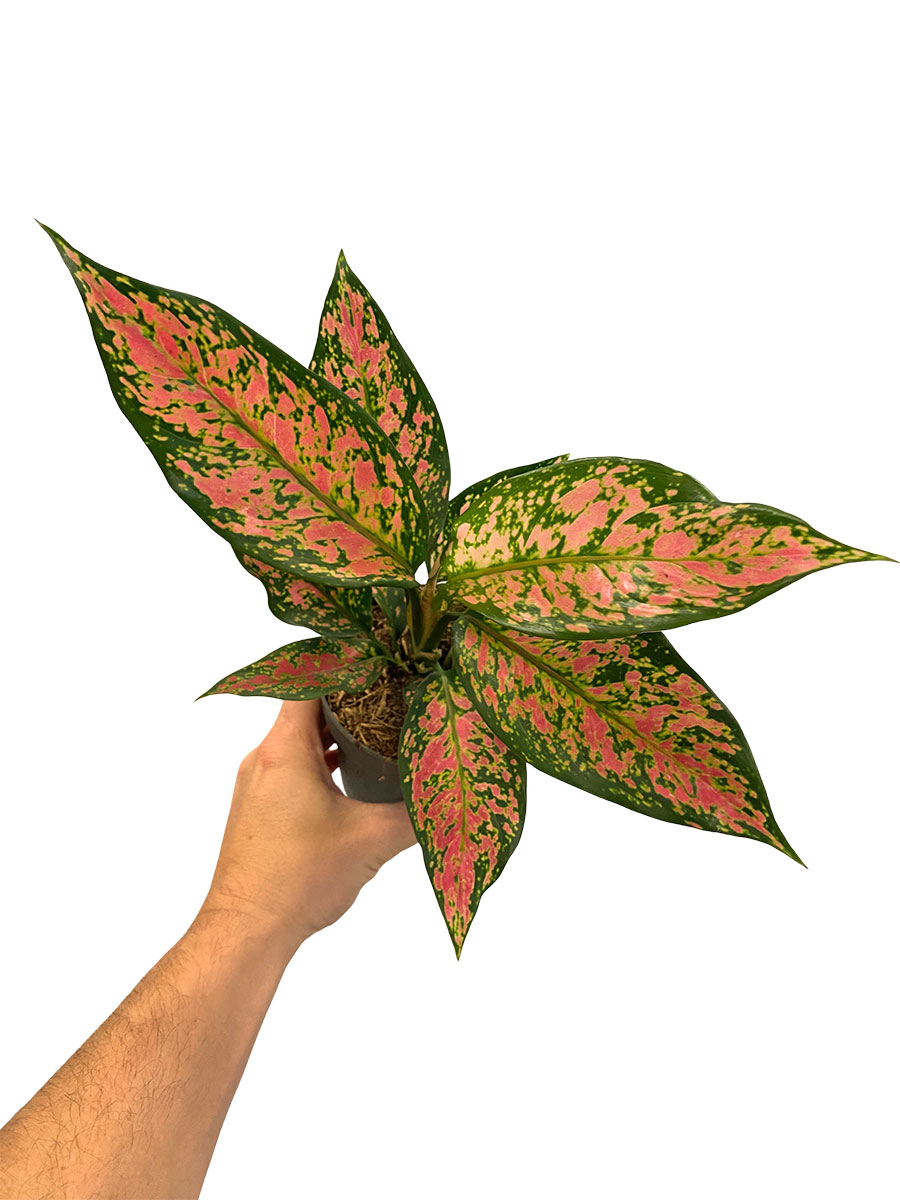
Item no. 4409
Aglaonema Strawberry

Topfdurchmesser 12cm

Topfhöhe ab Boden 30cm ±

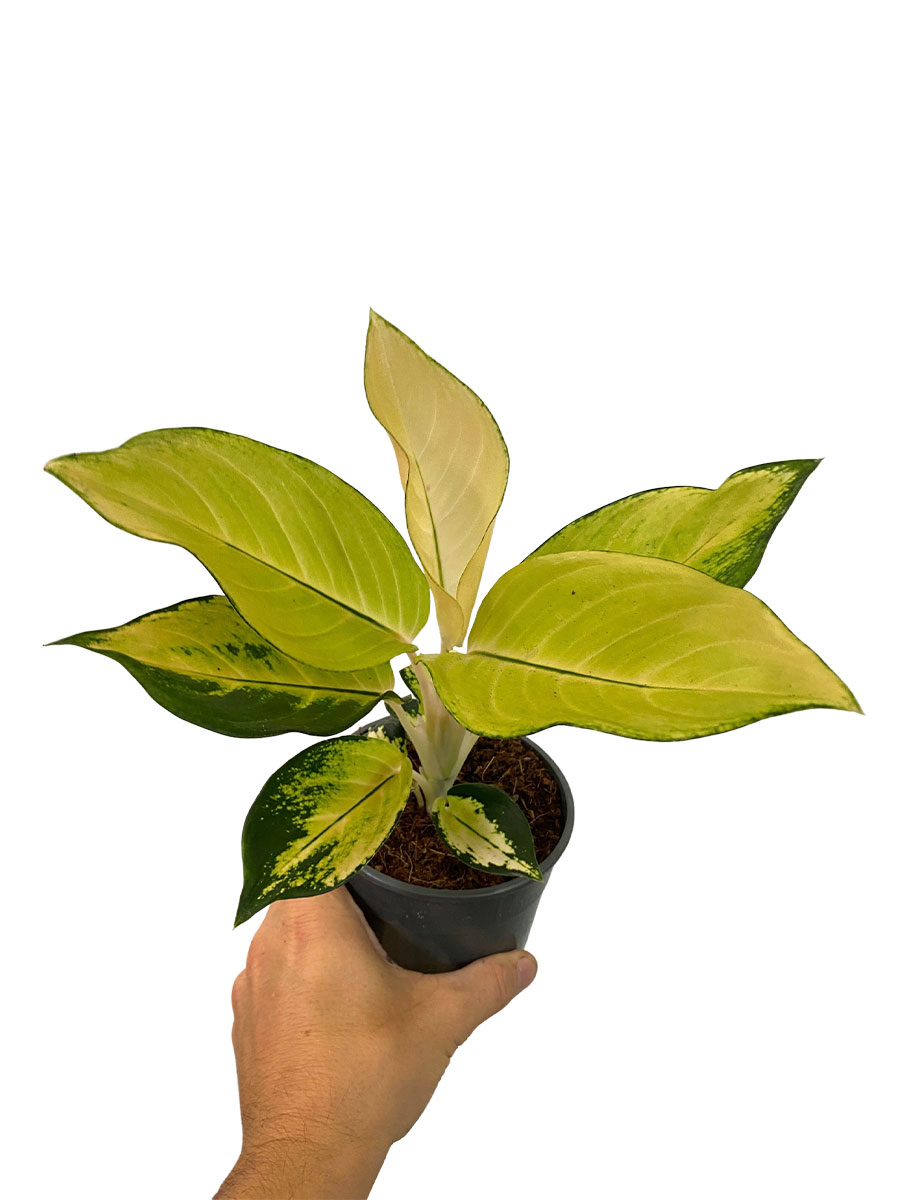
History of the Aglaonema StrawberryAglaonemas come from the tropical regions of South-East Asia and are known for their decorative leaves. The Strawberry variety delights with its interplay of pink, red and green and brings a colourful, tropical accent to living spaces and plant terrariums.Care as a houseplant:Light: Bright to partially shaded, without direct midday sun.Temperature: Ideally 20–27 °C, not below 15 °C.Humidity: Medium to high humidity.Substrate: Loose, humus-rich and free-draining.Watering: Water as soon as the top layer of substrate has dried out slightly. Avoid waterlogging.Feeding: From spring to autumn, feed weakly every 2–4 weeks.Special features: Bright, indirect light supports strong leaf colouring.Important for pet owners: Toxic to cats and dogs if ingested.Care as a terrarium plant:Light: Bright to partially shaded, indirect light.Temperature: Ideally 22–28 °C.Humidity: About 70–85 %.Substrate: Loose, airy and well-drained aroid substrate.Watering: Keep slightly moist, avoid waterlogging.Air circulation: Ensure regular air exchange to prevent mould and rot.Special features: The high humidity supports leaf growth. Because of its size, it is particularly suitable for spacious, tropical terrariums.Overwintering tips:In winter, keep bright and warm, water less and pause feeding when growth slows. Avoid cold draughts and permanently wet substrate.

CHF 24.90*

Delivery time 2 - 7 working days

Available
New
Item no. 4398
Dieffenbachia Lemon Tropic

Topfdurchmesser 24cm

Topfhöhe ab Boden 80cm ±

History of the Dieffenbachia Lemon TropicDieffenbachias originate from the tropical regions of Central and South America. The Lemon Tropic delights with its large, decorative leaves in fresh green and bright shades of yellow. It brings tropical flair to bright living spaces.Care as a houseplant:Light: Bright to semi-shaded, without strong direct midday sun.Temperature: Ideally 20–27 °C, not below 15 °C.Humidity: Medium to high humidity.Substrate: Loose, humus-rich and free-draining.Watering: Water as soon as the top layer of substrate has dried out slightly. Avoid waterlogging.Feeding: Feed lightly every 2–4 weeks during the growing season.Special features: Avoid draughts and sharp temperature fluctuations.Important for pet owners: Toxic to cats and dogs. The plant sap can irritate the skin and mucous membranes and cause severe discomfort on contact with the mouth or eyes.Overwintering tips:In winter, keep as bright and warm as possible. Water less and pause feeding while growth slows. Avoid cold draughts.

CHF 79.90*

Delivery time 2 - 7 working days

Available
New
Item no. 2SACABP13
Hydro - Sansevieria Trifasciata Canary

Topfdurchmesser 13/12

Topfhöhe ab Boden 30cm ±

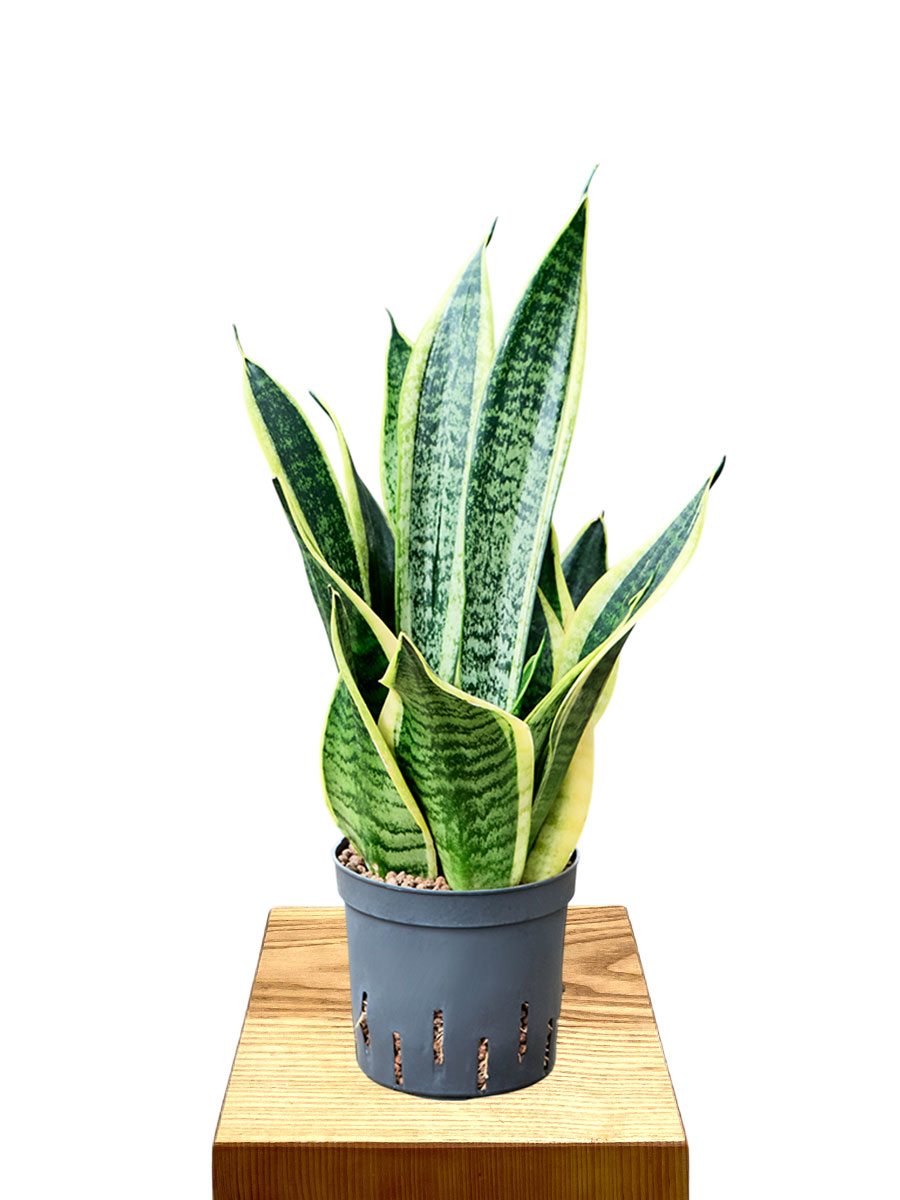
Hydro – Sansevieria trifasciata “Canary”Sansevieria trifasciata “Canary” is a decorative, easy-care houseplant with upright, sturdy leaves and striking yellowish-green tones. Its vivid leaf markings give living spaces and offices a fresh, elegant touch. This robust plant stores water in its leaves, is very undemanding and, with adapted watering, is ideally suited to hydroculture.Care in hydrocultureLight:A bright spot with plenty of indirect light is ideal. Partially shaded spots are also tolerated. Some morning or evening sun is fine; intense midday sun should be avoided.Temperature:Ideally 18–27 °C; if possible, do not keep below 12 °C. Avoid cold draughts and large temperature fluctuations.Humidity:Normal room air is perfectly sufficient. Increased humidity is not necessary.Substrate:Hydroculture granules (e.g. expanded clay) ensure good aeration of the roots and an even water supply.Watering:Check the water level regularly and only top up once the water level indicator shows “Minimum”. Wait a few days before refilling so that the roots get enough oxygen. Avoid permanently high water levels, as waterlogging can encourage root rot.Feeding:During the growing season from spring to autumn, feed every 4–6 weeks with special hydroculture fertiliser at the recommended dosage. In winter, feed considerably less or pause if there is no growth.Special features:The hydro Sansevieria trifasciata “Canary” is robust, long-lived and ideal for plant lovers looking for an uncomplicated houseplant. Its yellowish-green leaves add decorative splashes of colour and make it an attractive eye-catcher. Thanks to its water-storing leaves, it copes well with short dry spells and needs very little care.Overwintering tipsIn winter, reduce water use and only top up once the water level indicator shows “Minimum”. Do not leave the roots permanently standing in water. Keep temperatures as constant as possible above 12 °C and avoid cold draughts. Feed only sparingly during the darker season. The plant keeps its decorative leaf markings and remains an attractive eye-catcher in winter too.

CHF 29.90*

Delivery time 2 - 7 working days

Available
New
Item no. 2SASFBP12
Hydro - Snake Plant Sansevieria Silver Flame

Topfdurchmesser 13/12

Topfhöhe ab Boden 25cm ±

Hydro – Snake Plant Sansevieria “Silver Flame”The snake plant Sansevieria “Silver Flame” is a particularly decorative, easy-care houseplant with upright, sturdy leaves and a striking silvery-green pattern. Its elegant appearance makes it an attractive eye-catcher in modern living spaces or offices. The plant is robust, undemanding and ideally suited to hydroculture.Care in hydrocultureLight:Bright to partially shaded spot with plenty of indirect light. The plant also copes with darker spots. Avoid direct midday sun where possible.Temperature:Ideally 18–27 °C; do not keep below 12 °C. Avoid cold draughts.Humidity:Normal room air is perfectly sufficient; increased humidity is not necessary.Substrate:Hydroculture granules (expanded clay) for good aeration of the roots and an even water supply.Watering:Check the water level and only top up once the water level indicator shows “Minimum”. Then wait a few days before adding more water. Be sure to avoid waterlogging, as the roots can react sensitively to permanently too much water.Feeding:Feed every 4–6 weeks during the growing season from spring to autumn with special hydroculture fertiliser at the recommended dosage. In winter, feed considerably less.Special features:The hydro Sansevieria “Silver Flame” is particularly easy to care for, undemanding and ideal for beginners. Its silvery-green leaves give any room an elegant, modern touch. The plant stores water in its leaves and tolerates short dry spells better than permanently wet roots.Overwintering tipsIn winter, reduce water use and only top up once the water level indicator reaches “Minimum”. Do not leave the roots permanently standing in water. Keep temperatures as constant as possible above 12 °C and avoid cold draughts. Feed only sparingly during the darker season. The plant remains a decorative eye-catcher in winter too.

CHF 29.90*

Delivery time 2 - 7 working days

Available
New
Item no. 2SAFSBP10
Hydro - Sansevieria Futura Superba

Topfdurchmesser 13/12

Topfhöhe ab Boden 35cm ±

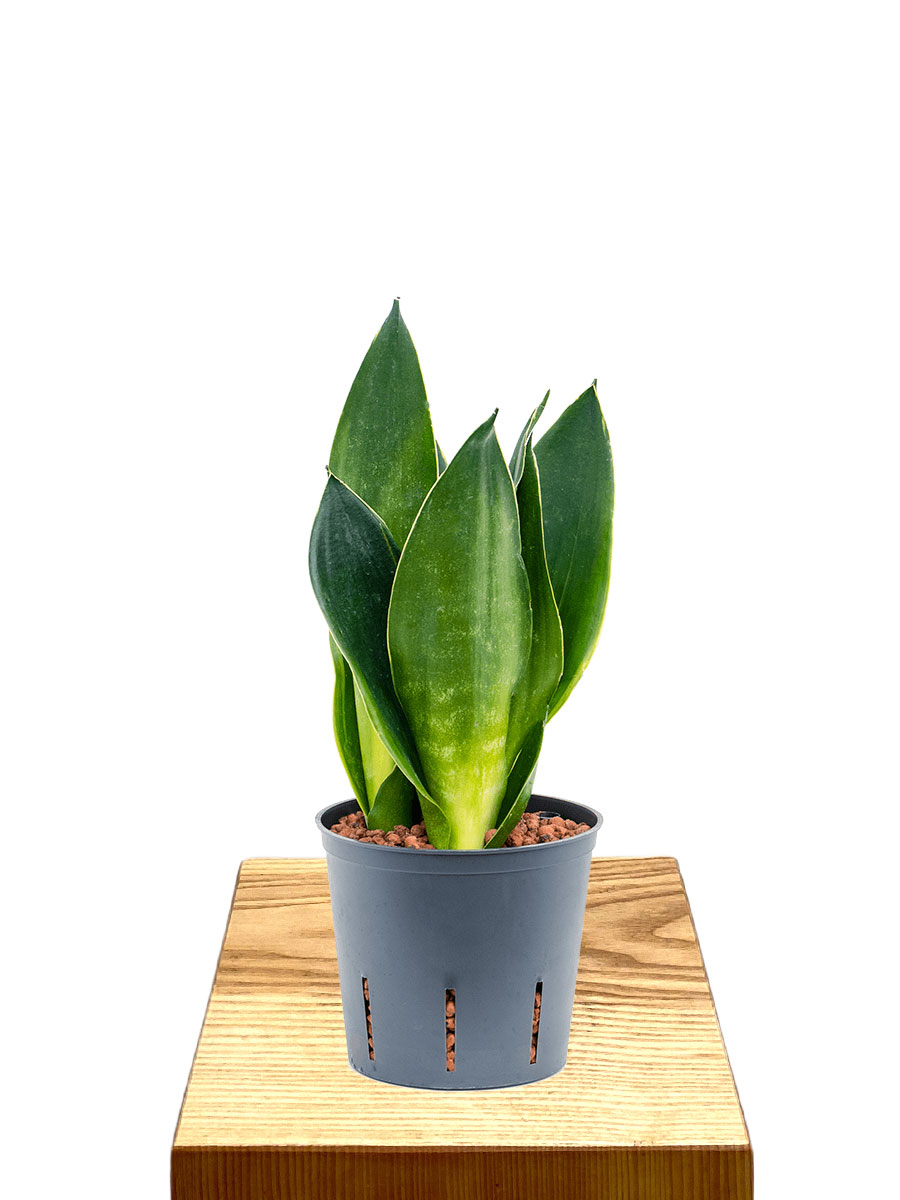
Hydro – Sansevieria trifasciata “Futura Superba”Sansevieria trifasciata “Futura Superba” is a particularly robust and easy-care snake plant with broad, upright, dark green leaves and striking light green to yellowish leaf edges. Its compact growth and decorative leaf markings make it an attractive houseplant for modern living spaces or offices. In hydroculture, this variety thrives reliably with the right water supply and is ideal for plant lovers who want to keep care to a minimum.Care in hydrocultureLight:A bright spot with plenty of indirect light is ideal. Partially shaded spots are also tolerated. Some morning or evening sun is fine, but intense midday sun should be avoided.Temperature:Ideally 18–27 °C; do not keep below 12 °C. Avoid cold draughts and large temperature fluctuations.Humidity:Normal room air is sufficient; there is no need to increase humidity specially.Substrate:Use hydroculture granules (expanded clay) for good aeration of the roots and a stable water supply.Watering:Check the water level regularly and only top up once the water level indicator shows “Minimum”. Wait a few days before refilling. Be sure to avoid waterlogging, as permanently wet roots can lead to rot.Feeding:Feed every 4–6 weeks during the growing season from spring to autumn with special hydroculture fertiliser at the recommended dosage. In winter, feed only sparingly, or not at all if there is no growth.Special features:The hydro Sansevieria “Futura Superba” is easy to care for, long-lived and ideal for beginners. Its broad, dark green leaves with light edges add a decorative accent and suit many interior styles. Thanks to its water-storing leaves, it copes well with short dry spells and needs very little care.Overwintering tipsIn winter, reduce water use and only top up once the water level indicator shows “Minimum”. Do not leave the roots permanently standing in water. Keep temperatures as constant as possible above 12 °C and avoid cold draughts. Feed only sparingly during the darker season. The plant keeps its decorative leaves in winter too and remains an attractive eye-catcher.

CHF 29.90*

Delivery time 2 - 7 working days

Available
New
Item no. 2SACTBP14
Hydro - Sansevieria Cylindrica Tower

Topfdurchmesser 13/12

Topfhöhe ab Boden 40cm ±

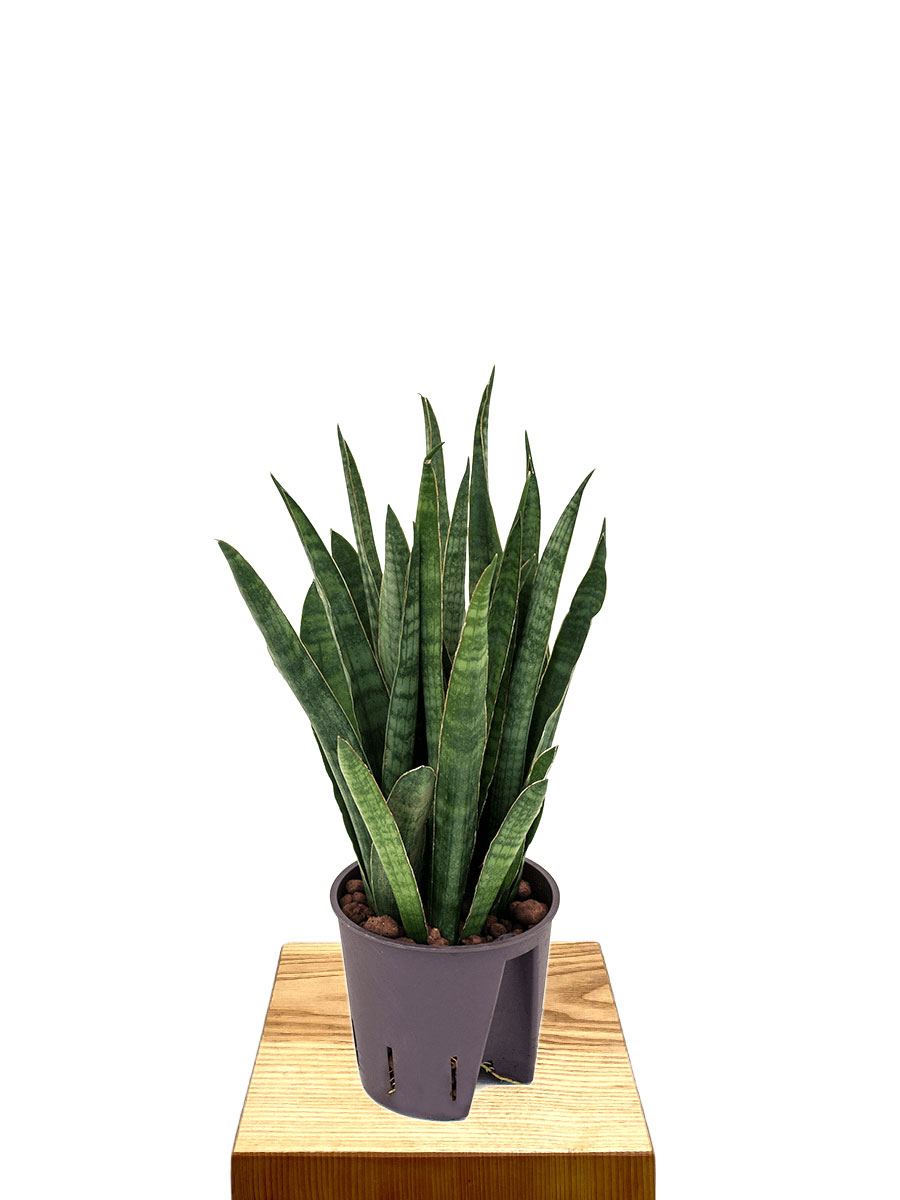
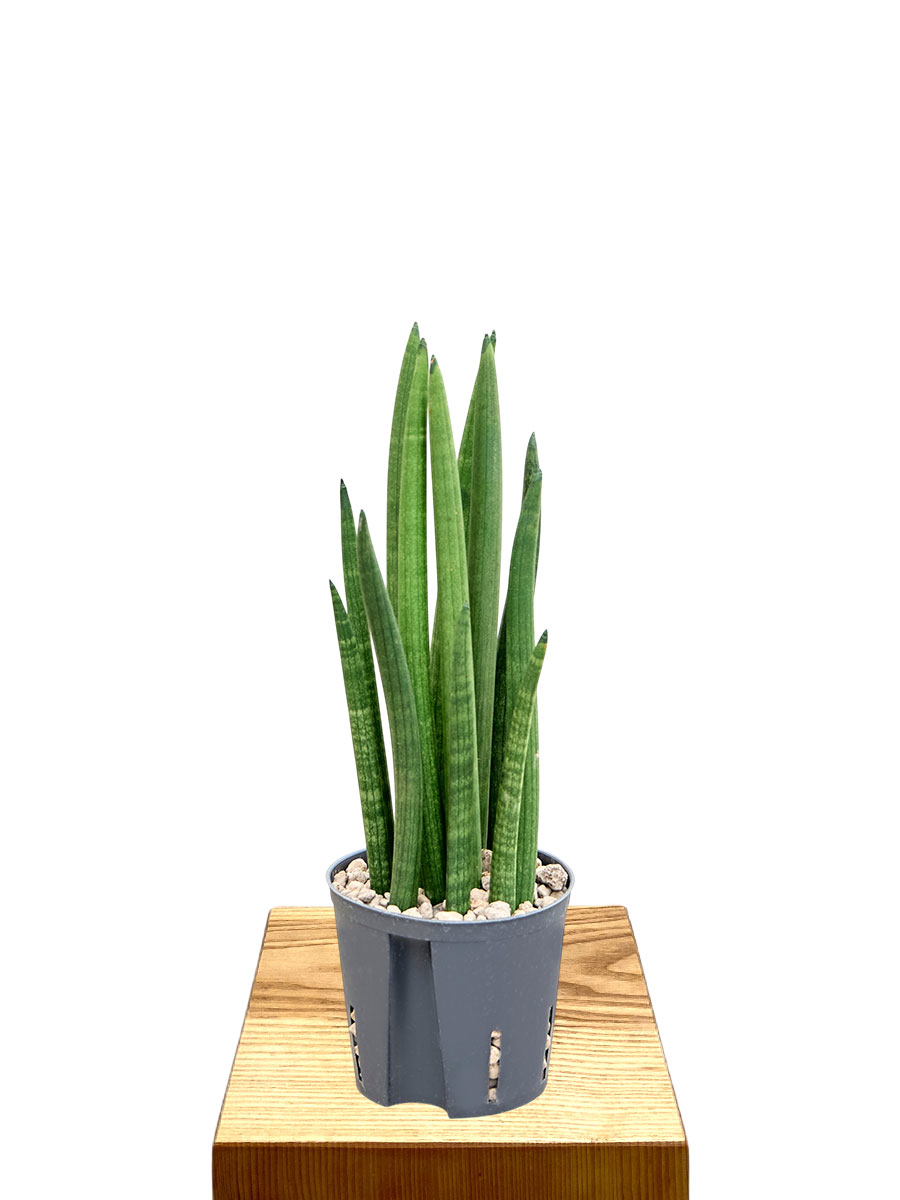
Hydro – Sansevieria cylindrica “Tower”Sansevieria cylindrica “Tower” is a particularly decorative, easy-care houseplant with upright, cylindrical, sturdy leaves. Its columnar growth gives it a modern, elegant appearance that is ideal for living spaces or offices. Originally from Africa, the plant is robust, undemanding and stores water in its leaves. In hydroculture, it thrives with adapted watering and needs very little care.Care in hydrocultureLight:A bright spot with plenty of indirect light is ideal. Partially shaded spots are also tolerated. Some morning or evening sun is fine; intense midday sun should be avoided where possible.Temperature:Ideally 18–27 °C; do not keep below 12 °C. Avoid cold draughts and large temperature fluctuations.Humidity:Normal room air is perfectly sufficient; there is no need to increase humidity specially.Substrate:Use hydroculture granules (e.g. expanded clay) for good aeration of the roots and an even water supply.Watering:Check the water level regularly and only top up once the water level indicator shows “Minimum”. Wait a few days before refilling so that the roots get enough oxygen. Be sure to avoid waterlogging, as permanently wet roots can lead to rot.Feeding:Feed every 4–6 weeks during the growing season from spring to autumn with special hydroculture fertiliser at the recommended dosage. In winter, feed considerably less or pause if there is no growth.Special features:The hydro Sansevieria cylindrica “Tower” is easy to care for, long-lived and ideal for beginners. Its distinctive, round, upright leaves make it a special eye-catcher. Thanks to its water-storing leaves, it copes well with short dry spells and needs very little water. It is particularly suited to modern interiors and to plant lovers looking for an uncomplicated houseplant.Overwintering tipsIn winter, top up less water and only refill once the water level indicator shows “Minimum”. Do not leave the roots permanently standing in water. Keep temperatures as constant as possible above 12 °C and avoid cold draughts. Feed only sparingly during the darker season. With its upright, columnar growth, the plant remains a decorative eye-catcher in winter too.

CHF 29.90*

Delivery time 2 - 7 working days

Available
New
Item no. 3263
Philodendron Spiritus-Sancti

Topfdurchmesser 10.5cm

Topfhöhe ab Boden 20cm ±

History of the Philodendron Spiritus Sancti The Philodendron Spiritus Sancti is considered one of the rarest and most sought-after philodendrons in the world. It comes from the Brazilian state of Espírito Santo, where only a few specimens still exist in the wild. Its long, narrow, elegantly drooping leaves give it a majestic appearance. Because of its rarity, it is often grown as a collector's plant in protected indoor spaces or terrariums. Care as a houseplant: Light: Plenty of bright, indirect light; no direct sun. Temperature: 20–28 °C is ideal; do not keep below 18 °C. Humidity: High (above 70 %); a humidifier or daily misting is recommended. Substrate: Very airy substrate of soil, bark, perlite and moss. Watering: Keep evenly moist; the substrate must never dry out, but must not be waterlogged either. Feeding: Every 2–3 weeks with a weakly dosed liquid fertiliser during the growing season. Special features: This houseplant is sensitive to temperature fluctuations and needs stable conditions. Care as a terrarium plant: Light & climate: Warm, bright terrarium with high humidity (70–90 %) and good air circulation. Substrate & watering: Loose substrate of moss, bark and perlite, kept moist; mist evenly. Advantage: A terrarium makes it ideal for maintaining the constant humidity and warmth this rare species needs. The Philodendron Spiritus Sancti is an exclusive and demanding houseplant that thrives particularly well in a terrarium and makes collectors' hearts beat faster.

CHF 39.90*

Delivery time 2 - 7 working days

Available
New
Item no. 4056
Fatsia Japonica Variegata Spider Web

Topfdurchmesser 17cm

Topfhöhe ab Boden 40cm ±

History of the Fatsia japonica variegata Spider Web Fatsia japonica variegata Spider Web is an extraordinary, elegant houseplant that delights with its large, hand-shaped leaves with decorative white variegation. The dark green leaves are covered with fine, creamy white speckles and markings reminiscent of a delicate spider's web – hence the name “Spider Web”. Fatsia japonica originally comes from Japan and Korea, where it grows in shady woodland. As a houseplant, it is very popular for its exotic foliage and robust nature. Care as a houseplant: • Light: Bright to partially shaded spot with plenty of indirect light; avoid direct midday sun. • Temperature: 15–24 °C is optimal; cooler temperatures are well tolerated. • Humidity: Medium; normal room air is sufficient, occasional misting is beneficial. • Substrate: Loose, humus-rich and free-draining houseplant substrate. • Watering: Water regularly; keep the substrate slightly moist, but avoid waterlogging. • Feeding: During the growing season, every 2–4 weeks with a liquid fertiliser for foliage plants. • Special features: The striking leaf markings make this Japanese aralia a stylish eye-catcher in homes and offices. Overwintering tips: Water a little less in winter and ideally keep it somewhat cooler. Temperatures should ideally not drop below 10 °C. The Japanese aralia Fatsia japonica variegata Spider Web is an easy-care, decorative houseplant whose unique leaf markings create an elegant ambience.

CHF 49.90*

Delivery time 2 - 7 working days

Available
New
Item no. 4357
Hanging Pot - Pitcher Plant Nepenthes Dark Secret

Topfdurchmesser 14cm

Topfhöhe ab Boden 45cm ±

History of the pitcher plant Monkey Jars Dark Secret (Nepenthes) Nepenthes Monkey Jars Dark Secret is a fascinating carnivorous pitcher plant with particularly striking, dark-coloured pitchers. The cultivar 'Dark Secret' is listed as a hybrid of Nepenthes ampullaria and Nepenthes sibuyanensis and combines a decorative, trailing habit with spectacular dark red to almost black traps. The pitchers form at the leaf tips and serve as ingenious traps with which the plant catches and digests insects. As a trailing plant, it looks especially beautiful in hanging baskets and raised spots. With enough light, warmth and high humidity, it can keep producing new pitchers. Care as a houseplant: Light: Bright to very bright with plenty of indirect light. Morning or evening sun is well tolerated. Avoid intense midday sun, as the leaves and pitchers can react sensitively. Temperature: Around 20–30 °C is ideal. Avoid temperatures below 15 °C where possible. A slight drop in temperature at night is well tolerated. Humidity: High, ideally around 60–80 %. Increased humidity supports the development of new, richly coloured pitchers. Substrate: Use an airy, moisture-retaining and nutrient-poor carnivorous plant substrate, for example a mix of sphagnum moss, perlite and some orchid bark. Normal potting soil is not suitable. Watering: Use only rainwater, distilled water or other low-mineral water. Keep the substrate evenly moist, but do not leave it standing in water permanently. Never let it dry out completely. Feeding: Normal feeding of the substrate is not necessary. The plant obtains nutrients from the insects it catches. Commercial fertiliser can damage the sensitive roots. Special features: The dark red to almost black pitchers are the special highlight of this variety. Good light encourages the intense colouring. The plant does not need to be actively fed with insects, as it catches its own prey. The pitchers produce their own digestive fluid and should not be regularly topped up with water. Care as a terrarium plant: Light: Very bright to strongly lit. Supplement with suitable plant LEDs if needed. Temperature: Around 22–28 °C is optimal. A slight drop in temperature at night is well tolerated. Humidity: High, ideally around 70–80 %. At the same time, good air circulation should be ensured. Substrate: Use a loose and free-draining carnivorous plant substrate with sphagnum moss. Water: Use rainwater or distilled water and keep the substrate evenly moist. Avoid waterlogging. Winter dormancy: No classic winter dormancy necessary. With less light, growth may slow down during the cold season. Summer care (keeping outdoors) In summer, Nepenthes Monkey Jars Dark Secret can be placed outdoors in a warm, sheltered spot: Location: Bright to partially shaded, protected from intense midday sun and strong wind. Water: Always water with low-lime water and never let the substrate dry out completely. Humidity: The higher humidity outdoors can encourage the formation of new pitchers. Feeding behaviour: Outdoors, the plant catches its prey by itself. Additional feeding is not normally required. Bringing it back indoors: Bring back indoors before temperatures drop below 15 °C. Winter care: In winter, Nepenthes Monkey Jars Dark Secret still needs warmth, enough light and the highest possible humidity: Temperature: Keep at a minimum of 18 °C if possible and protected from cold draughts. Humidity: Aim for around 60–80 %. If the heating makes the air dry, a humidifier can be helpful. Water: Water less than in summer, but never let the substrate dry out completely. Light: Keep as bright as possible and supplement with a grow light if needed. Pitchers: It is normal for older pitchers to dry up and turn brown over time. With good light and humidity, new pitchers can then form.

CHF 39.90*

Delivery time 2 - 7 working days

Available
Bestseller
Item no. 692
Hanging Pot - Scindapsus Pictus Argyraeus

Topfdurchmesser 14cm

Topfhöhe ab Boden 40cm ±

History of the Scindapsus pictus 'Argyraeus' The Scindapsus pictus 'Argyraeus' is a popular climbing plant known for its striking, heart-shaped leaves decorated with silver and green spots. This tropical plant originally comes from the rainforests of Southeast Asia and belongs to the Araceae family. Its decorative foliage and easy-care nature make it a favourite choice for houseplant lovers and collectors. Care as a houseplant: Light: Bright spot with indirect light; avoid direct sun, as it can scorch the leaves. Temperature: Ideally 18–28 °C; do not keep below 15 °C. Humidity: Prefers moderate to high humidity; occasional misting is beneficial. Substrate: Loose, free-draining substrate, e.g. a mix of potting soil, perlite and orchid bark. Watering: Water moderately; the substrate should dry out slightly between waterings; avoid waterlogging. Feeding: During the growing season (spring to autumn), every 2–4 weeks with a liquid fertiliser for foliage plants. Special features: This plant grows best when placed on a climbing support or in a terrarium, where it can fully develop its natural growth. Care as a terrarium plant: Light: Bright, indirect light or artificial lighting in the terrarium. Temperature: 22–28 °C, not below 15 °C at night. Humidity: High humidity (60–80 %); regular misting or a fogger is recommended. Substrate: Free-draining, moisture-retaining terrarium substrate, e.g. coconut fibre and orchid bark. Watering: Keep evenly moist, but make sure no waterlogging occurs. Terrarium conditions: Ideal for tropical terrariums where the plant can grow on a climbing support or wall to show its natural growth. Overwintering tips: In winter, reduce watering and make sure the temperature does not fall below 15 °C. Scindapsus pictus 'Argyraeus' is a fascinating plant that enriches any room or terrarium with its silvery foliage.

CHF 29.90*

Delivery time 2 - 7 working days

Available
New
Item no. 4388
Alocasia Odora Variegata Yellow

Topfdurchmesser 19cm

Topfhöhe ab Boden 75cm ±

History of the Alocasia Odora Variegata Yellow The Alocasia odora comes from the tropical regions of Asia and is known for its large, heart-shaped leaves . The yellow- variegated variety delights with golden-yellow to cream-coloured patterns and turns every leaf into a unique eye-catcher.Care as a houseplant:Light: Bright to very bright, indirect light.Temperature: Ideally 20–28 °C, if possible not below 16 °C.Humidity: High, ideally 60–80 %.Substrate: Loose, airy and well- draining.Watering: Keep consistently slightly moist ; waterlogging must be avoided.Feeding: In the course of the growing phase, feed every 2–4 weeks at low strength.Special features: Bright, indirect light supports the growth and the yellow variegation.Important for pet owners: For cats and dogs : toxic if ingested.Care as a terrarium plant:Light: Bright to very bright, indirect light or a suitable grow light.Temperature: Ideally 22–28 °C.Humidity: About 70–85 %.Substrate: Airy aroid substrate with good drainage.Watering: Keep consistently slightly moist ; the roots must not be left permanently wet .Air circulation: Ensure good ventilation in order to prevent mould and rot from developing.Special features: Because of its large leaves , it needs sufficient space and is particularly well suited for spacious, tropical terrariums.Tips for the winter months: In winter, keep warm and bright ; water less and if there is slower growth the feeding should be reduced or paused. Cold draughts must be avoided.

CHF 69.90*

Delivery time 2 - 7 working days

Available
Item no. 1197
Hanging Pot - Epipremnum Marble Planet

Topfdurchmesser 15cm

Topfhöhe ab Boden 30cm ±

History of the Epipremnum Marble PlanetEpipremnum Marble Planet is a compact-growing cultivar from the arum family that delights with its decorative leaves marbled in green and white. Thanks to its dense, rounded growth, it makes an excellent modern houseplant for shelves, tables or plant arrangements. It is considered easy to care for and robust, and is particularly popular with plant lovers looking for an uncomplicated yet eye-catching foliage plant.Care as a houseplant:• Light: Bright spot with plenty of indirect light; avoid direct midday sun. The brighter the spot, the more attractive the marbling remains.• Temperature: 18–27 °C is optimal; do not keep below 15 °C for long periods.• Humidity: Medium to high; copes well with normal indoor air but benefits from increased humidity.• Substrate: Loose, free-draining soil, e.g. houseplant soil with perlite or coconut fibre.• Watering: Water moderately; let the top layer of soil dry out slightly between waterings. Avoid waterlogging.• Feeding: Feed every 2–4 weeks with a liquid fertiliser during the growing season.• Terrarium: Only suitable to a limited extent for closed terrariums. In large, well-ventilated terrariums or paludariums, it thrives very well given enough space and regular pruning.• Special features: Compact growth, easy care and air-purifying; ideal for small rooms and modern plant displays.Overwintering tips:Water less in winter and make sure temperatures stay above 15 °C. Epipremnum Marble Planet grows more slowly in the darker months and accordingly needs less water and fertiliser. However, it remains an attractive, decorative houseplant all year round.

CHF 29.90*

Delivery time 2 - 7 working days

Available
Bestseller
Item no. 889
Jewel Orchid Macodes Petula Emerald

Sphagnum

Topfdurchmesser 6cm

Topfhöhe ab Boden 8cm ±

History of the jewel orchid Macodes Petula Emerald The jewel orchid Macodes Petula Emerald is a fascinating orchid species that originally comes from the tropical forests of Southeast Asia. This rare houseplant is valued less for its flowers than for its breathtaking leaves. Its velvety, deep green leaves are streaked with a vivid golden or emerald-green vein pattern that looks like a web of glowing gemstones. It is a true gem among houseplants and delights plant lovers around the world. Care as a houseplant: Light: Bright to partially shaded spot without direct sunlight. Temperature: Ideally 20–26 °C, at least 18 °C in winter. Humidity: High; regular misting or a humidifier is ideal. Substrate: Loose, orchid-specific substrate, e.g. a mix of bark, sphagnum moss and perlite. Watering: Keep evenly moist, ideally with decalcified water, but avoid waterlogging. Feeding: Every 4 weeks with a weak orchid fertiliser during the growing phase. Care as a terrarium plant: Light: Subdued, indirect light, supplemented by grow lights. Temperature: Tropical conditions between 22–26 °C, at least 20 °C in winter. Humidity: Very high, ideally 70–90 %, ensured by a fogger or regular misting. Substrate: Orchid substrate enriched with moss for additional moisture retention. Watering: Water moderately; the substrate should be evenly moist but not wet. Terrarium conditions: This houseplant feels particularly at home in an environment with high humidity and constant warmth.

CHF 19.90*

Delivery time 2 - 7 working days

Available
Bestseller
Item no. 3371
Sweetheart Plant Hoya Kerrii Splash

Topfdurchmesser 6cm

Topfhöhe ab Boden 10cm ±

History of the Hoya kerrii Splash The Hoya kerrii Splash is a special variety of the sweetheart plant that instantly stands out with its heart-shaped leaves and unique silver speckles. This houseplant originally comes from the tropical forests of South-East Asia, where it grows as a climbing and trailing plant. Its unmistakable look makes it a sought-after collector's item among plant lovers. The Hoya kerrii Splash is not only decorative but also easy to care for, making it an ideal houseplant for any living space. Care as a houseplant: Light: A bright spot with indirect light shows off the silver speckles particularly well; direct sun should be avoided. Temperature: The ideal temperature is between 18–26 °C; it does not tolerate cold and should be protected from temperatures below 15 °C. Humidity: Normal indoor air is sufficient, but the houseplant thrives particularly well in higher humidity. Substrate: A free-draining substrate, for example a mix of orchid and cactus compost, provides optimal growing conditions. Watering: The Hoya kerrii Splash prefers moderate watering. The substrate should dry out completely before the next watering; waterlogging must be avoided. Feeding: Feed lightly every 4 weeks during the growing phase, ideally with an orchid or cactus fertiliser. Special features: The Hoya kerrii Splash is a fascinating houseplant that is a real eye-catcher thanks to its silver speckles and extraordinary leaf shape. Overwintering tips: In winter, the Hoya kerrii Splash needs a bright spot and reduced watering. The temperature should not drop below 15 °C. With the right care, this special houseplant will remain a long-standing companion and a highlight in any collection.

CHF 8.90*

Delivery time 2 - 7 working days

Available
Bestseller
Item no. 372
Monstera Deliciosa

Topfdurchmesser 17cm

Topfhöhe ab Boden 60cm ±

History of the Monstera deliciosa Monstera deliciosa, also known as the Swiss cheese plant, comes from the tropical rainforests of Central and South America. This iconic houseplant is known for its large, glossy green leaves with decorative splits and holes. In the wild, it climbs up trees and can develop huge leaves. Thanks to its easy-care nature and exotic appearance, it is one of the most popular houseplants worldwide. Care as a houseplant: Light: Bright to partially shaded spot; no direct midday sun. Temperature: Ideally 18–27 °C; do not keep below 12 °C. Humidity: Prefers high humidity; mist occasionally. Substrate: Loose, free-draining substrate with a high organic content. Watering: Water moderately, only once the top layer of soil is dry; avoid waterlogging. Feeding: Every 2–4 weeks with liquid fertiliser from spring to autumn. Special features: This houseplant forms aerial roots, which should not be cut off but can be guided into the soil. Overwintering tips: Water less and ensure constant temperatures (at least 12 °C). Provide as much light as possible in winter, too. Monstera deliciosa is an impressive, easy-care houseplant that beautifies any room with its extraordinary leaves.

CHF 39.90*

Delivery time 2 - 7 working days

Available
Bestseller
Item no. 1223
Monstera Adansonii Variegata

Topfdurchmesser 12cm

Topfhöhe ab Boden 25cm ±

History of the Monstera adansonii variegata Monstera adansonii variegata is a sought-after, rare variety of the popular Monstera adansonii. Its unique variegated leaves, with a mix of deep green and creamy white to yellowish colour variations, make it one of the most fascinating houseplants. Monstera adansonii originally comes from the tropical rainforests of Central and South America, where it grows as a climbing plant in its natural environment. Thanks to its slow growth rate and special play of colours, the variegated version is highly prized, above all by houseplant lovers worldwide. Care as a houseplant: Light: Bright spot with indirect light; direct sun can damage the delicate variegation. Perfect for houseplants that love light. Temperature: A comfortable 20–28 °C is ideal; temperatures should not drop below 18 °C, even in winter. Humidity: High humidity of 60–80 % is ideal; as with many tropical houseplants, regular misting helps. Substrate: A loose, free-draining substrate, such as a mix of potting soil, perlite and a little bark, ensures healthy roots. Watering: Water evenly so that the substrate stays slightly moist; be sure to avoid waterlogging. Preferably use low-lime water. Feeding: During the growing season, every 2–4 weeks with a fertiliser for houseplants that need plenty of energy for their variegation. Special features: Monstera adansonii variegata is one of those houseplants that enrich any room with their striking looks while being a highlight in any collection. Care as a terrarium plant: Light: Indirect light, perfect for a well-lit tropical terrarium. Temperature: Tropical temperatures of 22–28 °C; not below 20 °C at night. Humidity: Very high humidity of 70–90 % supports the growth of this exceptional plant. Substrate: A mix of moist sphagnum moss, coconut fibre and bark is ideal for terrarium plants. Watering: Always keep the substrate in the terrarium slightly moist, but avoid waterlogging. Terrarium conditions: In a tropical terrarium, Monstera adansonii variegata reaches its full potential and shines as an eye-catcher among other terrarium plants. Overwintering tips: Even in winter, Monstera adansonii variegata needs warm temperatures and sufficient moisture. Reduce watering slightly, but keep the substrate moist. This variegated version is a particularly sought-after houseplant and, with its exotic appearance, is both a special challenge and a joy for plant lovers.

CHF 39.90*

Delivery time 2 - 7 working days

Available
Bestseller
Item no. 1032
Aglaonema Jungle Red

Topfdurchmesser 12cm

Topfhöhe ab Boden 40cm ±

History of the Aglaonema Jungle Red Aglaonema Jungle Red is a decorative houseplant from the Chinese evergreen genus and delights with its intensely coloured leaves. The elongated, glossy leaves show a striking interplay of rich green and strong red, giving the plant an exotic and lively accent in any living space. Aglaonema species originally come from the tropical rainforests of Southeast Asia, where they thrive in the shady understorey. Aglaonema Jungle Red is particularly popular as a houseplant because it is robust and copes well even with less light. Care as a houseplant: • Light: Bright to partially shaded position; avoid direct midday sun. • Temperature: Ideally 18–27 °C; temperatures below 15 °C should be avoided. • Humidity: Medium to slightly increased; occasional misting can promote the plant's well-being. • Substrate: Loose, free-draining houseplant substrate, ideally mixed with a little perlite or coir fibre. • Watering: Water moderately; let the substrate dry out slightly between waterings. Avoid waterlogging. • Feeding: During the growing season, every 2–4 weeks with a liquid fertiliser for foliage plants. • Special features: Aglaonema Jungle Red is considered particularly easy to care for and is therefore also well suited to less experienced plant lovers. Overwintering tips: Water a little less in winter and make sure the plant is not kept too cool. Temperatures should stay as constant as possible above 15 °C. Aglaonema Jungle Red is an attractive houseplant whose richly coloured leaves bring tropical flair to any living space.

CHF 24.90*

Delivery time 2 - 7 working days

Available
Item no. 3460
Begonia Maculata Mega Dot

Topfdurchmesser 17cm

Topfhöhe ab Boden 40cm ±

History of the Begonia maculata 'Mega Dot' The Begonia maculata Mega Dot is a particularly striking cultivar. The species originally comes from the tropical rainforests of Brazil. The 'Mega Dot' variety stands out with extra-large, silvery-white spots on olive-green leaves and intensely red leaf undersides. This makes it one of the most decorative houseplants and a real eye-catcher in any collection. Care as a houseplant: Light: Bright to partial shade, plenty of indirect light; avoid direct sun. Temperature: Ideally 18–25 °C; not below 15 °C. Humidity: Medium to high; avoid dry air from heating where possible. Substrate: Loose, free-draining substrate with good drainage. Watering: Water evenly; the top layer of soil may dry out slightly. Avoid waterlogging. Feeding: Every 2–3 weeks during the growing season with a mild liquid fertiliser. Special features: This houseplant grows upright, can be supported if needed and rewards a bright spot with intense spotted markings. Overwintering tips: In winter, water more sparingly and do not keep it colder than 15 °C. The Begonia maculata Mega Dot is an elegant houseplant that grows reliably with a little attention and shows off its spectacular leaf markings.

CHF 49.90*

Delivery time 2 - 7 working days

Available
New
Item no. 4394
Baby Cryptanthus Red Star

Topfdurchmesser 6cm

Topfhöhe ab Boden 5cm ±

History of the Cryptanthus Red Star The Cryptanthus Red Star belongs to the family of the bromeliads and comes from Brazil. Its star-shaped leaf rosette with reddish hues helps it to become an attractive plant for tropical plant collections and warm, humid terrariums.Care as a houseplant:Light: Bright to partial shade, without strong midday sun.Temperature: Ideally 18–27 °C, not below 15 °C.Humidity: Medium to high humidity.Substrate: Loose, humus-rich and well- draining.Watering: Keep consistently slightly moist ; waterlogging must be avoided.Feeding: In the course of the growing phase, feed sparingly with diluted bromeliad fertiliser .Special features: Bright, indirect light supports the intense red colouring.Care as a terrarium plant:Light: Bright and indirect, if needed with a grow light.Temperature: Ideally 22–28 °C.Humidity: About 60–80 %.Substrate: Airy, humus-rich and well- drained substrate.Watering: Keep slightly moist ; excess water must be able to drain away.Air circulation: Regularly allow for fresh air to circulate, in order for mould to be avoided.Special features: It is particularly suited for tropical terrariums and remains, in comparison to many other bromeliads, relatively compact.Tips for the winter: In winter, keep warm and bright ; water less and protect from cold draughts . With dry heating air, ensure sufficient humidity is maintained.

CHF 9.90*

Delivery time 2 - 7 working days

Available
New
Item no. 4391
Baby Zamioculcas Zenzi

Topfdurchmesser 6cm

Topfhöhe ab Boden 15cm ±

History of the Zamioculcas ZenziThe Zamioculcas Zenzi is a compact cultivar of the well-known ZZ plant (Zamioculcas zamiifolia). The species originally comes from the dry regions of East Africa, where it is adapted to extreme conditions. The 'Zenzi' variety stands out with its particularly compact growth and its thicker, slightly curved, dark green leaves. This makes this houseplant look especially dense and decorative, and it is ideal for smaller rooms or modern living concepts.Care as a houseplant:Light: Bright to partially shaded spot; also copes well with little light.Temperature: Ideally 18–26 °C; do not keep below 15 °C.Humidity: Normal indoor air is sufficient.Substrate: Free-draining potting soil, ideally mixed with sand or perlite.Watering: Water very sparingly; only once the soil is completely dry. Be sure to avoid waterlogging.Feeding: During the growing season, every 4–6 weeks with liquid fertiliser for foliage plants.Special features: This houseplant stores water in its rhizomes and is therefore extremely easy to care for and tolerant of drought.Overwintering tips:In winter, water considerably less and do not let temperatures drop below 15 °C. The Zamioculcas Zenzi is an extremely robust houseplant and perfect for anyone looking for a decorative but low-maintenance plant.

CHF 9.90*

Delivery time 2 - 7 working days

Available
New
Item no. 4393
Euphorbia Ingens Canarias

Topfdurchmesser 24cm

Topfhöhe ab Boden 80cm ±

History of the Euphorbia ingens CanariasThe Euphorbia ingens originates from the south of Africa and creates, with its columnar, branching growth, an impressive, tree-like silhouette. The Canarias variety impresses with its sculptural growth, and is particularly well suited for bright, modern living spaces.Care as a houseplant:Light: Very bright to sunny; direct sun is fine after gradual acclimatisation.Temperature: Ideally 18–28 °C, in winter, if possible, no lower than 12 °C.Humidity: Normal indoor air is well suited.Substrate: Very free-draining cactus or succulent soil with a mineral content.Watering: Only water when the substrate is completely dry . Be sure to avoid waterlogging.Feeding: from spring to summer, feed sparingly with cactus fertiliser.Special features: The white milky sap is highly irritant and can cause the eyes and skin serious damage. Wear gloves when pruning.Important for pet owners: Toxic for cats and dogs. Keep it away from children and pets .Tips for the winter: Keep it, in winter, if possible, bright and slightly cooler . Water sparingly only, and during the dormant period, give no or hardly any fertiliser.

CHF 149.90*

Delivery time 2 - 7 working days

Available
New
Item no. 4392
Euphorbia Ingens

Topfdurchmesser 26cm

Topfhöhe ab Boden 130cm ±

History of Euphorbia ingensThe Euphorbia ingens, also known as the candelabra tree (although it is not a true cactus), comes from the dry regions of southern Africa. In its native habitat, this striking houseplant grows into tree forms several metres tall and is eye-catching and decorative thanks to its candelabra-like, branching growth. It has long been cultivated as an easy-care and extremely robust succulent.Care as a houseplant:Light: Very bright spot to full sun; the more light, the better.Temperature: Ideally 18–30 °C; do not keep below 12 °C.Humidity: Low; copes perfectly with dry air.Substrate: Very well-drained cactus substrate or sandy soil.Watering: Water very sparingly; only water once the soil has dried out completely. Be sure to avoid waterlogging.Feeding: Every 4–6 weeks with cactus fertiliser during the growing season.Special features: When injured, this houseplant exudes a white, toxic milky sap – avoid contact! Wear gloves when repotting or pruning.Overwintering tips:In winter, water much less and do not keep below 12 °C. Euphorbia ingens is a robust, impressive houseplant that gives many years of pleasure with minimal effort.

CHF 299.90*

Delivery time 2 - 7 working days

Available
Item no. 4396
Ficus Microcarpa Moclame

Topfdurchmesser 32cm

Topfhöhe ab Boden 160cm ±

History of the Ficus microcarpa Moclame The Ficus microcarpa Moclame is a fascinating variety of the classic Ficus microcarpa, also known as the Indian laurel fig or Chinese banyan. Originally from the tropical and subtropical regions of Asia, this houseplant impresses with its attractive, dense foliage and compact growth. The Moclame variety is particularly popular with lovers of modern houseplants, as it not only improves the indoor climate but also stands out for its air-purifying properties and the development of natural aerial roots. Care as a houseplant: Light: Bright spot with plenty of indirect light; avoid direct midday sun to prevent leaf burn. Temperature: Ideally 18–26 °C; temperatures below 15 °C should be avoided. Humidity: Moderate to high humidity; regular misting supports healthy growth. Substrate: A free-draining, humus-rich substrate, for example a mix of potting soil and perlite, ensures optimal drainage. Watering: Keep evenly moist; only water when the top layer of soil is dry, and be sure to avoid waterlogging. Feeding: Feed every 2–4 weeks during the growing season with a liquid fertiliser for houseplants. Special features: The Ficus microcarpa Moclame develops natural aerial roots, which help to stabilise it and underline its tropical flair. Overwintering tips: In winter, watering should be reduced, as growth slows down. Make sure that temperatures do not fall below 15 °C and that the plant is in a bright, draught-free spot. With the right care, the Ficus microcarpa Moclame remains an impressive, easy-care houseplant that gives any room an exotic touch.

CHF 199.90*

Delivery time 2 - 7 working days

Available
Item no. 3004
Hanging Pot - Epiphyllum Chrysocardium

Topfdurchmesser 14cm

Topfhöhe ab Boden 30cm ±

History of the Epiphyllum chrysocardium (fern leaf cactus) The Epiphyllum chrysocardium, also known as fern leaf cactus, originally comes from the tropical rainforests of Central America. It is not a typical cactus – it grows epiphytically (on trees) and impresses with its deeply lobed, fern-like leaves. Thanks to its unusual growth habit and its night-blooming flowers, the plant quickly became a sought-after speciality among houseplant collectors. Care as a houseplant: Light: Bright spot with plenty of indirect light; avoid direct sun. Temperature: Ideally 18–26 °C; avoid draughts and temperatures below 15 °C. Humidity: Medium to high; regular misting or a spot in the bathroom is beneficial. Substrate: Loose, airy substrate as for orchids or epiphytes (e.g. with bark, perlite, coir). Watering: Water moderately; keep the substrate slightly moist but not soaked. Feeding: Feed lightly every 4 weeks during the growing season. Special features: A special houseplant with a bizarre leaf structure – well suited as a trailing plant or hanging basket plant. Overwintering tips: In winter, place it somewhere cooler (approx. 15–18 °C) and water less. This unusual houseplant prefers constant conditions without extreme fluctuations.

CHF 49.90*

Delivery time 2 - 7 working days

Available
New
Item no. 3039
Alocasia Dragon Scale Mint Variegata

Topfdurchmesser 8.5cm

Topfhöhe ab Boden 20cm ±

History of the Alocasia Dragon Scale Mint Variegata The Alocasia Dragon Scale Mint Variegata is a rare and sought-after collector's plant from the arum family (Araceae). Alocasias originally come from the tropical rainforests of Southeast Asia. This special variegated form delights with its textured leaves resembling dragon skin and an extraordinary mint-coloured variegation. As a houseplant, it is more demanding and needs stable conditions. Care as a houseplant: Light: Very bright spot with indirect light; no direct sun. Temperature: Ideally 20–28 °C; do not keep below 18 °C. Humidity: High (at least 60 %), ideally 70 % or more. Substrate: Very airy, free-draining aroid substrate with bark, perlite and some sphagnum. Watering: Keep evenly slightly moist, but avoid waterlogging. Feeding: Feed every 2 weeks at a weak dose during the growing season. Special features: This houseplant is sensitive to dry air and temperature fluctuations. Care as a terrarium plant: Location: Ideal for a warm, tropical terrarium. Temperature: 22–28 °C constant. Humidity: 70–90 % for optimal growth. Substrate: Loose, moisture-retaining but airy substrate. Watering: Keep the substrate slightly moist at all times; regular misting supports leaf development. Advantage in the terrarium: The consistently high humidity promotes strong, perfectly formed leaves and minimises leaf problems. Overwintering tips: Keep warm and bright in winter too, not below 18 °C. Reduce watering slightly, but never let it dry out. The Alocasia Dragon Scale Mint Variegata is an extraordinary houseplant and at the same time an ideal terrarium plant for anyone who can provide constant tropical conditions.

CHF 29.90*

Delivery time 2 - 7 working days

1 Available
Sale
Item no. 764
Yucca Rostrata

Topfdurchmesser 27cm

Topfhöhe ab Boden 70cm ±

Yucca rostrata, also known as the beaked yucca, is a robust and decorative plant that originally comes from the semi-desert regions of northern Mexico and Texas. It is known for its blue-green, sword-shaped leaves and its tree-like growth. In Central Europe it is often used as a container plant for terraces and gardens, where its exotic appearance makes a statement. Thanks to its cold tolerance, it is ideal as a seasonal plant in mild regions.Care as a seasonal plant / container plant:Light: Sunny location, ideally full sun.Temperature: Tolerates temperatures of -10 to -15 °C; protection is needed in severe frost.Substrate: Free-draining, sandy substrate, e.g. a mix of garden soil and gravel.Watering: Water moderately, letting the substrate dry out well between waterings.Feeding: Every 4–6 weeks in spring and summer with a cactus fertiliser or slow-release fertiliser.Overwintering: In containers, keep in a frost-free, bright place, or wrap well if planted out in a sheltered spot.Special feature: Tolerates drought well; be sure to avoid waterlogging.

CHF 100.00* CHF 149.90* (33.29% saved)

Delivery time 2 - 7 working days

Available
Bestseller
Item no. 1381
Strelitzia Nicolai

Topfdurchmesser 17cm

Topfhöhe ab Boden 60cm ±

History of the Strelitzia nicolai Strelitzia nicolai, also known as the white bird of paradise, comes from the tropical and subtropical regions of South Africa. With its imposing, banana-like leaves and majestic growth, it is an impressive houseplant that brings a touch of the exotic and elegance to any room. Its ability to thrive even in large tubs makes it an ideal choice for interiors and bright conservatories. Care as a houseplant: Light: Very bright spot, ideally with direct sunlight, e.g. in front of a south-facing window. Temperature: Ideally 20–28 °C, at least 10–12 °C in winter. Humidity: Average to slightly increased; occasional misting is beneficial. Substrate: Free-draining, nutrient-rich substrate, e.g. potting soil mixed with sand or perlite. Watering: Water regularly and let the substrate dry out slightly between waterings. Avoid waterlogging. Feeding: Every 2–4 weeks during the growing season with a liquid foliage plant fertiliser. Repotting: Every 2–3 years into a larger pot with fresh soil. Care as a container/seasonal plant: Light: In summer, happy to be placed outdoors in a sunny, sheltered spot. Temperature: Sensitive to temperatures below 10 °C, so bring indoors in good time. Watering: Water regularly while avoiding waterlogging. Outdoors, drainage must work well. Feeding: Every 2 weeks during the growing season to support vigorous growth. Overwintering: Overwinter in a bright room at 10–15 °C with reduced watering.

CHF 29.90*

Delivery time 2 - 7 working days

Available
Bestseller
Item no. 3252
Calathea Roseopicta Crimson

Topfdurchmesser 14cm

Topfhöhe ab Boden 40cm ±

History of the Calathea roseopicta 'Crimson' Calathea roseopicta 'Crimson' is a striking houseplant from the tropical rainforests of South America. It belongs to the arrowroot family (Marantaceae) and is known for its large, velvety leaves in deep dark red with delicate, lighter veins. Like many Calathea species, it follows a day-night rhythm and moves its leaves depending on the light – which is why it is also called a 'prayer plant'. This exotic beauty is a popular choice among lovers of tropical houseplants. Care as a houseplant: Light: Bright to partially shaded spot without direct sun. Temperature: Ideally 18–26 °C; avoid temperatures below 15 °C. Humidity: High (60–80 %); regular misting or a humidifier is recommended. Substrate: Loose, humus-rich substrate with good drainage, e.g. a mix of potting soil, coconut fibre and perlite. Watering: Keep evenly moist but avoid waterlogging; ideally water with soft, low-lime water. Feeding: From spring to autumn, every 2–4 weeks with a weak dose of liquid fertiliser. Special features: This houseplant is sensitive to dry air and cold draughts – a sheltered spot with high humidity is ideal. Care as a terrarium plant: Light: Bright, indirect light; artificial lighting possible in a terrarium. Temperature: 22–28 °C during the day, not below 18 °C at night. Humidity: Very high (70–90 %), making it perfect for humid terrariums. Substrate: Loose, well-aerated terrarium substrate with high moisture retention. Watering: Keep evenly moist, but avoid waterlogging. Terrarium conditions: Particularly well suited to tropical rainforest terrariums with high humidity. Overwintering tips: The temperature should never drop below 15 °C. During the heating season, ensure sufficient humidity to prevent brown leaf edges. Calathea roseopicta 'Crimson' is a fascinating houseplant for anyone who loves tropical elegance.

CHF 29.90*

Delivery time 2 - 7 working days

Available
Bestseller
Item no. 1253
Baby Alocasia Frydek Variegata

Topfdurchmesser 6cm

Topfhöhe ab Boden 15cm ±

History of the Baby Alocasia Frydek VariegataThe Baby Alocasia Frydek Variegata is a rare and sought-after variety of Alocasia micholitziana. It originally comes from the tropical rainforests of Asia and delights plant lovers with its velvety, dark green leaves with unique creamy white variegation. Despite its exotic nature, this miniature version is particularly valued as a houseplant or in terrariums thanks to its decorative leaves and compact growth.Care as a houseplant:Light: Bright, indirect spot, no direct sun.Temperature: Ideally 20–26 °C, no temperatures below 18 °C.Humidity: High, at least 60 %; regular misting recommended.Substrate: Loose, free-draining substrate, e.g. potting soil with perlite, sphagnum and coconut fibre.Watering: Keep evenly moist, but avoid waterlogging.Feeding: Every 4–6 weeks with a weak foliage plant fertiliser during the growing phase.Care as a terrarium plant:Light: Indirect lighting from grow lights, ideal for tropical plants.Temperature: Constantly between 22–26 °C.Humidity: 70–90 %, keep constantly high by misting or using a fogger.Substrate: Free-draining terrarium mix, e.g. with added bark or moss.Watering: Water moderately; keep the substrate evenly moist but not soaked.Terrarium conditions: Ensure compact growth and good air circulation, and leave enough space for the leaves.

CHF 19.90*

Delivery time 2 - 7 working days

Available
Bestseller
Item no. 3050
Alocasia Frydek Variegata

Topfdurchmesser 12cm

Topfhöhe ab Boden 25cm ±

History of the Alocasia Frydek VariegataThe Alocasia Frydek Variegata is a rare and sought-after variety of Alocasia micholitziana. Originally native to the tropical rainforests of Asia, it delights plant lovers with its velvety, dark green leaves with unique creamy white variegation. Despite its exotic nature, this miniature version is particularly valued as a houseplant or in terrariums thanks to its decorative leaves and compact growth.Care as a houseplant:Light: Bright, indirect spot, no direct sun.Temperature: Ideally 20–26 °C, no temperatures below 18 °C.Humidity: High, at least 60 %; regular misting recommended.Substrate: Loose, free-draining substrate, e.g. potting soil with perlite or coconut fibre.Watering: Keep evenly moist, but avoid waterlogging.Feeding: Every 4–6 weeks with a weak foliage plant fertiliser during the growing phase.Care as a terrarium plant:Light: Indirect lighting from grow lights, ideal for tropical plants.Temperature: Constantly between 22–26 °C.Humidity: 70–90 %, keep constantly high by misting or using a fogger.Substrate: Free-draining terrarium mix, e.g. with added bark or moss.Watering: Water moderately; keep the substrate evenly moist but not soaked.Terrarium conditions: Ensure compact growth and good air circulation, and leave enough space for the leaves.

CHF 29.90*

Delivery time 2 - 7 working days

Available
New
Item no. 3183
Baby Philodendron Caramel Marble

Topfdurchmesser 6cm

Topfhöhe ab Boden 20cm ±

History of the Philodendron Caramel Marble The Philodendron Caramel Marble is a very rare and highly sought-after collector's houseplant. It captivates with its extraordinary variegated leaves in warm caramel, yellow and cream tones alternating with rich green. This hybrid descends from tropical philodendron species and is grown mainly by enthusiasts, as it is only available in limited quantities and is considered a real novelty among philodendrons. Care as a houseplant: Light: Very bright spot with plenty of indirect light so that the variegation stays strong; avoid direct sun. Temperature: Ideally 20–28 °C; do not keep below 18 °C. Humidity: High (over 60 %); misting or a humidifier supports the leaf pattern. Substrate: Loose, airy substrate (e.g. a mix of soil, bark, perlite, coconut fibre). Watering: Water evenly but carefully; the substrate should never dry out completely, but should not become waterlogged either. Feeding: Every 2–3 weeks with a nutrient-rich liquid fertiliser during the growing season. Special features: This houseplant grows slowly and should not be moved too often, as it is sensitive to changes of location. Overwintering tips: In winter, keep temperatures no lower than 18 °C, water less and continue to ensure high humidity. The Philodendron Caramel Marble is a rare, precious houseplant for collectors that fascinates with its unique play of colours.

CHF 39.90*

Delivery time 2 - 7 working days

Available
Bestseller
Item no. 3242
Alocasia Frydek

Topfdurchmesser 12cm

Topfhöhe ab Boden 35cm ±

History of the Alocasia Frydek The Alocasia Frydek is an elegant houseplant with deep green, velvety leaves and striking white veins. It originally comes from the tropical rainforests of Southeast Asia and belongs to the arum family. Its velvety texture and decorative effect make it a popular plant among lovers of unusual houseplants. Care as a houseplant: Light: Bright spot with plenty of indirect light; avoid direct sun. Temperature: 18–26 °C; not below 16 °C. Humidity: High (over 60 %); ideally with a humidifier or daily misting. Substrate: Loose and free-draining, e.g. of soil, perlite and a little bark. Watering: Water moderately; the top layer of soil should dry out slightly between waterings. Feeding: Every 2–4 weeks with liquid fertiliser during the growing season. Special features: As a houseplant it is somewhat sensitive – protect it from draughts, dry air and waterlogging. Care in a terrarium: Suitable for: Warm, humid tropical terrariums. Care tip: Consistently high humidity and constant temperatures promote healthy growth. The Alocasia Frydek is a houseplant full of character with great ornamental value – ideal for anyone who loves extraordinary foliage plants.

CHF 24.90*

Delivery time 2 - 7 working days

Available
New
Item no. 4375
Gardenia Jasminoides

Topfdurchmesser 13cm

Topfhöhe ab Boden 20cm ±

History of the Gardenia jasminoidesGardenia jasminoides, also known as gardenia or cape jasmine, is an evergreen shrub from the madder family (Rubiaceae). It originally comes from China and Japan and delights with glossy dark green leaves and large, creamy white flowers with a particularly intense, sweet fragrance. As a houseplant, it is an elegant eye-catcher, especially during the flowering period, and needs a little more attention than many other houseplants.Care as a houseplant:Light: Bright spot with plenty of indirect light; avoid strong midday sun. In winter, place it in as bright a spot as possible.Temperature: Around 20–24 °C during the day and a slightly cooler 15–18 °C at night is optimal. Avoid strong temperature fluctuations.Humidity: Prefers high humidity. Regular misting or a humidifier supports healthy growth.Substrate: Use a free-draining, humus-rich and strictly acidic substrate for ericaceous plants or rhododendrons. Avoid soil containing lime.Watering: Keep evenly moist, but avoid waterlogging. If possible, use rainwater or low-lime water, as hard water can raise the pH of the substrate.Feeding: From spring to summer, feed regularly with a fertiliser for acid-loving plants. Feed much less in winter.Special features: The gardenia is sensitive to changes of location, dry air and irregular watering. During flowering, avoid getting water on the flowers if possible, as they can otherwise develop spots.Overwintering tips:In winter, keep as bright as possible and slightly cooler. Continue to keep evenly moist, but do not let the substrate stay wet. If possible, do not let temperatures drop below 15 °C for long periods and avoid draughts.

CHF 19.90*

Delivery time 2 - 7 working days

Available
New
Item no. 4100
Baby Alocasia Dragon Gold

Topfdurchmesser 7cm

Topfhöhe ab Boden 10cm ±

History of the Alocasia Dragon Gold Alocasia Dragon Gold is an extraordinary and rare houseplant that delights with its striking, textured leaves. The large, heart- to arrow-shaped leaves have a fascinating surface with pronounced veins and an elegant play of colours, from rich green to golden or yellowish nuances. These special markings give the plant an almost dragon-like, exotic appearance. Alocasia species originally come from the tropical regions of Southeast Asia, where they grow in warm, humid rainforests. As a houseplant, Dragon Gold is an exclusive eye-catcher for modern living spaces. Care as a houseplant: • Light: Bright spot with plenty of indirect light; avoid direct sun. • Temperature: 20–28 °C is ideal; temperatures below 18 °C should be avoided. • Humidity: High; 60 % or more is ideal. A humidifier or regular misting is recommended. • Substrate: Loose, airy and free-draining substrate, e.g. a mix of potting soil, perlite, bark and coconut fibre. • Watering: Keep evenly moist, but avoid waterlogging. The substrate should dry out slightly, but never completely. • Feeding: During the growing season, every 2–3 weeks with a liquid fertiliser for foliage plants. • Special features: The striking leaf texture and golden nuances make this plant a special collector's item. Overwintering tips: Water a little less in winter and keep it in a warm, bright spot. Temperatures should remain as constant as possible above 18 °C. Alocasia Dragon Gold is an exclusive houseplant that adds a luxurious touch to your living space with its unique leaf texture and elegant colouring.

CHF 19.90*

Delivery time 2 - 7 working days

Available
Item no. 4229
Weeping Fig Ficus Nitida Standard

Topfdurchmesser 27cm

Topfhöhe ab Boden 120cm ±

History of the weeping fig Ficus benjamina Nitida Ficus benjamina Nitida, a variety of the classic weeping fig, originally comes from tropical and subtropical regions of Asia and Australia. This elegant houseplant is characterised by its dense, glossy green foliage and its fast growth. It is popular as a decorative eye-catcher in homes and offices and helps to purify the air. Care as a houseplant: Light: Bright spot, also tolerates partial shade; direct sun ideally only in the morning or evening. Temperature: Ideally 18–28 °C; avoid temperatures below 12 °C. Humidity: Medium to high; occasional misting helps prevent leaf drop. Substrate: Free-draining potting soil with a little sand or perlite for better drainage. Watering: Water moderately, only once the top layer of soil is dry; avoid waterlogging. Feeding: Every 2–4 weeks with liquid fertiliser for foliage plants during the growing season. Special features: This houseplant can react sensitively to changes of location, draughts and dry air, which can lead to leaf drop. Overwintering tips: Water less and do not let temperatures fall below 12 °C. A bright location is important to prevent excessive leaf loss. Ficus benjamina Nitida is a timeless houseplant that, with the right care, will bring you joy for many years.

CHF 189.90*

Delivery time 2 - 7 working days

Sold out
New
Item no. 4386
Butterwort Pinguicula Carnivorous Plant

Topfdurchmesser 8.5cm

Topfhöhe ab Boden 10cm ±

History of the PinguiculaPinguicula, also known as butterwort, is a carnivorous plant that forms compact rosettes of fleshy, sticky leaves. Small insects are caught on the sticky leaf surface and used as an additional source of nutrients. The various species and hybrids differ in leaf colour, shape and flower colour, and their compact growth makes them particularly attractive as small houseplants.Care as a houseplant:Light: Bright to very bright, but without strong midday sun.Temperature: Ideally around 18–25 °C.Humidity: Normal to slightly increased humidity is sufficient.Substrate: Use a special carnivorous plant substrate. No ordinary potting soil.Watering: Use rainwater, distilled or very low-lime water. Keep evenly moist, but avoid waterlogging.Feeding: Do not feed. The plant obtains nutrients from the small insects it catches.Special features: The sticky leaves are natural insect traps. Avoid touching the leaves where possible.Care as a terrarium plant:Light: Bright to very bright, ideally with suitable plant lighting.Temperature: Around 20–27 °C for tropical and Mexican species.Humidity: Around 60–80 % is favourable.Substrate: Mineral, nutrient-poor and free-draining carnivorous plant substrate.Watering: Keep evenly moist, but never permanently wet. Be sure to avoid waterlogging.Ventilation: Ensure good air circulation. An open or well-ventilated terrarium is ideal.Special features: Mexican Pinguicula in particular are suitable for terrariums. Exact care may vary slightly depending on the species or hybrid.Overwintering tips:Many Mexican Pinguicula form a more compact dormant rosette in winter. During this time, water less and keep the substrate somewhat drier. As soon as larger carnivorous leaves appear again, watering can be slowly increased.

CHF 14.90*

Sold out – we will notify you

Available
New
Item no. 4390
Epipremnum Lemon Joy

Topfdurchmesser 11cm

Topfhöhe ab Boden 15cm ±

History of the Epipremnum Lemon JoyEpipremnum Lemon Joy is a compact, variegated form of pothos with striking green-and-white markings. The light leaves make it a decorative and easy-care houseplant.Care as a houseplant:Light: Bright to semi-shaded, without strong direct midday sun.Temperature: Ideally 18–28 °C, not below 15 °C.Humidity: Normal indoor air is suitable; higher humidity encourages vigorous growth.Substrate: Loose, free-draining and humus-rich.Watering: Water as soon as the top layer of substrate has dried out slightly. Avoid waterlogging.Feeding: From spring to autumn, roughly every 2–4 weeks with a fertiliser for foliage plants.Special features: The brighter the spot, the more beautiful the light variegation stays.Important for pet owners: Toxic to cats and dogs if eaten.Overwintering tips:In winter, water much less and do not feed. Keep the plant bright and warm and protect it from cold draughts.

CHF 19.90*

Delivery time 2 - 7 working days

Available
New
Item no. 4387
Schlumbergera Truncata Flame Red

Topfdurchmesser 12cm

Topfhöhe ab Boden 20cm ±

History of the Schlumbergera truncata Flame RedThe Schlumbergera truncata Flame Red is a tropical leaf cactus from Brazil and one of the popular Christmas cacti. This variety delights with vivid, bright red flowers and flat, segmented, arching shoots. Unlike typical desert cacti, in its natural habitat Schlumbergera grows as an epiphyte in humid forests and therefore prefers an even supply of moisture and a bright but sheltered environment.Care as a houseplant:Light: Bright to very bright, but without strong midday sun.Temperature: 18–25 °C is ideal. Keep a little cooler while the buds are forming.Humidity: Prefers medium to high humidity.Substrate: Loose, humus-rich and free-draining cactus substrate with some orchid bark.Watering: Keep evenly slightly moist, but avoid waterlogging. Let the substrate dry out slightly between waterings.Feeding: From spring to summer, fertilise lightly about every 2–4 weeks. Fertilise less during flower formation and the rest period.Special features: For abundant flowering in autumn, keep somewhat cooler and drier for a few weeks. Avoid moving the plant while the buds are forming, as otherwise they may drop.Important for pet owners: Schlumbergera truncata is considered non-toxic to cats and dogs.Overwintering tips:After flowering, allow a short rest period and water a little less. Then move it to a brighter, warmer spot again. During the flowering period, keep it evenly supplied, but avoid waterlogging.

CHF 14.90*

Delivery time 2 - 7 working days

Available
New
Item no. 4385
Strobilanthes Metallica

Topfdurchmesser 13cm

Topfhöhe ab Boden 20cm ±

History of the Strobilanthes MetallicaStrobilanthes Metallica, also known as Persian shield, originally comes from Myanmar and belongs to the acanthus family (Acanthaceae). Its large, velvety-looking leaves with a metallic shimmer in violet, purple and silver are particularly striking. The colour effect changes depending on the light, making the plant a very special eye-catcher.Care as a houseplant:Light: Bright to very bright, but without strong midday sun. Good light promotes intense colouring.Temperature: Ideally 18–28 °C. Avoid temperatures below 15 °C.Humidity: Increased humidity of around 60–80 % is ideal.Substrate: Use a loose, humus-rich and free-draining substrate.Watering: Keep evenly slightly moist, but avoid waterlogging. Do not let the substrate dry out completely.Feeding: Feed lightly with foliage plant fertiliser every 2–4 weeks during the growing season.Special features: With too little light, the intense metallic colouring can fade. Regular trimming encourages compact, bushy growth.Overwintering tips:In winter, continue to keep it bright and warm and reduce watering slightly. Feeding can be paused during the low-light period. Avoid cold draughts and temperatures below 15 °C.

CHF 29.90*

Delivery time 2 - 7 working days

Available
New
Item no. 4383
String of Pearls Senecio Rowleyanus

Topfdurchmesser 11cm

Topfhöhe ab Boden 15cm ±

History of the string of pearls (Senecio Rowleyanus)The string of pearls, also known as string of peas, comes from the dry regions of south-western Africa. Its long, trailing stems are covered with spherical, fleshy leaves that resemble small peas and store water, and it looks particularly beautiful as a hanging plant.Care as a houseplant:Light: Very bright to sunny. Morning and evening sun is well tolerated.Temperature: 18–26 °C is ideal. Not below 10 °C in winter.Humidity: Normal indoor air is sufficient. Avoid high humidity.Substrate: Use a very free-draining cactus or succulent substrate.Watering: Only water once the substrate has dried out completely. Be sure to avoid waterlogging.Feeding: From spring to autumn, feed lightly with succulent fertiliser roughly every 4–6 weeks.Special features: The spherical leaves store water. The variegated areas need enough light for good colouring.Important for pet owners: The string of pearls should be kept away from cats and dogs, as it can cause health problems if eaten.Care as a terrarium plant:Light: Very bright, ideally with additional grow lights.Temperature: 18–26 °C.Humidity: Low to moderate. Avoid constantly high humidity.Substrate: Highly mineral, free-draining succulent substrate with good drainage.Watering: Water very sparingly and let the substrate dry out completely.Terrarium: Only suitable for open or very well-ventilated terrariums. A closed humid terrarium is not recommended.Special features: The long stems can trail decoratively over branches or the edge of the terrarium.Overwintering tips:In winter, keep in a very bright and rather cool spot. Water only sparingly and let the substrate dry out completely between waterings. Do not feed if kept in a cooler spot.

CHF 14.90*

Delivery time 2 - 7 working days

Sold out
New
Item no. 1STNI3T15
Hydro - Strelitzia Nicolai Large

Topfdurchmesser 28/19

Topfhöhe ab Boden 150cm ±

History of the Strelitzia Nicolai in hydroculture Strelitzia Nicolai, also known as the white bird of paradise, comes from South Africa and impresses with its large, exotic leaves. It is one of the most popular houseplants for modern living spaces and grows particularly well in hydroculture, as this gives it an optimal supply of water and nutrients. Care as a houseplant in hydroculture: Light: Bright, indirect light; a few hours of direct sun promote growth. Temperature: Ideally 18–27 °C; should not fall below 15 °C. Humidity: Average to high; occasional misting helps. Substrate: Expanded clay as a pure hydroculture substrate; no soil needed. Watering: Use the water level indicator; a medium level is recommended; avoid waterlogging. Feeding: Special hydroculture fertiliser every 2–4 weeks during the growing phase. Special features: The Strelitzia needs plenty of space and regular cleaning of its leaves. Overwintering tips: In winter, fertilise less and make sure the roots do not get too cold. Strelitzia Nicolai in hydroculture is an elegant houseplant that enhances any home with its imposing leaves.

CHF 299.90*

Sold out – we will notify you

Available
Bestseller
Item no. 1655
Alocasia Platinum

Topfdurchmesser 14cm

Topfhöhe ab Boden 40cm ±

History of the Alocasia Platinum The Alocasia Platinum is an elegant and rare houseplant from the tropical regions of Southeast Asia. It belongs to the arum family and is known for its silvery green, metallic shimmering leaves with striking veining. As a decorative novelty, it is especially sought after by collectors and brings an exotic flair to any home. Care as a houseplant: Light: Bright spot with plenty of indirect light; no direct sun. Temperature: Ideally 20–28 °C; not below 16 °C. Humidity: High (over 60 %); ideally with a humidifier or daily misting. Substrate: Free-draining, loose mix of soil, coir, perlite and bark. Watering: Keep the substrate evenly slightly moist; no waterlogging. Feeding: Every 2–3 weeks with a weakly dosed fertiliser during the growing season. Special features: This houseplant is somewhat more demanding, but rewards good care with spectacular growth. Overwintering tips: Water a little less in winter and ensure consistently warm conditions (not below 16 °C). The Alocasia Platinum is a tropical beauty among houseplants – perfect for plant lovers looking for something special.

CHF 39.90*

Delivery time 2 - 7 working days

Available
New
Item no. 4380
Baby Alocasia Azlanii

Topfdurchmesser 8cm

Topfhöhe ab Boden 15cm ±

History of the Alocasia AzlaniiAlocasia Azlanii comes from the tropical rainforests of Borneo and is one of the most sought-after alocasias. Depending on the light, its compact leaves display a fascinating play of colours in dark green, violet and metallic shimmering tones. The striking leaf veins create a strong contrast and make it a true rarity. Because of its preference for warmth and high humidity, it is particularly well suited to being kept in a terrarium.Care as a houseplant:Light: Bright to partial shade, but without direct sun.Temperature: 20–28 °C is ideal. Avoid temperatures below 15 °C.Humidity: High, ideally 70–80 %.Substrate: Loose, airy and free-draining aroid substrate.Watering: Keep evenly and slightly moist, avoid waterlogging.Feeding: Feed lightly every 2–4 weeks during growth.Special features: The metallic, shimmering leaves change their colour effect depending on the light. Even warmth and humidity encourage vigorous growth.Important for pet owners: Alocasia Azlanii is toxic to pets and should be kept out of reach of cats and dogs.Care as a terrarium plant:Light: Bright, indirect light or suitable plant lighting.Temperature: 22–28 °C, as constant as possible.Humidity: 70–90 % is ideal.Substrate: Airy, moisture-retaining aroid substrate with good drainage.Watering: Keep evenly moist, but avoid waterlogging.Air circulation: Despite the high humidity, ensure good air movement so that the leaves and roots stay healthy.Overwintering tips:Keep warm, bright and humid in winter too. When growth slows, water a little more sparingly and do not keep permanently wet. Avoid temperatures below 15–18 °C.

CHF 19.90*

Delivery time 2 - 7 working days

Sold out
New
Item no. 4377
Eucalyptus Gunnii

Topfdurchmesser 17cm

Topfhöhe ab Boden 50cm ±

History of the Eucalyptus GunniiEucalyptus gunnii, also called the cider gum, originally comes from Tasmania and belongs to the myrtle family (Myrtaceae). Its roundish, silvery blue-green leaves with their pleasantly aromatic scent are particularly characteristic. Eucalyptus gunnii grows quickly and can be kept compact as a container plant. Its decorative, silvery foliage also makes it particularly attractive for modern living spaces and terraces.Care as a houseplant:Light: Very bright to sunny spot. Plenty of light is important for strong and compact growth.Temperature: Around 15–25 °C is optimal. In winter, the plant can be kept considerably cooler.Humidity: Normal indoor air is sufficient. No particularly high humidity necessary.Substrate: Use a loose, free-draining and slightly acidic substrate. Be sure to avoid waterlogging.Watering: Water regularly during the growing season and keep the soil slightly moist. Let excess water drain away. Water less in winter.Feeding: From spring to autumn, feed every 2–4 weeks with a fertiliser for foliage plants.Special features: Eucalyptus gunnii grows very quickly and can be cut back regularly if needed. Pruning encourages more compact growth and keeps the silvery blue juvenile foliage particularly attractive.Overwintering tips:In winter, keep it as bright as possible and rather cool. Water less, but do not let the root ball dry out completely. For container plants, make sure they are in a sheltered spot and avoid waterlogging. Eucalyptus gunnii is comparatively hardy, but young plants and potted plants should be protected from severe frost.

CHF 39.90*

Sold out – we will notify you

Available
New
Item no. 4376
Radermachera Sinica

Topfdurchmesser 27cm

Topfhöhe ab Boden 150cm ±

History of the Radermachera sinica hainanensisRadermachera sinica hainanensis, also known as China doll, is a decorative evergreen plant from the trumpet vine family (Bignoniaceae). It forms finely pinnate, glossy green leaves and has an upright, bushy habit. Radermachera species come from the warm regions of Asia and are popular as houseplants because of their elegant foliage. The finely textured leaves give it a light, tropical appearance.Care as a houseplant:Light: Bright spot with plenty of indirect light; avoid strong direct midday sun.Temperature: 18–27 °C is optimal; avoid temperatures below 13 °C.Humidity: Prefers medium to high humidity. Dry heating air can lead to leaf drop.Substrate: Use a loose, nutrient-rich and free-draining substrate. Avoid waterlogging.Watering: Keep evenly moist, but not wet. The top layer of soil may dry out slightly between waterings.Feeding: From spring to autumn, feed every 2–4 weeks with a fertiliser for foliage plants.Special features: Changes of location and strong fluctuations in light, temperature or water supply can trigger leaf drop. A consistent location encourages compact and healthy growth.Overwintering tips:In winter, keep as bright and warm as possible and reduce the amount of water slightly. Continue to keep the substrate slightly moist, but avoid waterlogging. Do not let temperatures drop below 13 °C and avoid cold draughts.

CHF 199.90*

Delivery time 2 - 7 working days

Available
New
Item no. 4378
Radermachera Sinica

Topfdurchmesser 19cm

Topfhöhe ab Boden 60cm ±

History of the Radermachera sinica hainanensisRadermachera sinica hainanensis, also known as China doll, is a decorative evergreen plant from the trumpet vine family (Bignoniaceae). It forms finely pinnate, glossy green leaves and has an upright, bushy habit. Radermachera species come from the warm regions of Asia and are popular as houseplants because of their elegant foliage. The finely textured leaves give it a light, tropical appearance.Care as a houseplant:Light: Bright spot with plenty of indirect light; avoid strong direct midday sun.Temperature: 18–27 °C is optimal; avoid temperatures below 13 °C.Humidity: Prefers medium to high humidity. Dry heating air can lead to leaf drop.Substrate: Use a loose, nutrient-rich and free-draining substrate. Avoid waterlogging.Watering: Keep evenly moist, but not wet. The top layer of soil may dry out slightly between waterings.Feeding: From spring to autumn, feed every 2–4 weeks with a fertiliser for foliage plants.Special features: Changes of location and strong fluctuations in light, temperature or water supply can trigger leaf drop. A consistent location encourages compact and healthy growth.Overwintering tips:In winter, keep as bright and warm as possible and reduce the amount of water slightly. Continue to keep the substrate slightly moist, but avoid waterlogging. Do not let temperatures drop below 13 °C and avoid cold draughts.

CHF 39.90*

Delivery time 2 - 7 working days

Available
New
Item no. 4379
Maidenhair Fern Adiantum Raddianum

Topfdurchmesser 8.5cm

Topfhöhe ab Boden 20cm ±

History of the Adiantum raddianum Fritz-LüthiAdiantum raddianum, also known as maidenhair fern, is a particularly delicate fern with fine, fan-shaped leaflets on dark, almost black stalks. The variety grows compact and bushy and originally comes from the tropical regions of the Americas. The delicate foliage looks its best in a bright, sheltered spot with high humidity.Care as a houseplant:Light: Bright to partial shade, but without direct sun.Temperature: 18–24 °C is ideal. Avoid temperatures below 15 °C.Humidity: High, ideally 60–80 % or more.Substrate: Use a loose, humus-rich, moisture-retaining substrate.Watering: Keep evenly moist. The substrate must never dry out completely, but avoid waterlogging. Low-lime water is preferable.Feeding: From spring to autumn, feed about every 4 weeks with a low dose of foliage plant fertiliser.Special features: The fern is very sensitive to dryness. Dry air or a dried-out root ball can quickly lead to brown, withered fronds.Overwintering tips:Keep it bright and as warm as possible in winter too. Continue to keep it evenly moist and pay particular attention to dry heating air. Avoid cold draughts and large temperature fluctuations.

CHF 9.90*

Delivery time 2 - 7 working days

Available
New
Item no. 4381
Peperomia Obtusifolia

Topfdurchmesser 12cm

Topfhöhe ab Boden 20cm ±

History of the Peperomia obtusifoliaPeperomia obtusifolia, also known as radiator plant or baby rubber plant, comes from the tropical regions of Central and South America. Its thick, glossy leaves can store water and give the plant its characteristic, almost succulent growth. Its compact shape and easy-care nature make it particularly well suited as a houseplant.Care as a houseplant:Light: Bright to very bright and indirect. Some morning or evening sun is tolerated.Temperature: 18–27 °C is ideal. Avoid cold and draughts.Humidity: Normal room air is sufficient; around 40–60 % is ideal.Substrate: Loose, free-draining substrate with perlite or other mineral material.Watering: Only water once the soil has dried out noticeably. Be sure to avoid waterlogging.Feeding: From spring to autumn, feed at a low dose about every 4 weeks.Special features: The fleshy leaves store water. So it is better to water a little too little than too much.Important for pet owners: Peperomia obtusifolia is considered non-toxic to cats and dogs.Overwintering tips:In winter, keep it bright and at room temperature. Water less and pause feeding. Let the substrate dry out more between waterings.

CHF 14.90*

Delivery time 2 - 7 working days

Available
New
Item no. F1687
Sensitive Plant Mimosa Pudica

Topfdurchmesser 16cm

Topfhöhe ab Boden 20cm ±

Ready-made planting

History of the sensitive plant (Mimosa pudica) The sensitive plant, botanically Mimosa pudica, is a fascinating tropical plant that originally comes from South America. It became famous for its extraordinary reaction to touch: its leaves fold up within seconds, which has also earned it the name 'touch-me-not'. This special feature makes it a popular houseplant, especially for children and plant lovers looking for something out of the ordinary. Care as a houseplant: Light: Very bright spot, happy with direct sun. Temperature: 18–28 °C; no temperatures below 15 °C. Humidity: Moderate to high; avoid dry air from heating. Substrate: Free-draining soil, e.g. potting soil with a little sand or perlite. Watering: Water regularly; the soil may dry out slightly, but not completely. No waterlogging! Feeding: Fertilise lightly every 2 weeks during the growing season. Special features: As a houseplant it is rather short-lived, but can easily be grown again from seed. Overwintering tips: In winter, keep it bright and warm (min. 15 °C), water less, but do not let it dry out. 

CHF 39.90*

Delivery time 2 - 7 working days

Available
New
Item no. 4368
Tillandsia Red Clumb

Topfdurchmesser -

Topfhöhe ab Boden 10cm ±

History of Tillandsia Red Clumb Tillandsia Red Clumb is a decorative air plant from the bromeliad family (Bromeliaceae) that is grown entirely without soil. It grows as a dense cluster of several rosettes, forming a particularly attractive, compact clump. With good light, the leaves can take on an intense reddish colour. Like other tillandsias, in the wild it usually grows epiphytically on trees, branches or rocks and absorbs water and nutrients mainly through special structures on its leaves. This makes it ideal for decorative arrangements on wood, cork, stones or in open glass containers.   Care as an air plant: Light: Very bright spot with plenty of indirect light. Some morning or evening sun is well tolerated and can enhance the red colouring. Avoid intense midday sun behind glass. Temperature: Around 18–28 °C is ideal. Avoid temperatures below 12 °C if possible. Humidity: Medium to high humidity is ideal. In dry living spaces, regular misting can help. Substrate: No substrate required. Tillandsia Red Clumb can be displayed on wood, cork, stones or decoratively in an open glass container. The roots serve mainly for attachment. Watering: About 2–3 times a week, rinse thoroughly with low-lime water or regularly soak for about 20–30 minutes. Then shake off excess water well and let the plant dry completely. Water must not remain inside the rosette for long.   Feeding: During the growing season, feed about once a month with heavily diluted tillandsia or bromeliad fertiliser. Special features: Good air circulation is particularly important. With good care, the mother plant can produce offsets after flowering and thus develop an ever larger clump over time. Care as a terrarium plant: Tillandsia Red Clumb is very well suited to an open or well-ventilated terrarium. The key is that the plant can dry off completely again quickly after watering. A closed terrarium without sufficient air exchange, on the other hand, is not suitable, as moisture can collect in the rosette and encourage rot.   Light: Bright, indirect light or a suitable grow light. Avoid direct sun through glass, as the terrarium can heat up considerably. Temperature: Around 20–28 °C is ideal. At night, the temperature should ideally not drop much below 15 °C. Humidity: Increased humidity is beneficial. At the same time, the terrarium must be adequately ventilated so that the plant can dry off between waterings. Substrate: Not necessary. The tillandsia can be attached to cork, branches, stones or other dry decorative elements. Watering: For thorough watering, it is best to take the plant out of the terrarium, soak it or rinse it thoroughly and then let it dry for several hours outside the terrarium. Light misting in the terrarium is possible between waterings, but does not necessarily replace thorough watering. Terrarium conditions: An open terrarium or a container with sufficient ventilation openings is ideal. After watering, the tillandsia should be completely dry within a few hours. Overwintering tips: In winter, Tillandsia Red Clumb should continue to be kept bright and as warm as possible. In dry heated air, the plant can be moistened a little more often. At the same time, take particular care that it can dry off completely after each watering. At cooler temperatures, water more cautiously.

CHF 14.90*

Delivery time 2 - 7 working days

Available
New
Item no. 4363
Alocasia Imperial Red

Topfdurchmesser 21cm

Topfhöhe ab Boden 100cm ±

History of the Alocasia Imperial Red The Alocasia Imperial Red is a particularly decorative Alocasia with large, glossy leaves and strikingly reddish to burgundy-coloured leaf stalks and leaf undersides. The variety is listed as a horticultural hybrid of Alocasia odora and Alocasia macrorrhizos ‘Pink Petiole’. Its upright, compact growth makes it an attractive houseplant that adds an exotic touch with its strong colours. With warm temperatures, sufficient light and high humidity, it continuously produces impressive new leaves.   Care as a houseplant: Light: Bright to very bright, but as indirect as possible. A spot near a window with filtered light is ideal. Intense midday sun should be avoided, as it can cause leaf burn. Temperature: Around 18–28 °C is ideal. Temperatures below 15 °C should be avoided where possible, as the tropical Alocasia is sensitive to cold. Humidity: Increased humidity of around 60–80 % is preferred. A humidifier can be helpful, especially with dry heating air. Substrate: A loose, airy yet slightly moisture-retaining aroid substrate is ideal. A mix of high-quality potting soil or coconut fibre, perlite and pine bark ensures good aeration of the roots and reliable drainage. Watering: Keep evenly moist, but be sure to avoid waterlogging. Water as soon as the top 2–3 cm of the substrate has dried slightly. Excess water should always be able to drain away well. Feeding: During the growing season in spring and summer, feed about every 2–4 weeks with a balanced liquid fertiliser for foliage plants at a reduced dose. In autumn and winter, when growth slows considerably, stop feeding. Special features: The Alocasia Imperial Red grows upright and produces new leaves from a central rhizome or tuber. At cooler temperatures or with too little light, it may temporarily go dormant and lose leaves. In warm conditions it usually sprouts again. Important for pet owners: Alocasias contain insoluble calcium oxalate crystals and are considered toxic to pets. Chewing or swallowing can cause severe irritation in the mouth, salivation, vomiting and difficulty swallowing, among other things. The plant should therefore be kept out of reach of cats, dogs and small children. Overwintering tips: The Alocasia Imperial Red should also be kept as warm and bright as possible in winter. With less light, growth often slows considerably and the plant may temporarily die back its leaves. During this time, water less and do not feed. It is important that the substrate can dry out a little between waterings, as cool, permanently wet soil can quickly lead to root problems.

CHF 64.90*

Delivery time 2 - 7 working days

Available
New
Item no. 4373
Rhaphidophora Foraminifera Variegata

Topfdurchmesser 9cm

Topfhöhe ab Boden 20cm ±

History of the Rhaphidophora foraminifera Variegata The Rhaphidophora foraminifera Variegata is a rare and particularly decorative climbing plant from the arum family (Araceae). The wild form Rhaphidophora foraminifera comes from the tropical regions of Malaysia, Sumatra and Borneo, where it grows as a climbing hemiepiphyte in humid forests. Particularly characteristic are the elongated leaves, which develop striking natural fenestrations as they mature. The Variegata form adds attractive white to cream-coloured variegation, which can vary individually from leaf to leaf. Together with the decorative leaf openings, this creates an extraordinary appearance that makes this Rhaphidophora a sought-after rarity for aroid collectors. With a climbing support, it can develop its natural climbing habit particularly well and produce larger, more strongly fenestrated leaves. Care as a houseplant: Light: Bright to very bright with plenty of indirect light. Good light supports stable, high-contrast variegation. Intense midday sun should be avoided, as the pale areas of the leaves are more susceptible to sunburn. Temperature: Around 18–27 °C is ideal. Avoid temperatures below 15 °C where possible. Cold draughts and sharp temperature fluctuations should also be avoided. Humidity: Increased humidity of around 60–80 % is preferred. Normal indoor air is also tolerated once the plant has acclimatised, but with dry heating air, additional humidity supports the development of beautiful leaves. Substrate: A coarse, airy and well-draining aroid substrate of orchid bark, perlite, coconut material and some moisture-retaining substrate is ideal. The roots need sufficient oxygen and should never stand permanently wet. Watering: Water as soon as about 30–50 % of the substrate has dried out. Then water thoroughly and let excess water drain away completely. Avoid waterlogging. Feeding: During the growing season, feed regularly with a balanced liquid fertiliser for foliage plants or aroids. When growth slows considerably in winter, reduce or pause feeding accordingly. Special features: As it matures, Rhaphidophora foraminifera develops characteristic holes and fenestrations in its leaves. The white to cream-coloured areas of the variegation contain less chlorophyll and therefore need good light. The exact pattern can vary greatly from leaf to leaf. Moss pole: A sturdy climbing support such as a moss pole, a wooden board or a piece of cork is highly recommended. Climbing allows the plant to grow more vigorously and, as it matures, to develop larger and more strongly fenestrated leaves. Important for pet owners: Rhaphidophora foraminifera Variegata is considered toxic. As with many members of the arum family, calcium oxalate crystals can cause irritation in the mouth and throat if ingested. The plant should therefore be kept out of reach of cats, dogs and small children. Care as a terrarium plant: Thanks to its tropical origin, the Rhaphidophora foraminifera Variegata is also suitable for warm, humid terrariums and plant cabinets. Especially with young plants, the constantly warm and humid conditions can support new growth. At the same time, good ventilation is important so that the airy substrate does not stay permanently too wet. Light: Bright and indirect, ideally with a suitable grow light. Avoid direct sun through the glass. Temperature: Around 22–28 °C is ideal. Avoid temperatures below 18 °C where possible. Humidity: High humidity of around 70–90 % is well tolerated. At the same time, sufficient air movement is important. Substrate: A very airy terrarium substrate of sphagnum, orchid bark and perlite is well suited. The substrate should retain moisture but never be permanently wet. Watering: Keep evenly slightly moist and let it dry out a little between waterings. Be sure to avoid waterlogging. Climbing support: A small moss pole, cork board or branch supports the natural climbing habit and gives the aerial roots something to hold on to. Special features: In optimal warm and humid conditions, the plant can grow particularly actively. Good air circulation remains important in the terrarium too, to prevent problems with fungi and rot. Overwintering tips: The Rhaphidophora foraminifera Variegata should also be kept as bright and warm as possible in winter. Due to the lower light levels, growth usually slows, so water less and feed only sparingly. The substrate may dry out more between waterings. Temperatures below 15–16 °C and cold draughts should be avoided.

CHF 39.90*

Delivery time 2 - 7 working days

Available
New
Item no. 4364
Baby Anthurium Red Crystallinum

Topfdurchmesser 8cm

Topfhöhe ab Boden 10cm ±

History of the Anthurium Red Crystallinum The Anthurium Red Crystallinum is a particularly sought-after form from the group of velvet-leaved anthuriums and is characterised by its spectacular new shoots in shades of red and burgundy through to violet. As they mature, the leaves become dark green and velvety, while the striking silvery-white veining remains and creates a fascinating contrast. In the plant trade, the name Red Crystallinum is used for selected lines with particularly intensely coloured new growth. The well-known Red Crystallinum lines go back to breeding work by Tim Anderson and his so-called “Wonderboy” line and were later further selected by various breeders.   Care as a houseplant: Light: A bright to very bright spot with indirect light. Direct, intense sun should be avoided, as the velvety leaves can quickly be damaged. Good light supports strong growth and beautiful colouring of the new shoots. Temperature: Around 20–28 °C is ideal. Temperatures should not fall below 15 °C if possible. Avoid cold draughts and sharp temperature fluctuations. Humidity: High humidity of at least 60–70 % is recommended. For particularly beautiful leaves and trouble-free new growth, around 70–80 % is ideal. Substrate: A loose, airy aroid substrate of orchid bark, perlite, sphagnum or coconut fibre is ideal. Good drainage is important so that the sensitive roots receive enough oxygen. Watering: Keep evenly slightly moist, but never permanently wet. As soon as the top layer of substrate has dried slightly, you can water again. Ideally use rainwater, filtered or low-lime water. Feeding: From spring to autumn, feed regularly with a weakly dosed liquid fertiliser for foliage or aroid plants. During the low-light winter months, reduce feeding or stop it when growth comes to a halt. Special features: The striking red to violet colouring appears mainly on the young leaves. As the leaf hardens off, the colour changes and the leaf develops its typical dark green, velvety surface with silvery veining. Important for pet owners: Anthuriums contain irritant calcium oxalate crystals and are considered toxic if ingested. The plant should therefore be kept out of reach of cats, dogs and small children. Care as a terrarium plant: The Anthurium Red Crystallinum is very well suited to a warm, humid terrarium or a bright plant cabinet. The constantly high humidity particularly supports the development of the velvety leaves and helps prevent young leaves from drying out at the edges as they unfurl. At the same time, good air circulation is important so that the high humidity does not lead to permanently standing moisture. Light: Bright, indirect light or a suitable grow light. Avoid direct sunlight. Temperature: Tropical temperatures of around 22–28 °C are optimal. Even at night, the temperature should not fall much below 18 °C if possible. Humidity: Very high humidity of around 70–90 % is preferred. A mister or humidifier can ensure constant conditions. Substrate: An airy terrarium substrate of sphagnum moss, orchid bark and perlite is excellent. The substrate should retain moisture without staying permanently wet. Watering: Keep the substrate evenly slightly moist and let the surface dry out a little between waterings. Be sure to avoid waterlogging. Terrarium conditions: A warm, bright terrarium with high humidity and good air circulation offers very good conditions for vigorous new growth and intense leaf markings. Overwintering tips: The Anthurium Red Crystallinum should also be kept warm and bright in winter. Temperatures of around 18–25 °C remain ideal. Due to the lower light levels, growth usually slows, so water less and feed only sparingly. The substrate may dry out slightly, but should not dry out completely. Especially in winter, cold draughts and permanently wet roots should be avoided.

CHF 39.90*

Delivery time 2 - 7 working days

Available
New
Item no. 4367
Anthurium Luxurians x Radicans

Topfdurchmesser 12cm

Topfhöhe ab Boden 20cm ±

History of the Anthurium Luxurians x Radicans The Anthurium Luxurians x Radicans is a rare hybrid houseplant that originated from crossing two tropical Anthurium species from South America. It combines the heavily textured, almost leathery foliage of Luxurians with the compact, climbing growth of Radicans. This cross was bred to create a particularly attractive yet robust variety for plant lovers. Care as a houseplant: Light: Bright spot with plenty of indirect light; avoid direct sun. Temperature: Ideally 20–28 °C; do not keep below 16 °C. Humidity: High (at least 70 %); regular misting or using a humidifier is recommended. Substrate: Loose, airy substrate as for epiphytes – e.g. a mix of bark, perlite, sphagnum and a little soil. Watering: Keep the substrate evenly moist, but never soak it; avoid waterlogging. Feeding: Every 3–4 weeks with a heavily diluted liquid fertiliser for foliage plants. Special features: This houseplant impresses with its deep green, textured leaves and is a highlight in any collection of rare species. Overwintering tips: In winter, water less, maintain high humidity and do not let temperatures drop below 16 °C. Anthurium Luxurians x Radicans is a demanding but fascinating houseplant for lovers of exotic leaf shapes.

CHF 29.90*

Delivery time 2 - 7 working days

Available
New
Item no. 4365
Baby Anthurium Luxurians

Topfdurchmesser 6cm

Topfhöhe ab Boden 15cm ±

History of the Anthurium Luxurians The Anthurium luxurians comes from the tropical rainforests of Colombia and is one of the most exquisite Anthurium species. Its characteristic features are the heavily textured, deep green leaves with an almost leathery surface reminiscent of reptile skin. This rare species is a true collector's treasure, prized for its luxurious appearance. Care as a houseplant: Light: Bright spot with plenty of indirect light; avoid direct sun. Temperature: Ideally 20–28 °C; do not keep below 18 °C. Humidity: High (over 70%); mist regularly or place near a humidifier. Substrate: Loose, airy substrate of bark, sphagnum and perlite. Watering: Keep evenly moist but avoid waterlogging; use only low-lime water. Feeding: Every 4 weeks with a weakly dosed liquid fertiliser. Special features: This houseplant grows slowly and develops impressive, deeply veined leaves over time. Care in a terrarium: Light & climate: Ideal in a warm, humid tropical terrarium with high humidity (80–90%). Watering: Mist regularly or use an automatic misting system; never let the substrate dry out. Advantage: In a terrarium, the Anthurium luxurians stays consistently moist and shows more vigorous growth. The Anthurium luxurians is an extraordinary houseplant and a real highlight in a terrarium for lovers of rare plants.

CHF 16.90*

Delivery time 2 - 7 working days

Available
New
Item no. 4374
Hanging Pot - String of Hearts Ceropegia Woodii

Topfdurchmesser 14cm

Topfhöhe ab Boden 40cm ±

History of the string of hearts Ceropegia woodii Ceropegia woodii, also known as string of hearts, is a delicate, succulent trailing plant from southern Africa. Its long, thin shoots are covered with small, heart-shaped leaves that show an attractive silvery-green marbling and often a purple underside. As the plant ages, small tubers can form on the shoots, through which it can also be propagated vegetatively. The string of hearts shows its special charm as a trailing plant when the long shoots can grow freely downwards. Under suitable conditions, it also produces small, unusually shaped pinkish-purple flowers. Ceropegia woodii is considered an easy-care and drought-tolerant houseplant. Care as a houseplant: Light: Bright to very bright with plenty of indirect light. Some morning or evening sun is well tolerated and can enhance the beautiful leaf markings. Intense midday sun behind glass should be avoided. Temperature: Around 18–26 °C is ideal. Avoid temperatures below 10 °C where possible. Cold draughts and permanently cool, damp conditions can cause damage. Humidity: Normal indoor air is sufficient. Particularly high humidity is not necessary for this succulent plant. Substrate: A very free-draining cactus or succulent substrate is ideal. A mix with perlite or coarse mineral material ensures good drainage and protects the sensitive roots from waterlogging. Watering: Only water when the substrate has dried out almost completely. Then water thoroughly and let excess water drain away completely. Be sure to avoid waterlogging, as the plant stores water in its fleshy leaves and tubers. Feeding: During the growing season, feed sparingly with a weakly dosed liquid fertiliser for cacti or succulents. Feeding about 2–3 times during the active growing phase is sufficient. Special features: The long shoots can reach several metres and look particularly beautiful hanging from hanging baskets or raised positions. Small tubers on the shoots are typical of the species and can be used for propagation. Important for pet owners: Ceropegia woodii is listed as non-toxic to cats and dogs. Nevertheless, pets should be prevented from eating larger amounts of plant material. Care as a terrarium plant: Ceropegia woodii can also be grown in a bright, well-ventilated terrarium. As it is a succulent plant, the terrarium should not be permanently tropical and humid. A very free-draining substrate, plenty of light and good air circulation are particularly important. Light: Very bright, indirect light or suitable plant lighting. With too little light, the shoots can become long and thin. Temperature: Around 20–27 °C is ideal. It can be slightly cooler at night, but the temperature should ideally not drop below 15 °C. Humidity: Moderately increased humidity is tolerated. Permanently very high humidity is not necessary. Substrate: Very mineral and free-draining, for example cactus or succulent substrate with added perlite or pumice. Watering: Only water when the substrate is completely or almost completely dry. Excess water must be able to drain away reliably. Terrarium conditions: An open or well-ventilated terrarium is more suitable than a permanently closed humid terrarium. The plant should be able to dry out well again after watering. Special features: The long shoots can hang decoratively over branches, pieces of cork or the edge of the terrarium, creating a particularly beautiful cascading effect. Overwintering tips: In winter, Ceropegia woodii should still be kept as bright as possible. The lower amount of light slows growth, so water less accordingly. The substrate may dry out completely between waterings. In a cooler spot, water particularly sparingly, as the combination of low temperatures and damp soil can quickly lead to root rot.

CHF 29.90*

Delivery time 2 - 7 working days

Available
New
Item no. 4370
Baby Snake Plant Sansevieria Black Coral

Topfdurchmesser 7cm

Topfhöhe ab Boden 25cm ±

History of the Sansevieria Black Coral The Sansevieria Black Coral, also known as snake plant or mother-in-law's tongue, is an elegant and particularly easy-care houseplant. Its upright, sword-shaped leaves show striking dark green to almost black markings with silvery-green cross bands, giving it a modern and refined appearance. Sansevieria species originally come from the dry regions of Africa and Asia, where they are adapted to warm and sparse conditions. The Black Coral is especially popular as a houseplant because it is robust and stays beautiful for a long time even with little care. Care as a houseplant: • Light: Bright to partially shaded spot; also copes well with less light. • Temperature: Ideally 18–28 °C; temperatures below 12–15 °C should be avoided. • Humidity: Low to medium; dry indoor air is tolerated very well. • Substrate: Free-draining cactus substrate or a mix of potting soil and sand/perlite. • Watering: Water very sparingly; let the substrate dry out completely between waterings. Be sure to avoid waterlogging. • Feeding: During the growing season, every 4–6 weeks with a weakly dosed foliage plant or cactus fertiliser. • Special features: Very robust and ideal for beginners; considered a particularly air-purifying houseplant. Overwintering tips: In winter, water only very little and continue to keep it in a bright to partially shaded spot. Temperatures should not drop below 12 °C. The Sansevieria Black Coral is a stylish and easy-care houseplant whose dark leaf markings add modern accents to any living space.

CHF 12.90*

Delivery time 2 - 7 working days

Available
New
Item no. 4372
Rhaphidophora Puberula Variegata

Topfdurchmesser 9cm

Topfhöhe ab Boden 20cm ±

History of Rhaphidophora puberula Variegata Rhaphidophora puberula Variegata is a rare and particularly decorative climbing plant from the arum family (Araceae). The green parent species Rhaphidophora puberula comes from the warm, humid tropics of Southeast Asia, where it climbs trees and rocks. The variegated cultivated form delights with irregular cream-white, light green to yellowish markings on dark green leaves. The patterning can range from fine marbling to larger pale areas, with each new leaf turning out differently. Young parts of the plant can also show fine, velvety hairs. As it gets older, the plant develops a strong climbing shoot and, given a support, can produce larger, more mature leaves. Care as a houseplant: Light: Bright to very bright with plenty of indirect light. Good light is particularly important so that the variegated areas remain well defined. Intense midday sun should be avoided, as the pale leaf areas are more susceptible to sunburn. Temperature: Around 18–28 °C is ideal. Avoid temperatures below 15 °C wherever possible. Cold draughts and sharp temperature fluctuations can lead to growth problems. Humidity: Increased humidity of around 60–80 % is preferred. In dry indoor air, young leaves in particular can react sensitively. Substrate: A very loose, airy and free-draining aroid substrate made of orchid bark, perlite, coir fibre and a little high-quality potting soil is ideal. The roots need plenty of oxygen and should not stand permanently wet. Watering: Water as soon as the top few centimetres of substrate have dried out well. Then water thoroughly and let excess water drain away completely. Avoid waterlogging. Feeding: During the growing season from spring to autumn, feed regularly but at a low dose with a foliage plant or aroid fertiliser. If growth slows down considerably in winter, stop feeding or reduce it significantly. Special features: The variegation is not the same on every leaf and can range from fine marbling to larger cream-coloured areas. As the pale leaf areas contain less chlorophyll, sufficient light is particularly important. Moss pole: A sturdy climbing support is highly recommended. A moss pole or another rough support allows the plant to cling on with its aerial roots and supports the development of larger, more mature leaves. Important for pet owners: Rhaphidophora puberula should not be nibbled on or eaten by pets. The plant contains calcium oxalate crystals, which can cause irritation of the mouth and digestive tract if ingested. Overwintering tips: Rhaphidophora puberula Variegata should also be kept as bright and warm as possible in winter. With less light, growth usually slows down considerably. Accordingly, water less and feed only sparingly or not at all. The substrate may dry out more between waterings, but should not dry out completely for long periods. Avoid temperatures below 15 °C and cold draughts.

CHF 39.90*

Delivery time 2 - 7 working days

Available
New
Item no. 4371
Rhapidophora Elliptica Variegata Aurea

Topfdurchmesser 12cm

Topfhöhe ab Boden 20cm ±

History of the Rhaphidophora elliptica Variegata Aurea Rhaphidophora elliptica Variegata Aurea is a rare and particularly decorative climbing plant from the arum family (Araceae). The wild form Rhaphidophora elliptica comes from the tropical regions of Borneo, where it grows as a vigorous climber in humid tropical forests. The Aurea variegata form delights with elongated, elliptical leaves streaked with attractive golden yellow to cream-yellow variegation. Depending on the plant and the leaf, the markings can be more or less pronounced, giving each specimen its own individual character. With a climbing support, Rhaphidophora elliptica can develop its natural climbing habit particularly beautifully. Care as a houseplant: Light: Bright to very bright with plenty of indirect light. Good light supports strong and stable golden variegation. Intense midday sun should be avoided to prevent leaf burn. Temperature: Around 18–28 °C is ideal. Avoid temperatures below 15–16 °C where possible. Cold draughts and strong temperature fluctuations should also be avoided. Humidity: Increased humidity of around 60–80 % is preferred and supports healthy growth and the development of beautiful leaves. Substrate: A loose, airy and free-draining aroid substrate made of orchid bark, perlite, coconut fibre and some high-quality potting soil is ideal. Good drainage is important so that the roots get enough oxygen. Watering: Water evenly and let the substrate dry out slightly between waterings. Be sure to avoid waterlogging. The plant reacts sensitively to roots that are permanently wet. Feeding: During the growing season from spring to autumn, feed about every 2–3 weeks with a weakly dosed liquid fertiliser for foliage plants or aroids. In winter, cut back feeding accordingly as growth slows. Special features: The golden yellow variegation can vary from leaf to leaf. In very low light, the variegated portion can become weaker. A bright spot is therefore particularly important. Moss pole: A sturdy climbing support such as a moss pole is highly recommended. As a climbing plant, Rhaphidophora elliptica can grow more vigorously and with more structure on it and, in good conditions, develop larger leaves. Important for pet owners: Rhaphidophora species contain calcium oxalate crystals and should not be nibbled or eaten by cats, dogs or other pets. Therefore place the plant out of reach of animals. Overwintering tips: Rhaphidophora elliptica Variegata Aurea should be kept as bright and warm as possible in winter too. With less light, growth usually slows down, so water correspondingly less and feed only sparingly. The substrate may dry out a little more between waterings, but should not dry out completely for long periods. Avoid temperatures below 15 °C and cold draughts.

CHF 69.90*

Delivery time 2 - 7 working days

Available
Item no. 4369
Baby Cryptanthus Rubin Star

Topfdurchmesser 6cm

Topfhöhe ab Boden 7cm ±

History of the Cryptanthus 'Rubin Star' Cryptanthus 'Rubin Star', also known as earth star, is a fascinating, compact bromeliad from the tropical rainforests of Brazil. This special variety impresses with its star-shaped, ruby-red to pink leaves, which are arranged in a dense rosette and give any room a sparkling accent. Thanks to its extraordinary look and easy-care nature, it is a popular eye-catcher not only as a classic houseplant but also in terrariums. Care as a houseplant: Light: Bright spot with plenty of indirect light; direct sunlight should be avoided, as it can bleach the intense colours. Temperature: 18–26 °C is optimal; temperatures should not fall below 15 °C. Humidity: High humidity is ideal – regular misting promotes healthy growth. Substrate: A free-draining, slightly humus-rich substrate, for example a mix of potting soil and perlite, provides optimal conditions for the roots. Watering: Water moderately, only once the top layer of soil is dry; be sure to avoid waterlogging. Feeding: During the growing season, feed every 4–6 weeks with a liquid fertiliser suitable for bromeliads or foliage plants. Special features: As a compact houseplant, Cryptanthus 'Rubin Star' takes up little space and adds a decorative splash of colour to any room with its bright, ruby-red leaves. Care as a terrarium plant: Light: Bright, indirect light or suitable grow lights; avoid direct, intense sunlight to preserve the intensity of the colours. Temperature: Ideal terrarium temperatures are 20–26 °C; stable, warm conditions promote growth. Humidity: Very high humidity (70–90%) is essential in a terrarium; regular misting or a built-in fogger ensures optimal conditions. Substrate: A free-draining, moisture-retaining terrarium substrate, for example a mix of high-quality potting soil, perlite and some coconut fibre, supports root development. Watering: Keep the substrate evenly moist but avoid waterlogging; regular, gentle misting in a closed terrarium ensures constant moisture. Feeding: During the growing season, feed every 4–6 weeks with a lightly dosed liquid fertiliser specifically for bromeliads to support strong leaf growth. Overwintering tips: In winter, watering should be reduced, as growth slows down. Make sure that temperatures do not drop below 15 °C, and ensure that the plant – whether as a classic houseplant or in a terrarium – is in a bright, draught-free spot. This way, Cryptanthus 'Rubin Star' keeps its impressive leaf colouring and stays healthy.

CHF 9.90*

Delivery time 2 - 7 working days

Available
New
Item no. 4361
Dracaena Reflexa Branched

Topfdurchmesser 27cm

Topfhöhe ab Boden 120cm ±

History of the Dracaena reflexa Dracaena reflexa, also known as song of India, originally comes from Madagascar and the surrounding islands of the Indian Ocean. With its elegantly curved, narrow leaves and tree-like growth, this plant has been established as a popular houseplant for centuries. In tropical and subtropical regions it is also often grown as a decorative garden plant. Its robustness and ease of care make Dracaena reflexa a classic among houseplants. Care as a houseplant: Light: Bright to partially shaded spot; the plant also tolerates less light, but grows more compact and vigorous in good light. Temperature: Temperatures of 18–27 °C are ideal; cool draughts should be avoided. Humidity: Average room humidity is sufficient; occasional misting does it good, especially in the dry winter months. Substrate: A free-draining substrate, such as loose potting soil with some sand or perlite, prevents waterlogging. Watering: Water moderately, so that the top layer of soil dries out between waterings; avoid waterlogging. Feeding: Feed every 4–6 weeks during the growing season with a liquid fertiliser for foliage plants. Special features: Dracaena reflexa is not only an extremely easy-care houseplant, but also a natural air purifier that can filter pollutants from the air. Overwintering tips: In winter, it is enough to reduce watering slightly and keep the plant at a minimum of 15 °C. Direct heat from radiators should be avoided. With its decorative leaves, this uncomplicated houseplant brings a tropical feel to any home and is also suitable for beginners.

CHF 199.90*

Delivery time 2 - 7 working days

Available
New
Item no. 4362
Dracaena Reflexa Branched

Topfdurchmesser 24cm

Topfhöhe ab Boden 90cm ±

History of the Dracaena reflexa Dracaena reflexa, also known as song of India, originally comes from Madagascar and the surrounding islands of the Indian Ocean. With its elegantly curved, narrow leaves and tree-like growth, this plant has been established as a popular houseplant for centuries. In tropical and subtropical regions it is also often grown as a decorative garden plant. Its robustness and ease of care make Dracaena reflexa a classic among houseplants. Care as a houseplant: Light: Bright to partially shaded spot; the plant also tolerates less light, but grows more compact and vigorous in good light. Temperature: Temperatures of 18–27 °C are ideal; cool draughts should be avoided. Humidity: Average room humidity is sufficient; occasional misting does it good, especially in the dry winter months. Substrate: A free-draining substrate, such as loose potting soil with some sand or perlite, prevents waterlogging. Watering: Water moderately, so that the top layer of soil dries out between waterings; avoid waterlogging. Feeding: Feed every 4–6 weeks during the growing season with a liquid fertiliser for foliage plants. Special features: Dracaena reflexa is not only an extremely easy-care houseplant, but also a natural air purifier that can filter pollutants from the air. Overwintering tips: In winter, it is enough to reduce watering slightly and keep the plant at a minimum of 15 °C. Direct heat from radiators should be avoided. With its decorative leaves, this uncomplicated houseplant brings a tropical feel to any home and is also suitable for beginners.

CHF 179.90*

Delivery time 2 - 7 working days

Sold out
New
Item no. 4136
Hoya Sp. Malang

Topfdurchmesser 10.5cm

Topfhöhe ab Boden 15cm ±

History of the Hoya sp. Malang The Hoya sp. Malang is a rare and special wax plant that owes its name to the Malang region in Indonesia. It delights with its decorative, mostly rich green leaves and its trailing growth. Depending on the light, the leaves may have a slight sheen or show fine markings. Like many hoyas, this species forms spherical flower umbels over time with small, star-shaped waxy flowers that are often pleasantly fragrant. In the wild, Hoya sp. Malang grows epiphytically in the tropical forests of Southeast Asia, where it climbs up trees. Care as a houseplant: • Light: Bright spot with plenty of indirect light; tolerates some morning or evening sun well. • Temperature: Ideally 18–28 °C; temperatures below 12–15 °C should be avoided. • Humidity: Medium to high; increased humidity supports healthy growth and flowering. • Substrate: Loose, airy and free-draining substrate, e.g. orchid compost mixed with perlite and coir fibre. • Watering: Water moderately; let the substrate dry out slightly between waterings. Avoid waterlogging. • Feeding: During the growing season, every 2–4 weeks with a low dose of liquid fertiliser. • Special features: The long, trailing shoots are ideal for hanging baskets or climbing supports. Overwintering tips: Water a little less in winter and continue to keep it in a bright spot. Temperatures should ideally not drop below 12 °C. The Hoya sp. Malang is an exotic, easy-care houseplant whose tropical growth and decorative flower umbels add a special accent to your living space.

CHF 29.90*

Sold out – we will notify you

Available
Bestseller
Item no. 3482
Dischidia Nummularia in a Snail Shell

Topfdurchmesser 8cm

Topfhöhe ab Boden 30cm ±

History of the Dischidia nummularia snail shell plant Dischidia nummularia is an easy-care, exotic trailing plant from the tropical rainforests of Southeast Asia. As an epiphyte, it grows on trees there. Its trademark is its small, thick, coin-like leaves that sit closely together. Thanks to its delicate appearance, it is very popular as a houseplant and terrarium plant. Care as a houseplant: Light: Bright spot with plenty of indirect light; avoid direct sunlight. Temperature: Ideally 20–26 °C, not below 18 °C in winter. Humidity: High, at least 60 %; regular misting promotes healthy growth. Substrate: Airy, free-draining substrate, e.g. a mix of sphagnum moss, orchid bark and perlite. Watering: Water moderately and let the substrate dry out slightly between waterings; be sure to avoid waterlogging. Feeding: During the growing season, every 4–6 weeks with a weakly dosed liquid houseplant fertiliser. Special features: Its elegant trailing growth makes this plant ideal for hanging baskets or raised planters. Care as a terrarium plant: Light: Diffused light or grow lights that give off little heat are optimal. Temperature: Evenly warm at 22–28 °C, at least 20 °C in winter. Humidity: Very high, ideally 70–90 %; regular misting or a fogger is recommended. Substrate: Loose mix of moss, bark pieces and perlite for good root aeration. Watering: Keep evenly slightly moist without waterlogging; short drying phases are important. Terrarium conditions: Dischidia nummularia grows particularly vigorously in a well-ventilated terrarium with stable warmth and high humidity. Overwintering tips: During the winter months, the Dischidia nummularia snail shell plant should not be kept colder than 18 °C as a houseplant and 20 °C in a terrarium. Watering can be reduced slightly without letting the substrate dry out completely. Continued high humidity is crucial to prevent leaf loss and stunted growth.

CHF 19.90*

Delivery time 2 - 7 working days

Available
Item no. 4233
Baby Monstera Bulbasaur

Topfdurchmesser 6cm

Topfhöhe ab Boden 12cm ±

History of the Monstera Bulbasaur The Monstera Bulbasaur is a rare and sought-after collector's plant that delights with its extraordinary leaf markings and vigorous growth. The large, heart-shaped leaves show fascinating patterns in various shades of green, streaked with light to dark green areas depending on the plant. As it matures, the plant develops the leaf holes and splits typical of Monstera, giving it a particularly exotic appearance. The Bulbasaur variety is very popular among collectors because of its unique look and rarity. Care as a houseplant: • Light: Bright spot with plenty of indirect light; avoid direct midday sun. • Temperature: Ideally 18–28 °C; temperatures below 16 °C should be avoided. • Humidity: Medium to high; 60 % or more is ideal. Increased humidity promotes healthy growth and large leaves. • Substrate: Loose, airy and free-draining aroid substrate, for example of potting soil, bark, perlite and coconut fibre. • Watering: Water moderately; let the substrate dry out slightly between waterings. Avoid waterlogging. • Feeding: During the growing season, feed every 2–4 weeks with a liquid fertiliser for foliage plants or aroids. • Special features: On a climbing support or moss pole, the plant develops larger leaves and a more pronounced leaf structure. The individual leaf markings make each plant unique. Overwintering tips: In winter, water a little less and continue to keep it in a bright, warm spot. Temperatures should stay as constantly as possible above 16 °C. Avoid draughts and cold spots.

CHF 49.90*

Delivery time 2 - 7 working days

Available
Rarity
Item no. 4194
Anthurium Michelle® DocBlock

Topfdurchmesser 12cm

Topfhöhe ab Boden 20cm ±

History of the Anthurium Michelle® DocBlock The Anthurium Michelle® DocBlock is an exclusive collector's hybrid from the renowned DocBlock Anthuriums breeding programme. This exceptional plant delights with its large, velvety leaves and striking, high-contrast veining. The deep green leaf surface is traversed by pale, clearly prominent veins, creating an elegant and luxurious appearance. As it matures, the plant develops ever more impressive leaves and becomes a striking eye-catcher. Its origins lie in crossing high-quality Anthurium lines selected specifically for beauty, leaf structure and vigour. Care as a houseplant: • Light: Bright spot with plenty of indirect light; avoid direct sun. • Temperature: Ideally 18–26 °C; temperatures below 16 °C should be avoided. • Humidity: High; 60–80 % is ideal. Increased humidity promotes healthy growth and large leaves. • Substrate: Airy, coarse and free-draining substrate, e.g. a mix of bark, perlite, coconut fibre and sphagnum. • Watering: Water moderately; keep the substrate slightly moist, but avoid waterlogging. • Feeding: During the growing season, every 2–4 weeks with a low dose of liquid fertiliser. • Special features: The velvety leaves and striking veining make this hybrid a sought-after collector's item for Anthurium lovers. Overwintering tips: In winter, water a little less and keep the plant in a warm, bright spot. Keep humidity as high as possible and avoid cold draughts. The Anthurium Michelle® DocBlock is a luxurious houseplant that brings tropical elegance into your home with its impressive leaves and exclusive origins.

CHF 79.90*

Delivery time 2 - 7 working days

Available
New
Item no. 3378
Monstera Aurea Variegata

Topfdurchmesser 17cm

Topfhöhe ab Boden 30cm ±

History of the Monstera Aurea Variegata Monstera Aurea Variegata is a rare and sought-after houseplant derived from the classic Monstera deliciosa. Its leaves are distinguished by striking yellow (Aurea) variegation that appears in unique patterns. Originally from the tropical rainforests of Central and South America, this plant is particularly interesting for collectors, as every leaf pattern is individual and new variations appear over time. Care as a houseplant: Light: Plenty of bright, indirect light to encourage the yellow variegation; direct sun only in moderation to avoid leaf scorch. Temperature: 18–28 °C is ideal; temperatures below 15 °C should be avoided. Humidity: High humidity (above 60 %) helps keep the variegation healthy – regular misting or a humidifier is beneficial. Substrate: Free-draining substrate, ideally a mix of potting soil, perlite, bark and coconut fibre for optimal root aeration. Watering: Water as soon as the top layer of soil has dried out; be sure to avoid waterlogging, as it can lead to root rot. Feeding: From spring to autumn, feed every 2–4 weeks with a slightly diluted liquid fertiliser to support growth and variegation. Special features: A climbing support encourages natural growth and larger leaves with the typical fenestrations; regular repotting promotes the plant's development. Overwintering tips: Water less in winter, as growth slows down. A bright spot with temperatures above 15 °C is ideal for maintaining leaf health. A humidifier or regular misting helps maintain the necessary humidity.

CHF 99.90*

Delivery time 2 - 7 working days

Available
Bestseller
Item no. 3481
Dischidia Pectenoides in a Snail Shell

Topfdurchmesser 8cm

Topfhöhe ab Boden 30cm ±

History of the Dischidia snail shell plant The Dischidia snail shell plant (sail plant), known botanically as Dischidia pectenoides, is a fascinating houseplant famous for its unusual, hollow leaves. In their natural environment, these leaves provide shelter and a habitat for ants, which has earned it the nickname “snail shell plant”. It originally comes from the tropical rainforests of Southeast Asia, where it grows as an epiphyte on trees. Today, this unique plant is a popular choice for exotic houseplant collections, as it impresses both with its unusual appearance and its ease of care. Care as a houseplant: Light: Bright spot with plenty of indirect light; direct sun should be avoided. Temperature: Ideally 20–26 °C, at least 18 °C in winter. Humidity: High, ideally over 60 %; occasional misting supports its well-being. Substrate: Free-draining substrate, e.g. a mix of sphagnum moss, orchid bark and perlite. Watering: Water moderately; let the substrate dry out slightly between waterings. Avoid waterlogging. Feeding: Every 4–6 weeks with a weak liquid fertiliser for houseplants during the growing season. Special features: This houseplant prefers increased humidity and thrives particularly well in hanging baskets or on climbing supports. Care as a terrarium plant: Light: Diffused light or grow lights are ideal for growth. Temperature: Tropical temperatures between 22–28 °C, at least 20 °C in winter. Humidity: High, ideally 70–90 %. A fogger or regular misting is helpful. Substrate: An airy mix of moss, bark pieces and perlite ensures ideal drainage. Watering: Keep evenly moist without waterlogging. The substrate should dry out slightly between waterings. Terrarium conditions: The Dischidia snail shell plant thrives superbly in a well-ventilated terrarium with high humidity and stable temperatures. Overwintering tips: In winter, the Dischidia snail shell plant needs a minimum temperature of 18 °C as a houseplant and 20 °C in a terrarium. Watering can be reduced slightly during this phase, but high humidity should still be maintained to keep the plant healthy.

CHF 19.90*

Delivery time 2 - 7 working days

Available
Bestseller
Item no. 3525
Aglaonema Coco Melon

Topfdurchmesser 12cm

Topfhöhe ab Boden 40cm ±

History of the Aglaonema 'Cocomelon' Aglaonema 'Cocomelon' is a new and rare cultivar from the popular Aglaonema family, known for its decorative leaves and easy care. This houseplant originally comes from the tropical rainforests of Asia and is particularly popular for its striking leaf colouring. The mix of green, pink and creamy white tones is reminiscent of the colours of a watermelon, which earned it the name "Cocomelon". Thanks to its resilience and adaptability, it is an ideal choice for plant lovers who want to add a splash of colour to their rooms. Care as a houseplant: Light: Partially shaded to bright spot; avoid direct sunlight, as it can scorch the leaves. Temperature: Ideally 20–28 °C; temperatures below 16 °C should be avoided. Humidity: Medium to high humidity (50–70 %); occasional misting promotes healthy growth. Substrate: Loose, free-draining substrate, e.g. a mix of potting soil, perlite and a little sand. Watering: Water moderately; the top layer of soil should dry out slightly before the next watering. Be sure to avoid waterlogging. Feeding: Feed every 4 weeks with a weak liquid fertiliser for foliage plants. Special features: This houseplant filters pollutants from the air, making it not only decorative but also useful for a healthy indoor climate. Care as a terrarium plant: Light: Indirect light or gentle artificial lighting is ideal. Temperature: 22–28 °C, not below 18 °C at night. Humidity: High humidity (70–90 %) promotes growth. Substrate: Free-draining, moist terrarium soil or a mix of coconut fibre and bark. Watering: Keep evenly moist, but no waterlogging in the substrate. Terrarium conditions: Aglaonema 'Cocomelon' is perfect for tropical terrariums and creates an exotic atmosphere with its colourful leaves. Overwintering tips: Even in winter, the temperature should not fall below 16 °C. Water less, but make sure the soil does not dry out completely. This extraordinary houseplant brings colour to any room and is an excellent choice for plant lovers looking for an uncomplicated yet visually impressive plant.

CHF 24.90*

Delivery time 2 - 7 working days

Available
New
Item no. 4355
Hanging Pot - Pitcher Plant Nepenthes Louisa

Topfdurchmesser 15cm

Topfhöhe ab Boden 30cm ±

History of the pitcher plant Louisa (Nepenthes) Nepenthes Louisa, also called the pitcher plant, is a fascinating carnivorous plant that naturally catches and digests insects with its characteristic pitchers. Nepenthes species mainly come from the tropical regions of Southeast Asia, where they often grow as climbers in warm, humid forests. The decorative pitchers form at the leaf tips and can be particularly well developed depending on light, humidity and care. As a trailing plant, Nepenthes Louisa is ideal for hanging baskets and raised spots and brings a special atmosphere to your living space with its exotic growth. Care as a houseplant: Light: Bright, but without intense direct midday sun; east- or west-facing windows are ideal. Temperature: 20–30 °C; tropical warmth is preferred. Avoid temperatures below 15 °C where possible. Humidity: High, ideally at least 60–70 %. Regular misting and a humidifier can support pitcher formation. Substrate: Airy and nutrient-poor carnivorous plant substrate with sphagnum moss and perlite. Normal potting soil is not suitable. Watering: Use only rainwater or suitable low-lime water. Always keep the substrate slightly moist, but avoid waterlogging. Feeding: Normal feeding is not necessary, as the plant obtains additional nutrients from the insects it catches. If needed, a special carnivorous plant fertiliser can be used very sparingly. Special features: The decorative pitchers form particularly well with enough light and high humidity. The plant does not need to be actively fed with insects, as it catches its own prey. Care as a terrarium plant: Light: Very bright to strongly lit. A suitable plant LED can be used if needed. Temperature: Around 22–28 °C is optimal. A slight drop in temperature at night is well tolerated. Humidity: High, ideally 70 % or more. Regular misting or a suitable terrarium environment support pitcher formation. Substrate: Use a free-draining carnivorous plant substrate with sphagnum moss. Water: Use rainwater or suitable low-lime water. Keep the substrate moist, but not permanently wet. Winter dormancy: No classic winter dormancy necessary. However, growth may slow down somewhat during the darker season. Summer care (keeping outdoors) In summer, when temperatures are warm, Nepenthes Louisa can be placed outdoors in a sheltered spot: Location: Partial shade to bright, protected from intense midday sun. Water: Always water with low-lime water and never let the substrate dry out completely. Humidity: The higher humidity outdoors can encourage the development of new pitchers. Feeding behaviour: Outdoors, the plant catches insects by itself; additional feeding is not necessary. Bringing it back indoors: Bring back indoors before temperatures drop below 15 °C. Winter care: In winter, Nepenthes Louisa still needs warm temperatures and the highest possible humidity: Temperature: At least 18 °C if possible, ideally still tropically warm. Humidity: Keep high, around 60–80 %. A humidifier can be helpful if the heating makes the air dry. Water: Water a little less than in summer, but never let the substrate dry out completely. Light: Keep as bright as possible and supplement with a grow light if needed. Pitchers: Reduced pitcher formation in winter is normal and can increase again in spring with better light and humidity.

CHF 49.90*

Delivery time 2 - 7 working days

Sold out
New
Item no. 4356
Hanging Pot - Pitcher Plant Nepenthes St.Gaya

Topfdurchmesser 15cm

Topfhöhe ab Boden 30cm ±

History of the pitcher plant St.Gaya (Nepenthes) Nepenthes St. Gaya is a fascinating carnivorous pitcher plant with a decorative trailing habit and striking pitchers. Nepenthes species mainly come from the tropical regions of Southeast Asia, where they are adapted to warm, humid habitats. Their characteristic pitchers form at the leaf tips and serve as ingenious traps with which the plant catches and digests insects. Thanks to its trailing stems, Nepenthes St. Gaya looks particularly beautiful in hanging baskets, on shelves and in raised positions. Given enough light and high humidity, it can regularly develop new pitchers and becomes an extraordinary eye-catcher for lovers of carnivorous plants. Care as a houseplant: Light: Bright to very bright, but without intense midday sun. An east- or west-facing window is ideal. Sufficient light encourages strong pitcher formation. Temperature: Around 20–30 °C is optimal. Tropically warm conditions are preferred. Avoid temperatures below 15 °C where possible. Humidity: High, ideally at least 60–70 %. Regular misting and a humidifier can support the development of new pitchers. Substrate: Use a very airy, nutrient-poor carnivorous plant substrate, for example with sphagnum moss and perlite. Normal potting soil is not suitable. Watering: Use only rainwater or other suitable low-lime water. Keep the substrate evenly slightly moist, but avoid waterlogging. Feeding: Normal feeding is not necessary. The plant obtains additional nutrients from the insects it catches. If needed, a special carnivorous plant fertiliser can be used very sparingly. Special features: The trailing stems and decorative pitchers make Nepenthes St. Gaya particularly attractive for hanging baskets and raised positions. The plant does not need to be actively fed with insects, as it catches its own prey. Care as a terrarium plant: Light: Very bright to brightly lit. Supplement with a suitable plant LED if needed. Temperature: Around 22–28 °C is optimal. A slight drop in temperature at night is well tolerated. Humidity: High, ideally around 70 % or more. Regular misting can encourage pitcher formation. Substrate: Use an airy, free-draining carnivorous plant substrate with sphagnum moss. Water: Use rainwater or suitable low-lime water. Keep the substrate moist, but not permanently wet. Winter dormancy: No classic winter dormancy is needed. With less light, growth may slow down during the winter. Summer care (keeping outdoors) In summer, Nepenthes St. Gaya can be placed outdoors in a sheltered spot when temperatures are warm: Location: Partial shade to bright, protected from intense midday sun. Water: Always water with low-lime water and never let it dry out completely. Humidity: The natural humidity outdoors can support the formation of new pitchers. Feeding behaviour: Outdoors, the plant catches insects on its own. Additional feeding is not necessary. Bringing it back indoors: Bring back indoors before temperatures drop below 15 °C. Winter care: In winter, Nepenthes St. Gaya still needs warmth, sufficient light and the highest possible humidity: Temperature: Keep at a minimum of 18 °C if possible and protected from cold draughts. Humidity: Aim for around 60–80 %. If the heating makes the air dry, a humidifier can be helpful. Water: Water less than in summer, but never let the substrate dry out completely. Light: Keep as bright as possible and supplement with a grow light if needed. Pitchers: Fewer pitchers forming during the darker months is normal. With increasing light and better growing conditions in spring, the formation of new pitchers can increase significantly again.

CHF 49.90*

Sold out – we will notify you

Available
New
Item no. 4358
Hanging Pot - Pitcher Plant Nepenthes Bill

Topfdurchmesser 14cm

Topfhöhe ab Boden 45cm ±

History of the pitcher plant (Nepenthes) Nepenthes Monkey Jars Bill is a fascinating carnivorous pitcher plant with striking, deep red pitchers and a decoratively pronounced rim. The pitchers form at the tips of the leaves and are filled with their own digestive fluid, which the plant uses to catch small insects as an additional source of nutrients. The 'Bill' variety is described as a particularly reliable and comparatively adaptable Nepenthes, making it suitable for growing on a bright windowsill too. Thanks to its trailing growth, it looks especially attractive in hanging baskets or in raised positions. Care as a houseplant: Light: Bright to very bright, but preferably with indirect or filtered light. Direct, intense midday sun should be avoided, as the leaves and pitchers can be sensitive to it. Sufficient light encourages the formation of new pitchers. Temperature: Ideally around 18–28 °C. Temperatures below 15 °C should be avoided if possible. Humidity: Increased humidity of around 50–70 % is beneficial. In dry heated air, a humidifier can support pitcher formation. Substrate: Use a loose, airy and free-draining carnivorous plant substrate, for example a mix of sphagnum, perlite and some bark. Normal potting soil is not suitable. Watering: Keep evenly moist, but avoid waterlogging. Ideally use rainwater, distilled water or water that is very low in minerals. The pot should not stand in water permanently. Feeding: Regular feeding is not necessary. The plant covers part of its nutrient requirement from the insects it catches. Do not fill the pitchers with water – they produce their own digestive fluid. Special features: If no new pitchers form over a longer period, too little light or too low humidity is often the cause. The pitchers are natural traps and should not be artificially fed with insects or meat. Care as a terrarium plant: Nepenthes Monkey Jars Bill is very well suited to a warm, bright and humid terrarium. Good air circulation is important so that, despite the high humidity, a permanently stagnant, damp climate does not develop. Light: Bright and indirect, with suitable grow lights if necessary. Temperature: Ideally around 20–28 °C. Humidity: Increased and as constant as possible, around 60–80 %. Substrate: Very airy carnivorous plant substrate of sphagnum and perlite or comparable materials. Watering: Keep evenly moist, but never permanently wet. Summer care (keeping outdoors) In summer, Nepenthes Monkey Jars Bill can also be grown outdoors when temperatures are warm. A sheltered spot with plenty of bright, filtered light and no hot midday sun is ideal. Location: Sheltered, bright and protected from wind, for example under a canopy or in a covered hanging basket. Sun: Morning or evening sun is fine; avoid intense midday sun. Water: Use only low-lime water in summer too. Temperature: Bring it back indoors if temperatures stay below around 15 °C for longer periods. Winter care: Nepenthes Monkey Jars Bill does not need a classic winter rest and should be kept as warm and bright as possible in winter too. Especially during the heating season, make sure there is sufficient humidity and an even water supply. Temperature: Preferably not below 15 °C for extended periods. Light: As bright as possible, with additional grow lights if necessary. Humidity: Compensate for dry heated air where possible. Watering: Continue to keep evenly moist, but avoid waterlogging. Important for pet owners: This variety is described as non-toxic to pets. Nevertheless, the plant should be kept out of reach of curious animals so that neither the leaves nor the pitchers get damaged.

CHF 39.90*

Delivery time 2 - 7 working days

Available
New
Item no. 4352
Tillandsia Cyanea Abdita

Topfdurchmesser -

Topfhöhe ab Boden 15cm ±

History of the Tillandsia abdita Tillandsia abdita is a compact and colourful air plant from the bromeliad family (Bromeliaceae). It comes from Central America and in its natural habitat grows epiphytically, i.e. on trees and other plants, without drawing nutrients from its host. Particularly attractive are its dense rosette and strong colouring, which can become especially intense in good light. Like other tillandsias, Tillandsia abdita absorbs water and nutrients mainly through its leaves and therefore does not need conventional soil. It is also of interest to pet owners, as tillandsias are generally considered non-toxic to cats and dogs. Care as a houseplant: Light: Bright to very bright with plenty of indirect light. Some morning or evening sun is well tolerated. Avoid intense midday sun behind glass. Temperature: Around 18–26 °C is ideal. Avoid temperatures below 15 °C where possible. Humidity: Increased humidity is preferred. If the room air is dry, mist regularly with low-lime water. Substrate: As a true air plant, Tillandsia abdita does not need soil. It can be attached to wood, bark or stones, or displayed decoratively in special tillandsia holders. Good air circulation is important. Watering: Depending on the indoor climate, mist regularly with low-lime water or briefly soak the plant. After watering, it should be able to dry off completely so that no rot develops. Do not leave water standing in the rosette for long periods. Feeding: During the growing season, use a heavily diluted tillandsia or bromeliad fertiliser about every 3–4 weeks. Feed much less in winter. Special features: Its compact growth makes it ideal for small arrangements, terrariums and decorative tillandsia holders. Good air circulation is particularly important. After flowering, the plant can produce offsets, which can later be carefully separated. Important for pet owners: Tillandsia abdita is considered non-toxic to cats and dogs and is therefore generally well suited to households with pets. Overwintering tips: Tillandsia abdita should also be kept as bright and warm as possible in winter. Because there is less light, the amount of water can be reduced. After each watering, the plant must be able to dry off well. Avoid cold draughts and permanently damp conditions.

CHF 9.90*

Delivery time 2 - 7 working days

Available
New
Item no. 4351
Aglaonema Gold

Topfdurchmesser 12cm

Topfhöhe ab Boden 30cm ±

History of Aglaonema Gold Aglaonema Gold is an attractive tropical ornamental foliage plant from the arum family (Araceae) and originally comes from the tropical regions of Southeast Asia. Aglaonemas are known for their decorative leaves, compact growth and great adaptability. The Gold variety delights with its striking green and gold colouring and adds a special splash of colour to living spaces even in less bright positions. It grows bushy and upright, making it ideal for homes, offices and other indoor spaces. However, pet owners should be careful, as aglaonemas contain calcium oxalate crystals and are poisonous to cats and dogs. Care as a houseplant: Light: Bright to partially shaded with indirect light. Overly intense direct sun should be avoided, as the leaves can be sensitive. A bright position supports the golden leaf markings. Temperature: Around 18–26 °C all year round is ideal. Avoid temperatures below 15 °C wherever possible. Humidity: Increased humidity is preferred, but normal indoor air is usually well tolerated. Avoid dry heating air where possible. Substrate: Use a loose, humus-rich and free-draining houseplant substrate. Be sure to avoid waterlogging. Watering: Water evenly but moderately. The top layer of soil may dry out slightly between waterings. Always pour away excess water. Feeding: During the growing season from spring to autumn, feed about every 2–4 weeks with a foliage plant fertiliser. Feed much less in winter. Special features: Aglaonema Gold grows compactly and is comparatively easy to care for. Its attractive leaf markings look particularly beautiful with sufficient indirect light. Dust on the leaves can be carefully removed with a damp cloth. Important for pet owners: Aglaonema Gold is not suitable for cats and dogs. If nibbled, the calcium oxalate crystals it contains can cause severe irritation of the mouth and throat, drooling, difficulty swallowing and vomiting. Overwintering tips: Aglaonema Gold can be grown warm as a houseplant all year round. In winter it should be kept in as bright a spot as possible and protected from cold draughts. Because there is less light, water more carefully and reduce feeding. Slightly higher humidity helps to prevent dry leaf tips during the heating season.

CHF 22.90*

Delivery time 2 - 7 working days

Available
New
Item no. 4359
Philodendron Painted Lady XL

Topfdurchmesser 21cm

Topfhöhe ab Boden 100cm ±

History of the Philodendron Painted Lady Philodendron Painted Lady is a particularly eye-catching cultivar with bright yellow-green to green variegated leaf colouring and characteristic pink to reddish petioles. The young leaves often first appear a strong yellow and develop their typical green-yellow markings as they mature. As a climbing philodendron, the Painted Lady grows upwards on a climbing support over time and can develop larger, impressively coloured leaves. The attractive variegation shows up particularly well in bright, indirect light. Care as a houseplant: Light: Bright to very bright and indirect. The better the light supply, the more intense the yellow markings remain. Direct, strong midday sun should be avoided. Temperature: Ideally around 18–26 °C. Avoid temperatures below 15 °C if possible, as the tropical plant is sensitive to cold. Humidity: Increased humidity of around 50–70 % promotes healthy growth and makes it easier for new leaves to unfurl. Substrate: A loose, airy and free-draining aroid substrate of potting soil or coconut fibre, perlite and pine bark is ideal. Be sure to avoid waterlogging. Watering: Water as soon as the top layer of substrate has clearly dried out. Then water thoroughly and let excess water drain away. Substrate that stays wet for too long can quickly lead to root rot. Feeding: During the growing season in spring and summer, feed regularly with a balanced liquid fertiliser at a reduced dose. Feed significantly less in winter. Special features: The Painted Lady is a climbing plant. A moss pole or other sturdy climbing support encourages its natural growth and, with good care, can promote the development of larger leaves. Important for pet owners: Philodendron Painted Lady is considered toxic or harmful if eaten. The plant should therefore be kept out of reach of cats, dogs and small children. Overwintering tips: Philodendron Painted Lady should be kept warm and bright all year round. In winter, growth usually slows due to the lower amount of light, so it should be watered less and fed only sparingly. Cold draughts and temperatures below 15 °C should be avoided.

CHF 129.90*

Delivery time 2 - 7 working days

Available
New
Item no. 4348
Zamia Floridiana

Topfdurchmesser 14cm

Topfhöhe ab Boden 45cm ±

History of Zamia FloridianaZamia Floridiana is an extraordinary and robust houseplant from the cycad family. With its glossy, rich green, pinnate leaves, it looks like a small palm, yet appears particularly elegant and exotic. Zamia originally comes from subtropical regions of North and Central America, especially Florida, where it grows in warm, dry to slightly humid areas. As a houseplant, it is very popular because of its slow growth and easy-care nature.Care as a houseplant:• Light: Bright to partially shaded position; indirect light is ideal. A little morning or evening sun is well tolerated.• Temperature: Ideally 18–26 °C; temperatures below 12–15 °C should be avoided.• Humidity: Low to medium; normal indoor air is sufficient.• Substrate: Loose, free-draining substrate, e.g. palm soil or a mix with sand and perlite.• Watering: Water sparingly to moderately; let the substrate dry out well between waterings. Avoid waterlogging.• Feeding: During the growing season, every 4–6 weeks with a mild liquid fertiliser.• Special features: Very slow-growing and therefore particularly long-lived; ideal for modern living spaces.Overwintering tips:In winter, water much less and keep it in a bright position. Temperatures should stay as constant as possible above 15 °C. Zamia Floridiana is an easy-care and stylish houseplant whose exotic, palm-like growth creates a modern ambience.

CHF 49.90*

Delivery time 2 - 7 working days

Available
New
Item no. 4349
Aechmea Blue Rain

Topfdurchmesser 15cm

Topfhöhe ab Boden 65cm ±

History of the Aechmea Blue Rain Aechmea Blue Rain is an unusual bromeliad from the bromeliad family (Bromeliaceae) that delights with its exotic appearance and decorative inflorescence. Its characteristic feature is the strong rosette of long, firm leaves, from the centre of which a striking inflorescence with blue-violet flowers develops. Like many bromeliads, Aechmea originally comes from the tropical regions of the Americas and is adapted to warm, humid conditions. It makes an excellent decorative houseplant and needs comparatively little space, as it grows upright and compact. It is also of interest to pet owners, as Aechmea species are considered non-toxic to cats and dogs. Care as a houseplant: Light: Bright to very bright with indirect light. Some morning or evening sun is well tolerated. Intense midday sun should be avoided. Temperature: Around 18–26 °C is ideal. Avoid temperatures below 15 °C where possible. Humidity: Increased humidity is preferred, but normal indoor air is usually well tolerated. Avoid dry heating air where possible. Substrate: Use a loose, airy and free-draining bromeliad substrate. Be sure to avoid waterlogging in the root zone. Watering: Bromeliads absorb some of their water through their leaf rosette. During the growing season, a little low-lime water can be poured into the central cup. Replace the water regularly and rinse out the rosette occasionally. Keep the substrate only slightly moist and do not leave it permanently wet. Feeding: During the growing season, use a weakly dosed bromeliad or liquid fertiliser roughly every 3–4 weeks. The fertiliser can be added diluted to the watering water. Feed much less in winter. Special features: After flowering, Aechmea usually forms side offsets (pups), through which it can propagate. The mother plant gradually loses vigour after flowering while the new daughter plants grow. Good air circulation helps to prevent rot in the rosette. Important for pet owners: Aechmea Blue Rain is considered non-toxic to cats and dogs and is therefore generally well suited to households with pets. Overwintering tips: Aechmea Blue Rain should be kept warm and as bright as possible in winter too. The amount of water can be reduced during the darker months. If there is water standing in the leaf rosette, it should be replaced regularly so that it does not go stale. Avoid cold draughts and temperatures below 15 °C.

CHF 29.90*

Delivery time 2 - 7 working days

Available
Item no. 4174
Philodendron Red Wonder

Topfdurchmesser 17cm

Topfhöhe ab Boden 60cm ±

History of the Philodendron Red Wonder The Philodendron Red Wonder is a striking and elegant houseplant that delights with its intensely coloured leaf stalks and decorative foliage. The large, glossy leaves show strong shades of green, while new leaves often emerge with reddish to copper-coloured hues. Particularly striking are the red to dark red stems, which give the plant its characteristic name. Philodendrons originally come from the tropical rainforests of Central and South America, where they grow in warm, humid regions. As a houseplant, the Philodendron Red Wonder creates an exotic and modern ambience. Care as a houseplant: • Light: Bright spot with plenty of indirect light; avoid direct midday sun. • Temperature: Ideally 18–27 °C; temperatures below 16 °C should be avoided. • Humidity: Medium to high; increased humidity supports healthy growth and strong leaf colours. • Substrate: Loose, airy and free-draining substrate, e.g. a mix of potting soil, bark, perlite and coconut fibre. • Watering: Water moderately; keep the substrate slightly moist, but avoid waterlogging. • Feeding: During the growing season, every 2–4 weeks with a liquid fertiliser for foliage plants. • Special features: The red leaf stalks and the colourful new growth make this plant a special eye-catcher. Overwintering tips: Water a little less in winter and keep it in a warm, bright spot. Temperatures should remain as constant as possible above 16 °C. The Philodendron Red Wonder is a decorative houseplant that sets modern accents in the home with its strong colours and tropical growth.

CHF 69.90*

Delivery time 2 - 7 working days

Available
New
Item no. 4280
Alocasia Golden Bone

Topfdurchmesser 19cm

Topfhöhe ab Boden 60cm ±

History of the Alocasia Golden Bone Alocasia Golden Bone is a striking and decorative Alocasia that delights with its sturdy leaf stalks and distinctive golden-yellow colouring. Particularly characteristic is the strong contrast between the rich green leaves and the yellowish-gold to orange stalks that give the plant its name. The arrow- to heart-shaped leaves lend it an elegant, tropical look. Like many Alocasia species, this plant comes from the tropical regions of Southeast Asia, where it grows in warm, humid habitats. Care as a houseplant: • Light: A bright spot with plenty of indirect light. Some morning or evening sun is tolerated, but intense midday sun should be avoided. • Temperature: 20–28 °C is optimal; avoid temperatures below 16 °C where possible. • Humidity: High; around 60–80 % is ideal. Consistently raised humidity supports healthy growth and beautiful leaves. • Substrate: Loose, airy and free-draining aroid substrate, for example made of bark, perlite, coconut chips and some high-quality potting soil. • Watering: Keep evenly and slightly moist. The top layer of substrate may dry out slightly between waterings. Be sure to avoid waterlogging. • Feeding: During the growing season, feed roughly every 2–3 weeks with a weakly dosed liquid fertiliser for foliage plants or aroids. • Special features: The striking golden stalks contrast strongly with the green foliage, making Alocasia Golden Bone a special eye-catcher for plant lovers and collectors. Overwintering tips: Water a little less in winter and continue to keep it as bright and warm as possible. Temperatures should stay as constant as possible above 16–18 °C. Avoid cold draughts and sharp temperature fluctuations. In unfavourable conditions, an Alocasia may temporarily lose individual leaves or go into a dormant phase.

CHF 69.90*

Delivery time 2 - 7 working days

Available
New
Item no. 2CRMABP13
Hydro - Croton Codiaeum Variegatum Mammi

Topfdurchmesser 13/12

Topfhöhe ab Boden 30cm ±

The croton Codiaeum variegatum Mammi fascinates with its narrow, twisted leaves in vibrant shades of green, yellow, orange and red. Its intense colouring makes it a particularly decorative houseplant that can be grown cleanly and easily in hydroculture. With sufficient light, its strong colours develop particularly beautifully, adding an exotic and colourful accent to any room. Care in hydroculture: Light: Very bright position without intense midday sun. Plenty of light supports strong leaf colouring. With too little light, the colours can fade. Temperature: Ideally 18–26 °C. Temperatures below 16 °C should be avoided if possible. Humidity: Prefers higher humidity but adapts to normal room air. Regular misting can help, especially during the heating season. Water & nutrients: Check the water level in the hydro pot regularly. Only top up with water once it has dropped to the appropriate minimum level, and avoid waterlogging. During the growing season, add hydroculture fertiliser to the water every 2–3 weeks. Fertilise correspondingly less in winter. Special features: With its twisted, colourful leaves and bushy growth, the croton 'Mammi' is a real eye-catcher. It is sensitive to frequent changes of position and temperature fluctuations and may respond by dropping leaves. Ideal for modern living spaces, offices or entrance areas – easy to care for, long-lived and exotic. Important for pet owners: Croton is toxic to cats and dogs. Its milky sap can irritate skin and mucous membranes on contact and cause health problems if eaten.

CHF 29.90*

Delivery time 2 - 7 working days

Available
New
Item no. 3002
Alocasia Dark Star

Topfdurchmesser 17cm

Topfhöhe ab Boden 50cm ±

History of the Alocasia Dark Star Alocasia Dark Star is an impressive hybrid from the popular Alocasia family, captivating with its large, dark green leaves with an almost metallic sheen. Originally from the tropical rainforests of Asia, this variety was bred specifically as a decorative houseplant. With its upright, sculptural growth, it makes a real statement in modern living spaces and is very popular with collectors. Care as a houseplant: Light: Bright spot with indirect light; no direct midday sun. Temperature: Ideally 18–26 °C; do not keep below 15 °C. Humidity: High (over 60 %); regular misting or a humidifier is ideal. Substrate: Free-draining, slightly airy mix of soil, bark, perlite and coconut fibre. Watering: Keep evenly moist, but avoid waterlogging. Use a pot with good drainage. Feeding: Every 2–4 weeks with a foliage plant fertiliser during the growing season. Special features: This houseplant develops impressive leaves of great ornamental value when well cared for. Overwintering tips: Water less in winter, but keep humidity high. Do not keep below 15 °C. Alocasia Dark Star is a tropical houseplantthat enriches any collection with its structure and leaf size.

CHF 39.90*

Delivery time 2 - 7 working days

Available
Bestseller
Item no. 3290
Baby Alocasia Melo

Topfdurchmesser 6cm

Topfhöhe ab Boden 8cm ±

History of the Alocasia Melo The Alocasia Melo is a rare and particularly fascinating houseplant from the arum family (Araceae). It originally comes from the tropical rainforests of Southeast Asia, in particular the Philippines. This alocasia is especially striking for its thick, leathery leaves with a textured, almost stone-like surface. Its extraordinary look makes it a sought-after collector's plant among lovers of exotic houseplants. Care as a houseplant: Light: Bright spot with plenty of indirect light; avoid direct sun, as it can damage the leaves. Temperature: Ideally 20–30 °C; should not drop below 18 °C. Humidity: High humidity (60–80 %) is important for healthy growth. Substrate: Free-draining mix of potting soil, perlite and a little bark for a loose structure. Watering: Water moderately; keep the substrate slightly moist, but avoid waterlogging. Feeding: Feed every 4 weeks with a weak liquid fertiliser for foliage plants. Special features: The Alocasia Melo stores water in its thick leaves and therefore needs a little less moisture than other Alocasia species. Care as a terrarium plant: Light: Bright, indirect light or artificial lighting is ideal. Temperature: 22–28 °C, not below 18 °C at night. Humidity: High humidity (70–90 %) is beneficial. Substrate: Free-draining, moisture-retaining substrate with good drainage. Watering: Keep evenly moist without risking waterlogging. Terrarium conditions: Thanks to its preference for warm, humid environments, the Alocasia Melo is ideal for tropical terrariums. Overwintering tips: The temperature should not drop below 18 °C, and watering should be reduced to avoid root rot. As a special houseplant with a unique leaf shape, the Alocasia Melo is a valuable addition to any collection.

CHF 12.90*

Delivery time 2 - 7 working days

Available
Bestseller
Item no. 3479
Monstera Variegata Super White

Topfdurchmesser 15cm

Topfhöhe ab Boden 50cm ±

History of Monstera Variegata Super White Monstera Variegata Super White is an impressive variety of the well-known Monstera deliciosa. This plant originally comes from the tropical rainforests of Central and South America. Its striking, large leaves are not just green but show a striking white variegation caused by genetic mutations. Thanks to its rarity and beauty, Monstera Variegata Super White has become very popular with plant lovers in recent years and is often regarded as a status symbol in the plant world.Important:Super White is a very delicate plant – the white parts of the leaves in particular often turn brown quickly and naturally do not last long. This is completely normal for this variety. As this plant is very sensitive and often already arrives from the grower with cut marks, we unfortunately cannot guarantee that it will be in perfect condition. Above all, a healthy root system is what matters. If the plant is repotted promptly and can then settle in well, it will soon produce beautiful new leaves. With good care, it reliably puts out new growth and will soon develop into a larger plant. Care as a houseplant: Light: Bright, indirect light is ideal; direct sun can scorch the leaves. Temperature: Ideally 20–28 °C; protect from cold below 12 °C. Humidity: Moderate to high; humidity of 50–70 % promotes growth. Substrate: Free-draining potting soil mixed with perlite or orchid substrate for better drainage. Watering: Water moderately; the substrate should dry out slightly between waterings. Avoid waterlogging. Feeding: Feed every 4-6 weeks during the growing season with a balanced liquid fertiliser. Special features: Regular repotting every 1–2 years promotes healthy growth; the variegation can vary depending on light conditions. Care as a terrarium plant: Light: Strong, indirect lighting or special grow lights; avoid direct sunlight. Temperature: In a terrarium, 20–28 °C should be maintained; constant warmth is important. Humidity: High (60–80 %); regular misting can increase humidity. Substrate: A mix of potting soil and orchid substrate ensures good drainage and aerated roots. Water: Use lime-free water; the soil should be evenly moist but not wet. Winter dormancy: Monstera Variegata Super White does not need a special winter rest, but watering should be reduced. Monstera Variegata Super White is an exquisite addition to any home, both as a houseplant and in a terrarium. Its striking colouring and impressive leaves make it an absolute eye-catcher.

CHF 99.90*

Delivery time 2 - 7 working days

Available
Item no. 3385
Agave Shaka Zulu

Topfdurchmesser 15cm

Topfhöhe ab Boden 25cm ±

The Agave Shaka Zulu is a fascinating succulent that originally comes from the dry regions of Central America. Its exceptionally compact shape and symmetrical blue-grey leaves make it a real eye-catcher. This plant is ideal for sunny locations and is often grown as a decorative container or seasonal plant. Its robustness and low care requirements make it a popular choice for gardens, terraces and balconies.Care as a seasonal plant/container plant:Light: Sunny location, ideally full sun.Temperature: Tolerates heat well, ideally from 15 °C, but protect from frost.Humidity: Dry, no additional humidification needed.Substrate: Free-draining, sandy soil, ideally cactus or succulent soil.Watering: Water sparingly, letting the substrate dry out completely before watering again.Feeding: Every 4–6 weeks during the growing season with cactus fertiliser.Overwintering: Cool and bright at 5–10 °C, keep almost dry.Additional tipsChoice of container: Use pots with drainage holes to avoid waterlogging.Care effort: Regularly removing dead leaves keeps the plant looking attractive.Change of location: Gradually accustom the agave to direct sun when it comes out of its winter quarters.

CHF 29.90*

Delivery time 2 - 7 working days

2 Available
Sale
Item no. 4156
Myrtillocactus Geometrizans

Topfdurchmesser 17cm

Topfhöhe ab Boden 35cm ±

History of the Myrtillocactus geometrizans The Myrtillocactus geometrizans, also known as the 'blue myrtle cactus', originally comes from Mexico. In its native habitat it grows into a large, heavily branched shrub or tree cactus and can reach several metres in height. It owes its name to its small, edible fruits, which resemble blueberries ('myrtillus' = blueberry). As a houseplant, it is highly valued for its striking blue-green colour and easy-care nature. Care as a houseplant: Light: Sunny spot; tolerates direct sun very well. Temperature: Ideally 20–30 °C; not below 10 °C in winter. Humidity: Low; copes perfectly with dry air. Substrate: Very free-draining cactus substrate or a mineral mix. Watering: Water sparingly; only water once the soil has dried out completely. Be sure to avoid waterlogging. Feeding: Every 4–6 weeks with cactus fertiliser from spring to summer. Special features: This houseplant grows slowly but, with good care, can reach impressive dimensions and is a real eye-catcher. Overwintering tips: In winter, water very sparingly and keep cool (10–15 °C). The Myrtillocactus geometrizans is an extraordinary, decorative houseplant that delights with its blue colour and robustness.

CHF 30.00* CHF 49.90* (39.88% saved)

Delivery time 2 - 7 working days

Available
Item no. 4211
Hoya Compacta Variegata

Topfdurchmesser 6cm

Topfhöhe ab Boden 5cm ±

History of the Hoya Compacta Variegata The Hoya Compacta Variegata is an extraordinary and sought-after variety of the popular wax plant. Its strongly twisted and curled leaves are streaked with creamy white to yellowish variegation, giving each plant a unique appearance. The decorative shoots grow trailing or climbing and, over time, form impressive cascades of leaves. Under optimal conditions, the plant develops spherical flower clusters with small, star-shaped and pleasantly fragrant flowers. Hoya species originally come from the tropical regions of Southeast Asia and Australia, where they grow epiphytically on trees. Care as a houseplant: • Light: Bright spot with plenty of indirect light; some morning or evening sun promotes variegation. Avoid direct midday sun. • Temperature: Ideally 18–28 °C; temperatures below 12–15 °C should be avoided. • Humidity: Medium to high; increased humidity supports healthy growth. • Substrate: Loose, airy and free-draining substrate, e.g. orchid compost mixed with perlite and coir fibre. • Watering: Water moderately; let the substrate dry out slightly between waterings. Avoid waterlogging. • Feeding: During the growing season, every 2–4 weeks with a low dose of liquid fertiliser. • Special features: The variegated, curled leaves make this Hoya an exclusive collector's item. The long shoots are ideal for hanging baskets or raised spots. Overwintering tips: In winter, water a little less and continue to keep it in a bright spot. Temperatures should ideally not fall below 12 °C. The Hoya Compacta Variegata is a decorative and easy-care houseplant that creates an exotic eye-catcher in your living space with its uniquely twisted, variegated leaves and fragrant flowers.

CHF 14.90*

Delivery time 2 - 7 working days

Available
New
Item no. 4344
Philodendron Silver Queen Moss Pole

Topfdurchmesser 17cm

Topfhöhe ab Boden 65cm ±

History of the Philodendron Silver Queen Philodendron Silver Queen is a particularly elegant tropical foliage plant from the arum family (Araceae). It impresses with its attractive, silvery-green leaves which, depending on the plant and its stage of development, can show a beautiful metallic sheen. The decorative leaf colour makes it a special eye-catcher for bright living spaces and plant collections. Like many philodendrons, the Silver Queen prefers warm conditions, increased humidity and an airy, free-draining substrate. With good care it can develop vigorously and form increasingly impressive leaves as it matures. Pet owners should take care, however, as philodendrons contain calcium oxalate crystals and are toxic to cats and dogs. Care as a houseplant: Light: Bright to partial shade with plenty of indirect light. A good supply of light supports strong leaf development. Avoid intense midday sun. Temperature: Around 18–26 °C all year round is ideal. Avoid temperatures below 16 °C where possible. Humidity: Increased humidity is preferred. Levels of around 60 % and above promote healthy, strong growth. Substrate: A loose, airy aroid substrate of bark, perlite, coconut material and some high-quality soil is very suitable. Watering: Water evenly but moderately. The top layer of substrate may dry out slightly between waterings. Be sure to avoid waterlogging. Feeding: During the growing season from spring to autumn, feed about every 2–3 weeks with a weakly dosed foliage plant fertiliser. Feed less in winter. Special features: A bright, warm spot that is as free from draughts as possible supports attractive leaf development. The leaves can be carefully wiped free of dust with a damp cloth from time to time. Moss pole: If the plant shows climbing growth, a moss pole or other climbing support can be used. This supports stable growth and, in many philodendrons, can promote the development of larger leaves. Important for pet owners: Philodendron Silver Queen is not suitable for cats and dogs. If nibbled, the calcium oxalate crystals it contains can cause severe irritation of the mouth and throat, drooling, difficulty swallowing and vomiting. Overwintering tips: Philodendron Silver Queen should be kept warm and as bright as possible all year round. In winter, water more carefully and reduce feeding due to the lower light levels. At the same time, the plant should be protected from cold draughts and very dry heated air.

CHF 49.90*

Delivery time 2 - 7 working days

Available
New
Item no. 4346
Fan Palm Licuala Grandis

Topfdurchmesser 29cm

Topfhöhe ab Boden 100cm ±

History of the fan palm Licuala grandis The fan palm Licuala grandis originally comes from the Solomon Islands and belongs to the palm family (Arecaceae). It is known above all for its large, almost round and strongly pleated leaves, which look like elegant fans and give the plant its name. Unlike many other palms, Licuala grandis grows rather slowly and stays more compact than palms that grow large outdoors. This makes it an excellent decorative houseplant that brings a distinctly tropical atmosphere to your living space. It prefers a warm, bright to partially shaded spot with high humidity and an even water supply. It is also interesting for pet owners, as Licuala grandis is considered non-toxic to cats and dogs. Care as a houseplant: Light: Bright to partially shaded with indirect light. Avoid direct intense midday sun, as the large leaves can react sensitively. Temperature: Around 20–28 °C all year round is ideal. Avoid temperatures below 16 °C where possible. Humidity: High humidity is preferred. A humidifier can be helpful, especially during the heating season. Substrate: Use a loose, humus-rich and free-draining palm soil or houseplant substrate. Good drainage is important. Watering: Keep evenly moist and do not let the substrate dry out completely. At the same time, avoid waterlogging. Low-lime water is recommended. Feeding: During the growing season from spring to autumn, feed about every 2–4 weeks with a suitable palm fertiliser. In winter, feed much less. Special features: Licuala grandis grows slowly and develops ever larger, fan-shaped leaves over time. It reacts sensitively to dry air, strong temperature fluctuations and changes of location. Brown leaf tips can occur, especially if the air is too dry. Important for pet owners: Licuala grandis is considered non-toxic to cats and dogs and is therefore generally well suited to households with pets. Overwintering tips: The fan palm should be kept warm and as bright as possible in winter too. Because there is less light, the amount of water can be reduced slightly, but the substrate should still stay slightly moist. Sufficiently high humidity is particularly important during the heating season. Avoid cold draughts and temperatures below 16 °C where possible.

CHF 199.90*

Delivery time 2 - 7 working days

Available
Item no. 184
Dracaena Marginata Branched

Topfdurchmesser 24cm

Topfhöhe ab Boden 100cm ±

History of the Dracaena marginata The Dracaena marginata, also called the Madagascar dragon tree, originally comes from Madagascar and belongs to the asparagus family (Asparagaceae). With its slender, woody stems and long, narrow, elegantly arching leaves, it resembles a small palm and gives living spaces a modern, tropical feel. Depending on its growth form, it can develop a stately, upright character over time and can easily be kept in shape by pruning. The Dracaena marginata is considered particularly robust, long-lived and easy to care for, and also copes with a little less light. However, pet owners should take care: the plant is poisonous to cats and dogs and, if eaten, can cause vomiting, drooling, weakness and other symptoms. Care as a houseplant: Light: Bright to partially shaded with indirect light. Somewhat less light is also tolerated. Intense midday sun should be avoided, as the leaves can otherwise scorch. Temperature: Around 18–25 °C all year round is ideal. Avoid cold draughts and temperatures below 15 °C wherever possible. Humidity: Normal indoor air is well tolerated. However, slightly higher humidity promotes attractive, healthy growth. Substrate: Use a loose, free-draining, slightly humus-rich houseplant substrate. Be sure to avoid waterlogging. Watering: Only water once the top layer of soil has dried out well. Then water thoroughly and let excess water drain away. Dracaenas are sensitive to permanently wet soil. Feeding: From spring to autumn, feed with a foliage plant fertiliser about every 3–4 weeks. In winter, feed much less or not at all. Special features: The Dracaena marginata is very robust and can be grown for many years. It can be pruned if necessary and will sprout again below the cut. Brown leaf tips can be caused by dry air, irregular watering or water containing fluoride, among other things. Important for pet owners: The Dracaena marginata is poisonous to cats and dogs. If eaten, symptoms can include vomiting, drooling, loss of appetite, weakness and coordination problems. Overwintering tips: The Dracaena marginata can easily be grown as a houseplant all year round. In winter it should be kept as bright and warm as possible, while being protected from cold draughts and direct heating air. Because there is less light available, water more carefully and reduce feeding.

CHF 129.90*

Delivery time 2 - 7 working days

Available
Item no. 1607
Dracaena Surculosa

Topfdurchmesser 24cm

Topfhöhe ab Boden 60cm ±

History of the Dracaena Surculosa Dracaena Surculosa, also known as "gold dust dracaena", belongs to the asparagus family (Asparagaceae) and originally comes from the tropical rainforests of Africa and Asia. Unlike many other Dracaena species, it does not have long, narrow leaves, but oval, glossy leaves with decorative yellow speckles, which have earned it the name "gold dust". This exotic houseplant has a rather shrubby habit and is a popular choice for indoor spaces. Care as a houseplant: Light: Bright to partially shaded position; also tolerates less light, but then grows more slowly. Temperature: 18–26 °C is optimal; avoid temperatures below 15 °C. Humidity: Medium to high (50–70 %); occasional misting promotes healthy leaves. Substrate: Loose, free-draining substrate, e.g. a mix of potting soil, sand and perlite. Watering: Water moderately, only once the top layer of soil is dry; avoid waterlogging. Feeding: Every 2–4 weeks during the growing season with a weakly dosed liquid fertiliser for foliage plants. Special features: This houseplant grows slowly but can develop a compact, bushy shape over time. Overwintering tips: The temperature should not fall below 15 °C. In winter it needs less water, but the humidity should remain stable. With its patterned leaves, this easy-care houseplant brings a touch of tropical elegance to any home.

CHF 79.90*

Delivery time 2 - 7 working days

Available
Bestseller
Item no. 1724
Money Tree Pachira Aquatica

Topfdurchmesser 17cm

Topfhöhe ab Boden 60cm ±

History of the Pachira – money tree Pachira aquatica, also known as the money tree, comes from the tropical regions of Central and South America. Its braided trunks and elegant leaf shape have made it popular worldwide as a decorative houseplant. In feng shui it is considered a symbol of prosperity and positive energy, which is why it is often given as a gift. Care as a houseplant: Light: Bright spot with indirect light; also tolerates partial shade. Temperature: Ideally 18–25 °C; do not keep below 12 °C. Humidity: Moderate to high humidity; mist occasionally. Substrate: Free-draining, loose soil with some sand or perlite. Watering: Water moderately; the soil may dry out slightly between waterings. Avoid waterlogging. Feeding: Every 4 weeks with liquid fertiliser during the growing season. Special features: This houseplant stores water in its trunk and copes well with short dry spells. Overwintering tips: In winter, water less and do not let temperatures drop below 12 °C. The Pachira is an easy-care and decorative houseplant that is a real eye-catcher with its braided trunk and distinctive leaves.

CHF 49.90*

Delivery time 2 - 7 working days

Available
New
Item no. 4341
Hanging Pot - Spider Plant Chlorophytum Laxum

Topfdurchmesser 17cm

Topfhöhe ab Boden 35cm ±

History of the spider plant Chlorophytum Laxum The spider plant Chlorophytum Laxum is a popular houseplant originally native to South Africa. It belongs to the asparagus family and is characterised by its long, narrow leaves, which appear in an attractive mix of green and white patterning (Reverse). This plant is known for its air-purifying properties and its ability to propagate easily. Thanks to its easy-care nature and attractive appearance, the spider plant is very popular in many homes and offices. Care as a houseplant: Light: Bright spot with indirect sunlight; can also tolerate some shade. Temperature: Ideally 18–24 °C, not below 10 °C in winter. Humidity: Average; occasional misting is beneficial to keep the leaves fresh. Substrate: Free-draining substrate, such as a mix of potting soil and perlite or sand. Watering: Water moderately; the substrate should dry out slightly between waterings. Feeding: Every 4–6 weeks with a weak liquid fertiliser during the growing season. Care as a terrarium plant: Light: Indirect light, supplemented by grow lights for optimal growth. Temperature: Tropical conditions between 20–25 °C, at least 15 °C in winter. Humidity: High, ideally 50–70 %; regular misting or a fogger is recommended. Substrate: A mix of potting soil and perlite to regulate moisture and avoid waterlogging. Watering: Keep evenly moist, but avoid waterlogging. Terrarium conditions: This houseplant needs enough space and good air circulation to thrive healthily.

CHF 34.90*

Delivery time 2 - 7 working days

Available
New
Item no. 4347
Spathiphyllum Wallisii

Topfdurchmesser 17cm

Topfhöhe ab Boden 60cm ±

History of the peace lily (Spathiphyllum)The peace lily, botanically known as Spathiphyllum, is an elegant houseplant that originally comes from the tropical rainforests of Central and South America. It is known for its glossy, dark green leaves and its characteristic white bracts, which look like flowers. It has been widespread in Europe as a popular houseplant since the 19th century, as it is easy to care for and improves the indoor climate with its air-purifying properties.Care as a houseplant:Light: Bright to partially shaded spot, no direct sun.Temperature: Ideally 18–26 °C, no draughts.Humidity: At least 50 %; occasional misting promotes growth.Substrate: Nutrient-rich, free-draining potting soil.Watering: Keep evenly moist, avoid waterlogging.Feeding: Every 2–4 weeks with a weak foliage plant fertiliser.Care as a terrarium plant:Light: Indirect lighting, even light distribution with plant lamps.Temperature: Constantly between 20–26 °C.Humidity: 60–80 %; regular misting or a mister is recommended.Substrate: Loose, moist potting soil with a drainage layer.Watering: Water with soft, lime-free water, without waterlogging.Terrarium conditions: Ensure enough space for the leaves and good air circulation.

CHF 29.90*

Delivery time 2 - 7 working days

Available
New
Item no. 4342
Baby Aloe Vera Organic

Topfdurchmesser 8.5cm

Topfhöhe ab Boden 25cm ±

History of Aloe Vera Aloe vera, also called “true aloe”, belongs to the Asphodelaceae family and originally comes from the dry regions of Africa and the Arabian Peninsula. It has been valued for centuries for its healing properties – its gel in particular is used in skincare and natural medicine. This succulent is one of the best-known houseplants and impresses with its easy-care nature and attractive rosette-shaped growth. Care as a houseplant: Light: Sunny to bright spot; tolerates direct sun well. Temperature: Ideally 18–30 °C; avoid temperatures below 10 °C. Humidity: Low; copes well with dry air. Substrate: Free-draining cactus soil or a mix of potting soil, sand and perlite. Watering: Water sparingly, only once the substrate has dried out completely; be sure to avoid waterlogging. Feeding: During the growing season (spring to autumn), every 4–6 weeks with cactus fertiliser. Special features: This houseplant stores water in its thick leaves and can therefore go a long time without watering. Overwintering tips: Water less in winter and do not let temperatures drop below 10 °C. A bright spot is important, as otherwise aloe vera grown as a houseplant becomes leggy. This easy-care succulent is ideal for anyone looking for an uncomplicated yet useful plant.

CHF 12.90*

Delivery time 2 - 7 working days

Available
New
Item no. 4345
Philodendron Pedatum Moss Pole

Topfdurchmesser 21cm

Topfhöhe ab Boden 100cm ±

History of the Philodendron pedatum Philodendron pedatum is a fascinating tropical climbing philodendron from the arum family (Araceae) and originally comes from the tropical regions of South America. Its deeply lobed leaves are particularly striking; they become increasingly pronounced as the plant matures and give it an unusual, almost fern-like look. The young leaves are often simpler in shape at first and only develop their characteristic form over time. With its climbing shoots, Philodendron pedatum is particularly well suited to growing on a moss pole or another climbing support. Pet owners should take care, however, as philodendrons contain calcium oxalate crystals and are toxic to cats and dogs. Care as a houseplant: Light: Bright to partially shaded with plenty of indirect light. Avoid intense midday sun, as it can damage the leaves. Temperature: Around 18–26 °C all year round is ideal. Avoid temperatures below 16 °C where possible. Humidity: Increased humidity is preferred. Levels of around 60 % and above support strong growth and beautiful leaf development. Substrate: A loose, airy and free-draining aroid substrate made of bark, perlite, coconut material and some humus-rich soil is ideal. Watering: Water evenly but moderately. The top layer of substrate may dry out slightly between waterings. Be sure to avoid waterlogging. Feeding: During the growing season from spring to autumn, feed about every 2–3 weeks with a weakly dosed foliage plant fertiliser. Feed less in winter. Special features: As it matures, Philodendron pedatum can develop increasingly lobed and larger leaves. A bright spot and a good supply of nutrients encourage this development. Check the leaves regularly for pests. Moss pole: A climbing support is highly recommended. On a moss pole, the plant can follow its natural climbing habit and, in good conditions, develop larger and more pronounced leaves. Important for pet owners: Philodendron pedatum is not suitable for cats and dogs. If nibbled, the calcium oxalate crystals it contains can cause severe irritation in the mouth and throat, drooling, difficulty swallowing and vomiting. Overwintering tips: Philodendron pedatum should be kept warm and as bright as possible all year round. In winter, because there is less light, water more carefully and reduce feeding. Avoid cold draughts and temperatures below 16 °C where possible. Sufficiently high humidity helps prevent dry leaf tips during the heating season.

CHF 89.90*

Delivery time 2 - 7 working days

Available
New
Item no. 4340
Zamioculcas Zenzi

Topfdurchmesser 14cm

Topfhöhe ab Boden 40cm ±

History of the Zamioculcas ZenziThe Zamioculcas Zenzi is a compact cultivar of the well-known ZZ plant (Zamioculcas zamiifolia). The species originally comes from the dry regions of East Africa, where it is adapted to extreme conditions. The 'Zenzi' variety is distinguished by its particularly compact growth and its thicker, slightly curved, dark green leaves. This makes this houseplant look particularly dense and decorative, and it is ideal for smaller rooms or modern interiors.Care as a houseplant:Light: Bright to partially shaded spot; also copes well with little light.Temperature: Ideally 18–26 °C; do not keep below 15 °C.Humidity: Normal indoor air is sufficient.Substrate: Free-draining potting soil, ideally mixed with sand or perlite.Watering: Water very sparingly; only once the soil is completely dry. Be sure to avoid waterlogging.Feeding: During the growing season, every 4–6 weeks with liquid fertiliser for foliage plants.Special features: This houseplant stores water in its rhizomes and is therefore extremely easy to care for and tolerant of drought.Overwintering tips:In winter, water considerably less and do not let temperatures drop below 15 °C. Zamioculcas Zenzi is an extremely robust houseplant and is perfect for anyone looking for a decorative but low-maintenance plant.

CHF 29.90*

Delivery time 2 - 7 working days

Available
New
Item no. 4339
Rhapidophora Indo. Variegata

Topfdurchmesser 12cm

Topfhöhe ab Boden 20cm ±

History of Rhaphidophora ind. Variegata Rhaphidophora ind. Variegata is an attractive tropical climbing plant from the arum family (Araceae). It delights with its heart-shaped to elongated leaves, which look particularly decorative thanks to their individual variegation in various shades of green, white and cream. With its climbing shoots, it is ideal for a plant support and, in good conditions, can develop larger and more impressive leaves over time. Like many tropical aroids, it prefers a warm position, good humidity and an airy substrate. However, pet owners should be careful, as Rhaphidophora species contain calcium oxalate crystals and are poisonous to cats and dogs. Care as a houseplant: Light: Bright to very bright with plenty of indirect light. Good light supports attractive, stable variegation. Avoid intense midday sun. Temperature: Around 20–28 °C all year round is ideal. Avoid temperatures below 16 °C where possible. Humidity: Increased humidity of around 60–80 % is preferred and supports the development of beautiful leaves. Substrate: An airy, free-draining aroid substrate made of bark, perlite, coconut material and a little humus-rich soil is ideal. Watering: Water evenly and let the substrate dry out slightly between waterings. Be sure to avoid waterlogging. Feeding: During the growing season from spring to autumn, feed about every 2–3 weeks with a weakly dosed foliage plant fertiliser. Feed less in winter. Special features: A plant support such as a moss pole supports the natural climbing growth and, with appropriate care, can encourage the development of larger leaves. In variegated plants, the proportion of white or cream can vary from leaf to leaf. Moss pole: Highly recommended, as Rhaphidophora, being a climbing plant, can grow more vigorously and with more structure on a support. Important for pet owners: Rhaphidophora ind. Variegata is not suitable for cats and dogs. If nibbled, the calcium oxalate crystals it contains can cause severe irritation of the mouth and throat, drooling, difficulty swallowing and vomiting. Overwintering tips: Rhaphidophora ind. Variegata should be grown warm and as bright as possible all year round. In winter, it should be protected from cold draughts and watered more carefully because there is less light. Humidity should be kept as constant as possible, especially if the plant is near a radiator.

CHF 59.90*

Delivery time 2 - 7 working days

Available
Bestseller
Item no. 4121
Alocasia Frydek Variegata XL

Topfdurchmesser 19cm

Topfhöhe ab Boden 65cm ±

History of the Alocasia Frydek VariegataThe Alocasia Frydek Variegata is a rare and sought-after variety of Alocasia micholitziana. Originally native to the tropical rainforests of Asia, it delights plant lovers with its velvety, dark green leaves with unique creamy white variegation. Despite its exotic nature, this miniature version is particularly valued as a houseplant or in terrariums thanks to its decorative leaves and compact growth.Care as a houseplant:Light: Bright, indirect spot, no direct sun.Temperature: Ideally 20–26 °C, no temperatures below 18 °C.Humidity: High, at least 60 %; regular misting recommended.Substrate: Loose, free-draining substrate, e.g. potting soil with perlite or coconut fibre.Watering: Keep evenly moist, but avoid waterlogging.Feeding: Every 4–6 weeks with a weak foliage plant fertiliser during the growing phase.Care as a terrarium plant:Light: Indirect lighting from grow lights, ideal for tropical plants.Temperature: Constantly between 22–26 °C.Humidity: 70–90 %, keep constantly high by misting or using a fogger.Substrate: Free-draining terrarium mix, e.g. with added bark or moss.Watering: Water moderately; keep the substrate evenly moist but not soaked.Terrarium conditions: Ensure compact growth and good air circulation, and leave enough space for the leaves.

CHF 79.90*

Delivery time 2 - 7 working days

Available
Bestseller
Item no. 3477
Philodendron Pink Princess

Topfdurchmesser 14cm

Topfhöhe ab Boden 30cm ±

History of the Philodendron Pink Princess The Philodendron Pink Princess, also known asRosa Princess Marbleis an extraordinary houseplant with striking pink variegation on dark green to almost black leaves. This rare cultivar from the Philodendron family originally comes from the tropical rainforests of South America. Thanks to its distinctive colouring, it is one of the most sought-after collector's plants and is very popular among plant lovers. Care as a houseplant: Light: Bright spot with plenty of indirect light; avoid direct sun to preserve the variegation. Temperature: Ideally 20–28 °C; do not keep below 16 °C. Humidity: Prefers high humidity; regular misting or a humidifier is recommended. Substrate: Loose, free-draining substrate with perlite, bark and a little peat. Watering: Water moderately; the top layer of soil should dry out slightly between waterings. Avoid waterlogging. Feeding: Every 2–4 weeks with liquid fertiliser during the growing season. Special features: This houseplant grows slowly and needs patient care to develop an intense pink colouring. Care as a terrarium plant: Light: Plenty of indirect light; in closed terrariums make sure there is sufficient lighting. Moisture: High humidity is beneficial, but good air circulation is needed to prevent mould. Substrate: Loose, well-aerated substrate with a drainage layer to prevent waterlogging. Special features: Due to the high humidity in the terrarium, the Philodendron Pink Princess should be checked regularly for mould or rot. Overwintering tips: In winter, water less and do not let temperatures drop below 16 °C. The Philodendron Pink Princess is a fascinating houseplant that brings a tropical touch with its unique colouring – whether in a room or in a terrarium.

CHF 49.90*

Delivery time 2 - 7 working days

Available
Bestseller
Item no. 4120
Philodendron Melanochrysum

Topfdurchmesser 12cm

Topfhöhe ab Boden 20cm ±

History of the Philodendron melanochrysum The Philodendron melanochrysum is an elegant and sought-after collector's plant known for its large, velvety leaves. The deep dark green, elongated leaves have a refined, almost black surface with strikingly pale veins that can shimmer gold depending on the light – hence the name 'melanochrysum', which roughly means 'black-gold'. This tropical climbing plant originally comes from the rainforests of Colombia, where it grows up tree trunks. As a houseplant, it gives any room a luxurious, tropical atmosphere. Care as a houseplant: • Light: Bright spot with plenty of indirect light; avoid direct sun. • Temperature: Ideally 18–27 °C; temperatures below 16 °C should be avoided. • Humidity: High; 60 % or more is ideal. Increased humidity promotes large, healthy leaves. • Substrate: Loose, airy and free-draining substrate, e.g. a mix of potting soil, bark, perlite and coconut fibre. • Watering: Water moderately; keep the substrate slightly moist, but avoid waterlogging. • Feeding: During the growing season, every 2–4 weeks with a liquid fertiliser for foliage plants. • Special features: As a climbing plant, it develops particularly large and impressive leaves on a moss pole or climbing support. Overwintering tips: In winter, water a little less and continue to keep it in a warm, bright spot. Temperatures should stay as constantly as possible above 18 °C. The Philodendron melanochrysum is an exclusive houseplant whose velvety, elegant leaves create a luxurious eye-catcher.

CHF 29.90*

Delivery time 2 - 7 working days

Available
Bestseller
Item no. 1713
Aglaonema Red Joy

Topfdurchmesser 12cm

Topfhöhe ab Boden 30cm ±

History of Aglaonema Red Joy The Aglaonema Red Joy belongs to the genus Aglaonema, a group of tropical plants originally native to the rainforests of Southeast Asia. With its striking red and green leaves, it is a popular choice among houseplant lovers, especially because it is easy to care for and decorative. Care as a houseplant: Light: Partial shade to indirect light; avoid direct sun. Water: Water moderately; only water when the top layer of soil is dry. Humidity: Average room humidity is sufficient; occasional misting promotes good health. Temperature: 18-24°C, no draughts or cold temperatures. Feeding: Every 4-6 weeks during the growing phase with houseplant fertiliser. Care as a terrarium plant: Light: Subdued light, ideal for humid and shady areas of the terrarium. Water: Regular misting instead of direct watering to keep humidity high. Substrate: Free-draining substrate with a high humus content, suitable for tropical conditions. Humidity: Very high humidity, over 70%, optimal for closed terrariums. Placement: Not directly against the walls of the terrarium, to prevent condensation forming on the leaves.

CHF 24.90*

Delivery time 2 - 7 working days

Available
Bestseller
Item no. 3377
Aglaonema Crimson Love

Topfdurchmesser 12cm

Topfhöhe ab Boden 30cm ±

History of the Aglaonema Crimson Love The Aglaonema Crimson Love is a newer cultivar from the popular Aglaonema range, especially valued for its intense red and green leaf markings. Aglaonemas originally come from the tropical rainforests of Southeast Asia, where they grow in the shady undergrowth. This variety brings strong colours into the room, making it a striking novelty among decorative houseplants. Care as a houseplant: Light: Bright spot with plenty of indirect light; avoid direct sun. Temperature: Ideally 18–26 °C; never below 15 °C. Humidity: Medium to high; regular misting improves its well-being. Substrate: Loose, free-draining, e.g. potting soil with perlite. Watering: Water moderately; let the soil dry out slightly, avoid waterlogging. Feeding: Every 3–4 weeks during the growing season with liquid fertiliser. Special features: This houseplant stands out with its striking red colouring, which is most intense in good light. Overwintering tips: In winter, water less, keep it warm and not below 15 °C. The Aglaonema Crimson Love is an attractive houseplant that brings colour and tropical flair into your home.

CHF 24.90*

Delivery time 2 - 7 working days

Available
Bestseller
Item no. 4043
Epipremnum N'joy

Topfdurchmesser 12cm

Topfhöhe ab Boden 15cm ±

History of the Epipremnum N’Joy The Epipremnum N’Joy is a compact and particularly decorative variety of the classic pothos. Its small, heart-shaped leaves show striking green and cream variegation, giving each plant a unique pattern. The species originally comes from the tropical regions of Southeast Asia, where it grows as a climbing plant on trees. In its baby size, it is ideal for small rooms, shelves or as a gift and brings fresh greenery to any living space. Care as a houseplant: • Light: Bright to partially shaded spot; indirect light encourages the beautiful variegation. Avoid direct midday sun. • Temperature: Ideally 18–27 °C; temperatures below 15 °C should be avoided. • Humidity: Medium; copes well with normal room air. • Substrate: Loose, free-draining houseplant substrate, ideally mixed with a little perlite or coir fibre. • Watering: Water moderately; let the substrate dry out slightly between waterings. Avoid waterlogging. • Feeding: During the growing season, every 2–4 weeks with a liquid fertiliser for foliage plants. • Special features: Compact growth habit; ideal for small pots, hanging baskets or as an easy-care beginner's plant. Overwintering tips: In winter, water a little less and keep in a bright spot. Temperatures should stay as constant as possible above 15 °C. The Epipremnum Aureum N’Joy is an easy-care, decorative houseplant that adds a fresh accent to your living space with its finely patterned leaves.

CHF 14.90*

Delivery time 2 - 7 working days

Available
Bestseller
Item no. 1086
Alocasia Jacklyn

Topfdurchmesser 12cm

Topfhöhe ab Boden 30cm ±

History of the Alocasia Jacklyn The Alocasia Jacklyn is a fascinating houseplant that comes from the tropical rainforests of Southeast Asia. It impresses with its striking, deeply lobed leaves, which are traced with vivid, dark veins. The high-contrast leaf structure and distinctive growth make it a highlight for plant lovers. Its rarity and exotic charisma have quickly earned it a special place in the world of houseplants, where it captivates with both its design and its care requirements. Care as a houseplant: Light: Bright spot with indirect light; avoid direct sun to protect the delicate leaves. Temperature: Ideally 20–28 °C, at least 18 °C in winter. Humidity: High humidity of 60–80 % is ideal; regular misting or a humidifier is recommended. Substrate: Loose, free-draining substrate, e.g. a mix of potting soil, bark, perlite and a little coconut fibre. Watering: Keep evenly moist but avoid waterlogging; let it dry out slightly between waterings. Feeding: During the growing season, every 2–4 weeks with a fertiliser designed for foliage plants. Special features: The Alocasia Jacklyn grows quickly and needs enough space to fully unfold its impressive leaves. Care as a terrarium plant: Light: Indirect light or suitable grow lights; UV light can promote growth and leaf colour. Temperature: Tropical temperatures between 22–28 °C, not below 18 °C at night. Humidity: Very high humidity of 70–90 % is essential; a fogger or frequent misting helps. Substrate: An airy, moisture-regulating substrate, e.g. terrarium soil with sphagnum moss and some bark. Watering: Always keep the substrate slightly moist; be sure to avoid waterlogging. Terrarium conditions: In a tropical terrarium with high humidity and sufficient warmth, the Alocasia Jacklyn thrives particularly well and develops magnificently. Overwintering tips: In winter, the Alocasia Jacklyn should be kept in a bright, sheltered spot at no less than 18 °C. Watering can be reduced slightly, but the substrate should never dry out completely. Humidity should remain high to prevent leaf drop or stunted growth.

CHF 24.90*

Delivery time 2 - 7 working days

Available
Item no. BON17
Bonsai Zelkova Serrata

Topfdurchmesser 32cm

Topfhöhe ab Boden 50cm ±

History of the Zelkova bonsai The Japanese zelkova (Zelkova serrata) is relatively robust and well suited to bonsai beginners. It is easier to care for than many tropical bonsai, as it can be kept outdoors in summer and tolerates pruning very well. The Japanese zelkova (Zelkova serrata) is a close relative of the elm. In Asia it has been cultivated and prized as a bonsai for centuries. The fine, serrated leaves, the elegant growth habit and the impressive autumn colour make it a popular choice for bonsai enthusiasts. This tree species is robust, adaptable and suitable both as an indoor bonsai and for sheltered keeping outdoors. Care as a houseplant:Light: Bright position with indirect light; direct sun is tolerated.Temperature: 15–25 °C is ideal; cooler in winter (10–15 °C) to encourage the rest period.Humidity: Increased humidity promotes healthy leaves; occasional misting is recommended.Substrate: Free-draining bonsai substrate, e.g. akadama or a mix with pumice and bark.Watering: Keep evenly moist but avoid waterlogging. Water more often in summer.Feeding: Feed every 2 weeks during the growing season with organic bonsai fertiliser.Special features: Regular pruning encourages fine branching and an attractive bonsai shape.Keeping as a seasonal plant outdoors:Location: From spring to autumn, the Zelkova bonsai prefers a partially shaded to sunny spot outdoors.Temperature: 10–25 °C is ideal. Avoid temperatures below 5 °C or provide protection.Overwintering: Can be overwintered in a cool environment (e.g. a conservatory), but should not be exposed to frost for long periods.Winter dormancy:The Zelkova bonsai needs a cool winter rest to stay healthy and put out vigorous new growth in spring. The ideal temperature for this rest period is between 5 and 12 °C. A bright, sheltered spot such as an unheated conservatory, a cold stairwell or a frost-free garage is ideal. Water less during this time, but do not let the substrate dry out completely. Do not feed again until spring, when growth resumes.

CHF 249.90*

Delivery time 2 - 7 working days

Available
New
Item no. 4327
Baby Monstera Minima Variegata

Topfdurchmesser 6cm

Topfhöhe ab Boden 15cm ±

History of the Rhaphidophora Tetrasperma Variegata The Rhaphidophora Tetrasperma Variegata, also known as Monstera Minima Variegata, comes from the tropical forests of South-East Asia and delights with its split leaves and unique white to cream variegation. Thanks to its rapid growth and exotic look, it has become a sought-after houseplant. Care as a houseplant: Light: Bright, indirect light; avoid direct sun. Temperature: 18–26 °C, no cold or draughts. Humidity: Medium to high; mist occasionally. Substrate: Loose, free-draining, e.g. with perlite and bark. Watering: Keep evenly moist, but avoid waterlogging. Feeding: Every 2–4 weeks with liquid fertiliser during the growing season. Special features: Climbing plant – a climbing support encourages vigorous growth. Care as a terrarium plant: Light: Indirect light, no direct sunlight. Humidity: High; ideal for tropical terrariums. Substrate: Free-draining, moisture-regulating substrate. Care: Keep moist but not too wet; mist regularly. Overwintering: Do not keep at temperatures below 16 °C; water less, but keep humidity high. Reduce or stop feeding in winter.

CHF 24.90*

Delivery time 2 - 7 working days

Available
Bestseller
Item no. 1611
Weeping Fig Golden King

Topfdurchmesser 21cm

Topfhöhe ab Boden 100cm ±

History of the weeping fig Golden King The weeping fig (Ficus benjamina Golden King) is a variegated variety of the classic Ficus benjamina, which originally comes from Southeast Asia and Australia. This houseplant was bred for its decorative yellow-green leaves and elegant, slightly drooping growth and has been a popular classic in living rooms, conservatories and offices for decades. Care as a houseplant: Light: Bright spot with plenty of indirect light; a little morning or evening sun is well tolerated. Temperature: Ideally 18–25 °C; do not keep below 15 °C. Humidity: Moderate to high; mist occasionally, especially in winter. Substrate: Loose, well-drained substrate, e.g. potting soil with sand or perlite. Watering: Water evenly but sparingly; let the soil dry out slightly and avoid waterlogging. Feeding: Feed with liquid fertiliser every 2–4 weeks during the growing season. Special features: This houseplant is sensitive to changes of position and draughts, so leave it in one place if possible. Overwintering tips: In winter, water less and do not keep it below 15 °C. The weeping fig Golden King is an easy-care, elegant houseplant whose bright variegation makes any room look livelier.

CHF 69.90*

Delivery time 2 - 7 working days

Available
Bestseller
Item no. 828
Hanging Pot - Hoya Carnosa Gracilis

Topfdurchmesser 14cm

Topfhöhe ab Boden 20cm ±

History of the Hoya GracilisThe Hoya Gracilis is a delicate, trailing houseplant from the tropical regions of Asia. It belongs to the dogbane family (Apocynaceae) and is particularly popular for its dainty, succulent leaves and its delicate, star-shaped flowers. As a climbing plant, it is ideal for hanging pots or as a terrarium plant.Care as a houseplant:Light: Bright position with indirect light; direct sun can scorch the leaves.Temperature: Ideally 18–28 °C; do not keep below 12 °C.Humidity: Medium to high; regular misting promotes healthy growth.Substrate: Loose, well-draining substrate, e.g. orchid or succulent soil.Watering: Keep evenlymoist, but avoid waterlogging; allow to dry out slightly between waterings.Feeding: Every 4 weeks during the growing season with liquid fertiliser for succulents or flowering plants.Special features: This houseplant climbs or trails well; a trellis or hanging basket is ideal.Overwintering tips:In winter, water less and do not let temperatures drop below 12 °C. Hoya Gracilis is a decorative houseplant and terrarium plant that delights with its dainty leaves and delicate flowers.

CHF 39.90*

Delivery time 2 - 7 working days

Available
Item no. 1311
Syngonium Mottled Moss Pole

Topfdurchmesser 16cm

Topfhöhe ab Boden 60cm ±

History of the Syngonium Mottled Syngonium Mottled, botanically Syngonium podophyllum 'Mottled', is an attractive tropical foliage plant from the arum family (Araceae). The species originally comes from the tropical regions of Central and South America, where it grows as a climber up trees. Its arrow-shaped leaves with their irregular, marbled pattern in various shades of green and cream are particularly striking. As it matures, Syngonium can develop longer shoots and can be grown either as a trailing plant or with a climbing support. It is comparatively easy to care for and is ideal for tropical plant collections. Pet owners should take care, however, as Syngonium contains calcium oxalate crystals and is toxic to cats and dogs. Care as a houseplant: Light: Bright to partial shade with plenty of indirect light. Good light supports the attractive marbling. Avoid direct midday sun. Temperature: Around 18–26 °C all year round is ideal. Avoid temperatures below 15 °C wherever possible. Humidity: Increased humidity is preferred. Normal room air is usually tolerated, but dry heating air can cause the leaf tips and edges to turn brown. Substrate: Use a loose, humus-rich and free-draining aroid substrate. A mix of soil, bark and mineral components works very well. Watering: Water evenly but moderately. The top layer of soil may dry out slightly between waterings. Avoid waterlogging. Feeding: During the growing season from spring to autumn, feed about every 2–4 weeks with a balanced foliage plant fertiliser. Feed less in winter. Special features: Syngonium Mottled can be kept compact or trained upwards on a climbing support. Regular pruning encourages bushier growth. As the plant matures, its leaf shape and growth habit can change. Important for pet owners: Syngonium Mottled is not suitable for cats and dogs. If nibbled, the calcium oxalate crystals it contains can cause severe irritation of the mouth and throat, drooling, difficulty swallowing and vomiting. Overwintering tips: Syngonium Mottled can be grown warm as a houseplant all year round. In winter it should be kept as bright as possible and protected from cold draughts. Because there is less light, water more carefully and reduce feeding. Sufficiently high humidity helps prevent dry leaf tips during the heating season.

CHF 49.90*

Delivery time 2 - 7 working days

Available
New
Item no. 4329
Asparagus Densiflorus Meyeri

Topfdurchmesser 17cm

Topfhöhe ab Boden 45cm ±

History of Asparagus densiflorus Meyeri Asparagus densiflorus 'Meyeri', also known as foxtail fern or foxtail asparagus, is a particularly decorative plant from the asparagus family (Asparagaceae). The species originally comes from South Africa and develops numerous shoots densely covered with fine, needle-like cladodes that are reminiscent of a fluffy fox's tail. Unlike the finely branched Asparagus setaceus, 'Meyeri' grows rather compact and upright, making it ideal as a decorative houseplant. With good care, it forms a dense, lush clump over time. However, pet owners should be careful, as the berries and plant parts in particular can be poisonous to cats and dogs if eaten. Care as a houseplant: Light: Bright to partially shaded with indirect light. A little morning or evening sun is well tolerated, but intense midday sun should be avoided. Temperature: Around 18–25 °C is ideal. In winter the plant can be kept a little cooler, but preferably not below 12–15 °C. Humidity: Normal indoor air is usually well tolerated. However, slightly higher humidity supports strong and attractive growth. Substrate: Use a loose, humus-rich and free-draining houseplant substrate. Be sure to avoid waterlogging. Watering: Water evenly but moderately. The top layer of soil may dry out slightly between waterings. However, the root ball should not dry out completely. Feeding: During the growing season from spring to autumn, feed about every 2–4 weeks with a foliage plant fertiliser. Feed much less in winter. Special features: The compact, foxtail-like growth makes 'Meyeri' particularly attractive. Older or damaged shoots can easily be cut back. The plant has underground storage roots, so it can cope well with somewhat drier conditions for a while. Important for pet owners: Asparagus densiflorus 'Meyeri' is not suitable as a plant for cats and dogs to nibble on. The bright red berries in particular can cause gastrointestinal problems if eaten and should be kept away from pets. Overwintering tips: Asparagus densiflorus 'Meyeri' can be grown indoors all year round. In winter it should be kept in as bright a spot as possible and watered a little less. A slightly cooler position is also possible as long as the plant remains protected from frost. Dry heating air should be avoided where possible.

CHF 29.90*

Delivery time 2 - 7 working days

Available
New
Item no. 4333
Spathiphyllum Wallisii

Topfdurchmesser 12cm

Topfhöhe ab Boden 40cm ±

History of the peace lily (Spathiphyllum)The peace lily, botanically known as Spathiphyllum, is an elegant houseplant that originally comes from the tropical rainforests of Central and South America. It is known for its glossy, dark green leaves and its characteristic white bracts, which look like flowers. It has been widespread in Europe as a popular houseplant since the 19th century, as it is easy to care for and improves the indoor climate with its air-purifying properties.Care as a houseplant:Light: Bright to partially shaded spot, no direct sun.Temperature: Ideally 18–26 °C, no draughts.Humidity: At least 50 %; occasional misting promotes growth.Substrate: Nutrient-rich, free-draining potting soil.Watering: Keep evenly moist, avoid waterlogging.Feeding: Every 2–4 weeks with a weak foliage plant fertiliser.Care as a terrarium plant:Light: Indirect lighting, even light distribution with plant lamps.Temperature: Constantly between 20–26 °C.Humidity: 60–80 %; regular misting or a mister is recommended.Substrate: Loose, moist potting soil with a drainage layer.Watering: Water with soft, lime-free water, without waterlogging.Terrarium conditions: Ensure enough space for the leaves and good air circulation.

CHF 19.90*

Delivery time 2 - 7 working days

Available
New
Item no. 4334
Vanda Michelle Orchid in Glass

Topfdurchmesser 17cm

Topfhöhe ab Boden 70cm ±

History of the Vanda Michelle orchid The Vanda Michelle orchid belongs to the genus Vanda and is a fascinating tropical orchid characterised by its elegant flowers, strong leaves and striking aerial roots. Vanda orchids originally come from the tropical regions of Asia, where they mainly grow as epiphytes on trees rather than in ordinary soil. In decorative glass cultivation, their characteristic aerial roots are shown off particularly beautifully, making the plant a real eye-catcher. In good conditions, it can flower several times a year and delights with colourful, long-lasting blooms. For pet owners, the Vanda orchid is generally a good choice, as it is considered non-toxic to cats and dogs and can therefore also be grown in households with pets. Care as a houseplant: Light: Very bright to bright. Vanda orchids need a lot of light and also tolerate some direct morning or evening sun. Intense midday sun behind glass should be avoided. Temperature: Around 20–28 °C during the day and slightly cooler temperatures at night are ideal. Avoid temperatures below 15 °C where possible. Humidity: High humidity of around 60–80 % is preferred. A humidifier can be helpful, especially in dry rooms. Substrate: In glass cultivation, the Vanda is kept without conventional substrate. The aerial roots should have enough space and be well ventilated. Watering: Moisten the aerial roots regularly with low-lime water or, depending on how it is grown, briefly dip the plant. Excess water should then be able to drain away completely. Never leave the roots standing in water permanently. Feeding: During active growth, feed roughly every 1–2 weeks with a special orchid fertiliser at a weak dose. Feeding can be reduced in winter. Special features: The aerial roots are an important part of the plant and should not be cut off as long as they are healthy. Good air circulation is particularly important. Faded flower spikes can be removed once they have dried out completely. Important for pet owners: Vanda orchids are considered non-toxic to cats and dogs and are therefore generally well suited to households with pets. Overwintering tips: The Vanda Michelle should be kept very bright and warm in winter too. As natural light is weaker in the cold season, a grow light can be used if needed. Watering should be adapted to the slower growth, but at the same time the aerial roots must not dry out completely for long periods.

CHF 99.90*

Delivery time 2 - 7 working days

Available
New
Item no. 4328
Asparagus Setaceus

Topfdurchmesser 21cm

Topfhöhe ab Boden 60cm ±

History of the Asparagus setaceus Asparagus setaceus, also known as asparagus fern or lace fern, is a delicate, elegant plant from the asparagus family (Asparagaceae). It originally comes from South Africa, where it grows as a sprawling, climbing plant. Particularly characteristic are its fine, needle-like false leaves, which give it a feather-light, almost cloud-like appearance. Thanks to its decorative growth, Asparagus setaceus is ideal for shelves, hanging baskets and as an addition to plant arrangements. In good conditions it grows vigorously and can develop long, elegantly trailing shoots. Pet owners should take care, however, as the berries and other parts of the plant in particular can be toxic to cats and dogs if eaten. Care as a houseplant: Light: Bright to partial shade with plenty of indirect light. Avoid intense midday sun, as the fine shoots can be sensitive. Temperature: Around 18–25 °C is ideal. Avoid temperatures below 12–15 °C where possible. Humidity: Increased humidity is preferred. Regular misting with low-lime water can be helpful, especially during the heating season. Substrate: Use a loose, humus-rich and free-draining houseplant substrate. Avoid waterlogging. Watering: Keep evenly moist without the plant standing permanently wet. The root ball should not dry out completely. Feeding: During the growing season from spring to autumn, feed about every 2–4 weeks with a foliage plant fertiliser. Feed much less in winter. Special features: Over time, Asparagus setaceus forms long, fine shoots, making it particularly attractive as a trailing plant. If the air is too dry, the fine leaflets can turn yellow or drop. Regular pruning helps keep the plant compact and attractive. Important for pet owners: Asparagus setaceus is not suitable as a plant for cats and dogs to nibble. The berries in particular can cause gastrointestinal problems if eaten and should be kept away from pets. Overwintering tips: Asparagus setaceus can be grown as a houseplant all year round. In winter it should be kept as bright and slightly cooler as possible, but protected from draughts. Watering can be reduced, but the substrate should not dry out completely. The plant is sensitive to dry heating air, which is why increased humidity is particularly helpful in winter.

CHF 49.90*

Delivery time 2 - 7 working days

Available
New
Item no. 4336
Hoya Mathilde Splash

Topfdurchmesser 8cm

Topfhöhe ab Boden 10cm ±

History of the Hoya Mathilde Splash The Hoya Mathilde Splash is a particularly decorative wax plant with compact shoots and attractive, fleshy leaves. It is a hybrid of Hoya carnosa and Hoya serpens, combining the rounded leaves of Hoya serpens with the robust growth of Hoya carnosa. In the 'Splash' variety, the silvery-grey speckles and spots on the dark green leaves create a particularly striking look. In good conditions, it produces the star-shaped flowers typical of hoyas, which often appear in small umbels and can give off a pleasant fragrance. The Hoya Mathilde Splash is relatively easy to care for and is suitable both as a trailing plant and for climbing on a support. It is also of interest to pet owners, as hoyas are generally considered non-toxic to cats and dogs. Care as a houseplant: Light: Bright to very bright with plenty of indirect light. A few hours of morning or evening sun can enhance the leaf markings and flowering. Avoid intense midday sun. Temperature: Around 18–25 °C is ideal. In winter, the plant can be kept a little cooler, but ideally not below 15 °C for long periods. Humidity: Normal indoor air is well tolerated. However, increased humidity supports growth and can encourage flowering. Substrate: Very loose, airy and free-draining. A special hoya or aroid substrate with bark, perlite and some humus-rich soil is ideal. Watering: Let it dry out well between waterings. The fleshy leaves store water, which is why the hoya tolerates short dry spells better than permanently wet soil. Be sure to avoid waterlogging. Feeding: During the growing season from spring to autumn, feed about every 2–4 weeks with a low dose of a balanced fertiliser. In winter, feed much less or not at all. Special features: The Hoya Mathilde Splash grows compactly and can be trained on a climbing support or grown as a decorative trailing plant. Spent flower stalks should not be removed, as new flowers often form in the same places. The characteristic silvery speckling looks particularly attractive with good light. Important for pet owners: Hoya Mathilde Splash is considered non-toxic to cats and dogs and is therefore generally well suited to households with pets. Overwintering tips: In winter, the Hoya Mathilde Splash should be kept as bright as possible and a little cooler. Reduce watering so that the substrate can dry out more between waterings. Be sure to avoid waterlogging and protect the plant from cold draughts.

CHF 22.90*

Delivery time 2 - 7 working days

Available
New
Item no. 4332
Baby Anthurium Silver Blush

Topfdurchmesser 6cm

Topfhöhe ab Boden 15cm ±

History of the Anthurium Silver Blush Anthurium Silver Blush is an attractive tropical foliage plant from the arum family (Araceae). The plant delights with its decorative, heart-shaped leaves, which, depending on the specimen, can show a silvery-green colouring and a beautiful metallic sheen. Its compact, bushy growth makes it ideal for bright living spaces and a special addition to an Anthurium collection. Like many anthuriums, it prefers warm conditions, increased humidity and an airy, free-draining substrate. However, pet owners should take care, as anthuriums contain calcium oxalate crystals and are toxic to cats and dogs. Care as a houseplant: Light: Bright to partial shade with plenty of indirect light. Overly intense direct sun can damage the leaves. Temperature: Around 20–28 °C all year round is ideal. Avoid temperatures below 16 °C where possible. Humidity: High humidity is preferred. Levels from around 60 % encourage strong, healthy growth. Substrate: Use a loose, airy aroid substrate, for example a mix of bark, coarse coconut material, perlite and some high-quality soil. Watering: Keep evenly moist, but not permanently wet. The top layer may dry out slightly between waterings. Be sure to avoid waterlogging. Feeding: During the growing season from spring to autumn, feed roughly every 2–4 weeks with a weakly dosed, balanced fertiliser. Feed less in winter. Special features: Anthurium Silver Blush benefits from a warm, bright spot that is as free from draughts as possible. The silvery-looking leaves look especially beautiful with good light. An airy substrate is important so that the sensitive roots get enough oxygen. Important for pet owners: Anthurium Silver Blush is not suitable for cats and dogs. If nibbled, the calcium oxalate crystals it contains can cause severe irritation of the mouth and throat, drooling, difficulty swallowing and vomiting. Overwintering tips: Anthurium Silver Blush should be kept warm all year round and placed somewhere as bright as possible in winter. Because there is less light, water more carefully and reduce feeding. Avoid dry heating air where possible and continue to keep humidity raised.

CHF 12.90*

Delivery time 2 - 7 working days

Available
New
Item no. 4331
Anthurium Silver Blush

Topfdurchmesser 12cm

Topfhöhe ab Boden 25cm ±

History of the Anthurium Silver Blush Anthurium Silver Blush is an attractive tropical foliage plant from the arum family (Araceae). The plant delights with its decorative, heart-shaped leaves, which, depending on the specimen, can show a silvery-green colouring and a beautiful metallic sheen. Its compact, bushy growth makes it ideal for bright living spaces and a special addition to an Anthurium collection. Like many anthuriums, it prefers warm conditions, increased humidity and an airy, free-draining substrate. However, pet owners should take care, as anthuriums contain calcium oxalate crystals and are toxic to cats and dogs. Care as a houseplant: Light: Bright to partial shade with plenty of indirect light. Overly intense direct sun can damage the leaves. Temperature: Around 20–28 °C all year round is ideal. Avoid temperatures below 16 °C where possible. Humidity: High humidity is preferred. Levels from around 60 % encourage strong, healthy growth. Substrate: Use a loose, airy aroid substrate, for example a mix of bark, coarse coconut material, perlite and some high-quality soil. Watering: Keep evenly moist, but not permanently wet. The top layer may dry out slightly between waterings. Be sure to avoid waterlogging. Feeding: During the growing season from spring to autumn, feed roughly every 2–4 weeks with a weakly dosed, balanced fertiliser. Feed less in winter. Special features: Anthurium Silver Blush benefits from a warm, bright spot that is as free from draughts as possible. The silvery-looking leaves look especially beautiful with good light. An airy substrate is important so that the sensitive roots get enough oxygen. Important for pet owners: Anthurium Silver Blush is not suitable for cats and dogs. If nibbled, the calcium oxalate crystals it contains can cause severe irritation of the mouth and throat, drooling, difficulty swallowing and vomiting. Overwintering tips: Anthurium Silver Blush should be kept warm all year round and placed somewhere as bright as possible in winter. Because there is less light, water more carefully and reduce feeding. Avoid dry heating air where possible and continue to keep humidity raised.

CHF 22.90*

Delivery time 2 - 7 working days

Available
New
Item no. 4337
Anthurium Michelle X Red Velvet Cake X Goliath 20

Topfdurchmesser 9cm

Topfhöhe ab Boden 20cm ±

History of the Anthurium Michelle × Red Velvet Cake × Goliath 20 The Anthurium Michelle × Red Velvet Cake × Goliath 20 is an exclusive Anthurium hybrid for lovers of exceptional tropical foliage plants. The cross combines various attractive features of its parent plants and, depending on its expression, can develop large, heart-shaped leaves with a strong texture, striking veining and an elegant dark green colouring. The development of the leaves is particularly interesting: as they mature, they can become larger, more textured and more intensely coloured. Like many anthuriums, this hybrid prefers warm temperatures, high humidity and an airy, free-draining substrate. Pet owners should take care, however, as anthuriums contain calcium oxalate crystals and are toxic to cats and dogs. Care as a houseplant: Light: Bright to very bright with plenty of indirect light. Avoid direct, intense midday sun, as otherwise the leaves can get scorched. Temperature: Ideally around 20–28 °C. Avoid temperatures below 16 °C if possible. Humidity: High humidity of around 60–80 % is preferred and supports the development of strong, beautiful leaves. Substrate: Use a very airy and free-draining aroid substrate, for example made of pine bark, perlite, coarse coconut material and some high-quality soil. Watering: Keep evenly slightly moist, but let the substrate dry out a little between waterings. Be sure to avoid waterlogging. Feeding: During the growing season from spring to autumn, feed roughly every 2–3 weeks with a weakly dosed, balanced fertiliser. Feed less in winter. Special features: This hybrid can develop particularly impressive leaves as it matures. A warm, bright spot that is as free from draughts as possible supports the formation of strong leaves and an attractive leaf texture. Important for pet owners: The Anthurium Michelle × Red Velvet Cake × Goliath 20 is not suitable for cats and dogs. The calcium oxalate crystals it contains can cause severe irritation of the mouth and throat, drooling, difficulty swallowing and vomiting if nibbled. Overwintering tips: The Anthurium hybrid should be kept warm all year round. In winter, a spot that is as bright as possible is important, while watering should be reduced due to the slower growth. Humidity should still be kept as constant as possible and the plant protected from cold draughts.

CHF 99.90*

Delivery time 2 - 7 working days

Available
New
Item no. 4335
Echeveria Antaris Mina

Topfdurchmesser 10.5cm

Topfhöhe ab Boden 13cm ±

History of Echeveria Antaris Mina Echeveria Antaris Mina is a decorative succulent from the stonecrop family (Crassulaceae) and is one of the popular rosette succulents. Its fleshy, densely arranged leaves form a compact, symmetrical rosette and, depending on light and growing conditions, can develop attractive shades of green, grey and red. Especially with plenty of light, the plant often shows beautiful colouring on the leaf tips and edges. Like many echeverias, it comes from the dry regions of Mexico and is perfectly adapted to sunny, rather dry conditions. Thanks to its compact growth, it is ideal for windowsills, succulent collections and decorative arrangements. It is also of interest to pet owners, as echeverias are generally considered non-toxic to cats and dogs. Care as a houseplant: Light: Very bright to sunny. A spot at a bright south-facing window is ideal. Gradually accustom it to direct sun to avoid sunburn. Temperature: Around 18–25 °C is ideal. In winter the plant can be kept a little cooler, but preferably not below 10 °C. Humidity: Normal, rather dry indoor air is perfectly sufficient. There is no need to increase the humidity. Substrate: Use a very free-draining succulent or cactus substrate. A high mineral content supports a healthy root zone. Watering: Water sparingly and let the substrate dry out completely between waterings. If possible, do not leave water standing in the rosette for long. Be sure to avoid waterlogging. Feeding: During the growing season from spring to summer, feed about every 4–6 weeks with a weakly dosed cactus fertiliser. Do not feed in winter. Special features: Plenty of light promotes compact growth and can intensify the natural colouring. With too little light, the rosette begins to stretch and loses its compact shape. Important for pet owners: Echeveria Antaris Mina is considered non-toxic to cats and dogs and is therefore generally well suited to households with pets. Overwintering tips: Echeveria Antaris Mina should be kept as bright and rather dry as possible in winter. A slightly cooler position supports its natural dormant period. Water only very sparingly and make sure the substrate dries out completely between waterings.

CHF 12.90*

Delivery time 2 - 7 working days

Available
Bestseller
Item no. 3373
Hanging Pot - Pitcher Plant Nepenthes Gaya

Topfdurchmesser 14cm

Topfhöhe ab Boden 40cm ±

History of the pitcher plant (Nepenthes) Nepenthes, also called the pitcher plant, is a fascinating carnivorous plant originally from the tropical rainforests of Asia, Australia and Madagascar. Its characteristic pitchers serve as ingenious traps for catching and digesting insects. This exotic plant is a special addition for collectors and lovers of unusual houseplants. Care as a houseplant: Light: Bright, but without direct midday sun; east- or west-facing windows are ideal. Temperature: 20–30 °C; prefers tropical warmth. Humidity: High (at least 50–70 %); regular misting improves growth. Substrate: Airy carnivorous plant substrate with sphagnum moss and perlite. Watering: Only water with rainwater or distilled water; always keep slightly moist. Feeding: No fertiliser needed; it catches insects by itself. Special features: An exotic houseplant that forms a particularly large number of pitchers in high humidity. Care as a terrarium plant: Light: Strong plant LEDs or a very bright spot required. Temperature: Ideally 22–28 °C; a slight drop to 18–22 °C at night is possible. Humidity: Very high (at least 70 %); daily misting or a fogger recommended. Substrate: Free-draining carnivorous plant substrate with moss. Water: Use rainwater or distilled water; avoid waterlogging. Winter dormancy: No classic winter dormancy needed, but water slightly less at cooler temperatures. Summer care (keeping outdoors) In summer, Nepenthes can be placed outdoors in a sheltered, warm spot: Location: Partial shade to bright, but no direct midday sun. Water: Always water with lime-free water; never let it dry out. Humidity: Often higher outdoors – encourages pitcher growth. Feeding behaviour: Outdoors the plant catches plenty of insects by itself; no additional feeding needed. Bringing it back indoors: Bring it back indoors before temperatures drop below 15 °C. Winter care: In winter, Nepenthes needs warm temperatures and high humidity: Temperature: At least 18 °C; keep tropically warm. Humidity: Keep high (60–80 %), possibly with the help of a humidifier. Water: Water less than in summer, but do not let it dry out. Light: Place in a bright spot; supplement with a grow light if necessary. Leaves: Fewer pitchers in winter is normal – they return in spring. Whether as a houseplant, in a terrarium or outdoors in summer – Nepenthes is an exotic carnivorous plant that thrives best with high humidity and warmth.

CHF 39.90*

Delivery time 2 - 7 working days

Available
New
Item no. 4288
Anthurium Ace of Spades x Papillilaminum

Topfdurchmesser 7cm

Topfhöhe ab Boden 15cm ±

History of the Anthurium Ace of Spades × papillilaminum The Anthurium Ace of Spades × papillilaminum is a fascinating Anthurium hybrid for lovers of special foliage plants. The cross combines the dark, elegant appeal of Ace of Spades with the characteristic velvety leaf texture of Anthurium papillilaminum. The elongated, heart-shaped leaves can develop a deep dark green to almost black colouring and show pronounced, high-contrast veining. On young leaves in particular, the reddish-brown to bronze new growth adds extra variety of colour. As a hybrid, its appearance can vary from plant to plant. It is precisely this individual development that makes it especially interesting for Anthurium collectors. Both parent lines come from tropical habitats and prefer warm, humid conditions. Care as a houseplant: • Light: Bright spot with plenty of indirect light. Avoid direct midday sun, as the velvety leaves can be sensitive to it. • Temperature: 20–28 °C is optimal; avoid temperatures below 16 °C where possible. • Humidity: High; around 70–80 % is ideal. Consistent humidity supports the development of large, strong leaves. • Substrate: Very airy, coarse and free-draining aroid substrate, for example made of pine bark, perlite, sphagnum and coco chips. • Watering: Water evenly but carefully. The substrate should stay slightly moist and dry out a little on the surface between waterings. Be sure to avoid waterlogging. • Feeding: During the growing season, feed roughly every 2–3 weeks with a weakly dosed liquid fertiliser for aroids. • Special features: The velvety leaf surface, the dark colouring and the pronounced leaf veining make this cross a special collector's piece. Good air circulation helps to maintain high humidity without standing moisture. Overwintering tips: Water a little less in winter, but continue to ensure high humidity and sufficient light. Temperatures should remain as constant as possible above 18 °C. Avoid cold draughts and sharp temperature fluctuations. With less light, growth slows down considerably.

CHF 49.90*

Delivery time 2 - 7 working days

Available
New
Item no. 4283
Vanilla Planifolia Orchid

Topfdurchmesser 12cm

Topfhöhe ab Boden 40cm ±

History of the Vanilla planifolia The Vanilla planifolia, also known as true vanilla, is a fascinating tropical climbing orchid and the most important species for producing natural vanilla. It originally comes from Mexico and Central America. Today it is grown mainly in tropical regions. In their natural environment, the long, fleshy leaves and sturdy shoots climb up trees. Under good conditions, the vanilla orchid can flower after a few years and then develop its characteristic long vanilla pods. However, pollination and fruit formation require special conditions and usually hand pollination. Care as a houseplant: • Light: Bright to partially shaded spot with plenty of indirect light. Some morning or evening sun is well tolerated; avoid intense midday sun. • Temperature: Ideally 20–30 °C. Even at night, it should ideally not drop below 16–18 °C for long periods. • Humidity: High; around 60–80 % is ideal. Consistent humidity supports the growth of the long shoots. • Substrate: Very loose, airy and free-draining, for example orchid substrate with bark, coconut chips and some sphagnum. • Watering: Water regularly as soon as the top layer of substrate has dried slightly. Be sure to avoid waterlogging. The fleshy roots should not stand in water permanently. • Feeding: During the growing season, feed about every 2–3 weeks with a weakly dosed orchid fertiliser. • Climbing support: The Vanilla planifolia is a true climbing plant and needs a climbing support. A moss pole, trellis or other sturdy climbing aid supports its natural growth. • Special features: With enough warmth, light, humidity and patience, a mature plant can develop flowers and later vanilla pods. The flowers open only for a short time and often have to be pollinated by hand to ensure fruit formation. Overwintering tips: In winter, continue to keep it warm, bright and humid. Watering can be reduced slightly when growth slows, but the substrate should not dry out completely. Avoid temperatures below 16 °C where possible.

CHF 49.90*

Delivery time 2 - 7 working days

Available
Item no. 4301
Ficus Nitida XXL

Topfdurchmesser 80cm

Topfhöhe ab Boden 300cm ±

History of the Ficus Nitida Ficus Nitida, also known as Indian laurel fig and often listed as Ficus microcarpa, comes from the tropical and subtropical regions of Asia and Australia. As a large plant, it develops strong, upright growth and a dense crown of small, glossy, dark green leaves. Thanks to its elegant appearance, it is particularly well suited as an impressive specimen plant for large living spaces, offices, entrance areas or business premises. With enough light, Ficus Nitida is robust and long-lived, but as a large plant it needs a suitable, bright spot. Pet owners should take care, as the milky sap of the Ficus can cause health problems in cats and dogs. Care as a houseplant: Light: Bright to very bright with plenty of indirect light. A few hours of morning or evening sun are well tolerated. With too little light, the Ficus may lose leaves. Temperature: Around 18–25 °C is ideal. Avoid temperatures below 15 °C and strong temperature fluctuations where possible. Humidity: Normal indoor air is usually well tolerated. Slightly higher humidity, however, promotes strong and healthy growth. Substrate: Use a loose, humus-rich and free-draining houseplant substrate. With a large plant, make sure there is good drainage. Watering: Water moderately and regularly. The top layer of soil should dry out slightly between waterings. Be sure to avoid waterlogging. Feeding: From spring to autumn, feed about every 2–4 weeks with a foliage plant fertiliser. Reduce feeding considerably in winter. Special features: As a large plant, Ficus Nitida is a particularly impressive eye-catcher. It should not be moved too often, as Ficus species can react to changes of location by dropping leaves. Regular pruning helps keep the crown compact and nicely shaped. Important for pet owners: Ficus Nitida is not suitable as a plant for cats and dogs to nibble on. The milky sap it releases can cause irritation on contact or if eaten, as well as gastrointestinal problems. Overwintering tips: As a houseplant, Ficus Nitida can be kept warm all year round. In winter it should be kept as bright as possible and protected from cold draughts. Because there is less light, it needs less water and should not be kept permanently wet. A bright spot is particularly important so that the large plant keeps its dense foliage as well as possible.

CHF 6,999.90*

Delivery time 2 - 7 working days

Sold out
Item no. 3534
Begonia Pavonina

Topfdurchmesser 10.5cm

Topfhöhe ab Boden 20cm ±

History of the Begonia Pavonina The Begonia Pavonina is a fascinating houseplant and terrarium plant that impresses with its metallic blue leaves. This rare species comes from the tropical rainforests of Southeast Asia, where it grows in shady locations. Its iridescent effect is created by special cell structures that reflect light – an adaptation to dark environments. Care as a houseplant: Light: Bright to partially shaded spot with indirect light; avoid direct sun. Temperature: Ideally 18–25 °C; do not keep below 15 °C. Humidity: High (over 70 %); regular misting or a humidifier is recommended. Substrate: Loose, free-draining substrate, e.g. a mix of potting soil, perlite and bark. Watering: Keep evenly moist, but avoid waterlogging. Ideally water with low-lime water. Feeding: Every 2–4 weeks with a weakly dosed liquid fertiliser during the growing season. Special features: This houseplant is sensitive to dry air and needs a humid microclimate. Care as a terrarium plant: Location: Ideal for tropical humid terrariums with high humidity. Humidity: Constantly above 80 %, as otherwise the leaves dry out. Substrate: Humus-rich, free-draining soil topped with sphagnum moss. Care tip: Regular misting and good ventilation are important to prevent mould. Overwintering tips: Water less in winter, but keep humidity high. Temperatures should not drop below 15 °C. The Begonia Pavonina is an extraordinary houseplant and terrarium plant that impresses with its shimmering blue.

CHF 24.90*

Sold out – we will notify you

Available
Bestseller
Item no. 021
Alocasia Zebrina

Topfdurchmesser 17cm

Topfhöhe ab Boden 65cm ±

History of Alocasia Zebrina Alocasia Zebrina is a striking and popular houseplant from the tropical rainforests of Southeast Asia. It owes its name to its distinctive zebra-patterned stems, which make it a real eye-catcher. In recent years it has become a trend plant, as its exotic appearance perfectly complements modern living spaces. Care as a houseplant: Light: Bright, indirect light; direct sun only in moderation to avoid leaf scorch. Temperature: Ideally 18–28 °C; no temperatures below 15 °C. Humidity: High humidity (over 60 %) promotes healthy growth – regular misting or a humidifier is ideal. Substrate: Free-draining, loose soil, e.g. a mix of potting soil, perlite and bark. Watering: Water as soon as the top layer of soil has dried; avoid waterlogging, as the plant is sensitive to too much water. Feeding: During the growing season (spring to autumn), feed with liquid fertiliser every 2–4 weeks. Special features: Older leaves sometimes die off while new ones grow – this is normal and no cause for concern. Overwintering tips: Water less during winter and do not fertilise. Temperatures should not drop below 15 °C, as the plant is sensitive to cold. If the air is too dry, the leaf edges can turn brown – a humidifier can help prevent this.

CHF 39.90*

Delivery time 2 - 7 working days

Available
New
Item no. 3182
Baby Monstera Mint Variegata

Topfdurchmesser 8cm

Topfhöhe ab Boden 20cm ±

History of the Monstera Mint Variegated The Monstera Mint Variegatais an extremely rare and sought-after cultivar of the popular Monstera deliciosa. It is characterised by its striking mint green and white variegation, which gives each leaf a unique pattern. Monstera originally comes from the tropical rainforests of Central and South America, but this special variety is mainly cultivated by collectors as an exclusive houseplant. Care as a houseplant: Light: Bright spot with plenty of indirect light so that the variegation is retained; avoid direct sun. Temperature: Ideally 18–28 °C; do not keep below 16 °C. Humidity: High (over 60 %); regular misting or a humidifier is recommended. Substrate: Loose, airy substrate of soil, bark, perlite and coconut fibre. Watering: Keep evenly moist, but no waterlogging; let the top layer of soil dry out. Feeding: Every 2–4 weeks with liquid fertiliser during the growing season. Special features: This houseplant grows more slowly than the green Monstera, as the variegated parts of the leaves contain less chlorophyll. Overwintering tips: In winter, water more sparingly and do not let temperatures fall below 16 °C. The Monstera Mint Variegated is an exclusive and decorative houseplant whose unique colouring makes it one of the highlights of any plant collection. 🌿

CHF 49.90*

Delivery time 2 - 7 working days

Available
Item no. 4209
Baby Monstera Deliciosa Aurea Variegata

Topfdurchmesser 7cm

Topfhöhe ab Boden 15cm ±

History of the Monstera Deliciosa Aurea Variegata The Monstera Deliciosa Aurea Variegata is a rare and highly sought-after collector's plant that delights with its spectacular yellow variegation. The large, split leaves show unique patterns in various shades of green and bright yellow, making every plant a one-of-a-kind specimen. As it matures, the Monstera develops its characteristic leaf windows and impressively large leaves. Monstera deliciosa originally comes from the tropical rainforests of Central America, where it climbs up trees. The Aurea Variegata form is one of the most exclusive variants of this popular houseplant. Care as a houseplant: • Light: Bright spot with plenty of indirect light; avoid direct midday sun to protect the variegated parts of the leaves. • Temperature: 18–28 °C is ideal; temperatures below 15 °C should be avoided. • Humidity: Medium to high; increased humidity promotes healthy growth and large leaves. • Substrate: Loose, airy and free-draining aroid substrate, e.g. a mix of potting compost, bark, perlite and coconut fibre. • Watering: Water moderately; let the substrate dry out slightly between waterings. Avoid waterlogging. • Feeding: During the growing season, every 2–4 weeks with a liquid fertiliser for foliage plants. • Special features: The yellow variegation makes every plant unique. On a climbing support or moss pole, it develops particularly large and impressive leaves. Overwintering tips: In winter, water a little less and keep it in a bright spot. Temperatures should remain as constant as possible above 16 °C. The Monstera Deliciosa Aurea Variegata is an exclusive houseplant that creates a luxurious eye-catcher in the living space with its large, yellow-variegated leaves and tropical growth.

CHF 59.90*

Delivery time 2 - 7 working days

Available
Item no. 1691
Banyan Tree Ficus Benghalensis Stem

Topfdurchmesser 31cm

Topfhöhe ab Boden 120cm ±

History of the banyan tree (Ficus benghalensis) The majesticFicus benghalensis, also known as the banyan tree, originally comes from India and Sri Lanka and is one of the most impressive members of the fig family. In the wild, its aerial roots form veritable tree landscapes and it can overgrow entire areas. As a houseplant , it is valued for its decorative foliage and tree-like growth. In homes it stays much smaller, but still brings a tropical flair to the room. Care as a houseplant: Light: Bright spot with plenty of indirect light; some direct sun is tolerated. Temperature: Ideally 18–28 °C; do not keep below 15 °C. Humidity: Medium to high; occasional misting can help, especially in winter. Substrate: Free-draining, nutrient-rich soil; a mix with some sand or perlite is ideal. Watering: Water moderately; let the soil dry slightly before the next watering. Avoid waterlogging. Feeding: Roughly every 4 weeks during the growing season with foliage plant fertiliser. Special features: This houseplant forms aerial roots, which can develop when humidity is high. Overwintering tips: In winter, water less and make sure it gets enough light. The banyan tree is an imposing yet hardy houseplantthat really comes into its own indoors when given enough space.

CHF 249.90*

Delivery time 2 - 7 working days

Available
New
Item no. 4326
Araucaria Cunninghamii Bonsai S-Shape

Topfdurchmesser 33cm

Topfhöhe ab Boden 85cm ±

History of the Araucaria cunninghamii Bonsai S-shapeThe Araucaria cunninghamii, also known as hoop pine, originally comes from Australia and New Guinea. In its homeland it becomes a mighty tree, whereas as a bonsai in an S-shape it has been trained into an elegant and decorative houseplant. With its even, curved growth and soft, needle-like leaves, it brings a piece of nature into any home.Care as a houseplant:Light: Bright spot with plenty of indirect light; no direct midday sun.Temperature: 16–22 °C is ideal; do not keep below 10 °C.Humidity: Moderate to high; mist occasionally, especially in winter when the heating is on.Substrate: Free-draining, humus-rich, slightly sandy soil.Watering: Keep evenly moist but avoid waterlogging; let the soil dry out slightly between waterings.Feeding: Every 4 weeks with a mild liquid fertiliser during the growing season.Special features: This houseplant grows slowly and is ideal for lovers of decorative bonsai shapes.Overwintering tips:In winter, keep in a brighter and cooler spot (10–15 °C) and water less. The Araucaria cunninghamii Bonsai S-shape is an exceptional houseplant that radiates calm and style with its elegant growth and natural green.

CHF 249.90*

Delivery time 2 - 7 working days

Available
New
Item no. 4324
Sweetheart Plant Hoya Kerrii Ceramic Red

Topfdurchmesser 7cm

Topfhöhe ab Boden 13cm ±

History of the sweetheart plant Hoya kerrii The sweetheart plant Hoya kerrii is a small houseplant that instantly catches the eye with its heart-shaped leaves. It originally comes from Southeast Asia, where it grows as a climbing plant in tropical forests. Hoya kerrii is especially popular as a gift, as its heart-shaped leaves are seen as a symbol of love and affection. It is often sold as a single leaf cutting, but with a little patience it can grow into a magnificent houseplant. Care as a houseplant: Light: A bright spot with indirect light is ideal; direct sun can damage the leaves, while too little light inhibits growth. Temperature: Comfortable temperatures are between 18–26 °C; this houseplant likes warmth and does not tolerate temperatures below 15 °C. Humidity: Average room air is sufficient, but it thrives better with slightly increased humidity. Substrate: A loose, free-draining substrate, for example a mix of orchid compost and normal potting soil, is ideal. Watering: Water sparingly; only water again once the substrate has dried out completely. Be sure to avoid waterlogging, as the roots are sensitive to it. Feeding: During the growing season from spring to autumn, feed lightly every 4 weeks with a cactus or orchid fertiliser. Special features: As a houseplant, Hoya kerrii is extremely easy to care for and an eye-catcher in any home. Its slow growth rate also makes it suitable for small rooms. Overwintering tips: In winter, Hoya kerrii should be kept in a bright, warm spot. As it needs less water during its dormant period, the intervals between waterings should be extended. With the right care, this special houseplant remains a long-lasting highlight that delights with its unique leaf shape.

CHF 14.90*

Delivery time 2 - 7 working days

Available
New
Item no. 4325
Dracaena Reflexa Valentina Braided

Topfdurchmesser 19cm

Topfhöhe ab Boden 70cm ±

History of the Dracaena reflexa Valentina The Dracaena reflexa 'Valentina' is an elegant, easy-care houseplant that delights with its decorative, elongated foliage and attractive green-and-yellow colouring. The narrow leaves grow densely on the upright shoots and form a compact, bushy habit. With its fresh colouring, it adds a bright and modern accent to living spaces and offices. Dracaena reflexa originally comes from the tropical regions of the Indian Ocean and Southeast Asia, where it grows in warm, humid forests. As it ages, it develops a characteristic, slightly branched trunk. Care as a houseplant: • Light: Bright to partially shaded spot with plenty of indirect light. Some morning or evening sun is well tolerated. Avoid intense midday sun. • Temperature: 18–27 °C is optimal; avoid temperatures below 15 °C where possible. • Humidity: Medium to high; normal indoor air is usually well tolerated, but slightly higher humidity supports strong leaf growth. • Substrate: Loose, nutrient-rich and free-draining houseplant substrate. Good drainage prevents waterlogging. • Watering: Water moderately and let the top layer of substrate dry out slightly between waterings. Avoid waterlogging and use low-lime water if possible. • Feeding: During the growing season, feed roughly every 3–4 weeks with a liquid fertiliser for foliage plants. • Special features: The yellowish-green leaf markings make 'Valentina' particularly decorative. A bright location supports strong colouring and dense growth. The plant is sensitive to major changes of location and may temporarily lose a few leaves when moved. Overwintering tips: Water a little less in winter and keep the plant as bright as possible. Temperatures should stay as constant as possible above 16 °C. Avoid cold draughts, sharp temperature fluctuations and placing it right next to radiators. As there is less light in winter, the plant also needs less water.

CHF 49.90*

Delivery time 2 - 7 working days

Available
New
Item no. 4168
Inca Orchids Set of 6 - Mixed

Topfdurchmesser 9cm

Topfhöhe ab Boden 30cm ±

Inca Orchids Set Mixed The Inca Orchids Set Mixed brings tropical elegance and colourful variety into your home. The set contains 6different orchids in random colours. Eye-catchers for living rooms or offices, terrariums and display cabinets.The exotic flowers delight with their long flowering period and give any room a stylish, lively atmosphere. Also ideal as a special gift for plant lovers. Care tips: • Bright position without direct midday sun • Keep evenly slightly moist, avoid waterlogging • Temperatures between 18–25 °C are ideal • Feed regularly with orchid fertiliser With their varied colours and elegant flowers, this orchid set creates a luxurious ambience all year round.

CHF 89.90*

Delivery time 2 - 7 working days

Available
New
Item no. 1219
Philodendron Micans Lime

Topfdurchmesser 12cm

Topfhöhe ab Boden 20cm ±

History of the Philodendron Micans Lime Philodendron Micans Lime is a particularly attractive variety of the popular Philodendron Micans and delights with its velvety, heart-shaped leaves in bright lime to fresh green shades. Depending on the age of the leaf, different nuances from light green to yellow-green can develop, giving the plant a lively and varied appearance. The velvety leaf surface also adds an elegant sheen. Like many philodendrons, this plant comes from the tropical regions of Central and South America, where it grows as a climbing or creeping plant in warm, humid forests. With its long shoots, it is ideal for hanging baskets, shelves or a climbing support. Care as a houseplant: • Light: Bright spot with plenty of indirect light. Some morning or evening sun is well tolerated. Avoid intense midday sun so that the delicate leaves do not burn. • Temperature: Ideally 18–28 °C; avoid temperatures below 15 °C if possible. • Humidity: Medium to high; around 60 % or more is ideal. Increased humidity supports the development of beautiful, healthy leaves. • Substrate: Loose, airy and free-draining aroid substrate, for example made of potting soil, pine bark, perlite and coconut fibre. • Watering: Water moderately and let the substrate dry out slightly between waterings. Be sure to avoid waterlogging. • Feeding: During the growing season, feed about every 2–4 weeks with a low dose of liquid fertiliser for foliage plants or aroids. • Special features: The long shoots can trail or be attached to a climbing support. Regular pruning encourages bushier growth. The velvety, lime-green leaves make the plant a particularly fresh and decorative eye-catcher. Overwintering tips: Water a little less in winter and keep it as bright and warm as possible. Temperatures should remain as constant as possible above 16 °C. Avoid cold draughts and dry heating air. With less light, growth can slow down considerably.

CHF 19.90*

Delivery time 2 - 7 working days

Sold out
Item no. 4118
Begonia Rex Ferox - Large

Topfdurchmesser 17cm

Topfhöhe ab Boden 35cm ±

History of the Begonia rex Ferox The Begonia rex Ferox is an extraordinary ornamental foliage plant and a real highlight for collectors. Particularly striking are its large, textured leaves with conspicuous, dark, almost spine-like bumps on the leaf surface. This unique texture gives the plant an exotic and almost prehistoric appearance. The deep green leaves with contrasting veins make it a special eye-catcher. Rex begonias originally come from the tropical regions of Asia, where they grow in warm, humid and shady forest areas. Care as a houseplant: • Light: Bright to partially shaded position with plenty of indirect light; avoid direct sun. • Temperature: 18–24 °C is optimal; temperatures below 16 °C should be avoided. • Humidity: High; 60–80 % is ideal. Increased humidity is important for healthy growth. • Substrate: Loose, humus-rich and free-draining substrate, e.g. a mix of potting soil, perlite and some bark. • Watering: Keep evenly and slightly moist, but avoid waterlogging. The substrate should never dry out completely. • Feeding: Every 2–3 weeks during the growing season with a weakly dosed liquid fertiliser. • Special features: The extraordinary leaf texture makes this begonia an exclusive collector's item. Overwintering tips: Water a little less in winter, but keep it in a warm, bright spot. Avoid draughts and keep humidity as high as possible. The Begonia rex Ferox is an impressive houseplant that sets an exotic accent in the home with its unique leaf texture.

CHF 39.90*

Sold out – we will notify you

Available
Bestseller
Item no. 3180
Baby Monstera Adansonii Variegata

Topfdurchmesser 6cm

Topfhöhe ab Boden 15cm ±

History of the Monstera Adansonii Variegata Monstera adansonii variegata is a sought-after, rare variety of the popular Monstera adansonii. Its unique variegated leaves, with a mix of deep green and creamy white to yellowish colour variations, make it one of the most fascinating houseplants. Monstera adansonii originally comes from the tropical rainforests of Central and South America, where it grows as a climbing plant in its natural environment. Thanks to its slow growth rate and special play of colours, the variegated version is highly prized, above all by houseplant lovers worldwide. Care as a houseplant: Light: Bright spot with indirect light; direct sun can damage the delicate variegation. Perfect for houseplants that love light. Temperature: A comfortable 20–28 °C is ideal; temperatures should not drop below 18 °C, even in winter. Humidity: High humidity of 60–80 % is ideal; as with many tropical houseplants, regular misting helps. Substrate: A loose, free-draining substrate, such as a mix of potting soil, perlite and a little bark, ensures healthy roots. Watering: Water evenly so that the substrate stays slightly moist; be sure to avoid waterlogging. Preferably use low-lime water. Feeding: During the growing season, every 2–4 weeks with a fertiliser for houseplants that need plenty of energy for their variegation. Special features: Monstera adansonii variegata is one of those houseplants that enrich any room with their striking looks while being a highlight in any collection. Care as a terrarium plant: Light: Indirect light, perfect for a well-lit tropical terrarium. Temperature: Tropical temperatures of 22–28 °C; not below 20 °C at night. Humidity: Very high humidity of 70–90 % supports the growth of this exceptional plant. Substrate: A mix of moist sphagnum moss, coconut fibre and bark is ideal for terrarium plants. Watering: Always keep the substrate in the terrarium slightly moist, but avoid waterlogging. Terrarium conditions: In a tropical terrarium, Monstera adansonii variegata reaches its full potential and shines as an eye-catcher among other terrarium plants. Overwintering tips: Even in winter, Monstera adansonii variegata needs warm temperatures and sufficient moisture. Reduce watering slightly, but keep the substrate moist. This variegated version is a particularly sought-after houseplant and, with its exotic appearance, is both a special challenge and a joy for plant lovers.

CHF 22.90*

Delivery time 2 - 7 working days

Available
Bestseller
Item no. 1727
Fiddle-Leaf Fig Ficus lyrata Stem

Topfdurchmesser 34cm

Topfhöhe ab Boden 160cm ±

History of the fiddle-leaf fig (Ficus lyrata) stem The fiddle-leaf fig, botanically Ficus lyrata, is a tropical plant from West Africa and belongs to the mulberry family. As a standard it is particularly popular in modern living spaces, as its large, glossy, fiddle-shaped leaves immediately catch the eye. In recent years it has become one of the most sought-after houseplants in urban spaces. Care as a houseplant: Light: Bright spot with plenty of indirect light; some direct sun is tolerated. Temperature: Ideally 18–25 °C; no cold or draughts. Humidity: Medium to high; occasional misting helps in dry heated air. Substrate: Free-draining, humus-rich potting soil; ideally mixed with perlite or sand. Watering: Keep evenly moist but not wet; be sure to avoid waterlogging. Feeding: Every 2–4 weeks during the growing season with foliage plant fertiliser. Special features: This houseplant reacts sensitively to changes of location – it is best to find it a good spot once and then not move it again. Overwintering tips: In winter, water sparingly and do not keep below 15 °C. The fiddle-leaf fig as a standard is a striking houseplantthat gives any room structure and style with its elegant shape.

CHF 399.90*

Delivery time 2 - 7 working days

Available
Bestseller
Item no. 129
Ginseng Fig S-Shape

Topfdurchmesser 27cm

Topfhöhe ab Boden 70cm ±

History of the S-shaped ginseng fig The ginseng fig, also known as Ficus microcarpa Ginseng, is a fascinating houseplant that impresses with its sculptural, tuber-like roots and curved S-shape. Originally from Southeast Asia, it is a popular choice for bonsai lovers and anyone who wants to give their home a touch of Zen. Its robustness and decorative appearance make it a valued houseplant that is a highlight in both modern and traditional interiors. Care as a houseplant: Light: Bright to partially shaded spot, no direct midday sun. A place near an east- or west-facing window is ideal. Temperature: Ideally 18–24 °C, at least 15 °C in winter. Humidity: Average; occasional misting of the leaves can be helpful. Substrate: Well-draining soil, e.g. a mix of potting soil and sand or special bonsai substrate. Watering: Water when the top layer of soil has dried out slightly. Be sure to avoid waterlogging, as it can damage the roots. Feeding: Every 4–6 weeks during the growing phase with a weak liquid houseplant fertiliser. Special features: This houseplant should be turned regularly so that it grows evenly, and it does not like sudden changes of location. Overwintering tips: In winter, the ginseng fig needs constant temperatures of at least 15 °C. Reduce watering, as its water requirement drops during the rest period. Make sure not to place the plant near radiators or in draughty areas. A bright spot without direct sunlight remains important to promote healthy growth.

CHF 149.90*

Delivery time 2 - 7 working days

Available
Bestseller
Item no. 1160
Strelitzia Nicolai

Topfdurchmesser 24cm

Topfhöhe ab Boden 120cm ±

History of the Strelitzia nicolai Strelitzia nicolai, also known as the white bird of paradise, comes from the tropical and subtropical regions of South Africa. With its imposing, banana-like leaves and majestic growth, it is an impressive houseplant that brings a touch of the exotic and elegance to any room. Its ability to thrive even in large tubs makes it an ideal choice for interiors and bright conservatories. Care as a houseplant: Light: Very bright spot, ideally with direct sunlight, e.g. in front of a south-facing window. Temperature: Ideally 20–28 °C, at least 10–12 °C in winter. Humidity: Average to slightly increased; occasional misting is beneficial. Substrate: Free-draining, nutrient-rich substrate, e.g. potting soil mixed with sand or perlite. Watering: Water regularly and let the substrate dry out slightly between waterings. Avoid waterlogging. Feeding: Every 2–4 weeks during the growing season with a liquid foliage plant fertiliser. Repotting: Every 2–3 years into a larger pot with fresh soil. Care as a container/seasonal plant: Light: In summer, happy to be placed outdoors in a sunny, sheltered spot. Temperature: Sensitive to temperatures below 10 °C, so bring indoors in good time. Watering: Water regularly while avoiding waterlogging. Outdoors, drainage must work well. Feeding: Every 2 weeks during the growing season to support vigorous growth. Overwintering: Overwinter in a bright room at 10–15 °C with reduced watering.

CHF 89.90*

Delivery time 2 - 7 working days

Available
Bestseller
Item no. 3358
Aglaonema Silver Bay

Topfdurchmesser 17cm

Topfhöhe ab Boden 70cm ±

History of the Aglaonema Silver Bay Aglaonema Silver Bay is an elegant houseplant from the tropical regions of Asia. This robust, easy-care plant impresses with its large, silvery-green leaves with dark green edges. Thanks to its adaptability and timeless appearance, it is a popular choice for homes and offices alike. Care as a houseplant: Light: Semi-shaded to bright position, no direct sunlight. Temperature: Ideally 18–26 °C, at least 15 °C in winter. Humidity: Average; occasional misting is helpful when the room air is dry. Substrate: Loose, free-draining substrate, e.g. potting soil with sand or perlite. Watering: Keep evenly moist; let the substrate dry out slightly between waterings. Feeding: Every 4–6 weeks with a fertiliser for foliage plants during the growing season. Care as a terrarium plant: Light: Indirect light, supplemented by plant grow lights if necessary. Temperature: Tropical conditions between 22–28 °C, at least 18 °C in winter. Humidity: High, ideally 60–80 %; regular misting or a fogger is recommended. Substrate: A mix of loose potting soil and moss for good moisture retention. Watering: Water sparingly; keep the substrate slightly moist but not wet. Terrarium conditions: Ensure sufficient space for the plant and good air circulation.

CHF 39.90*

Delivery time 2 - 7 working days

Available
Bestseller
Item no. 082
Weeping Fig Ficus Benjamina Twilight

Topfdurchmesser 21cm

Topfhöhe ab Boden 100cm ±

History of the weeping fig Twilight The weeping fig Twilight (Ficus benjamina ‘Twilight’) is a decorative variety of the classic weeping fig and belongs to the mulberry family (Moraceae). The species originally comes from the tropical regions of Asia and Australia, where it grows into large trees in the wild. The ‘Twilight’ variety is characterised by its green-and-white variegated leaves, which give it a particularly elegant look. This popular houseplant is not only an eye-catcher but is also known for improving air quality. Care as a houseplant: Light: Bright spot with plenty of indirect light; direct sun is well tolerated. Temperature: 18–26 °C is optimal; avoid temperatures below 15 °C. Humidity: Medium to high (50–70%); occasional misting is beneficial. Substrate: Loose, free-draining substrate with good drainage, e.g. a mix of potting soil, sand and perlite. Watering: Keep evenly moist but avoid waterlogging; only water once the top layer of soil is dry. Feeding: From spring to autumn, every 2–4 weeks with liquid fertiliser for foliage plants. Special features: This houseplant can react sensitively to changes of location and shed leaves – but it usually recovers quickly. Overwintering tips: The temperature should not drop below 15 °C, and watering should be reduced slightly in winter. A stable location with high humidity helps to prevent leaf drop. This easy-care houseplant brings tropical flair to any home with its elegant foliage.

CHF 69.90*

Delivery time 2 - 7 working days

Available
Bestseller
Item no. 1379
Fiddle-Leaf Fig Ficus lyrata Standard

Topfdurchmesser 30cm

Topfhöhe ab Boden 150cm ±

History of the fiddle-leaf fig (Ficus lyrata) The fiddle-leaf fig (Ficus lyrata) is a popular houseplant that originally comes from the tropical rainforests of West Africa. It belongs to the mulberry family (Moraceae) and is known for its large, striking leaves, which have a characteristic violin-like shape. In recent years, the fiddle-leaf fig has become one of the most sought-after houseplants, as it creates a modern and elegant atmosphere in both homes and offices. Care as a houseplant: Light: Bright position with plenty of indirect light; direct sun can scorch the leaves. Temperature: Ideally 20–25 °C; avoid temperatures below 15 °C. Humidity: Medium to high humidity; regular misting of the leaves can be helpful. Substrate: Free-draining, humus-rich potting soil, ideally with some perlite for better drainage. Watering: Water moderately; the soil should be evenly moist but not wet. Be sure to avoid waterlogging. Feeding: During the growing season (spring and summer), feed every 4–6 weeks with a liquid fertiliser for foliage plants. Special features: This houseplant grows relatively quickly and can reach an impressive height in optimal conditions. Overwintering tips: In winter, reduce the amount of water to slow down growth . The fiddle-leaf fig should be kept in an area where temperatures do not drop below 15 °C. With its distinctive leaf shape, the Ficus lyrata is an excellent choice for anyone looking for a stylish, easy-care houseplant.

CHF 299.90*

Delivery time 2 - 7 working days

Available
Item no. 1146
Dracaena Anita Branched

Topfdurchmesser 27cm

Topfhöhe ab Boden 100cm ±

History of the branched Dracaena Anita The branched Dracaena Anita is an elegant houseplant with slender, arching leaves in rich green. It belongs to the asparagus family (Asparagaceae) and originally comes from Africa. Its branched growth habit gives it a particularly decorative appearance that is ideal for homes and offices. Thanks to its robustness and air-purifying properties, it is a popular choice among houseplants. Care as a houseplant: Light: Bright spot with indirect light; also tolerates partial shade. Temperature: Ideally 18–25 °C; do not keep below 12 °C. Humidity: Moderate; occasional misting promotes vitality. Substrate: Loose, free-draining substrate, e.g. potting soil mixed with sand or perlite. Watering: Water moderately; the substrate should dry out slightly before the next watering. Avoid waterlogging. Feeding: Every 4 weeks with liquid fertiliser during the growing season. Special features: This houseplant is easy to care for and improves the indoor climate with its air-purifying properties. Overwintering tips: Water more sparingly in winter and do not keep it below 12 °C. The branched Dracaena Anita is a hardy and decorative houseplant that is also suitable for beginners.

CHF 149.90*

Delivery time 2 - 7 working days

Available
Bestseller
Item no. 115
Calathea Warscewiczii

Topfdurchmesser 17cm

Topfhöhe ab Boden 60cm ±

History of the Calathea Warscewiczii Calathea Warscewiczii comes from the tropical rainforests of Central and South America and belongs to the prayer plant family. It is known for its velvety soft, dark green leaves with lighter patterns and an intense purple underside. This decorative houseplant is valued for its air-purifying properties and its exotic appearance. Thanks to its preference for high humidity, it is also suitable for humid terrariums. Care as a houseplant: Light: Bright, indirect light; no direct sun. Temperature: Ideally 18–25 °C; do not keep below 15 °C. Humidity: High (over 60 %); regular misting or a humidifier is recommended. Substrate: Loose, free-draining substrate, e.g. potting soil with perlite and coconut fibre. Watering: Keep evenly moist; use low-lime water at room temperature. Avoid waterlogging. Feeding: Every 2–4 weeks with a weak liquid fertiliser during the growing season. Special features: The leaves move depending on the time of day ("living plant"). Demanding to care for; needs constant moisture. Care as a terrarium plant: Light: Bright, diffused light; no direct sunlight. Humidity: Very high (over 70 %); ideal for tropical humid terrariums. Location: Perfect for larger terrariums with enough space for it to grow. Water requirements: Keep evenly moist; use rainwater or distilled water. Overwintering tips: In winter, water less and protect it from dry air from heating. Calathea Warscewiczii is an impressive houseplant and a stylish addition to tropical humid terrariums.

CHF 39.90*

Delivery time 2 - 7 working days

Available
Bestseller
Item no. 3288
Norfolk Island Pine Araucaria Heterophylla

Topfdurchmesser 14cm

Topfhöhe ab Boden 50cm ±

History of the Norfolk Island pine Araucaria heterophylla The Norfolk Island pine (Araucaria heterophylla) comes from Norfolk Island in the Pacific and is one of the primeval plants. This evergreen houseplant impresses with its soft, symmetrically growing needles and is especially popular at Christmas time as a natural alternative to the classic Christmas tree. Its elegant growth and adaptability make it an exceptional choice for indoor spaces. Care as a houseplant: Light: Bright spot with plenty of indirect light; no direct midday sun. Temperature: 15–22 °C is optimal; slightly cooler in winter is fine (10–15 °C). Humidity: Moderate to high; mist occasionally. Substrate: Free-draining, slightly acidic soil, e.g. rhododendron or container plant soil. Watering: Keep evenly moist, but avoid waterlogging; water more sparingly in winter. Feeding: Every 4–6 weeks with liquid fertiliser during the growing season. Special features: This houseplant grows slowly and needs plenty of headroom, as it can reach a considerable height over the years. Overwintering tips: In winter, the Norfolk Island pine prefers cooler temperatures (10–15 °C) and a reduced water supply. As an elegant houseplant with natural charm, it creates a green, calming ambience all year round.

CHF 22.90*

Delivery time 2 - 7 working days

Available
New
Item no. 4048
Tillandsia Eric Knobloch

Topfdurchmesser -

Topfhöhe ab Boden 8cm ±

History of the Tillandsia Eric Knobloch The Tillandsia Eric Knobloch is a special hybrid from the tillandsia family and delights with its decorative growth habit and its leaves, which often have a slight silvery sheen. Like many tillandsias, it grows epiphytically, i.e. without soil, and absorbs water and nutrients through its leaves. It originates from the warm regions of Central and South America, where tillandsias grow on trees, rocks or cacti. As a houseplant, it is popular above all for its extraordinary appearance and easy care. Care as a houseplant: • Light: Very bright spot with plenty of indirect light; some direct sun is well tolerated. • Temperature: Ideally 18–28 °C; avoid temperatures below 10–12 °C. • Humidity: Medium to high; good air circulation is important. • Substrate: No substrate needed; the plant can be placed freely or attached to wood, stone or in decorative containers. • Watering: Mist with low-lime water once or twice a week or occasionally dip in water, then let it dry well. • Feeding: During the growing season, occasionally mist with heavily diluted tillandsia or orchid fertiliser. • Special features: As an air plant, it needs no soil and is ideal for creative decorations. Overwintering tips: Mist a little less in winter, but continue to keep it in a bright, airy place. Be sure to avoid waterlogging. The Tillandsia Eric Knobloch is an easy-care, decorative houseplant whose extraordinary shape adds modern, natural accents to your living space.

CHF 14.90*

Delivery time 2 - 7 working days

Available
New
Item no. 4311
Tillandsia Oerstediana

Topfdurchmesser 12cm

Topfhöhe ab Boden 60cm ±

History of Tillandsia oerstediana Tillandsia oerstediana is an attractive bromeliad species from Central America that impresses with its narrow, densely growing leaf rosette and its exotic appearance. Unlike many well-known tillandsias, it is also sold as a potted plant grown in substrate. In its natural habitat it grows mainly as an epiphyte, using other plants for support without drawing nutrients from them. With its rich green to slightly silvery leaves and its distinctive growth habit, it is an interesting addition to bromeliad and houseplant collections. Care as a houseplant: • Light: Bright spot with plenty of indirect light. Some morning or evening sun is well tolerated; avoid intense midday sun. • Temperature: Ideally 18–28 °C; avoid temperatures below 15 °C if possible. • Humidity: Medium to high. Increased humidity supports healthy growth, while good air circulation is also important. • Substrate: Loose, airy and very free-draining bromeliad or orchid substrate. Be sure to avoid waterlogging. • Watering: Water moderately but regularly. Let the substrate dry out slightly between waterings. Excess water should always be able to drain away well. • Feeding: During the growing season, feed roughly every 3–4 weeks with a weakly dosed bromeliad or orchid fertiliser. • Special features: The plant should not stand in wet conditions permanently. Good drainage and sufficient air movement are particularly important to keep the roots healthy. Overwintering tips: Water a little less in winter and continue to keep it as bright as possible. Temperatures should remain as constant as possible above 15 °C. Avoid waterlogging and cold draughts. With less light, the water requirement also decreases.

CHF 29.90*

Delivery time 2 - 7 working days

Available
New
Item no. 4307
Cast-Iron Plant Aspidistra Elatior

Topfdurchmesser 14cm

Topfhöhe ab Boden 60cm ±

History of the Aspidistra elatior Aspidistra elatior, also known as the cast-iron plant, is an extremely robust houseplant that originally comes from the shady forests of East Asia. It became particularly popular in the 19th century because it can thrive even in dark and unfavourable conditions. Thanks to its resilience to neglect and poor air quality, it is an ideal choice for plant lovers with little time. Care as a houseplant: Light: Tolerates shade to partial shade and copes with little light. Temperature: 15–25 °C is ideal, but very adaptable. Humidity: No special requirements; tolerates dry indoor air well. Substrate: Free-draining soil, normal potting soil with some sand or perlite. Watering: Water moderately; let the substrate dry out slightly between waterings. Feeding: Every 4–6 weeks with a weak liquid fertiliser during the growing season. Special features: Very easy to care for, resistant to dust, dry air and irregular watering. Overwintering tips: Aspidistra elatior can easily overwinter at normal room temperatures. Reduce watering in winter, as the plant needs less water then. Temperatures below 10 °C should be avoided.

CHF 39.90*

Delivery time 2 - 7 working days

Available
New
Item no. 4309
Money Tree Pachira Aquatica

Topfdurchmesser 12cm

Topfhöhe ab Boden 40cm ±

History of the Pachira – money tree Pachira aquatica, also known as the money tree, comes from the tropical regions of Central and South America. Its braided trunks and elegant leaf shape have made it popular worldwide as a decorative houseplant. In feng shui it is considered a symbol of prosperity and positive energy, which is why it is often given as a gift. Care as a houseplant: Light: Bright spot with indirect light; also tolerates partial shade. Temperature: Ideally 18–25 °C; do not keep below 12 °C. Humidity: Moderate to high humidity; mist occasionally. Substrate: Free-draining, loose soil with some sand or perlite. Watering: Water moderately; the soil may dry out slightly between waterings. Avoid waterlogging. Feeding: Every 4 weeks with liquid fertiliser during the growing season. Special features: This houseplant stores water in its trunk and copes well with short dry spells. Overwintering tips: In winter, water less and do not let temperatures drop below 12 °C. The Pachira is an easy-care and decorative houseplant that is a real eye-catcher with its braided trunk and distinctive leaves.

CHF 19.90*

Delivery time 2 - 7 working days

Available
Item no. 4304
Snake Plant Sansevieria Zeylanica

Topfdurchmesser 12cm

Topfhöhe ab Boden 40cm ±

History of the snake plant Sansevieria Zeylanica The snake plant (Sansevieria Zeylanica) comes from the dry regions of Africa and South Asia, in particular Sri Lanka. This houseplant is known for its long, sword-shaped leaves with dark green markings. For centuries it has been valued as a robust and long-lived plant that is not only easy to care for but also air-purifying, and even has the ability to produce oxygen at night. Care as a houseplant: Light: Sunny to partially shaded spot; very adaptable. Temperature: Ideally 18–30 °C; do not keep below 10 °C. Humidity: Tolerant of dry air. Substrate: Free-draining, sandy cactus soil or normal potting soil with good drainage. Watering: Water very sparingly, only once the soil has dried out completely. Avoid waterlogging. Feeding: Every 4–6 weeks during the growing season with cactus fertiliser. Special features: This houseplant is extremely hardy, survives even longer dry spells and is ideal for beginners. Overwintering tips: In winter, water even less and do not let temperatures drop below 10 °C. The snake plant Sansevieria Zeylanica is an easy-care houseplant that enriches any home with its elegant growth and air-purifying properties.

CHF 19.90*

Delivery time 2 - 7 working days

Available
Item no. 4306
Hanging Pot - Scindapsus Pictus Trebie

Topfdurchmesser 15cm

Topfhöhe ab Boden 40cm ±

History of the Scindapsus pictus Trebie Scindapsus pictus Trebie is a particularly decorative climbing plant that delights with its heart-shaped, dark green leaves and striking silvery-white markings. The leaves have a slightly velvety surface and are interspersed with irregular silver spots and patches, so that each leaf develops an individual pattern. The long shoots can either trail or be trained up a support. Scindapsus pictus originally comes from the tropical regions of Southeast Asia, where it grows as a climber on trees and benefits from warm, humid conditions. Care as a houseplant: • Light: A bright spot with plenty of indirect light; some morning or evening sun is well tolerated. Avoid intense midday sun. Sufficient light supports strong silver markings. • Temperature: 18–28 °C is ideal; temperatures below 15 °C should be avoided. • Humidity: Medium to high; increased humidity promotes healthy growth and beautiful leaves. • Substrate: Loose, airy and free-draining aroid substrate, for example made of potting soil, pine bark, perlite and coconut fibre. • Watering: Water moderately and let the substrate dry out slightly between waterings. Be sure to avoid waterlogging. • Feeding: During the growing season, feed about every 2–4 weeks with a low dose of liquid fertiliser for foliage plants or aroids. • Special features: Scindapsus pictus Trebie is ideal for hanging baskets, shelves or a trellis. On a climbing support, it can develop stronger and larger leaves as it matures. The silver leaf markings make it an elegant eye-catcher. Overwintering tips: Water a little less in winter and continue to keep it as bright and warm as possible. Temperatures should stay as constant as possible above 16 °C. Avoid cold draughts and dry heating air. With less light, growth may slow down and the gaps between the leaves may become larger.

CHF 29.90*

Delivery time 2 - 7 working days

Available
Item no. 4225
Aloe Vera Humilis Shark

Topfdurchmesser 7cm

Topfhöhe ab Boden 10cm ±

History of the Aloe humilis Shark The Aloe humilis 'Shark' is an extraordinary succulent that wins hearts with its striking leaf shape and compact growth. The sturdy, blue-green leaves grow in dense rosettes and are set with conspicuous white teeth reminiscent of a shark's skin or teeth – hence the cultivar name 'Shark'. With its sculptural appearance, it is a real eye-catcher for a windowsill, desk or succulent collection. The species Aloe humilis originally comes from the dry regions of South Africa, where it is adapted to intense sunshine and long dry periods. Care as a houseplant: • Light: Very bright to sunny spot; several hours of direct sun promote compact growth and intense leaf colour. • Temperature: Ideally 18–30 °C; temperatures below 10 °C should be avoided. • Humidity: Low; dry indoor air is tolerated very well. • Substrate: Free-draining cactus or succulent substrate with a high mineral content. • Watering: Water sparingly; let the substrate dry out completely between waterings. Be sure to avoid waterlogging. • Feeding: During the growing season, feed about once a month with a weakly dosed cactus or succulent fertiliser. • Special features: The toothed leaves and compact rosette shape give the plant an extraordinary, almost sculptural appearance. With good care, orange to coral-red flowers on long flower stalks may appear in spring or early summer. Overwintering tips: In winter, water very sparingly and place it in as bright a spot as possible. Temperatures between 10 and 15 °C are ideal. During the dormant period, the plant needs only a little water.

CHF 8.90*

Delivery time 2 - 7 working days

Available
Item no. 4284
Bromeliad Set of 5 - Mixed Large

Topfdurchmesser 9cm

Topfhöhe ab Boden 40cm ±

History of bromeliads Bromeliads are tropical plants from Central and South America, known for their intensely coloured flowers and decorative leaf rosettes. In the wild, many species grow on trees or on the ground in humid rainforests. Thanks to their adaptability, some varieties are suitable both as houseplants and as terrarium plants. With their bright colours, bromeliads bring an exotic highlight to living spaces or terrariums. Care as a houseplant / terrarium plant: • Light: Bright spot with indirect light; avoid direct midday sun. • Temperature: Ideally 18–26 °C; not below 15 °C. • Humidity: Medium to high; also ideal for terrariums. • Substrate: Loose, free-draining soil, e.g. bromeliad or orchid substrate. • Watering: Water moderately; a little water can stand in the leaf rosette, but refresh it regularly. Avoid waterlogging. • Feeding: During the growing phase, feed sparingly every 4–6 weeks. • Special features: Produces offsets (pups) after flowering; smaller species are well suited to terrariums. Overwintering tips: Water less in winter and keep in a bright spot. Keep temperatures as constant as possible above 15 °C. Bromeliads are easy to care for and bring a tropical flair to living spaces and terrariums.

CHF 69.90*

Delivery time 2 - 7 working days

Available
Bestseller
Item no. 3349
Philodendron Scandens

Topfdurchmesser 14cm

Topfhöhe ab Boden 50cm ±

History of the Philodendron Scandens The Philodendron Scandens, also known as the heartleaf philodendron, is one of the most popular houseplants worldwide. This climbing plant originally comes from the tropical rainforests of Central and South America. It is known for its heart-shaped, glossy green leaves and is characterised by its easy care. Thanks to its adaptability, it is grown both as a trailing houseplant and as a climbing plant. Care as a houseplant: Light: Bright to partially shaded spot with indirect light; avoid direct sun. Temperature: Ideally 18–27 °C; do not keep below 15 °C. Humidity: Medium to high; mist occasionally. Substrate: Loose, free-draining substrate, e.g. potting soil with perlite or bark. Watering: Water moderately; the substrate should be slightly moist but not wet. Avoid waterlogging. Feeding: Every 2–4 weeks with liquid fertiliser during the growing season. Special features: One of the easiest houseplants to care for, ideal for beginners. Care as a terrarium plant: Light: Indirect light or low lighting; ideal for closed terrariums. Humidity: High (over 60 %); perfect for tropical terrariums. Substrate: Loose, free-draining substrate with a high organic content. Watering: Mist regularly with soft water to ensure high humidity. Special features: Also grows well in higher humidity and climbs up branches or back walls. Overwintering tips: Water less in winter and do not keep below 15 °C. The Philodendron Scandens is a beautiful, easy-care choice both as a houseplant and as a terrarium plant.

CHF 24.90*

Delivery time 2 - 7 working days

Sold out
Item no. 4300
Caladium Bicolor

Topfdurchmesser 12cm

Topfhöhe ab Boden 25cm ±

History of the Caladium Bicolor Caladium bicolor is a colourful tropical foliage plant, known above all for its large, heart-shaped and exceptionally colourful leaves. Depending on the variety, the leaves can show various combinations of green, white, pink and red and be crossed by contrasting veins. The species originally comes from the tropical regions of South America, especially Brazil and neighbouring areas, where it grows in warm, humid and shady forests. As a houseplant, its intense play of colours adds an exotic touch to your living space. Care as a houseplant: • Light: Bright to partially shaded spot with plenty of indirect light. Avoid direct midday sun, as the delicate leaves can burn easily. • Temperature: 20–28 °C is optimal; avoid temperatures below 16 °C where possible. • Humidity: High; around 60–80 % is ideal. Increased humidity supports strong growth and beautiful leaves. • Substrate: Loose, humus-rich and free-draining substrate, for example a mix of high-quality potting soil, perlite and coconut fibre. • Watering: Water regularly during the growing phase and keep the substrate evenly slightly moist. Be sure to avoid waterlogging. • Feeding: During the growing season, feed about every 2–3 weeks with a weakly dosed liquid fertiliser for foliage plants. • Special features: The colourful leaves make every Caladium a special eye-catcher. Colour intensity can vary depending on the variety and location. Overwintering tips: In autumn, Caladium bicolor can go into a natural dormant period and lose its leaves. Once the foliage has died back completely, keep the tuber much drier and store it frost-free and warm. In spring, watering can slowly be increased again as soon as new shoots appear.

CHF 19.90*

Sold out – we will notify you

6 Available
Sale
Item no. 4239
Astrophytum Myriostigma

Topfdurchmesser 12cm

Topfhöhe ab Boden 10cm ±

History of the Astrophytum myriostigma Astrophytum myriostigma, also known as bishop's cap, is an exceptional cactus that impresses with its symmetrical, usually five-ribbed shape. The plant body is covered with fine, white felt dots that give it a silvery-grey appearance and protect it from intense sunlight. Astrophytum myriostigma originally comes from the dry, rocky regions of northern Mexico, where it thrives in extreme conditions. As it gets older, the plant develops beautiful, silky yellow flowers, often with an orange centre, which appear mainly in spring and summer. Thanks to its geometric shape and slow growth, this cactus is one of the most popular collector's species. Care as a houseplant: • Light: Very bright to sunny spot; several hours of direct sun encourage compact growth and flower formation. • Temperature: 20–30 °C is optimal; temperatures below 8–10 °C should be avoided. • Humidity: Low; dry room air is tolerated extremely well. • Substrate: Very free-draining cactus substrate with a high mineral content, e.g. pumice, lava, sand and a little organic material. • Watering: Water sparingly; let the substrate dry out completely between waterings. Be sure to avoid waterlogging. • Feeding: During the growing season, feed roughly once a month with a weakly dosed cactus fertiliser. • Special features: The striking, geometric, spineless shape and the decorative yellow flowers make Astrophytum myriostigma an exceptional eye-catcher and a sought-after collector's cactus. Overwintering tips: Water very sparingly in winter and overwinter as bright and cool as possible. Temperatures between 8 and 12 °C are ideal. During the rest period, the substrate should remain almost completely dry.

CHF 20.00* CHF 24.90* (19.68% saved)

Delivery time 2 - 7 working days

Available
Bestseller
Item no. 1162
Kentia Palm Howea Forsteriana

Topfdurchmesser 17cm

Topfhöhe ab Boden 70cm ±

History of the kentia palm (Howea forsteriana) The kentia palm (Howea forsteriana) comes from remote Lord Howe Island in Australia and is one of the most popular houseplants worldwide. Since the 19th century, it has been valued as an elegant, easy-care plant that brings tropical flair to living spaces with its slender, arching leaves. Its robustness and adaptability make it one of the ideal houseplants for beginners and experienced plant lovers alike. Care as a houseplant: Light: Bright to partially shaded spot; avoid direct midday sun, as it can damage the leaves. Temperature: Optimal conditions are between 18–25 °C; temperatures below 10 °C should be avoided. Humidity: Kentia palms thrive better with increased humidity, but also cope with dry room air. Substrate: Free-draining, humus-rich soil, ideally a mix of palm soil and sand or perlite. Watering: Keep evenly moist without waterlogging; the top layer of soil should dry out slightly before the next watering. Feeding: During the growing season from spring to summer, feed every 4 weeks with a liquid palm fertiliser. Special features: One of the few houseplants that can also thrive in somewhat darker corners, albeit more slowly. Overwintering tips: In winter, the kentia palm should still be kept at temperatures above 15 °C. Watering can be reduced, but the soil must never dry out completely. Thanks to its longevity and easy care, it is one of those houseplants that create a relaxed, tropical atmosphere in any home.

CHF 49.90*

Delivery time 2 - 7 working days

Available
Bestseller
Item no. BON04
Bonsai Carmona Microphylla

Topfdurchmesser 15cm

Topfhöhe ab Boden 30cm ±

History of the Carmona Fukien tea bonsaiThe Carmona Fukien tea bonsai (Carmona microphylla), also known as Fukien tea or Chinese tea shrub, originally comes from Southeast Asia and is valued in bonsai culture for its small, leathery leaves and its attractive, gnarled trunk structure. The plant is known for its small white flowers, which form during the growing season and offer a special aesthetic. It is suitable for beginners as well as experienced bonsai enthusiasts and can be grown both indoors and outdoors.Care as a houseplant:Light: Bright spot with direct sunlight for several hours a day; a south-facing window is ideal.Temperature: 15–25 °C is optimal; in winter the temperature should not drop below 10 °C.Humidity: Prefers increased humidity; occasional misting of the leaves promotes good health.Substrate: Free-draining bonsai substrate, e.g. a mix of akadama, pumice and bark.Watering: Keep evenly moist, but avoid waterlogging; water more often in summer and less in winter.Feeding: Feed every 2–4 weeks during the growing season with a balanced bonsai fertiliser.Special features: Regular pruning is important to encourage shape and branching; flowers can be removed once they have faded.Keeping as a seasonal plant outdoors:Location: From spring to autumn, the Carmona Fukien tea can stand outdoors in a sunny, sheltered spot.Temperature: Ideally 10–25 °C; at temperatures below 5 °C the plant should be brought indoors.Overwintering: In winter, the plant should be kept in a bright, cool place to support its rest period.Winter dormancy:The Carmona Fukien tea bonsai needs a rest period to replenish its energy and encourage growth in spring. The ideal temperature for winter dormancy is between 10 and 15 °C. A bright, cool spot such as a conservatory or a cool stairwell is ideal. During this time, watering should be reduced, but the substrate must not dry out completely. Only in spring, when growth resumes, can normal watering and feeding start again.

CHF 49.90*

Delivery time 2 - 7 working days

Available
New
Item no. 4286
Ficus Altissima Stem - Large

Topfdurchmesser 30cm

Topfhöhe ab Boden 150cm ±

History of the Ficus altissima The Ficus altissima is an impressive tropical fig tree, distinguished by its large, glossy leaves and its strong, upright growth. The leaves are oval to elliptical and a rich green with clearly visible veins. Young leaves may first emerge light green to slightly reddish and later turn a strong green. Ficus altissima originally comes from the tropical regions of South and Southeast Asia. In its natural habitat it can grow into a stately tree and sometimes starts life as a so-called strangler fig on other trees. As a houseplant it stays much more compact and over time forms an attractive small indoor tree. Care as a houseplant: • Light: Bright spot with plenty of indirect light. A few hours of morning or evening sun are well tolerated. With too little light, growth can become weaker. • Temperature: 18–27 °C is optimal; avoid temperatures below 15 °C where possible. • Humidity: Medium to high; normal indoor air is usually tolerated, but slightly higher humidity supports healthy leaf growth. • Substrate: Loose, nutrient-rich and free-draining houseplant substrate. Good drainage is important, as waterlogging can lead to root problems. • Watering: Water moderately. Let the top layer of substrate dry out slightly between waterings and let excess water drain away. • Feeding: During the growing season, feed about every 2–4 weeks with a liquid fertiliser for foliage plants. • Special features: As it ages, Ficus altissima develops strong, tree-like growth. A bright spot encourages a dense, well-balanced crown. After a change of location it may temporarily drop leaves – Ficus species often react sensitively to change. Overwintering tips: In winter, keep it as bright as possible and water a little less. Temperatures should stay as constant as possible above 15–16 °C. Avoid cold draughts, strong temperature fluctuations and placing it right next to radiators. With less light, the plant needs correspondingly less water.

CHF 299.90*

Delivery time 2 - 7 working days

Available
New
Item no. 4281
Aglaonema Turtle Green

Topfdurchmesser 12cm

Topfhöhe ab Boden 30cm ±

History of the Aglaonema Turtle Green Aglaonema 'Turtle Green' is an attractive, easy-care houseplant whose decorative dark green foliage creates a calm and natural atmosphere. Its oval to lanceolate leaves show an interesting, finely textured pattern in various shades of green that is reminiscent of a turtle's shell and gives the variety its name. Thanks to its compact, bushy growth, it is ideal for living spaces, offices and also for spots with less direct light. Aglaonema species originally come from the tropical and subtropical forests of Southeast Asia, where they grow in the shady understorey. Care as a houseplant: • Light: Bright to partially shaded spot with indirect light. 'Turtle Green' also copes with somewhat less light, but should not be kept in complete darkness for long periods. Avoid direct midday sun. • Temperature: Ideally 18–27 °C; temperatures below 15 °C should be avoided. • Humidity: Medium to high; normal indoor air is usually well tolerated, but higher humidity promotes strong growth. • Substrate: Loose, humus-rich and free-draining houseplant substrate, for example mixed with perlite or bark. • Watering: Water moderately and let the top layer of substrate dry out slightly between waterings. Avoid waterlogging. • Feeding: During the growing season, feed roughly every 3–4 weeks with a weak liquid fertiliser for foliage plants. • Special features: Its compact growth and decorative green leaf pattern make it an ideal plant for living spaces and workplaces. It is particularly well suited to plant lovers looking for an attractive and comparatively uncomplicated tropical plant. Overwintering tips: In winter, water a little less and keep it in a bright to partially shaded spot. Temperatures should stay as constant as possible above 16 °C. Avoid cold draughts and spots directly next to radiators.

CHF 24.90*

Delivery time 2 - 7 working days

Available
New
Item no. 4285
Ficus Altissima

Topfdurchmesser 21cm

Topfhöhe ab Boden 100cm ±

History of the Ficus altissima The Ficus altissima is an impressive tropical fig tree, distinguished by its large, glossy leaves and its strong, upright growth. The leaves are oval to elliptical and a rich green with clearly visible veins. Young leaves may first emerge light green to slightly reddish and later turn a strong green. Ficus altissima originally comes from the tropical regions of South and Southeast Asia. In its natural habitat it can grow into a stately tree and sometimes starts life as a so-called strangler fig on other trees. As a houseplant it stays much more compact and over time forms an attractive small indoor tree. Care as a houseplant: • Light: Bright spot with plenty of indirect light. A few hours of morning or evening sun are well tolerated. With too little light, growth can become weaker. • Temperature: 18–27 °C is optimal; avoid temperatures below 15 °C where possible. • Humidity: Medium to high; normal indoor air is usually tolerated, but slightly higher humidity supports healthy leaf growth. • Substrate: Loose, nutrient-rich and free-draining houseplant substrate. Good drainage is important, as waterlogging can lead to root problems. • Watering: Water moderately. Let the top layer of substrate dry out slightly between waterings and let excess water drain away. • Feeding: During the growing season, feed about every 2–4 weeks with a liquid fertiliser for foliage plants. • Special features: As it ages, Ficus altissima develops strong, tree-like growth. A bright spot encourages a dense, well-balanced crown. After a change of location it may temporarily drop leaves – Ficus species often react sensitively to change. Overwintering tips: In winter, keep it as bright as possible and water a little less. Temperatures should stay as constant as possible above 15–16 °C. Avoid cold draughts, strong temperature fluctuations and placing it right next to radiators. With less light, the plant needs correspondingly less water.

CHF 99.90*

Delivery time 2 - 7 working days

Sold out
New
Item no. 4282
Hoya Wayetii Tricolor

Topfdurchmesser 12cm

Topfhöhe ab Boden 15cm ±

History of the Hoya Wayetii Tricolor The Hoya Wayetii Tricolor is a decorative and rare houseplant from the large wax plant family. It originally comes from South-East Asia and impresses with its elongated, slightly curved leaves, variegated in green, white and pink. With good care, it produces fragrant, star-shaped flowers that release their sweet scent especially in the evening. Care as a houseplant: Light: Bright spot with plenty of indirect light; a little morning sun enhances the leaf colour. Temperature: Ideally 18–27 °C; do not keep below 15 °C. Humidity: Medium to high; regular misting promotes vitality. Substrate: Airy, free-draining substrate, e.g. orchid compost mixed with perlite or bark. Watering: Water moderately; let the soil dry out between waterings. Be sure to avoid waterlogging. Feeding: Every 2–4 weeks with liquid fertiliser during the growing season. Special features: This houseplant climbs or trails elegantly and develops even more intense leaf colours over time. Overwintering tips: In winter, water more sparingly and do not keep at temperatures below 15 °C. The Hoya Wayetii Tricolor is a long-lived and extraordinary houseplant that impresses with its special variegation and its typical wax plant flowers.

CHF 19.90*

Sold out – we will notify you

Available
New
Item no. 4287
Baby Philodendron Billietiae Variegata

Topfdurchmesser 7cm

Topfhöhe ab Boden 10cm ±

History of the Philodendron billietiae Variegata Philodendron billietiae Variegata is a rare and highly sought-after collector's plant that impresses with its combination of an exceptional leaf shape and attractive variegation. The large, elongated, arrow-shaped leaves have strikingly orange to copper-red petioles and are interspersed with creamy white to yellowish areas. The variegation can range from fine speckles and marbling to larger pale patches, making every leaf unique. Philodendron billietiae originally comes from the tropical rainforests of French Guiana, Brazil and Guyana, where it grows as a climbing plant in warm, humid forest areas. The variegated form is particularly popular with aroid collectors and develops increasingly impressive leaves as it matures. Care as a houseplant: • Light: Bright spot with plenty of indirect light. Sufficient light is particularly important to preserve the variegation. Avoid intense midday sun, as the pale areas of the leaves are more susceptible to sunburn. • Temperature: 20–28 °C is optimal; avoid temperatures below 16 °C where possible. • Humidity: High; around 60–80 % is ideal. Consistently increased humidity supports the development of large, healthy leaves. • Substrate: Loose, airy and free-draining aroid substrate, for example made of pine bark, perlite, coco chips and some high-quality potting soil. • Watering: Water moderately to regularly. Keep the substrate slightly moist and let the surface dry out a little between waterings. Be sure to avoid waterlogging. • Feeding: During the growing season, feed roughly every 2–3 weeks with a weakly dosed liquid fertiliser for foliage plants or aroids. • Special features: The combination of long, arrow-shaped leaves, striking orange petioles and individual variegation makes Philodendron billietiae Variegata a real highlight for collectors. A climbing support can encourage its natural growth and contribute to larger leaves on mature plants. Overwintering tips: Water a little less in winter and continue to keep it as bright and warm as possible. Temperatures should remain as constant as possible above 16–18 °C. Avoid cold draughts and sharp temperature fluctuations. Due to the lower light levels, growth can slow down considerably in the winter months.

CHF 149.90*

Delivery time 2 - 7 working days

Available
New
Item no. 4290
Baby Scindapsus Pictus

Topfdurchmesser 6cm

Topfhöhe ab Boden 12cm ±

History of the Scindapsus pictus Scindapsus pictus is an elegant and popular climbing plant that delights above all with its heart-shaped, dark green leaves with characteristic silvery-white markings. The leaves have a slightly velvety surface and, depending on the variety, can be more or less heavily spotted or marbled with silver. The long shoots initially grow upright and later develop into an attractive trailing or climbing plant. Scindapsus pictus originally comes from the tropical regions of Southeast Asia, where it climbs up trees and benefits from the high humidity of the tropical forest. Care as a houseplant: • Light: Bright spot with plenty of indirect light; some morning or evening sun is well tolerated. Avoid intense midday sun. Sufficient light supports attractive silver leaf markings. • Temperature: 18–28 °C is ideal; temperatures below 15 °C should be avoided. • Humidity: Medium to high; increased humidity promotes strong growth and beautiful leaves. • Substrate: Loose, airy and free-draining aroid substrate, for example made of potting soil, pine bark, perlite and coconut fibre. • Watering: Water moderately and let the substrate dry out slightly between waterings. Be sure to avoid waterlogging. • Feeding: During the growing season, feed about every 2–4 weeks with a low dose of liquid fertiliser for foliage plants or aroids. • Special features: Scindapsus pictus is suitable for hanging baskets and shelves as well as for a climbing support. When climbing, it can develop larger leaves as it matures. The silver-patterned leaves make it a particularly decorative eye-catcher. Overwintering tips: Water a little less in winter and keep it as bright and warm as possible. Temperatures should remain as constantly as possible above 16 °C. Avoid cold draughts and dry heating air. With less light, growth may slow down and the gaps between the leaves may become larger.

CHF 7.90*

Delivery time 2 - 7 working days