🌿 New customers: get 10% off plants 🌿

Pioneer since 2012
Safe shipping to Switzerland & Liechtenstein
Largest selection & variety in Switzerland
Hand-picked quality from the grower

Special

Filter

30 Artikel

Available
New
Item no. 4414
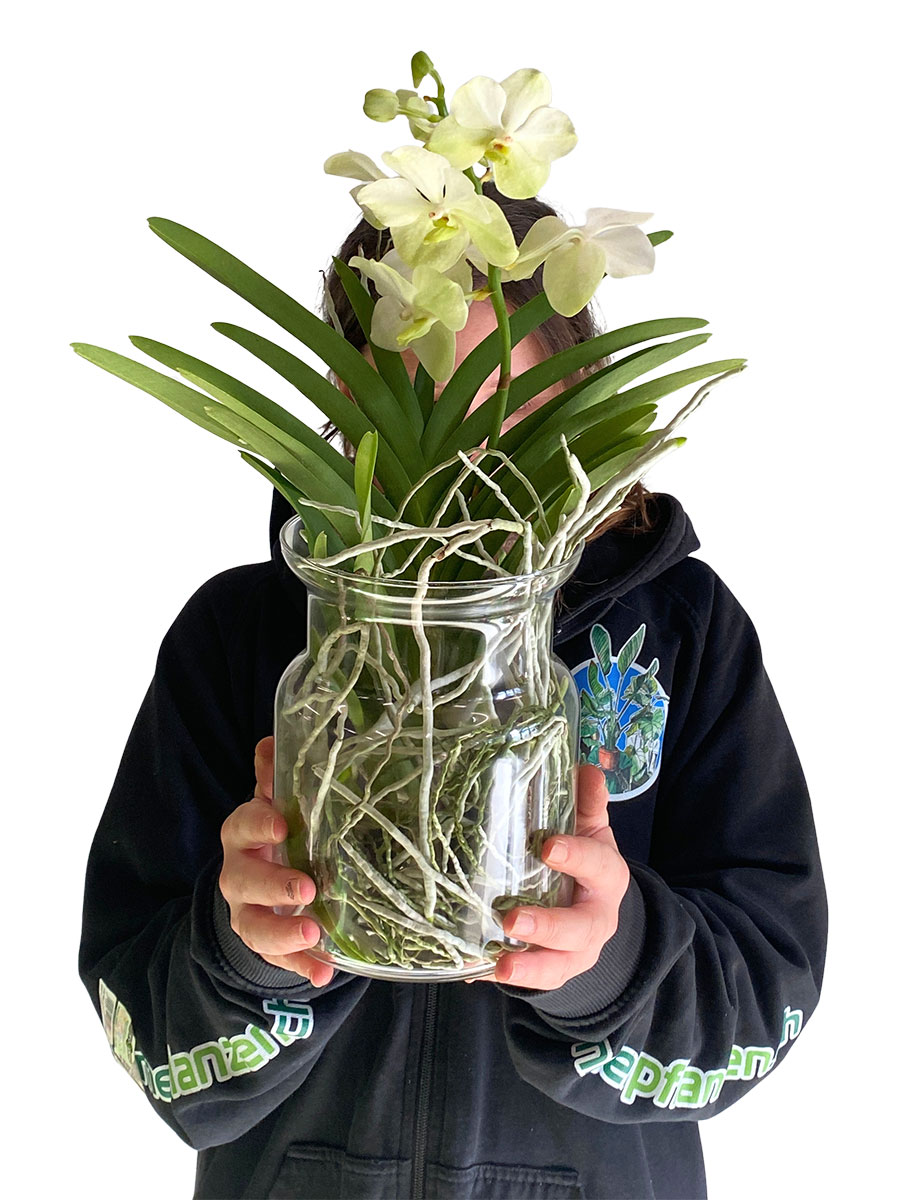
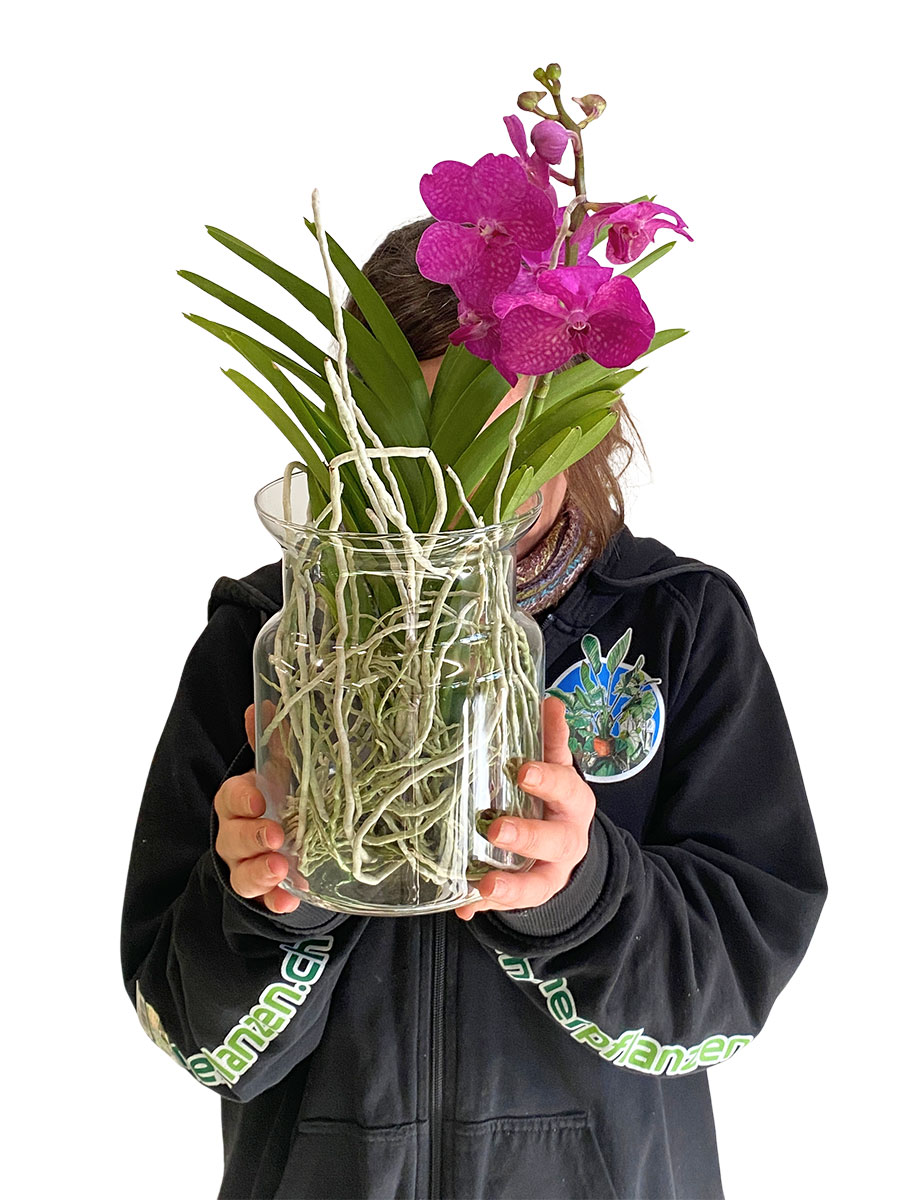
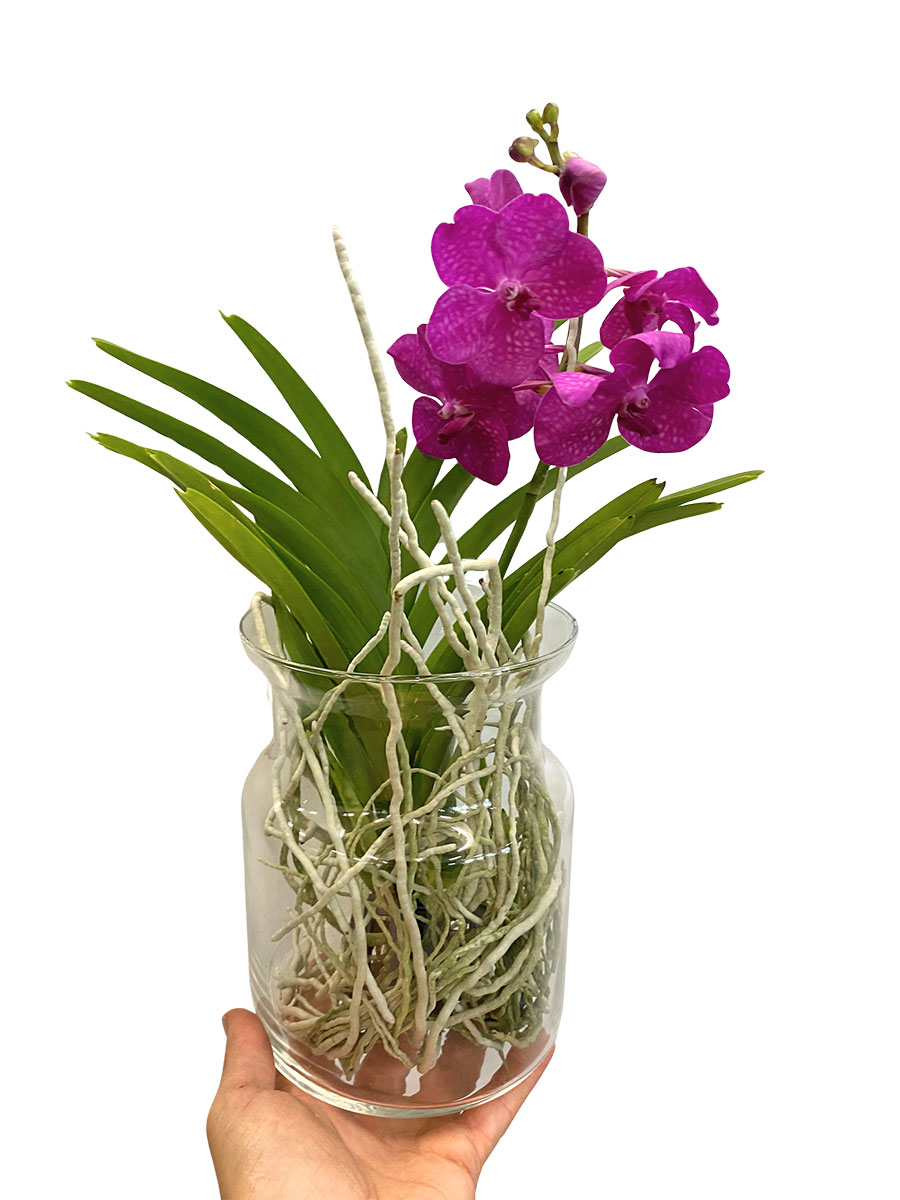
Vanda Michelle Orchid in Glass

Topfdurchmesser 14cm

Topfhöhe ab Boden 45cm ±

History of the Vanda Michelle orchid The Vanda Michelle orchid belongs to the genus Vanda and is a fascinating tropical orchid characterised by its elegant flowers, strong leaves and striking aerial roots. Vanda orchids originally come from the tropical regions of Asia, where they mainly grow as epiphytes on trees rather than in ordinary soil. In decorative glass cultivation, their characteristic aerial roots are shown off particularly beautifully, making the plant a real eye-catcher. In good conditions, it can flower several times a year and delights with colourful, long-lasting blooms. For pet owners, the Vanda orchid is generally a good choice, as it is considered non-toxic to cats and dogs and can therefore also be grown in households with pets. Care as a houseplant: Light: Very bright to bright. Vanda orchids need a lot of light and also tolerate some direct morning or evening sun. Intense midday sun behind glass should be avoided. Temperature: Around 20–28 °C during the day and slightly cooler temperatures at night are ideal. Avoid temperatures below 15 °C where possible. Humidity: High humidity of around 60–80 % is preferred. A humidifier can be helpful, especially in dry rooms. Substrate: In glass cultivation, the Vanda is kept without conventional substrate. The aerial roots should have enough space and be well ventilated. Watering: Moisten the aerial roots regularly with low-lime water or, depending on how it is grown, briefly dip the plant. Excess water should then be able to drain away completely. Never leave the roots standing in water permanently. Feeding: During active growth, feed roughly every 1–2 weeks with a special orchid fertiliser at a weak dose. Feeding can be reduced in winter. Special features: The aerial roots are an important part of the plant and should not be cut off as long as they are healthy. Good air circulation is particularly important. Faded flower spikes can be removed once they have dried out completely. Important for pet owners: Vanda orchids are considered non-toxic to cats and dogs and are therefore generally well suited to households with pets. Overwintering tips: The Vanda Michelle should be kept very bright and warm in winter too. As natural light is weaker in the cold season, a grow light can be used if needed. Watering should be adapted to the slower growth, but at the same time the aerial roots must not dry out completely for long periods.

CHF 89.90*

Delivery time 2 - 7 working days

Available
New
Item no. 4413
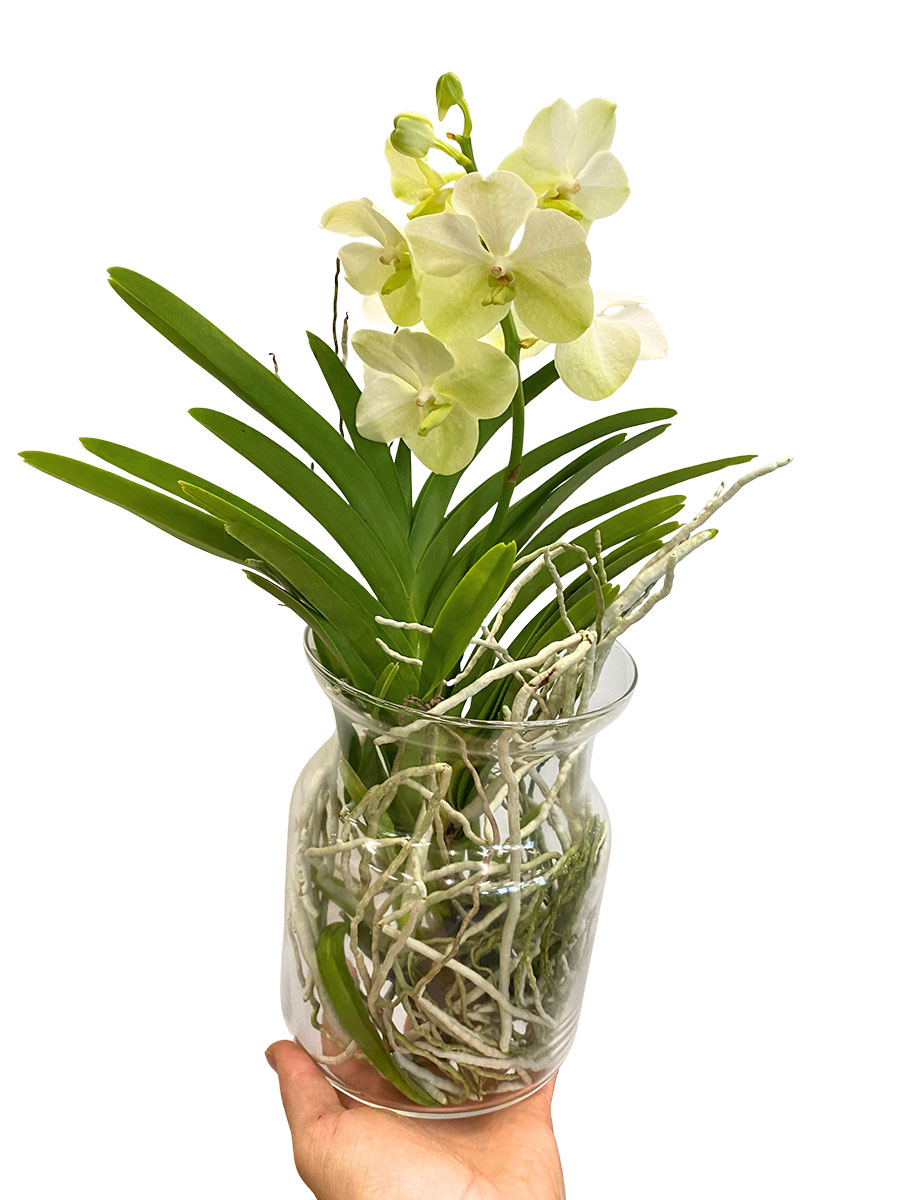
Vanda Michelle Orchid in Glass

Topfdurchmesser 14cm

Topfhöhe ab Boden 45cm ±

History of the Vanda Michelle orchid The Vanda Michelle orchid belongs to the genus Vanda and is a fascinating tropical orchid characterised by its elegant flowers, strong leaves and striking aerial roots. Vanda orchids originally come from the tropical regions of Asia, where they mainly grow as epiphytes on trees rather than in ordinary soil. In decorative glass cultivation, their characteristic aerial roots are shown off particularly beautifully, making the plant a real eye-catcher. In good conditions, it can flower several times a year and delights with colourful, long-lasting blooms. For pet owners, the Vanda orchid is generally a good choice, as it is considered non-toxic to cats and dogs and can therefore also be grown in households with pets. Care as a houseplant: Light: Very bright to bright. Vanda orchids need a lot of light and also tolerate some direct morning or evening sun. Intense midday sun behind glass should be avoided. Temperature: Around 20–28 °C during the day and slightly cooler temperatures at night are ideal. Avoid temperatures below 15 °C where possible. Humidity: High humidity of around 60–80 % is preferred. A humidifier can be helpful, especially in dry rooms. Substrate: In glass cultivation, the Vanda is kept without conventional substrate. The aerial roots should have enough space and be well ventilated. Watering: Moisten the aerial roots regularly with low-lime water or, depending on how it is grown, briefly dip the plant. Excess water should then be able to drain away completely. Never leave the roots standing in water permanently. Feeding: During active growth, feed roughly every 1–2 weeks with a special orchid fertiliser at a weak dose. Feeding can be reduced in winter. Special features: The aerial roots are an important part of the plant and should not be cut off as long as they are healthy. Good air circulation is particularly important. Faded flower spikes can be removed once they have dried out completely. Important for pet owners: Vanda orchids are considered non-toxic to cats and dogs and are therefore generally well suited to households with pets. Overwintering tips: The Vanda Michelle should be kept very bright and warm in winter too. As natural light is weaker in the cold season, a grow light can be used if needed. Watering should be adapted to the slower growth, but at the same time the aerial roots must not dry out completely for long periods.

CHF 89.90*

Delivery time 2 - 7 working days

Available
New
Item no. 4415
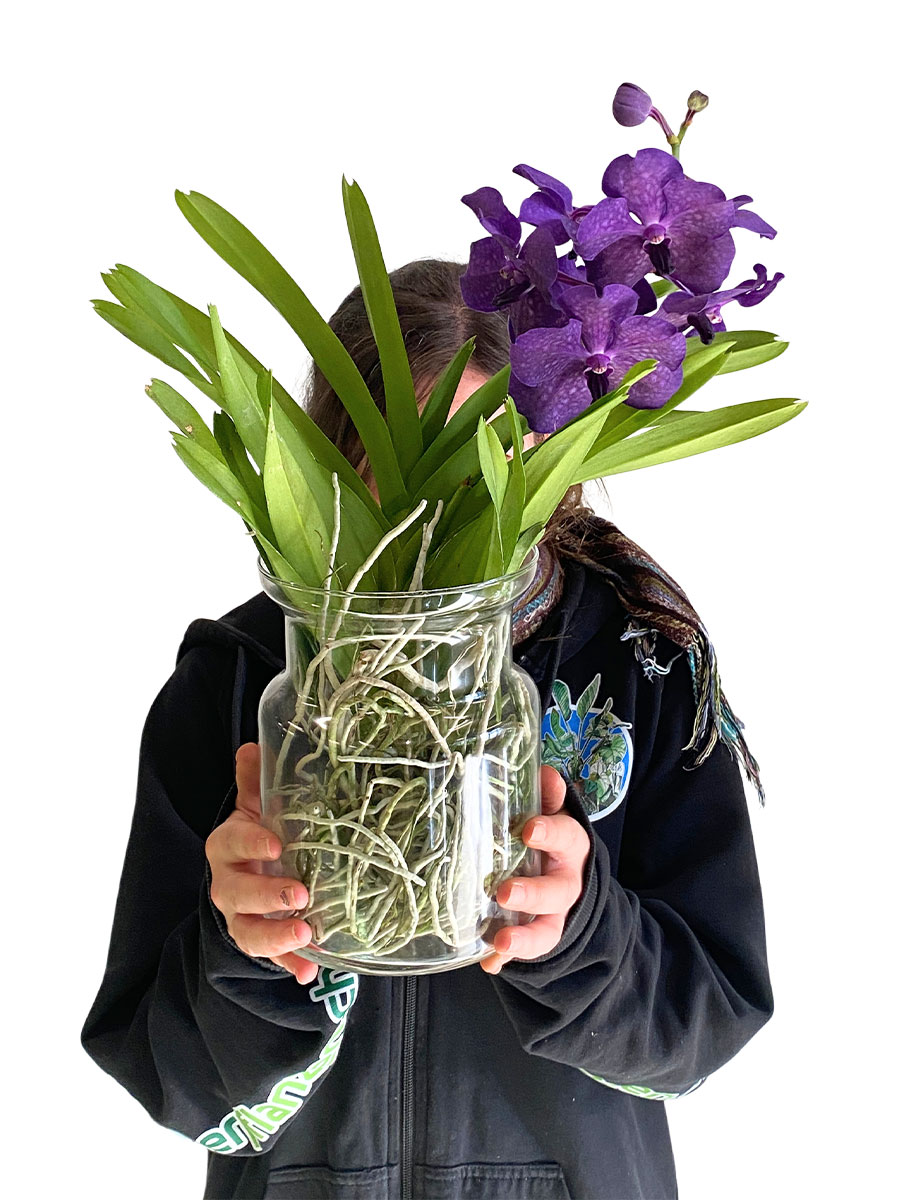
Vanda Michelle Orchid in Glass

Topfdurchmesser 14cm

Topfhöhe ab Boden 45cm ±

History of the Vanda Michelle orchid The Vanda Michelle orchid belongs to the genus Vanda and is a fascinating tropical orchid characterised by its elegant flowers, strong leaves and striking aerial roots. Vanda orchids originally come from the tropical regions of Asia, where they mainly grow as epiphytes on trees rather than in ordinary soil. In decorative glass cultivation, their characteristic aerial roots are shown off particularly beautifully, making the plant a real eye-catcher. In good conditions, it can flower several times a year and delights with colourful, long-lasting blooms. For pet owners, the Vanda orchid is generally a good choice, as it is considered non-toxic to cats and dogs and can therefore also be grown in households with pets. Care as a houseplant: Light: Very bright to bright. Vanda orchids need a lot of light and also tolerate some direct morning or evening sun. Intense midday sun behind glass should be avoided. Temperature: Around 20–28 °C during the day and slightly cooler temperatures at night are ideal. Avoid temperatures below 15 °C where possible. Humidity: High humidity of around 60–80 % is preferred. A humidifier can be helpful, especially in dry rooms. Substrate: In glass cultivation, the Vanda is kept without conventional substrate. The aerial roots should have enough space and be well ventilated. Watering: Moisten the aerial roots regularly with low-lime water or, depending on how it is grown, briefly dip the plant. Excess water should then be able to drain away completely. Never leave the roots standing in water permanently. Feeding: During active growth, feed roughly every 1–2 weeks with a special orchid fertiliser at a weak dose. Feeding can be reduced in winter. Special features: The aerial roots are an important part of the plant and should not be cut off as long as they are healthy. Good air circulation is particularly important. Faded flower spikes can be removed once they have dried out completely. Important for pet owners: Vanda orchids are considered non-toxic to cats and dogs and are therefore generally well suited to households with pets. Overwintering tips: The Vanda Michelle should be kept very bright and warm in winter too. As natural light is weaker in the cold season, a grow light can be used if needed. Watering should be adapted to the slower growth, but at the same time the aerial roots must not dry out completely for long periods.

CHF 89.90*

Delivery time 2 - 7 working days

Available
Item no. F4400
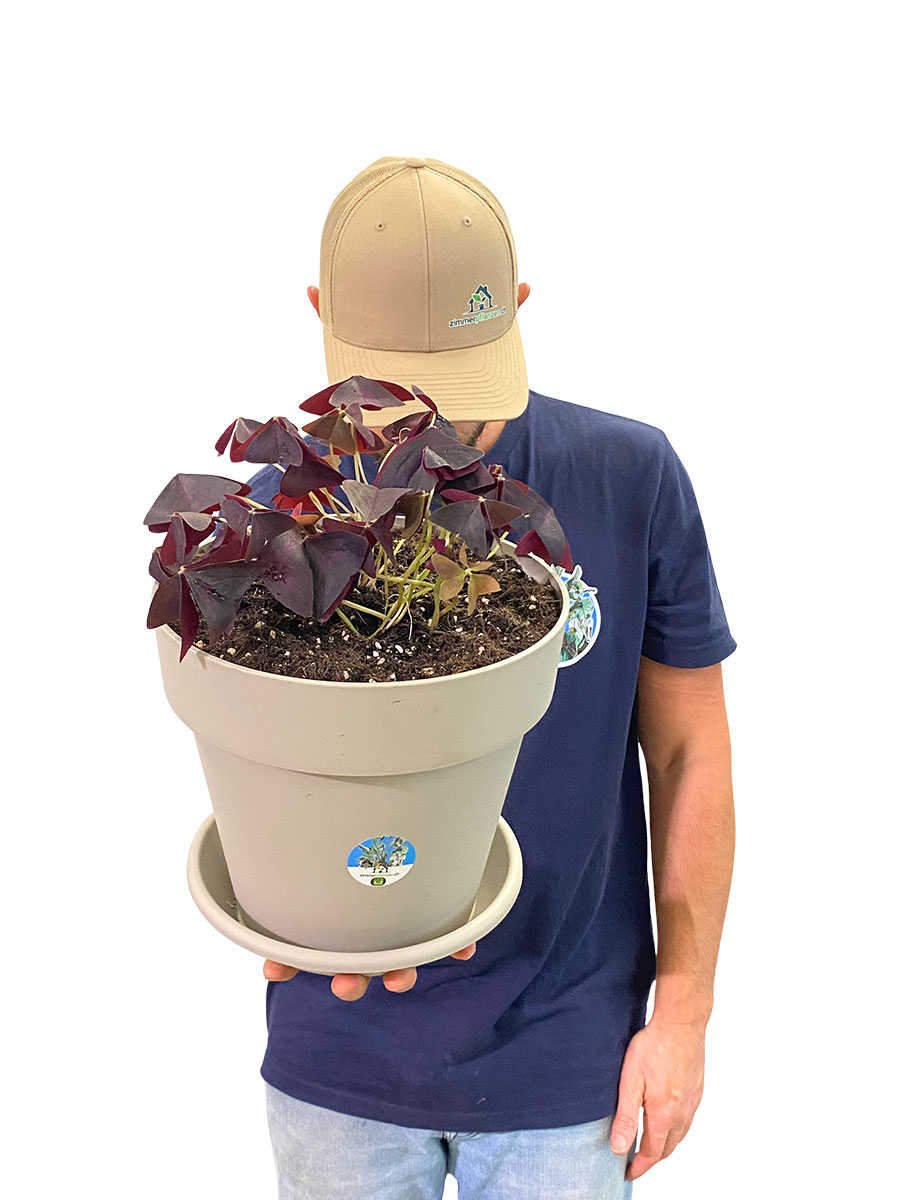
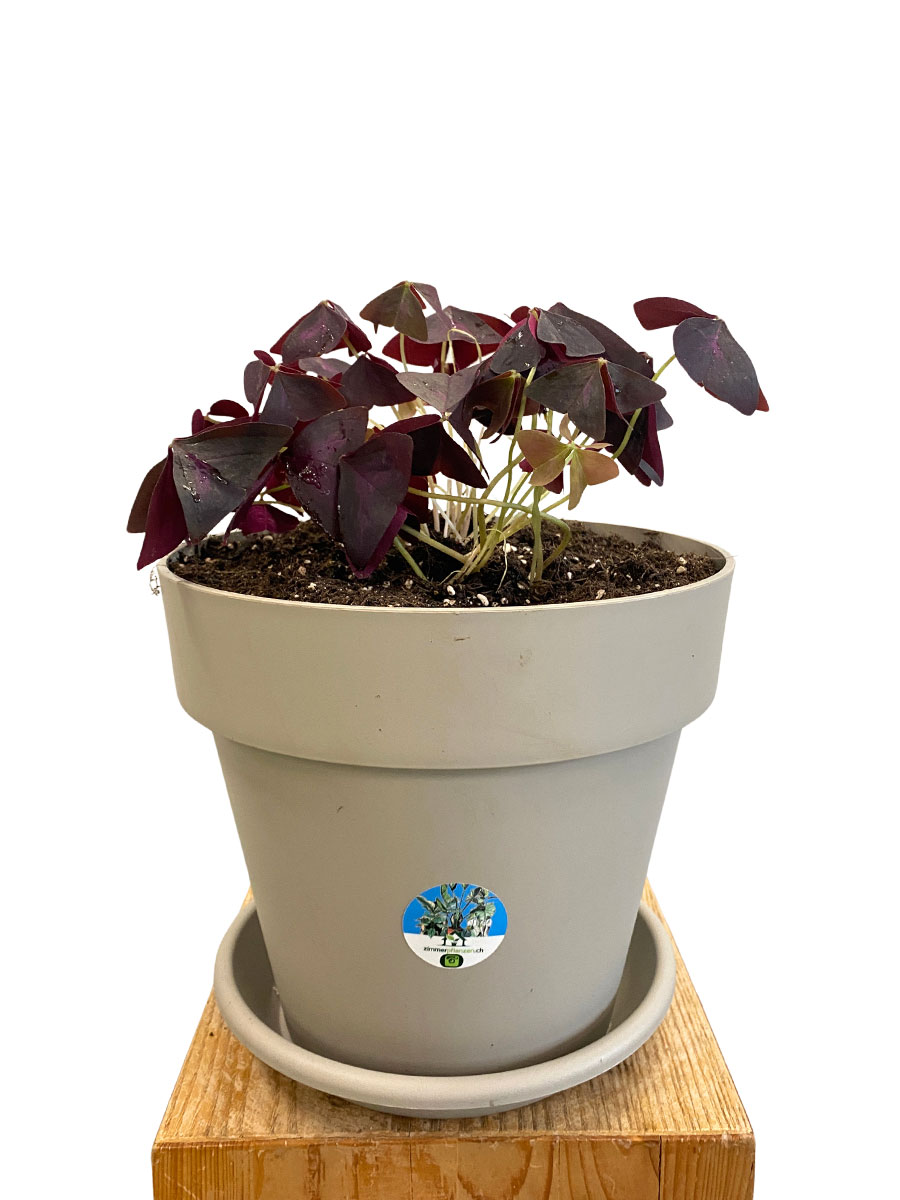
Purple Shamrock Oxalis Triangularis - Large

Topfdurchmesser 25cm

Topfhöhe ab Boden 25cm ±

Ready-made planting

History of the purple shamrock Oxalis triangularisThe purple shamrock Oxalis triangularis comes from the tropical regions of South America and captivates with its characteristic triangular, purple leaves that are reminiscent of clover leaves. As a symbol of luck and positive energy, it is very popular – whether as a houseplant or as a decorative accent outdoors. Its dainty appearance gives any room or garden a touch of exoticism and charm.Care as a houseplant:Light: Bright spot with plenty of indirect light; avoid direct, intense sunlight to prevent leaf scorch.Temperature: Ideally 15–25 °C; temperatures should not drop below 10 °C.Humidity: Moderate humidity is sufficient; occasional misting supports its well-being in dry rooms.Substrate: Free-draining potting soil, possibly enriched with a little sand or perlite, promotes healthy root development.Watering: Water regularly, but only once the top layer of soil is dry – avoid waterlogging.Feeding: During the growing season, feed every 4–6 weeks with a weak dose of liquid fertiliser for foliage plants.Outdoor care (seasonal cultivation)In warm, frost-free regions, the purple shamrock can also thrive outdoors and add a colourful accent to gardens or balconies.Light & location: A partially shaded to sunny spot that is protected from intense midday sun is ideal for healthy growth.Temperature: Oxalis triangularis thrives in tropical or subtropical climates – make sure it is protected from frost in the cooler months.Soil: Loose, free-draining soil enriched with organic matter promotes root development.Watering: Water regularly so that the soil stays moist without becoming waterlogged; more frequent watering may be needed during very hot spells.Feeding: Outdoors, feed every 4–6 weeks during the growing phase with an organic liquid fertiliser to support its vivid colours.Care tip: In regions with cooler nights or seasonal frost, the purple shamrock should be moved to a sheltered area or indoors in good time.Overwintering tips:Whether as a houseplant or outdoors:Reduce watering in winter, as growth slows down.Make sure temperatures do not drop below 10 °C to avoid damage.A bright, draught-free spot keeps the purple shamrock vigorous even during its dormant phase.With the right care, the purple shamrock Oxalis triangularis brings a vibrant display of colour and plenty of positive energy to your home or garden, both indoors and outdoors.

CHF 69.90*

Delivery time 2 - 7 working days

Available
New
Item no. F1687
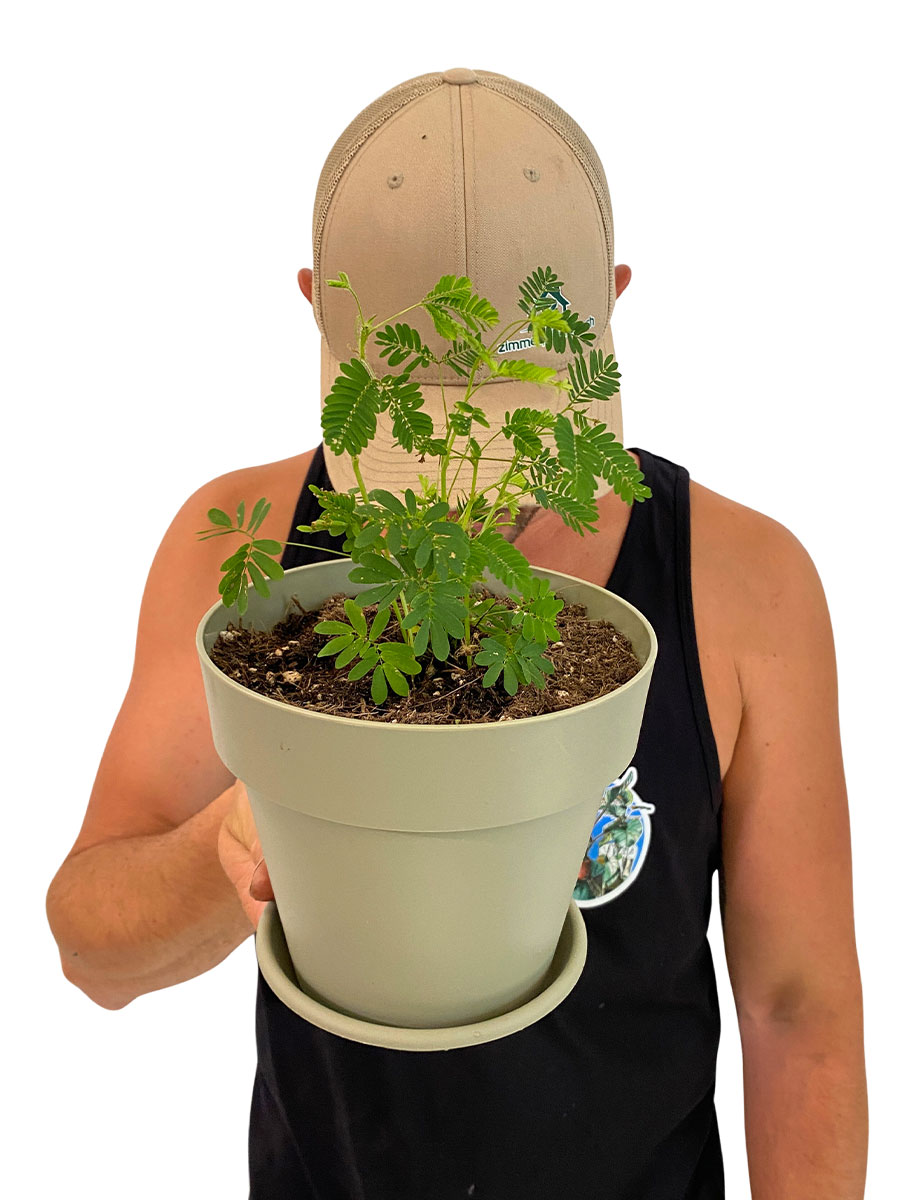
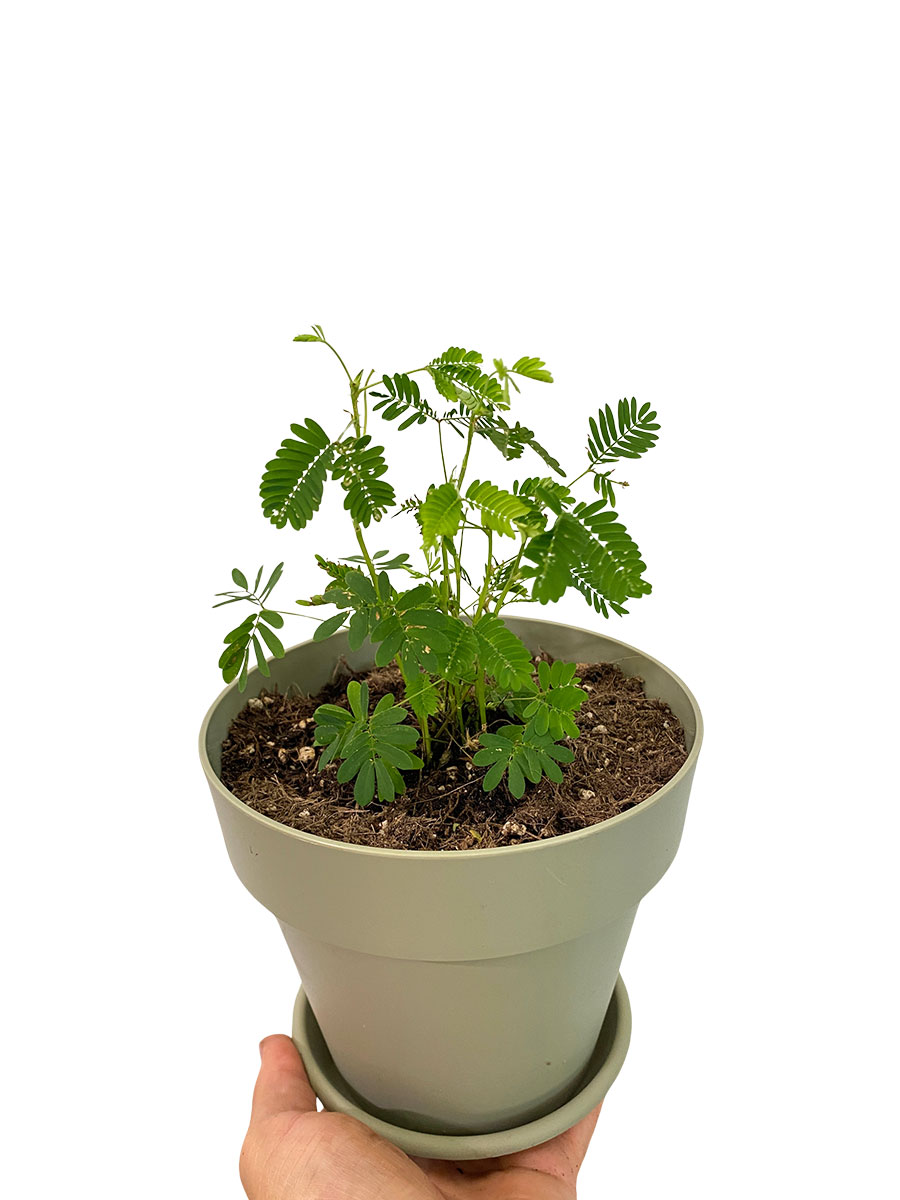
Sensitive Plant Mimosa Pudica

Topfdurchmesser 16cm

Topfhöhe ab Boden 20cm ±

Ready-made planting

History of the sensitive plant (Mimosa pudica) The sensitive plant, botanically Mimosa pudica, is a fascinating tropical plant that originally comes from South America. It became famous for its extraordinary reaction to touch: its leaves fold up within seconds, which has also earned it the name 'touch-me-not'. This special feature makes it a popular houseplant, especially for children and plant lovers looking for something out of the ordinary. Care as a houseplant: Light: Very bright spot, happy with direct sun. Temperature: 18–28 °C; no temperatures below 15 °C. Humidity: Moderate to high; avoid dry air from heating. Substrate: Free-draining soil, e.g. potting soil with a little sand or perlite. Watering: Water regularly; the soil may dry out slightly, but not completely. No waterlogging! Feeding: Fertilise lightly every 2 weeks during the growing season. Special features: As a houseplant it is rather short-lived, but can easily be grown again from seed. Overwintering tips: In winter, keep it bright and warm (min. 15 °C), water less, but do not let it dry out. 

CHF 39.90*

Delivery time 2 - 7 working days

Available
New
Item no. 4334
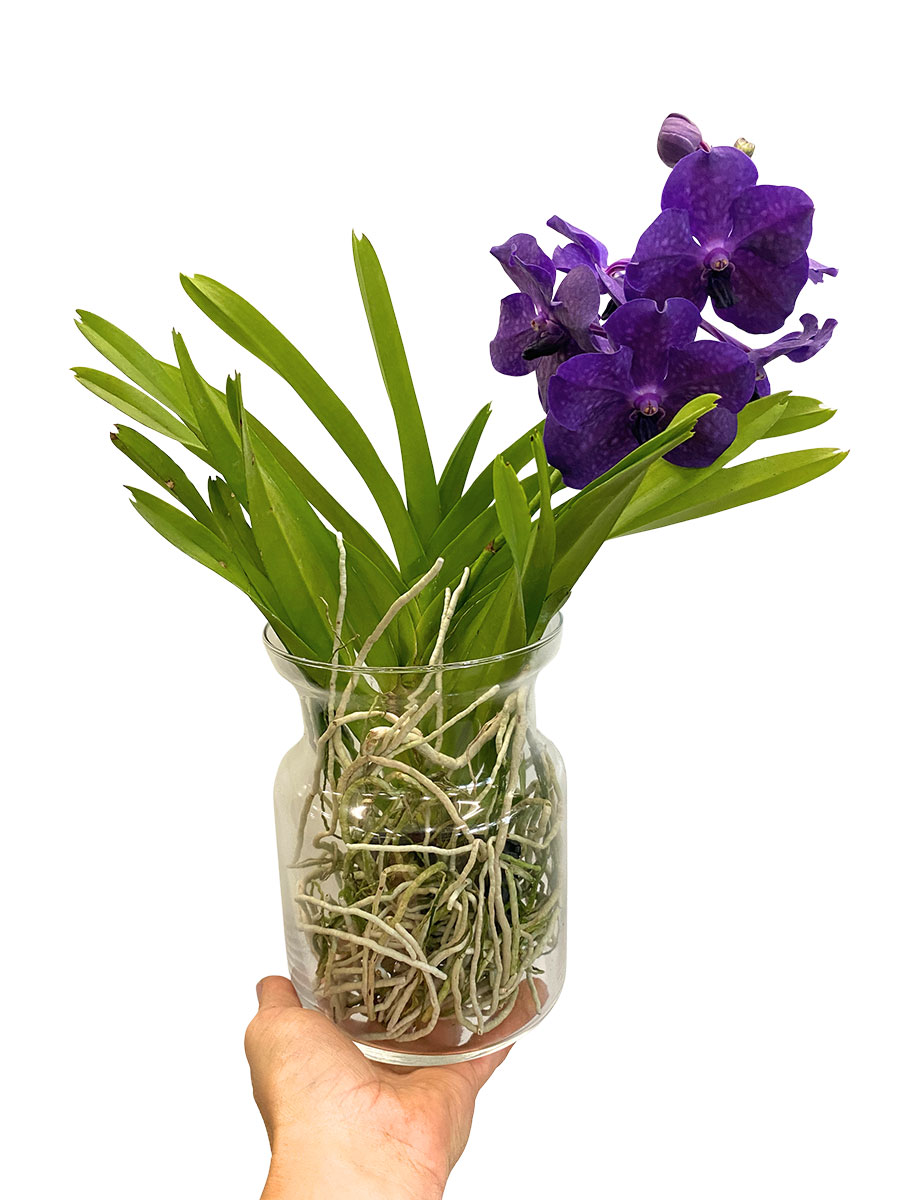
Vanda Michelle Orchid in Glass

Topfdurchmesser 17cm

Topfhöhe ab Boden 70cm ±

History of the Vanda Michelle orchid The Vanda Michelle orchid belongs to the genus Vanda and is a fascinating tropical orchid characterised by its elegant flowers, strong leaves and striking aerial roots. Vanda orchids originally come from the tropical regions of Asia, where they mainly grow as epiphytes on trees rather than in ordinary soil. In decorative glass cultivation, their characteristic aerial roots are shown off particularly beautifully, making the plant a real eye-catcher. In good conditions, it can flower several times a year and delights with colourful, long-lasting blooms. For pet owners, the Vanda orchid is generally a good choice, as it is considered non-toxic to cats and dogs and can therefore also be grown in households with pets. Care as a houseplant: Light: Very bright to bright. Vanda orchids need a lot of light and also tolerate some direct morning or evening sun. Intense midday sun behind glass should be avoided. Temperature: Around 20–28 °C during the day and slightly cooler temperatures at night are ideal. Avoid temperatures below 15 °C where possible. Humidity: High humidity of around 60–80 % is preferred. A humidifier can be helpful, especially in dry rooms. Substrate: In glass cultivation, the Vanda is kept without conventional substrate. The aerial roots should have enough space and be well ventilated. Watering: Moisten the aerial roots regularly with low-lime water or, depending on how it is grown, briefly dip the plant. Excess water should then be able to drain away completely. Never leave the roots standing in water permanently. Feeding: During active growth, feed roughly every 1–2 weeks with a special orchid fertiliser at a weak dose. Feeding can be reduced in winter. Special features: The aerial roots are an important part of the plant and should not be cut off as long as they are healthy. Good air circulation is particularly important. Faded flower spikes can be removed once they have dried out completely. Important for pet owners: Vanda orchids are considered non-toxic to cats and dogs and are therefore generally well suited to households with pets. Overwintering tips: The Vanda Michelle should be kept very bright and warm in winter too. As natural light is weaker in the cold season, a grow light can be used if needed. Watering should be adapted to the slower growth, but at the same time the aerial roots must not dry out completely for long periods.

CHF 99.90*

Delivery time 2 - 7 working days

Available
Bestseller
Item no. F3135
Venus Flytrap Dionaea Carnivorous Plant XXL

Topfdurchmesser 20cm

Topfhöhe ab Boden 20cm ±

Ready-made planting

History of the Venus flytrap (Dionaea muscipula) The Venus flytrap Dionaea muscipula is one of the best-known carnivorous houseplants and comes from the moist, nutrient-poor soils of the coastal regions of North and South Carolina (USA). Its spectacular trap leaves snap shut in a flash as soon as prey such as insects touch the fine trigger hairs. This fascinating adaptation makes it one of the most exciting plants for carnivorous plant enthusiasts. Feed it your flies and insects directly :-) Care as a houseplant: Light: Bright, direct sunlight for at least 4–6 hours a day. Temperature: Ideally 20–30 °C during the growing season. Humidity: Moderate to high; occasional misting can help. Substrate: Special carnivorous plant soil (nutrient-poor, peat-free, free-draining). Watering: Only lime-free water (rainwater or distilled water); keep the substrate constantly moist, but avoid waterlogging. Feeding: No fertiliser needed – the plant feeds itself by catching insects. Special features: An extraordinary houseplant that actively catches prey, which makes it unique. Care as a terrarium plant: Light: Very bright with direct sunlight or strong plant LEDs in the terrarium. Temperature: Ideally 22–28 °C during growth. Humidity: High (60–80 %), but good air circulation is needed to prevent mould. Substrate: Carnivorous plant soil with sphagnum moss for a permanently moist environment. Water: Use rainwater or distilled water; keep permanently moist, but not wet. Winter dormancy: Also necessary in a terrarium – lower the temperature to 5–10 °C and greatly reduce watering. Summer care (keeping outdoors) In summer, the Venus flytrap Dionaea muscipula can be kept outdoors very successfully: Location: Sunny, but protect from extreme midday heat. Weather: Choose a sheltered spot, as strong winds can damage the delicate traps. Water: Always keep moist with rainwater or distilled water – never let it dry out. Feeding behaviour: Outdoors it catches enough insects by itself, so no additional feeding is necessary. Bringing it back indoors: Move it back to a sheltered place before the first cold nights. Winter care: In winter, the Venus flytrap Dionaea muscipula needs a dormant period: Temperature: 5–10 °C (cool spot, e.g. an unheated room or garage with daylight). Water: Water less, but do not let the substrate dry out. Light: Less light required, but not a completely dark spot. Leaves: Many traps die off – this is normal. The plant puts out new growth in spring. Whether as a houseplant, in a terrarium or outdoors in summer – the Venus flytrap Dionaea muscipula is a fascinating plant with unique behaviour and needs a winter rest to stay healthy in the long term.

CHF 59.90*

Delivery time 2 - 7 working days

Available
Bestseller
Item no. F3605
Strelitzia Nicolai Super Size

Topfdurchmesser 60cm

Topfhöhe ab Boden 240cm ±

Ready-made planting

History of the Strelitzia Nicolai Strelitzia nicolai, also known as the white bird of paradise, comes from the tropical and subtropical regions of South Africa. With its imposing, banana-like leaves and majestic growth, it is an impressive houseplant that brings a touch of the exotic and elegance to any room. Its ability to thrive even in large tubs makes it an ideal choice for interiors and bright conservatories. Care as a houseplant: Light: Very bright spot, ideally with direct sunlight, e.g. in front of a south-facing window. Temperature: Ideally 20–28 °C, at least 10–12 °C in winter. Humidity: Average to slightly increased; occasional misting is beneficial. Substrate: Free-draining, nutrient-rich substrate, e.g. potting soil mixed with sand or perlite. Watering: Water regularly and let the substrate dry out slightly between waterings. Avoid waterlogging. Feeding: Every 2–4 weeks during the growing season with a liquid foliage plant fertiliser. Repotting: Every 2–3 years into a larger pot with fresh soil. Care as a container/seasonal plant: Light: In summer, happy to be placed outdoors in a sunny, sheltered spot. Temperature: Sensitive to temperatures below 10 °C, so bring indoors in good time. Watering: Water regularly while avoiding waterlogging. Outdoors, drainage must work well. Feeding: Every 2 weeks during the growing season to support vigorous growth. Overwintering: Overwinter in a bright room at 10–15 °C with reduced watering.Overwintering tips: Strelitzia nicolai is not a hardy plant and should be brought indoors in good time before the first frost. It prefers a bright spot, for example in a conservatory, at temperatures between 10–15 °C. During its winter rest the plant needs less water; the substrate should dry out well between waterings. Fertilising can be skipped during this phase. Regularly removing dust from the large leaves promotes photosynthesis during overwintering too.

CHF 799.90*

Delivery time 2 - 7 working days

Available
Item no. F3080
Strelitzia Nicolai XL

Topfdurchmesser 50cm

Topfhöhe ab Boden 200cm ±

Ready-made planting

History of the Strelitzia nicolai Strelitzia nicolai, also known as the white bird of paradise, comes from the tropical and subtropical regions of South Africa. With its imposing, banana-like leaves and majestic growth, it is an impressive houseplant that brings a touch of the exotic and elegance to any room. Its ability to thrive even in large tubs makes it an ideal choice for interiors and bright conservatories. Care as a houseplant: Light: Very bright spot, ideally with direct sunlight, e.g. in front of a south-facing window. Temperature: Ideally 20–28 °C, at least 10–12 °C in winter. Humidity: Average to slightly increased; occasional misting is beneficial. Substrate: Free-draining, nutrient-rich substrate, e.g. potting soil mixed with sand or perlite. Watering: Water regularly and let the substrate dry out slightly between waterings. Avoid waterlogging. Feeding: Every 2–4 weeks during the growing season with a liquid foliage plant fertiliser. Repotting: Every 2–3 years into a larger pot with fresh soil. Care as a container/seasonal plant: Light: In summer, happy to be placed outdoors in a sunny, sheltered spot. Temperature: Sensitive to temperatures below 10 °C, so bring indoors in good time. Watering: Water regularly while avoiding waterlogging. Outdoors, drainage must work well. Feeding: Every 2 weeks during the growing season to support vigorous growth. Overwintering: Overwinter in a bright room at 10–15 °C with reduced watering.Overwintering tips: Strelitzia nicolai is not a hardy plant and should be brought indoors in good time before the first frost. It prefers a bright spot, for example in a conservatory, at temperatures between 10–15 °C. During its winter rest the plant needs less water; the substrate should dry out well between waterings. Fertilising can be skipped during this phase. Regularly removing dust from the large leaves promotes photosynthesis during overwintering too.

CHF 499.90*

Delivery time 2 - 7 working days

Available
Item no. F3281
Dypsis Areca Palm XL

Topfdurchmesser 50cm

Topfhöhe ab Boden 200cm ±

Ready-made planting

History of the Dypsis areca palm The areca palm (Dypsis lutescens) comes from Madagascar and has been one of the most popular houseplants for many decades. It used to be grown mainly in large courtyards; today it delights with its bushy, elegant growth and its air-purifying properties. Its fine, golden-green shimmering fronds bring a tropical flair to any room. Care as a houseplant: Light: Bright position with plenty of indirect light; no strong midday sun. Temperature: Ideally 18–25 °C; do not keep below 15 °C. Humidity: High; mist regularly or use a humidifier. Substrate: Loose, humus-rich substrate with good drainage. Watering: Keep evenly moist; allow the top layer of soil to dry out slightly. Be sure to avoid waterlogging. Feeding: Every 2 weeks during the growing season with liquid fertiliser. Special features: This houseplant improves the indoor climate and looks particularly decorative in living rooms and office corners. Overwintering tips: In winter, water less, but do not let it dry out completely; temperatures not below 15 °C. This way, the Dypsis areca palm remains an easy-care, elegant houseplant.

CHF 499.90*

Delivery time 2 - 7 working days

Available
Item no. F3282
Ficus Elastica Abidjan Column XL

Topfdurchmesser 50cm

Topfhöhe ab Boden 180cm ±

Ready-made planting

History of the rubber plant Ficus elastica Abidjan The rubber plant (Ficus elastica Abidjan) is a decorative variety of the classic Ficus elastica and originally comes from the tropical regions of Southeast Asia. The variety Abidjan is characterised by its deep dark red to almost black, glossy leaves, which give it a particularly elegant appearance. Rubber plants used to be grown for rubber production; today they are very popular as robust, long-lived houseplants. Care as a houseplant: Light: Bright spot with plenty of indirect light; partially shaded spots are well tolerated. Temperature: Ideally 18–25 °C; do not keep below 15 °C for long periods. Humidity: Moderate; occasional misting promotes glossy leaves. Substrate: Loose, well-draining substrate, e.g. potting soil with sand or perlite. Watering: Water moderately; the top layer of soil should dry out between waterings. Avoid waterlogging. Feeding: Every 2–4 weeks with liquid fertiliser during the growing season. Special features: An easy-care houseplant that perfectly complements modern living spaces with its dark, elegant leaves. Overwintering tips: Water more sparingly in winter and do not keep below 15 °C. The Ficus elastica Abidjan is a reliable, decorative houseplant that is ideal for beginners and collectors alike.

CHF 499.90*

Delivery time 2 - 7 working days

Available
Item no. 3163
Bird of Paradise Strelitzia Reginae XL

Topfdurchmesser 50cm

Topfhöhe ab Boden 150cm ±

Ready-made planting

History of the Strelitzia reginae Strelitzia reginae, also known as the bird of paradise flower, comes from South Africa and is famous for its spectacular, exotic flowers, which resemble a colourful bird's head. This iconic houseplant brings tropical flair to any room with its bright orange and blue flowers. It is a popular choice for interiors, conservatories and as a container plant outdoors during the warmer months. Care as a houseplant: Light: Very bright spot with plenty of direct sun, ideally in front of a south- or west-facing window. Temperature: Ideally 20–28 °C, at least 10–12 °C in winter. Humidity: Average; occasional misting promotes healthy leaves. Substrate: Free-draining, nutrient-rich potting soil mixed with sand or perlite. Watering: Water regularly; let the substrate dry out slightly, but never let it dry out completely. Avoid waterlogging. Feeding: Every 2–4 weeks during the growing and flowering season with liquid fertiliser for flowering plants. Repotting: Every 2–3 years, as the plant needs larger pots and fresh soil to develop flowers. Care as a container/seasonal plant: Light: Ideally outdoors in summer in a sunny, sheltered spot. Temperature: Tolerates a range of temperatures but is sensitive to cold; bring indoors in good time before temperatures drop below 10 °C. Watering: Water regularly, especially in summer, but be sure to avoid waterlogging. Feeding: Every 2 weeks during the growing season to encourage flower formation. Overwintering: Bright spot at 10–15 °C, with reduced watering, until growth resumes in springOverwintering tips for Strelitzia reginae: In winter, Strelitzia reginae should be kept in a bright spot at 10–15 °C. Water sparingly so that the root ball dries out slightly but does not dry out completely. Avoid waterlogging and stop feeding. Occasional misting helps when the heating air is dry. A calm spot without frequent moving is ideal, so that the plant starts spring strengthened.

CHF 499.90*

Delivery time 2 - 7 working days

Available
Item no. F3223
Fiddle-Leaf Fig Ficus lyrata Stem XL

Topfdurchmesser 50cm

Topfhöhe ab Boden 200cm ±

Ready-made planting

History of the fiddle-leaf fig Ficus Lyrata The fiddle-leaf fig Ficus Lyrata comes from the tropical rainforests of West Africa and is a popular houseplant thanks to its large, violin-shaped leaves. In the wild it can grow up to 15 metres tall, while as a houseplant it usually stays more compact. Its striking foliage makes it an elegant eye-catcher in living spaces. Care as a houseplant: Light: Bright, indirect light; too little light leads to slow growth. Temperature: Ideally 18–25 °C; no cold draughts or sudden temperature fluctuations. Humidity: Moderate to high; occasional misting promotes healthy leaves. Substrate: Free-draining, humus-rich potting soil with sand or perlite for better aeration. Watering: Water moderately; only once the top layer of soil is dry. Be sure to avoid waterlogging. Feeding: Every 2–4 weeks during the growing season with a weak liquid fertiliser. Special features: An impressive houseplant that, with the right care, grows into an imposing eye-catcher. Overwintering tips: During the winter months, the fiddle-leaf fig should be kept in a bright room at a minimum of 15 °C. Avoid draughts and cold windows, as it is sensitive to them. Reduce watering, but do not let the substrate dry out completely. Wiping the large leaves regularly keeps them free of dust and promotes photosynthesis.

CHF 699.90*

Delivery time 2 - 7 working days

Available
Item no. F3206
Kentia Palm Howea Forsteriana XL

Topfdurchmesser 50cm

Topfhöhe ab Boden 200cm ±

Ready-made planting

History of the kentia palm (Howea forsteriana) The kentia palm, botanically Howea forsteriana, is an elegant houseplant that originally comes from remote Lord Howe Island in the Pacific. Since the 19th century, it has enjoyed great popularity worldwide as a decorative palm for indoor spaces. Robust, gently arching pinnate fronds and slow, easy-care growth make it the ideal choice for plant lovers who want to bring tropical flair into their home. Care as a houseplant: Light: A bright to semi-shaded position is ideal. Direct sun should be avoided, especially around midday. Temperature: Ideally 18–24 °C. In winter, the temperature should not drop below 12 °C. Humidity: Average humidity is sufficient, but occasional misting of the leaves promotes their vitality. Substrate: A loose, free-draining substrate, such as a mix of potting soil, sand and peat, is ideal. Watering: Water evenly, avoiding waterlogging. The top layer of soil should dry out slightly between waterings. Feeding: During the growing season (spring to autumn), feed every 4–6 weeks with a liquid foliage plant fertiliser. No feeding needed in winter. Repotting: Repot into a larger pot every 3–4 years, preferably in spring, when the roots fill the pot. Care as a container/seasonal plant: Light: In summer, the kentia palm can stand outdoors in a semi-shaded spot. However, it should be protected from strong midday sun. Temperature: The palm is sensitive to temperatures below 10 °C and should be brought indoors in good time. Watering: Water regularly, without leaving water standing in the pot or saucer. Feeding: Feed every 4 weeks during the growing season to support healthy growth. Overwintering: Overwinter in a bright spot at a minimum of 12 °C with reduced watering. Overwintering tips: The kentia palm is sensitive to cold and should be kept in a bright spot at a minimum of 12 °C during the cold season. Watering can be reduced in winter, but the substrate must never dry out completely. Misting the leaves helps counteract dry air in heated rooms. Thanks to its robust nature, the kentia palm remains an easy-care and stylish houseplant even in winter.

CHF 499.90*

Delivery time 2 - 7 working days

Available
Item no. F3078
Fiddle-Leaf Fig Ficus lyrata Bush XL

Topfdurchmesser 50cm

Topfhöhe ab Boden 180cm ±

Ready-made planting

History of the fiddle-leaf fig Ficus Lyrata The fiddle-leaf fig Ficus Lyrata comes from the tropical rainforests of West Africa and is a popular houseplant thanks to its large, violin-shaped leaves. In the wild it can grow up to 15 metres tall, while as a houseplant it usually stays more compact. Its striking foliage makes it an elegant eye-catcher in living spaces. Care as a houseplant: Light: Bright, indirect light; too little light leads to slow growth. Temperature: Ideally 18–25 °C; no cold draughts or sudden temperature fluctuations. Humidity: Moderate to high; occasional misting promotes healthy leaves. Substrate: Free-draining, humus-rich potting soil with sand or perlite for better aeration. Watering: Water moderately; only once the top layer of soil is dry. Be sure to avoid waterlogging. Feeding: Every 2–4 weeks during the growing season with a weak liquid fertiliser. Special features: An impressive houseplant that, with the right care, grows into an imposing eye-catcher. Overwintering tips: In the winter months, the fiddle-leaf fig should be kept in a bright room at a minimum of 15 °C. Avoid draughts and cold windows, as it reacts sensitively to them. Reduce watering, but do not let the substrate dry out completely. Regularly wiping the large leaves keeps them free of dust and promotes photosynthesis.

CHF 499.90*

Delivery time 2 - 7 working days

Available
Bestseller
Item no. V10
Ficus Lyrata Branched - Vulka

Vulkastrat

Topfdurchmesser 32cm

Topfhöhe ab Boden 100cm ±

Ready-made planting

History of the fiddle-leaf fig (Ficus lyrata) The fiddle-leaf fig, botanically known as Ficus lyrata , originally comes from the tropical regions of West Africa. Its name derives from its large, violin-shaped leaves, which make it a striking and popular houseplant. With its imposing growth and eye-catching, glossy leaves, the fiddle-leaf fig brings a modern, urban flair to living spaces. It is particularly eye-catching as a solitary plant and is often used as a style statement in interiors. Care as a houseplant: Light: Bright spot with plenty of indirect light, as close to a window as possible. Direct midday sun should be avoided. Temperature: Ideally 18–25 °C. In winter, the temperature must not drop below 15 °C. Humidity: Average to slightly increased. Regular misting helps to compensate for dry heating air. Substrate: Free-draining potting soil, ideally mixed with sand or perlite to prevent waterlogging. Watering: Water moderately so that the top layer of soil dries out slightly between waterings. Avoid waterlogging, as the plant is sensitive to it. Feeding: Feed every 2–4 weeks with a liquid fertiliser for foliage plants during the growing season from spring to autumn. Feed only rarely in winter. Repotting: Repot young plants every 1–2 years. Older plants only when necessary, about every 3 years. Overwintering tips: During the winter months, the fiddle-leaf fig should be kept in a bright room at a minimum of 15 °C. Avoid draughts and cold windows, as it is sensitive to them. Reduce watering, but do not let the substrate dry out completely. Regularly wiping the large leaves keeps them free of dust and promotes photosynthesis.

CHF 299.90*

Delivery time 2 - 7 working days

Available
Item no. F3067
Dypsis Areca Palm XXL

Topfdurchmesser 60cm

Topfhöhe ab Boden 220cm ±

Ready-made planting

History of the Dypsis areca palm The areca palm (Dypsis lutescens) comes from Madagascar and has been one of the most popular houseplants for many decades. It used to be grown mainly in large courtyards; today it delights with its bushy, elegant growth and its air-purifying properties. Its fine, golden-green shimmering fronds bring a tropical flair to any room. Care as a houseplant: Light: Bright position with plenty of indirect light; no strong midday sun. Temperature: Ideally 18–25 °C; do not keep below 15 °C. Humidity: High; mist regularly or use a humidifier. Substrate: Loose, humus-rich substrate with good drainage. Watering: Keep evenly moist; allow the top layer of soil to dry out slightly. Be sure to avoid waterlogging. Feeding: Every 2 weeks during the growing season with liquid fertiliser. Special features: This houseplant improves the indoor climate and looks particularly decorative in living rooms and office corners. Overwintering tips: In winter, water less, but do not let it dry out completely; temperatures not below 15 °C. This way, the Dypsis areca palm remains an easy-care, elegant houseplant.

CHF 649.90*

Delivery time 2 - 7 working days

Available
Item no. F3068
Kentia Palm Howea Forsteriana XXL

Topfdurchmesser 60cm

Topfhöhe ab Boden 220cm ±

Ready-made planting

History of the kentia palm (Howea forsteriana) The kentia palm, botanically Howea forsteriana, is an elegant houseplant that originally comes from remote Lord Howe Island in the Pacific. Since the 19th century it has been hugely popular worldwide as a decorative palm for indoor spaces. Robust, gently arching feathery fronds and slow, easy-care growth make it the ideal choice for plant lovers who want to bring tropical flair into their home. Care as a houseplant: Light: A bright to semi-shaded position is ideal. Direct sun should be avoided, especially around midday. Temperature: Ideally 18–24 °C. In winter, the temperature should not drop below 12 °C. Humidity: Average humidity is sufficient, but occasional misting of the leaves promotes their vitality. Substrate: A loose, free-draining substrate, such as a mix of potting soil, sand and peat, is ideal. Watering: Water evenly, avoiding waterlogging. The top layer of soil should dry out slightly between waterings. Feeding: During the growing season (spring to autumn), feed every 4–6 weeks with a liquid foliage plant fertiliser. No feeding needed in winter. Repotting: Repot into a larger pot every 3–4 years, preferably in spring, when the roots fill the pot. Care as a container/seasonal plant: Light: In summer, the kentia palm can stand outdoors in a semi-shaded spot. However, it should be protected from strong midday sun. Temperature: The palm is sensitive to temperatures below 10 °C and should be brought indoors in good time. Watering: Water regularly, without leaving water standing in the pot or saucer. Feeding: Feed every 4 weeks during the growing season to support healthy growth. Overwintering: Overwinter in a bright spot at a minimum of 12 °C with reduced watering. Overwintering tips: The kentia palm is sensitive to cold and should be kept in a bright spot at a minimum of 12 °C during the cold season. Watering can be reduced in winter, but the substrate must never dry out completely. Misting the leaves helps counteract dry air in heated rooms. Thanks to its robust nature, the kentia palm remains an easy-care and stylish houseplant even in winter.

CHF 649.90*

Delivery time 2 - 7 working days

Available
Item no. F3573
Fiddle-Leaf Fig Ficus Lyrata Stem XXL

Topfdurchmesser 60cm

Topfhöhe ab Boden 250cm ±

Ready-made planting

History of the fiddle-leaf fig (Ficus lyrata) The fiddle-leaf fig, botanically known as Ficus lyrata, originally comes from the tropical regions of West Africa. Its name derives from its large, fiddle-shaped leaves, which make it a striking and popular houseplant. With its imposing growth and eye-catching, glossy leaves, the fiddle-leaf fig brings a modern, urban flair to living spaces. As a solitary plant in particular, the fiddle-leaf fig is a real eye-catcher and is often used as a stylish statement in interiors. Care as a houseplant: Light: Bright spot with plenty of indirect light, as close to a window as possible. Direct midday sun should be avoided. Temperature: Ideally 18–25 °C. In winter, the temperature must not drop below 15 °C. Humidity: Average to slightly increased. Regular misting helps to compensate for dry heating air. Substrate: Free-draining potting soil, ideally mixed with sand or perlite to prevent waterlogging. Watering: Water moderately so that the top layer of soil dries out slightly between waterings. Avoid waterlogging, as the plant is sensitive to it. Feeding: Feed every 2–4 weeks with a liquid fertiliser for foliage plants during the growing season from spring to autumn. Feed only rarely in winter. Repotting: Repot young plants every 1–2 years. Older plants only when necessary, about every 3 years. Overwintering tips: During the winter months, the fiddle-leaf fig should be kept in a bright room at a minimum of 15 °C. Avoid draughts and cold windows, as it is sensitive to them. Reduce watering, but do not let the substrate dry out completely. Regularly wiping the large leaves keeps them free of dust and promotes photosynthesis.

CHF 999.90*

Delivery time 2 - 7 working days

Available
Item no. F3070
Lady Palm Rhapis Excelsa XXL

Topfdurchmesser 60cm

Topfhöhe ab Boden 180cm ±

Ready-made planting

History of the lady palm Rhapis excelsa The lady palm (Rhapis excelsa) originally comes from Southeast Asia, especially China and Taiwan. There it has been cultivated in temples and palaces for centuries. Its elegant fan shape, slow growth and high adaptability make it a valued houseplant today, especially for partially shaded rooms. Care as a houseplant: Light: Partially shaded to bright position; no direct sun. Temperature: 18–24 °C is ideal; not below 10 °C. Humidity: Medium to high; regular misting is beneficial. Substrate: Free-draining houseplant soil, ideally with some sand or clay granules. Watering: Keep evenly moist, but avoid waterlogging. Water less in winter. Feeding: About every 4–6 weeks during the growing season. Special features: A very robust & long-lived houseplant. Also ideal for offices or shady corners. Overwintering tips: In winter, keep it slightly cooler (not below 10 °C) and water more sparingly. Rhapis excelsa is a long-lived, undemanding houseplant with quiet elegance.

CHF 649.90*

Delivery time 2 - 7 working days

Available
Item no. F3069
Dracaena Reflexa Branched XXL

Topfdurchmesser 60cm

Topfhöhe ab Boden 200cm ±

Ready-made planting

History of the Dracaena reflexa Dracaena reflexa, also known as song of India, originally comes from Madagascar and the surrounding islands of the Indian Ocean. With its elegantly curved, narrow leaves and tree-like growth, this plant has been established as a popular houseplant for centuries. In tropical and subtropical regions it is also often grown as a decorative garden plant. Its robustness and ease of care make Dracaena reflexa a classic among houseplants. Care as a houseplant: Light: Bright to semi-shaded spot; the plant also tolerates less light, but grows more compact and vigorous in good light conditions. Temperature: Temperatures of 18–27 °C are ideal; cool draughts should be avoided. Humidity: Average room humidity is sufficient; occasional misting does it good, especially in the dry winter months. Substrate: A free-draining substrate, such as loose potting soil with some sand or perlite, prevents waterlogging. Watering: Water moderately so that the top layer of soil dries out between waterings; avoid waterlogging. Feeding: Feed every 4–6 weeks during the growing season with a liquid fertiliser for foliage plants. Special features: Dracaena reflexa is not only an extremely easy-care houseplant, but also a natural air purifier that can filter pollutants from the air. Overwintering tips: In winter, it is enough to reduce watering slightly and keep the plant at a minimum of 15 °C. Direct heat from radiators should be avoided. With its decorative leaves, this uncomplicated houseplant brings a tropical feel to any home and is also suitable for beginners.

CHF 799.90*

Delivery time 2 - 7 working days

Available
Item no. F4338
Strelitzia Nicolai

Topfdurchmesser 40cm

Topfhöhe ab Boden 150cm ±

Ready-made planting

History of the Strelitzia nicolai Strelitzia nicolai, also known as the white bird of paradise, comes from the tropical and subtropical regions of South Africa. With its imposing, banana-like leaves and majestic growth, it is an impressive houseplant that brings a touch of the exotic and elegance to any room. Its ability to thrive even in large tubs makes it an ideal choice for interiors and bright conservatories. Care as a houseplant: Light: Very bright spot, ideally with direct sunlight, e.g. in front of a south-facing window. Temperature: Ideally 20–28 °C, at least 10–12 °C in winter. Humidity: Average to slightly increased; occasional misting is beneficial. Substrate: Free-draining, nutrient-rich substrate, e.g. potting soil mixed with sand or perlite. Watering: Water regularly and let the substrate dry out slightly between waterings. Avoid waterlogging. Feeding: Every 2–4 weeks during the growing season with a liquid foliage plant fertiliser. Repotting: Every 2–3 years into a larger pot with fresh soil. Care as a container/seasonal plant: Light: In summer, happy to be placed outdoors in a sunny, sheltered spot. Temperature: Sensitive to temperatures below 10 °C, so bring indoors in good time. Watering: Water regularly while avoiding waterlogging. Outdoors, drainage must work well. Feeding: Every 2 weeks during the growing season to support vigorous growth. Overwintering: Overwinter in a bright room at 10–15 °C with reduced watering.Overwintering tips: Strelitzia nicolai is not a hardy plant and should be brought indoors in good time before the first frost. It prefers a bright spot, for example in a conservatory, at temperatures between 10–15 °C. During its winter rest the plant needs less water; the substrate should dry out well between waterings. Fertilising can be skipped during this phase. Regularly removing dust from the large leaves promotes photosynthesis during overwintering too.

CHF 249.90*

Delivery time 2 - 7 working days

Available
Item no. F3132
Monstera Deliciosa Variegata Coir Pole

Topfdurchmesser 30cm

Topfhöhe ab Boden 70cm ±

Ready-made planting

History of the Monstera deliciosa variegata The Monstera deliciosa variegata is a breathtaking variety of the classic Monstera with its characteristic white-and-green marbled leaves. Monstera deliciosa originally comes from the tropical rainforests of Central and South America, where it grows as a climber up trees. The variegated form is the result of a natural mutation, which makes it a sought-after and exclusive houseplant. With its exotic look and unique leaf markings, it is a real highlight in any collection. Care as a houseplant: Light: Bright spot with plenty of indirect light. Direct sunlight can damage the delicate white parts of the leaves. Temperature: Ideally 18–27 °C. In winter, temperatures should not drop below 15 °C. Humidity: Increased humidity is beneficial, for example through regular misting or a humidifier. Substrate: Loose, free-draining soil, e.g. a mix of potting soil, orchid substrate and perlite. Watering: Keep the substrate slightly moist, but be sure to avoid waterlogging. Let the top layer of soil dry slightly before watering. Feeding: During the growing phase (spring to autumn), every 2–4 weeks with a liquid foliage plant fertiliser. Fertilise only sparingly in winter. Repotting: Repot into a larger pot with fresh soil every 2–3 years or when root growth is strong. Care as a container/seasonal plant: Light: In summer, the Monstera variegata can be placed outdoors in a sheltered, bright spot, but without direct midday sun. Temperature: Sensitive to temperatures below 15 °C – bring it indoors in good time. Watering: Water regularly, but the root ball must not stay wet permanently. Feeding: Every 2 weeks during the growing season to encourage strong leaf development. Overwintering: Overwinter in a bright room at a minimum of 15 °C with moderate watering. Overwintering tips: In winter, the Monstera deliciosa variegata should be kept in a bright spot free from draughts. Temperatures below 15 °C can harm the plant. Watering should be reduced to avoid waterlogging, but the substrate must never dry out completely. Misting the leaves is particularly important in winter to increase humidity and protect the delicate, white-patterned leaves from drying out.

CHF 179.90*

Delivery time 2 - 7 working days

Available
Item no. F3285
Ficus Benjamina Twilight

Topfdurchmesser 40cm

Topfhöhe ab Boden 160cm ±

Ready-made planting

History of the weeping fig Twilight The weeping fig Twilight (Ficus benjamina ‘Twilight’) is a decorative variety of the classic weeping fig and belongs to the mulberry family (Moraceae). The species originally comes from the tropical regions of Asia and Australia, where it grows into large trees in the wild. The ‘Twilight’ variety is characterised by its green and white variegated leaves, which give it a particularly elegant look. This popular houseplant is not only an eye-catcher but is also known for improving air quality. Care as a houseplant: Light: Bright spot with plenty of indirect light; direct sun is well tolerated. Temperature: 18–26 °C is optimal; avoid temperatures below 15 °C. Humidity: Medium to high (50–70%); occasional misting is beneficial. Substrate: Loose, free-draining substrate with good drainage, e.g. a mix of potting soil, sand and perlite. Watering: Keep evenly moist but avoid waterlogging; only water once the top layer of soil is dry. Feeding: From spring to autumn, every 2–4 weeks with liquid fertiliser for foliage plants. Special features: This houseplant can react sensitively to changes of location and shed leaves – but it usually recovers quickly. Overwintering tips: The temperature should not drop below 15 °C, and watering should be reduced slightly in winter. A consistent location with high humidity helps prevent leaf drop.

CHF 299.90*

Delivery time 2 - 7 working days

Available
Item no. F1234
Araucaria Cunninghamii

Topfdurchmesser 30cm

Topfhöhe ab Boden 60cm ±

Ready-made planting

History of Araucaria cunninghamii The Araucaria cunninghamii, also known as the Moreton Bay pine or hoop pine , comes from Australia and New Guinea. In its homeland it grows up to 60 metres tall and plays an important role in timber production. As a houseplant it stays much smaller and is valued for its even, conifer-like growth and its elegance. It is reminiscent of the classic Norfolk Island pine, but is more robust and longer-lived. Care as a houseplant: Light: Bright spot with plenty of indirect light; some direct sun is tolerated. Temperature: Ideally 15–25 °C; do not keep below 10 °C. Humidity: Moderate to high; occasional misting is beneficial. Substrate: Loose, free-draining substrate, ideally potting soil with sand or perlite. Watering: Keep evenly moist; be sure to avoid waterlogging. Feeding: Every 4–6 weeks during the growing season with foliage plant fertiliser. Special features: This houseplant grows slowly but develops an elegant, symmetrical shape and brings an evergreen flair to your home. Overwintering tips: In winter, keep cooler at 10–15 °C and water more sparingly. Araucaria cunninghamii is a refined and long-lived houseplant whose conifer-like growth makes it a special highlight.

CHF 199.90*

Delivery time 2 - 7 working days

Available
Item no. F3179
Ficus Elastica Robusta Trunk XXL

Topfdurchmesser 60cm

Topfhöhe ab Boden 220cm ±

Ready-made planting

History of the rubber plant El Robusta The rubber plant El Robusta (Ficus elastica) is a particularly vigorous cultivar of the classic rubber plant. The species originally comes from South-East Asia, where it grows into stately trees in tropical forests. It became popular as a houseplant in Europe in the 19th century and is still a classic today, valued for its robust growth and its large, glossy, dark green leaves. Care as a houseplant: Light: Bright spot with plenty of indirect light; partial shade is also tolerated. Temperature: Ideally 18–25 °C; do not keep below 15 °C. Humidity: Medium; occasionally wiping or misting the leaves keeps them glossy and healthy. Substrate: Loose, humus-rich substrate with good drainage. Watering: Water moderately; let the soil dry out slightly before watering again. Be sure to avoid waterlogging. Feeding: Every 2–4 weeks during the growing season with fertiliser for foliage plants. Special features: This houseplant is very long-lived, easy to care for and can be kept compact by pruning or grown into a large specimen plant. Overwintering tips: In winter, water less and make sure temperatures stay evenly warm.

CHF 799.90*

Delivery time 2 - 7 working days

Available
Item no. F3107
Organic True Aloe Vera Large

Topfdurchmesser 30cm

Topfhöhe ab Boden 70cm ±

Ready-made planting

History of Aloe Vera Aloe vera, also known as "true aloe", belongs to the Asphodelaceae family and originally comes from the dry regions of Africa and the Arabian Peninsula. It has been valued for centuries for its healing properties. Its gel in particular is used in skincare and natural medicine. This succulent is one of the best-known houseplants and impresses with its easy-care nature and attractive, rosette-shaped growth. Care as a houseplant: Light: Sunny to bright spot; tolerates direct sun well. Temperature: Ideally 18–30 °C; avoid temperatures below 10 °C. Humidity: Low; copes well with dry air. Substrate: Free-draining cactus soil or a mix of potting soil, sand and perlite. Watering: Water sparingly, only once the substrate has dried out completely; be sure to avoid waterlogging. Feeding: During the growing season (spring to autumn), every 4–6 weeks with cactus fertiliser. Special features: This houseplant stores water in its thick leaves and can therefore go a long time without watering. Overwintering tips: Water less in winter and do not let temperatures drop below 10 °C. A bright spot is important, as otherwise aloe vera grown as a houseplant becomes leggy. This easy-care succulent is ideal for anyone looking for an uncomplicated yet useful plant.

CHF 129.90*

Delivery time 2 - 7 working days

Available
Item no. 3130
Fiddle-Leaf Fig Ficus lyrata Standard

Topfdurchmesser 50cm

Topfhöhe ab Boden 170cm ±

Ready-made planting

History of the fiddle-leaf fig (Ficus lyrata) stem The fiddle-leaf fig, botanically Ficus lyrata, is a tropical plant from West Africa and belongs to the mulberry family. As a standard it is particularly popular in modern living spaces, as its large, glossy, fiddle-shaped leaves immediately catch the eye. In recent years it has become one of the most sought-after houseplants in urban spaces. Care as a houseplant: Light: Bright spot with plenty of indirect light; some direct sun is tolerated. Temperature: Ideally 18–25 °C; no cold or draughts. Humidity: Medium to high; occasional misting helps in dry heated air. Substrate: Free-draining, humus-rich potting soil; ideally mixed with perlite or sand. Watering: Keep evenly moist but not wet; be sure to avoid waterlogging. Feeding: Every 2–4 weeks during the growing season with foliage plant fertiliser. Special features: This houseplant reacts sensitively to changes of location – it is best to find it a good spot once and then not move it again. Overwintering tips: During the winter months, the fiddle-leaf fig should be kept in a bright room at a minimum of 15 °C. Avoid draughts and cold windows, as it is sensitive to them. Reduce watering, but do not let the substrate dry out completely. Wiping the large leaves regularly keeps them free of dust and promotes photosynthesis.

CHF 699.90*

Delivery time 2 - 7 working days

Available
Item no. F3582
Schefflera Arboricola Compacta Branched XXL

Topfdurchmesser 60cm

Topfhöhe ab Boden 160cm ±

Ready-made planting

History of the Schefflera arboricola Compacta The Schefflera arboricola Compacta, also known as the umbrella tree, is a compact-growing variety of the classic Schefflera. The species originally comes from Taiwan and Hainan and has been a popular houseplant for decades. The Compacta variety stands out for its dense growth, small glossy leaves and easy care - ideal for modern living spaces and offices. Care as a houseplant: Light: Bright to partially shaded spot; avoid direct sun. Temperature: 18–25 °C is optimal; briefly lower is fine, but not below 12 °C. Humidity: Average; occasional misting promotes health. Substrate: Normal, free-draining potting soil, e.g. with some sand or perlite. Watering: Water moderately; let the soil dry out slightly, avoid waterlogging. Feeding: About every 4 weeks during the growing season with liquid fertiliser. Special features: This houseplant tolerates pruning well and is easy to keep in shape. Overwintering tips: In winter, keep it slightly cooler (approx. 15 °C) and water more sparingly.

CHF 649.90*

Delivery time 2 - 7 working days

Available
Item no. 3575
Fiddle-Leaf Fig Ficus lyrata Branched XXL

Topfdurchmesser 60cm

Topfhöhe ab Boden 220cm ±

Ready-made planting

History of the fiddle-leaf fig (Ficus lyrata) The fiddle-leaf fig, botanically known as Ficus lyrata, originally comes from the tropical regions of West Africa. Its name derives from its large, fiddle-shaped leaves, which make it a striking and popular houseplant. With its imposing growth and eye-catching, glossy leaves, the fiddle-leaf fig brings a modern, urban flair to living spaces. As a solitary plant in particular, the fiddle-leaf fig is a real eye-catcher and is often used as a stylish statement in interiors. Care as a houseplant: Light: Bright spot with plenty of indirect light, as close to a window as possible. Direct midday sun should be avoided. Temperature: Ideally 18–25 °C. In winter, the temperature must not drop below 15 °C. Humidity: Average to slightly increased. Regular misting helps to compensate for dry heating air. Substrate: Free-draining potting soil, ideally mixed with sand or perlite to prevent waterlogging. Watering: Water moderately so that the top layer of soil dries out slightly between waterings. Avoid waterlogging, as the plant is sensitive to it. Feeding: Feed every 2–4 weeks with a liquid fertiliser for foliage plants during the growing season from spring to autumn. Feed only rarely in winter. Repotting: Repot young plants every 1–2 years. Older plants only when necessary, about every 3 years. Overwintering tips: In the winter months, the fiddle-leaf fig should be kept in a bright room at a minimum of 15 °C. Avoid draughts and cold windows, as it reacts sensitively to them. Reduce watering, but do not let the substrate dry out completely. Regularly wiping the large leaves keeps them free of dust and promotes photosynthesis.

CHF 999.90*

Delivery time 2 - 7 working days